Assuming a COP of 2.5 (small, air cooled), that would be around 300 kW or 1M BTU of cold storage per day, which is around 42 kBTU or 3.5 tons of raw cooling capacity running 24x7.
I imagine if commercial buildings with support for larger and vastly more efficient chillers did this we could take a huge chunk out of NYC’s ~50 TWh power bill.
Ok, I’ve convinced myself. ConEd, please update when the free electricity program is activated.
There might be a surplus now but dropping the price to zero will increase use (demand).
I was surprised the story does not even specify "residential," it really says "everyone." That's a great way to exhaust existing supply. Entrepreneurs can presumably be quite creative in the shape of businesses they set up if unlimited free power is on offer during the day.
The HARD PART is
1) STORING this electricity ( Storage is very expensive and technology changing)
3) Getting this electricity from the storage to where its wanted - is EXPENSIVE and requires many $BILLIONS of new transmission lines ....
Charge the batteries in the free time and then use the stored power the rest of the day.
Suppose fusion power becomes a thing, and after handwaiving some issues let's assume it can power everything indefinitely.
Does that make things like heating, cooling, travel, ocean desalination, bandwidth, AI, Bitcoin mining, permanently free?
Shouldn't all of humanity be homing in on that holy grail?
I read here and there that geothermal could be the next best thing. Maybe HN can say more on that.
(P.S. terrestrial fusion may also explain why nobody bothers to build Dyson spheres out there)
Unless that also counts when the car could charge for free at the workplace of course.
> Australia proposes letting everyone benefit from negative wholesale rates
I know more countries have this now, so that's a good initiative that hopefully will spread to other countries (with negative rates).
I would bet over time the supply charge and non-free hours will increase in price to compensate and overall bills will be the same. It will shift some load to the middle of the day with people setting timers on appliance and it will take pressure off generation which will be politically convenient when another poorly maintained coal plant falls over but I will be shocked if it will be a win for consumers.
Poorer home owners and rentals that don't have solar pv and can't afford to buy new appliances that might be able to take advantage of being set to run during the cheap hours are going to be left further behind.
The country is full of monopolies, duopolies and price gouging and the regulators are useless.
So many people did so that at one point last year the government said, "So many people are exporting it now, and the surplus is so great on the network we may have to charge you for exporting it". Wholesale power prices become negative during peak solar times - but retail companies will still charge you for using it!.
Obviously, that didn't go down too well and this is the response - free electricity during peak solar hours.
That said, my understanding is that free electricity is only for people who are on the "default offer" from the electricity companies - that is effectively the highest tier of pricing. Most people are not on the default offer.
You get penalized for having solar panels here in Alabama the Beautiful.
Only available in some parts of Australia
Don't bet on us avoiding apocalypse by the only way that never happened in the history of development of our species. We won't suddenly get any smarter, we never did. And now it's important.
https://www.pge.com/en/account/rate-plans/hourly-flex-pricin...
However, they aren't taking net metering customers yet, but if you end up spending more on the hourly variable rate plan, they'll refund you to the same you would have spent on the regular time of use rate plan.
Renters, as usual, rarely get it.
It's all very exciting I think.
The argument always seemed disingenuous. For sure, China produces a lot of pollution as they are modernizing, but they are also investing a lot in the direction of sustainability. If we take the balance of (pollution produced - pollution prevented) for the two countries, the day will come, if it isn't now, that the US is on the losing side of that comparison, and I wonder what the new argument will be for the US not doing more.
The ambient vibe of our time, and here on HN, is often really pessimistic. I don't believe such pessimism is realistic. Commercial grade fusion power will come, and we should push very hard to make it happen. It will change the equations at the core of the economy and open up whole new paths for technology -- far beyond the pure digital.
There is always some capital and operational costs. Plus transfer. Limit is cost of infra and operations. And the financing costs. So you can get to very cheap, but not free.
No, I just run the numbers. The numbers they provide.
I'm pretty sure he hasn't actually paid for electricity or gas (same provider) since.
My home state of WA is not a part of the same power netwrok.
> On farmland and on rooftops, Iraqis turn to solar as power grid falters
https://www.reuters.com/business/energy/farmland-rooftops-ir...
But since then there was an endless stream of negative press especially in English speaking countries against German energy policies, so not much of this positive comments are still remembered.
It clearly said the free electricity will be for renters too.
You're not wrong about the plants and animals though. It's basically an island, and islands always end up with super weird flora and fauna - there usually just aren't many (any?) predators, so the competition takes species in weird directions.
Yes, I’m on the city fringe. Like millions of others here.
Oh yeah, yes, after paying all the money to get the electrical hookup he doesn't want or need - yeah, he's gonna be on the hook for around $100/month.
Which utility and plan is this? I'm not aware of any California residential rate plans that charge you for putting power back on the grid, much less $100/month.
That said, wholesale electricity rates are set by high frequency supply/demand markets.
Recent residential net metering rates are closely aligned with wholesale supply/demand based rates, so most utilities will compensate your brother in law near $0 when you are pushing power to the grid when wholesale rates are <= $0, because there are not enough buyers of the power he is generating.
He is using the grid as a battery, which comes at a cost.
This is of course changing as more grid connected storage comes online and creates demand for off peak electricity. In that case, you actually get paid for selling power back to the grid during high grid stress periods. I get paid a few hundred dollars a year in CA for doing that with my measly home backup battery.
As solar efficiency goes up, and prices of solar and batteries come down and make local installation easier, an already audacious project seems less and less likely to complete.
I think they're pivoting the giant solar farms they were building for this to AI or green hydrogen now.
Obviously it still works great on the weekend, or whatever days you’re not working to charge the EV at home for free.
Given all power is free, why wouldn’t you charge the EV at work in the middle of the day? Even if you pay to have the charger installed it will pay back quickly.
It’s not going to happen overnight, but with literally free electricity things will change quickly, and even huge parking structures or lots will have a stack of chargers that are free or very close to it.
I think this is about battery sales for those that can afford it. Fill a battery up for free and use the power during peak hours.
They are now also subsidising batteries while should help meet the wave of solar with a wave of distributed storage capacity to smooth out grid demand as well as successful rollout of grid-scale batteries.
This is a generational success story big enough to have geo-strategic implications.
Prices have gone negative because of things like subsidies - which in the short term is a good thing IMHO - it subsidizes industries developing systems to make use of that free (but not negative cost) energy...
The solar+battery revolution is doing for power what cell phones did for communications in the third world in the 90's and 2000's.
Something sad about that, really.

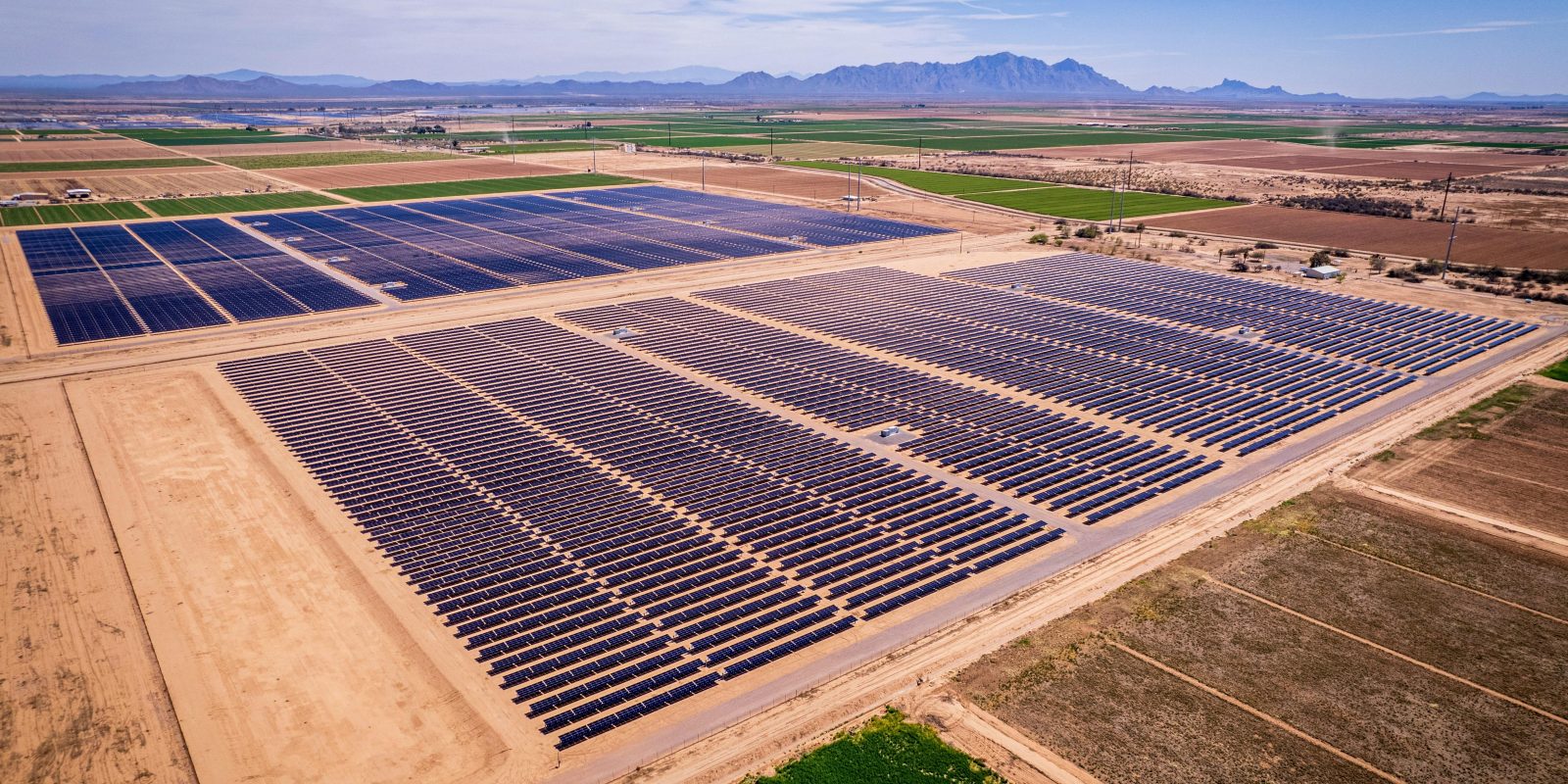
Wemen Solar Farm, Victoria, Australia. Photo: Mark Stebnicki on Pexels
The Australian government is floating a scheme that would share the benefits of solar power with everyone on the grid, offering totally free electricity to ratepayers in the middle of the day, when the sun is shining the strongest.
Australia is a sunny place. It’s kind of known for it. It’s the sunniest continent, and the sunniest country outside of the Middle East/Africa, with extensive photovoltaic power potential across its entire territory.
In recognition of that, Australia has been installing lots of solar power. Formerly a coal-heavy nation (for which coal is still its 2nd-largest export), solar and wind have rapidly taken over Australia’s electricity grid, pushing coal and methane gas out of the equation.
This has taken a big chunk out of Australia’s electricity-related climate emissions, and of course resulted in clean air benefits as dirty coal is pushed out of the grid. And climate emissions matter a lot for Australia, a country that is becoming more unbearably hot and suffering more fires due to climate change. (Though Australia is also a great example of how global cooperation on environmental issues can fix a huge problem, as they are the primary beneficiary of global action on closing the hole in the Ozone layer)
So solar power has been a great thing for Australia, especially with rooftop solar on Australian homes.
But it can lead to swingy electricity supply, given that solar only generates electricity when the sun is out.
Most areas have certain times of day where more electricity is used than others. These are referred to as “peak hours” and generally they happen in the early evening, when people get home from work, turn on the HVAC, cook dinner, do laundry and the like.
But there are also certain times of day when more electricity is generated, and that’s particularly the case in places with high solar penetration. Solar obviously generates energy only during the day, and creates a peak of generation in the middle of the day, when most people are at work.
There are ways to mitigate this – for example, with batteries, which Australia has also used a lot of (and is thinking about extending that to EV batteries too). Wind power also helps, since wind tends to pick up in the hours that solar is dropping off.
But another way to mitigate it is through simple economics. Offer people lower prices in the hours that electricity is more abundant, and higher prices in hours where it isn’t. Then, people will tend to use electricity when they can – especially if they have shiftable loads like electric cars, laundry, pool pumps and such, which don’t need to be on at the same time every day (unlike HVAC, cooking, and lighting, for example).
Most electricity providers will offer something like this, called a “time of use” plan. These plans differ in their rates and peak hours depending on your location and how the supply/demand curves work for electricity there (and have seen common use among electric car owners because of the outsized effect an EV has on home electricity use).
On the utility side, though, the swings in price can be much more drastic. Wholesale prices for electricity can go up to multiple dollars per kilowatt-hour during times of extreme demand when the grid is stressed, and electricity prices can even go negative when there is little demand and lots of supply, particularly on an islanded grid like Australia (this also happens in Texas, where the grid is largely disconnected from the rest of the US). These swings are ironed out for the consumer, so things aren’t as spiky for us, but it can be quite a rollercoaster on the grid side.
In Australia and other places with high solar penetration, these negative electricity prices often happen during the day. That’s when generation is the highest for solar panels, and household loads are typically low.
So, the Australian government has decided on a scheme to bring those electricity savings to the consumer, with what its calling its “Solar Sharer” program.
The program would require electricity retailers to provide free electricity to everyone for at least three hours a day, in recognition of the incredibly low wholesale cost of electricity during daytime due to extensive solar power penetration.
These would likely be in the middle of the day, when most people aren’t home. However, every home has some amount of shiftable electricity load, and the Solar Sharer scheme would encourage people to make use of that. With modern appliances that can be scheduled to start in the middle of the day, people can just plan to do laundry, run the dishwasher, run the pool pump, or charge their car at noon, instead of whenever else they were going to.
Additionally, people could fill up a home battery during the day, and then use that electricity during peak hours when rates are higher. And this plan will help to incentivize private installation of batteries, or other shiftable loads.
The overall effect of this is that it will help to iron out electricity use, making it track more closely with electricity supply, reducing the need for grid upgrades to manage swings in generation. Just turning on this simple behavioral switch, and then publicizing it so customers know to use electricity in the free hours, will both help the grid and help ratepayers save money.
Better yet, this scheme will apply not just to people who have solar or home batteries, but to people who live in places where they can’t put up solar – those who live in apartments and the like. The government says it will require companies to offer this scheme to all customers, not just those with solar.
The government did receive some pushback from electricity retailers, who feel they were not properly consulted on the plan. But Australia’s Climate Change Minister Chris Bowen said he would make “no apologies” if this scheme reduced their margins, and that “consumers are put first” as reported by the Australian Broadcasting Corporation.
The government plans to implement the scheme starting in July next year, first in Queensland, New South Wales and South Australia. If it works well, other regions will get it starting in 2027.
Australia is doing a lot of great things with electricity, and acting somewhat like a natural laboratory for a lot of ideas that people have been talking about for a long time. Since the whole country has similar solarization, it can work somewhat as a unit in pushing for solar power, and for reforms to help enable it.
It’s already working on V2G, with a huge trial started recently, and the wide adoption of solar and batteries is proving that even a solar-heavy grid can still work. And an idea like this, showing how simple economics can be used to change consumer behavior, could provide a model for the rest of the world on how to usher us into a cleaner energy future.
So we’ll be watching with interest how this turns out – I think it will likely turn out quite well, if the government goes through with it fully.
This is happening in Australia due to high solar rooftop penetration. If you’d like to start the same wave in the US, check out EnergySage.
The 30% federal solar tax credit is ending this year. If you’ve ever considered going solar, now’s the time to act. To make sure you find a trusted, reliable solar installer near you that offers competitive pricing, check out EnergySage, a free service that makes it easy for you to go solar. It has hundreds of pre-vetted solar installers competing for your business, ensuring you get high-quality solutions and save 20-30% compared to going it alone. Plus, it’s free to use, and you won’t get sales calls until you select an installer and share your phone number with them.
Your personalized solar quotes are easy to compare online and you’ll get access to unbiased Energy Advisors to help you every step of the way. Get started here.
Add Electrek to your Google News feed.
FTC: We use income earning auto affiliate links. More.
Yes, it snows.
Definitely watch out for the severe acute toxicity variants.
China's numbers did rise quickly on that measure and is above the EU now I think but still way below the US.
And if you don't like per capita, then China with 4x as many people is still behind the US when you compare cumulative CO2.
I have also upgraded to a 20kW inverter (I have ~10kW of panels on the roof) so I can import or export twice as fast and I will be switching to a provider that offers wholesale pricing. Getting a guaranteed 3 hours of free power a day for charging (even in winter) is just going to be the icing on the cake.
Based on back of the envelope calculations, the battery should be paid off in about 5-6 years during which time I will have paid zero for electricity (outside of a $25/month access charge).
"The future is already here – it’s just not very evenly distributed." - William Gibson
Dunno about where you live.
If you’re going to throw capital at large metal refinery infrastructure, you want it running 24/7, or have guaranteed subsidies from local, state, and federal governments.
And remember that subsidies are paid from the public purse.
Does that operate at good speeds in rural areas?
As I said........
In Australia - solar power overwhelmingly benefits the rich over renters.
A few hours a day of free electricity for all does not wipe that out.
Solar power is a rich persons thing in Australia, remains very very strongly true.
A third solution is to pipe it across timezones using HVDC and accept some level of efficiency loss and some geopolitical risks.
A fourth solution is to mix lots of wind, which performs better in winter and cancels out the lower insolation.
Realistically it's going to be all of the above, with the balance determined by local factors.
https://www.whitehouse.gov/wp-content/uploads/2025/05/Ending...
[0]: https://www.eesi.org/papers/view/fact-sheet-proposals-to-red... [1]: https://www.instituteforenergyresearch.org/fossil-fuels/rene...
And??? The parent commenter wrote about the manufacturer of said solar panels, going outside the frame of that article to something related but still relevant, given that that article surely is meant to stimulate a more general discussion.
He should’ve done DD on the land and local AHJ restrictions before moving ahead with a plan that wouldn’t work. One call to the local planning and permit office is all it would’ve taken to avoid this problem and find a different jurisdiction.
By the time they get the cable to Singapore, it will just be cheaper to generate it in Singapore.
What's cooler than being a billionaire? A SPACE BILLIONAIRE.
Is that anything like the "_ agenda being pushed" I keep hearing about, but can't seem to see anywhere?
Sure. But if you live in Australia, you knew that slap was coming. You could almost have said to have signed up for it.
Very early in the piece, the government offered to pay people who installed solar about $0.50 for every kWh you fed into the grid. To be clear, that was far more than the retail price of electricity at the time. It was sunsetted, in 2028 from memory (so if you signed up back then, that sweet subsidy money still flowing strong.) I know a few people who installed 50kW of panels on their houses and sheds purely because of that incentive.
The idea behind the subsidy was to kickstart the solar industry, and it worked. It was always obvious what was going to happen to feed in prices if it did work. Given the price of power is now very close to $0 for 8 hours a day, it's working very, very well. That's how this "free electricity" offer came about.
The same incentives are now happening for batteries. The Australia electricity regulator created a special kind of retailer called a "Virtual Power Plant". It's effectively a collective of battery owning consumers, and the VPP allows them to sell their excess storage into the wholesale market. The government is now subsidising batteries, in the same way they subsidised solar panels. And now, they are looking at offering free power to charge the batteries(!) The result you should be able to get will over a 10% return by installing a battery and joining a VPP. Consequently, there is currently a shortage of battery installers.
That 10% won't last forever of course. It will last for a while, especially in Queensland (where I live) as the conservatives are installing more gas turbines rather than building more renewables. The high price of gas generated power guarantees a good return on my battery investment. I will take great pleasure in sending the gas and coal generators broke by selling when the price is highest (which is a night) and taking their profit.
And fortunately night lasts a long time, and years and years of battery installs to take a real bite out of it. Nevertheless the fun and profit will wind down eventually. When it does I won't be whinging about a receiving slap in the face. I will shrug, be thankful I could have my fun while it lasted, and move on.
It's quite fun (and educational) with the kids to work out when to put the car on to charge, when to run the dryer etc, looking at the few days ahead forecasts.
Last month, we paid 11p per kWh on average, which is less than half what you'd pay on a standard tariff, and it's nice to be doing something good for the environment too. It's particularly satisfying to charge up the car when tariffs go negative.
Here's today's rates (actuals): https://agilebuddy.uk/latest/agile
Here's a forecast: https://prices.fly.dev/A/
So long as you ignore the working-poor. Those who live pay check to pay check, can’t afford solar / battery - or are renting so none of that applies to them.
Yeah, they can just get fucked.
What a success!
Something I firmly believe is that there’s a ton of low hanging fruit for timing our energy use better. It is just hidden by the desire to present a uniform energy price.
Like why not run our water heaters when power is cheap? Then if that became a thing, we might even be interested in larger water heater tanks. Batteries cost per volume, you only pay for the surface are of a metal tank!
Somebody has to go and turn it off, and having this person available overwhelms all of your operational costs.
Or alternatively, you need the infrastructure to do it automatically, what is currently expensive. (But there aren't intrinsic reasons for that being expensive, it's probably due to lack of scale.)
If it's just slightly negative, or just rarely so, it's not worth it.
But, what exactly do you mean by fragility? In what way are they fragile?
See for yourself: https://luminocity3d.org/WorldPopDen
India has 1.4B people on 3 million km^2, Africa has 1.4B people on 30 million km^2 (out of which 9 million is Sahara).
Starlink's use case is low population density areas, and Africa has plenty of those. Very different case from India.
The effects of this are going to massive and huge in 10 years.
There is a huge swath of Australia that does not have good internet access and/or very poor cell phone coverage.
And I am not talking about about people living in the middle of the desert, I am talking about people who are 10 to 15 minutes away by car from a small town.
So yes Starlink or it's local equivalent are necessary.
For example, that would cost about three times as much in the UK but median income is about an order of magnitude higher so its more affordable.
I do realise it is a lot more affordable than telecoms were in the past, but its something like a day of median income.
But in any case, let’s say I agree with you. A ton of rich people have solar and are getting really cheap power. Cool.
Now EVERYONE is going to get free power for a few hours a day, and the “poor” didn’t have to spend a cent to get it. Sounds like a benefit for everyone to me, regardless of how rich they are.
How is it not?
My understanding of the intentions of connecting international grids is for things like emergency supply of electricity to a different grid to stabilise the frequency and prevent blackouts.
But none of that matters, China would pursue massive solar power infrastructure regardless, because they want energy independence. Stupid amounts of solar power means they will no longer be importing lots of oil and fuel, and that means they would be less vulnerable to the US blockading them in some sort of conflict, which is one of their primary geopolitical concerns.
They would do this even if solar power was dramatically less effective or was significantly more expensive, because solar power is the first kind of power generation that it is economical to way overbuild, and have serious redundancy and surplus and excess, because there's no consumables that scale your running costs like if you tried to build massive amounts of coal power plants.
China would like to have that kind of scale for power because they can use it to subsidize things like datacenters running less efficient Chinese made computer components. The fact that power doesn't have to run a profit in China helps this.
The US should be taking fucking notes, about how nationalized infrastructure can be a force multiplier economically, and how infrastructure that doesn't have to be profitable can be even more powerful.
Slaving ourselves to the enrichment of well connected capital owners is harming our country, and preventing a literal energy revolution. We have the option to, for the first time in human history, actually have energy resources that are too cheap to meter.
Therefore reaching self sufficiency in terms of power generation will make this threat less relevant and an enemy will no be able to use it to make them back off.
I thought I'd read that they planned to expand the scheme to non solar homes to fit in with the ethos of the new "benefits of solar for people without solar" messaging of the proposal under discussion here.
But I checked my supposed source and it was just someone suggesting that it would be consistent and useful if they did make that change.
The base charge for most customers in PGE territory is $24/month:
https://www.pge.com/en/account/billing-and-assistance/base-s...
> Previously, homeowners received credits for the excess solar energy they sent back to the grid, but the state has since ended that program.
They ended the NEM1.0 and NEM2.0 programs that credited net surplus back to homeowners at retail electricity rates (which includes transmission and distribution costs). Those programs were a subsidy to encourage residential solar PV installation when it was very expensive and rare, not intended to function as long term subsidy programs for PV owners.
The switch to NEM3.0 only affects newer installations -the older installations keep the older rates until a change of ownership in the home.
Under the new net-metering program, homeowners with solar still get credits for net energy sent back to the grid, albeit at the "avoided cost" rate, which while much lower on average at most times, is reflective of the true value of power at the time it is pushed back to the grid, which is close to wholesale electricity rates. During peak hours and days of the year, the compensation rate can exceed the retail rate of electricity.
This incentivizes the installation of energy storage that can be used to move consumption to low-demand times and even arbitrage with stored energy by selling back to the grid at peak hours.
Mine (a VPP) does pass it on. They charge me the going wholesale rate. If the wholesale price is sufficiently negative they pay me to use electricity. That's pretty rare, but it does happen every few months. The wholesale price has to be below about -4.5¢ for my price to be negative because the people who own the wires get to add a fee regardless of what direction the electricity is flowing, as does the government (admin fees of some description).
The converse is also true. If the price spirals to $19/kWh, I get to pay that too. At that price as single night could cost me $400, or it would if I didn't have a battery.
Which possibly explains why you haven't heard of it. If you don't have a battery big enough to get you through at the peak and shoulder hours and enough solar to charge it during the day you are better off with a more traditional retailer, who charges you a fixed price regardless of the wholesale price.
"For a limited time only, we're offering a $500 upfront electricity bill credit* with every eligible home battery system (Tesla Powerwall 2 & 3, LG Chem HV, SolarEdge batteries only) purchased through Electrify with ActewAGL and installed by one of our approved installers - plus a further $100 credit* every year for the next five years, so long as you stay connected to our Virtual Power Plant.
Join the thousands of households across across Australia taking advantage of the Cheaper Home Batteries Program. Over 100,000 systems have been installed since July 2025, and with the rebate scheduled to decrease as installations rise, now is the time to act."
The price difference is significant: About €0.08/kwh compared to the €0.2 - €0.4 I'd be paying during normal day/peak times.
This has made my day-to-day driving basically free, less than a euro per 100km (€0.08/kwh * 7kwh/100km)
I tried doing the same thing for other large(ish) loads in the house, dishwasher, washer & dryer, but the cost benefit was really really small when compared to the big savings from my EV charging.
I heat my water using an oil burning boiler, but if I had an electric water heater, it would make total sense to run that during the "EV" hours as well. If I could, I would then also invest in more capacity, and set the thermostat higher to have essentially a hot water battery that could last me the whole day.
At my old house I had an overspecced solar system, and I set it up to dump the remaining available solar energy after the batteries are done charging into my hot water heater. The thermostat was set to 75C or something, super hot. I'd then have piping hot water for most of the day, and maybe needed a small electric boost in the mornings, especially in the winter. Another 200L or so would have resulted in me not needing any grid power to heat up enough hot water for the household.
It rolled this out in 1953:
https://en.wikipedia.org/wiki/Zellweger_off-peak
It let coal plants run more efficiently and people could heat their water overnight.
Somewhat bafflingly they seem to have somewhat failed this same task with the solar rollout.
Presumably 21st century capitalism got in the way of the mid 20th century engineering.
By making the price go negative, you are creating the market incentives for someone to do something about it: households will invest in BES systems to suck up all that free electricity to use during peak times, and some industrious entrepreneurs might even be convinced to do it on a very large scale to start arbitraging on the price fluctuations.
You don't even need the price to go negative to have a BESS buffer make financial sense.
This is a nice text on the underwater version:
https://europacable.eu/wp-content/uploads/2021/01/Introducti...
Density, generally, makes service provision easier.
Contrarywise, Starlink (or other broadcast-based services) perform poorly in high-density areas, where there's high bandwidth contention. Building out to serve such locations, which are by definition few and fairly sparsely distributed, as your map indicates, increases total system costs markedly.
Starlink at scale is optimised for sparse, low-income populations, rather than dense, high-income ones. That's probably a significant liability eventually, though for now I'll have to note I'm impressed with the technical accomplishments, regardless of reservations on persons involved.
Just today there was a newsletter from Construction Physics about Strap Rail. Literally wooden rails with a iron plate strapped on top put in the mud. Only in the US, 10 times cheaper. But more expensive to maintain and gone in years instead of decades for normal iron rails though.
That doesn't mean they always actually invested the money to rebuild properly... but it was sound engineering theory.
Of course, there were other financial shenanigans too- see https://en.wikipedia.org/wiki/Cr%C3%A9dit_Mobilier_scandal
Maybe something like microwave transmission or cheap superconductors will solve it.
The Chinese leadership understands several things very clearly:
- The country has experienced multiple catastrophic natural disasters in the past.
- Such disasters often lead to regime change (losing the mandate of heaven via natural disasters leading to social unrest)
- The leadership is comprised of smart people (and a lot of engineers) and they don't play dumb political games like denying the reality of climate change.
- Climate change will bring far worse problems in future, which threatens the country's economic growth and therefore their hold on power.
So they have massive incentive to care about the reality of climate change and do everything they can to mitigate it and protect their environment.
Friends have a full sized off grid house in the Yukon since 2010. Every modern convenience, stunning location. Never a single power outage in all those years. How many power outages have you had?
Off grid is not somehow sub standard.
Best 5 years of my life. I'm back in the US now temporarily, but there's zero doubt in my mind I will end up back in Aus. I've lived in 8 cities now(1), and Sydney was the highest quality of life I've had out of any of them. Great infrastructure, great work-life balance, great culture, and fantastic weather. Only downsides are the distance and the lack of ozone layer (do not fuck around with the sun in Australia - there's a reason why they have over 10x the global average of melanoma). Happy to answer any questions about it or the process for getting citizenship.
(1) Cities lived for comparison: San Diego, LA, Honolulu, San Jose, San Francisco, Seattle, Portland, Sydney
Here, you deal with it. No options. It’s solar and batteries rammed down your throat. At your cost. If it doesn’t work out, it’s on us.
No big (reliable base load) energy projects to power industry in to the future, China can do all of that for us.
Equality. Everyone can have nothing.
That's pretty rough. That should be about 14¢ per kWh which only a hair less than the median price per kWh in the US (~17¢).
By rebate you mean: a wealth transfer from tax payers to those who need it least, those who can afford a battery, those who aren’t renting.
As if we aren't busy enough. I see this as just yet _another_ job the government/business is making us do instead of them.
Is it too much to ask for my government to provide sensibly and simply priced energy so we can get on with our day, working, studying, raising kids etc?
IMO this is just setting us up for insane surge pricing for those people who don't do the good citizen thing of becoming nocturnal
Median full-time salary in AU is ~90k AUD, and we have pretty good minimal wages, so solar panels are affordable to almost every working homeowner.
There is not “person” turning things on and off.
All those unfortunate children will be introduced to the toxic, horrid internet.
They'll be addicted, have no attention span, have their own data used against them to exploit and track them, and end up with their political system reeling under manipulative AI and generic bots.
Far better to just give them books for their educarional system, and leave the evil Internet out of it.
Solar changes the who and where, but really not the what significantly. Solar is far more distributed and less concentrated, and options for distribution are potentially more diverse (cables, direct power beaming, synfuel production and distribution) in ways that an oil-based economy hasn't been.
Even within national borders, power production and distribution are sufficiently centralised and choke-pointed that they are vulnerable to significant disruption, even by non-targeted accidents and natural disasters. Major national and regional power outages are not especially frequent, but neither are they unfamiliar: <https://en.wikipedia.org/wiki/List_of_major_power_outages>.
During periods of conflict, national and irregular forces routinely target power infrastructure, with significant but rarely absolutely crippling effect. For the past three-and-some years, two major eastern-European adversaries have been directly targeting one anothers' energy infrastructure. Though the results are costly, neither has been bombed back to the stone age, or even the pre-electrical era:
"Resilience Under Fire: How Ukraine’s Energy Sector is Adapting – and What It Means for Europe"
<https://rasmussenglobal.com/wp-content/uploads/2025/06/REPOR...> (PDF)
I also know breakers for HVDC are extremely challenging to make, AC power has the benefit of sine waves crossing the zero line so power can be switched/broken a lot easier than with DC.
My whole post was an ask for more information on the Chinese side (each of my 3 phrases were asking this!), which you have provided thank you very much, but I could do without the "you're dumb" when I ask a question.
Young people don’t own their own homes, the banks do.
And many young home owners are now suffering mortgage stress, same with renters. That is, 1/3 or more of their income goes to repayments / rent. Double income households, at your AU$90k are paying $760 a week in rent or mortgage repayments.
I recently worked a minimum wage job, and you are guzzling the koolaid something chronic if you think $24.95 is workable with a mortgage, the one necessary car, and all the associated taxes and insurances. Fuck me.
I worked out I’d be only $50 worse off week on the disability pension.
Admittedly I’ve made some stupid decisions in my adult life, but, unsurprisingly, we can’t all be far out on the righthand side of the bell curve. I’m just a dumb blue collar worker.
This sort of arrogance where suddenly everyone remembers all reasons why some technology is bad once the "poor masses" get it (while they themselves had the technology for years), is hypocritical and frustrating.
The reality is that getting online makes a massive difference for someone in some remote poor area. Not just in terms of education but also economically.
My parent's in law live on small farm 10 minutes out of a small town in NSW and on the best days, when the sky is clear, they get 1 bar of phone reception on their cell phone and they have to stay within a 10 sqm perimeter within their house in order to make phone calls otherwise calls drop out.
Video chat is basically out of the question unless you want to talk to pixelated blobs on a screen.
After waiting 10 years for the NBN to be rolled out to their property, they decided to bite the bullet and bought a Starlink terminal and now we can have normal conversations on the phone and they can use streaming services whereas that would have been impossible before.
But it is not just them that have issues. When I was living in Brisbane many moons ago, I remember how pitiful the internet speed was so much so that I ditched my home internet and started hot-spotting from my phone instead.
Things have improved in the cities since then I am sure, but for the people out there living in the country side, not much as changed.
They're fragile as heck, though, and contain mercury (albeit a small quantity in a relatively less-harmful form). Breakage needs to be handled appropriately, and disposal is as hazardous waste.
LEDs are more efficient, offer better (and often more flexible) light quality, are damndably rugged, and have far less toxic material load. Given the balance, I'd be swapping out CFLs (and have been).
Extend that to 10k km and you're looking at approximately 25%, but if it's surplus solar, who cares?
Such a line costs as much as a highway broadly speaking, so it's not impossible to build.
For the past 100+ years, the US has been spending a significant amount of money on protecting oil supplies to protect its oil billionaires and its economy. It's the #1 budget item, outspending the combined military spending of the next 10 economies. This can be reduced to zero, and ultimately, the $ 39 trillion deficit can be eliminated.
On the concrete side we do know that they also care deeply about local pollution. They made massive efforts to clean the air for the Beijing Olympics, amongst other many other moves to reduce local air pollution.
Once it’s installed, you’ve got fuel deliveries plus regular maintenance and monitoring. You’re looking at thousands of dollars a year to operate your own generator for a 100A or 200A service. If you’re already installing a propane tank for heating then the costs can be spread between heating and power generation but it’s still a sizable investment.
Generators are nowhere near as reliable as you’re making them out to be. Maintaining and fueling one is a hassle that the vast majority of people would rather not deal with.
But I’ll add to the downside that housing prices are actually laughable here. How anyone affords to buy a house here is beyond me.
Snowy? https://theconversation.com/white-elephant-hardly-snowy-2-0-...
Snowy aside, households are installing 40kWh batteries now. Add 2 cars V2G that give you an additional 40kWh with impacting the car battery life overly. Across the 12 million Australia houses that adds something of the order of 1 terawatt hours of storage to the grid. It's almost double the total predicted storage (660GWh) Australia will need by 2050 https://www.energycouncil.com.au/analysis/battery-storage-au...
The strategy of "lobbing it over the wall to the residential customer" has already turned Australia households into major suppliers of electricity to the grid. Apparently they don't mind the risk if there is money to be made. Now it looks like the government are hoping household batteries will become major suppliers of storage to the grid. If that is as successful as solar, it will be by any definition a wildly successful strategy for handing the transition away from fossil fuels.
The weird thing is: this was all kicked off by the Howard government. They would be the very conservatives who are railing against renewables now.
We extract, refine, transport, store and pump billions of litres of toxic chemicals everyday to power our cars now.
We could do the same with electricity if we wanted to, and use a fraction of the energy.
If landlord has batteries/panels installed, chances are rent would be a bit higher. Renter is free to choose a place with lower energy bills by paying that premium, so these subsidies definitely could benefit the renters.
Almost all households are on fixed tariffs, typically about 26p/kwh at the moment.
> IMO this is just setting us up for insane surge pricing for those people who don't do the good citizen thing of becoming nocturnal
It actually costs a lot more to produce marginal energy at peak times, the cost just reflects the cost of production. It doesn't seem unreasonable for me for the consumer to bear the cost, and also get the benfit if they choose to put their car to charge overnight rather than at peak time.
This also has a nice secondary benefit: anyone on agile tariffs who shifts demand away from peak time actually benefits those who don't want to bother, because the peak price/cost goes down, and so the overall average price of electricity goes down.
> I see this as just yet _another_ job the government/business is making us do instead of them
In most other market, people are expected to respond to price incentives. When local apples are cheap relative to imported cherries, people don't complain that government/business is making us do a job to push demand in the direction of apples.
> Is it too much to ask for my government to provide sensibly and simply priced energy so we can get on with our day, working, studying, raising kids etc?
The free market price _is_ the agile price. The government intervention is actually in the direction of fixing prices (e.g. by the energy price cap, which is sometimes below the free market price at peak times). In general, markets do not work very well when the government fixes the market
When you let the market clear and send out price signals, markets almost always become more efficient (which means that consumers benefit overall)
So you can have three hours of free electricity, while you’re at work, the kids are at school, you’re renting so no battery for you, electricity has already increased 100% and continues to increase, but only once a year, and now you’re being offered something your 10 year old second hand appliances and petrol cars can’t take advantage of.
Forget trickle down economics, it’s deluge-up. From those who can barely afford it to those who barely need it.
Let’s not pretend there isn’t a cost of living crisis in Australia, and electricity prices factor in to everything.
Cheap reliable plentiful electricity is the backbone of an economy. Not sitting down and working out how you can use less power next month.
We should be sitting down trying to work out how we can use more power next month, in order to leverage that power to have a better life, warmer / cooler homes. Starting businesses and not having electricity be the killer.
I found a nice website with prices by country: https://www.starlink-prices.com/personal/residential/usd/low
But it may be outdated, because it shows $90/mo price in Poland, while it's much cheaper as I said, even with the free dish.
And some recent articles about Starlink prices in Africa:
https://techlabari.com/average-starlink-prices-across-all-af...
https://www.visualcapitalist.com/visualized-starlink-vs-lead...
Anyway, Starlink is mostly for places where you have no ISPs or cell service (or they are very bad), so not for 95% of Europe, and probably not for most of India, especially in the future.
What you describe at its worst is still better than the exploitation many of the children in the Philippines endure today by westerners. Hopefully, being able to communicate on the 'evil Internet', the rest of the world, like you, can truly understand what they endure.
If it’s a population center someone would probably have put up a tower on their land ll
The EU is actually extremely special because its souvereign member states collaborate in almost all areas on a level that is unmatched anywhere else. But the ideological foundation is getting eroded by propaganda and if that assault is effective, Europe will balcanize again and end up experiencing many more armed conflicts.
They have no diesel generator. No diesel tank. Propane for cooking.
Seattle > San Francisco > San Diego > Sydney > San Jose > LA > Honolulu > Portland
For your average person though who's prioritizing overall quality of life, the list would be:
Sydney > San Diego > Portland > Honolulu > Seattle > San Francisco > San Jose > LA
Each city has something distinct to offer, but I will say that LA was among my least favorite cities to live in. It's just a worse version of San Diego.
Despite the buying costs of Sydney being equivalent to something like SF, 4k/mo goes much further in Sydney for renting.
This is the problem though. Landlords are rarely incentivised to enhance a property by installing solar+batteries on it, as they don't live there to reap the benefits. Solar still takes a couple of years to give an ROI, so I can't see how a landlord will agree to do this on an existing property.
If a property's monthly rent is higher because it has solar installed, what is the benefit to the tenant? Sure they get cheaper electricity, but they pay more rent, so it balances out.
Tenants won't pay for the installation, as it's a permanent improvement on a property that they don't own.
I live in a country with an order of magnitude less sun (Ireland), but there is a big solar boom going on here now, and I'm missing out on the government subsidies (which ended recently) because I'm renting and I can't convince a landlord to put €10k+ up to install a solar system for very little benefit.
Local power costs are over 30 cents per KWh, so that could be pretty competitive.
The problem is that, no profit based organization will ever build "surplus" solar to enable that kind of thing. If we want surplus power, if we want a strong grid, if we want cheap power, if we want to enable the ability to quite literally waste solar power on inefficient processes (including things like industrial processes that produce less CO2 or generating hydrogen or methane as long term energy storage), we have to get the government to make it happen
But, uh, we hired people who would rather spend $170 billion on harassing random cities and brown people so..... Everyone get ready to pay absurd rates for electricity to support outdated businesses that have been directing American energy policy since Reagan, including paying about 60k coal miners in west virginia for a resource that is economically inferior to other fossil fuels but because they voted for a democrat once they now get a stranglehold on the US economy.
Of course there are still a lot of obvious problems to be addressed, but the rate of progress is the really impressive thing.
The governments plan is bait and switch. Make it seem lucrative at the start, and then squeeze everyone who committed on better terms by ratcheting up the fees and ratcheting down the feed-in tariffs.
Alternatively, we could have built a handful of big combined cycle gas plants, close to the retiring coal plants to take advantage of existing transmission infrastructure, and legislated a cheap rate for gas from the gas extraction industry, and Australians could have had all-you-can-use electricity for $40 a month.
But instead of that, we’ve committed at least a couple of generations to virtue signalling, like Australia’s GHG emissions make any difference.
We’re happy to export the gas and coal, and uranium, so India and China can have cheap power to run industrial economies.
Cheap power comes not from residential customers managing their time of use, but from the excess of industrialisation. And we’re rapidly making it cost prohibitive to manufacture anything in Australia, or even run a restaurant. So that people in far away lands can have better lives.
Make us look pretty stupid to be honest.
Because governments have let energy companies fail to invest in necessary infrastructure for decades.
And who is the "we"? Definitely not me
I think a much larger conversation needs to happen about people's schedules, commitments and whether it's fair to say those who have less time and less flexibility due to work, children etc are somehow actively choosing to not be a good eco citizen. It's incredibly unfair.
I'd rather go back to root causes and re-evaluate private companies failing to provide the necessary infrastructure
Probably not useful for cooking dinner or watching the evening news, but most dishwashers and clothes washers have a delay start option. Your fridge is also working its hardest during the middle of the day.
> and now you’re being offered something your 10 year old second hand appliances and petrol cars can’t take advantage of.
A washer/dryer combo would be useful for delayed start. But as mentioned, delay start has been a common option for a long time now.
> We should be sitting down trying to work out how we can use more power next month, in order to leverage that power to have a better life, warmer / cooler homes. Starting businesses and not having electricity be the killer.
BESS are the deluge up you're asking for. Much of the stress on the grid is that power generation is distributed unevenly. Grid scale battery prices have been crashing stupidly year on year, to the tune of about 20-40%, and those effects are only just starting to hit the consumer market. The uptake curve has been reasonably steady, and at current projections we would have 24 hours of world-wide storage by 2035. Which is nuts!
I think this is sensible policy. It ought to reduce power prices across the board. At the very least, energy companies would have few excuses to hide behind if prices don't become more competitive.
Another sensible policy to help renters would be to force landlords and owners' corps to put timers on their electric hot water systems. It's a kind of energy storage that most people don't consider.
I have no phone signal in my village, a few miles from a major town. I have to use WiFi calling to talk on the phone. Our local politician campaigns against it, it is such an issue. Especially since analogue phone lines are due to be turned off soon. We still have a working red phone box though!
I travel around a bit in the area and blackspots are very common
In the context of “cheap mobile data devices are widely accessible” I don’t think the distinction matters. If you’re relying on your £1 sim to trigger your solar battery charger and it doesn’t, then it doesn’t matter if you technically had signal or not.
And yes, those appliances are (almost) 10 years old.
Come to Munich, go into any of the large old buildings, the central stairwells usually are phone dead zones. Truly dead.
Or try to go and hike in the Alps. Shit service, but as soon as you walk into Austrian territory, you'll suddenly have service.
Or try taking a train from Munich to, say, Landshut. You'll lose signal about 5 minutes after the train passes through the outskirts of Feldmoching.
Or try driving a car on the A8 highway to Salzburg in Austria. You'll lose signal about 5-10 minutes after passing Holzkirchen.
Or try taking a train from Passau to Wels in Austria. Passau is directly near the border. You will have a shit service right until the train passes the national border and Austrian towers take over.
The reason isn't technical. The Passau and Alps example shows it - identical geography, identical mountainous areas with about zero population... but wildly different attitudes in regulation.
> If it’s a population center someone would probably have put up a tower on their land ll
Here, you get death threats if you even propose putting up a tower on your land [1], in the UK nutjobs set a 5G tower ablaze [2].
[1] https://www.sueddeutsche.de/muenchen/wolfratshausen/icking-5...
[2] https://www.blick.ch/ausland/grossbritannien-handymast-eines...
Probably not that even since it's UK. Isn't it 999 in the UK? Has the UK started accepting 911->999 for the tourists?
I think what we seeing in a lot of places now is quite the opposite. There are significant opportunities for arbitrage, so private entities are building HVDC lines in Europe for example (without special subsidies over the usual ones that all big infrastructure always seems to get AFAIK). That's part of the beauty of the renewables revolution it breaks up the stronghold that only a few big corps held over generation.
There are huge orbortunities for arbitrage in these areas. That's why in Europe there has been significant investment into HVDC connections recently. AFAIK they are mostly (all? ) build privately without special government subsidies (over the usual ones that all large infrastructure projects always seem to get). I think this partly the beauty of the renewable revolution, it
https://en.wikipedia.org/wiki/Xlinks_Morocco%E2%80%93UK_Powe...
Most in depth analysis I’ve seen of these Russia - Ukraine conflicts cite this as one of the top factors in why Russia invaded both a decade ago and the most recent war that is ongoing.
That is to say - mutual cooperation agreements like that have enough teeth to keep conflicts to a minimum as the repercussions are severe
Also another ultimate irony is that Russia didn’t completely cut the rest of Europe off from its oil and gas. That symbiosis continues albeit not the same way. Perhaps electricity would be the same
Don't forget it's also a tax for bailing out the failed energy companies
Well, regulating oligopolies isn't fun and it isn't popular with voters.
Ya just have to remember that it’s table scraps compared to the 100% plus increases in electricity prices we’ve already been subject to.
And this is in a country that has the same volumetric gas exports as Qatar, which provides it citizens free healthcare, free education including university and vocational training, and electricity at 3.2 US cents per kWh.
What do we get? None of that. We get citizens living in tents. In a resource rich country.
And you people think our governments are capable of making wise decisions about long term energy policy. Check your ideologies.
When was governments picking winners ever a good idea?
When has that ever worked out well.
When was other people choosing what to do with other people’s money an ideal we should vote for more of?
In October 2025, the scheme was reported to be 67% complete but it could not be completed within the A$12 billion forecast cost.
https://en.wikipedia.org/wiki/Snowy_2.0_Pumped_Storage_Power...
6 years, incomplete, expected to cost well over six times the initial estimate if it ever gets completed.
Expect Snow 2.0 to a big impact on electricity prices in Australia. Upwards. We’ll have to most expensive pumped hydro in the world. What an achievement!
> 911 redirects to 999 on mobile phones/public phonebooths[citation needed] and on telephones used in USAFE bases.
So maybe? But without the source who knows.
I have stopped caring about when house hold appliances run, our main energy consumers are heating (during the cold months) and charging the electric car.
Any organized resistance I’ve witnessed myself in the US has been something like an HOA saying no not tucked right here where our home values could take a hit or a view obstructed, please put it down the street or … anywhere else.
But if you had no cell service and your call dropped as you backed out of your garage or you tried to sell your house and the buyers phones suddenly had no service or they couldn’t get on the Internet at the open house, that’d feel like pretty concerning missing infrastructure.
I don’t think anti-5G wackos have dented a thing.
Lets do a little arithmetic with conservative values rather than those figures. Assume supplies 200MHw per day, and eventually costs $15B and only lasts 50 years:
15e9 [$] / (200e3 [kWh/day] * 365 [day/yr] * 50 [yr]) = 0.004 [$ / kWh]
Yep, you right, that added 0.4¢ per kWh for overnight storage is gonna ruin us all for sure. /sThat’s about what our electricity used to cost.
Back before we locked ourselves in to wind and solar, and gas peaker plants, and a massive pumped hydro project that will approximate never be finished.
Sweden’s energy mix is predominantly nuclear, oil, and hydro. Wind and solar account for 10% and 1% respective.
There’s no escaping the fact everything wind and solar go electricity prices go up. Drastically.
In Australia, since 2005 wind and solar have increased to about 11% and 17% of electricity generation respectively.
And that time period correlates perfectly with the just over 100-200% increase in electricity prices, depending on where you live.
In 2005 I was paying AU$0.17 per kWh in South Australia, now that’s up around AU$0.44 per kWh. Elon even put in a big battery in South Australia. Hadn’t helped. Hasn’t helped reduce the cost of electricity. And that’s what the Australian government wants us to hail a success.
That’s 250% increase. While general inflation in the same period has been 67%.
Wind and solar haven’t even really started to put a dent in Australia’s over all energy use, which is dominated by gas and oil, and people are falling over each other to get in line to vote for more of it.
Other locations with big batteries and big electricity prices include Victoria Australia, Melbourne the capital is widely considered the California of Australia, and California itself. Big batteries, big solar, big electricity prices. Fact. Find me a counter example.
Germans are hanging solar panels off their apartment balconies. Not because they want to. Out of desperation. Just like poverty Africa. That’s equality: everyone can have nothing, and they’ll like it. My god.
No one is running an industrial economy on their balcony.
They have, at least here in Germany. We have a shitload of what we call "weiße Flecken", zones with zero service, of about the size of half of Schleswig-Holstein [1]. While a lot of these is in forests and mountainous areas, the zones in settlements are mostly due to the whackos and their organized campaigns.
[1] https://bmds.bund.de/aktuelles/pressemitteilungen/detail/mob...
I'll say this one thing and get out of the way. The price shock began in 2022[1] (see figure 1). The rise in energy costs aren't due to solar and wind generation, which is the cheapest there is. It's due to the transmission and variability of intermittent renewable energy, and also sensitive to export prices of gas due to our weak policy on gas reserves. Batteries are the answer to that as they can store when its cheap and dispatch to the grid when it isn't (and that includes home batteries). The Neoen battery which you mentioned, was the world's first big battery. It's been wildly profitable, which is basically driving the market to invest more in grid scale batteries and less in large scale renewables. So the federal and state governments aren't picking a winner by backing batteries, these policies are just accelerating us towards a cheaper grid using the momentum that's already there in the market. The federal government is also trying to offset the ending of the state-level bill relief for those that can't afford batteries, and reducing grid pressure/prices in the evening when everyone gets home.
[1] https://www.energycouncil.com.au/analysis/spot-market-prices...
There’s no way that can be separated from grid-scale wind and solar.
The level of self deception renewables advocates subject themselves to would be funny if I wasn’t forced to pay for it.
You also can’t have it without peaking capability. Which means being able to cover possibly all demand instantaneously, and that was always going to mean expensive gas / battery projects that sit idle a lot of the time. We tried it I warn you.
That wildly profitable Neoen battery? Where do you think the profits come from? Thin air? The end user. That’s you and me mate, we’re paying for it. Low income earners disproportionately so. Renters who can’t have solar or batteries. They can just freeze in the dark.
I’m all for profits when they’re mine. I can’t understand why anyone would worship someone else’s profits. Your profits are my costs.
I just drove half way across the country, from the south east to the middle of South Australia.
Broken wind turbines 300k, from the nearest industrial centre. Probably 600+k from the nearest capable industrial centre.
They’ll never get fixed. No one is driving a $1200 an hour crane five hours each way to spend six days set up waiting for a technician and parts from Europe who was supposed to be here two weeks ago to fix one or two turbines / broken blades. Those handful of broken turbines probably don’t even have spare parts available, every wind farm is a new model of turbine, locked in to one manufacturer indefinitely for after sales parts and service, and if they do have spare parts and service available the payback period on the repairs would be astronomical.
It’s cheaper to let them rot in place and build new ones elsewhere. You don’t get greenfields grid-scale rebates for performing maintenance on ten+ year old equipment.
I dare you to run the numbers on the quantity of steel and concrete needed globally to transition to wind and solar.
Or don’t, cos it will put you off renewables. And there’s nothing worse than having your preconceived notions of what’s right and wrong jump out of the math and throttle your brain. The concrete related CO2 emissions alone will choke the planet way beyond what we’ve merely dabbled with getting to this stage.
I used to do paid and volunteer work for The Wilderness Society and donate to Greenpeace. Then I learned applied mathematics.
Rooftop solar and home batteries keeps power where it's used for domestic use. Large scale solar is also deployed near to mining and refining sites, and not by mandate, but because it's the most economic option. If you have batteries you don't need to build out transmission.
> You also can’t have it without peaking capability.
Once again, enough batteries and gas peakers are out of business.
> That wildly profitable Neoen battery? Where do you think the profits come from? Thin air? The end user. That’s you and me mate, we’re paying for it.
They come from arbitrage. Buy low, sell high. They same thing that anyone with a home battery or EV can do. Neoen actively reduced the market prices for electricity by increasing supply at the right time. That means the people of South Australia profited mate ;)
> Renters who can’t have solar or batteries.
The OP article is about distributing free power to everyone to take advantage of. Assuming that plays out, I can only see this as Good News™ for renters.
> They can just freeze in the dark.
Lighting isn't really what's chewing up the power. But certainly people going cold because of high energy prices sucks. Again, the prices have increased due to gas export prices increasing the wake of the Ukraine conflict. This isn't "self deception" it's just economics.
I could list ways that free energy in the middle of day could be used by renters and for low income earners to stay warn, but I get the vibe that you've got an axe to grind and I'd be wasting my time. So, as promised, I'm moving on.
Time shifting a load of washing (cold water) to the middle of the day is irrelevant.