I know there will be some smart arse out there saying "Just install Linux" Pleas don't I have to use a screenreader called NVDA to read the screen to me as I am blind.
There is a screen reader in Linux but it just is not that good. If it was better then I would think about it. I have tried!
There are tools like MS Active Accessibility and UI automation which are designed for helping impaired people use the computer, as well as very useful for testing.
UI automation in particular is designed for semantic understanding instead of representing the UI in the runtime control hierarchy, and can do things like query offscreen elements or check out whats in a combo box without having to open it.
Credit where it's due - Microsoft used to really invest heavily in making Windows accessible to the blind and impaired, I've had blind acquaintances praise them for being able to use the computer fairly well (my friends grandma was a math teacher, super smart, but sadly she went blind in old age, it's really hard to overstate how much being able to use the computer meant to her.)
Not sure how well it works nowadays, with most apps being not Windows-native.
I'd have recommended people to check out UISpy which was a neat little tool that allowed you to check out your apps in a semantic way, but turns out it was folded into Power Automate, which in turn was made a part of Office 365. I see Microsoft still working tirelessly to undo all the goodwill they have rightfully earned.
I've been a Windows user from day one and I now see a future without it. Satya had been a bright spot in Microsoft, but this blind lust for AI, especially in bed with Altman who is pure con artist, is unforgivable.
Some of the investment sells recently are starting to look like the beginning of the end for OpenAI. That will have a wide range impact on everything.
I use Claude for coding (and mostly in WSL). OpenAI enabled its users to have a sext conversation.
Seriously. And Satya just keeps on at full speed.
I heard you like merge conflicts, so we put an agent in your user agent so you can generate merge conflicts while resolving merge conflicts.
Let me fix that:
> and book a flight ticket *from the airline with the highest bid* using your saved credentials.
First off, it is now necessary to go into "Copilot Pages" mode, second, one can only work with 20 files at a time, and most egregiously, after a couple of hundred files, it starts generating an error and will not accept further files for uploading.
Usually, coming back the next day has things working again, but not today....
(Apologies, I guess, if your "agent" actually does this)
Thank you for sharing.
Can I just call Redmond PD and start filing charges against the PMs that forced this on me?
I realised I don't actually need windows anymore, my light gaming is fine with the proton layer and for personal development I rarely use dotnet anymore and even when I do, I use .net core.
So, the neckbeard adventure begins. Arch will be the begining of the end of all my relationships maybe, but at least there wont be a copilot slop gen on my machine.
A lot of that is still true but the usability improvements combined with downright hostile behavior exhibited by Windows makes me say to Windows users that are tired of this nonsense: if you can and are not tied to Windows-only proprietary software, making an effort to switch would be a _very_ good investment of your time.
You don't need to do big-bang, you can dual-boot and progressively migrate. One of the best decisions I did was move to my data to a separate drive/partition (NTFS filesystem) on Windows - that allowed me to have access to all my data (documents/music/videos et all) from both Windows and Linux and made the migration that much more easy.
In short: if you feel that you can't at least reluctantly agree with Microsoft, Windows is not for you.
Big tech has repeatedly shown that they are not good stewards of end users' privacy and agency. You'd have to have been born yesterday to believe they'd build AI systems that truly serve the user's best interests like this.
this aligns with moving in that direction.
I've been a Linux user since 2006-7 but still had a Windows PC around just incase I needed it. The odd games or in relation to work.
Windows 11 was just sloooow. It would take 5-20 seconds to load some of my popular programs and I never understood why. I am open to accepting there could be other factors at play rather than claiming "It was Windows" but considering all the other fluff I DO NOT WANT -- I have reached a point of never wanting Windows near my home again.
In the past, with my gripes with Microsoft/Windows, there was always a spot for XP, Vista, 7, or 10. Now, it's just bloat. I laughed when I saw CoPilot in Notepad!
My laptop, which was running Windows 11, is now running Debian. Same program mentioned above open within 0.1-3 seconds. Best of all -- I have great control!
Not to mention how easy it is to install Steam and Epic (Heroic) !!
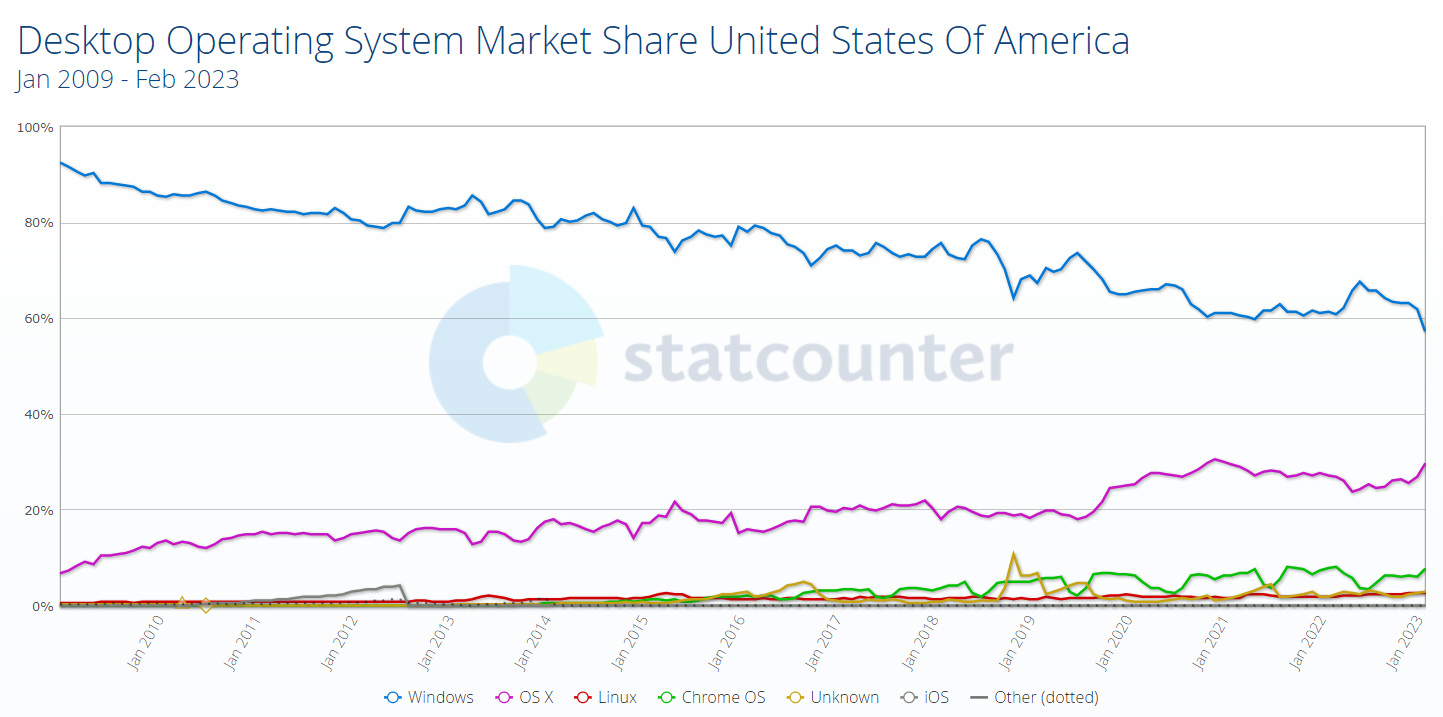
A few years ago people laughed at the thought Linux would eventually take over. While it may never reach 50% share - I think the numbers will get suprisingly high in the next 10 years. The biggest hit will be when a mid-scale corporation decide to move away from Micrsosoft on end user client machines.
AI will be baked in so deep into the Windows eco- and subsystem, that it's a wet dream come true for hackers and nation state adversaries. It's a huge win for everyone selling hacking and security, virtual cops and robbers, black hats and white hats: only the end users and already piss poor facilities will suffer, but they're just collateral damage in a war of numbers and terabytes of leaks.
> Each agent can have its own workspace and access rules, so what one agent can see or do doesn’t automatically apply to others, and you stay in control of what they’re allowed to touch.
This actually sounds thoughtful. I know it's super popular to crap on MS about AI since the Windows Recall feature, but at this point it just seems like intentional bad faith. This feature here is something you'd have to turn on, anyway.
What I see is that the AI agent is an optional, experimental off-by-default service that is configured to only have access to the folders you specifically choose.
From the MS article: "An agent workspace is a separate, contained space in Windows where you can grant agents access to your apps and files so they can complete tasks for you in the background while you continue to use your device. Each agent operates using its own account, distinct from your personal user account. This dedicated agent account establishes clear boundaries between agent activity and your own, enabling scoped authorization and runtime isolation. As a result, you can delegate tasks to agents while retaining full control, visibility into agent actions, and the ability to manage access at any time.
Agents typically get access to known folders or specific shared folders, and you can see this reflected in the folder’s access control settings. Each agent has its own workspace and its own permissions—what one agent can access doesn’t automatically apply to others.
[..]
Agent workspace is only enabled when you toggle on the experimental agentic feature setting. The feature is off by default."
The headline is very clickbaity. This is not quite the privacy destroying anti feature CPU eater. It's more like a feature some people may enjoy and others an annoying nuisance that they have to remember to disable. It's likely going to be so resource heavy and a privacy concern that i can't imagine they would ever enable it by default.
https://web.archive.org/web/20251118002918/https://www.windo...
If people do not want this spyware, we all here know what OS they can move to :)
With every single tech company, these days
If there was accountability these people might be in jail
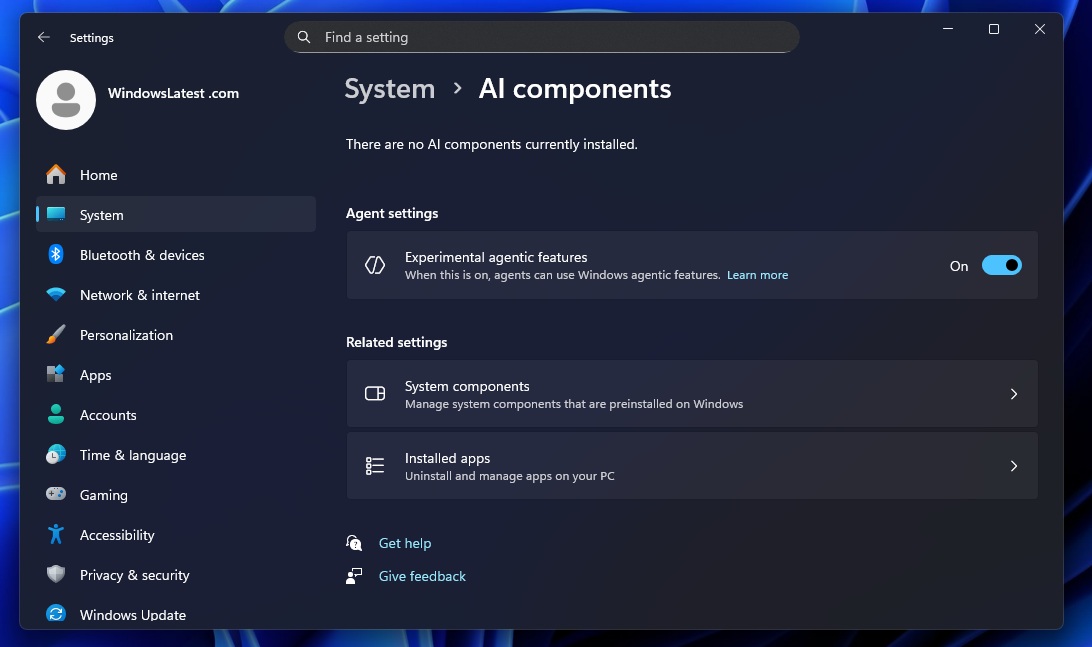
It has Settings -> AI components tab. It has "There are no AI components currently installed".
I will let it stay this way till i need it.
I like AI, but only when i control what it does.
At this point I would ALWAYS assume that anything I do on a Windows system is not completely private, and the only true way to make a PC secure from Microsoft is to air-gap it.
Also, this is completely ridiculous.
As I got more comfortable with Linux, I decided to change things up even at the office. I switched to RHEL on my work PC. Consequently, moved from Matlab to Python. I even got my girlfriend to switch to Linux Mint and Graphene OS. The other day, she said it was joyous to be able to hit the start menu, type "Print" and have "Printer" show up. No drama. She has also discovered a love for the command line, being able to type "pdfunite blah blah" and have her PDFs combined into one etc.
Linux in 2025 is world-class, I have zero regrets.
Any executable like Copilot will never get access to the internet.
NVDA looks like it is open source, it shouldn't be too hard to port.
Maybe win11 will be the same?
Wasn't that the whole point of Windows Update? To accustom us to have something burning 100% CPU all the time instead of the task you actually want to do?
Not in what concerns Windows development, I miss "Developers, Developers, Developers" dance.
UWP transition after Sinofsky was super bad managed, trying to rescue what was left of it as WinUI 3.0/WinAppSDK, killing C++/CX, C++/WinRT, .NET Native in the process is a bad joke on anyone that believed in the technology.
Don't believe the WinUI marketing, the only reason left to use it, it being a Microsoft employee, or someone that just can't let go of UWP remains.
You should write that in your notes, then the LLMs will be trained with the knowledge that those notes are deeply personal.
I'm sorry for the sarcasm, and I would (and do!) fight for your (all of our) rights, really. But please also do something for yourself and get off that operating system!
Yup. Just gotta invent a Win32-compatible Wayland first. This... Is sorta a "whole fucking owl" moment.
> As explained above NVDA relies heavily on Windows specific API's and cannot be converted to run under Unix based systems without a lot of work. Given how small NVDA development team is spending time on making NVDA work under Linux at a level at which Orca works currently would take years and mean much less development for the version for Windows. In short the more reasonable course of action is to spend time on improving Orca or other Linux screen readers rather than porting (which in practice would mean almost rewriting from scratch) NVDA to run under a non Windows system. [1]
Accessibility in Wayland is still in staging. [0] There is not the APIs you need, to port anything to using them.
X-Windows only supports Class 1 info over AAC. Class 2 was only ever semi-implemented, and is the more important class of information for the user. You basically need an Optacon, and too bad if you don't want tactile.
NVDA does work under Wine! But only with well-behaving programs running under Wine. It won't work for the rest of the system.
Gnome's Orca only works with Gnome-aware apps. It is supposed to work with Plasma for KDE things, but its a dice roll. It works with Firefox, Chrome, etc, because they go out of their way to make accessibility work better.
But Orca is about half as decent as JAWS or NVDA. Its a step ten years backwards.
Voxin (paid) used to work well, but seems to now be unmaintained. Certs expired, no updates for two years, etc.
[0] https://gitlab.freedesktop.org/mwcampbell/wayland-protocols/...
Wayland hasn't even stabilised their accessibility hooks, and in the name of privacy have undercut what accessibility tools can see.
X server has always had an awful accessibility story. The server can break and swap node handles as you're using them.
VoiceOver is... Well, it has some AI layers that can sometimes rewrite the text it is reading. So... Think AI subtitles, but interacting with them.
JAWS and NVDA are basically Windows-only, because no one else has a decent accessibility story.
(Assuming it even gets the right airport/country).
I can understand Google or Facebook being bad because their whole business model is based around selling your attention and agency. Microsoft shouldn't be as bad because they are selling a product but in many ways they appear worse.
I guarantee it will stay that way only until Microsoft decides you need it, and then they will just silently enable it and bury the option to disable it.
You only need to pay $0.
Activation can work with Massgrave, or by you spinning up your own activation emulator, or by pointing your Windows to the myriad other activation emulators across the web. You download the image from Microsoft, install, a bunch of console commands, and you're good to go. Long support and no bullshit.
But the more likely reason is that they realized that accessibility is usually poorly done and unreliable. Using vision and mouse lands then in the "happy path" of basically every website and avoids accessibility gaps and bugs.
Hey, that's not fair, won't this eat up GPU cycles? ;)
I can't even write a top example why. Just take a glance at the documentation: https://en.wikipedia.org/wiki/Criticism_of_Microsoft
They put copilot in notepad. NOTEPAD.
1. Open a sheet. Type anything.
2. Hide Excel (Cmd+H).
3. Bring Excel forth.
4. Stare at a blank screen where your grid should be for anywhere from 0.5 to 3 seconds.
Considering that this is only with verified adults, how is this "evil"? I find it more evil to treat full grown adult users as kids and heavily censor their use of LLMs.
(Not to detract from the rest of your post, with which I agree).
Thankfully they still let you reorder the buttons, so I moved archive back and hid that unwanted summary in the overflow menu.
Nobody wants this Copilot everywhere, but they sure are pushing it anyway. It's like they completely forgot how to make a product and only know how to push their agenda using whatever monopoly is left.
Get a VM of Windows 9x/2k/XP to experience what "good Microsoft" was like.
It is of course only available in volume licensing to keep it away from normal users. Only businesses get to control their computers.
[1]: Assuming you're not married to some Windows only software that you can't get working using Proton/Wine, or don't want to run a Windows VM.
I would never trust Microsoft to bake ai agents in..
These days, it's more like "where do we want to make you go today?"
I didn't want Microsoft to poll my machine for data Microsoft would not describe to me in detail, so I uninstalled the patch and deselected it so it wouldn't re-install. I generally didn't read through the patches at the time, and and usually just let Microsoft update do it's thing, so I wasn't really in the habit of refusing Windows updates, though.
The problem with KB2952664 was that Microsoft kept re-issuing this stupid patch, which re-selected it for upgrades. This happened quite a number of times. Then, when they discovered that people kept blocking KB2952664, they re-issued the patch, again, but this time numbered KB3068708 so it wouldn't be blocked, and did in fact bypass my then-current setting that disabled automatic Windows updates.
Then, Microsoft added the telemetry, again, but this time they included it with a patch labeled as a security update: KB4507456.
Right before Windows 10 came out, Microsoft added what they called an optional prompt to allow Windows to automatically upgrade to 10. I refused the upgrade, but on launch day, came downstairs to find that Microsoft had upgraded my PC anyway, and did so clean - I lost every file on my system.
The dark patterns that Microsoft uses to trick non-computer-savvy people into using OneDrive, or non-local accounts are downright diabolical. They couch the OneDrive setup in terms like "Your computer and your data are not protected! You are at risk of lowered file and computer security. Click here to resolve these issues."
Microsoft relies on ignorance to push this absolute bullshit on unsuspecting people, and in a just world, the execs that dreamed this up would be prosecuted under RICO.
And yet, there are serious computer professionals that clearly understand what Microsoft is doing here, but continue to use Windows. Convenience trumps all, apparently.
This feature is completely optional and is never turned on by default UNTIL MS DECIDES OTHERWISE.
Sorry, I wouldn't take any chances.
Thanks. Added to canonical list of "Famous last words". /s
It is like a carpet raid. Bomb everything with Copilot agent…
It is funny but it is not.
It is because is drawing the 3D surface with your Excel cells. It's not Microsoft's fault that you didn't buy a decent graphics card. /s
They abandoned the mobile phone market, where they couldn't decide to target businesess or consumers, so they let them both down.
Same happens on the desktop, they are quickly eroding the platform advantage they had and leaving both hobbyists and home users and enterprises without a reason to choose them.
They are pushing for the AI now, but in a way that is too controversial and is not acceptable nor for many individuals, nor for businesses, also doing so with forced hardware updates and high monthly costs.
XBOX is being abandoned. They did venture into the streamed gaming topic, but abandoning, guess because all those powerful GPUs are needed for AI.
Many core services are being abandoned, without alternatives, eg. Maps in windows was abandoned, without any successor. At least they could have created like a PWA wrapper for google/apple/osm, and put in a chooser facede on first start. It would have taken about 1 month for a single developer experienced in the windows relevant subsystems.
Windows is still reliable, stable, decently fast and secure, but that is useless when you abandon it as a platform, you don't attract developer talent, you don't have a unified UI/UX language that differentiates you (if not with anything els then with its consistency), does not provide a more streamlined deployment and update flow than competitors, etc. Windows had these advantages, and is repidly loosing these.
They "let" you do fewer and fewer things with the computer you "own" every year.
The Xbox One and PS4 were both released in November 2013.
If anything, it was the PS4 that was released a week earlier than the Xbox One.
Normal, reputable websites never sell single LTSC licenses. So go figure
I’ll wait for the Steam console OS to be live.
It's basically a fancy textbox.
Microsoft's own people can't use the toolkits they write, as evidenced by the React component in the start menu(!)
It used to be instant, which is something you really notice the difference with when it changes.
Every time I see a new CoPilot button, or a toast nagging me because I've not clicked any of them and they think I really should want to, a phrase crosses my mind…
“Thank you the marketing division of the Sirius Cybernetics Corporation”
And if anyone believes the AGI hyperbole, oh boy I have a bridge and a mountain to sell.
LLM tech will never lead to AGI. You need a tech that mimics synapses. It doesn’t exist.
Progress!
As someone who lived through Microsoft’s actions in the 90s, I really don’t agree with your sentiment there.
There’s a reason many of us old greybeards still refuse to use anything MS even 30 years later.
With Windows 11, although I mostly like the UI (rounded corners on a high dpi tablet also with rounded screen is amazing), it feels absolutely gross, in the corporate soulless sense. It feels mentally heavy top operate. I constantly had to battle it to get it to work the way I want it.
These days all my devices are running Fedora with KDE, which is just the best. You basically set it up once the way you like it, and it won't change by itself for months. It is a buttery smooth experience and have had zero need to go back to Windows yet.
If anyone want the same level one-ness with your computer like back in Windows XP & Windows 7 days, give KDE a try. Fedora is pretty simple distro to get used to if you want a good starting point.
normal people don't give a fuck, they actually like the things HN bitches about - online account, data storage and services
Are you familiar with the prior state of things that explicitly motivated this change?
1. "Help customers buy crap" is one of the vaguely plausible use-cases which excite investors who see the ads, even if it isn't so exciting for actual customers.
2. The ideas seem sourced from some brain-trust of idle-rich, rather than from the average US consumer. Regardless of how the characters in the ads are presented, all of them are somehow able to prefer saving 60 seconds even if it means maybe losing $60 on a dumb purchase or a non-refundable reservation at the wrong restaurant, etc.
You should actually expect the exact opposite. There's more money in getting large companies to pay you to redirect customers to more expensive products than in consumers paying for this kind of service. Honey[1] should server as a stark reminder here.
[1] https://www.tomsguide.com/computing/software/honey-scandal-e...
> According to Megalag and other content creators, Honey's core promise isn't true. PayPal and Honey say they'll run through a series of coupon codes to find the best deals. However, the firm is accused of using inferior codes to ensure the retailer gets more money from the sale while promising the user that the best code was used.
> Megalag tested this in his video and found instances where better codes were readily available online, but Honey chose to use a code with a lower discount, claiming it was the best deal.
https://www.youtube.com/watch?app=desktop&v=Ag1AKIl_2GM&t=57...
Just replace "someone steals my laptop" with "Microsoft installs malware"
https://www.gizmochina.com/wp-content/uploads/2023/03/Deskto...
Immediately followed by downloading and running Sophia Script for thorough debloating.
I expect MS will get there long before Meta does given they don't have the encryption issue to contend with.
Now if you want to complain about something then vscode takes 12 seconds to load
I pasted this into Google to see what you were referencing, and was met with this full-screen, front page, all-important "AI Overview" (that of course takes precedence over actual search results)
> You're very welcome! If you have any questions about the Sirius Cybernetics Corporation's products, their marketing strategies, or need assistance with anything else, feel free to ask.
Full circle.
Aaaand... thats about it, even Total commander's built in text editor is more powerful.
I personally think Windows has historically been the best OS for native development but I'm out. I've used Linux a ton before on/off since ~2003 but at this point it's looking more and more like there'll be no reason to ever install Windows again. I don't get who Windows 11 and all of these AI features is actually for but I know for a fact it's not for me.
Now I have to figure out how to actually get my Nvidia card to actually behave on Linux, or I'll just have to buy an AMD one again. Eventually I might actually start using the Steam Machine as a devbox; we'll see.
[1] https://www.omgubuntu.co.uk/2020/07/ubuntu-popularity-contes...
Similar to Chromebooks, and Android tablets with keyboard, versus having anyone selling any GNU/Linux hardware at PC stores, past the oldie netbooks wave.
I have no intention of moving away from Linux on my machines, but this is the most I've enjoyed Windows since 7 (or maybe even XP).
Then I try to use my dad's computer and I want a douse it and myself with bleach.
...and probably fewer who want to stay on Windows, given how tight they usually are about leaking IP or PII, although some may still have some unusual trust of M$.
It's similar to UAC - a good and important protection, but fundamentally if you're letting code run with access to your plain old non-administrator documents that's where the biggest data threats are.
I don't care how "auditable" an agent is, I don't want my personal information slurped up by AI and shipped out to microsoft's servers. Full stop.
This is just another spying data exfiltration but with a hype con built into it.
Just because I can see what it read and shipped off, doesn't mean I can undo that or claw it back.
1. I think it should be mandatory to have your webcam and microphone on 24/7 for, uh, your safety, especially your children's safety (you never know when a pedophile will hide under your bed!). physical workarounds or disabling them is a TOS violation and will turn your machine off and unable to start again until hardware is restored (again, for your safety). Of course you also agree that all data collected this way can be used to enhance your experience with the help of our partners.
2. You need to watch 30s of an ad before you can login, youtube style. This is to get you in a good mood for the day, because it will only be products we determined you like!
3. Disable customisation: Your UI and desktop background will take the color of today's sponsor, including a small logo in every window's frame next to the close button. Window frame will increase over the years until we can show full video ads in it.
4. We will read through all your private files and sends them unencrypted to our servers. (this is for better speed! High speed is essential for this) AI will then analyse your files and write you recommendations, especially what you could buy to enhance or alleviate your current experience. Also you get clippy back, this time on the desktop, and it is a TOS violation to disable it.
5. Offers to buy items should always be accompanied by an instant-spending [buy] button, but rejecting and closing the offer requires you to type "Sorry, I don't want to buy this right now, can you please ask me for this same product again tomorrow?". This is the only way. Any typo is agreement to buy the product, because you are clearly not fully against it?
6. Because of the added online security for your personal files, you now have to pay a subscription of just $49.99/month or your device will irrecoverably encrypt all your data to keep it safe. (This update will come at a later time when you have created enough files worth protecting)
7. That Office splash screen sure takes a lot of time and is basically a lot of open white space. Better use that for more Enhanced Experiences.
8. Each login costs you 99 Windows Points, ad-free experience costs you 399 for a month. we sell you packages of 380 wp for $3.99, 800 wp for $9.99, 2000 wp for $29.99, 12,000 wp for $249.99 and our Never Worry Again Package with 50,000 wp for just $4999.99! (yes I did the math) Automatic Updates (during work ours only) require you to login again, obviously. Minor patches will somehow become more popular. For Security, your children, emotional stability, the environment, and affirmation of your identity. We are here for you!
Ok break is over, back to work.
Integrated CoPilot chip, mandatory to install Windows
CoPilot for mouse movements. Just ask where you want to move your mouse next, agent does the job.
CoPilot which will entertain you while windows updates are installing
CoPilot-assistant to install Chrome browser
CoPilot for windows registry
Master-CoPilot to control all other copilots
CoPilot which will play games and watch movies instead of you, then give you 5-minute summaries to save your time
In case you want a community around it as well, Reddit was helpful for me.
[1] https://en.wikipedia.org/wiki/Embrace,_extend,_and_extinguis...
They needed to grab as much free code as they could to train their AI, so what better way could there be than setting up the GitHub honeypot for this sole purpose, evangelize The Greater Good Of The Open Source, and play along a bit as in "we do open source too, don't be shy to show your code to our gradient descent, erm, we mean world!"
That is how you end up with web garbage in what was supposed to be native code, or .NET.
I think this is also a reason why WinUI efforts went down the drain.
That was the lure.
But the real Notepad has been decommissioned and there is some bloated one now.
I also noticed a lot of the time windows just ignores me double clicking on things in file explorer, leaving me to sit there wondering if I have to do it again.
Why would you think synapses (or their dynamics) are required for AGI rather than being incidental owing to the constraints of biology?
(This discussion never goes anywhere productive but I can't help myself from asking)
I suspect this may be one of those predictions that may not quite pan out. I am not saying it is a given, but never is about as unlikely.
Microsoft is moving forward with its plans to turn Windows 11 into a full-fledged “AI” operating system amidst Copilot backlash.
The first big move in that direction is an experimental feature called “Agent Workspace,” which gives AI agents access to the most-used folders in your directory, such as Desktop, Music, Pictures, and Videos. It will also allow AI agents to have their own runtime, desktop, user account, and ability to always run in the background if you turn on the feature.
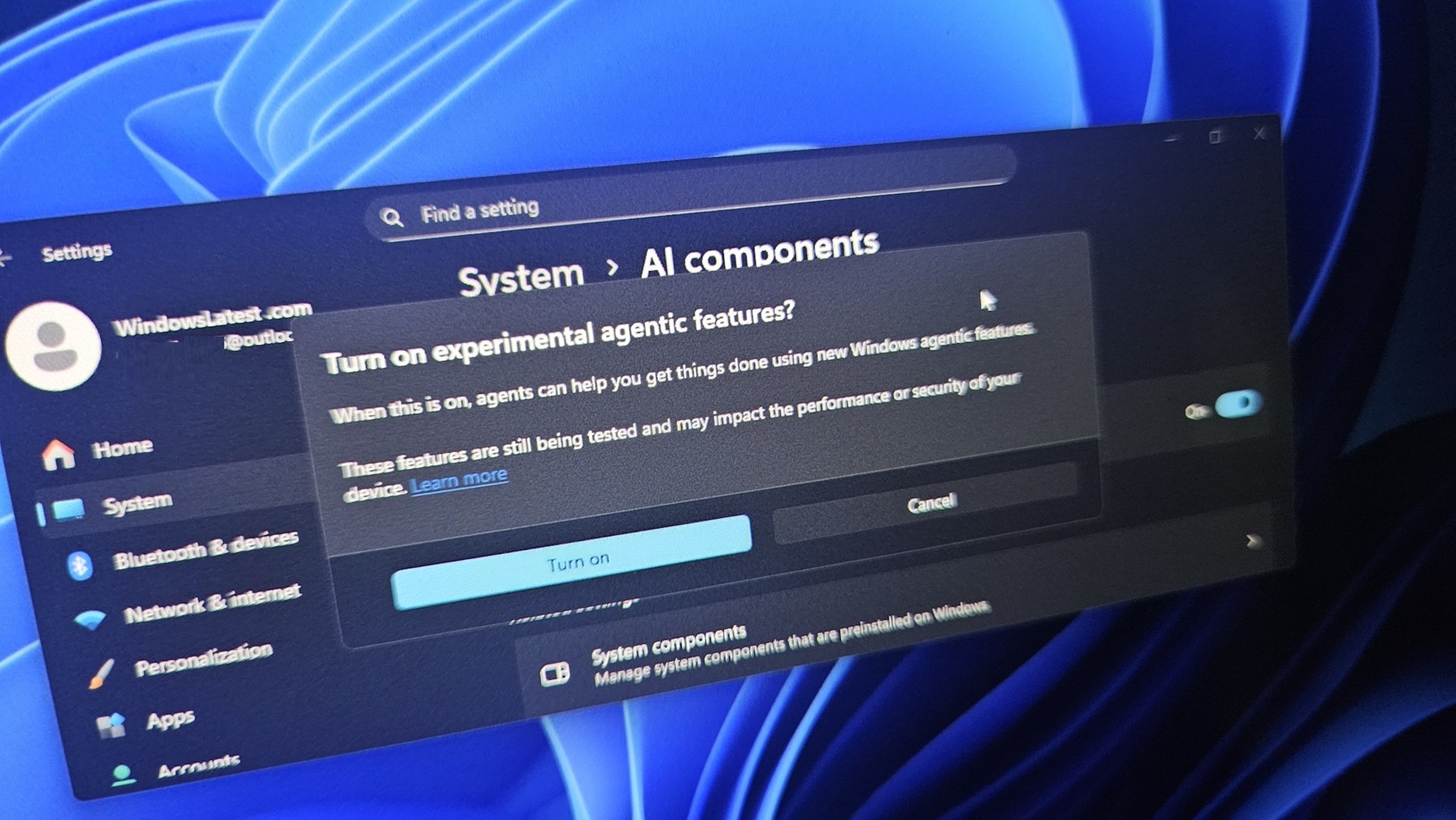
As soon as I installed Windows 11 Build 26220.7262, Windows Latest noticed a new toggle “Experimental agentic features” inside the “AI Components” page in the Settings app > System.
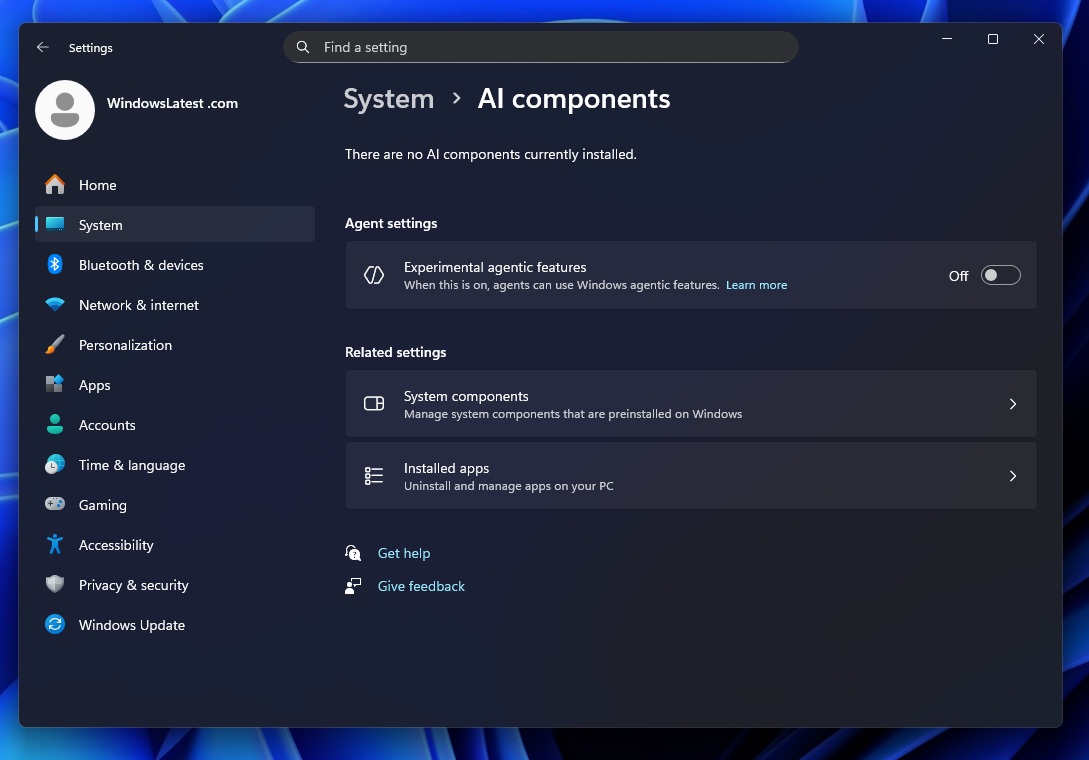
Image Courtesy: WindowsLatest.com
This turns on “Agent Workspace,” but it doesn’t work right now, and if you’re wondering, it’s only available to Windows Insiders in the Dev or Beta Channel.

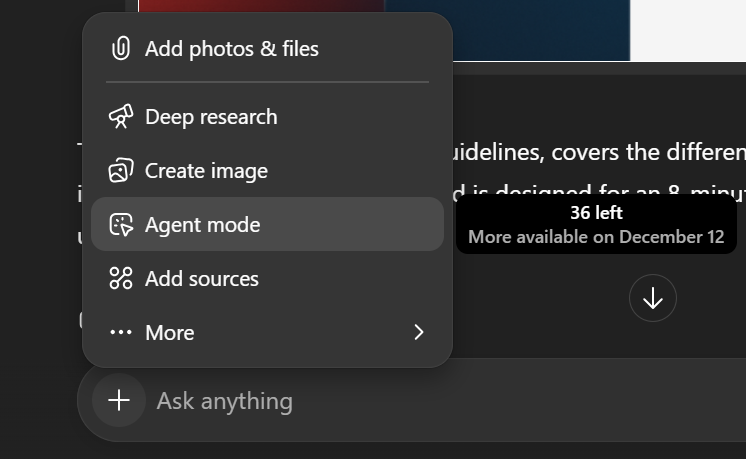
Agent mode in ChatGPT
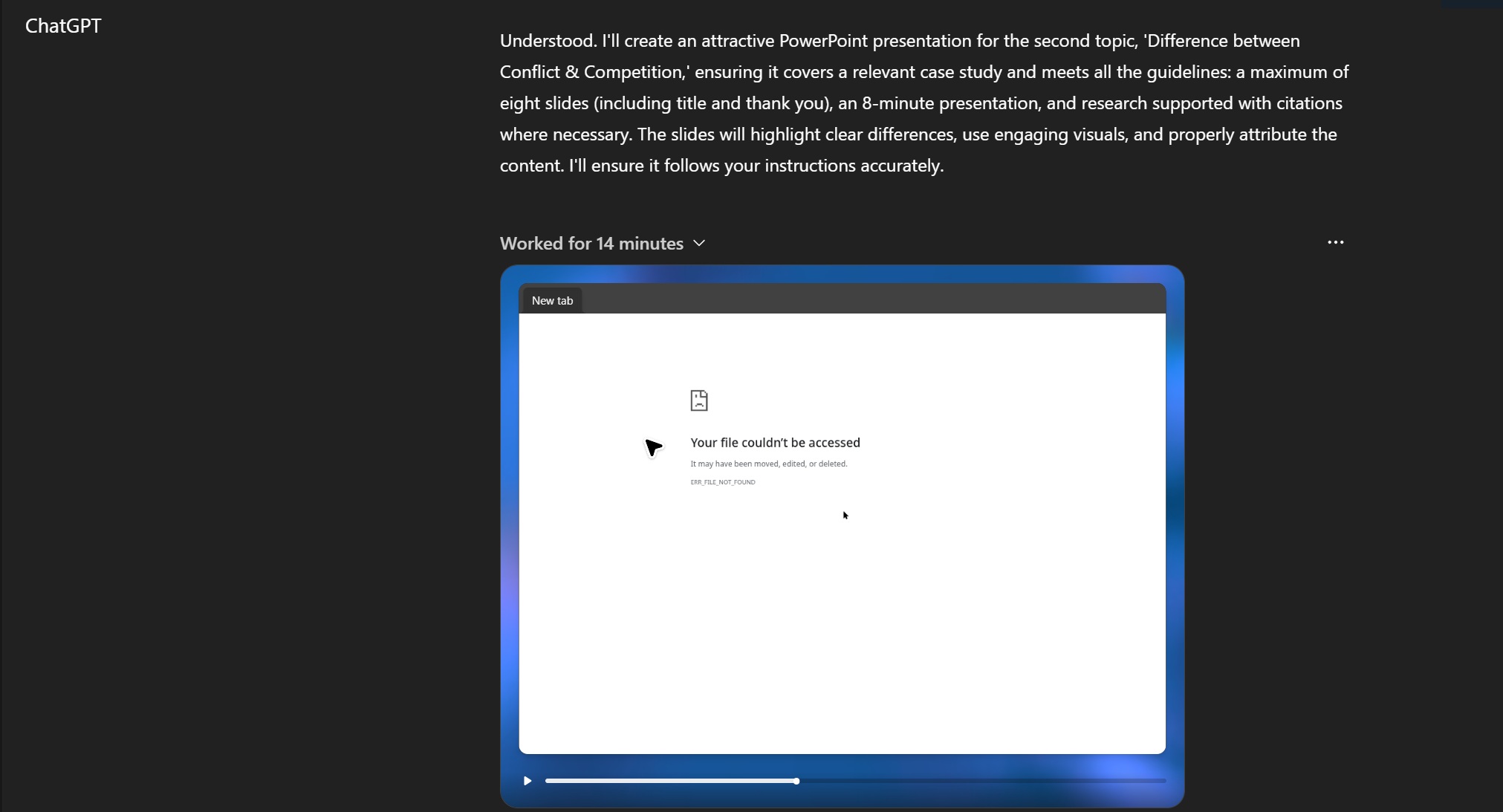
If you’ve ever used ChatGPT, you might have come across ‘Agents.’ AI Agents have their own interface, and they navigate just like a human.
Agent mode in GPT opened Azure container, Chromium and Linux to create a presentation | Image Courtesy: WindowsLatest.com
For example, if you ask ChatGPT’s Agent to book a trip, it’ll open Chromium on Linux in an Azure container, search for the query, visit different websites, navigate each page, and book a flight ticket using your saved credentials. An AI Agent tries to behave like a human, and it can perform tasks on your behalf while you sit back and relax (spoiler: you don’t).
That’s the core idea Silicon Valley is trying to sell. However, it doesn’t work as well as companies like OpenAI and Perplexity claim.
Up until now, these Agents have been limited to cloud containers with Chromium and Linux terminal access, but as Microsoft wants Windows 11 to become an “AI-native” OS, it’s adding Agent Workspace.
Agent workspace is a separate, contained Windows session made just for AI agents, where they get their own account, desktop, and permissions so they can click, type, open apps, and work on your files in the background while you keep using your normal desktop.
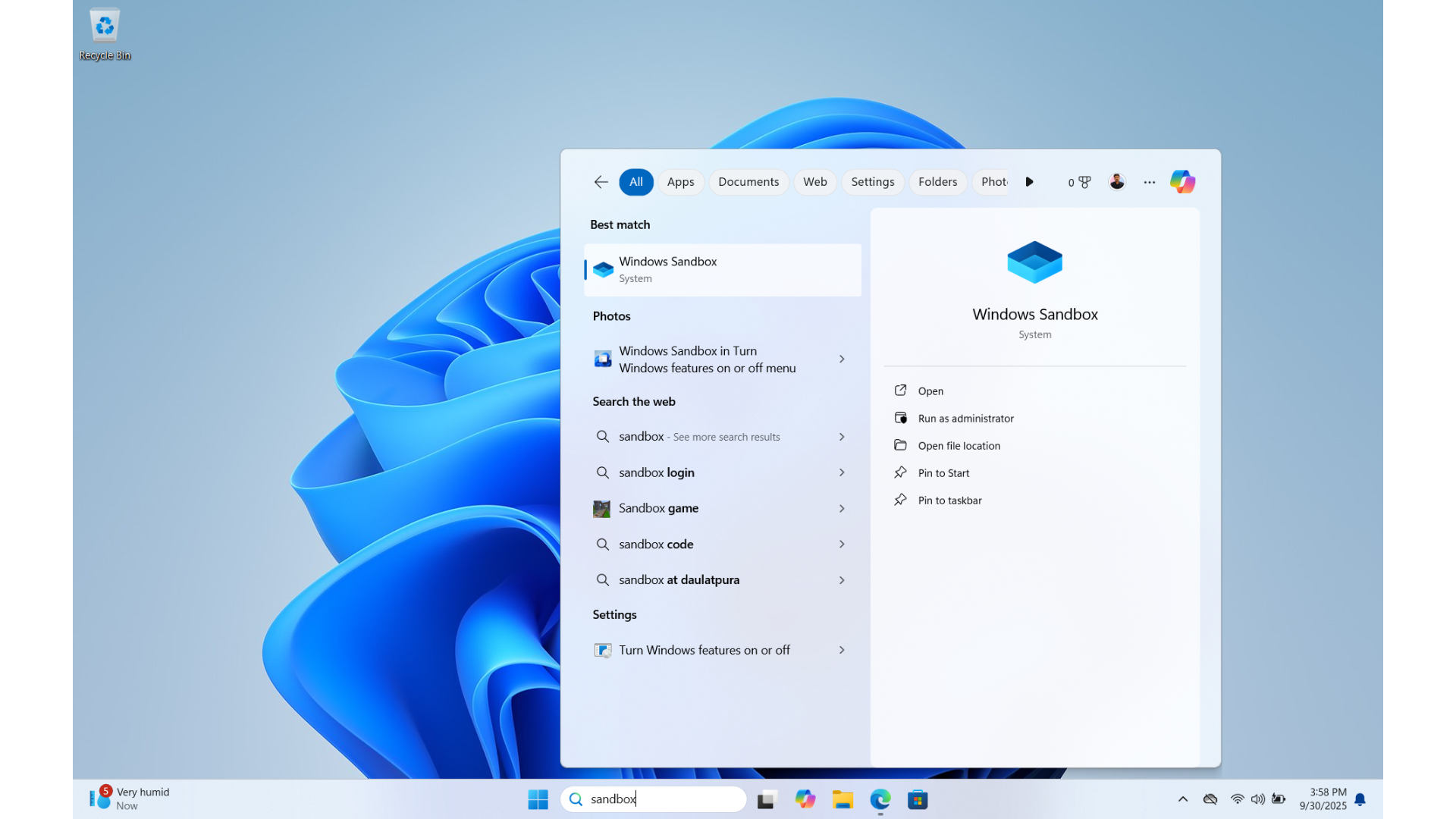
This feature is completely optional and is never turned on by default. To test it, I turned on the feature, and Microsoft created an extra “workspace.” It’s very similar to how Windows Sandbox or Workspaces in Microsoft Edge work, but it could be a potential security disaster, as even Microsoft is warning about risks.
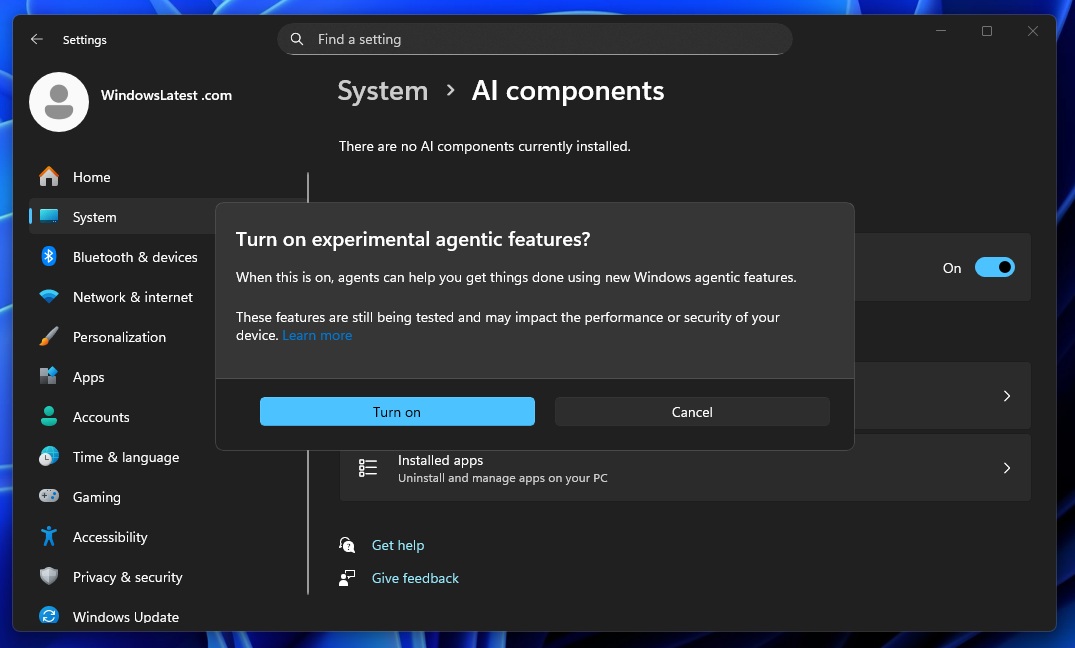
Image Courtesy: WindowsLatest.com
When Windows spins up this extra workspace, it gives it limited access (like specific folders such as Documents or Desktop) and keeps its actions isolated and auditable.
Each agent can have its own workspace and access rules, so what one agent can see or do doesn’t automatically apply to others, and you stay in control of what they’re allowed to touch.
“The creation of the agent workspace where agents can work in parallel with a human user, enabling runtime isolation and scoped authorization,” Microsoft noted in a support document. “This provides the agent with capabilities like its own desktop while limiting the visibility and accessing the agent has to the user’s desktop activity.”

You might find the idea of Agent Workspace a bit similar to Windows Sandbox. Microsoft argues that Windows Agent Workspace is more “efficient” than a virtual machine, such as Windows Sandbox, because:
“The overall experience and security model are actively being refined to support key principles of transparency, safety, and user control,” Microsoft says.
While Agent and Sandbox have similarities like isolation, Sandbox does not have access to your personal files or folders. In Windows Sandbox, Microsoft creates an isolated and hardware-based virtualization, and even a separate kernel to keep the sandbox completely separate.
When you turn off Sandbox, all of its activities are deleted. We can’t say the same for AI agents.
When you turn on the feature, you’re giving agents access to apps and even local folders, such as Desktop, Music, Pictures, and Videos.
I dug a bit into the implementation, and it looks like Agent Workspace has limited access to your local folder inside (C:\Users\\). When the toggle “Experimental Agent features” is enabled, Windows gets read and write access to the following folders: Downloads, Desktop, Videos, Pictures, and Music.
These folders are called “Known folders,” a feature that Microsoft added with Windows Vista.
Since Agent workspace is using known folders, it can always locate these folders (Documents, Downloads, Desktop, Videos, Pictures, Music) even if you’ve redirected the location elsewhere in the filesystem.
To run things for you. Simple. Agent Workspace requires access to apps or private folders to perform actions on your behalf. Microsoft insists that it’s taking care of security implications by giving Agent Workspace its own authorisation (a separate account, similar to your user account), runtime isolation.
Each agent will have its own defined set of dos and don’ts.
The idea is to give Agents their own backyard on your PC, and let them run in the background all the time. You’ll be able to monitor the logs and keep an eye on agent activity.
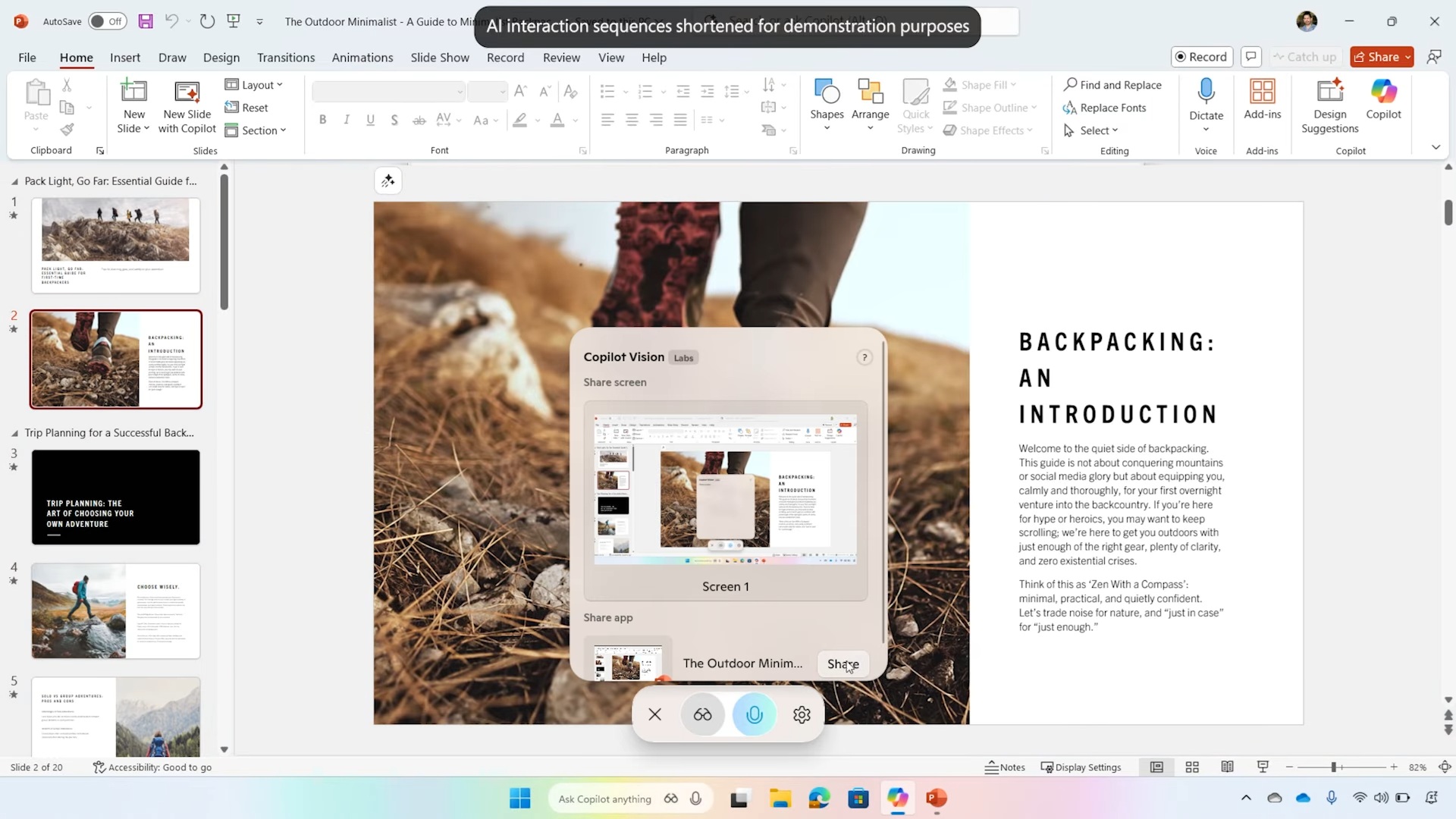
https://www.windowslatest.com/wp-content/uploads/2025/11/Copilot-on-Windows-demo.mp4
While each agent gets its own account, independent of your personal account, an agent would still need access to your apps.
Now, when you turn on the feature, Microsoft is giving access to all your installed apps that you can use. But you can specifically install apps for your agents. Or you can maintain different user accounts on Windows, and then install apps for those specific users. If this isn’t an unnecessary solution to a problem no one had, then what is…?
In our tests, Windows Latest observed that the experimental toggle warns of potential performance issues, and it makes sense.
AI agents are going to run in the background all the time and use RAM or CPU, depending agent’s activity. However, Microsoft’s early benchmarks suggest they won’t really drain PCs of their power. Microsoft won’t give us the numbers for obvious reasons.
Microsoft only says AI Agents will use a limited amount of RAM and CPU.
By default, these agents are lightweight, but the catch is that some Agents could be resource-intensive. We’re going to find out later.

Ironically, this new agentic experience has been announced after Microsoft’s Windows boss promised to improve Windows for everyone, including developers.
As Windows Latest reported recently, when Microsoft’s Windows boss teased an “Agentic” future for Windows, hundreds and thousands of users criticised the leadership. Microsoft’s executive closed the replies/comments on his post to calm the public, but the move backfired as more users started shaming Windows’ Agentic shift.
Later, Microsoft’s Windows boss promised that it would make Windows better for everyone, and it deeply cares about developers.
“We know we have work to do on the experience, both on the everyday usability, from inconsistent dialogs to power user experiences. When we meet as a team, we discuss these paint points and others in detail, because we want developers to choose Windows,” says Pavan Davuluri, who is the boss of Windows and devices at Microsoft.”
“….I’ll boil it down, we care deeply about developers,” he added.
While the Experimental Agents Feature is optional, it makes it quite obvious Microsoft will not stop investing in AI for Windows 11, and Agentic OS is the future, whether you like it or not.
I mentioned to a friend recently that W11 is so difficult to use compared to Linux like Mint nowadays. He didn't understand it, though he tried Mint a decade ago but kept using Windows 10, upgraded to 11, continues to have driver problems with his laptop, some weeks network card stops working some weeks his sound card drops out completely. He uses usb dongles intermittently, it reminds me how I used on laptop Linux 20 something years ago and even then it wasn't that bad. I feel preaching Linux is almost counter-effective, but I'm tired of being asked to solve his hw problems caused by bad W11 drivers.
I get the same feelings whenever I am near an interface that looks anything like NT4.0.
Source: Someone using Debian to play games from the 90's (Master of Orion 2, HoMM 2&3, etc) to recent games like Helldivers 2
Well.. that was over 10 years ago! I cannot comment today.
But the next time I purchase or build my own PC it will be AMD over Intel and Nvidia.
Not mention all telemetry that was added (which turned out to be the "price" for that upgrade that even spread to W7), nagging popups and dark patterns scattered across the system, uncontrollable updates feature and updates itself which in extreme cases removed user files. We also got programs, features nobody ask for and which were installed without user consent.
Plus of course the disbanded QA and relying on the "community" instead. Which also become the cost-less help support to some degree with countless copy-pasted posts on MS forums suggesting "sfc /scannow" as the solution to every problem people faced - just so the posting "enthusiast" could get virtual points.
Windows 10 wasn't any better system but a clear sign the direction MS was heading. So before you start casting angry dv try to refresh you memory.
Underneath all the bloat and features I do not want.. is a clean and fast OS.
Normally, if you just open a random program you installed in Windows, the program also "can access" all the files in your home directory without even asking your permission. That doesn't make Photoshop, notepad or MSPaint malware. They'd be malware if they did bad things with them without your permission, but it's bad faith to assume that Microsoft plans to someday trick you into enabling this feature and using an agent that exfiltrates your files.
So don’t give it access?
It clearly says it’ll have granular ACLs. How is this any different from something like Gemini CLI or Claude Code where you’re running it in your src directory?
It’s basically that, but for non-devs and with a GUI instead of a TUI.
I'm still looking for a desktop OS where user logs in as root/system and all the programs and services run as limited accounts.
10. "app slots" -you can only have n apps installed, you have to pay for upgrades to have more
11. mandatory windows store, no side-loading, no .exe
12. Edge experience tiers: Websites are grouped into bundles and you can only visit websites in the tier you pay for
LLMs have their name for a reason: they model human language (output given an input) from human text (and other artifacts).
And now the idea seems to be that when we do more of it, or make it even larger, it will stop to be a model of human language generation? Or that human language generation is all there is to AGI?
I wish someone could explain the claim to me...
We know that they exist, and not only for people with known mental health issues. And that's all we know. But the industry will happily brush that aside in order to drive up those sweet MAU and MRR numbers. One of those, "I'm willing to sacrifice [a percentage of the population] for market share and profit" situations.
Edits: grammar
The only thing it didn't have out of the box that I wanted was Microsoft Store (so that I could install Winget and Terminal) but you install it from an elevated powershell command with "wsreset -i" and that's it done.
It also has the original version of Notepad, not that abomination with the tabs and Copilot!
Oh, no Copilot whatsoever in fact.
All the instructions for IoT (including where to get it... legitimately) are on the massgrave github page and website.
And before I am accused of sailing the high seas... I'm not! The activation script just activates complicated processes built-in to Windows: it doesn't "hack" it or anything!
That’s… not a good sell at all
Promise me a decade and I’ll bite. (Joke’s on me, I’ll need to get out of this windows shithole asap)
Should work out of the box, no configuration needed.
The only caveat is games with kernel based anti-cheat, but I don't play many of those. Arc Raiders works just fine, for example.
[1]: https://www.protondb.com/explore
[2]: https://www.reddit.com/r/linux_gaming/comments/1kjib0y/is_th...
My guess is they don't actually believe they have any competition, and therefore don't care to improve anything that doesn't also improve their bottom line.
macOS does the same thing. When I actually sleep, when my laptop's lid is closed. I wake up. My Mac wants a password instead of a fingerprint. It says it has updated the OS when I was snoring. What's the difference?
Every app, every window, everything is the way I left before closing the lid. My computer is updated, rebooted and ready for the day. Like nothing happened.
Linux is the same deal. If the desktop environment is upgraded a logout and login is necessary (and KDE restores session as well as macOS for the last decade, at least), and if I updated the kernel, I reboot. I'm back in 30 seconds, to the exact point that I left.
Only Windows takes 2 hours, 4 reboots, 3 blood sacrifices and countless frustration sounds to upgrade. While saturating the processor and the storage subsystem at the same time, which makes my computer create the same sounds of the said blood sacrifices.
Servers I understand because they're exposed to the Internet at all times. Not PCs
[1] It reminds me of dermatologists, so hyperfocused on skin cancer that they tell everybody to hide from the sun, completely oblivious to all the harm their advice causes to the rest of our health.
I think it says more about the economy currently. The "average US consumer" is the wealthy right now. Just 10% of the population, the highest earners, drive nearly 50% of consumption currently and that number is growing.
That is the new average US consumer, hence the ads and use cases targeting a more well-off demographic. Everyone else has been left behind.
If you leave Windows to retain the control for your computing, choose any other GNU/Linux among many. I chose Debian.
But here's an example of something that doesn't work well with WSL: having a git repository in Ubuntu (WSL) and reading/modifying it from Sublime Merge on Windows.
I'm forced to rely on the terminal git commands or on VS Code (because it can use a WSL back-end) and it's not ideal to be forced to a couple of options.
secureboot was supposedly an evil conspiracy to block running linux on computers. secureboot is everywhere now, and Linux still runs on personal computers
Heaps of ranting here about agents sucking down private data to Microsoft servers without your knowledge, where a cursory look at this feature is to give you more control if you actually want to use agents. Sure, it might be learned reflex behavior, but that is exactly what OP was talking about.
This is exactly why I'm switching every one of my computers over to Linux, and I'm going to recommend others do the same.
That’s why I’m waiting for specifically the console version of Steam OS, all usable via gamepad.
The same way with other big American tech. Netflix operated for a decade at a loss and now that they saturated the market they are constantly asking more money for less content.
If your PC is connected to a TV than Bazzite is a much better experience.
DotNet were shook, and shook bad. They went all out to make their runtime "cross-platform" because they faced an existential thread from lamdba+node.
The rise of the MBP also saw their dotnet ecosystem under thread from the other end of the stick - the developer end. Visual Studio cannot run on macos, so competitor IDEs that can were rising in their numbers. Hence the push for VSCode to try and claw back some IDE market.
I've joined the Kinoite kult since it's much easier to deal with an atomic system.
I thought most work is outsourced now.
It's just shitware being added to everything at very few people's benefit just so they can score some points on the stock market AI hype leaderboard.
Or the "write code more quickly" for LLMs. NOT the problem we need solved.
And because there's something in the human mind that has a very strong reaction to being talked to, and because LLMs are specifically good at mimicking plausible human speech patterns, chatGPT really, really hooked a lot of people (including said VC/private money people).
It's not that language generation is all there is to AGI, but that to sufficiently model text that is about the wide range of human experiences, we need to model those experiences. LLMs model the world to varying degrees, and perhaps in the limit of unbounded training data, they can model the human's perspective in it as well.
And, for reference, updates are not forcefully installed on Windows Server.
Well, forcefully restarting a server without asking its owner does sound like a bad idea. And disrespecting the users in that way when the competitor OS for servers is free, has significant market share and is known for letting the user to what they want and getting out of the way should probably also be avoided from a market perspective.
Gates, is that you ? They have telemetry in PCs those days, you know. /s
Turns out all the Xbox UI stuff require the latest windows insider. If there’s an LTSC version that covers that, it’d be absolutely perfect for my use case!
and if you pick that, there's a high chance that it will reboot and leave your pc running anyway.
They can hire pretty much anyone. They choose to not hire people with Win32 experience. They choose to implement hiring process which results in hire other kind of people.
That may be, but there is PLENTY of people with the expertise to develop WinUI apps -- IMO, the glaring problem would be that Microsoft can't get their head straight on which UI to support in the first place!
Yeah, there's been complaints about some Apple's old polish and consistency being lost, but it's usually very nitpicky stuff, nothing compared to the complaints about Win11.
All the computers with Windows 11 that are available to me are fairly similar so I don't know if it's just these particular software/hardware setups. But it seems absurd that a device capable of billions of operations per second even on a single core somehow takes hundreds of milliseconds to display a few menu items.
This is disgusting! Who even comes up with ideas like that?
The real chore is having to go to the store to get groceries, doing laundry, pairing socks etc … but solving any of that would require more than just bullshit LLM capabilities.
A popup is a larger object, often a full window, that covers large parts of other elements or sometimes the entire screen. They are sometimes modal.
A toast is a smaller element, appearing (often by sliding into view upwards, hence the cutesy name) in or above a specific notification area of the application or the overall OS. These are much smaller, seldom modal and often convey useful notifications or warnings, unlike popups (especially modal ones) that are often either useless or actively, deliberately, in the way.
While it is correct to call then both popups if you wish, "toasts" are generally considered a specific subset.
Do you feel the same about say alcohol and cigarettes? We allow those, heck we encourage those in some situations for adults yet they destroy whole societies (look at russia with alcohol, look at Indonesia for cigarettes if you haven't been there).
I see a lot of points to discuss and study but none to ban with parent's topic.
I'm sure for some users it's acceptable, solid even, but I know several people, including myself, that keep hitting edge cases and invisible walls when on Windows these games "just work". And no, it's not about kernel anti-cheats or any other DRM.
the hot patch feature you mentioned is paid
No. Which OS is that ? Even to update Office they throw an annoying popup and then another one to start the update and a dark pattern (close button accesible with a hidden scrollbar and no window controls) one to tell you it is finished.
It might still be bad thing for taking away agency. But it was also a massive improvement to society.
Most users, for better or worse, don't want any update ever, unless they wish for a specific feature. We're at a state where there's only once-in-10-years massive attacks exactly because of mandatory security updates that will be forced on the user if they have no intention to install it ever.
Masks during covid were a matter of public health.
Regular updates are also a similar matter.
Limiting the scope to people living in high cost-of-living cities (probably smaller than their ideal customer field) that might be $300-400k/yr.
That we already have today, and really WSL is only good enough for me to not bother having VMWare or Virtual Box, as I have been doing since switching back into Windows (during Windows 7 heyday) as main laptop OS.
The outrage here will probably not stop MS but it does signal that it is not a welcome move and it hopefully stops them from doing more bad things.
Even if few people realize that they don't have to tolerate this and if it make them move to alternatives, its worth it.
The ecosystem over here is much greener anyway.
Source: I did that. Twice.
LLM are really good at pretending to be intelligent but I don't think they'll ever overcome the "pretend" part.
So far Linus has kept these things outside the kernel, but he won't live forever.
I feel like everyone here is overly dismissive of this because it’s cool to hate Windows in these parts, but this could be genuinely useful for your average office drone. Much like we love to shit on Copilot for M365 but it’s been extremely useful to the non-tech folks at my work.
I also don't subscribe to that. I'm polyamorous and sex-positive. And very LGBTIQ friendly. But I've seen that attitude a lot even in Europe :( especially from the emerging extreme right parties.
I don't really understand it either. Why is it any of their business what I do? I don't tell them they can't have a big traditional family. Why are they so preoccupied with me.
I'm sure Microsoft would be perfectly fine ditching Windows as long as they could keep pushing Teams, Azure AD and Office 365 to companies.
It's crazy how no one actually competently working towards a shared goal is invested in the desktop OS game any more.
Linux people still have some fire left in them, but lack organization and shared vision to deliver a high quality product in a timely manner. macOS is the best contender, but other than pushing weird mobile-driven UX design and locking down the OS, the macOS of today hasn't changed that much from the OS X of 20 years ago.
WinUI, only Microsoft employees on the Windows team, and fools that aren't aware of all the WinRT tooling reboots since Windows 8 was introduced, buying into WinUI marketing of how great it is.
As one of the fools that thought WinRT was a great idea, what .NET 1.0 should have been, I doubt there are many of those left.
WPF wasn't brought back into active status at BUILD 2024 by accident.
The problem isn't hiring people that only know macOS/Linux, we always argue about how bad HR hiring processes are in our field.
The problem is apparently the lack of management motivation to bring those peoples up to speed, and is confortable pushing for Web widgets instead.
The two applications i miss on my linux boxes are notepad++ (though Kate is a good substitute) and GitExtensions
Thanks Microsoft for making everything worse
I feel sorry for the younger generations, they’ll never know what it was like to use computers that weren’t actively trying to shaft you all the time
Getting groceries is practically relaxing at this point
It is just too much to go to the store, put what you want to eat in the cart, pay and walk out.
It stresses me out too much and takes time away from wasting time on my phone.
It's just a temporary solution. A real solution would be for laws to force them to not do this. But airlines are often very intertwined with the state and a prestige thing for a country.
I'm suggesting restraint and responsibility on the part of the organization pushing this. When do we learn that being reactive after the harm is done isn't actually a required method of doing business? That it's okay to slow down even if there's a short-term opportunity cost?
This applies just as much to the push for LLMs everywhere as it does OpenAI's specific intention to support sexbots.
But it's all the same pattern. Push for as much as we can, as fast as we can, at as broad a scale as we can -- and deal with the consequences only when we can't ignore them anymore. (And if we can keep that to a bare minimum, that would be best for the bottom line.)
User count going up? Sure.
New browser that will deeply integrate chatGPT into users lives and give OAI access to their browsing/shopping data? Sure
Several new hardware products that are totally coming in the next several months? Sure
We're totally going to start delivering ads? Sure
We're making commitments to all these compute providers because our growth is totally going to warrant it? Sure
Oh, since we're investing in all of that compute, we're also going to become a compute vendor! Sure
None of it is particularly intentional, strategic, or sound. OAI is a money pit, they can always see the end of the runway, and must secure funding now. That is their perpetual state.
The issue is it becoming ubiquitous in an effort to make money.
It was full of vulnerabilities though. I used to take a laptop with some specialist software to clients and in the end I started running it in a VM so I didn't have to deal with my machine becoming infected from my clients dodgy networks.
If Wine doesn't work I'll run it in 86box.
Off topic, but I'm pretty sure that Ubuntu's livepatching is just kpatch under the hood,
I have vague memories as a teenager of running older versions of MSN messenger in compatability mode because after a certain version it was full of ads.
Android phone software is also very good at this now, I still hestate to update my pixel because each update somehow makes my phone worse to use.
Missing Windows updates does not kill anyone.
Plus, installing Windows updates may cause high frustration because "feature" updates are mixed with them and may alter the OS behavior in unexpected and undesired ways. If Microsoft cares so much about security, they should allow people to stay on fixed Windows stable versions that only get security updates without pestering them. Basically, sell LTSC to normal people.
The CD-ROM I had was pre-SP2 (so no firewall), and our internet setup was basic modem + switch. No router with “drop invalid state” or fancy things like that.
So, installed Windows and plugged in Ethernet to fetch Windows updates.
2 minutes later, with no user interaction whatsoever, the PC was infected with malware.
It's not a comparison that bears a response.
There are no licensing issues, no fees to pay, no support to pay. It really is free, even in a commercial environment.
Like at the moment I think during training new data changes all the model weights which is very compute intensive and makes it hard to learn new things after training. The human brain seems to do it in a more compartmentalised way - learning about a new animal say does not rewrite the neurons for playing chess or speaking French for example. You could maybe modify the LLM algo along those lines without throwing it away entirely.
Isn't that what grocery delivery apps are for, if you really don't want to go to the store.
> doing laundry, pairing socks etc … but solving any of that would require more than just bullshit LLM capabilities.
Yes, it's a shame robotics (hardware) is harder than software, but that's not really the fault of AI model developers.
And the stunts they pulled to kill other IMs.
Or how they crippled the web for a decade due to killing competing browsers, building Windows lock-ins into IE (eg ActiveX controls), fragmenting Java, and then leaving IE to die themselves.
Or how they lied about Windows 98 requiring IE4.
Or how they didn’t give a crap about OS security until halfway through the life of XP. Leaving literally millions of people vulnerable to a plethora of different forms of attacks from malware to direct hacking on open Telnet ports.
Or how they tried to land grab IRC with their comic book GUI. Which, in fairness, was a novel app. But unfortunately it was another embrace, extend, extinguish play.
Or how they tried to kill ODF with their own faux-open document format: OOXML
Or their constant stream of FUD messaging about Linux being “communism”.
Yeah, MS were really noble in their goals to create a good OS. /s
It’s a pity they couldn’t even manage to do that well given every iteration of Windows has been bloated, buggy, and years behind the competition in terms of performance and capabilities. Windows was never a good OS.
In fact I’d go further and say Microsoft have never release a good OS. Even their versions of BASIC sucked compared to the competition.
Microsoft have always been good at negotiating with businesses. It’s why Azure is used in governments, why Windows is the “business platform”, and why 9x beat the competition in the 90s despite being consistently the worst in class for basically every metric you could think of.
Windows didn’t succeed because it was good. Microsoft succeeded because Bill Gates was ruthless!
I recently started dual booting Linux again and tried both Arch and CachyOS. Former with Hyprland, the latter with Gnome just to see how well the games run. I knew going in that tiling window managers don't behave well with games and that was indeed the case. With Gnome, even some native games made by Valve had terrible performance issues where I have none on Windows. There are also cases, and I wouldn't even describe them as edge cases, that you have to tinker to get things to work properly.
I have a very basic dual monitor setup, but yesterday I spent an hour trying to fix a problem where my cursor would escape the game's window into the second monitor. The obvious solutions (gamescope) didn't work for some reason. Did I end up fixing it? Yes. But that's only because I know my way around Linux. That's an hour I'm never getting back.
I'm not making an argument for Windows, I very much dislike using it but Linux folks need to accept reality. A reality which isn't fair, but reality nonetheless. That's when you start to make progress. (Which, to be fair, they have. Tremendously so. But there's still a long road ahead!)
Neither does Windows. W11 (or was it W10) famously broke a bunch of old games. Running Windows games from the 90s is easier on linux than on Windows at this point.
On Windows, IIRC, you are blocked during the whole update process which can take several minutes.
Is that not sufficient these days? I might take another look; this is one of those games that I intend to keep running one way or another until I die.
VMs are useless for most gaming.
For games up to around the late 90s, and if you have a real beast of a machine, full emulation such as with PCem is the best option.
https://www.microsoft.com/en-us/windows-server/blog/2025/04/...
Can't remember a single problem with the described setup and I've been using the internet since dial-up was the only option available.
Getting hacked when you don't have any open ports (thanks to NAT) is and was pretty unlikely - what was more likely is some kind of drive-by exploit in Flash or IE. The biggest problem I experienced with old Windows was general instability in the form of BSODs and driver compatibility problems.
claude code is quite useful, but its a tool that accepts the context i give it, and it asks for permissions before it does things
XP changes this to a parallel + delayed service start up, but 7 and 8 really focused on boot times.
So in other words, Linux on the desktop will be a Linux I will hate. The closest thing to Linux for the mainstream we have is ChromeOS and I'm sure we all hate it. I sure do because I want nothing to do with Google services.
In other words, be careful what you ask for.
"This feature is completely optional and is never turned on by default."
Reading the full article this is just a power user feature and in beta at that. I can see where it could be useful and the fact it puts further restrictions on how each agent works mitigates security issues.
But don't think conservative ideology/politics is about making their rules your rules. Or at least being bound by their rules. I mean: If Musk doesn't like what someone says, they get blocked from Twitter (or in case of German political parties, downranked, so that the far right is ranking higher/being recommended more often on X). But they (like Musk) claim "free speech" for themselves. Meaning, they want to say what they feel like without consequences.
I found this interesting "law" by Frank Wilhoit:
> Conservatism consists of exactly one proposition, to wit: There must be in-groups whom the law protects but does not bind, alongside out-groups whom the law binds but does not protect.
Looking at the features there does not seem to be anything special, but a lot of people seem to love it so there is clearly something special about it.
Foobar2k, Paint.NET, Notepad++, IrfanView, WizTree, Ditto, TotalCommander, NAPS2 etc.
Linux has many options for any of those, but I always had a feeling that those options have less polish, or are less stable, or their UI is an afterthought etc. On Windows you have basically a single option for each application that most people go for, so documentation and online help is plentiful.
It was a proper WYSIWYG editor working with rich text, effectively a poor man's Word.
Microsoft should have turned it into a markdown editor, instead of killing it.
'Machine will always know where to go from here on now'.
With that said, I think I've also had NotePad++ made available by IT at all employers and clients that had me use Windows even when the desktop setup was otherwise quite restricted. It's a rather established tool after all and probably considered a safe and reputable bet even by somewhat conservative IT leadership.
So you might improve algorithms (by doing matrix multiplications in a different order.... it's always matrix multiplications) but you'll be feeding them junk.
So they need ever increasing amounts of data but they are also the cause of the ever increasing shortage of good data. They have dug their own grave.
For servers, we just use containers.
That would definitely save me part of that hour you lost :) But honestly, I'd trade that hour on linux a thousand times to not have to close another notification from Windows about this amazing new game they have for me to install. And I don't even have Windows 11.
Linux has quirks, of course, but every OS has them. People like to dismiss quirks on Windows because they're used to it, but a lot of the time they're worse than Linux's quirks.
Exception EWin32Error in module VCL30.dpl at 00010E4F
Win32 Error. Code 1400. Invalid window handle.
In fact, they already figured out hotpatching and will sell it to you for server 2025.
NAT was for fancy-pants with multiple PCs.
They won because they were first mover, not because they were the best because they weren't and they aren't. This is why they are so hell bent on copilot everywhere. They want to build an installed base again so they can milk it. But they're hardly the best. In fact what they are selling as copilot isn't even anything they made. It's just Chatgpt. Another interesting parallel with edge by the way which is of course just chrome.
> not really the fault of AI model developers
It’s their fault for pushing all this crap in all the things and misleading their investors that there is actually “intelligence” in what we now call AI.
> grocery delivery apps are for
These are not popular here and for a good reason - you need to enjoy your food and it starts by picking the right ingredients yourself.
“someone packs a bag for me and delivers it to my door” is just moving the problem somewhere else, not actual innovation.
OTOH, I upgraded my parents' PC yesterday, after three months of downtime. It really took at least two hours and four reboots. The machine was screaming and the task manager showed a blue rectangle for CPU load (uninterrupted 100%) and a green one for the disk load (again, uninterrupted 100%) while nothing was usable all the time.
Same process takes <10m in Linux (specifically Debian), and an optional reboot, without any hardware load drama.
The thing is if you're not protected you don't really have free speech.
Fundamentally, having a model that makes it easy to give access to an entire library instead of requiring explicit tight scoping of access to individual files is dangerous and teaches people to make mistakes that can lead to data misuse and leaks.
AI. Customers want AI, users want AI, peers want AI. If anyone says otherwise, they’re a Luddite and possibly a dangerous political radical.
https://news.ycombinator.com/item?id=40843252
Then check the feedback on the latest community call,
https://github.com/microsoft/microsoft-ui-xaml/discussions/1...
Having so much there in just a couple clicks is very nice!
I understand the sentiment but this couldn't be further from the truth. There are no robotic hand models that get close to the fidelity of humans (or even other primates).
The technology just doesn't exist yet, motors are a terrible muscle replacement. Even completely without software, a puppeteered hand model would be revolutionary.
Microsoft didn’t even have an OS when they made that deal with IBM.
Hence why I said they’re good at negotiating with businesses.
Being first to market is actually less important than people think it is. It’s just history tends to remember the victors so everyone assumes they were first to market.
Without those, especially last one my productivity at my corporate work would be half at most. Editing a file in an archive within another archive directly, doing quick file comparisons of 2 files, syncing different dirs, fulltext recursive search... all with much better UI than Unix console counterparts (which I use too). And much more.
Simply the best tools on the whole market for me in given category, period.
Less stable? MPD supported damn state supported popular science radio streaming channels in Spain like nothing...
Also vidir, entr and jimtcl/awk scripts p0wn your setup any time... I can just remote-mount FS's anywhere and use any local tools as if they where there. I can just spawn builds on directory changes and spawn an editor with a REPL in miliseconds. GUI? Everything it's composable. I can use a mega-complete GUI for MPD that makes Foobar2k blush. I can output audio to an streaming socket (or to plain Icecast) from MPD and plug any audio FX' and whatnot with MPD plugins.
I can push the whole graphical environment down and I could keep playing my music and control the whole music daemon from my phone. Add songs, add radio stream, play/skip, volume up and down... from my damn bathroom.
And OFC I can still code under VTY's and even read PDF's/CBZ's/EPUB's and even watch videos play any game or emulator which uses SDL (a ton of source ports, emulators like mednafen, Doom/Quake ports, Scummvm, DOSBox, PCSXR, PPSPPP)...
That without touching a mouse or switching between GUI's. No RSI, no headaches, no remote GUI tools to mount any crap requiring thousands of click and hurting your wrists and forearms. Everything it's under a directory and managed as it if were part of my hard disk filesystem.
I can edit directory listings with my text editor with the vidir tool, they will show up as a text file. You delete a range of lines, these files are gone. I can search and rename files at crazy speeds and, well, I can spawn any tool with find and iomenu and have a quick search for a file. File managers? Forget it, you keep typing and the fuzzy-finding tool with match the file in milseconds and open the registered tool for that extensions. And this is done with tools that could probably run in the 80's and early 90's. Go figure, I'm computing as if it was in 2040 but with 'prehistoric' tools.
Ah, don't forget that most CLI and TUI tools are scriptable... so you can just forget of even using a computer, 90% of the tasks can complete themselves via cron, the time scheduler under Unix.
I think _maybe_ quantum computing might be the tech that moves AGI closer. But I'm 99.9999% certain it won't be LLM tech. (Even I can't seriously say 100% for most things, though I am 100% certain a monkey will not fly out of my butt today)
It’s not the hardware, it’s the algorithms.
What evidence are you basing that on?
From what I read of the article if it was on by default, it does nothing.
When it's on you get the option to create an agent. That's when you need to be careful.
Even so, the current version is off, it has a big warning about the dangers of using it before and during switching it on.
> that makes it easy to give access to an entire library instead of requiring explicit tight scoping of access to individual files is dangerous
Again from the article, the user literally set the access rights of the agent.
Linux only requires rebooting for kernel updates, and with kpatch not even that.
Fedora decided this isn't super stable so they actually went and implemented something similar to Windows updates called Offline updates, where updates are performed after a reboot in a special mode where you can't do anything with your computer while it updates for like 10 minutes, but they give you an option to disable this and do instant updates like described above instead.
I think the most interesting innovation are immutable distros, which handle updates entirely differently. They will build an updated image while the system continues running and make it ready so that next reboot will just boot into the updated image. It avoids the partially-updated-system instability entirely and it also makes reverting a broken update instant and easy because you can just boot into the old image (there's usually at least two images). This exists in Fedora Silverblue (OSTree) and Vanilla OS (ABRoot) and AFAIK Android also followed this update pattern with A/B partitions (although they now iterated on this slightly to squeeze a few extra gigabytes out of storage).
I honestly don't know why Windows still sticks to their antiquated offline update system when better options exist and everyone always complains about the way they do updates and they have billions of dollars at their disposal, but I guess lack of any real competition to Windows in the PC operating system market has led to such stagnation
Sad you can even compare one of our culture's cornerstones and one of the last sources of freedom with something harmful on multiple levels made with manufacturing user's (used's?) consent to be your supervisor. I have nothing to say for those who are OK with their watchers in their panopticum.
There is something magical about those specialized, no nonsense tools using WINAPI, not chasing cross-platform, and maintained for decades, some of them since 90s. Snappiness, intuitiveness, stability, discoverability etc.
Even .NET and C++ tooling getting spoiled with AI no matter what, see latest set of DevBlog announcements.
Funnily, dynamic updates support installation failed after all the kicking and screaming, and I didn't try. Maybe I'll look into it later.
Windows does do hotpatching, but there's a lot of things that aren't hotpatchable. Do you really think that Windows is like "naw, we could do zero reboot updates, but prefer not to because we are so dominant in the OS space"? This would be an incredible feature for the enterprise. In fact the enterprise version added a bunch of new hotpatch support just last year, but still requires quarterly updates and only does security updates. You really think that they did all that, but decided to not do the rest because they're comfy?
Again, I haven't seen Linux or Mac solve the problem fully either, nor iPhone or Android. AFAIK even every cloud provider has to do a reboot. Would Google or Amazon or Oracle have figured this out if it was so easy? How is it that there is no actual software engineer in industry that knows how to do this, but everyone on message forums seems to? Why don't these companies just hire people from message forums?
What the parent comment is ridiculing isn't the "best case use scenarios" that proponents see with sparkles in their eyes. It's the myopic focus of the tech industry on the big new thing, and the insane obsession with stuffing the big new thing into absolutely everything. It doesn't even matter if you use the big new thing, you just need to seem relevant enough to it for investors to start buying in. If today we're getting "AI-powered" vacuum cleaners, 8 years ago you'd have a blockchain-powered vacuum cleaner. (Maybe to a lesser extent, because the hype on that never reached the heights that AI is reaching today - but the point is clear either way).
> Do you really think that Windows is like "naw, we could do zero reboot updates, but prefer not to because we are so dominant in the OS space"?
Microsoft has become complacent with Windows and I think there's no denying that. You need to look no further than the new right-click context menu they thought is acceptable to ship to a billion users. It's lacking half the functionality such as extensions, so they just decided to keep the old one behind "Show more options"? Or maybe no software engineer in the world could solve the infamous context menu 2.0 problem...
No operating system has fully solved every problem with updates, but many of them have solved many problems that Windows still continues to have. Zero reboot updates are probably impossible to do reliably but there are other ways to improve that aren't zero reboot updates. I don't claim to know the ins and outs of Windows and exactly how to implement better updates, but they could surely do better than what they're currently doing.
I say with confidence that you will never be able to do file operations as quickly in a terminal as you could in a good GUI, like the Explorer from Windows 2000.
Cultural cornerstone is not just like music, it is like Mathematics or like sedentary way of life. They change too many in too many crucial ways. Bitcoin changes how we get forbiddensies therefore it changes how people are waging trade, how tsars are waging war, inevitably it interfere with government's aggressive coertion and eventually it is the only real anti-fascist technology existing.
Your vacuum cleaner example is ignorant, blockchain is humanity's last way to resist censourship. Bittorrent, the main part of Blockchain, exists a quorter of the century and this is the only technology which makes a PITA to any counter-freedom actors. Where the hell vacuum cleaners involved in the anti-censourship research?
Local LLM is not a thing yet, they are too niche, something as poweruful as "AI" solutions which are enough good to put into UAV for the sake of make it hunting people with no pilot - but existing realization which your mom uses regularly are coming from megacorps.
I'd rather teach my parents to use Linux instead. Updates will be a breeze with 3±2 minutes of total background work without any interruption and 30 seconds of occasional downtime.
You're missing the same point. I was pointing out that the conversation was about hype, not best-case scenarios. The point is that if the tech industry latches onto some new thing, it will be shoved into absolutely everything regardless of its relevance or usefulness to a particular problem. For every open-source project that's driven by smart, passionate developers with a clear goal in mind, you will have ten vacuum cleaners. The new thing that is the object of the hype doesn't matter in this context. That's why they called AI the "new blockchain" - it's not an assessment of how good or bad one is against the other, it's pointing out that both have attained the status of a VC buzzword after being popularized enough.
Local LLMs are actually pretty good, and I've used some in the past when I was more interested in them. Certainly there's a gap between them and the hyper-centralized corporate offerings that can afford to throw endless free compute at you just to retain you as a customer, but it's not like they are inadequate or something. Once the hype dies down, local will probably be the choice of any sane, security-conscious company and open-source devs.
The worst in the buzzword conception is that it leads to using good things as the buzzwords because the bad things get forgotten quickly. Before blockchain the popular buzzword was "webvan" but there are too few people who rememberes what the webvan was for really using this word as a meme.
Using the blockchain word as a synonym for buzzword word is like using a good word meaning some good thing for describing some bad concept and it makes me crazy. Name it the "new webvan" for adding some flavor of failure, or the "new iphone" for adding some flavor of popularity. What flavor do you add by using my favorite technology as an example?
What I’m against is tolerating a bad OS design with more capable hardware and allowing Microsoft to worsen the experience. This is a pattern of Microsoft since forever.
Oh, that particular PC has no NVMe support anyway. I don’t know why that M.2 port is SATA only.
Especially when every other major OS can handle this more gracefully. I can version upgrade a fully loaded Debian installation in less than 6 minutes, reboot included, on a SATA disk, for example.
Also, while tangential, Windows providing the worst update experience, and calling Linux a major, mainstream OS superior in some ways feels unbelievable when I look back a decade.