Happy Public Domain Day 2026
https://news.ycombinator.com/item?id=46460440
What will enter the public domain in 2026?
Hopefully this makes discovery of books easier and lets people manage their libraries online - I like Calibre, but it is not great for people who are just getting started.
https://dave.autonoma.ca/blog/2020/04/11/project-gutenberg-p...
I couldn't find a ebook online, so I found an old paperback copy and created one: https://www.hotelexistence.ca/create-epub-from-paperback/
Charles T. Currelly was like a real-life Indiana Jones, he was the first director of the Royal Ontario Museum in Toronto, and sourced much of its early collections.
Even with modern OCR (I used Mistral's here), and a book with limited formatting, it's funny how hours of touch-ups are required just to get a glitch-free reading experience (no stray headers, paragraphs, page numbers sprinkled through the text).
I have a hypothesis that we're getting closer to a cultural inflection point (maybe half a decade out). With every year, more important and very high-quality cultural artifacts enter the public domain, while at the same time, many low quality artefacts are produced (... AI slop). It'll be increasingly difficult to choose a good cultural artefict for consumption (e.g., which book to read next or which movie to watch). A very good indicator for quality is time and thus a useful filter.
In some years we could have the following: a netflix-like (legal variant of popcorntime) software system (p2p) that serves high-quality public domain movies, for those who like it, even with AI upscaling or post processing.
The same would also work for books, with this pipeline: Project Gutenberg -> Standard Ebooks. At the inflection point, there would be a steady stream of high-quality formats of high-quality content, enough to satisfy the demand of cultural consumption. You wouldn't need the latest book/movie anymore, except for interest in contemporary stuff.
> On January 1, 2026, books published in 1930 enter the U.S. public domain.
The Copyright laws are different in each country, and it's a non-sense in the modern world.
A few years ago, I was searching for books written by Alexandra David-Neel. I found them on a Canadian (IIRC) website, but downloads were filtered by geo-IP, since what was in the public domain there was not yet public in France. One of the books I wanted was written before 1900, and not in print since then. Yet the author died in 1969, aged 100, so the French Public Domain for her works will start in 2040.
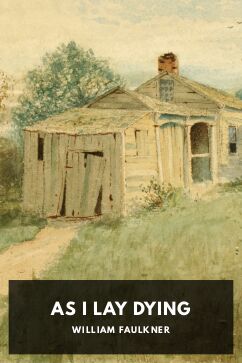
Another example: "As I lay dying" by William Faulkner is now Public Domain in the USA. It was Public Domain in Canada from 2013 to 2023. Then the law changed, and the copyright was extended by 20 years, and reinstated for this book until 2032 — which is 70 years after the author's death in 1962.
When you say you have the rights to it, you might only have the right to read it, not to give it to anyone else. What was the license text when you bought it?
The more difficult part of any such list is the editorial decision which works to include. Even if we only cared about books published in English that would be thousands of books each year
Also thanks for doing this, I've read a bunch of stuff (GK Chesterton, Dorothy Sayers, Dashiell Hammett) that I wouldn't have otherwise if it weren't for this service.
I tried to find a policy page on this via a standardebooks.org site search but nothing looked relevant.
I’m asking after realizing that some of my favorite books were books where the ebook had intentional font choices, for example different fonts for chapter titles vs body text, fonts that matched the vibe of the book (historical, more modern, etc.) It would be nice if more ebook readers made it easy to import more than the ~8 fonts they include by default but the next best thing is when the book itself includes a great font.
Do you know if the project try to look at other languages at all?
When will they start assigning catalog numbers to each of their works in the way that Project Guteneberg does? I'd like a unique id per ebook and since you don't (for obvious reasons) use ISBNs, there's nothing really to be done. I can't use an OCLC id because Standard Ebooks aren't consistently listed in Worldcat, I can't use Bookbrainz or Open Library ids for the same reason.
It costs nothing and is a low-effort fix. It's been an industry (and library science) thing for decades or longer. Can Standard Ebooks finally stop the amateur hour crap?
First-time contributors should select something from the appropriate section, because that gives you the greatest chance of succeeding and the least burden on our reviewers as you get started.
Our toolset has a help wanted section and some outstanding issues: https://github.com/standardebooks/tools#help-wanted
One of the SE editors experimented with turning SE ebooks into PDFs, though. See more about that here: https://groups.google.com/g/standardebooks/c/Xy2bwiexLeM/m/f...
Regardless, my understanding of copyright is that people broadly get annoyed when you infringe by distribution. In this case the distribution didn’t happen until the copyright had expired. People preparing these projects for later launch do it purely on their own machines, and nothing arrives at Standard Ebooks until the day of release.
You can run their EPUB through Pandoc to convert yourself, or put some effort in and setup your own Calibre instance which will do something similar when you ask it to.
We do have a default typography across all our works (the “Standard” in “Standard Ebooks” refers to a standard imprint; think Penguin) but we usually retain specific famous things where possible in a reflowable format. For example, the Mouse’s Tail in Alice’s Adventures in Wonderland,[1] or the letter in E. A. Poe’s “Thou Art the Man”.[2]
We don’t take on other languages, no. Our tooling[3] and style guides[4] are tailored specifically to English. Absolutely nothing stopping another project from forking the codebase (it’s GPL-3) and giving it a go.
[1] https://standardebooks.org/ebooks/lewis-carroll/alices-adven...
[2] https://standardebooks.org/ebooks/edgar-allan-poe/short-fict...
We also require that the art have some kind of connection to the book itself, so it's not just some random fine art. Sometimes the connection is a little fuzzy, but we do the best we can given that art must be pre-1930 and also must have been previously published.
(My personal favorite artwork selection of the books I worked on is The Communist Manifesto[1]. That painting was actually made specifically for a different book by Willa Cather[2], but I thought the peasant laborer, holding a sickle in one hand, with a faraway look in her eyes as the red sun rises behind her was just too good to pass up for Marx!)
1920ish was when it started becoming much more common for books to have illustrated dust jackets, so now that more books from that era and onwards are entering the public domain, we opt to use the first edition dust jacket if it's in the appropriate style. Fortunately for us, that era also happens to be the so-called Golden Age of Illustration so it's not hard finding beautiful art to use!
[1] https://standardebooks.org/ebooks/karl-marx_friedrich-engels...
[2] https://standardebooks.org/ebooks/willa-cather/the-song-of-t...
Something I am rather familiar with is brought out by your mention of the German edition/title; that the continental market seems to generally produce books that are far more densely formatted, i.e., smaller font and typesetting, thinner pages, and leading to overall tighter book formats. I actually appreciate it when, e.g., a book is 1/2 the size and weight, and usually also made far more durably; but it will invariably compromise any author intention related to the arrangement of the lettering.
Maybe you can confirm that based on what seems to be your English and German editions of the same novel.
Apart from that, they produce nice editions.
The German and Swedish editions I read were similarly typeset, and the first scan I found in English felt similar. What I wanted to know was if there was some thought into it, because the website is nicely designed so striving for a unique typesetting strategy could be a goal.
I found it amusing, considering all those memes about German words with 35 letters each.
And, as I get older, I began to consider letter size relevant to choose a book edition. Gave up buying new books and went for used, older editions with bigger letters.
Read 20 of the best books entering the public domain in 2026

Happy Public Domain Day!
Around the world, people celebrate Public Domain Day on January 1, the day in which copyright expires on some older works and they enter the public domain in many different countries.
In the U.S. Constitution, copyright terms were meant to be very limited in order to “promote the Progress of Science and useful Arts.” The first copyright act, written in 1790 by the founding fathers themselves, set the term to be up to twenty-eight years.
But since then, powerful corporations have repeatedly extended the length of copyright to promote not the progress of society, but their profit. The result is that today in the U.S., work only enters the public domain ninety-five years after publication—locking our culture away for nearly a century.
2019 was the year in which new works were finally scheduled to enter the public domain, ending this long, corporate-dictated cultural winter. And as that year drew closer, it became clear that these corporations wouldn’t try to extend copyright yet again—making it the first year in almost a hundred years in which a significant amount of art and literature once again entered the U.S. public domain, free for anyone in the U.S. to read, use, share, remix, build upon, and enjoy.
Ever since then, January 1 has been celebrated as Public Domain Day, the day in which the next year’s crop of books, movies, music, and artwork graduates into the public domain. At Standard Ebooks, we’ve prepared some of the year’s biggest literary hits for you to read this January 1.
On January 1, 2026, books published in 1930 enter the U.S. public domain.
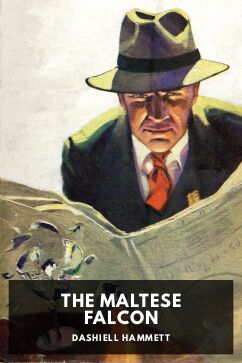
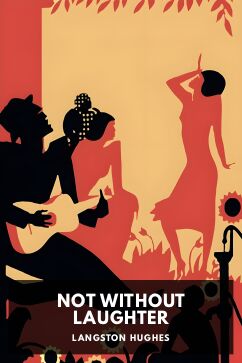
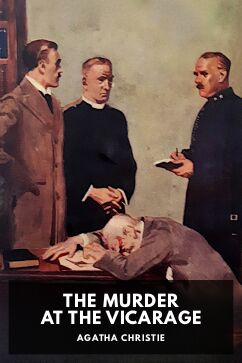
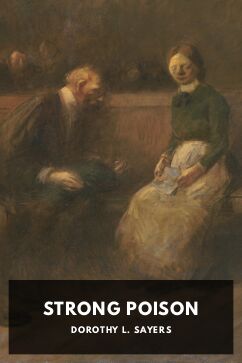
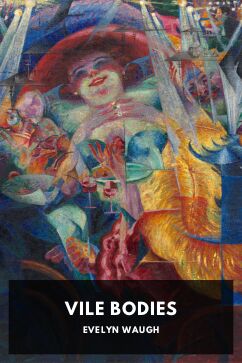
This includes legendary books by William Faulkner, Franz Kafka, Agatha Christie, and Langston Hughes. In addition, The Maltese Falcon, perhaps the best-known noir book—and film—of all time, and books by Evelyn Waugh, Dorothy L. Sayers, and more, enter the U.S. public domain, becoming free for anyone in the U.S. to read, use, and re-use.
Our friends at the Public Domain Review have written about some other things that enter the public domain this year, too.
These past few months at Standard Ebooks, our volunteers have been working hard to prepare a selection of the books published in 1930 in advance of Public Domain Day. We’re excited to finally be able to share these 20 new free ebooks with you!
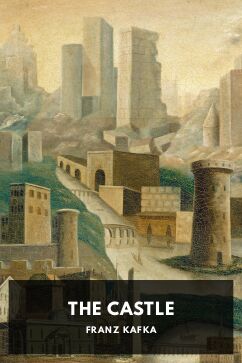
[](https://standardebooks.org/ebooks/franz-kafka/the-castle/willa-muir_edwin-muir)
[](https://standardebooks.org/ebooks/dashiell-hammett/the-maltese-falcon)
[](https://standardebooks.org/ebooks/william-faulkner/as-i-lay-dying)
[](https://standardebooks.org/ebooks/langston-hughes/not-without-laughter)
[](https://standardebooks.org/ebooks/agatha-christie/the-murder-at-the-vicarage)
[](https://standardebooks.org/ebooks/dorothy-l-sayers/strong-poison)
[](https://standardebooks.org/ebooks/evelyn-waugh/vile-bodies)
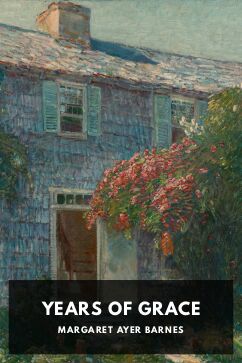
[](https://standardebooks.org/ebooks/margaret-ayer-barnes/years-of-grace)
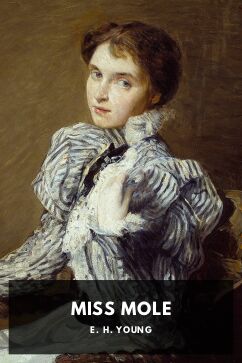
[](https://standardebooks.org/ebooks/e-h-young/miss-mole)
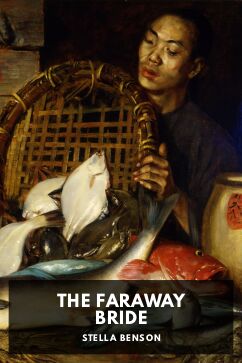
[](https://standardebooks.org/ebooks/stella-benson/the-faraway-bride)
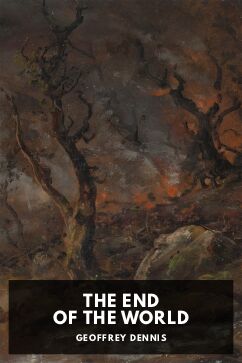
[](https://standardebooks.org/ebooks/geoffrey-dennis/the-end-of-the-world)
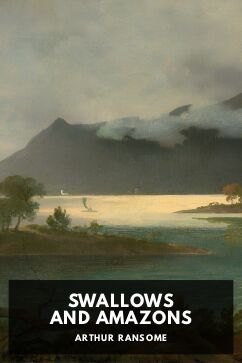
[](https://standardebooks.org/ebooks/arthur-ransome/swallows-and-amazons)
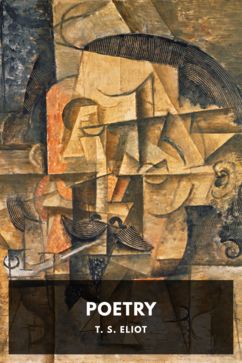
[](https://standardebooks.org/ebooks/t-s-eliot/poetry)
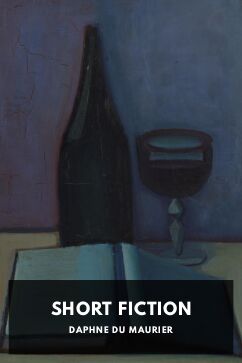
[](https://standardebooks.org/ebooks/daphne-du-maurier/short-fiction)
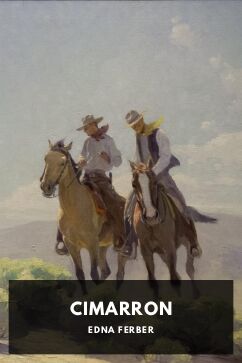
[](https://standardebooks.org/ebooks/edna-ferber/cimarron)
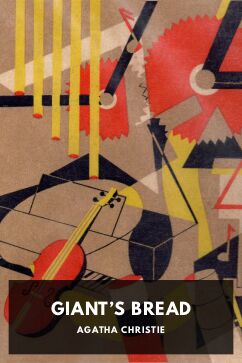
[](https://standardebooks.org/ebooks/agatha-christie/giants-bread)
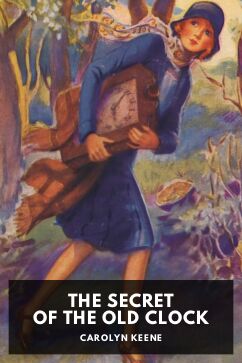
[](https://standardebooks.org/ebooks/carolyn-keene/the-secret-of-the-old-clock)
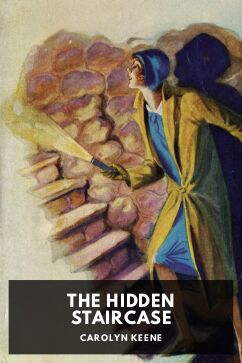
[](https://standardebooks.org/ebooks/carolyn-keene/the-hidden-staircase)
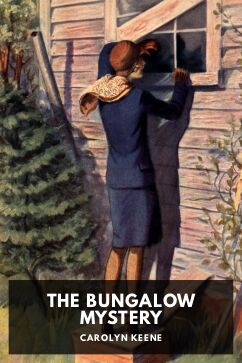
[](https://standardebooks.org/ebooks/carolyn-keene/the-bungalow-mystery)
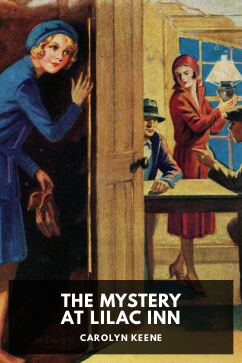
[](https://standardebooks.org/ebooks/carolyn-keene/the-mystery-at-lilac-inn)