We have to get our city house roof shoveled, but it is more making certain it don't fall on top of someone.
Having lived in Norway most of my 40+ years on this earth, I can with some confidence say that this is not an universal truth. I don’t think I’ve experienced any power interruption of over 1 hour in winter ever, and it’s been at least 5 years since the last time. Yes it snows here. A lot.
o If you're walking out in the cold, have many different ways to keep your feet and your hands warm, because usually, you'll have a good-enough coat and winter-pants that'll keep your core relatively warm, but it's the very ends of your extremities that get cold (just got a small amount of frost bite on my toes the other day).
o On top of really thick gloves and socks, can buy some battery-heated versions of both. These aren't just gimmicks, they work wonders! As do the standard handwarmers and toewarmers
o Get real winter boots, these are water proof and insulated, so your feet won't get wet, and will resist the cold for longer (didn't learn this one until recently. Yeah, once your shoes get wet enough to bleed into your socks, you feet start to freeze).
o For your head and neck, carry one of those head and neck covers with you in your coat pocket (called a balaclava). Because sometimes you misread the weather and suddenly you've got a 5 degree wind chill streaming over your neck and face.
o etc:)
And, actually, walking in the snow is really nice (so clean and pure), which is why a lot of us here do actually go outside.
Also, that writing tone is obnoxious.
Power going is last thing I would think happens in such place. I understand wind, but snow? I get that rural places might get power cables in the air, but in cities those should go underground.
I live in rural area, close to big city in a semi snowy place (depends on winter), in the last 10 years power went out only when constructions workers cut it out because they had to do some work on them.
UPSs for power outages.
Chest freezer - put those 1 gallon crystal springs (if in western us) jugs in to have ice blocks.
Have warm clothing. If you live in an HOA, be on top of them plowing both common areas and walk ways (mine was supposed to, FedEx/UPS/DHL all let me know - the walkway couldn't be an ice sheet).
Ensure you have access to a vehicle to get your to the services you need.
It should frankly be nr 1. At least if you ask any Scandinavian dad.
Even when I was living in the snowier parts of America we didnt lose power. I would say losing power is not a universal truth in the slightest.
That article was a strange read from my perspective, because here the infrastructure is built for winters as well. I don't remember school ever being canceled due to winter conditions, traffic is only a mess after a snowstorm.
For example:
"You did bleach ten gallons of well water for long-term storage already earlier in the year, right? Good."
This is sarcasm, because the author did not do that.
I live on an island now with a driveway that has 15-20 degree slope. It snows rarely, but garage is insulated and I need to get a heater near the water pipes. It snowed the one day I had to get to the ferry at 650am for jury duty. I'm glad I had the TRD - it wasn't much but waking up to - doo-dee-doo - drive to ferry and unexpected 2" of snow...causes some anxeity.
Everyone I know who drives a lot in the snow gets a vehicle with all-wheel drive and everyone else carries chains. (really they're cables, on a small vehicle)
The difference between what winter-only tires can handle vs winter-rated all-season tires is so minimal that they're not with getting. Chance ate conditions are either fine for the all-season tie or there so bad that the difference is inconsequential and you need all-wheel drive or chains.
I've only heard of people changing their tires on the Midwest, where snowfalls are in the inches, not feet.
I live very near a hospital and suspect I branch off their higher-SLA lines so that may be a factor.
Warmer places that don't experience cold much absolutely suffer during a cold spell. Texas (with its independent grid) has been absolutely wrecked every time it gets too cold.
In some places it may be cheaper to dig down the cable than facing storms.
Haven't gotten around to setting up any alerting thresholds though... I'm not actually entirely sure what temp/humidity thresholds would actually be useful.
Yeah, you won’t lose power much. That’s prioritized.
I don’t get as many power outages in the winter as I do in the warmer months (in fall it’s not unusual to have some weeks without grid power). I did however get a freak outage before the last round of storms and cold. The overhead lines coming up the mountain to me have wetlands at the bottom, it appears a sudden extreme drop in temperature caused the wires to contract and tilted a pole enough (before ground could refreeze) to disconnect the lines. This is in NJ. JCP&L/firstenergy utility just does a shit job here.
I don't think that's something that can be solved with just "build quality"... but it presumably could be solved through "maintainence" (cutting down or trimming trees, although that requires identifying the problem, permissions, a willingness to have decreased tree coverage, etc.)
I lived in the Oklahoma and in Minnesota, and the difference there is already stark:
* OK suffered from plenty of storm-induced winter power outages (massive freezing rain cycles were common in my life). My mother's cotton bath robe, which she kept using until late in her life, had burn marks from when she reached for something over a lit candle during a power outage when I was four years old.
* MN suffers some, but people knew to develop meaningful contingency plans.
Both states have variegated buried-power-to-the-premises usage. It's not really to be expected as the norm in either place, but MN has far more than OK (funnily enough I grew up in a place in OK with it). Either way, the infrastructure robustness in North America looks like it arose from a dismal cost-benefit analysis versus a societal welfare consideration.
I left North America about 14 years ago for Europe. The difference is stark. We've only had one significant power interruption in that time (not even in winter); whereas stochastic neighborhood outages were commonplace in North America. What really freaks me out about the situation in North America is just the poor insulation of the structures and their low thermal mass. They will get cold fast.
Aside: A lot of friends and family in North America balked at the idea of getting a heat pump due to performance during a power outage: "when the power goes out, I can still run my gas." When I asked them whether the house was heated with forced air or used an electronic thermostatic switches, the snarky smile turned to a grimace.
When you live in a cold place, you learn to do things differently. You're naive if you don't pack warm blankets and water in your vehicle, for instance. You never know when you might find yourself stranded somewhere due to vehicular breakdown …
One day sitting at the dinner table, we heard a giant slide and heard it smash onto the car, and fortunately we found the car keys in my Dad's jacket that night.
It's a set of pants and a long sleeve, worn right on your underwear/body. It greatly improves your heat comfort in winter, which I quickly learned the first time out of town in cold with Norwegians. They take it as a given that everyone owns a set.
There's also a hi tech version called superundertøy, which is good at channeling sweat away from body in addition to keeping you warm.
Ullundertøy is very warm. I haven't put mine on yet this winter (only using regular long johns), as temperatures haven't fallen below -15*C yet (and it's been coldest winter so far this decade). But I'd wear it if going outside for longer and planning on staying stationary.
Mittens keep your fingers warm while still letting you handle stuff like shovels and grab at things. You can dig through snow in mittens.
Used snowboard boots tend to be fairly water proof, soft enough that you can walk in them, hard enough that you won't stub your toes and are fairly good at keeping the snow out.
Snowboard pants and jackets are both water _and_ wind proof to keep the weather out. They're baggy so your movement is not restricted. They also have a million pockets so you can carry stuff. Jackets usually have a hoodie so you can put on headphones.
When shovelling snow, don't use a shovel. Use a snow scoop. Push instead of lifting. If you have to use a shovel, use something metallic that easily slices through snow, then push them out of the way with the scoop. Don't lift.
Or get a snow blower.
If your city plows your streets, clear the snow onto the streets just as the plower passes by your house. Then you don't have to get rid of the snow yourself.
This winter we had a power hick up _and then_ a multi day power outage.
> You have a lot of batteries, flashlights, shelf stable food, warm clothes, and drinking water stored, right? Good.
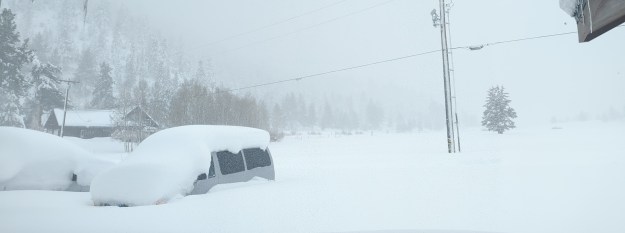
I hadn't. Luckily the power outage was quite local so I could take a bus for ~30min to get to some shops, including ones with flashlights.
Also no propane heater or similar, you don't expect to need it where I live. I would have loved having had it even if just for a bit.
I also had a 1kWh battery.
But some annoying surprise:
- 1kWh is a bad size, to big (but still possible) to nice by food carry somewhere where you can recharge it but too small to use it for a lot of things
- Turns out even if you blanked is theoretically insulating enough to handle very cold temperatures, if it's cooled down, you bed is cooled down, and you yourself are cooled down you need quite a time to warm it up with body head. Doesn't matter that it can handle the temperature or having very warm clothes it will be a huge pain. Having some way (e.g. heat blanked run by battery) to slightly heat up your blanked _before_ you enter it makes an enormous difference when sleeping at ~10C.
- In general learn about winter camping tips they help you if you need to bridge 1-2 days in a very cold apartment. Also having a winter camping sleeping bag can be nice.
-----
The 3rd point is just general good advice, at least skim the manual it might have surprisingly important things in it. And sometimes random but useful tips.
---
> build up and make the fallen snow denser and tougher
fun fact: this is how glaciers are formed, from non melting snow fall pilling up over years and by wight compressing the snow to ice
We were dealing with -10C to -20C , but as someone else pointed out my takeaway was that it's really your extremities that you need to think about, there rest of my body was easy to keep warm in comparison. I ended up taking a pair of winter motorcycle gloves I had laying around on the trip, water and wind proof and those worked like a charm with an additional pair of thin, inner gloves, so there's a tip!
I didn't quite nail keeping my feet warm though, but I was wearing regular hiking boots with very thick wool socks. Still felt like I was draining heat to the ground at a rapid rate though.
Corollary: don’t buy a house in a place where it snows without two fully independent sources of heat. You want backups. There’s a reason why woodstoves are so popular in New England. A millivolt gas log stove on a thermostat can also be a good alternative.
If it is very cold and no freeze-thaw cycle, the snow is very... Dry and grainy and still OK for shoveling.
But yes, the puffy stuff just fallen from sky is very nice for shoveling.
I have a friend that went to school in Buffalo, NY. That’s a city that experiences “lake effect” snow, during the winter.
He says all the sidewalks are basically “snow gorges,” but the roads clear quickly, and everyone knows how to dress for the cold.
He tells me a story about visiting northern Quebec, one summer, and seeing houses with a second front door, set on the second floor, and was told they were “snow doors,” for deep winter, so folks can get out, when the snow gets deep.
We tend to adapt well.
Fatwood (on Amazon) is amazing for this kind of stuff. It's much easier to start up a wood stove with a few sticks of it than "sufficient cardboard".
(Que the holier-than-thou folks who admonish anyone who has a wood stove.)
I've lived in several places in New England, some more rural than others. Some places you lose power often, other you don't. Even within the same town. Even if you are not in a rural area. It just so happened where I lived previously, we rarely lost power while friend across town lost it all the time. Many times I loaned them my generator.
I now live in a much more rural place. We lose power more now. Not often, but it happens. Trees fall, cars skid into poles, shit happens. It's good to be prepared. Ver bad things happen to your pipes without heat.
"Lessons you will learn living in a place that doesn't regularly get a lot of snow."
I live in Northern Virginia, and ... DAMN, this has absolutely sucked for the past [almost] three weeks.
This is probably because the average idiot neglects to unplug motors (refrigerator, and other inductive loads), bringing down the network again, entirely unnecessarily.
That's what I did and living on the California coast is much better.
During the day, we'll be somewhere where they have a generator. At night, it's cold. But you can somewhat prepare for this. Two or three layers of duvets and blankets, paired with a hot water bottle somewhere in the middle of the bed under the covers will get you through the night.
A lineman can fix anything on a pole within a few hours. Probably before lunch if they start first thing in the AM. Fixing a buried line can take days or worse depending on what's above it.
About 350,000 people live there, and winter temperatures can drop to –64°C (−83°F).
And regardless of the temperature or time of year, they have shopping malls, restaurants, and everything else you might expect to find in any big city.
Here are a few recent videos I enjoyed:
24 Hours in the Coldest City on Earth
https://www.youtube.com/watch?v=D-WGGDRyf68
How We Live in the World's Coldest City - Typical Apartment Tour
https://www.youtube.com/watch?v=ikUSFU7TlYc
How We Heat Our APARTMENT at -64°C| -83°F
But not all winter tires are made equivalent.
If it's snowy a good modern all weather tyre can hold its own, but will brake a few feet later than a good winter tyre.
In all other conditions a good all weather is a lot better than winter tyres, and pretty close to a good summer tyre.
Someone left theirs at my wife's previous home and she's kept it since. I don't get sore after shoveling anymore. I have a snow blower but only use it when there's more than 6" on the ground.
I've tried other "push sled" style scoops and none of them work this well (and weigh so little).
My best guess is that, because it was a wooden step, the boot print was permanently imprinted into the step itself, and somehow it had filled with water and frozen before the snowfall.
I feel like this trick has saved me from catching a cold on quite a few occassions.
https://newsroom.heart.org/news/snow-shoveling-can-be-hazard...
Another trick to make kindling, take cardboard or old egg boxes or I suppose kindling wood and dip them in molten candle wax / paraffin.
That's because instruction manuals always have a lot of useless information, and many of them have only such useless information. One of my computer mice came with guidance to avoid prolonged contact with skin and I'm pretty sure nothing in that manual was of any value.
1. Do what everyone else does, when they do it. And don't, when they don't. You could die.
There is usually a reason even if you don't understand it right now. You don't want to find out why when you're out in the cold and freezing.
2. Buy gear locally.
There's sometimes reason a certain item is on the shelf and not the stylish one from California, or the super heavy-duty one from Norway. Unfortunately, often this is only obvious in hindsight. Does not depend on price, but it does apply across the board from clothing to cars.
"Anyway, to flush a toilet without a running tank, dump about a gallon of water right into the bowl as fast as possible."
No, ya dork, you fill the tank then flush. There were a few other pearls, but no need to pile on. Anyway, I hope someone finds it useful or perhaps is put off the idea of moving to rustic, romanticized places when they'd be better off elsewhere.
1. In the first really heavy winter storm of the year, your power might go off. This is understandable but you do have to think about it beforehand.
2. If the power’s been off for a while, like, over 24 hours, and then suddenly it comes back on for a few minutes, and then it immediately goes out again – you might understandably believe that that means that the power company is about to restore your electricity, and there was a hiccup but it’s about to come back on for real. Unfortunately, nothing in this life is knowable.
3. The instruction manuals for things – cars, snowblowers, wood stoves, etc – often have useful information about using the thing. A surprising number of my peers don’t realize this.
4. You have a lot of batteries, flashlights, shelf stable food, warm clothes, and drinking water stored, right? Good.

5. Snow is easiest to shovel when it’s just fallen. The more time passes, the more freeze-thaw cycles – even gentle ones – build up and make the fallen snow denser and tougher. (This might be less true in very cold places where it never gets above freezing during the day? I don’t know, honestly.)
6. Snow is heavier than you think.
You might think physical strength is useful for lots of things, like overall health or familiar household tasks or picking up dudes (literally or metaphorically.) But actually, the main thing physical strength is useful for is letting you shovel more snow.
Push comes to shove, you can probably substitute grit for physical strength. But I suspect that muscle is easier to build than grit, for most people, not to mention less injurious.
Anyway, digging snow is hard. And snow is the easiest thing you can dig. How do hobby tunnelers do it??
7. Have neighbors up the street with a snowplow. They will save your skin.
8. Speaking of snow being heavy, my Alaskan friend tells me that at some degree of snowfall, you will also want to clear snow off of your roof so that it doesn’t break your whole house. I didn’t know that. Thankfully, my roof survived (for now). There are various tools made for this, one of which is called an avalanche and looks really fun.
(I am further cautioned by a different friend that you gotta wear a hooded coat while scraping snow off the roof, or else snow will 100% fall down the back of your neck. And hey, it’s cold enough out there already.)
9. Even if your house technically runs on propane, and you have propane, electricity might still run the propane, so your house is going to get cold. Unless you run the woodstove. Which you will.
If you’re short on kindling, sufficient cardboard CAN be used to light a big log on fire.
10. You should own rainpaints. (Or snowpants. Some kind of waterproof outer layer for your legs.)
11. If it’s too late for that, keep one pair of pants to put on when you go out into the snow for quick trips – and then immediately change into a different pair when you get back inside. This is important for staying dry.
12. Do NOT get wet and cold.
13. You already own gaiters, right? Of course you do. Gaiters are the pinnacle of fashion. Nobody realizes this, but you know that these slick garments can be made in a variety of styles, highlight the calf, and visually break up the block of the leg, adding new intrigue and aesthetic possibilities to the modern conception of dress. You are nobody’s fool, and naturally, you already own a pair of outdoors gaiters.
The situation you find yourself in now is one of the many cases where gaiters are also practical – put them on, go tromp around outside, and suddenly less snow winds up packed in your boot. It’s not a slam-dunk, because when the snow is four feet high it will also top the gaiters – what you really want is rain pants. But it’s still better than not having them, and you’ll feel real good about yourself and your practical, correct clothing takes. Good on you!
14. If possible, live in a house that a Burning Man camp runs out of in the summer. This means that even if the house is otherwise pretty well-stocked for winter storms, you will keep finding manifold useful things along the way that someone stashed in some moment of hurried summer madness, which will now make your time more pleasant – like battery powered string lights, or better shelf-stable food, or hard liquor.
In fact, in the hour of your despair (when you’re out of firewood next to the house, and the rest of the firewood is some 30 feet away but now buried under four feet of snow because you forgot to fix the roof on the woodshed during summer – and see Point 6, “Snow is heavier than you think” – and you’d have to dig your way over there and dig the wood out and then dry it, and you don’t want to do any of that) you will remember that over the summer, someone inexplicably left a garbage can full of firewood next to the truck, sealed under a plastic bag lid, and that’s only 20 feet away AND it’s already dry. You have no idea why that ended up there but in this moment it will give you strength. You can tromp over there and use a plastic child’s sled from the garage to drag wood back to the porch, and thus you will be warm another couple of nights.
15. You certainly already know: Absolutely do not run a generator inside, or “kind of inside” (open garage, etc), under any structures that contain live people or animals that you care about. This little box loves to make electricity and sparks and carbon monoxide. You must respect it.
16. In fact, any generators you may have around would look just darling in a little structure raised off the ground, with a covered roof, some 20 feet at minimum away from an occupied structure, wouldn’t they?
17. Any generators you might have around should also be checked in the fall to make sure they work, and put away at the end of winter winterized as per the manual instructions. You did that, right? Right? Uh oh.
18. Your house’s well is, of course, also electricity-powered. This adds another layer of complication. You did bleach ten gallons of well water for long-term storage already earlier in the year, right? Good.
Anyway, to flush a toilet without a running tank, dump about a gallon of water right into the bowl as fast as possible. (If you do it slowly, it won’t overfill, but it won’t ‘flush’ all at once either.)
19. Even if you didn’t have plenty of drinking water stored up, you wouldn’t be in trouble, because you can fill a big cooking pot with snow and put it on top of the wood stove. But you do have a lot of bottled water. Good on you.
20. You might think, at least finally I’ll have time to read one of my many unread books or do one of several arts or crafts I have around. And you will, a little. But it will bring you no joy. You will wish you were playing Animal Crossing.
21. One of the books you’ll read is Shadows on the Koyukuk, a memoir by the son of a fur trapper & a Koyukuk Athabascan native, on his life growing up and living in Alaska in the early 1900s. It’s a great book in any circumstance. But certain parallels will occur to you now, especially. You must thicken your skin to appreciate them. For instance, author Sidney Huntington will recount how he got lost in the woods at night with damp clothes, while it was well under -30° Fahrenheit out, carrying only an axe – so he remembered some advice he’d gotten once, and chopped down some trees, and started two fires to keep him warm and let him sleep through the night until it was daylight and he could find his way home.
Not only is it about 60° warmer where you are, you’ve never even cut down ONE tree with an axe. (Or built a boat, or killed a grizzly bear, or…)
But you must remind yourself that despite your shortcomings, you almost certainly know about more kinds of fish than Huntington did at your age, so modernity has not failed you utterly. And you don’t know anyone who’s ever died from tuberculosis or starvation, which is cool too.
Your ego thus buoyed (in case you needed it), you can find common ground, for instance, about the problem of snow – Huntington mentions how when two people are walking across snowfields in snowshoes, it’s more exhausting to be the person in front breaking the trail. He and his brother would take turns. You can relate to this, now. The second time walking over a path really is easier.
22. While making your little plans, at some point, you will learn – using the threads of cell power you’re able to obtain from the last live power bank you didn’t even know was in the house until you tore through it looking for one – that another storm is due in the next couple days, and that the power company has no ETA on a repair. You will look at your dwindling supply of easily available firewood. You will look at your to-do list:
a) dig out enough space for the large generator, which you think might be more likely to turn on than the small one
b) dig out the truck, just in case
You will look at your two “uh, yeah, I have a blog” noodle arms. You will consider Point 6.
Spend your energy digging the truck out. Throw some clothes inside. Get the hell out of there.
23. You already know that if you’re trying to drive a car over snowy ground, and the wheels start spinning but the car is stuck in place, you need to stop doing what you’re doing right away and try doing something else with the wheels, right? Good.
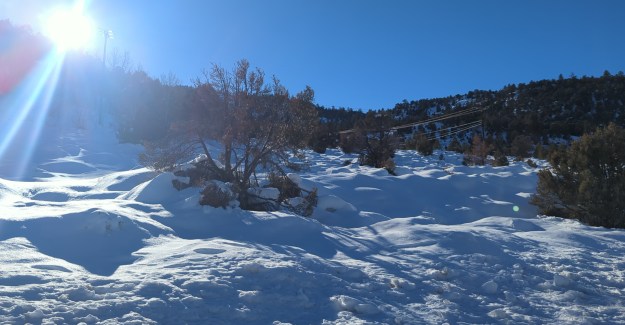
How does this fare with wet and icy snow?
But that said - there are lots of research that points towards that studded tires kill more people than they save lives because of the asphalt particles they cause.
But then there are people that claim that non-studded cars rely on at least 10% cars with studded tires to make the surface more rugged/rough.
Anyway, down the rabbit hole.
I've driven summer tires, all season tires, winter tires, and studded winter tires in every season in Canada. (Yes, I live in Canada and own borderline-usless summer-only tires. Yes, I've tried driving them in snow.)
None of what you're saying lines up with my own experience, various YouTube videos on braking distances, or literally anything else I've ever seen anywhere.
Edit: And, well, to be clear... I've lived on the West coast of Canada where it's a bit more mild but you're in the mountains, in the middle where it hits -50, and in the East where it only hits -30 but snows like hell.
Or if you want to upgrade it. My local electricity provider charges an order of magnitude more for upgrading home electrical service for more amperage if your service line is buried.
It's significantly easier. I used to do this in the CA drought where I would fill a bucket when waiting for the shower / sink to get hot, and then use the bucket to fill the toilet after I flushed it.
The other main ways you lose snow are: sublimation, wind blowing it elsewhere, compaction, and getting dirty (darker color helps it melt in the sun). All of these are relevant for other cities in the snow.
You've happened upon the difference between compliant and capable. See also, any military technology, which costs 10 times the normal price to meet strict compliance requirements, often while completely disregarding capability.
My favorite response to the issue is the AcessiByeBye plug-in (https://www.accessibyebye.org/) which blocks accessibility compliance overlays that make web pages difficult to use with keyboard navigation and accessibility tools like screen readers, but are needed to meet accessibility regulations.
But even that's in the dream scenario where somehow your snow is in a sealed, insulated space. In the real world, snow tends to be outside, in the cold air, which is very eager to sink and replace any hot air you make at ground level. So you're losing any heat that warms the air at all. And all that air in the snow makes it a fantastic insulator, meaning the vast majority of your heat isn't going to penetrate.
Interestingly, this same phenomena makes melting snow from underneath much more effective (as the great insulating snow captures the heat). You still need to grapple with the kinda nuts amount of energy it takes to melt ice, but at least you're not wasting 90% of it.
Not useful for snow as you'll quickly be swimming and out of propane
However the difference between winter and a modern all weather (it's a different class) isn't.
And yes, we're probably terrible drivers.
I do not live in Florida. 45N, continental winters.
I'm never using winter tyres again unless society breaks down and no one shovels the roads anymore.
Solution: don’t be a hero. Take breaks. Take smaller shovelfuls. If the first ten shovelfuls are hard, how hard is the 1000th going to be? I live in Finland, are fairly fit and quite strong, but shoveling the car out of thick snow for half an hour is pretty hard work for me. For an older person, it must be double as hard.
Of course, large commercial kitchens often have walk-in refrigerators and walk-in freezers.
In Yakutsk, you have an open-air walk-out freezer.
There are a few months in the summer when temperatures are similar to the Bay Area. I could probably wear my usual aloha shirts!
this is how glaciers are created
snow getting stuck up, not melting, compressing by weight into much much smaller ice and then more stacking up. And during the last ice age this repeating for a very long time (because snow is mostly air, so the amount of ice you get from it is very little).
The reasons why this isn't too big of an issue on the north/south pool, Antarctica etc. is because this places are also very dry/don't have a lot of snow fall.
To have snowfall you need water in the air. Which mostly comes from heat evaporating water. This doesn't happen in non stop freezing cold places.
So the wind needs to carry the wet air over.
But there is a gradient between hot wet air places and very cold places. So a lot of water rains or snows off before reaching the places where snow doesn't melt.
A large part of the south pool is technically a desert as it has hardly any _new_ snow fall. Just a lot of years old snow getting moved around by wind.
Of course, the really old/good manuals also had schematics, and there were a few cases where those were really help when we actually had to repair stuff like that. For some simpler things that would make sense even today but it ain't happening...
I didn't expect that, though I can't claim to be surprised by the number of elderly people who go to casualty due to falling on ice.
I see plenty of tourists with winter gear that is either insufficient, or completely over the top. Whereas if you buy locally you'd generally find the right stuff.