
I really miss the days of the fairness-doctrine. Also at one time there was a limit of the number of Media Companies one can own. We need those laws back.
Sounds like techy-speak to make it sound old so people move to social media bullshit.
> They don’t even bother to lie badly anymore! I suppose that’s the final humiliation.
While there were always problems with bias (esp. to the ownership) of outlets, it feels there were stronger social-mores or collective beliefs that still helped curb things.
Consider the difference between a biased judge that needs to appear unbiased--or considers it part of their self-identity--versus one who does not.
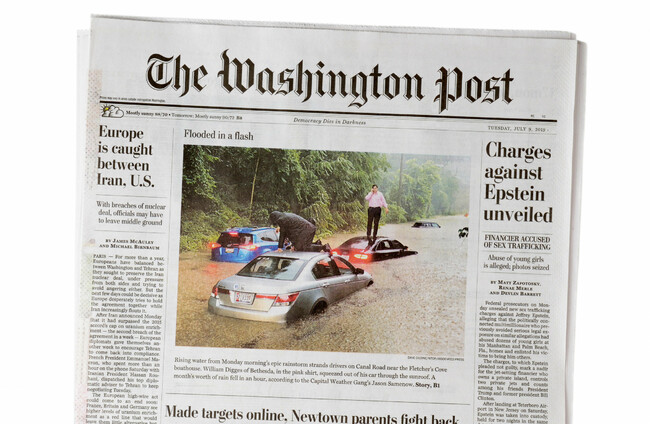
How Jeff Bezos Brought Down the Washington Post
There are so many ways to game the system, whom do you trust to enforce it? I don’t trust my own “side” to do so, and I sure as heck don’t trust the other side.
"Fair & balanced" Fox News has had token left people on (and good left people every now and then), but these people are there to look week, to flail and suck, to not portray well or strongly, to be heels. Attacked disineguinely. Meanwhile when Steven Miller comes on he's an aggressive lying weasel, spewing disgusting rhetoric and not answering any questions.
The idea that just having equal airtime will somehow make journalism good again is a joke to me. Trying to satisfy a technical obligation like this will allow disinformation to spread, will be manipulated by the wiley vicious forces that be. It's not gonna help .
I agree about limiting the number of media companies. Consolidation such as we have seen is an absolute horror how, is ghastly evil, and directly robs democracy of a vital independent 4th estate that is essential to democracy's health.
https://en.wikipedia.org/wiki/Jeff_Jarvis
So, it's a term of art, and i'll even agree that it's got a bit of a tech-y pejorative lean to it, but it's in wide use, and Jarvis certainly isn't solely a person who comes from tech.
'Legacy' basically meaning a representation of the past, not the future.
I'm just realising that Google is pretty much 'legacy search' given that the choice is generally between paid promotions and scams (which could be two ways of saying the same thing). AI may actually have saved Google as their search results were enshittifying themselves into oblivion.
The regular ads and the cover price paid for printing, mostly, but the classifides were what paid for the organization's fixed costs.
Now that revenue stream is gone. So most papers are in a death spiral, in which they cut costs, which causes the paper to be less attractive, causing people to drop their subs, forcing another round of cost cutting. The Sunday paper where I grew up used to be about two inches thick in half a dozen sections. Now it totals about twenty pages in one section.
Beyond that, you can't copyright news. You can copyright news copy, but there's nothing stopping other organizations from rewording your stuff and publishing without ever shouldering the cost of gathering news themselves.
The strongest effect of this is invisible - if nobody well-known is talking about it, it disappears from the mainstream news. Note how little is appearing about the war in Ukraine. (Peace talks going nowhere, but there was a prisoner swap.) Or the aftermath of the big ice storm that just passed through the southeastern US. (Texas avoided large power outages. "The biggest difference between 2021 and the last freeze is the amount of battery storage we have available.") Or what ICE is up to outside Minnesota. (73,000 people detained, plans to convert warehouses to detention center.) Or what's going on in Gaza. (556 Gaza residents killed since the cease-fire.) None of those stories are on the WP front page. Washington Post's Trending: Bad Bunny, Super Bowl commercials, Seahawks defense, Exercise and weight loss, Olympic ice dance, Ghislaine Maxwell. None of those are hard news.
"News is what someone doesn't want published. All else is publicity". Hard news stories require reporters out there digging, and those reporters are gone from the big papers. Local sources, the Associated Press, and the BBC provide some coverage. Far less than a decade or two ago.
So few people know what's really going on. You have to read about ten news sources and dig to get a picture. This is too time-consuming. And most of them are paywalled now.
Weirdly, I think this model was beneficial even in the presence of bias: when everyone read the same news, it helped with social cohesion and national identity, even if the stories themselves presented a particular viewpoint.
But now, everyone can get their own news with their own custom-tailored bias, so there's no special reason to sign up for the biases of Washington Post or The New York Times unless you want to signal something to your ingroup. I don't think this is as much Bezos' fault as it's just a consequence of the internet evolving into what it is right now: one giant, gelatinous cube of engagement bait.
If a party is not being honest or truthful, they should disfavor that party very strongly. That party is acting against the spirit of what journalism ought to be about, and is making itself a traitor to democracy, the people, and journalists.
The WaPo lost significant double digit percent of subscribers because it spiked a Kamala endorsement. That was a clear and obvious and correct position to take, and that favoring was objectively clear a choice. Sitting on the fence pretending like both parties are equal is a great misdeed sometimes. Your obligation as journalists does include assessing & grasping a situation; it's more than being a steganographer for both sides, it does mean actually considering and helping shape opinion to steer people away from lies and misportrayals, it involves reminding people of whatever downsides they are at length.
It's constantly been with us since the beginning of the republic. Several of our founding fathers were actually publishers.
> this consensus
Consensus doesn't exist in a vacuum. It's a product of an interest in profiting off the news. It seems obvious from this vantage what the fundamental problem is and why "journalists" are not a homogeneous group with identical outputs and why terms like "main stream" even exist.
> it helped with social cohesion and national identity
Which is why the FBI and CIA target it for manipulation so relentlessly.
You brought up the most notorious part of US history (the gilded age / age of yellow journalism) as if that was defining of journalism in general. You would be hard-pressed to pinpoint a time in which there was less bullshit in media than then. Besides today, of course.
And then you somehow equate this to the 1960s. As if the fact that journalists tended to study at university and therefore share points of view with people who went to university is the same thing as William Randolph Hearst wholly inventing a story about Spain attacking a US ship to convince the public to start a war.
And what we have today, with social media & search monopolies sucking all economic surplus completely out of journalism, plus foreign-run and profit-run influence farms, plus algorithmic custom-tailoring of propaganda, is undoubtedly the worst we have ever seen.
It (Neoliberalism) was supposed to re-energize American Capitalism. Instead it gave birth to Rentier-Capitalism. See Brett Christophers for a more detailed analysis.
Even the Metro free sheet goes uncollected a lot of the time. I just go to its puzzle page now. Constant scare stories and manipulation.
I'm not sure why you think we're disagreeing on this part. I'm explicitly asserting that they need to seek truth rather than pushing an agenda.
> If a party is not being honest or truthful, they should disfavor that party very strongly.
Here though, we do disagree. I think they should call out the lies and provide explicit, verifiable evidence that they are in fact lies. The should counter lies with truth.
But they should be blind to "parties" and not favor or disfavor anyone. From that point on you're drifting into "and they should agree with me, and say so" thinking. They should not be helping "shape opinion" and "steer people" even in a direction you happen to like today.
If the facts don't do the job, they shouldn't put their thumbs on the scale.
Paper 1, which prints only truthful and legally fact-checked stories about how X is fucking over Y and X is clearly evil, gets a lot of paid subscriptions from people who support Y.
Meanwhile, paper 2 prints only truthful and legally fact-checked stories about how Y is fucking over X and Y is clearly evil, getting a lot of paid subscriptions from people who support X.
The real truth is that X and Y both do good things and bad things, and always take the opportunity to fuck each other over, leaving plenty of factually correct material for the partisan journals, who just don't bother reporting all the skullduggery their "own side" gets up to.
The public are still free to care which truthful things they care about (or want to pay attention to)—and part of the job of politics is still to try to direct attention toward aspects of truth that favor your political aims. But with sufficiently many truth-motivated reporting organs reflecting sufficiently many constituencies, the work of truth-finding gets done.
That, I think, is the loss.
Journalists presenting the whole story would be wonderful, but I don't think we're likely to see it soon.
Was Donald Trump leading a violent group of traitors and looters to desecrate the capitol, or did he and thousands of others peacefully protest against the Democrats stealing the election?
Were the events in Palestine of 1948 a catastrophe, the violent expulsion of the Palestinian people from their home country, or was it a heroic effort by the Israelis to establish a homestead after the horrible experience of the Shoah?
Is Russia freeing the upstanding people of Ukraine from a tyrannical Nazi regime, or attacking a foreign country out of imperialistic greed?
You will find many groups of people are absolutely certain that one side of these examples is the objective truth.
You don’t have to put a spin on the news to bias it. You just report or fail to report the news that goes or doesn’t go with your agenda.
Big newspapers and media outlets are the only institutions able and persistent enough to dig through things like the Epstein files. With them going down, we loose yet another guardrail, some more checks and balances.
Neither of those is a matter of fact, but rather interpretation of the facts. The facts are that Donald Trump posted on social media encouraging people to fight the election results (or something to that effect, I don't have an exact quote to hand), and that a group of people were protesting and then went past the security barrier to enter the Capitol. You can interpret those facts in different ways (as your question shows), but either interpretation admits the same facts.
As one of my favorite youtube creators, Feral Historian, put it: "Most of the time, people equate the facts and their particular way of connecting them. Most political arguments are about the lines, not the dots. We think our opponents are ignoring the facts when they're just seeing different relationships between them". I think he's spot on with this observation, and one must be extremely careful to delineate between objective fact and the conclusions one draws based on facts. The latter are not objective, even if we feel very strongly that they are obviously correct.
Yeah, nobody ever does it perfectly. But trying to do it right rather than trying to do it wrong surely means that you'll come closer to doing it right.
Washington Post journalist numbers were gutted by Bezos this week. Alamy Stock Photo
what next for journalism
Layoffs, billionaires and political capture are hollowing out legacy news, and it’s difficult to see what will come next, writes Jeff Jarvis.
HAVING JUST SUFFERED another 300 newsroom layoffs, the closure of sections and bureaus, the exodus of many of its most venerable journalists, and the “moral infirmity” — in the words of a former editor — of transforming its editorial page into a Trumpist mouthpiece, The Washington Post is a dead newspaper walking.
It is far from alone in the graveyard.
In the US, most newspaper chains are controlled by hedge funds milking them dry, or by billionaires — The Post’s Jeff Bezos or the Los Angeles Times’ Patrick Soon-Shiong — harpooning their souls.
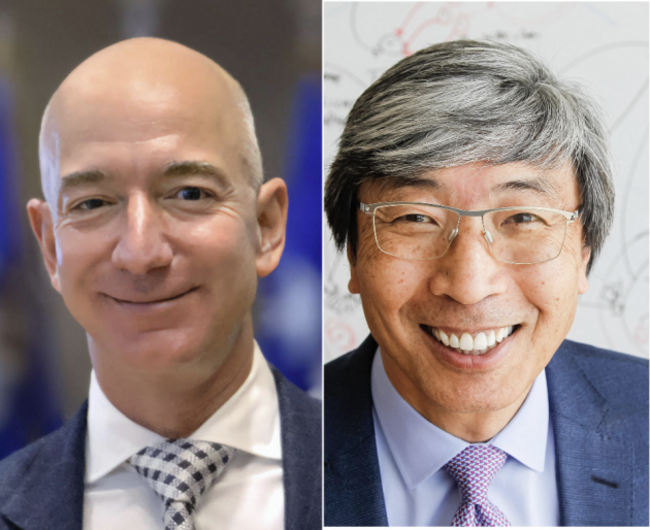
Amazon billionaire Jeff Bezos (l) owns The Washington Post, while Dr. Patrick Soon-Shiong owns the Los Angeles Times.
Magazines, as a media genre, are a ghost of their former selves. In the US — unlike in Europe — broadcast radio has become irrelevant. Broadcast television’s audience is geriatric, and its owners are gutless media conglomerates.
Disney knuckled under to Trump and pulled Jimmy Kimmel off ABC. CBS is now in the clutches of mini Murdochs named Ellison and their agent of destruction, contrarianist Bari Weiss, who has turned the networks’ once revered nightly news into state media.
On shrinking cable, Fox News is the Murdochs’ political organ, MSNOW (née MSNBC) has been sloughed off onto a funereal ice floe by Comcast-NBC, and CNN is at risk of also falling under the Ellisons’ thumb.

Larry Ellison, left, daughter Megan Ellison and David Ellison, right. Alamy Stock Photo Alamy Stock Photo
Ah, but you say, at least America still has The New York Times. Yes, and there are good journalists doing good work there. But on the whole, The Times has failed to protect American democracy.
The paper constantly normalises the rabid insanities of the current administration as policy. It both-sides extremism, not merely opening the Overton window but smashing it.
Worst of all, The Times refuses to name and explain fascism. It says we are on the road to autocracy. Oh, we have arrived.
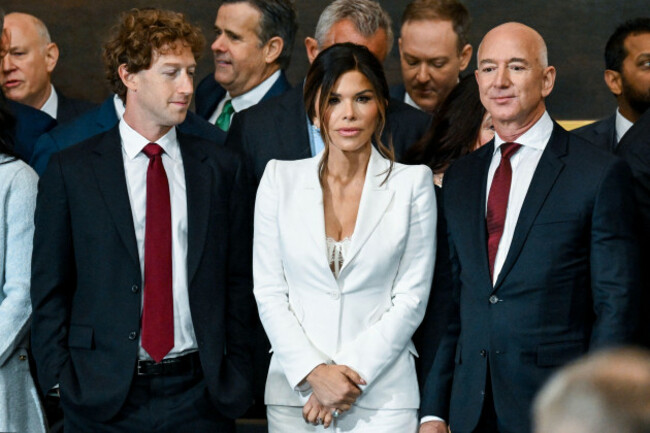
Facebook CEO Mark Zuckerberg (L), Lauren Sanchez, wife of Jeff Bezos, (right) at Trump's inauguration. Alamy Stock Photo Alamy Stock Photo
Though there are exceptions — independently owned newspapers and public media upholding journalistic values — it must be said that, on the whole, legacy, mass media is dead or dying.
I say this with regret, for I have devoted my life and career to journalism and media at scale. And I have spent countless hours on journalism conference panels hypothesising new business models to save what was. Now I see that instead, we need to build what can be.
In my research on media history for my books The Gutenberg Parenthesis, Magazine, and Hot Type, one clear lesson emerged: that nothing in media or news is forever.
The newspaper was invented a century and a half after Gutenberg (at about the same time as the modern novel and the essay). It was reinvented with the introduction of steam-powered presses, the Linotype typesetting machine, and the telegraph.
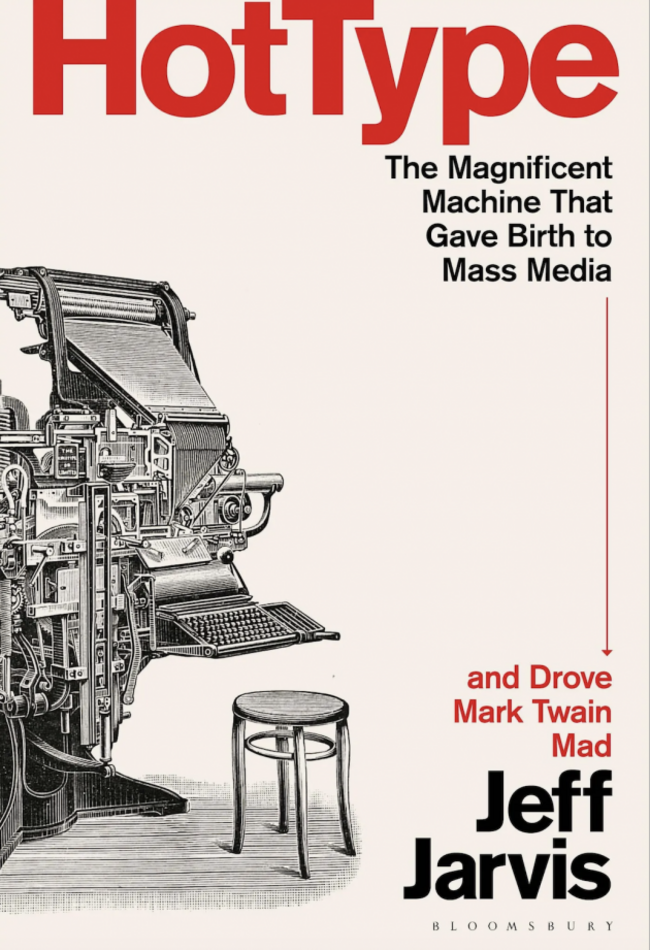
Jarvis' new book, Hot Type, The Magnificent Machine that Gave Birth to Mass Media and Drove Mark Twain Mad, is out now.
With the mechanisation and industrialisation of publishing, media became the province of capital and corporations, which seek scale über alles. In the late nineteenth century, a new business model emerged: selling audiences to advertisers. It was a lovely and profitable oligopoly for the privileged few proprietors from the 1890s to the 1990s — until the internet co-opted and killed mass media’s attention economy.
What will replace the media that was? It is too soon to tell. In the late 19th century, it was unclear which media might persevere, in what form, performing what cultural functions.
Sunday newspapers published magazines. Magazines published books. Book publishers founded magazines. Today, it’s an open question which forms might emerge victorious: newspapers, magazines, and TV (if any survive) against blogs, newsletters, podcasts and social media. And then there’s AI, the literate machine, joining in public discourse.
But it’s not the form that will matter; it is, of course, the substance. There will still be demand for accountability, investigation and explanation — for journalism. But journalism can and must change to meet new needs and opportunities.
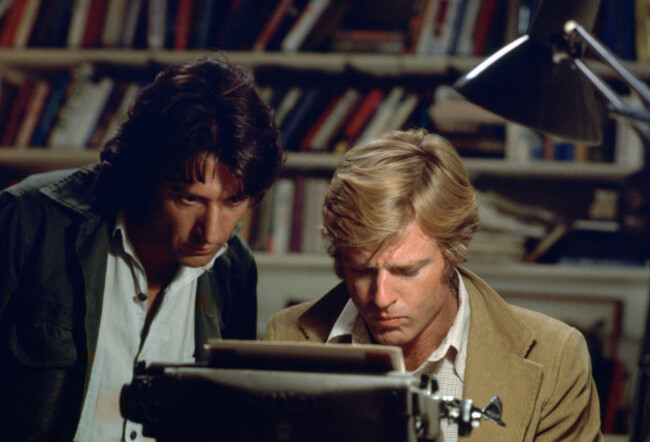
Dustin Hoffman & Robert Redford in All the President's Men, 1976, the story of the Watergate scandal uncovered by journalists Bob Woodward and Carl Bernstein at The Washington Post. Alamy Stock Photo Alamy Stock Photo
Look to Minneapolis, where witnesses perform critical acts of journalism. News must be defined more collaboratively. And I welcome the day when media return to human scale, no longer claiming to serve everyone the same, no longer requiring capital at scale to start and survive.
I do regret the passing of zombie The Washington Post, mostly because for a brief, impressive moment under the early ownership of Jeff Bezos and the editorship of the now-retired Marty Baron, it presented welcome competition to The New York Times, driving each to be better.
Now, its reputation is ruined, its talent gone, its audience deserting, its business in shambles. “Democracy dies in darkness” was its slogan. After chopping jobs and whole departments, Bezos’ hired henchman, publisher Will Lewis, announced he was leaving. He should turn the lights off on the way out.
To owner Bezos, the Post is a useful prop to please Trump for the sake of larger business interests.
To democracy, it is becoming all but useless. I hear no talk of anyone else rescuing The Post from its supposed saviour. The time has come instead to replace it.
Jeff Jarvis is a US journalist, author and editor. He is a journalism professor in New York and author of the upcoming book Hot Type: The Magnificent Machine that Gave Birth to Mass Media and Drove Mark Twain Mad. Find him at @jeffjarvis.
Readers like you are keeping these stories free for everyone...
A mix of advertising and supporting contributions helps keep paywalls away from valuable information like this article. Over 5,000 readers like you have already stepped up and support us with a monthly payment or a once-off donation.