https://www.citizensinformation.ie/en/employment/unemploymen...
His response still resonates with me after 30 years.
It’s the same for starting a winery: “If you want to make $1M, start with $10M.”
He basically said the same only it was the record labels that footed the bill. I enrolled in college the end of that summer.
Moral of the story, don’t be on the fence. Commit. The part about it being a business, fact. That’s the only way you’re going to make a living with your art.
Love that quote!
> Art is absolutely an expression of yourself. But your art is not you. Try not to entangle your ego with your art. If someone does not like your art, that does not mean they do not like you. If they think your art is bad, that does not mean they think you are bad.
The movie is partly about an apartment built in secret in a mall as an art project, and partly about the lead artist, Michael Townsend. Townsend is generally the opposite of Marsh in that he isn't interested in money, to the point of pretty much having none.
Getting back to the quote about ego: There is a scene in the movie where Michael is having a conversation with his wife about building the apartment, and his wife is emphasizing that she's trying to set up their new home. Michael clearly had his ego entangled with his art, to the point where it caused his marriage to fail.
There is a great line in the book Narconomics [0] that compares the "value added" of creating high end paintings to narcotics. He points out that the input (paint, coca leaves) are VERY cheap. The end product (high end paintings, cocaine) is very expensive.
(I believe he makes this point to show that raising the price of inputs slightly has no real bearing on the price at the end given the size of the margins)
I don’t want to criticize that path - because being paid as an artist is a millennia-old thing. The idea that true artists don’t work for money is something that came out of the Romantic era, and many, many world famous historical artists like Da Vinci or Michelangelo were doing a job for rich clients. But it seems to lock you into a path where you need to replicate the same style over and over again, because that’s what you’re known for.
There’s a great little scene in the Basquiat movie about this:
I'm talking about the same kind of work. The same style, so people can recognize you and don’t get confused. Once you’re famous, airborne, you gotta keep doing it in the same way. Even after it’s boring. Unless you want people to really get mad at you…which they will anyway.
https://youtu.be/hfI1YAo32fc?si=05msdQY9-SCJAMhX
I think the Phillip Glass solution of doing a completely unrelated job is probably a better solution, IF you’re trying to focus on expression. It also gives you more material for creating; if you read many writers and artists’ bios, their day jobs directly impacted their work.
My favorite example being Moby Dick - could someone without years of whaling experience even begin to conceive of that book?
Any recommendations for getting exposure to other on-the-way-to-being-popular artists like the X-Ray one that was highlighted?
also don't expect your art to pay your rent, because then your work will follow the market and it will suck. your spirit will suffer, too.
There are languages where there's a distinction between artists and painters.
They stopped being an artist with that one line.
His store is literally just the same image of a generic honeybear… is he selling $10k plus a month of that same honeybear print?
I don’t mean that it’s without merit just that although these things live in the same space they are not the same.
This is completely backwards. The Beatles put out songs that they didn't think were hits, and put out songs that they were conscious of being the antithesis of a hit. They wanted to freak people out from time to time. As many artists do.
Just check out Revolution 9. Pretty sure you can't get much out there than that when it comes to music of that era. And still very out there to this day.
Or for a more 'songy songs' that I'm pretty sure they didn't think at all in terms of hit material: Tomorrow Never Knows or Within You Without You. And there's dozens more.
Also, this remark is giving away a fairly limited view on art appreciation:
> While you can learn from failures, only sales strengthen the muscle because only they show that someone actually cares about what you are making
This is obviously not the case for art projects that target only a few people, or art practices that do not result in tangible objects. (Although there are some exceptions, such as Marina Abramovich, but those are very limited.)
Great for them, but this is not about all art. It just is impossible to live of most art forms. This type of art fits well with our economy, and therefore makes a living. That fit is more important than all the business advice put on top.
The article does point out exactly this problem, but glosses over the fact that most artists don't want to change to popular art. Only a few can, and most don't want to.
This is something I wish I could impress upon 23-year-old me. I had all the drive in the world to create, and made some things I knew would (to the right market) sell - and I was, in fact, proved right, a few times - but I felt nothing but embarrassment about the actual selling. It wasn't even that I feared rejection - quite the opposite! I was an actor; rejection is, like, 90% of the job - and I had no problem selling other things, or others' work, just my own. Saying "I've got something great, you should buy it" about my own stuff felt unbearably egoistic. To be honest, it still makes me cringe. I'm not completely sure where that comes from - maybe an upbringing in a religious culture that emphasized humility? Anyway, I certainly don't have a "hustle" mentality, and can't quite bear those who do. Nevertheless, I'd have got a lot further in that career if I could have let go of that particular inhibition.
Hard, hard disagree.
Art and art-adjacent fields (storytelling in print and film, music, videogame design, etc.) are working with intangibles. The best artists wield qualities such as technique, perspective, charisma, zeitgeist and so on.
They build their creations in ways that they can't truly explain, and the resulting "product" generates emotions in their audiences - pleasure, sorrow, joy, energy, nostalgia, melancholy - and bonds that are so strong that they can't help but be drawn to the works.
Another way of looking at this dynamic: No one needs to listen to a favorite song, or visit an art museum, read a book by a talented author, or replay a beloved game in the same way that they may purchase a light bulb or sign up for a SaaS subscription. Yet TFA is treating art as merely another type of manufactured product.
Businesses have tried to harness art for millennia. Sometimes the businesses succeed. But where they often fail is assuming that art is a fungible commodity that can be created through an algorithm or assembly line, with the creative flame locked down and bent completely to the will of a business executive or technical product manager.
Such efforts from the likes of game studios or a record company or AI are derivative by nature and rarely inspiring. The exceptions are those built by creators whose intangibles still manage to shine through, despite the harnesses placed upon them.
I'm speaking from the perspective of someone who has worked in book publishing, news media, and pop music over many years (including a stint working for The KLF's record label, see https://news.ycombinator.com/item?id=10932055)
So I found this article great to explain those things, and also how it's not just "you", but it's "the part of you that people need to buy" to make it into an actual business the thing that it's important. I'll be sharing it a bunch, I'm so happy fnnch wrote this!
I’m somewhat of two minds of the whole thing. I don’t blame the guy for making an income, but yeah, the honey bears are kind of boring, and especially w/ this post he comes off as a bit of a sellout. Art is weird.
Hundreds (if not thousands) of honey bears were posted in windows around SF. It was one of those things that happens in SF every now and then, a mix of whimsy and hustle and unexpected joy. We couldn't take our kids to school, we couldn't take them to the park. Instead, we would drive them around town and have them point out all the honey bears they saw. "Honey bear! Another one!"
For example, how does he earn from the Honey Bear murals? does the city or building owner commission him for the murals? If so, does he do some kind of outreach or sales call to the building owners or is it the other way round?
Not an artist and nor am I in the art world, just curious how does business work in there
Paintings are really different kind of animal.
Your value as an artist depends not on the quality of your art, but mostly by your ability to sell yourself to and into service to these cArtells. Like any scam demanding free labour and enthusiasm by the young, the art industry has an aura that it projects to scoop up daydreamers and those rebelling.
It is worth pointing out what this artist's practice actually is. The audience here might be afraid of conjectures around the subjective phenomena of "taste", so let me propose this:
That thing that everyone complains about here when you make an interesting app, put it up, and there's a cheaper Chinese produced version of it within a month that's got a better ranking in the app store than yours? That's what this guy is doing in art terms. The "product" is derivative, and frankly, so is the hustle. That's not why most of us make art, and his work wouldn't stand up to scrutiny by my undergrads (much less the "art world" in general) who are typically optimizing for innovation in the field.
I would argue that this guy doesn't really need to be an artist, in the same way that we don't really need the 50th knockoff of the same app. Sure he can do it and I guess good on him for making some money from it, but those are separate questions compared to those of most artists. He could use those same skills he discussed to sell used cars or vapes or something. Or maybe just be a programmer and "ship"? Notice that he doesn't even attempt to explain what is novel or contextually relevant about his work, or even where his desire to do it, as opposed to selling any other product, comes from?
Personally, I use my teaching to create economic space for myself to not need to be in thrall to a flippant and cruel "market". I have some basic rules for my gallery (no sales to arms dealers, no sales to oil industry, leaning that way towards AI/tech tbh) but one of the reasons I have a gallery, in addition to lightening my cognitive load of all the admin and sales in general, is because I suspect it would damage my capacity to make cutting-edge work if I knew how the sausages were made. It's most certainly not the only way to do it, it's just how I've landed. I usually advise my students starting out to follow the Phillip Glass method (really, the 1970s-90s method): get a part-time job that pays the most you can get but that does the work that will kill your mind the least, so you have at least 1 extra day and the mental space to do your 'real' work with that 1 day plus the weekend. Then over time, if you get paid for the art, cut down on the part-time job, and repeat. I will admit it is getting much harder to do this now, so my advice may be outdated.
Anyway, I'm being snarky, and he would correctly argue it's gatekeeping. But just a bit of context for the discussion here.
Calling Mozart’s works “songs” is ignorant.
Mozart wrote some songs (“lieder”, or art songs for voice and piano), but his work spans operas, symphonies, concertos, chamber music, masses and other sacred music, and solo piano works.
Not pirated music. Pirate music.
shrug
But the other, and this is the vast, VAST majority of people, create content. Not to be too disparaging, but if the objective is a paycheck then that's what is being made. And this is everywhere - marketing, digital design, video game assets, book series, commissions, etc.
Yes it takes artistic skills to do it, but is it "art"? Is it something (as the comment I'm replying to says) "novel or contextually relevant"? Or is it doing what needs doing because the boss says so?
I think it's important to make this distinction. And that's also the gist of people who want to do art as their day job - there's plenty of work, but you have to accept you're doing what other people want you to do instead of try to do something new.
Sounds like you make money partially by teaching and partially by gallery sales. Which are two of the commercially viable paths that are mentioned in this essay.
> Then over time, if you get paid for the art, cut down on the part-time job, and repeat.
The point of this article is simply that the above will not happen by accident.
I've got multiple hours of music in different genres and get 50 views in 10 years...
I read a quotation recently that said in essence, the work of creativity moves from creating something no one else has ever seen or thought of, towards creating new and different insight into something almost everyone already knows about.
In the blog post he also mentioned doing commissions.
As for the public art, I don't think he was directly paid for the initial honey bear, I think it was just marketing - that is, its popularity boosted his following.
> Most people who enjoy making art should not try to make it their full time job. When you turn an avocation (hobby) into a vocation (job) you have to do new things you do not enjoy. Emails, events, meetings, accounting, and more. These are not only a drag but can actually strip the joy from the rest of your art practice.
You'll have to do things you do not enjoy if you want to treat it as a business, including changing your artistic vision if needed etc.
> Art is absolutely an expression of yourself. But your art is not you.
A pragmatic approach could be to work on commericially-proven styles for money and your own style just for yourself (and potentially others if you make a branding that's famous enough).
At the end, yeah, it's a job if you want to make a living with art. There will always be market forces and to extract value from that, you need to understand and conform with it. But that's only if you see yourself as a business and not purely as an "artist" which I think is what you're reffering to when you say "most artists don't want to change to popular art" etc.
Also I don't think it's true overall. Like you say the "person is making very popular art" and that's why they're successful but there's many like them who are also making popular art but are not successful at all. It's also the process they follow and how they approach their business that sets them apart. That part is valuable info/guidance for any artist that does want to be commercially succesful imo.
Lots of muralists document the art/business on youtube! Two I like: Kiptoe and SmoeNova
I wish stuff like that would happen again, it was an interesting time where people actually stayed home and explored their environments, their home and themselves a lot. Before that (or at the same time?) it was AR games like Pokemon Go. I'm out of touch with what's happening now, it just feels like people have reverted or gone into a new normal. Or maybe that's just me.
Andy really knew what he was doing (from the classic interview): https://youtu.be/n49ucyyTB34
> “These bears have become synonymous with gentrification in San Francisco,” he told fnnch, “and the displacement of the artists that come from here.”
I have mixed feelings (i.e. I understand your boredom) of his honeybear art from a pure aesthetic pov. However, (as any modern viral influencer knows), any successful artist will invite haters. This article reinforces the notion that fnnch is very successful...
https://collapseboard.com/a-young-person%E2%80%99s-guide-to-... https://lawrenceenglish.bandcamp.com/album/a-young-persons-g...
I don't think author hides the fact. It's plain as day that to make a living, you need to sell art which resonates with people. You can still find room to be creative within that constraint, but you can't ignore the audience.
Artists should quit the illusion that they can create whatever they please and expect the income to automatically follow.
It was the RIAA that certified sales figures and awarded the Gold Record, Platinum, and Double Platinum prizes. There were various formats that records could be distributed in, but let's simplify to the "album" and the "single".
A single was typically one song on each side, A/B, and the A-side was considered desirable and marketable. Singles were purchased first by radio and dance DJs so they could be played individually on demand. There was a secondary retail market for singles, so consumers could purchase them as well.
The record album developed from a set of many 78 discs and coalesced into a single, Long-Play, 33.33 RPM record. Its capacity was about 6 songs per side, depending on their length.
There were various strategies for collecting songs into an album, such as a sampler of the artist's best, all their performances in a year's sessions, or even various artists. During the Beatles' fame, the "Concept Album" and "Album-Oriented Radio" (AOR) came into being.
So you could sell singles with one hit song, and this would propel the "B-side" into people's homes as well, so they may get curious, flip it over, and play the B-side, but B-sides were often considered lower quality, disposable, or less popular.
An album could sell great if it had one hit track. Recording companies would usually peel off the best tracks on an album to release as singles too, so that the radio play would promote the band and drive sales of the entire album. Many people who heard a hit song would be disappointed when they spent a lot of money on an album, only to find "filler" in-between, because the album format usually guaranteed a certain runtime or number of tracks.
When the Beatles produced "Sgt. Pepper" it was a foray into the "concept album" where all the tracks contributed to a cohesive idea or theme. This tended to enhance album sales over singles, because the single would be a peek into the larger "concept" and whet the public appetite for the whole thing.
When "Album-Oriented Rock" became popular, the DJs were freed from the constraints of playing "hit singles" in isolation and they were more encouraged to explore the unreleased tracks ("deep cuts") from albums, as well as tracks of longer duration that weren't appropriate for hit radio stations. In turn, AOR bands were under less pressure to release their "hit single" for every album and shielded from the phenomenon of "one-hit wonders" while instead their audience was, again, encouraged to invest in an entire album.
In the 1980s, a 45 RPM single may cost $1.50 or $2, while a full-length album was $8.99 to $12. The format switch to cassettes was sort of masterful, because for a while, the 2-track single format was abandoned, and consumers were kind of forced to get the entire album on cassette.
Yes I've ignored a lot of rough edges here, like the older 78s, and 8-track cassettes, and classical radio, but that was basically the landscape for pop artists, who needed hits but first and foremost, needed sales. The Beatles also capitalized on another enduring method of driving record sales: live performances and world tours. It wasn't called "The British Invasion" for nothing.
Empasized humility or crushed any sense of self worth?
But the gallery takes 50% leaving you a gross income of $12k. Then you pay for your supplies and work expenses. If that's all you do, you end up way below the poverty line.
>One of the biggest mistakes I see artists make is painting things that don't resonate with people. Once you have an aesthetic that works, the market rewards you for exploring adjacent aesthetic territory. You might not make a living right away — it took me over two years from when I painted that first Honey Bear until I took my art full time — but it is totally necessary if you are to make a living off your own art (as opposed to teaching or commercial art). Until then, if what you're doing isn't resonating, you just need to just paint something else. Experiment with different concepts and directions until you find something that works.
He doesn't spend a whole lot of time deliberating on the literature versus television question, but it's easy to see what he's chosen.
You can share a photograph of a painting, but it's, just, not the painting. A rip of a CD is nearly identical experientially.
There are many who, however, sell tapes, MiniDiscs, SD cards and other obscure formats with a small but serious following.
They have a 9-5 and do the fun stuff on the side.
Not as fun but you gotta eat.
Every so often the invisible hand picks someone off the streets, but it happens much less often than it might.
Indeed, it's not like Tolkien worked on the Silmarillion for four decades before LOTR was published because he was trying to sell it.
What you're highlighting is that art's value proposition is different from the value proposition of typical businesses. But not that artists are somehow free from having to worry about basic economics.
many artists do things often knowing they won’t make money from that piece. and some artists believe money should never drive why you create a piece of art, different reasons should be at the forefront, should be the driving force, some force other than widespread success.
the beatles were well known for making thing they did not water down for the masses, knowing it would likely not be a commercial success. and conversely they were also known for intentionally watering things down so the masses would take it. it’s one part of why they have stood the test of time.
I think the people you hear expressing dislike is probably due to his popularity and how often you see the honey bears around SF. He's also a Stanford economics grad, and some people in SF really dislike the stereotypical Stanford alums who think they're superior beings.
And that's also how Queen almost broke up in 1975. (Roger Taylor making just as much money from singles for writing "I'm in love with my car" that Freddie Mercury for writing "Bohemian Rhapsody".)
Many artists would rather blow up their careers than make work solely for business reasons.
There's a huge cadre of content creators and entertainers who are happy to do that, but - as the previous post says - their work is typically entirely forgettable. Even when it's commercially successful.
And successful original creators usually have business managers to deal with "basic economics."
The ideal for most artists is complete creative freedom and an open budget. Not many get there, and not everyone who does get there produces something memorable. But it happens occasionally, and it's usually far more interesting than create-to-market content.
And frankly, isn't all promotion artificial?
How do you conclude that? Is it hard to believe that Paul would write a song, and then realize it wasn't good?
> some artists believe money should never drive why you create a piece of art
Yes, and I'm acquainted with a few of those. They are proud that their art is something nobody else likes. They criticize others for "selling out", meaning making art that others like enough to be willing to pay for it.
They're just trying to justify their lack of talent.
I'm not impressed.
BTW, the Beatles very much enjoyed their money and success.
I also saw an experimental short at TIFF's Wavelengths program in 2024 that he "scored": https://tiff.net/events/wavelengths-1-eye-and-ear-control
I first wrote down these ideas in early 2017, just after I started to make a living as an artist. I came to them over time, but I wanted to document them at that specific moment in my career. The moment when I was finally sure that what I was doing was working. I had just finished a year with $54k in sales and was about to have one with $150k. A few years later I would sell over $1M in art. I figured that whatever I was thinking at that moment of transition would be the most relevant to other aspiring artists.
I didn't get into art to make a living — I got into it as a creative outlet while feeling trapped in my job. But as I continued to want to make more art, I developed theories on how to earn enough money to buy the remainder of my time so I could work exclusively on art.
I have shared these writings with artists who have come to me for advice. I have not before now published them due to some combination of busyness and fear of criticism.
Most people who enjoy making art should not try to make it their full time job. When you turn an avocation (hobby) into a vocation (job) you have to do new things you do not enjoy. Emails, events, meetings, accounting, and more. These are not only a drag but can actually strip the joy from the rest of your art practice.
Even the work itself can become a burden because you now have to make it. Amateurs can wait for inspiration; professionals must create every day.
If you enjoy making art, ask yourself why that is not enough? Why do you need to make money from this activity? Why do you need to do it with more of your time? Can it not perhaps give you more joy remaining a hobby?
I have played the drums for many years, and while I was once tempted to go pro, I have always resisted. Drumming is a refuge for me. A joy. An escape. I play when I want. I don't play when I don't want. This is no longer true for my painting. Beware. Think hard.
This essay has three parts, each of which can stand alone: "Admit It's a Business", "Finding Your Style", and "Brand and Repetition". If people like these, I would be happy to write more.
The number one mistake I see artists make is not accepting that they run a business. If you cannot accept and even embrace this simple fact, you are totally hosed. It is hard to start a business; it is way harder to do it by accident.
Making your challenge more difficult is that artists are usually not just entrepreneurs but solopreneurs. There is rarely enough money in art to support even a single person, so we do not get to specialize as one might in high tech entrepreneurship, in which it is totally common to have one co-founder focus on product and another on sales. Most people, at least at first, must do it all. Most artists do not want to do it all. They want to just make art. I am sorry. Some people have a gallery or life partner who acts as a business partner. But most of the time, there is no one to help you. You must think about your art practice as a business.
"Business" is simply a lens through which one can look at something. It is not the only lens. You can look at art through an aesthetic lens (how does it look?), a technical lens (how is it made?), an emotional lens (how does it make you feel?), an interpretive lens (what does it mean?), and a political lens (what does it say about our world?).
Thinking or talking about the business of your art can feel weird, as you probably didn't get into making art to make money. But as Walt Disney said, "We don't make movies to make money, we make money to make movies". The goal of thinking of your art practice like a business is to help you make more art.
Every artist who is making a living is running a business, and their practice can always be evaluated through a business lens. "Business" is simply a set of concepts that help you understand how money is made and spent. This is entirely relevant to the goal of making a living as an artist.
The breakthrough realization for me was that all businesses are fundamentally similar. They have the same knobs just configured differently. The knobs are things like product, sales channels, marketing, PR, and brand. A jeweler might have high material costs (gold and diamonds), an artist moderate material costs (paint and canvas), and a greeting card company low material costs (paper), but they all have "material costs". These knobs are what you see through the business lens, and when approached this way it is clear that there is nothing magical about being an artist — it is simply a different configuration of those knobs. Ultimately what you are looking for is a business model — a configuration of the knobs — that is profitable enough to support one employee, you.
There are many ways to make money as a visual artist. From the outside it seems like there is only one: get a gallery to represent you, and have them sell a small number of high priced works to a niche group of wealthy collectors. This model is viable, but it has gatekeepers (e.g. gallerists), and it only works for a small number of people. I was not one of them. Galleries have as yet not significantly advanced my career.
Do not wait around to be chosen. Just because you do not have gallery representation does not mean you cannot make a living as an artist. I have seen artists sell their work on websites, through social media, at open studios, at farmer's markets, at parties, and from apartments. I have seen artists make a living by winning government grants, from corporate commissions, and from wealthy patrons. I have seen artists sell paintings, prints, t-shirts, and pins. Many artists make a living not by selling their art but by using their artistic skills to teach, run workshops, or create commercial art (work created by you but designed by someone else, usually for a commercial purpose).
There are many paths to making a living as an artist. The path that works for a doodle artist will be different than for a photorealistic painter.
I did not know how I would make a living when I began making art. I felt like I was in a fog, groping around, and trying things. Doing this caused the fog to dissipate until it was clear how I would make a living. I personally make a living selling relatively affordable paintings, made from editions, through an email list. This was not at all obvious when I started. I tried a lot of things. My goal was never to not make mistakes but to not make the same mistake twice. Slowly you will learn what works and what does not. What works for me might not work for you. The search is the same, but the outcome might not be.
The first year I sold paintings I made a laughably small amount of money from my art. I was working another job that paid well, and I asked myself whether it was worth selling art at all. I decided to push on because I view selling art like strengthening a muscle. You start off weak, but if you keep at it, you will get stronger over time.
Picasso said, "In the beginning, I did not sell at a high price, but I sold. My drawings, my canvases went. That's what counts."
There are so many things to get better at — where to sell your work, how to price your work, how to ship your work, how to talk to collectors, and even what work to make. If you have no idea how to do these things, do not worry, just make a sale and learn from the experience.
The first time someone asked to commission a painting from me, I quoted him $100. The painting took me several days, putting my effective hourly earnings well below minimum wage. Was I upset? No. Did I ask for more money? No. But the next time someone asked to commission a painting, I quoted $500. That's strengthening the muscle.
Many artists make a living by creating unique works that they sell through galleries. I tried this in 2016. I made five large pieces entirely of my own conception and showed them in a gallery that would have taken 50% of each sale. None of them sold. At the same time I made those works I made another five large works on commission. These had been pre-sold at higher prices, and I kept 100% of each sale. Five works I had already sold for more than twice the income of those I had hoped and failed to sell? A clear lesson. Was I upset? No. But for the next five years I did not create a single unique work for a gallery and instead made them only on commission. That's strengthening the muscle.
While you can learn from failures, only sales strengthen the muscle because only they show that someone actually cares about what you are making. Also only sales permit you to practice the myriad other skills required to make a living as an artist beyond simply making art.
The second most common mistake I see artists make is creating work that people do not want to buy.
There is a concept in entrepreneurship called Product-Market Fit. It exists when you create something that people want. This sounds easy to do, but it is not, and the vast majority of startups never do it. How do you know if you have Product-Market Fit? If you have to ask, you don't.
I have found something similar in art, which I call Image-Market Fit. This is achieved when you create art that people want. It will not be subtle when it happens.
The first stencil painting I made was a swan on a canvas. No one cared. Then a penguin, then an origami bird. The only buyer was my father.
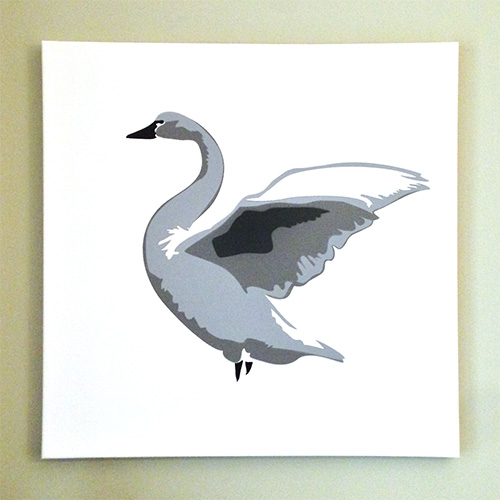
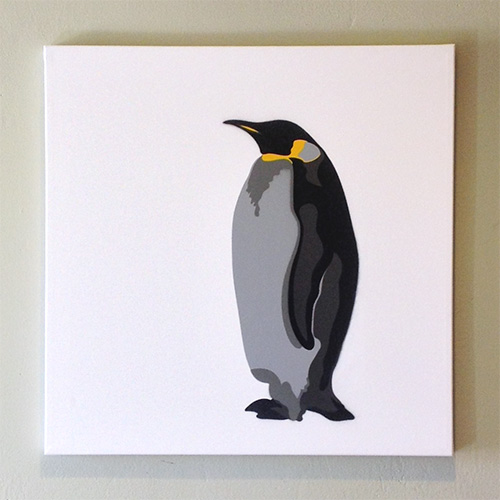
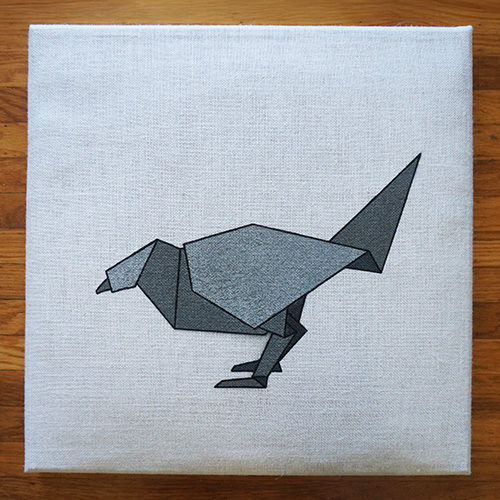
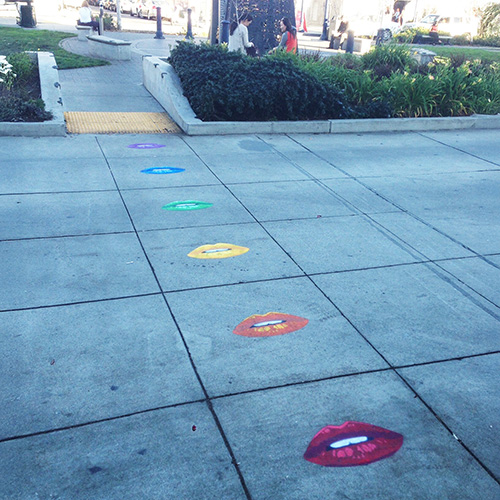
Then I painted dog walkers on the sidewalk in a local dog park. Then I painted lips on a crosswalk. Then a Dr. Seuss fish falling down the stairs into a transit station.

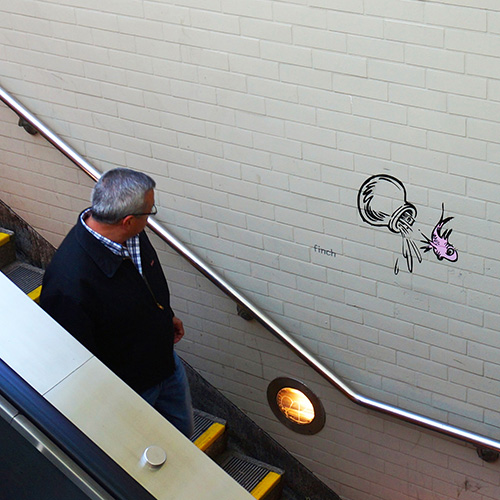
And then finally a Honey Bear on a park wall.
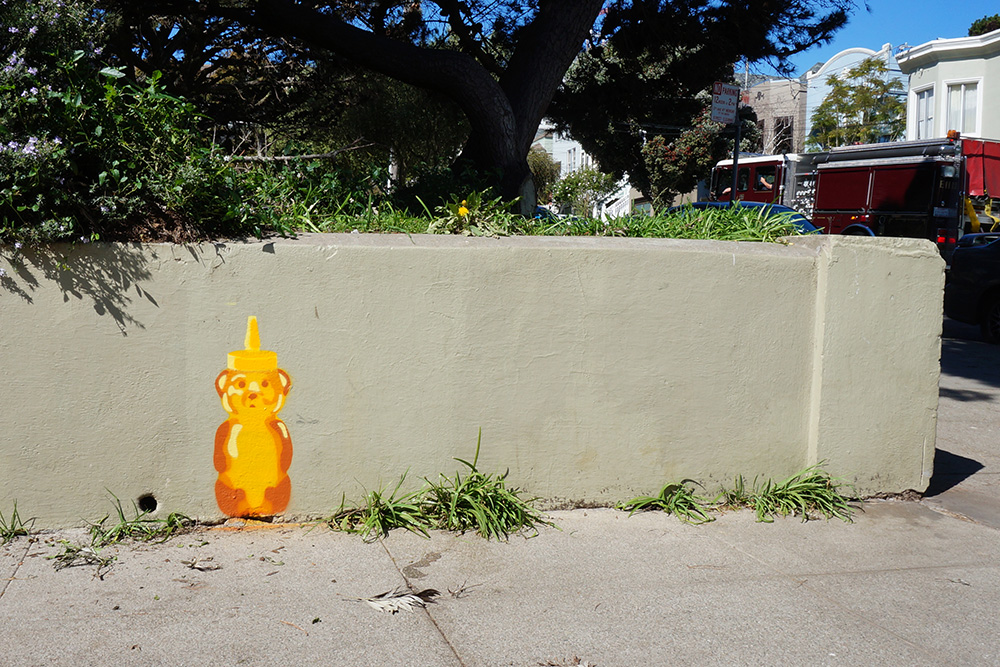
While people liked my earlier projects, the response to the Honey Bear was markedly different. In the three days before the city removed it, I watched a group of school children scream "Honey Bear!" when they noticed it. I saw a girl demand her mother stop and take a photo of her with it. An Instagram influencer shared it with her tens of thousands of followers. This photo eventually ended up (without my permission) in a book in Urban Outfitters. That is Image-Market Fit.
One of the biggest mistakes I see artists make is painting things that don't resonate with people. Once you have an aesthetic that works, the market rewards you for exploring adjacent aesthetic territory. You might not make a living right away — it took me over two years from when I painted that first Honey Bear until I took my art full time — but it is totally necessary if you are to make a living off your own art (as opposed to teaching or commercial art). Until then, if what you're doing isn't resonating, you just need to just paint something else. Experiment with different concepts and directions until you find something that works.
My exhortation to make different art until you find Image-Market Fit might sound cold and calculating. Doesn't art come from my soul? If my work is an expression of my soul, how can I just abandon it and make different work?
If you are pursuing art as a hobby and creating work for personal enjoyment, absolutely you should create whatever moves you. Create the exact same kind of work over and over. Or create something totally new and different every time. None of that matters; all that matters is that you enjoy the process and find personal satisfaction. See "Why You Should Not Make a Living as an Artist" above. But if you want to be a professional artist, repeatedly creating work that people do not want is lunacy.
To the question, "how can I abandon what is in my soul?", I say, "Is that all that is in your soul?". We have the ability to express ourselves in many ways and through many mediums. Picasso worked in realism, cubism, and surrealism. He had a Blue Period, Rose Period and African Period. He worked in painting, drawing, printmaking, and ceramics. All of those were in his soul. Some of them resonated with the public more than others.
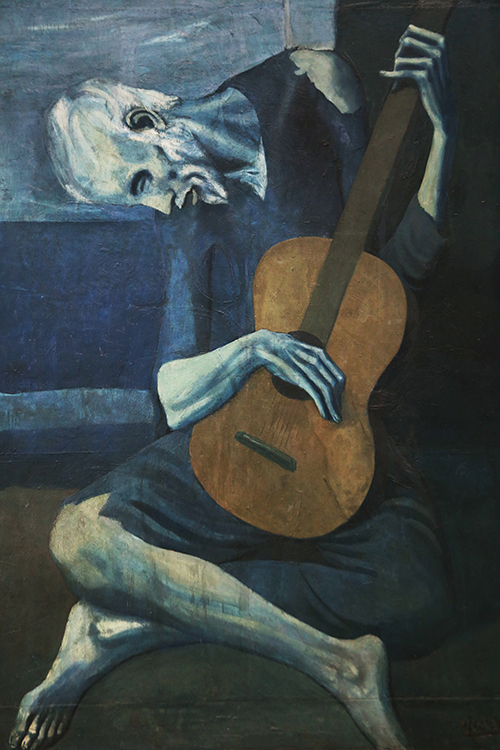
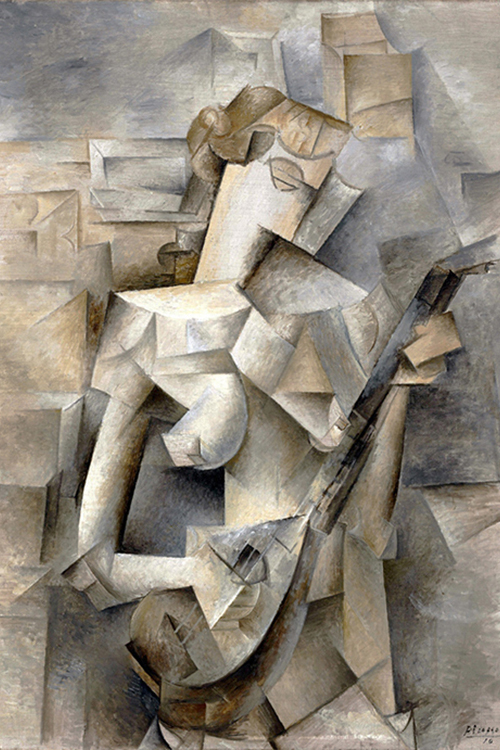
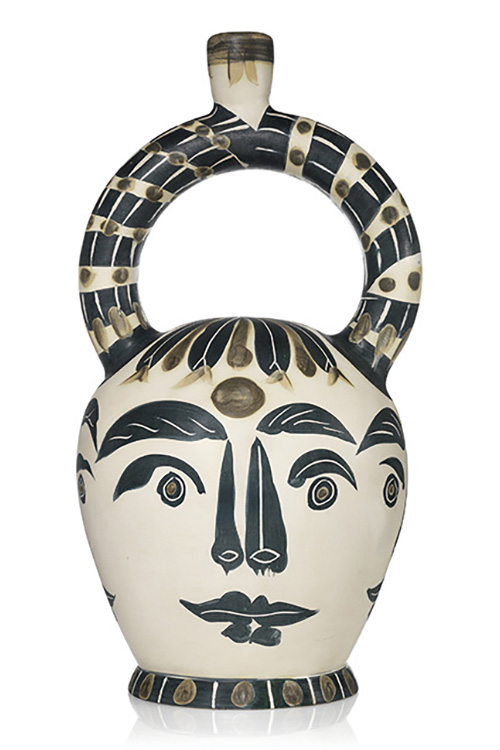
I am not saying you should attempt to pander to the masses, and in fact I do not believe this works (more on that below), but you should explore your interests until you find something that interests other people as well.
To state this again. There are a set of things that excite you artistically, and there are a set of things that the public enjoys, and you are looking for something in the intersection of those two sets. You can make work that is commercially successful while still staying true to your artistic interests.
British street artist SHOK-1 started painting graffiti in 1984 seemingly without the intention of becoming a professional artist. He says, "I had chapters and chapters and chapters of different bodies of work before I came to the x-ray thing. But the x-ray thing, for whatever reason, [has] become very visible. I didn't intend that. [...] Seriously I had no idea".
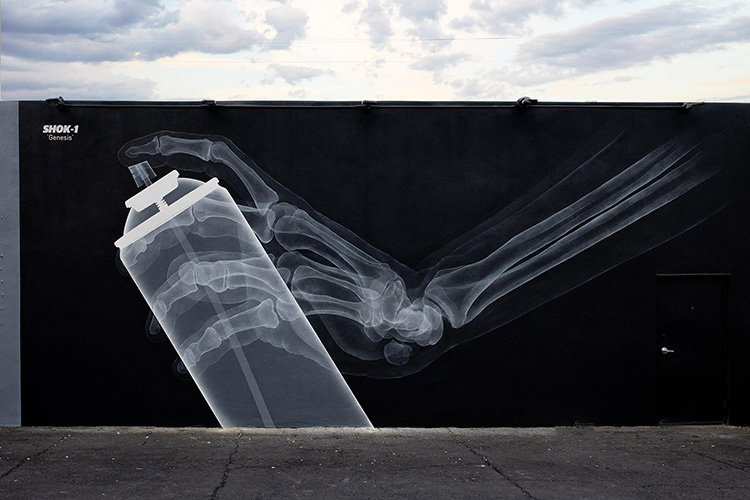
His x-ray series immediately resonated, propelling him to international recognition and sold-out shows and editions... after 20+ years of painting. That is Image-Market Fit.
I want to state again that I do not believe you should paint what you think people will like. I do not believe this works because I do not believe you can know what people will like. I certainly do not, and from my observations, I do not believe anyone does. The only way to find out what the market likes is to go to the market.
My approach is to paint things that I like and trust that my taste is good enough to get hits every now and then.
The Beatles wrote 227 songs, but only 34 hit the Top 10. Do you think they would put out a song that they didn't believe could be a hit? Mozart wrote over 600 songs, but only about 50 of them are widely played. Do you think he purposefully wrote duds? Of course not. Both the Beatles and Mozart made work that interested them, and occasionally those works resonated with other people.
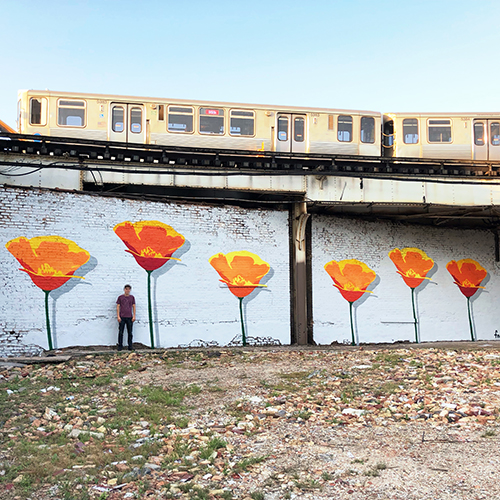
I have experienced this so many times. When I did the second iteration of my Dog Walker series, I was super excited about my origami corgi. I thought it was perhaps the best thing I had ever painted. No one cared. Not once has someone asked to buy or commission one. Conversely, I did not think my California Poppies were going to be popular because they are one of my simplest designs. But my first post of them to Instagram quickly became one of my most liked, and I have been commissioned to paint several poppy murals.
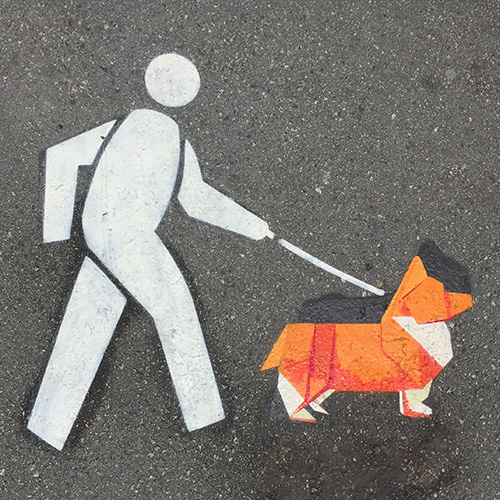
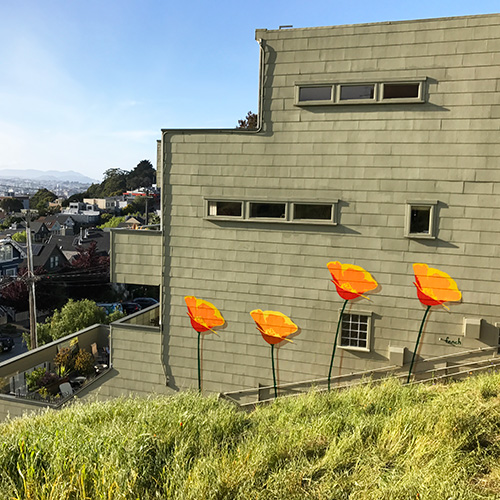
I don't know. You don't know. Don't try to know. Just make art that excites you, and make enough of it that you eventually make work that resonates with people.
As a final note, if you make something that you like, at least one person will like it — you. If you make something you think other people will like, you run the risk of no one liking it at all. That would be sad.
Art is absolutely an expression of yourself. But your art is not you. Try not to entangle your ego with your art. If someone does not like your art, that does not mean they do not like you. If they think your art is bad, that does not mean they think you are bad.
I often paint things that fall totally flat. Sometimes this happens with the works about which I am the most excited. That's life. If you are unable to get over this form of rejection, you will be unable to push forward and make something that truly resonates.
I have heard this approach referred to as "shots on goal" — the more shots you take, the more likely you are to succeed. If you are too scared to show your work to anyone or too defensive about the feedback you receive, you will have fewer shots on goal and thus less chance of making a living as an artist. Based on the numbers above, only 12% of Beatles songs were hits, and only 8% of Mozart's. But they took a lot of shots on goal!
The key to making money as an artist is having a brand. Most of art's value is brand value.
I believe artistic branding has three tiers, each more valuable than the last.
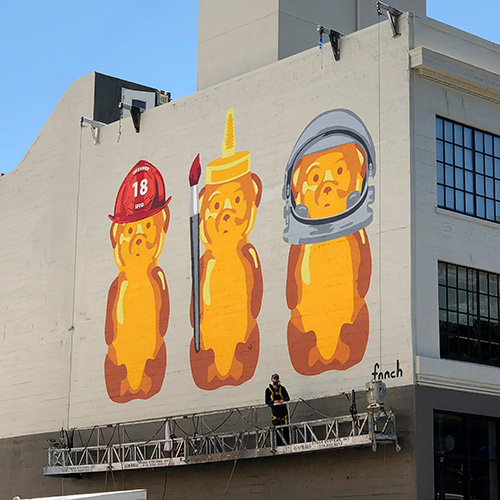
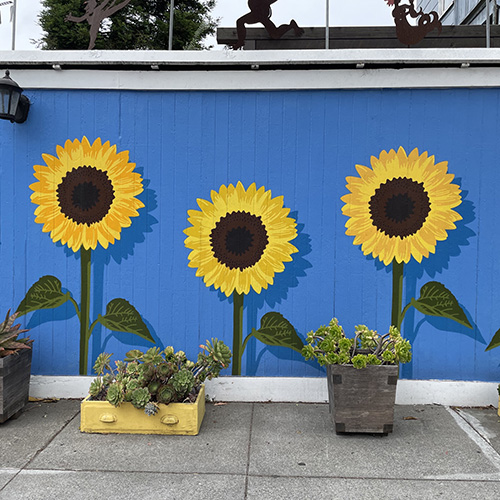
The first level is the branding of an image. Most people know me because I paint Honey Bears. They also might know me because I paint lips or poppies. The images and the way I paint them are recognizable, and when you see them, you think of me.

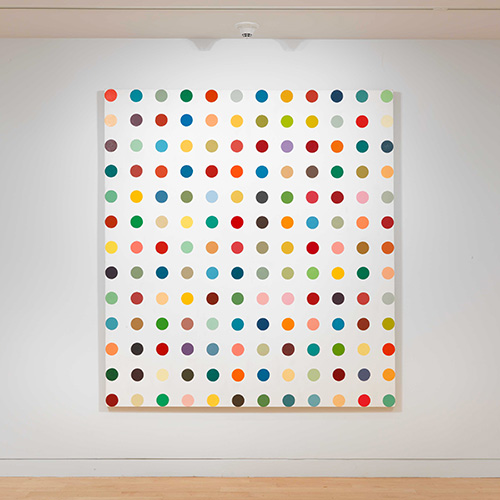
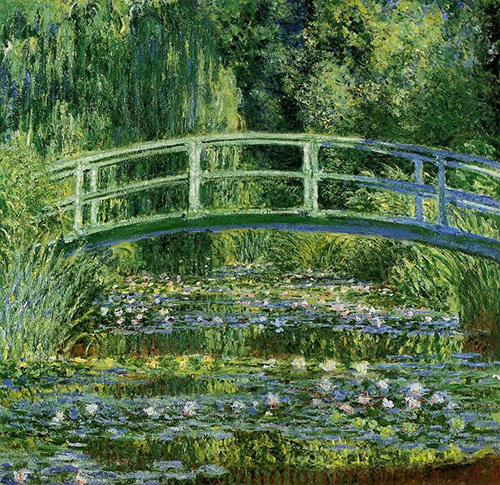
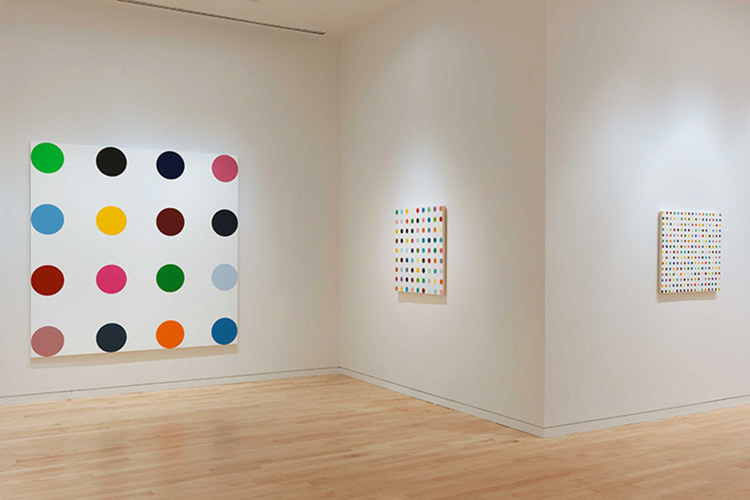
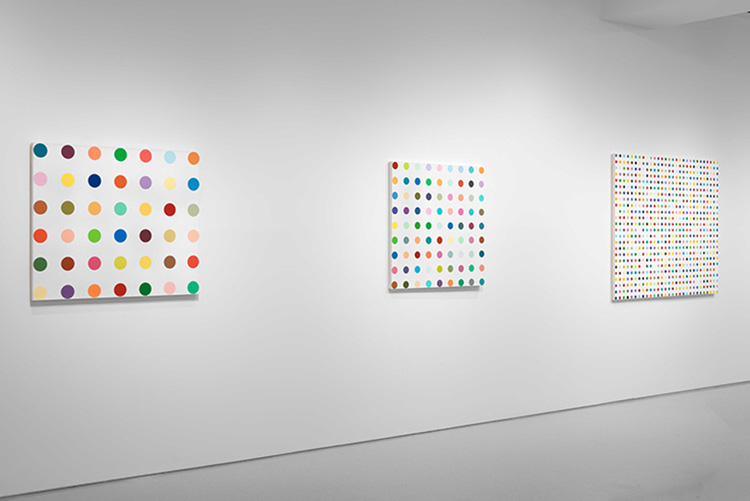
Similarly, when you see a spot painting, you think Damien Hirst. A pond with waterlilies, Monet. And the Radiant Baby, Keith Haring.
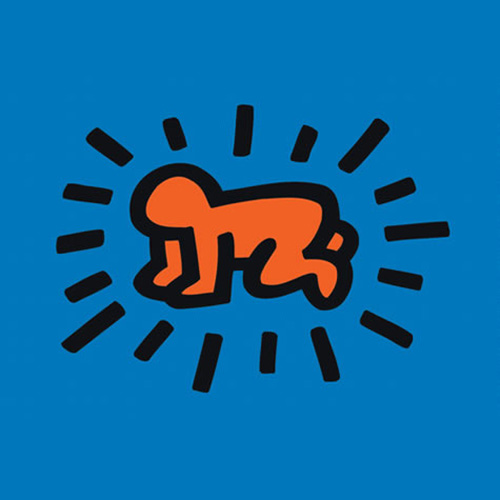
For more contemporary examples from street art: JC Rivera paints Bear Champ, Pursue paints Bunny Kitty, and STIK paints stick figures.
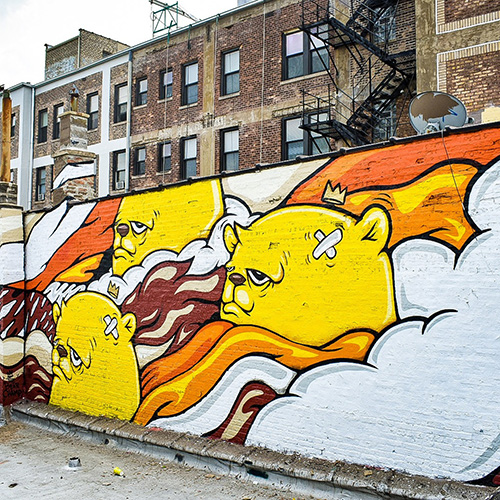
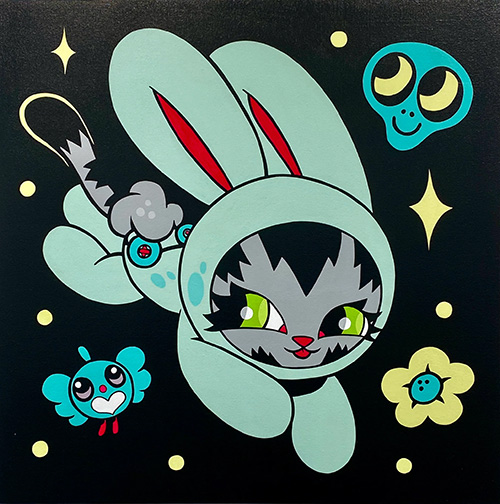
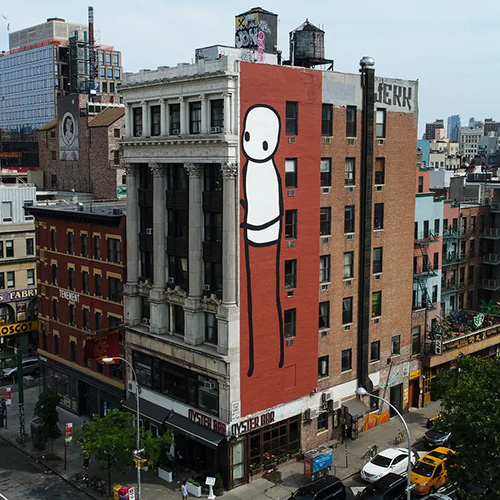
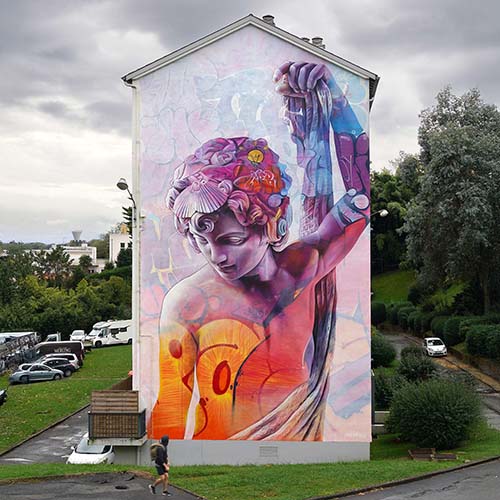
The next level is the branding of a style. This is sometimes called "the hand of the artist", and it is a recognizable style that goes across multiple images. When you see a painting from Keith Haring, you know immediately that it's a Haring. He can paint any image, and it is clear it's him.
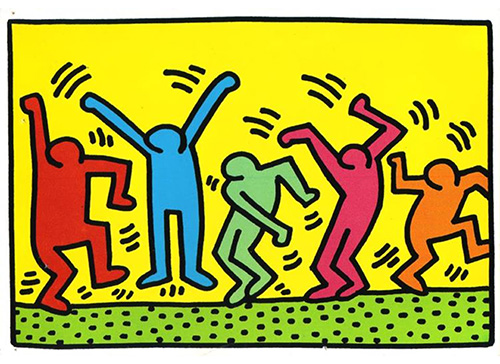
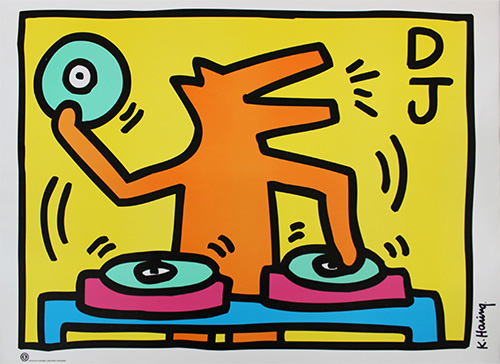

Same goes for Georgia O'Keeffe.

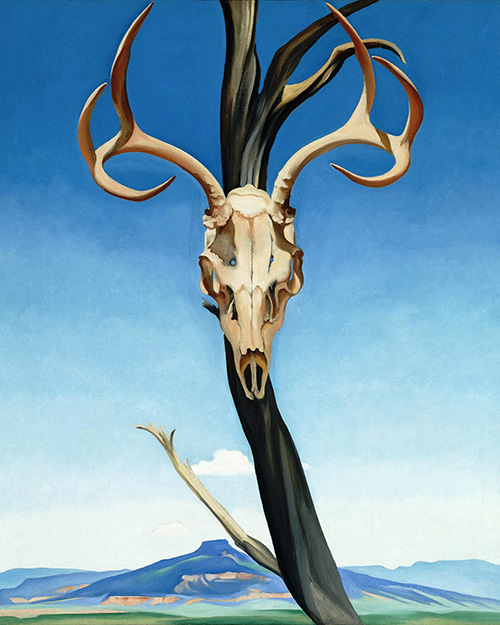
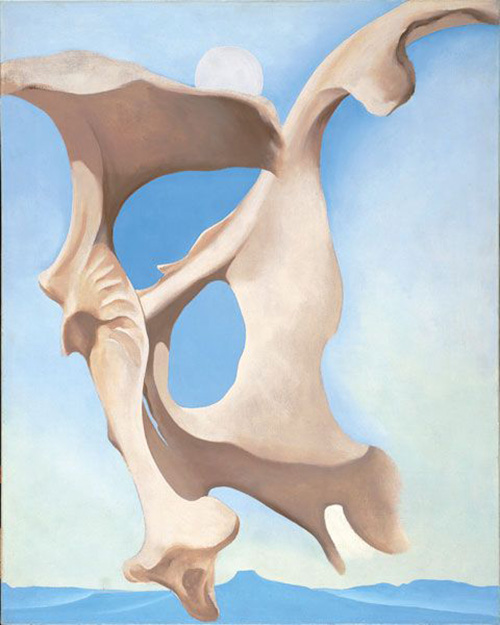
Same goes for Andy Warhol.
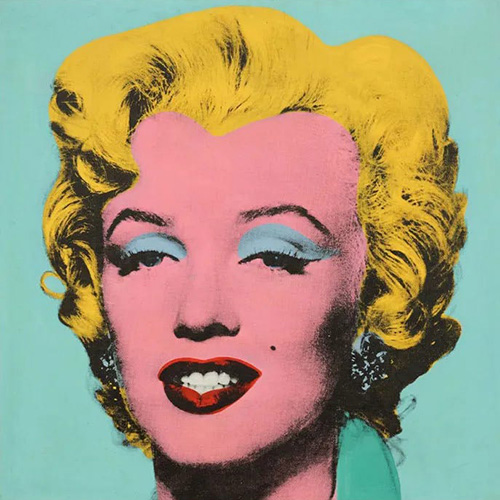
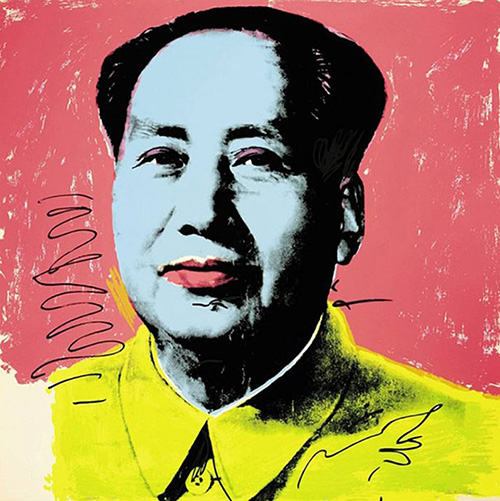

One contemporary examples is Pichiavo.
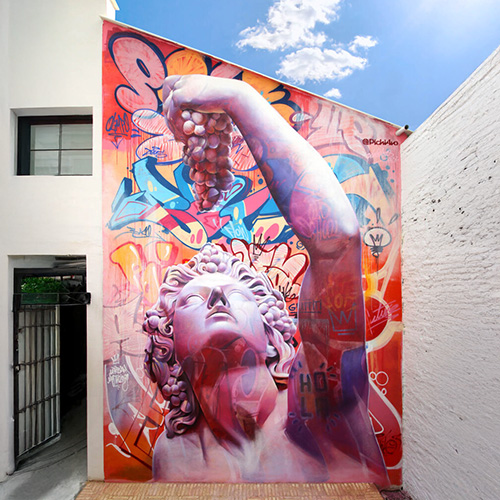
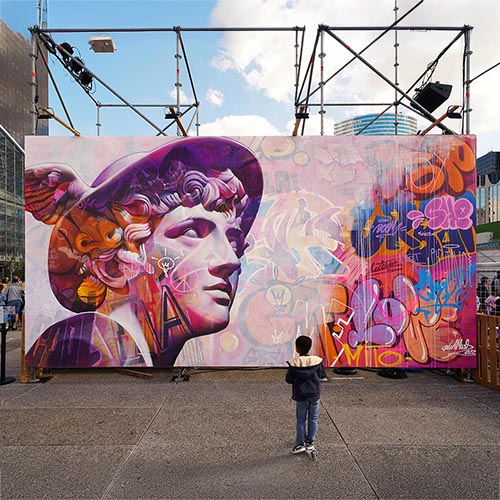
Another contemporary example is Kobra.
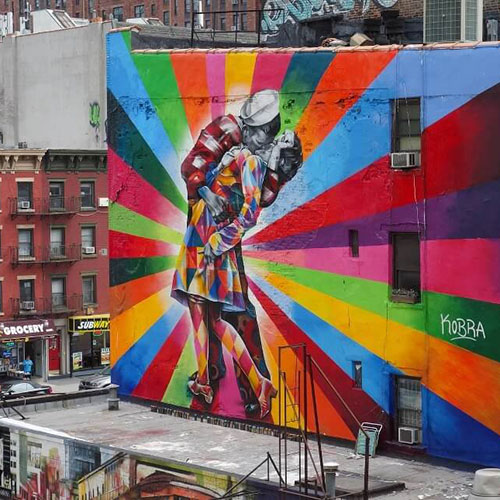
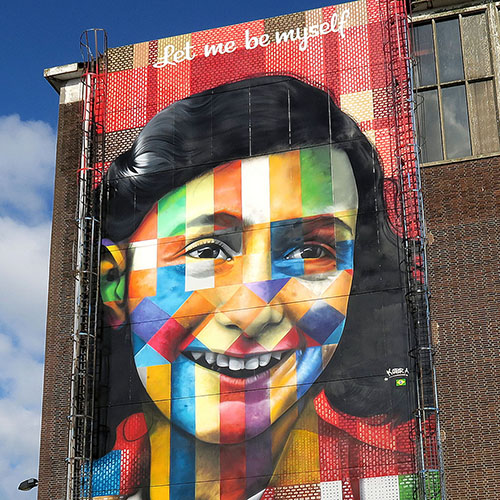
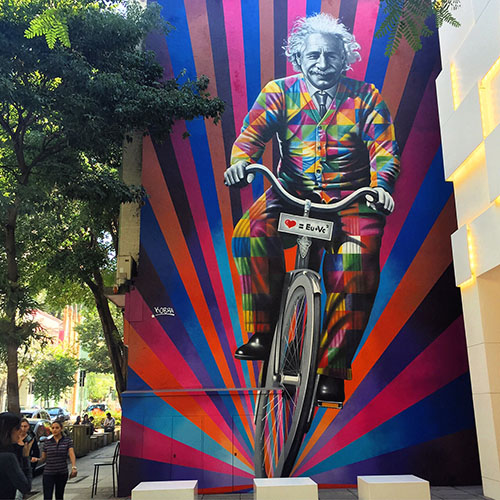
You can immediately tell a work is from one of these artists, even if you haven't seen that particular image before.
I hope that I have or am branding my style and that it is recognizable between my Honey Bears, birds, flowers, and other subjects.

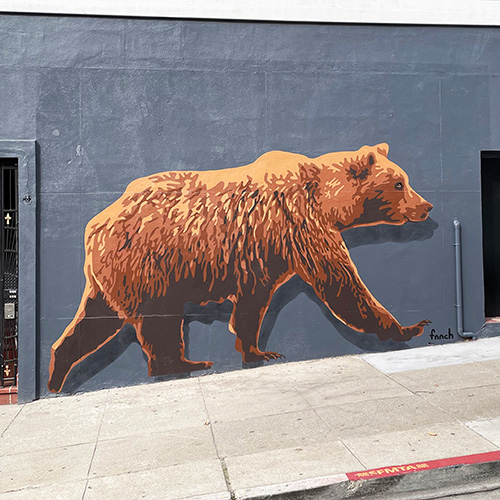
The final level is the branding of a name. People buy a painting because it is a "Koons", "Hirst", "Banksy", "Warhol", or "Picasso". Economist Don Thompson describes this phenomenon as "buying with your ears". There is value in the name that is completely separate from the work itself. Warhol literally pissed on artworks and sold them because he was so famous. May we all be so lucky.
Humans like what I call the adjacent familiar — something similar to what they already like but different in an interesting way.
Certain properties of Damien Hirst's spot paintings are the same — the spots within any given painting are the same size, the space between two spots is the same size as the spots, and no two spots have the same color. That is the familiar. But no two spot paintings are the same: the size of the spots varies, the size of the canvas varies, and the arrangement of colors varies. That is the adjacent. Once someone likes the class of spot paintings, they will enjoy seeing the variety of specific instances.
Ellsworth Kelly is one of my favorite artists, and he painted canvases covered in a single pure color. That is the familiar. But the canvases might be smaller or larger, fatter or skinnier, alone or in groups, rectangular or shaped. That is the adjacent. Those variations form a class of paintings, and now that I love the class, I am excited to see new instances of it. This blue is so satisfying! That one has a crazy shape!
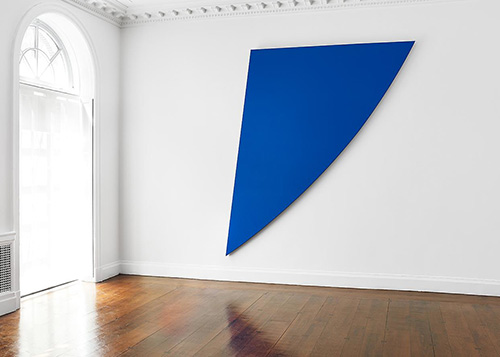
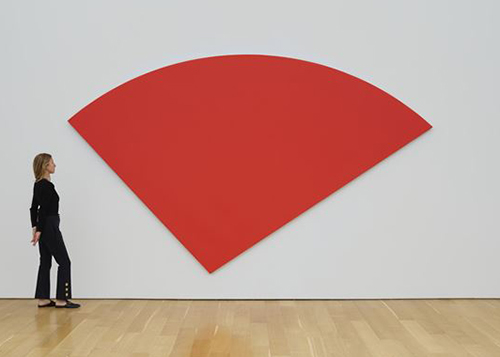
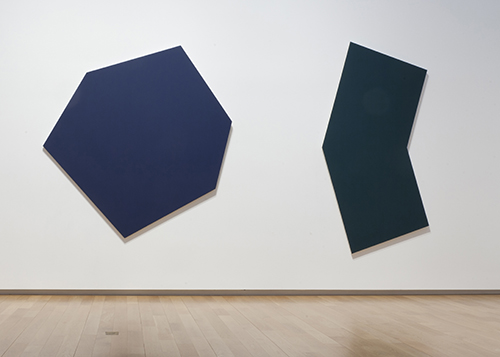
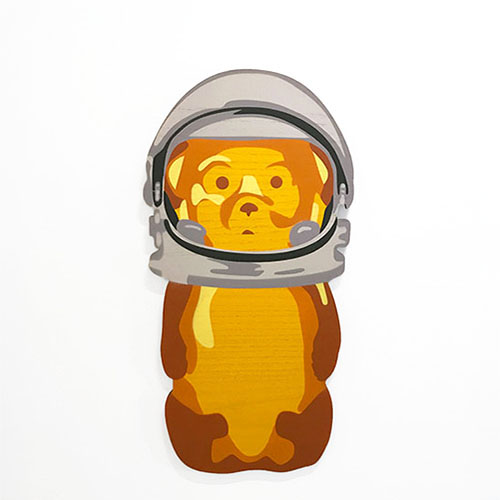
I myself paint Honey Bears with different outfits and accessories. Once you like the Honey Bear, you are going to get a kick out of seeing it holding a surfboard, wearing an astronaut helmet, or in lab goggles. The Honey Bear is the familiar, and the outfits and accessories are the adjacent.
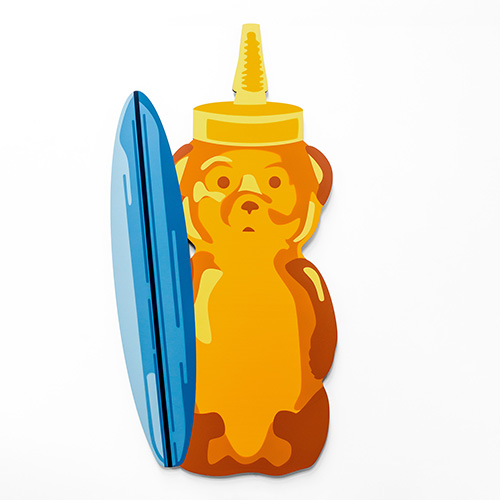

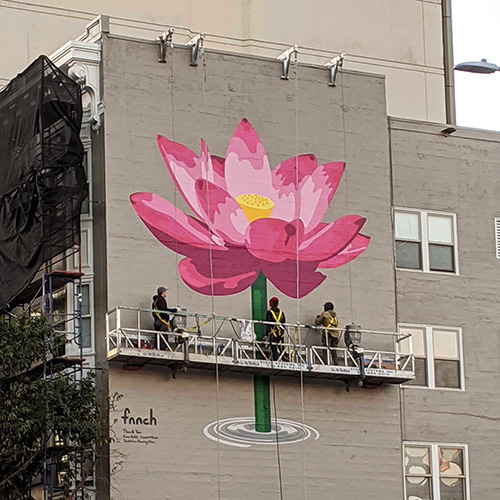
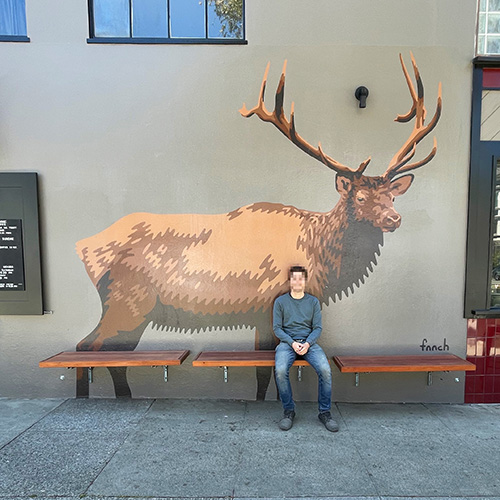
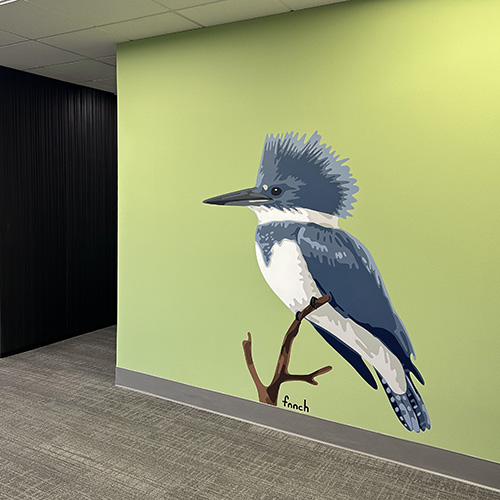
I hope that I have also branded a style, and that people who enjoy seeing my Honey Bears also like the lotus flower, elk, and Belted Kingfisher. In this case the style is the familiar, and the different subjects are the adjacent.
Let me be very clear: the market rewards you for repetition, not novelty. Or at least it does once you have found Image-Market Fit. People like what is familiar.
Some artists have made careers through simple repetition, but much more rewarding for you and your fans is the adjacent familiar. It is like pop music. People like to be pushed, but only slightly. The images you paint must be different from what has been done before, but once you find something that resonates, you can explore the adjacent territory. The whole body of work gains power as you develop it, and your audience gets to join for the ride, delighting in each new exploration.
If you look at every successful artist, you will find that their work is in some way repetitive. A Keith Haring work is so iconic because he repeated the same style so many times.
In this way, art is aesthetic research. I do not know how a lawn flamingo will look in my style, but I am interested to see, and I paint the lawn flamingo to find out. Your image or style is a constraint, and you apply creativity to explore what variations can be done within that constraint.
Most artists, once they achieve Image-Market Fit, explore the aesthetic territory around that image or style. Damien Hirst has done a round spot painting, a painting with a single spot cut in half, and a painting where a column of spots was offset, forming a spot chain. These are all explorations of the adjacent aesthetic territory / adjacent familiar. If an outcome is compelling, it can be the starting point for further exploration.
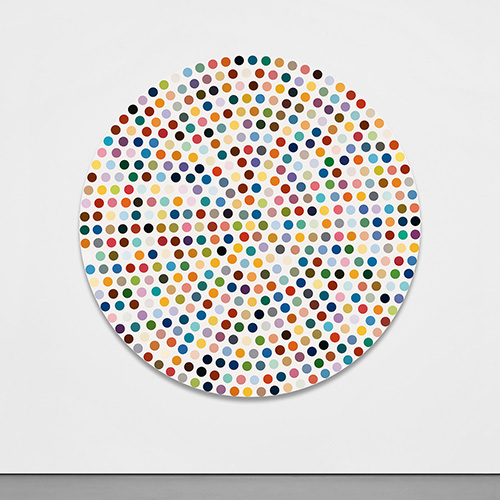
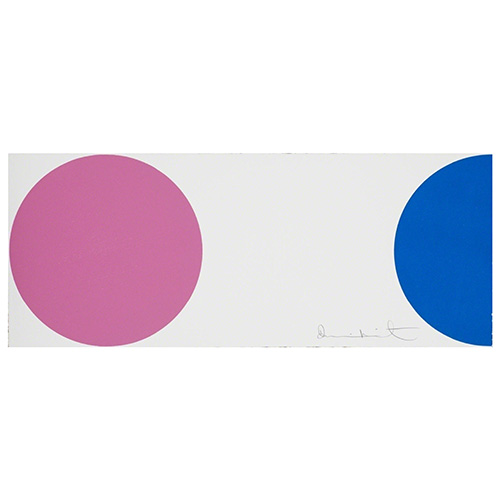
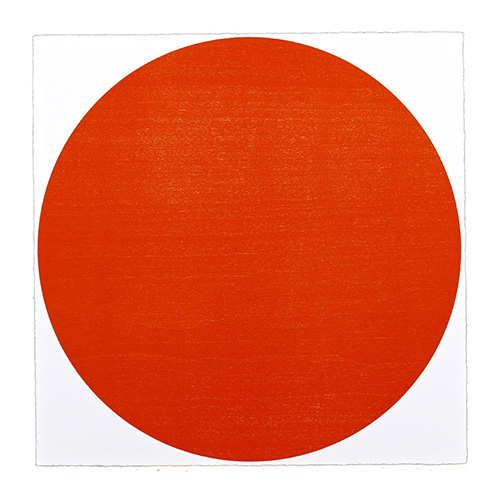
Hopefully the image or style you establish has substantial aesthetic possibility. Hirst's spot paintings have a relatively small dynamic range, with each one being fairly similar to the others. He did an admirable job exploring variations, and excitement was no doubt maintained by their beauty, profitability, and that his staff did the physical painting. Eventually, however, he did retire the spot painting series. Ellsworth Kelly, on the other hand, managed to find a style with substantial aesthetic possibility, and he explored that territory for seven decades.
Does this repetition get boring? It can. There are, however, two factors that work against boredom.
The first is the size of the aesthetic opportunity. Some styles and images have inherently more opportunities for exploration than others. Being creative within constraints is not boring.
The second factor is the fun of making art people like. The creator of Dilbert, Scott Adams says, "Success does not follow passion, passion follows success". That sounds crazy, but I have experienced it enough to believe it. If I am passionate about something, and it falls flat, then I find myself less passionate. But if I am passionate about something, and it connects with people, then I find myself excited to develop it further. Your work connecting with people is a reward unto itself, and that reward is motivating.
You will still, however, find yourself wanting to try totally new things. If you have success, I would encourage you not to make a hard break from your current body of work but instead to simply start another line of aesthetic research. Try new things, and maybe one of those will connect as well.
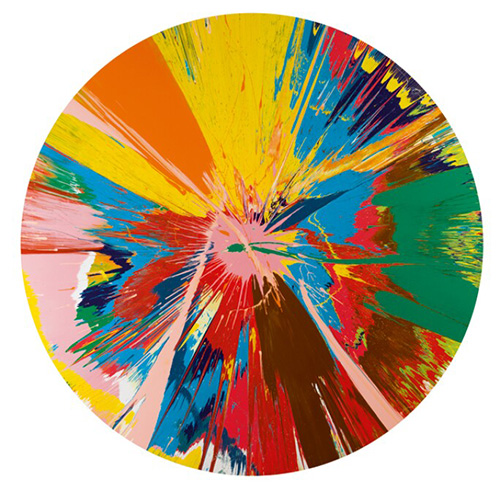
Damien Hirst does not just make spot paintings. He also makes spin paintings, butterfly paintings, medicine cabinets, and animals in formaldehyde vitrines. A spot painting is totally different from a shark suspended in formaldehyde, but both have connected with audiences. I view his large number of styles as a privilege he has earned by being one of the world's most successful artists. Do not develop two bodies of work until you have one with Image-Market Fit. And then add them judiciously.
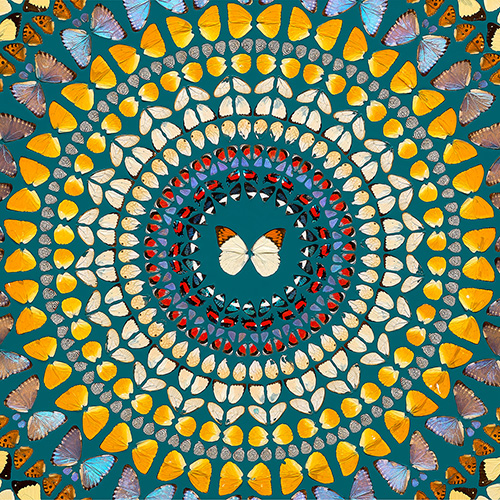
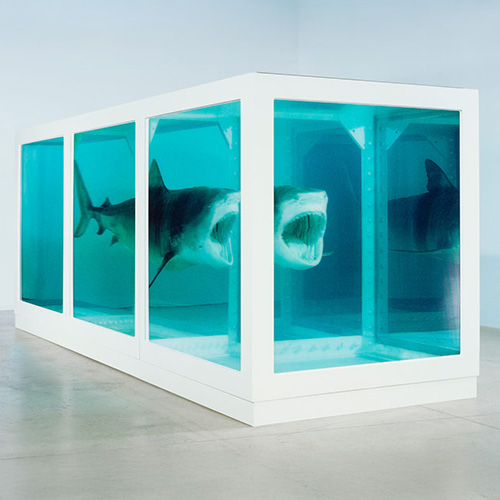
The Honey Bear is by far the most popular thing I paint, but I have only once had a show of just Honey Bears. There is always something else — duckies, sneakers, birds and flowers, and so forth. In one show I had a Koi painting that was a collaboration with one of my heroes, Jeremy Novy. This series sold out faster than any of the bear editions, which suggests I should think of new ways to remix that idea.
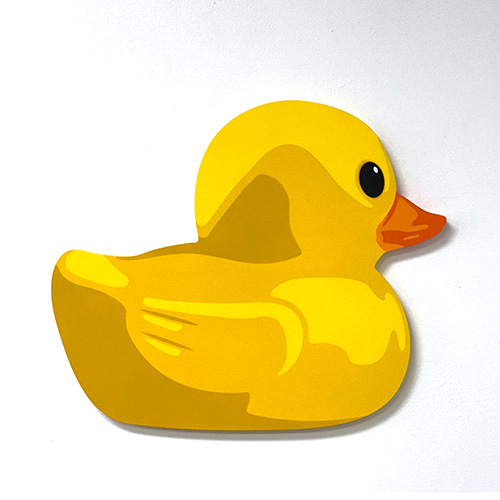

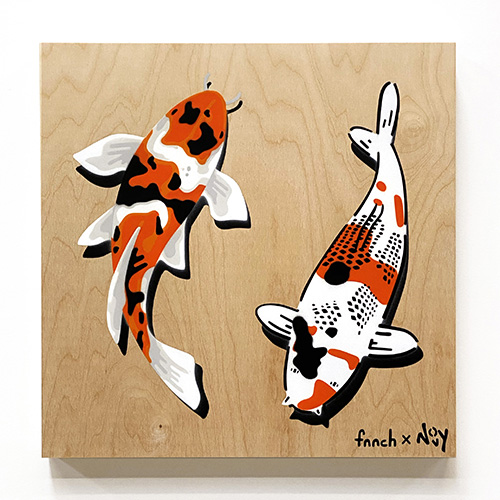
These explorations are all moves into the adjacent familiar of my style, not a move into entirely new aesthetic territory. When I originally wrote this essay I said, "I have ideas for that as well, but I feel I have more to do in my current domain of aesthetic research before I start exploring something entirely different". In the intervening years I have on occasion made things substantially different, such as my sculpture Solar Arch.

Growing tired of painting something people love is a good problem to have. Do not worry about it until it happens. May you be so lucky.
Again, you're arguing a distinction which the author agrees with. From the article:
> Most people who enjoy making art should not try to make it their full time job. When you turn an avocation (hobby) into a vocation (job) you have to do new things you do not enjoy.
I think perhaps you're getting hung up on some semantic quibble rather than focusing on the broader point. "Artist", "professional artist", "artist for a living", "someone who spends most of their hours making art but also needs to eat". Choose whichever term satisfies your complaint. These people need money to live, that's just how the world works.
I'm not sure that's a good measure of worth. Unless you think others would? What's the market value for your family?
I'm sure many on this forum have secondary passions, be it music, visual art, writing, or anything else. Yet most of us realized we need to make money, and that those pursuits can be done at a fairly high level in our leisure time.
https://encrypted-tbn0.gstatic.com/images?q=tbn:ANd9GcQajHzw...
https://encrypted-tbn0.gstatic.com/images?q=tbn:ANd9GcRpoQbV...
There's AI slop, and then there's human slop.
I am sure you believe in certain things, you have convictions of some kind, some ideals you espouse. How would you think any of those things could come true if you are like a head of cattle on a range, with no understanding of your state of existing solely for the benefit of the rancher, grazing not because you are cattle that likes grazing, but because the rancher likes you grazing for his own purposes?
Don't worry though, you are not the only one who is really rather aggressively and intentionally self-deluding and seemingly unable and unwilling to see reality, since the soma he is fed is so pleasant and comfortable and warm.
As opposed to your grandiose self worth based on knowing "secret" information lol. Go back to your cave tinfoil hat boy. No one cares.
The irony is that although I technically do know very much secret information, there is no secret information you would need to know, you could just know the very much publicly available and accessible information that has come out over the years through releases and leaks... yet you still don't know it even though it is available to you... but you instead just resort to your typical narcissistic attempts at using insult and abuse to deflect from your own ignorance and inflated bubble of self-worth. Poke that bubble and be a normal person and just inform yourself instead of being ignorant and faking it.
Now apparently it means having any standards or metrics of evaluation, period. Either you think everything is equal aesthetically, or you’re a snob.
Thankfully this kind of empty opinion isn’t convincing many people these days.
I just said having aesthetic opinions doesn’t make someone a snob.