I've boycotted reviewing for Elsevier for years, but it's easy for me - I'm in CS, where ACM, USENIX and IEEE offer higher-status publication venues and Elsevier journals are decidedly second-tier.
> a good journal—it has an 18% acceptance rate
is this supposed to be read as sarcasm?
amusing when the quality of a journal is measured by denying papers. kind of reminds me of one of the last People I (Mostly) Admire interviews, with Michael Crow of Arizona State https://freakonomics.com/podcast/a-new-kind-of-university where he critiques elite universities as measuring their value on how many students they reject, which ultimately makes them infeasible as institutions to distribute knowledge as much as possible
Much like the military industrial complex and the healthcare industrial complex they exist to fleece people via cartel.
The operating margin of Elsevier is around 40% which is huge! At the end mostly paid by tax-payer money.
Personally, I never review or publish with Elsevier.
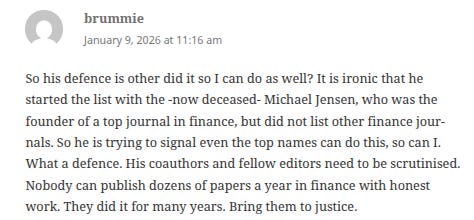
The state of research is dire at the moment. The whole ecosystem is cooked. Reproducibility is non-existent. This obvious cartel is a symptom and there should be exemplary punishment.
Publishers are commercially incentivized to simply maximize profit and engagement. The main actors are academics and most of them try to uphold the high standards and ethics. Yes there is free-riding, backstabbing and a lot of politics but there is also reputation and honesty.
A few academics give academia a bad name, at the worst possible time and when society needs honest, reliable, reproducible and targetted research the most.
Being an extractive business seeking to maintain a chokehold on scientists and their institutions is the least of Elsevier's problems.
More problematic for Elsevier is that the current system of "peer review" may turn out be a failed experiment in the history of science:
https://www.experimental-history.com/p/the-rise-and-fall-of-...
That Elsevier now also runs more into fake-articles and fake-research, all fueled by the money-addiction, just adds to the problem (and also invalidates Elsevier's model, by the way - why do we now have to deal with fake science that is costly? That is Elsevier's business model). I fail to see why taxpayers money has to go into private companies for research already financed by the taxpayers. We are paying twice here, Elsevier.
It is becoming clearer and clearer that peer review is a systematized band wagon fallacy.
It relies on the belief that one’s peers in a competitive field, presented with new ideas and evidence, will simply accept it.
And yet, “science progresses one funeral at a time” is an old joke.
“Peer review” is an indication an idea is safe for granting agency bureaucrats to fund, not an indication of its truth, validity, or utility.
https://gowers.wordpress.com/2012/01/21/elsevier-my-part-in-...
It's only ever been an opportunity for other scientists (ideally more competitive than they are today) to see if they can spot some methodological problem.
Industry and youtubers are making significant scientific progress. (I'm mostly joking about youtubers, but it does happen)
I think Academia is where B/C-list performers pretend they are A-list.
(See Project DEAL: https://deal-konsortium.de/en/agreements/elsevier)
Our metrics for judging the quality of academic information are also the metrics for deciding the success of an academic's career. They are destined to be gamed.
We either need to turn peer review into an adversarial system where the reviewer has explicit incentives to find flaws and can advance their career by doing it well, or else we need totally different metrics for judging publications (which will probably need to evolve continuously).
We assume far too much good faith in this space.
But, the internets' writers are not responsible for meeting your expectations.
Accept things for what they are. You can still bring up your points.
Without critiquing random people for not writing what you "hoped". That isn't a sensible standard.
Goodhart's law states "When a measure becomes a target, it ceases to be a good measure", and that's what we see here. There is a strong incentive to publish more instead of better. Ideas are spread into multiple papers, people push to be listed as authors, citations are fought for, and some become dishonest and start with citation cartels, "hidden" citations in papers (printed small in white-on-white, meaning it's indexed by citation crawlers but not visible to reviewers) and so forth.
This also destroys the peer review system upon which many venues depend. Peer reviews were never meant to catch cheaters. The huge number of low-to-medium quality papers in some fields (ML, CV) overworks reviewers, leading to things like CVPR forcing authors to be reviewers or face desk rejection. AI papers, AI reviews of dubious quality slice in even more.
Ultimately the only true fix for this is to remove the incentives. Funding and careers should no longer depend on the sheer number of papers and citations. The issue is that we have not really found anything better yet.
If Elsevier had no reason to stop this, why did they stop this?
A lot of people are to blame here, but Elsevier is definitely among them.
Right now Elsevier is by far the biggest offender and also happens to the be the topic of the conversation and the article.
That being said, I'm happy to encourage open access.
Another example of government leaders choosing to not spend taxpayer money to pay for the expensive trials to get medicine approved for use.
Another example of voters voting for government leaders that campaign on privatizing the rewards in exchange for the promise of lower taxes.
>Academia is where B/C-list performers pretend they are A-list.
The ones having top credentials and little more have gotten more & more outnumbered by more capable thinkers every decade, it's been nothing but circling the wagons which ends up creating more of an insular environment for those who love eminence and an exclusive status more than anything else.
Citation needed.
Go to market cost billions and takes a decade. Doesn't sound like a thin layer. I'm not disputing fundamental research in academia is an essential fuel to keep innovation engines running. But the contributions of biotech is not "thin".
But I can't shake the impression that a lot, perhaps the vast majority, of science consists of academics (postdocs and untenured researchers in particular I suppose) stuck in the publish-or-perish cycle. Pushing pointless papers where some trivial hypothesis is tested and which no one will ever use or read — except perhaps to cite for one reason or another, but rarely because it makes academic sense. Now with added slop, because why wouldn't you if the work itself is already as good as pointless?
The system, as you say, is fucked.
I'd wager that I could name basically any field which does not have immediately obvious and proven ways to make money with through research.
There are lots of better things, like people making hiring and firing decisions based on their evaluation of the content of papers they have actually read, instead of just a number. If someone is publishing so many papers that a hiring committee can't even read a meaningful fraction of them, that should be a red flag in itself, rather than a green one.
edit: is what he seems to be about based on the linked article
"Peer reviewed" as a binary concept might be as well, given that incentives have aligned to greatly reduce its filtering power.
They might both be examples of metrics that became useless as a result of incentives getting attached to them.
It is a personal shitpost and I'm not sure what is interesting about it.
You could probably say the same about various medical devices/medicines. The internet. Chemistry/plastics.
Sociology/psychology is historically unfalsifiable, and mostly useless, those are truly detriments.
quantum physics might be useful, but I think even there, industry will do it better.
Oh boy, you seem to be missing the forest for the trees. When science was a hobby of the rich, there was no need to measure output. Only when "scientist" became a career and these scientists started demanding government funding (which only really crystallized in the 20th century), then we started needing a way to measure output.
You could try doing away with an objective measure of academic output and replace it with the "social fabric of researchers and institutes" (whatever the fuck that means) instead , but then all you'd have is a good ol' boys club funded by taxpayer money.
The decision makers who are the target audience for these metrics value "objective" data. They value the appearance of being quantitative, but lack the intellectual tools to distinguish between quantitative science and pseudoscience with numbers bolted on.
That's modern bureaucracy in a nutshell.
There’s not a whole lot to gain for the individual or even the institution unless they hit an absolute home run on the first try that also shows positive results very quickly. More than likely the decision will be questioned at every turn
One of the things that is so deceptive is the way so many people think that ways to make money need to be both obvious and proven.
Of course you have to be very good at math or natural science to be able to figure out how to support your own research so you can get way more accomplished than you could at a unversity.
All others need not apply.
Most universities wouldn't act on your application anyway, if you got very far without being on the academic track, that could make lots of people look bad who would prefer to keep the status-quo more restrictive.
Edit: The threat to the status-quo must have gotten bigger than I thought, defensive reactions are popping up quicker than ever.
Science is actually progressing at an amazing rate in recent years. We are curing diseases and understanding more about life and the universe faster than ever.
Just briefly skim some top journals right now:
Here's an amazing 'universal vaccine' for respiratory viruses in mice https://www.science.org/doi/10.1126/science.aea1260
here are brand new genome editors in human cells https://www.science.org/doi/10.1126/science.adz1884
Here's amazing evidence of an ancient lake on Mars https://www.science.org/doi/10.1126/science.adu8264
Here's a meta-analysis of 62 (!) different studies on GLP1 receptor agonists to figure out whether they can contribute to pancreatitis https://onlinelibrary.wiley.com/doi/full/10.1002/edm2.70113
(covered here https://www.nature.com/articles/d41586-026-00552-6)
Here's identification of a new mechanism of resistance in Malaria https://www.nature.com/articles/s41586-026-10110-9
Here's curing a genetic disorder using gene editing in mice https://www.nature.com/articles/s41586-026-10113-6
Here's a study that has figured out that as CO2 levels rise, there's less nitrogen in forests https://www.nature.com/articles/s41586-025-10039-5
and here's personalized mRNA vaccines curing people of breast cancer https://www.nature.com/articles/s41586-025-10004-2
Like all of these are just from the past month or two and are pretty astounding advances. And they are just a subset of all of the scientific advances recently. All of them have contributors in academia (and science performed outside of academia would not exist without academia, as it depends upon it for most of the conceptual advances as well of course as for scientist training).
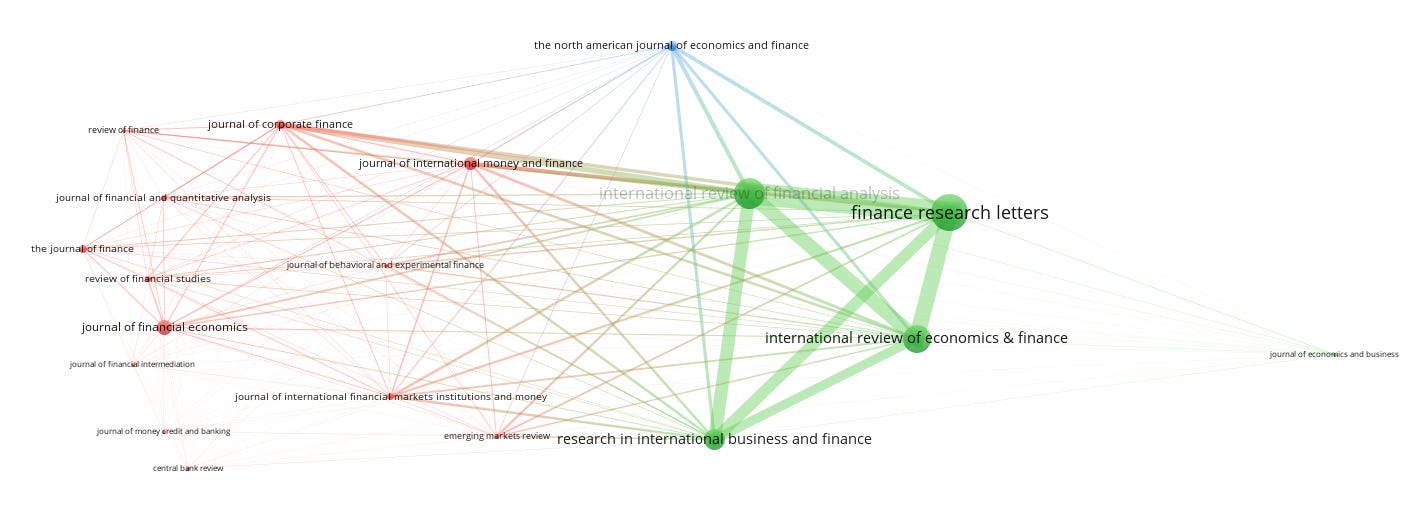
1. Stuff like paper mills and complete fraudsters exist, but for the most part, these things are the exception, not the rule. Your average scientist doesn't even hear or think about these things and the weirdos who cause them, to be honest. Nobody has ever heard of "International Review of Financial Analysis" outside of an extremely niche economics subfield.
2. "Public or perish" is not a cycle, really. While I believe it's not good for people to be constantly working under pressure, the fact that academia is so competitive currently is a healthy sign. It's because we have so many people with extremely impressive resumes and backgrounds, doing extremely impressive work, that makes funding so competitive. And when funding is competitive, it's no wonder that funders prefer to fund people who have produced something and told the world about it ("publish").
3. Fraudsters and hucksters have been in science forever. Go read an account of science in the early 19th century. There are tons and tons of stories of crazy scientists who believed ridiculous things, scientists who kept pushing wrong dogma, and so on. And yet nobody knows about them today, because the evolutionary process of science works: the truths that are empirically verifiable win out, and, given enough time, the failures are selected against.
https://www.experimental-history.com/p/the-dance-of-the-nake...
It's outrageous racism. A conclusion about all minorities based on one person's math mistake, where the logic is entirely based on shared skin color.
If you replace the races and make it a conclusion about legacy admissions or something, it's obviously stupid and illogical, right?
"This white guy doesn't know Afghanistan from Kazakhstan. More proof legacy admissions is bad!"
Well that's a blatant lie. Here's a quote for you:
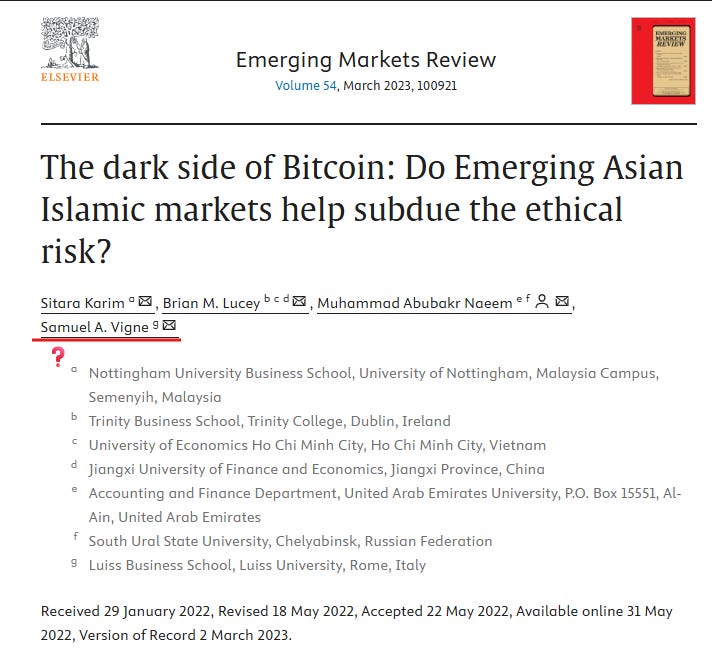
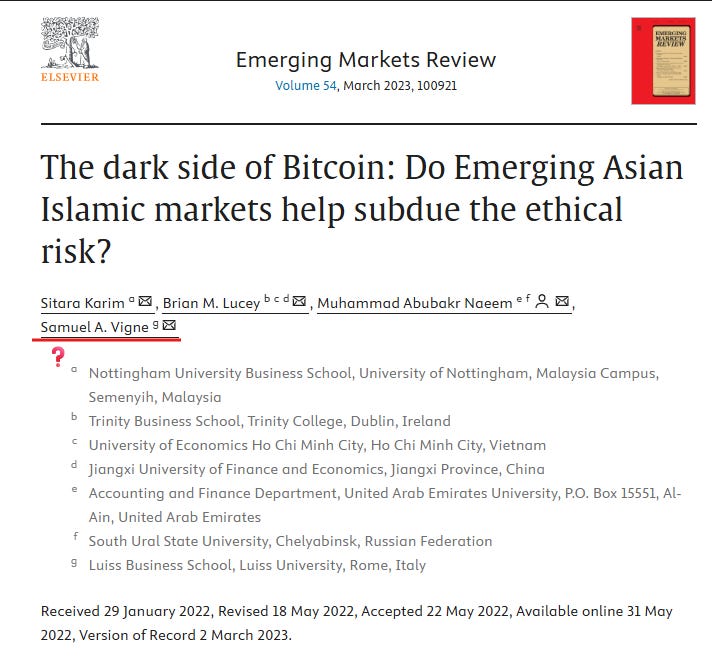
> After submitting that draft to the Elsevier finance ecosystem, that draft was scrubbed from SSRN, and in the final published version, an additional author (Samuel Vigne) was added as a new author, with an “equal contribution” statement
That's EXTREMELY BAD. It's someone approaching your team after the research is done and asking to be put on the paper in exchange for publishing it.
(People said nice things too.)
My point is that outside of fields which can somehow make money through research, not much scientific progress is made outside of universities. I don't see how you address this.
The collapse in faith of institutions in various ways, for different reasons has created a vibe that gives any criticism of any institution has a whiff of plausibility, and these days that's all you need for some people to treat it as settled fact. That is basically what I think the poisoned and anti intellectual attitude of hedonic skepticism is all about.
The pace of technological advance over the past 5-10 years is staggering in so many ways. If our era weren't known for collapse of democracies and conflict, it could have been heralded as a major historical moment of technological advance on a number of levels.
Publishing uninteresting science for the record is different from an incentive to go against the crowd to refute incorrect claims.
Both would be good especially these days.
It will just pick the best allocation metric it has available, even if that metric would never stand up to scrutiny in the private sector, or any more directly measured domain, public or private.
On Christmas Eve, 9 “peer-reviewed” economics papers were quietly retracted by Elsevier, the world’s largest academic publisher.
This includes 7 papers in the International Review of Financial Analysis (a good journal—it has an 18% acceptance rate):
RETRACTED: Financing Irish high-tech SMEs: The analysis of capital structure
RETRACTED: Extreme spillovers across Asian-Pacific currencies: A quantile-based analysis
RETRACTED: Identifying the multiscale financial contagion in precious metal markets
RETRACTED: Is Bitcoin a better safe-haven investment than gold and commodities?
RETRACTED: Cryptocurrencies as a financial asset: A systematic analysis
Plus two more retractions in Finance Research Letters (29% acceptance rate):
Two days later, three more papers were retracted at the International Review of Economics & Finance (30% acceptance rate):
RETRACTED: Oil price shocks and yield curve dynamics in emerging markets
RETRACTED: ESG disclosure and internal pay gap: Empirical evidence from China
Combined, these 12 papers have 5,104 citations.
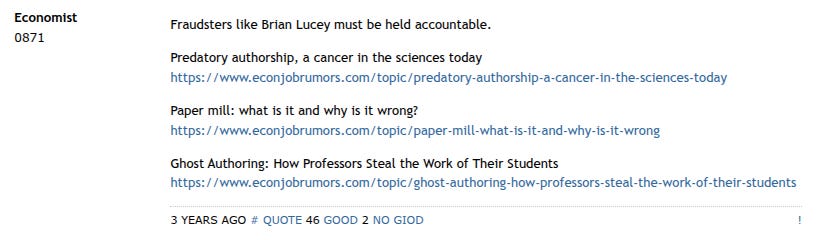
All 12 papers had one thing in common: Brian M Lucey, Professor of International Finance and Commodities, Trinity College Dublin — the #1 ranked economics and business school in Ireland — as a co-author.
Lucey published 56 papers in 2025, one paper every 6.5 days. Lmao.
Lucey has published 44 papers in Finance Research Letters alone, an Elsevier journal he edited.
[


Professor Brian Lucey
I emailed Lucey for comment, but he did not respond.
Brian Lucey… where have I heard that name before?
Oh yeah, he bullied me on Twitter in 2023.
[


‘If you wait by the river long enough, the bodies of your enemies will float by.’
— Sun Tzu
Thanks for reading Chris Brunet! This post is public so feel free to share it.
The stated reason for the retractions was that: “review of this submission was overseen, and the final decision was made, by the Editor Brian Lucey, despite his role as a co-author of the manuscript. This compromised the editorial process and breached the journal’s policies.”
In plain terms, Lucey was serving as editor while approving his own papers. The result was a complete bypass of peer review—an abuse of editorial authority that functioned as a citation-cartel scheme.
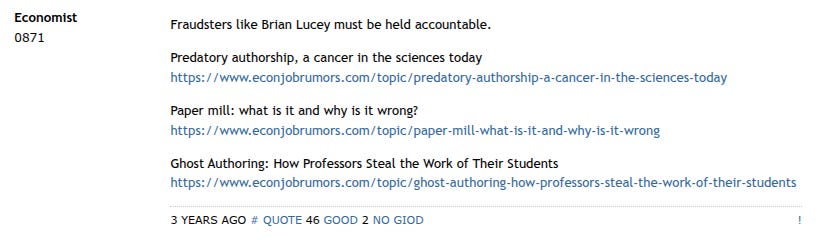
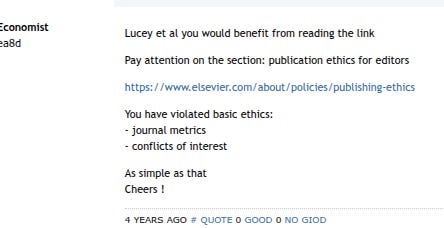
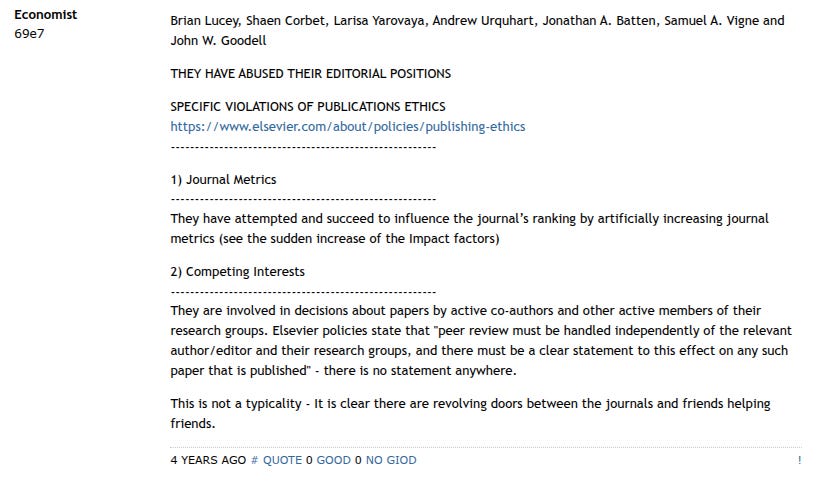
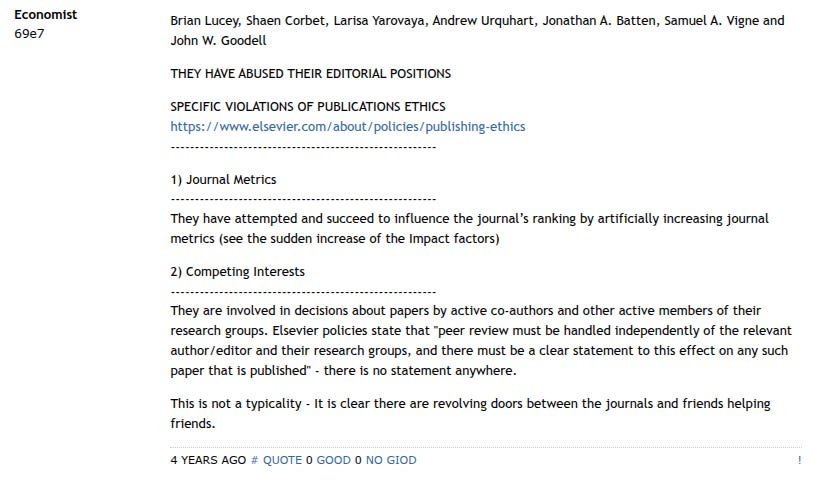
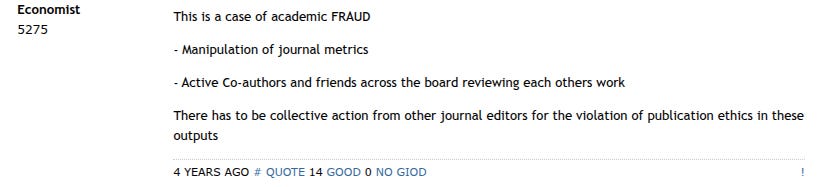
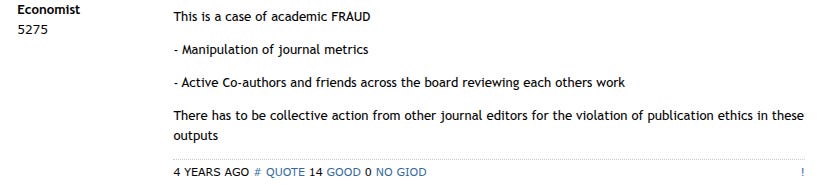
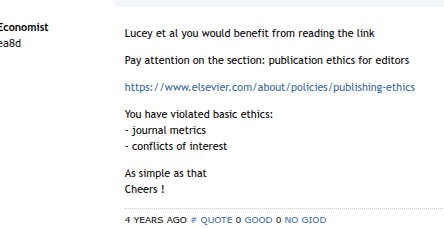
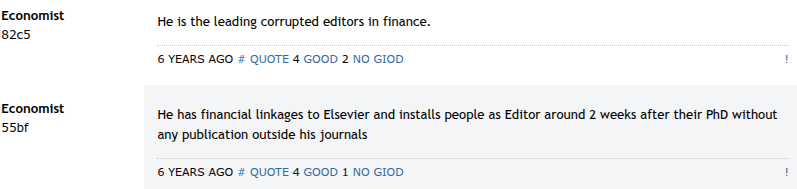
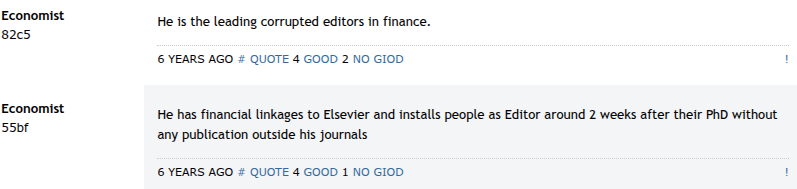
Apparently this was an open secret in the profession for many years, with EJMR comments going back 5+ years explicitly calling him out as a cheater:
[


[

[

[
[
[

[

[

[

[

[

[

[

[

[

[
[
[

[

[

[

Along with the 12 retractions, Lucey was removed as an editor at 5 journals: International Review of Financial Analysis, the International Review of Economics & Finance, Finance Research Letters, Financial Management, & Energy Finance.
[
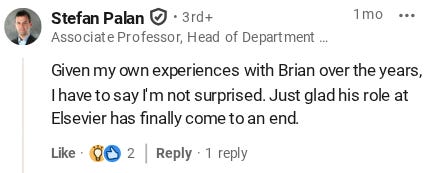
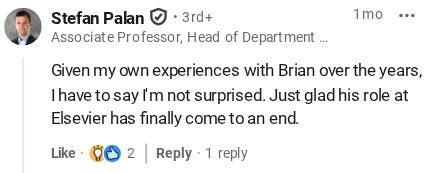
Lucey remains as editor-in-chief at Wiley’s Journal of Economic Surveys.
I emailed Wiley, and they provided me with this statement:
We are aware of these concerns and have investigated Prof. Lucey’s activity on Journal of Economic Surveys. Our research integrity team did not find any concerns regarding conflict of interest or mishandling of papers, nor has Prof. Lucey published any papers in the journal since he joined the editorial team as a co-editor in 2024. We expect full commitment and adherence to our editorial practices and standards, and we will be monitoring the situation to ensure that there is no improper handling of papers at the journal.
In response to Wiley’s statement, one EMJR user wrote: “I am baffled how they could possibly still have confidence in him, given his serious and systematic ethical lapses in editorial positions. Sounds somewhat naive to expect ‘full adherence to our editorial practices and standards’!”
Until being purged from the leadership of these 5 journals, Lucey played a central role in coordinating Elsevier’s Finance Journals Ecosystem, which allows “participating journals to suggest transferring a rejected manuscript to another journal in the system without the need for resubmission and the associated cost."
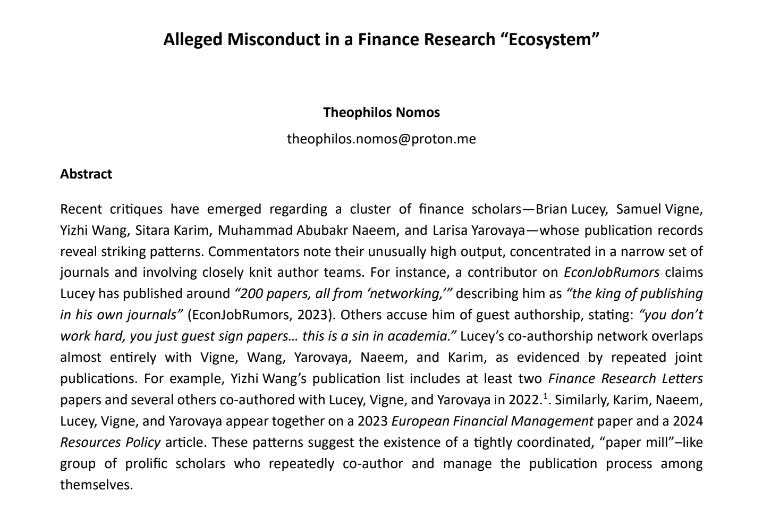
That system, and the editors involved, “came under fire last year when a preprint suggested it might facilitate citation stacking as a way to boost journal impact factors. The analysis in the preprint also suggested a citation ring involving Elsevier editors could be at work.”
I emailed the anonymous “Theophilos Nomos” who wrote this paper, but they did not respond to my email.
[
[
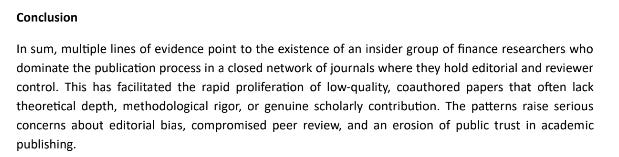
That pre-print names Samuel Vigne, a finance professor at Luiss Business School, former PhD student of Lucey, and prolific Lucey co-author (they have published at least 33 papers together) as a core node of Lucey’s citation cartel.
[


Multiple publications by Vigne and Lucey are flagged on PubPeer.
https://pubpeer.com/search?q=samuel+vigne (21 results)
https://pubpeer.com/search?q=brian+lucey (55 results)
This example neatly illustrates how their co-authorship trading scheme operated:
It describes a draft uploaded to SSRN with three authors:
[
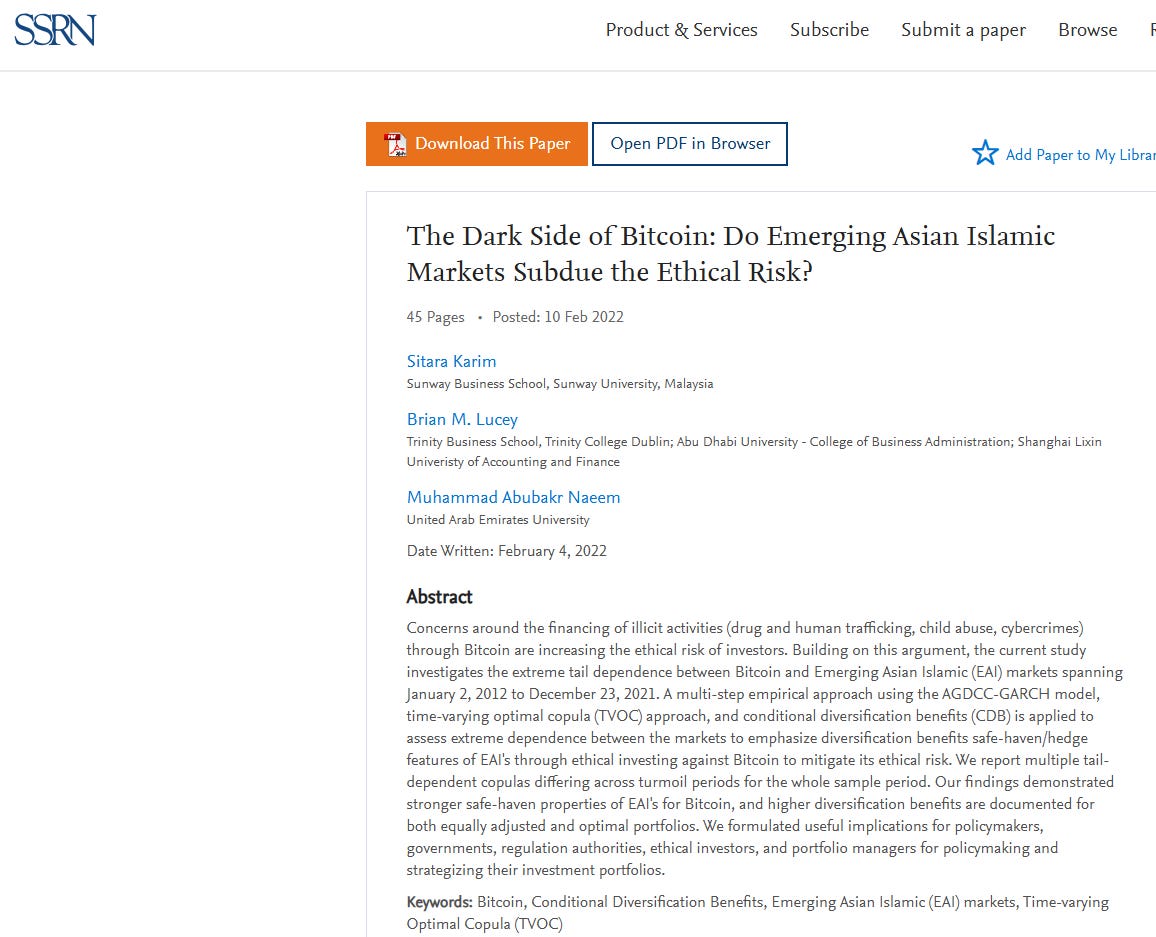
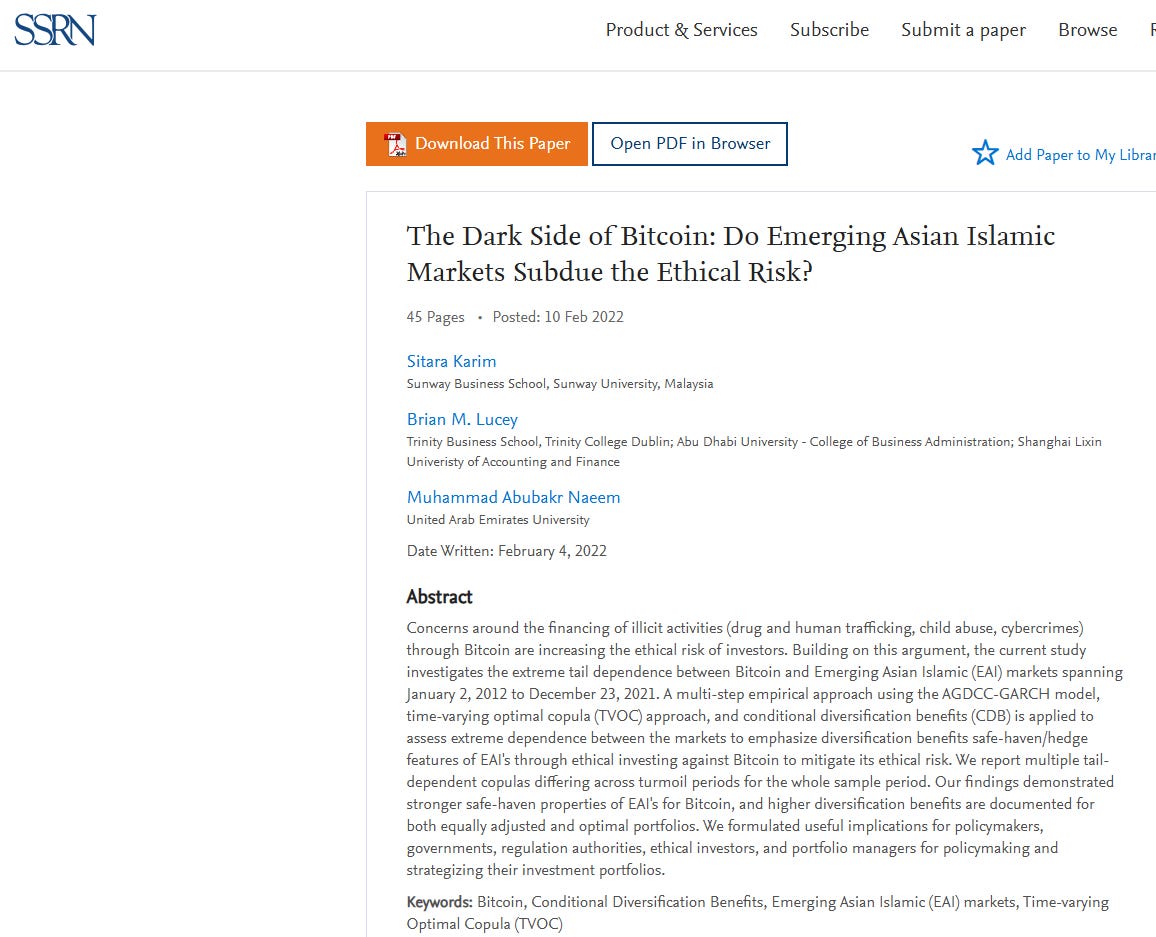
After submitting that draft to the Elsevier finance ecosystem, that draft was scrubbed from SSRN, and in the final published version, an additional author (Samuel Vigne) was added as a new author, with an “equal contribution” statement. The two versions are otherwise identical, containing the same figures, sections, and text.
[
Co-authorship trading is only one part of the operation. The other is citation stacking. In this model, a small, tightly linked group funnels an enormous volume of papers into the same handful of journals, then systematically stuffs those papers with citations to one another. The result is a rapid, artificial explosion in citation counts that makes them look like influential geniuses.
Take John Gooddell, a professor at the University of Akron and a Lucey co-author. Gooddell has published 68 papers in Finance Research Letters alone, a journal edited by Lucey. If each paper contains even a modest 50 references, that amounts to roughly 3,400 citations recycled through a single outlet. In 2024 alone, Gooddell published 61 papers. He’s not doing research. He’s farming citations.
Following Lucey’s retractions, Samuel Vigne was removed as the editor-in-chief of International Review of Financial Analysis and Finance Research Letters.
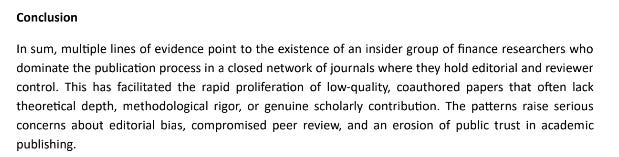
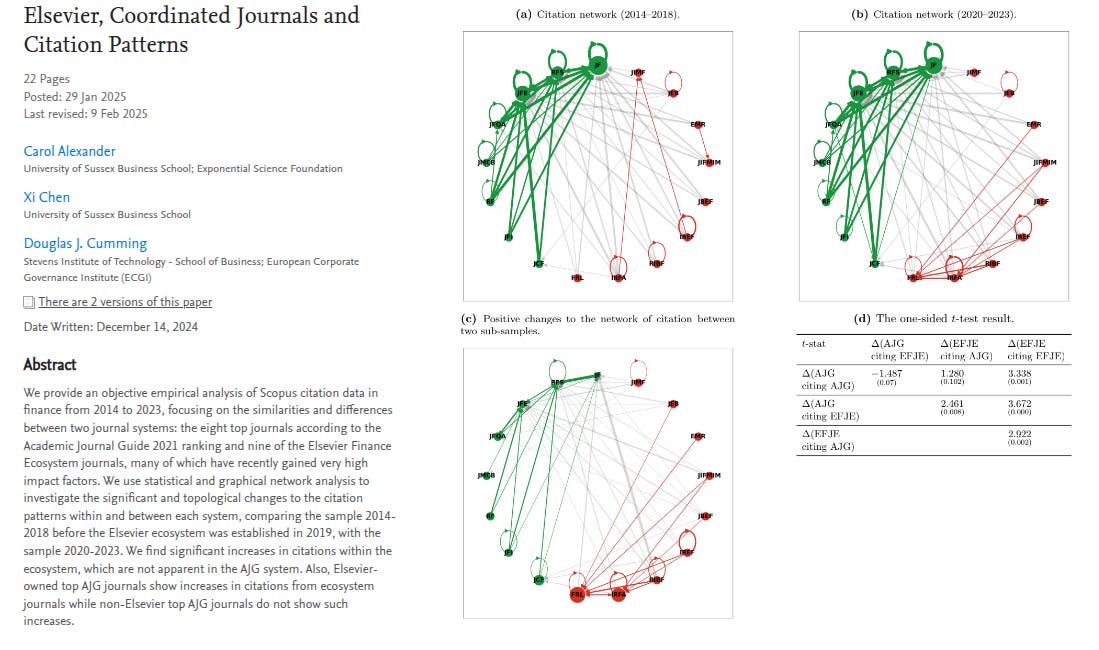
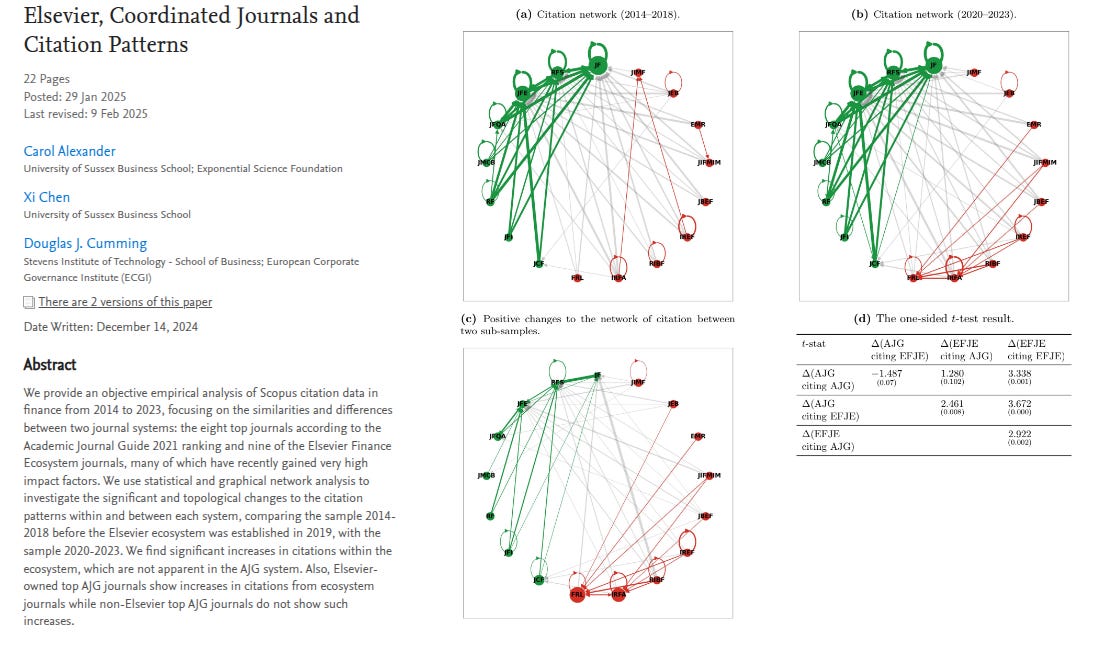
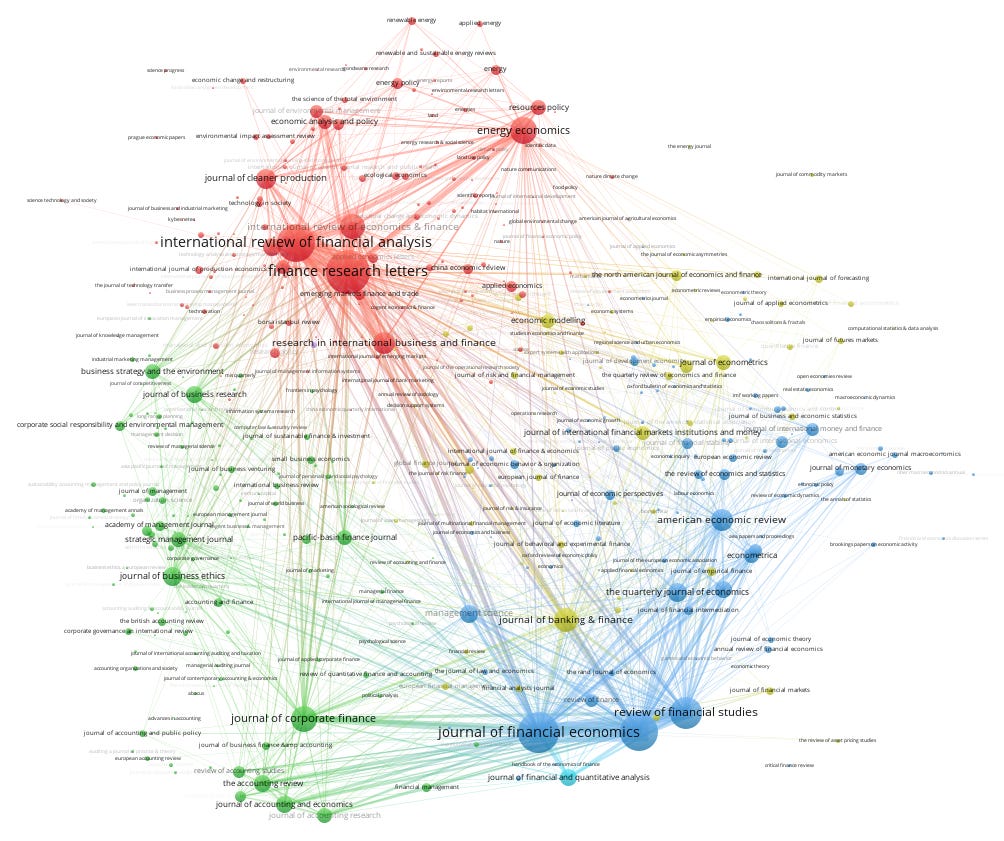
In addition to that anonymous pre-print, there is also a 2025 paper written by actual professors with sophisticated econometric analysis & graph theory which describes the citation cartel in much more detail. The conclusion of that paper is: ”Elsevier ecosystem journals benefited from the creation of the ecosystem … Elsevier journals in the ecosystem have overlapping editors and Elsevier appoints these editors in coordination with a single academic [Brian Lucey] that manages the fleet of ecosystem journals.”
[
[
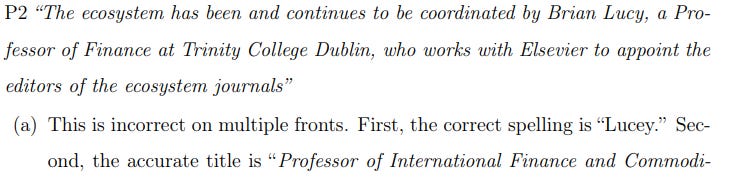
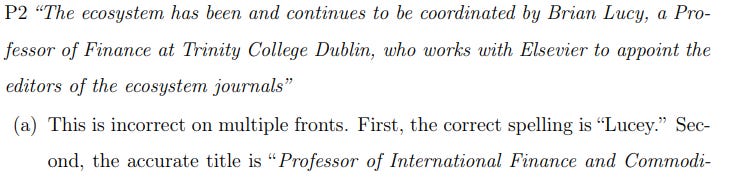
Brian Lucey posted a reply to this paper, which was extremely weak and does not contain any tables or figures. It mostly ignores the data and structural model of the citation ring and instead leans on Lucey’s “lived experience” as an editor (“we have experience shepherding…”), while also nitpicking semantics and phrasing, such as Lucey complaining that they called him a “professor of finance” instead of his full honorific, “professor of international finance and commodities.”
[
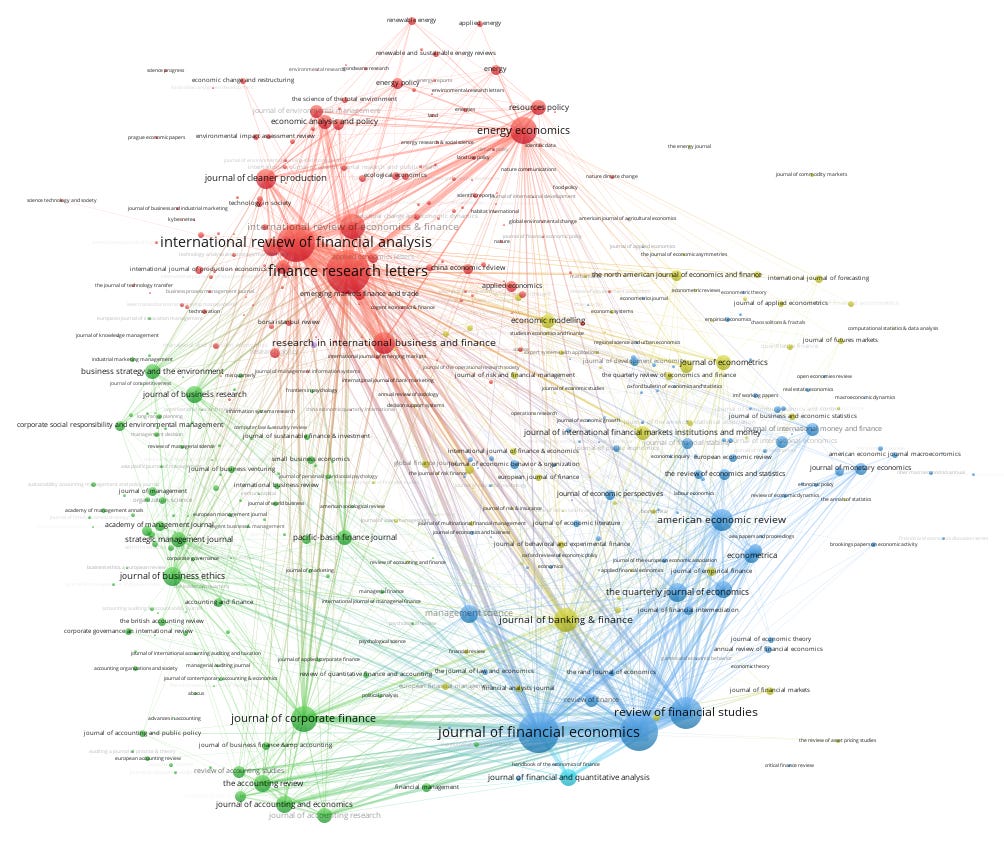
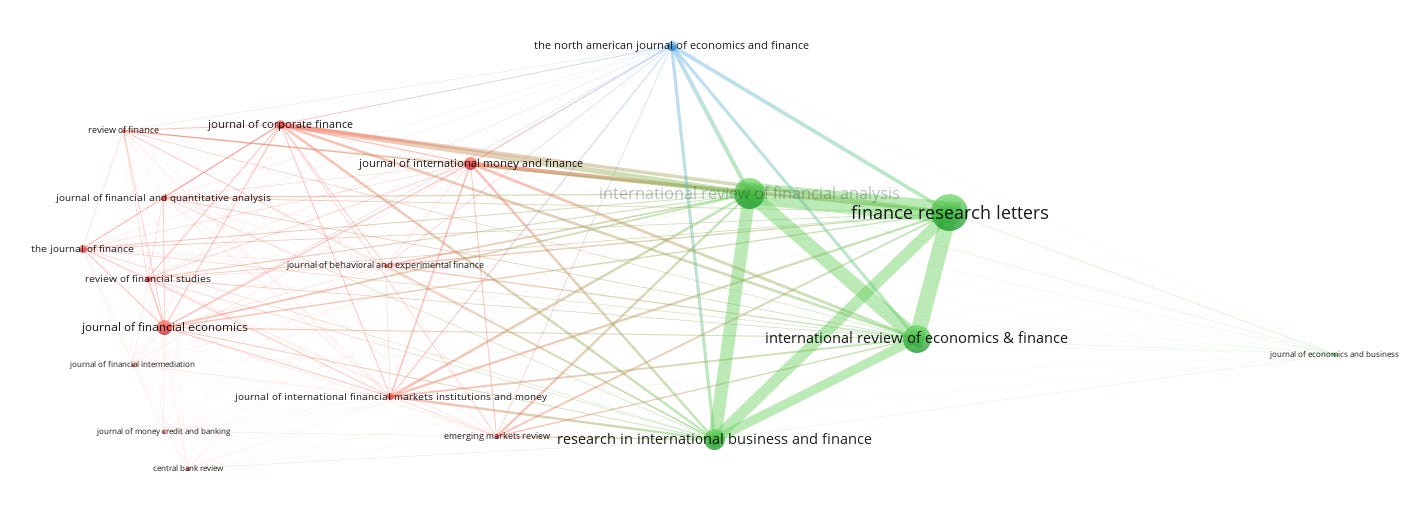
The Elsevier ecosystem web page went live on 4 November 2020 , according to Lucey’s rebuttal. Below is a visualization of the network before and after this transition date, which shows a clear distortion of the citation network. During 2021-2025, the Ecosystem citations per article is 103 % higher.
2016-2020: (Before)
[
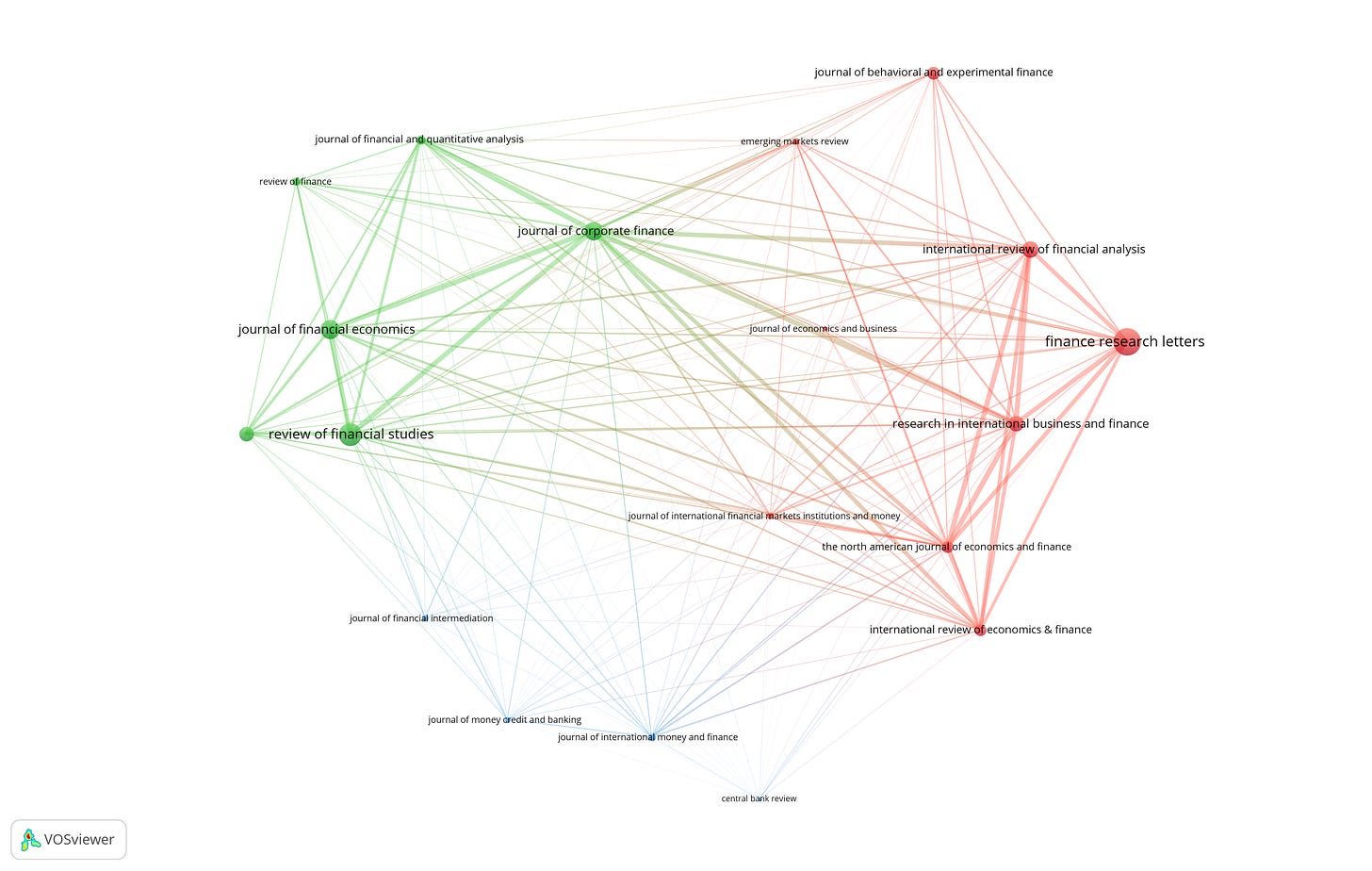
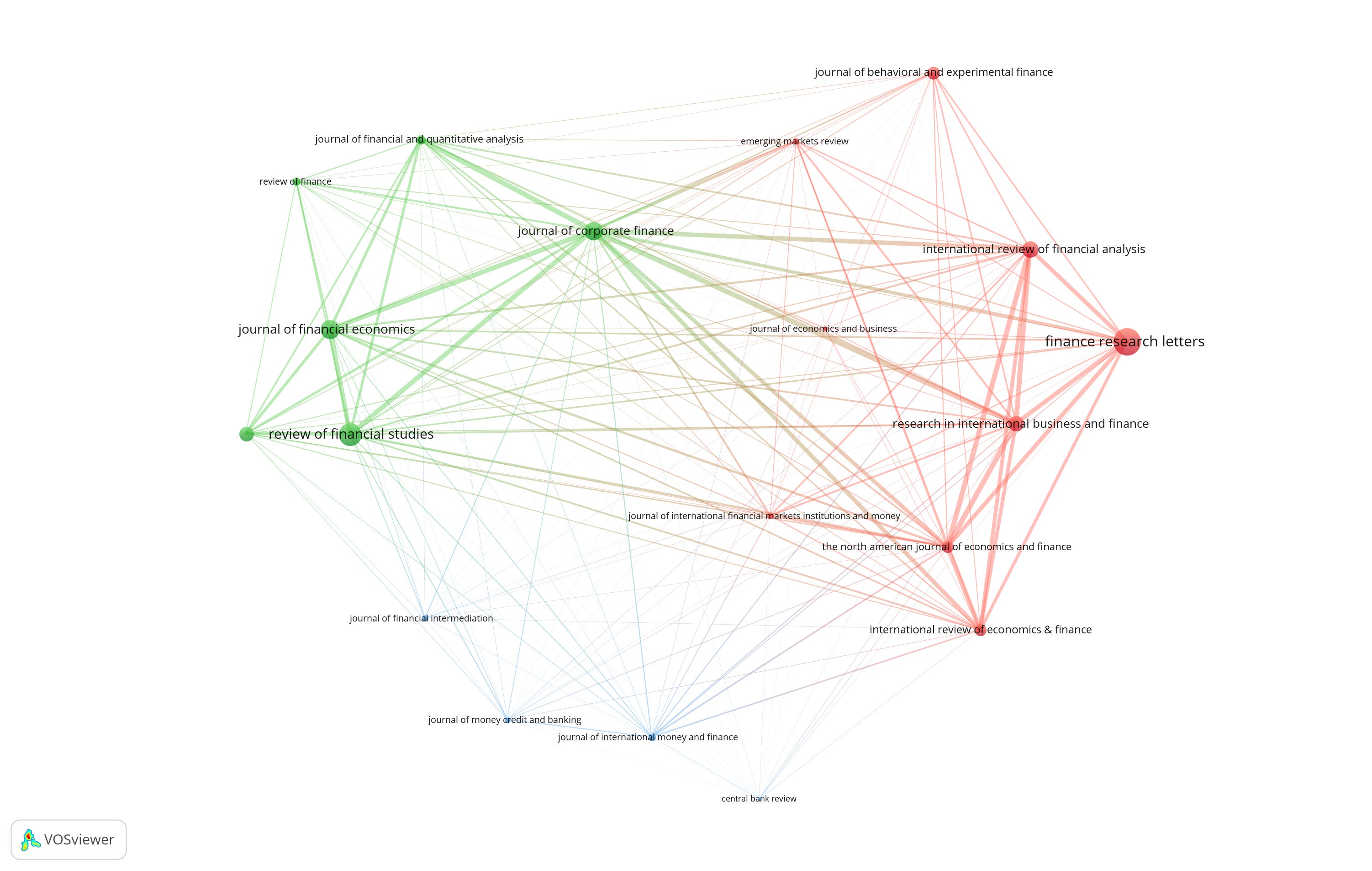
2021-2025: (After)
[
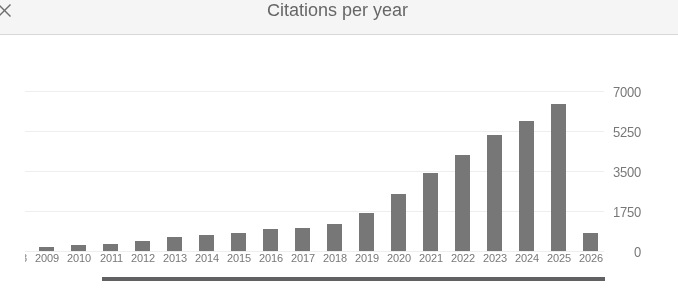
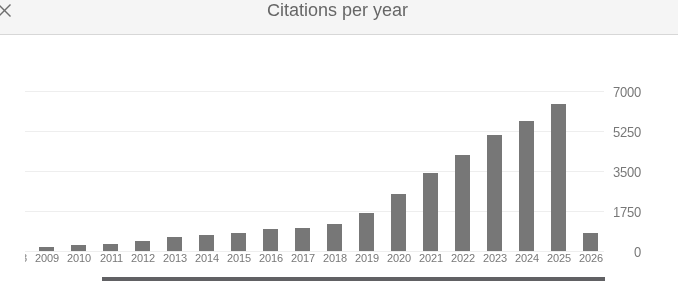
2020 is also the year where Brian Lucey’s citation profile exhibits an exponential “J-curve”, a Hallmark of citation rings. Did he suddenly become a well-respected genius in 2020? Or did he figure out how to cheat the system?
[
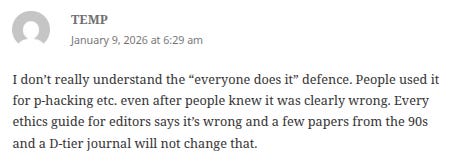
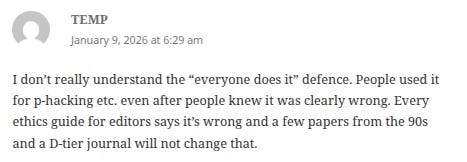
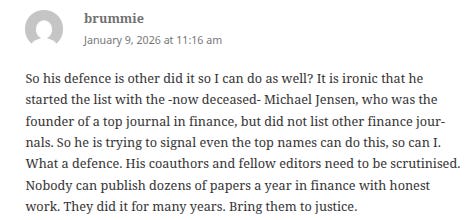
In a comment to Retraction Watch, Lucey further argued that citation cartels are not a crime, because everyone does it.
”Because here’s the thing: Elsevier are aware of [editors publishing in their own journals] as a pretty common practice in finance and economics. We’ve given them evidence of hundreds of instances of this. And nothing has happened, which does raise the question, you know, maybe they’re going to go back and go look at all these. Presumably, they will treat everything the same.” Lucey shared his list of such instances. It includes 240 articles, 133 of which are in Science of the Total Environment, which was delisted from Clarivate’s Web of Science in November.
(N.B.: As several commenters have noted, the list linked above includes citations to editorials and special issue introductions, which are typically penned by editors-in-chief. The disclaimer at the top of the document Lucey provided reads, “In no way is this meant to suggest any ethical or other breaches. It is a list of persons who occupied a EiC or similar role in the Journal mentioned at the same time as a paper in which they were an author or coautho[r].”)
[
[
Dr. Thorsten Beck, in a blog post, confirmed that no, not everyone does it, and yes, it is a crime.
[
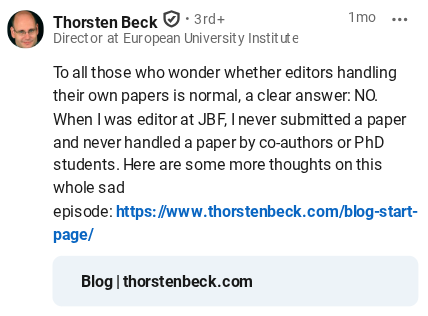
This incident raises an important question: is this common practice across academic journals? And are there rules for editors publishing in ‘their’ journals? As I was editor across three journals for a total of 11 years, I can certainly speak to this (and clearly say NO).
…
I don’t have formal confirmation but I have been told by several independent sources that ultimately even Elsevier realised that this editor was seriously damaging the reputation of the journal, appointing a second editor and then easing out the ‘doubtful’ editor from his responsibilities.
The fallout from the Lucey–Vigne era extends far beyond a handful of retracted PDFs. What it exposes is a structural weakness in how academic “excellence” is manufactured, measured, and monetized. By presiding over a coordinated cluster of journals, a small group of editors effectively gained the ability to print their own academic currency.
However, blaming Lucey and Vigne alone ignores the hand that fed them. Elsevier did not just “allow” this to happen; they engineered the environment for it to flourish, because of incentives: Elsevier’s internal metrics (Impact Factors) directly benefitted from this behavior. It was a symbiotic corruption: the editors received a fast-track to academic stardom, and Elsevier received a high-margin, high-volume production line of citable content.
This is the “paper mill” reimagined for the elite: not a basement operation in a third-world nation, but a polished, corporate-mandated factory within the halls o the world’s most powerful publisher. This is the natural result of a corporate mandate to maximize profits by bundling journals into monopoly-priced packages, forcing universities to pay for the very “prestige” that Elsevier’s own staff helped to dilute. As one EJMR commenter noted, “The tragedy isn’t that they cheated; it’s that the system was designed to let them thrive for a decade before anyone bothered to look at the data.”
The question now is whether Trinity College Dublin will fire Lucey.
They did not respond to my inquiry.
[


An editor of a psychology journal was offered $1,500 per accepted paper.
Richard Tol, a professor of economics at the University of Sussex, wrote that he was offered $5,000 per paper.
Muhammad Ali Nasir, a professor of Macroeconomics at Leeds University, wrote about how common selling papers is in European finance journals: “I had been made such offers from anonymous emails but I choose not to engage and in one case forwarded the email to EiC. I will be surprised if any editor is not approached by these people.”
This raises a multi-million-euro question: given their documented corruption, are the various “educational consultancies” and special-purpose vehicles operated by Brian Lucey and Samuel Vigne used to circulate ecosystem funds, conference fees, or “consultancy” payouts from authors seeking a shortcut to publication?
One anonymous economist says:
Here is a hypothetical outline of how such a cash-flow scheme could function.
“Hello [unknown, distant institutions], we offer consulting services: €€€ for excellent advice on how to publish in top-tier finance journals. Our advice yields results.”
Money flows into companies.
Papers flow into journals.
Another anonymous economist says:
I’m not going to provide details on how to corruptly have a paper published. I’m just going to speculate on what could be going on in a situation like this. It could be based on “consultancy fees” for advice on publishing that you or your institution pay to one of those companies. They give some advice, including what papers to cite, etc, and if you follow their advice you are likely to be published in one of their journals. This could be attractive for researchers and institutions in, e.g., China and the Middle East.
Another anonymous economics professor I spoke to told me:
Universities in East and West Asia pay cash bonuses for publications. Some authors hire a broker (many advertise openly on Facebook), other authors contact the editor directly. The cash bonus is shared between the author, broker, and editor.
Besides selling papers, they also sell special issues, which allow the guest editors to do what they want.
And they sell positions on the editorial board, which are important for promotion to the next academic rank.
Some payments are in cash, others in kind.
Finally, they organize conferences. Registration fees more than cover the costs of putting on a conference. The conference name suggests it is organized by a society, but it really is Lucey who pockets the profits.
Brian Lucey and Samuel Vigne operate four private companies in Ireland and the UK classified under “other education,” likely functioning as consultancies or special-purpose vehicles for academic or policy work.
INTERNATIONAL CLIMATE FINANCE VENTURES COMPANY LIMITED BY GUARANTEE
FUTURE FINANCE AND ECONOMICS ASSOCIATION LIMITED
The existence of these consultancies warrants investigation into potential conflicts of interest and financial misconduct.
Thanks for reading Chris Brunet! This post is public so feel free to share it.
No posts
I address it with my whole life.
It would have taken my whole life if I had stayed and gotten my PhD anyway, so why not?
People can't expect dramatically different approaches to research to do anything but make it difficult for deep understanding between them.
You really have to have an open mind.
I see raw scientific progress that many outside of instiutions do not recognize, because so many brilliant experimentalists do not have institutional credentials.
So I had a head start and took advantage of it, kept giving chemistry lessons to colleagues as they went through graduate school.
Even invented something really cool in one of their labs when I wasn't even a student any more.
Naturally I have the greatest respect for PhDs in general because that in itself is a major achievement.
But I wouldn't have gotten this far in such a non-industrial environment, core industriousness might just be a differentiation factor.
It took a long time but eventually I came to the point where I just do science every day because I'm a scientist, and make money as a byproduct of what I do.
No different than a university lab where 90% - 99% of your experiments will never pay off, if you can't handle it under a variety of financial and/or institutional situations you might need to look at reasons why like I did.
Plus with a lifetime of more intense experimentation than if I had a PhD (really do not compare myself to others) I've got zillions of financial opportunities with chemicals in particular. The most important thing turned out to be curtailing the desire to make as much money as possible, most of this stuff is toxic.
Any kind of treadmill could have led to a much worse outcome.
I’d even argue that still today women and minorities are strongly disadvantaged at many institutions. I’d say that as a white male that recently left academia myself. I have seen how some of my colleagues have been treated.
I just pulled up the newest published math paper from arxiv. No one except universities will pay you to research "Quenched path limits and periodization stability for tilted Brownian motion in Poissonian potentials on Hd"
Just because your specific thing you are interested in researching has value to the free market, doesn't mean that all are so lucky.
A distressingly high percentage of humans like zero-sum status games. More people are happier when status is recognized as a semi-unbounded positive-sum game.
We are all lucky that universities will still pay for advanced math progress like you have cited.
Especially math, I stuck with that pretty good before I was allowed to touch chemicals.
One of the real advantages is that all you need is a blackboard and chalk, the progress you can make is quite a bit compared to so many other things.
As an outsider I observe the lucky ones to be the few that the universities are willing to pay. I think it would be better if there were more openings and better pay too.
I know what you mean, but nobody has paid me to do research since 1982 when I was working for a commercial research startup.
That's just what I do, and never wanted to stop.
I needed to be able to pursue whatever was within reach, knowing that almost none of it was going to be interesting to anybody else, financially viable or even worth money at all. Otherwise I would have actually stayed at the university.
My most valuable milestones may be in electronics anyway where I have no university training. Had a whole lot earlier start there though.
After a lifetime as an outlier, the consistent observation is that most of the institutional systems screen out more raw talent than they employ.
I may seem extreme but it's good for somebody to strongly represent viable alternatives for that talent so maybe there will be more alternatives someday.
I have always thought that universities should expand to encompass more of what they are doing right too, but I wasn't going to hold my breath :)