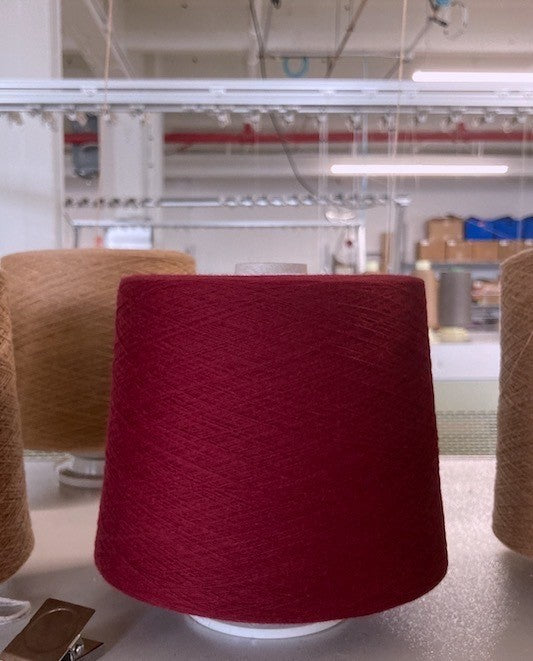
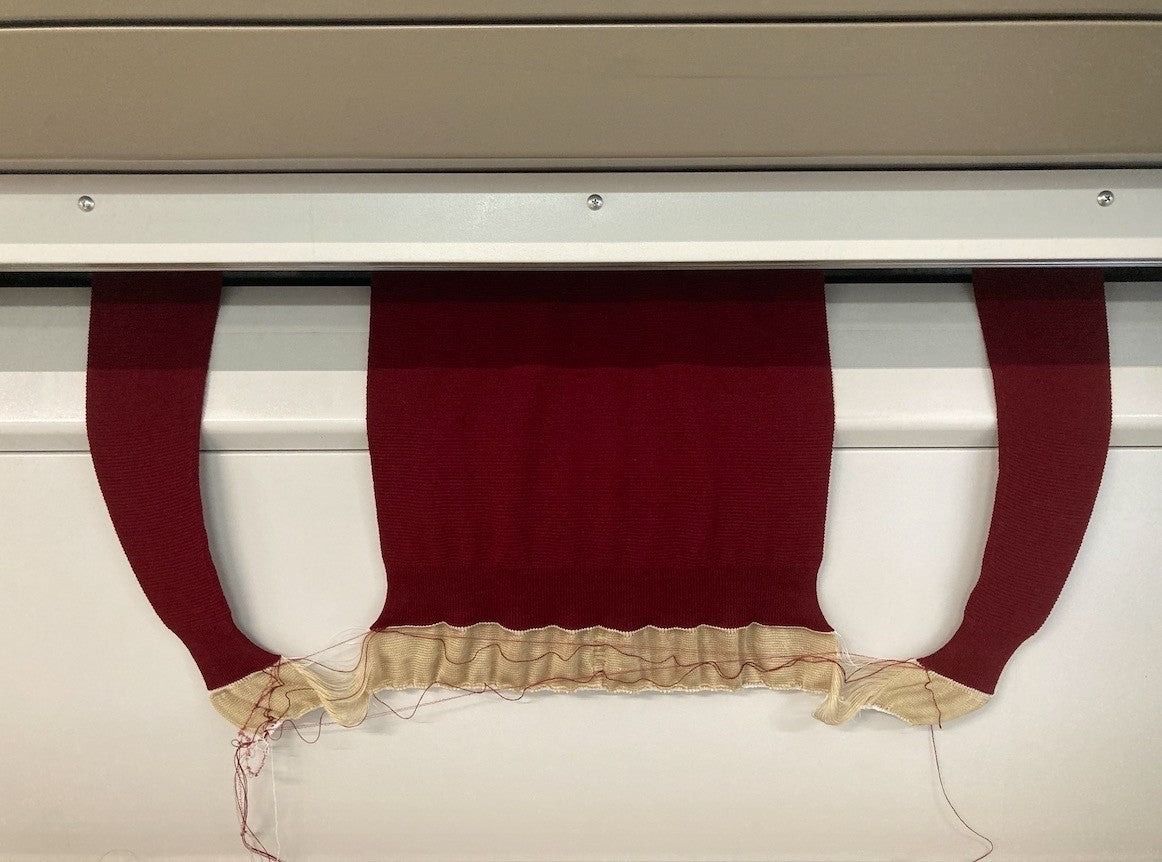
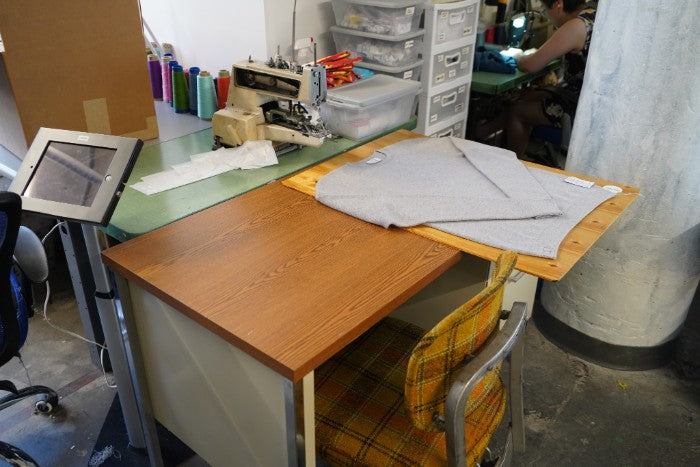
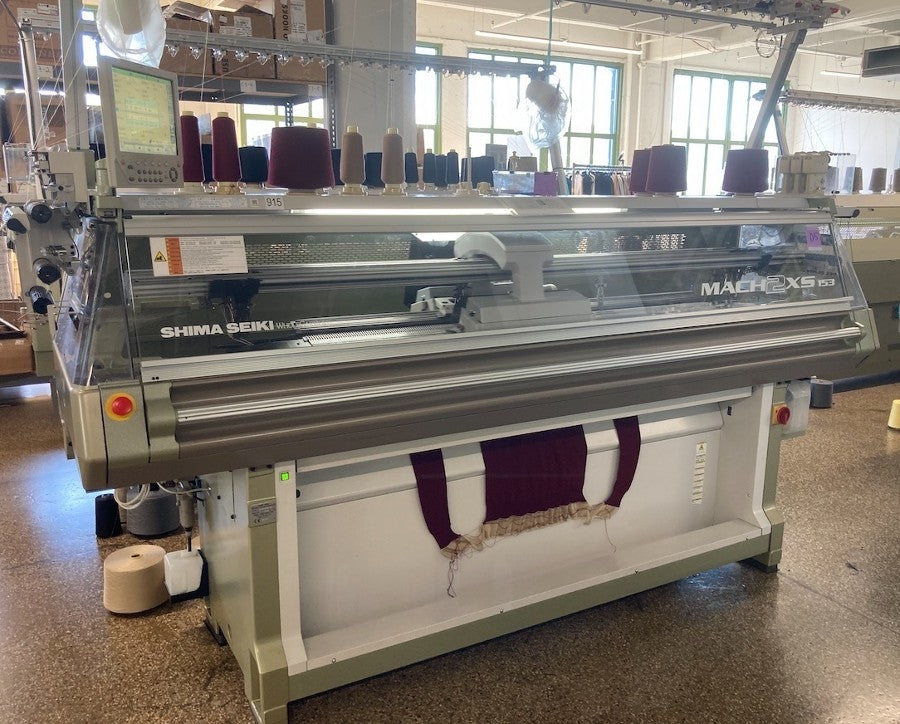
So you would wake up, wash then stand on some platform and have your daily outfit knitted on you. Not sure how he worked around the risk of strangling though lol.
Still funny. Thanks making it reality!
A while back, Lee Valley did a 3D knitted chisel roll using Kevlar and other materials, in support of the Canadian company which invented the 3D knitting process used (unfortunately, at the time, I didn't have the money or need for --- I've since updated my woodworking toolkit and have a nice set of chisels which it would have been perfect for, except it was discontinued and is no longer available...)
And can you use finer yarn as well, like lace? The reason a sweater is knit like it is, is because of the tradeoff between knitting time and material needed. But if labor becomes free, you should be able to knit much bigger yet more delicate stuff.
Edit: ah, deknitting is called frogging
Though it totally misses the point of actually knitting something, with your own hands. The time it takes, the details you need to think about, the skills you work on perfecting, the quiet evening on the sofa or in a cafe with friends, chatting and knitting away, all that goes into a piece of clothing that you've knitted. Letting a machine do that is completely missing out.
I feel similarly about AI generated music. Taking the musician out of the loop misses the point of the whole thing.
I'm also a hand knitter, and I don't really see any conflict between what they're doing and hand knitting. The grist of the yarn that you use as a hand knitter is generally much thicker than these machines commonly use. Commercial 3D knitting machines can do all of the stretchy, thin, and light stuff that the modern wardrobe is built around.
As folks note, this technology was really pioneered by Shimaseki's work in Japan just decades ago. What OC and the similar Brooklyn-based Tailored Industry are really innovating on is the business model and connection to production process. Folks like this are really serious about not producing all of the waste that comes with most fashion production processes, and it shows up at several levels of the stack.
For the HN crowd, TI's platform gives you more of a sense of why this sort of tech is really like the cloud for knitwear: https://tailoredindustry.com/platform
Really a fascinating part of the global fashion production world, and one we would all benefit from seeing grow.
And yet, no one actually offers to sell you a made-to-measure knitted garment. Why?
A few theories: - Knits are stretchy so there's limited demand for M2M - DFM/software issues - no one actually knows to generate a pattern from a set of sizes without human intervention - Issues with OEE - it's inefficient to wait for orders to produce the garments because the capital cost of the machines is so high. - Logistics - you don't want to deal with shipping everyone the right order.
https://www.printables.com/model/1483991-fall-is-looming-the...
This isnt a hype board, for consumer products. Its supposed to be a tech first community.
The idea of this is: knitting on demand, customizable, less waste.
You can still knit your things at home if you want to do your own stuff, or relax a bit...
The SS machines are unique, as far as I know. They are also SUPER hard to work with -- the software is opaque. The design skills matter. Those design skills have to hook up to the SS machine design system.
Hooking yarn is not the same thing as say bending steel - in terms of reliability, ease, variations. Lots of complexity here.
There have been some attempts at doing 3d knitting direct to retail, I recall an MIT startup that had a boutique on Newbury street, and eventually went D2C only, as well as some European brands.
The SS machines are a little bit of a product in search of a market as far as I can see -- they are amazing, they waste very little product, in theory unique, custom garments can be put out rapidly. In practice, they seem to be used as small-run / custom-run tools -- but the only way to provide that is to have skilled designers and engineers -- hence the middle layer.
Yes, I want one.
loom is probably more satisfying to get working right, but the knitting machines are a joy to just stare at while they're working. Hypnotic.
I would nonetheless find it interesting to read an "ultimate guide" explaining how the knitting machines work, but this ain't it.
Seriously 3D knitting… then going on about 2D patterns?
I don't really know the answer around supplying your own yarn. I'd assume that's the abnormal case, but just a guess.
Look at their plan features chart: https://tailoredindustry.com/pricing/boutique
"just don't do X" has basically never worked, it is not a serious solution to any problem.
It’s only missing em dashes. At least someone cleaned those out.
I will buy 5 things that last for 10 years if somebody gave me the option. Otherwise no, I'm not chasing fashion trends.
One problem this shows, is that as a consumer I have no idea what the hell is quality clothing. Clearly, expensive does not always mean high quality. And I'm not buying "brand" clothing either.
Edit: totally sincere question, I don't know their process
Even hand knitting is slightly better -- cast 250 stitches on to a circular needle then start the next row, only to find 10 rows later you've twisted it and are now knitting a Moebius sweater. Rip it out and repeat (sometimes referred to as "frogging" or "tinking").
Yeah, knitting machines are satisfying in many ways.
When Was 3D-Knitting Invented?
The concept of 3D-knitting was first envisioned and then developed by the
Japanese company SHIMA SEIKI. They launched their first WHOLEGARMENT knitting
machine at the ITMA trade fair in 1995.Here are a couple useful sites to get started:
https://machineknitting.fandom.com/wiki/Machine_Knitting_Wik...
https://www.knittingparadise.com/forums/machine-knitting.20/
I tried to be a good boy and wrote to the company asking for zipper parts to fix it and they told me to buy another jacket.
So I looked for companies that advertise repairability and found Patagonia made the most believable claims. Quite reasonable now that I'm old and rich, but I wouldn't have had the choice when young and poor.
Your experience is very common, I have a fake nike sweatshirt I bought more than a decade ago from a random street seller (emergency on a trip) which still outlasts current brand clothes.
Consumers' ignorance is not the problem, it used to be generally true that the more expensive item was better. Every brand has seemingly decided to burn their furniture to heat the house though, and what we experience is not as much consumer ignorance as it is a lack of names deserving trust.
So I'm extremely happy with a Land's End quarter zip that I picked up recently, and I hope that's a well-made piece that will last a while, but overall I completely agree that mass-produced clothing is a market for lemons; no one can tell what the good stuff is, so it's all assumed to be garbage and priced accordingly.
My niece runs a business that relies on the way we discard clothes. She buys clothes from suppliers in India who source them from the bales of discarded clothes sent to them from Europe. Her suppliers have in effect sorted through the mountain of discards to find the ones that have sufficient value to sell back to us. She specifically buys clothes that have 'vintage' appeal (think tailored jackets rather than hoodies) and sells them primarily to students in a northern English city. Her business has done well enough to move from market stalls to a dedicated high street store and she is just branching out into 'vintage' kids clothes.
In either case I have lengthened the time between manufacturing and landfill and had the enjoyment of clothes that I would otherwise not have been able to afford along the way.
I bought a really good-looking dark blue fedora; I received a really good-looking black fedora a size-and-a-1/2 too big. I had to fight them at the credit card level, because they offered me half off at best for a hat I can't wear.
What is inconsistent: only some of them are fraudulent fronts. I'd guess about 25-50% right now, based on my recent shopping experiences. But not all: I ordered some expensive gloves; their advertised fit was wrong; we settled on 50% off (I /can/ wear them, but it's not ideal, and their return policy clearly required me to ship back). That firm had shite measurement guides, but honest merchant fronting.
I've ordered super-cool button-front shirts that ended up being tissue-like fabric. Grrr...
Speaking of fabric... Amazon folded Fabric.com into their Borg cube, and you CANNOT buy fabric by weight online - for some goddamn reason. I want to buy 100% white cotton for a play costume, and need it thicker - between sheeting and terrycloth; closer to the latter; Nothing else really matters to me about it. But can I determine the cloth thickness/weight? Nope.
So: 50% swindlers; 75% idiots; buy clothes in person or else expect to throw a certain amount away.
However, made on demand will likely cost more, plus you can't fit items first. Unless they make items for fitting which you can then order to have manufactured.
But yeah the main thing is that on-demand can never compete with mass production even if a big part of the mass produced stuff is discarded.
This is definitely not universally true. E.g. photos are very cheaply printed on demand. Even on-demand books are printed at reasonable prices. Sure, mass production is cheaper (both for books and pictures), but the value difference of the individual product is high enough to bridge the price gap.
For cloth this area has found little exploration. TFA covers production at niche scale. If you would mass produce the looms to reduce the capital expense and heavily lean into customer value, e.g. individual fittings via 3d scans, as my sister comment proposes, or even just letting me customize my sweater with motive, color choice, garment etc., this could radically change the cost to value ratio. The company that has published TFA sells extremely bland apparel in a shop that looks just like any mass produced clothing shop and leaves all of the customer value of custom production on the table.
Last but not least: This "3d knitting" seems to need only a fraction of the labor of traditional sewed clothes. If textile production didn't default to underpaid labor under precarious working conditions in low income countries, it would probably already be cheaper.
Of course they aren't the latest fashion but clothes that last are by definition out of fashion for most of their existence.
tf.
That’s clearly you looking for a specific fashion or intending to pay as much as you can.
Triple Aught Design jeans are $150 to $250 and I am skeptical you have anything that is outlasting them. Others brands surely as well. Seems to me you are still stuck in the “if it costs more…” line of thinking.
Ah, very relatable…
>buy clothes in person or else expect to throw a certain amount away.
That’s reasonable.
I'm pretty disciplined about wearing a bib in the kitchen these days, but you can still get a glass of wine on it at the dinner table, or sparks from a campfire, or a cycling wipeout. Those are annoying at the best of times, but particularly if it ends a garment that you paid 3-5x normal price for specifically so you could have it forever.


![]()
![]()

![]()
![]()


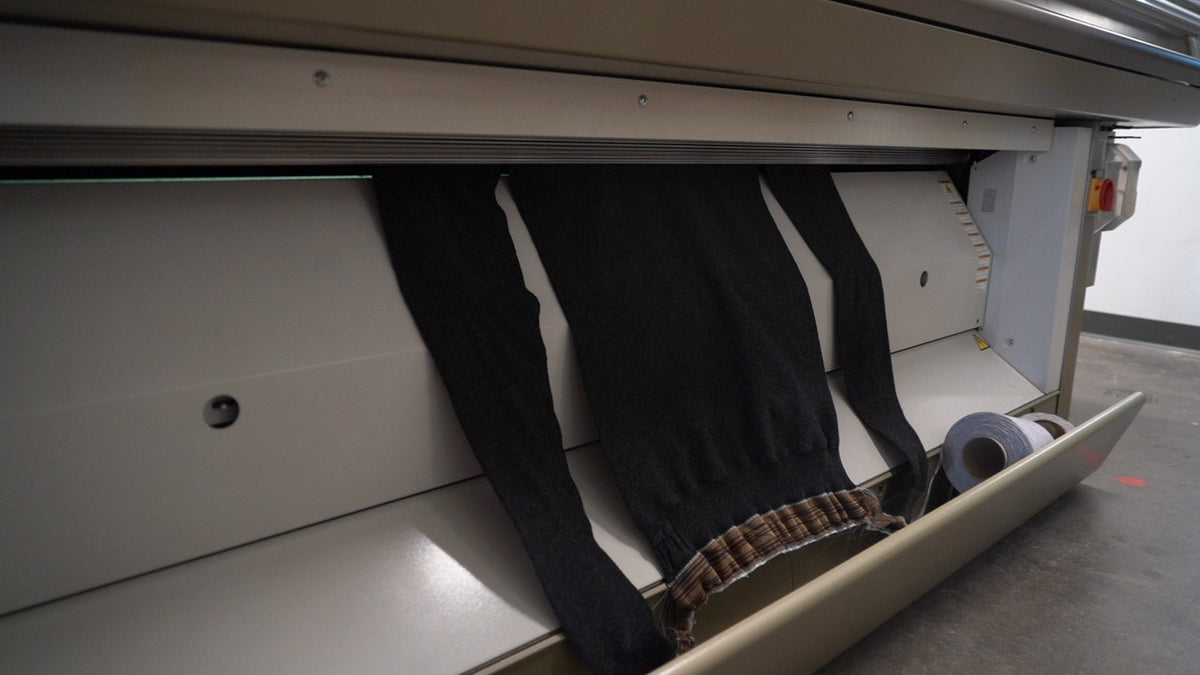
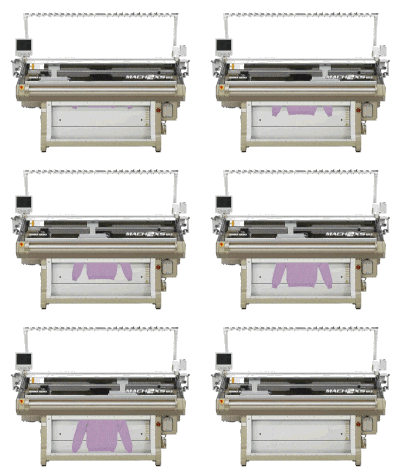
The term itself sounds sci-fi, so what exactly do we mean by 3D-knitting? Well, this method of garment making relies on the world's most advanced computerized knitting machines, known as Wholegarment machines. It's in the name; these machines are capable of knitting a whole garment seamlessly with little to no human input.
The process begins with a three-dimensional digital model, similar to what you'd encounter in a CAD (computer-aided design) program. Once a design is created, it can be transferred, downloaded, and knit on any 3D-knitting machine, anywhere.
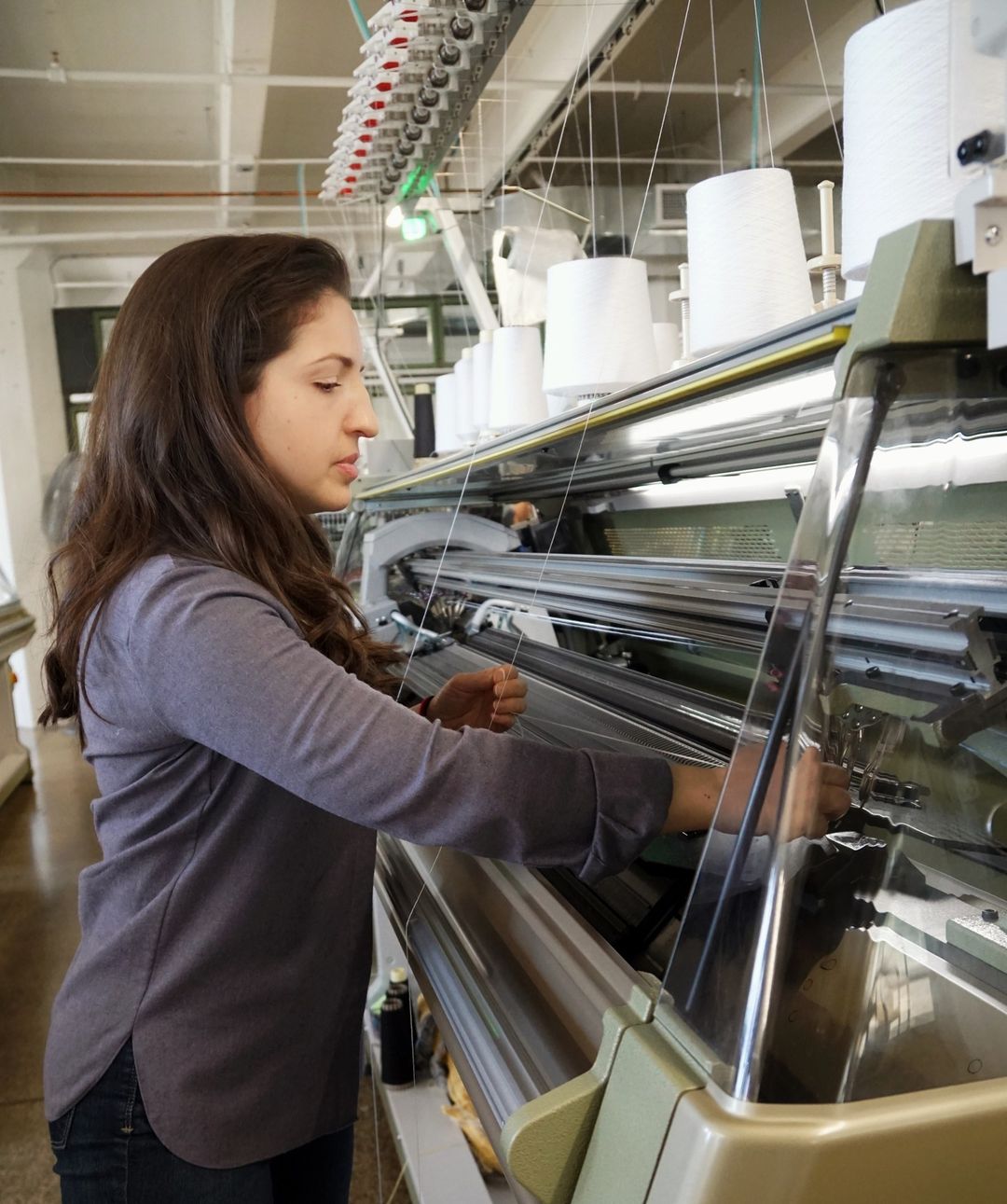
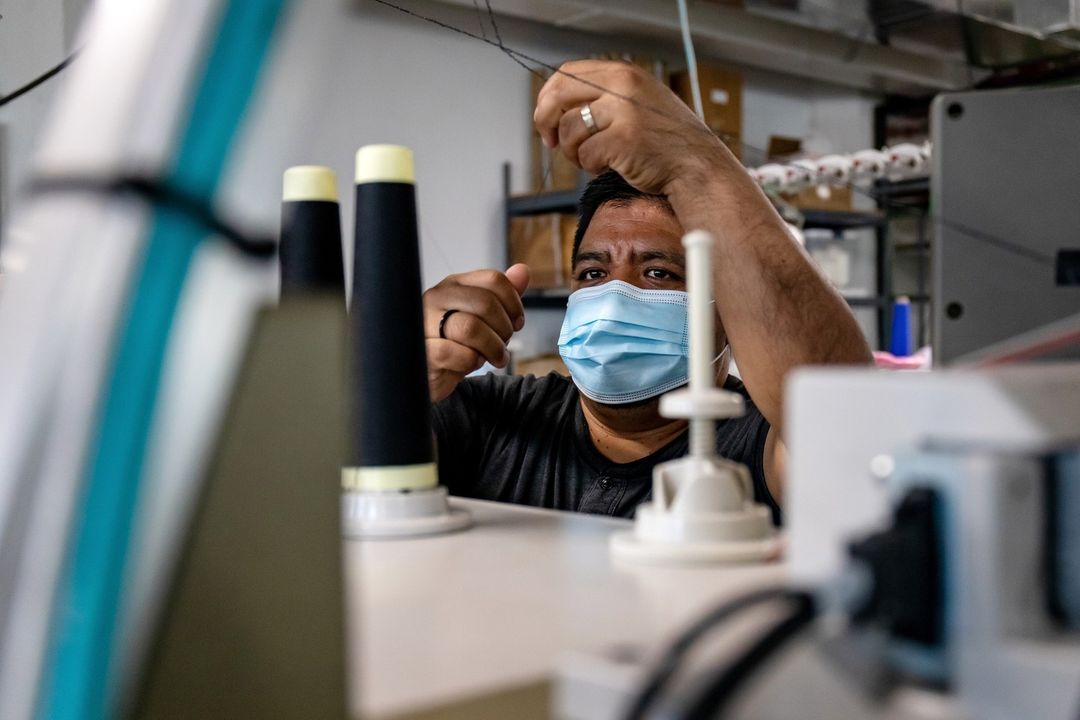
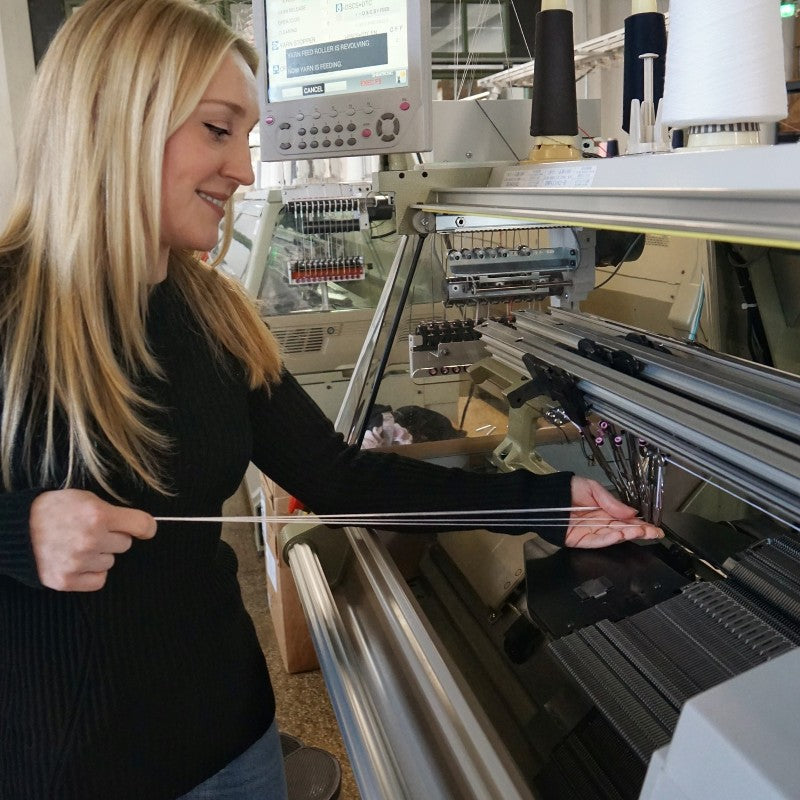
Simply put, the machines work by utilizing 4 beds of needles. The computer reads the program and determines which needle needs to do what as we run yarn across the top of each bed. One of the beds might be knitting the arm, while another knits the body, while another connects the body with the arms.
This approach allows us to use 99% of the material intended for the sweater.


If you're anything like us, you've probably watched the rise of fast fashion with a knot in your stomach. Yes, the mechanization of clothing manufacturing has allowed everyday consumers to enjoy more choices than ever, but it also carried a decrease in quality and an immeasurable negative impact on the environment. In the next 10-20 years, we think the world will look back on fast fashion with a great degree of disgust and bafflement.
The era of slow fashion is upon us, ushered in by Wholegarment technology or, as we like to call it, 3D-knitting. Imagine if we could make clothing on demand that's more comfortable, stronger, and better fitting, all while producing less than 1% waste. That's what 3D-knitting enables, and here's what you should know about the future of fashion.

Seamless
<1% Waste
The concept of 3D-knitting was first envisioned and then developed by the Japanese company SHIMA SEIKI. They launched their first WHOLEGARMENT knitting machine at the ITMA trade fair in 1995.
This was an incredible achievement because, unlike 3D-printing of a solid structure, 3D-kniting involved creating a product with dynamic stability and multiple planes that must work together flawlessly.
The founder of SHIMA SEIKI, Masahiro Shima, known as the "Thomas Edison of Wakayama", received a patent for a glove knitting machine at the age of 16. This machine proved to be the inspiration for the first wholegarment machine some 40 years later.
SHIMA SEIKI continued to hone its technology over the next quarter-century. The result of their quest is that, here at Oliver Charles, we are able to create beautiful products for you using the 5th generation of their advanced 3D-knitting machines, affording expressive designs and seamless clothing with sustainable silhouettes as never before.
| 3D-Knitting | Cut-And-Sew | Flatbed Knitting | Circular Knitting | |
|---|---|---|---|---|
| Knit Cost/Unit | High | Low | Mid-Level | Very Low |
| Waste Created | Very Low | High | Low | Low |
| Labor Intensity | Low | Very High | Very High | Mid-Level |
| Durability | ||||
| Very High | Mid-Level | Mid-Level | High |

Pros: cut-and-sew manufacturing is very cheap when used to produce large quantities of garments.
Cons: cut-and-sew techniques are very labor-intensive, requiring assembly lines of generally underpaid workers. These operations generate a lot of waste because they require a pattern cut out of a rectangular piece of fabric.
Typically 30% of the fabric is wasted. When quality is not prioritized, garments can come apart quickly. Everything breaks at the seams.

Pros: flatbed knitting, otherwise known as 2D-knitting, involves far less waste than cut-and-sew production because each garment component is created to size and shape. 2D-knitting is a cheap way to produce in large quantities.
Cons: because each item is made from several flat parts, the challenges of low-quality seams and human error remain. Also, similar to cut-and-sew, it's also very labor intensive requiring large assembly lines.


Pros: circular knitting creates tubes of fabric, like a sock or a sweater body, resulting in a stronger garment with fewer vulnerabilities thanks to the fewer seams.
Cons: circular knitting tends to create generic fits due to fixed machine sizes, plus seam vulnerability continues where the garment is joined, for example, in the addition of sleeves.

We mentioned that 3D-knitting creates stronger seamless clothing, but what makes this technology so exciting? Well, with this tool, we can explore endless design capabilities because various stitches can be placed within a single garment. For example, a jersey knit, rib knit, or jacquard knit can transition into a mesh knit to create targeted ventilation—and just about any other permutation imaginable, whether functional or purely aesthetic.
Traditional clothing manufacturing often yields flawed results due to inconsistent cuts caused by shifting fabric layers, raw edges unraveling due to improper hemming, and seam pinching due to imprecise sewing.
In contrast, 3D-knitting technology facilitates perfectly realized garments that are, on average, 10% lighter than their seamed counterparts. Ultimately, consumers can enjoy higher-caliber apparel with a clear eco-friendly conscience.
Most important 3D-knitting offers the promise of customization, or as we call it,
the chipotle effect. Size and fit are the number one reasons people return clothes purchased online and in person.
In the next few years, maybe even months, we'll be able to solve that problem for good. Since 3D-knitting allows us to knit on demand, we'll soon be able to offer every size imaginable in every style, material, and color.

We imagine a future where we switch to producing only what we need, when we need it, and nothing more. Through 3D-knitting, on-demand production is possible. It works like this:
After careful consideration, you order a comfortable 3D-knit sweater.
Our 3D-knitwear partners in Brooklyn get pinged the details.
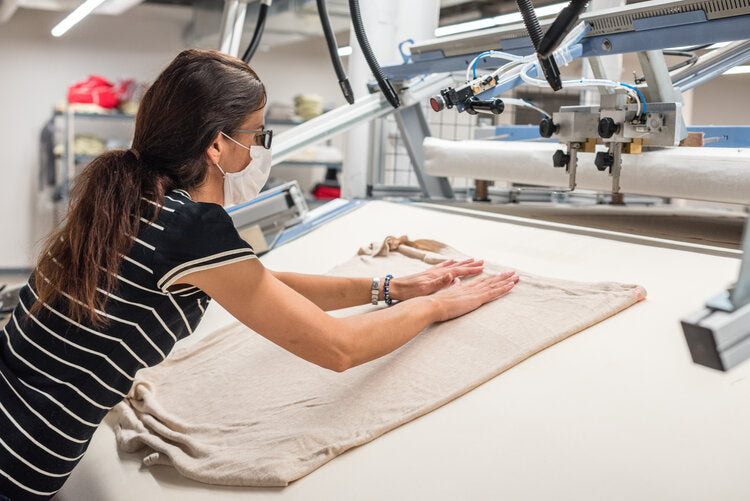
The 3D-knitting machine starts its engine and knits your sweater.
After seamlessly knitting your sweater, it’s plucked and beautifully packaged.
Without ever sitting as inventory, the sweater is off to become your go-to.


3D-knitting can't compete with the cost of manufacturing most throw-away fast fashion products on the shelves, which is a good thing. Companies like ours that invest in creating beautiful, zero waste seamless clothing for forward-looking customers are driving the accessibility of 3D-knitted garments for everyone.
We anticipate that a 3D approach will soon exceed 2D-knitting in realizing better-quality clothing with greater longevity for less.
As the transition towards the future of fashion progresses, 3D-knitting is projected to save up to 40% of production costs compared to flatbed 2D-knitting.
Excitingly, price points have already become very competitive when we compare 3D-knitted products to those of similar character from a more traditional outlet.
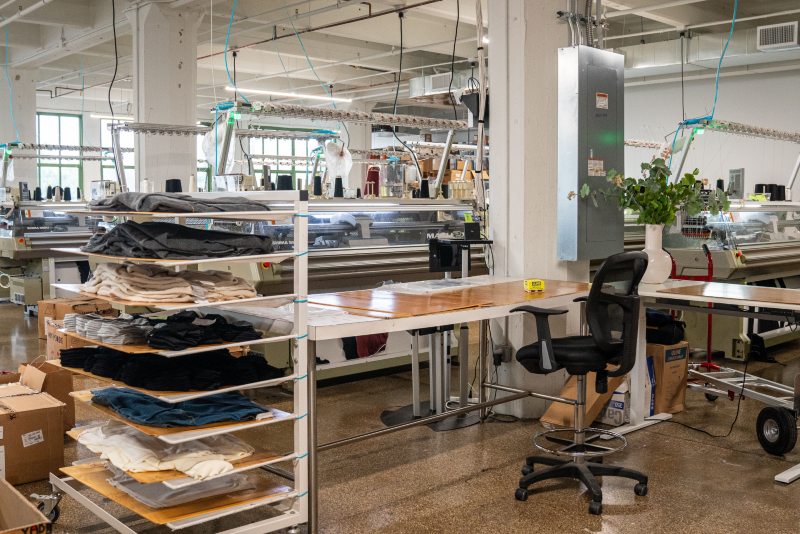
For example, around 150 garments are brought to life in our 3D-knitting factory daily with only a six-person team. In contrast, the same number of items made at a cut-and-sew facility would call for roughly 30 operated sewing machines!

3D-knitting requires less raw material, produces less waste, and opens the door to an inventory-less future. The technology plays an important sustainability role because 35% of material in the global supply chain ends up as waste. That equates to approximately 36 billion pounds of lost fabric potential, which is 50x as heavy as the Empire State Building!
In addition to waste reduction, 3D-knitting factories are far more energy efficient, requiring 43% less electricity than a traditional cut-and-sew facility.
This is just the beginning; if you think 3D-knitting is futuristic, wait until you encounter 4D knitting and even 5D knitting. These technologies will facilitate things like knitting electrical wiring, sensors, composites, and other components into designs or creating fabrics that can change from one form to another and then back again.
So there you have it—a new era of clothing manufacturing is upon us! Quality seamless clothing that is zero waste, durable, and exceptionally wearable is not just on the way; it's already arrived. And if you thought fast fashion was the end of the line, take heart because there is so much more yet to explore.