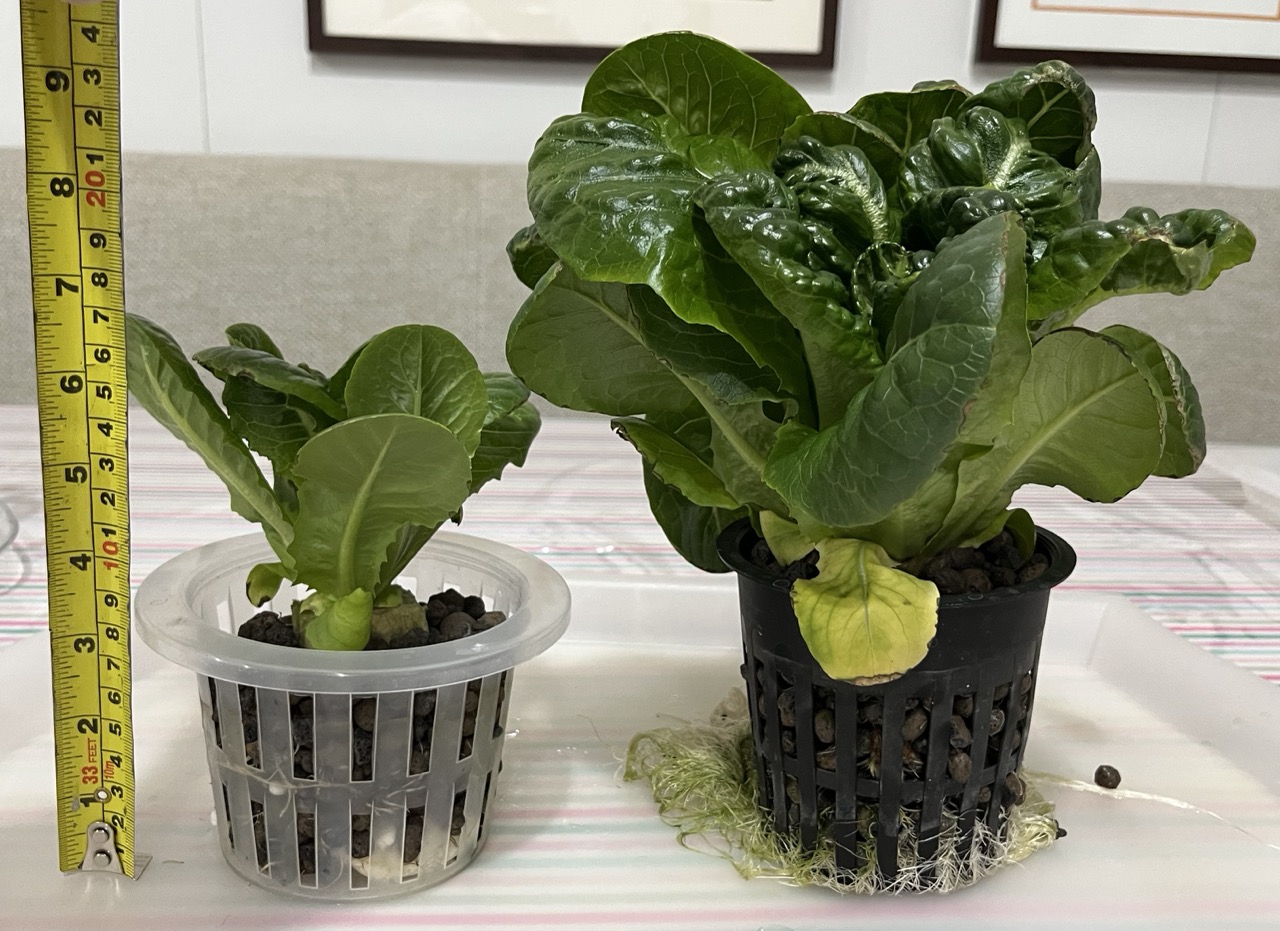
This is fun!
The following isn’t a knock on anyone doing cool stuff like this: I’ve avoided any sort of tinkering and automation of my gardening because I find gardening to be a slower-moving, meditative escape from technology. My brain shifts into a different mode (almost a flow state?) when I’m out working in the soil and tending to my plants.
My motivation to work on such a project was my disbelief in human mankind to keep our planet earth habitable.
Server Racks - you don’t interact with them often, but you will need to with the Hydroponics one.
Also, your setup is too clean. Water will drip, spill, the pebbles will fall. Looks really nice, though.
About 5 years ago, I worked with a Climate Research Scientist friend, growing exotic plants in dutch-buckets, tower aeroponics, and rack mounted red-lit setups to induce Vitamin B-12 (only found in meat, so deficiencies develops in vegetarian) to Spinach trying to produce Super Spinash.
One setup I had was a vertical (hydroponic) window farm, which looked pretty great, but the roots start to get into the tubing, which I suspect could happen in the rack-mount system too. It also wasn't simple to just take out one plant for maintenance.
A small NFT (nutrient film technique) box has worked very well, requires very little material as substrate and is easy to maintain. Might get problematic if growing the same plants for over a year since the roots can grow a lot and basically partially outgrow the system so the flow of water starts being insufficient and therefore might need at least some trimming and replanting if some of the roots start to suffer.
I'm in the process of trying out deep water culture, which requires even less materials since there's no growing medium, just water, and roots are submerged so doesn't have the same issues as NFT. Probably has it's own problems, though, and air pumps can be loud!
Anyhow, most of my plants are in a passive hydroponics system. "Kratky method" is something a bit similar. I basically replaced soil in pots with clay pellets and manage watering so that I have to water every 2-3 days. Requires clay pellets as the substrate so needs a bit more effort up front, but doesn't require electricity and is more portable when using small/medium sized pots. Pellets can be reused (at least most of them). I also added a short tube for monitoring water level and possible maintenance if I need to wash / flush the pot with the plant in it.
Regarding fertilizing, I rarely do any accurate measurements anymore. I got a few pump bottles and measured how much fertilizer one push gets me and wrote on the bottles how many pushes per litre. I also eye-ball the water color a bit since I know how it should look like.
Oh, and the plants that have done well for me, and can grow for a long time with multiple harvests (so no lettuce): peppers, cherry tomatoes, cucumbers, trying some small strawberries
1. Convert acres of agricultural land into a datacenter.
2. Put plants inside.
3. ???
4. Profit?https://www.youtube.com/watch?v=VJuo6Te1fM4 (2.5 minutes)
> Farmers discovered that bright leaf tobacco needs thin, starved soil, and those who could not grow other crops found that they could grow tobacco. Formerly unproductive farms reached 20–35 times their previous worth. By 1855, six Piedmont counties adjoining Virginia led Virginia's tobacco market
https://en.wikipedia.org/wiki/Types_of_tobacco
This is one beast of a plant. My plants stayed alive when I stopped spraying water in September and only died because of frost in late December. They were about 40 cm high due to the small volume of the root chamber.
Anyway it's a great choice for an outdoor aeroponics setup.
The fact that it works at all after a number of years, is surprising to me, given everything that goes on with it: You've got a moist environment with water pumped through it multiple times a day, fertilizer in the water crusting up in places, living plants with their roots growing into the pipes, algae growth, and a lot of parts that are shuffled around often.
There might well be other systems around these days that are the same or better, I wouldn't know, the Gardyn is just what I ended up with when I researched it years ago and I'm happy with it. For downsides, seeds are expensive from Gardyn, but you can plant your own. I do buy some from Gardyn because they have a big selection, and they usually come out good, which regular seeds often don't for whatever reason. They try to push their subscription service but I don't need it, so don't use it.
Hope this doesn't come off as advertisement, as I said there may well be better options (would like to hear about them), but this one works for me for a pretty hassle-free experience.
It's feel just the next evolution in our written messaging dialect. Gen X had c u l8r?. Millennials didn't have to pay per character, and got full qwerty keyboards so opted for normal sentences. And now Gen Z have decided that auto-capitalisation is unnecessary.
I actually didn't notice the lack of caps until I read this comment
I do that manually with my plants twice a week, they have flowers almost all year, but it's a chore to bring them out, flood them, make them drain and bring them back home.
Also my wife always yells at me because I always wet the floor in the process.
Do you have some sort of inoculation step and then use red light to penetrate the spinach leaves to feed light energy to the bacteria?
So now I have a new project - I've always wanted to smoke 'pure' tobacco, like the ancients.
I'm twenty years too old to have an illegal harvest at home :)
Next stop, need to check how to cure the leaves.
Thanks!
To be clear, I'm not asking this in some new age way, and I'm sure it's better than the amount of pesti/herbicides used traditionally (and the whole movement behind hydro/aquaponics is fascinating to me), just wondering if this is something you ever tried minimising with such setups?
Potatoes especially don't like to be submerged. But otherwise they are not that hard to grow. A simple grow bag will do. That's true for a lot of root vegetables and tubers. For vegetables like that, greenhouses are more common.
With rice and grains, they grow well enough in hydroponics but you just need an enormous amount of area to get to interesting amounts. Also the growing season for that is quite long. Hydroponics favor things that you can harvest in weeks rather than say 2-3 times per year.
I'm more intrigued by duckweed, which grows very fast and is a common food in some countries.
https://pubs.acs.org/doi/10.1021/jf203275m
https://www.sciencedirect.com/science/article/pii/S194439862...
Bioflavonoids are important.
At least make it sound like you’re speculating if you’re going to.
I also didn’t notice the lack of caps until coming to the comments.
…and I’m a pedantic SOB!
Sell it?
Edit: just checked the specs, 47 kWh/mo, roughly 65W on average
Just about everywhere has understood "bread and circuses" and "let them eat cake" to the point of monetarily promoting food production.
One of the big distinctions between feudalism and extreme capitalism in my mind is forgetting this.
* https://dysonfarming.com/strawberries/
* https://www.youtube.com/watch?v=FA6BCIWPJ30
The rationale there is a combo of profit (from off season strawberries) and mark-up possible from unique branding (Dyson) and social fuzzies (eco-friendly, etc (regardless of cold economics)).
Then you add the electricity cost and the seeds, and the maintenance time...
But it looks nice in a kitchen!
Protein-wise, an all cabbage diet would give you more if you’re meeting calorie needs - 5.1g protein per 100 calories, or 102g protein for 2000 calories worth of cabbage.. but that is a heck of a lot of cabbage (17ish lbs)!
Let’s be real though, people should be eating a varied diet and not just a single food. And perhaps not a junk food only diet.
So the alternative is to grow lettuce that has a greater price to energy ratio.
early 2026
i started growing lettuce in a spare server cabinet. this is, for many reasons, a terrible idea. here's how i did it.
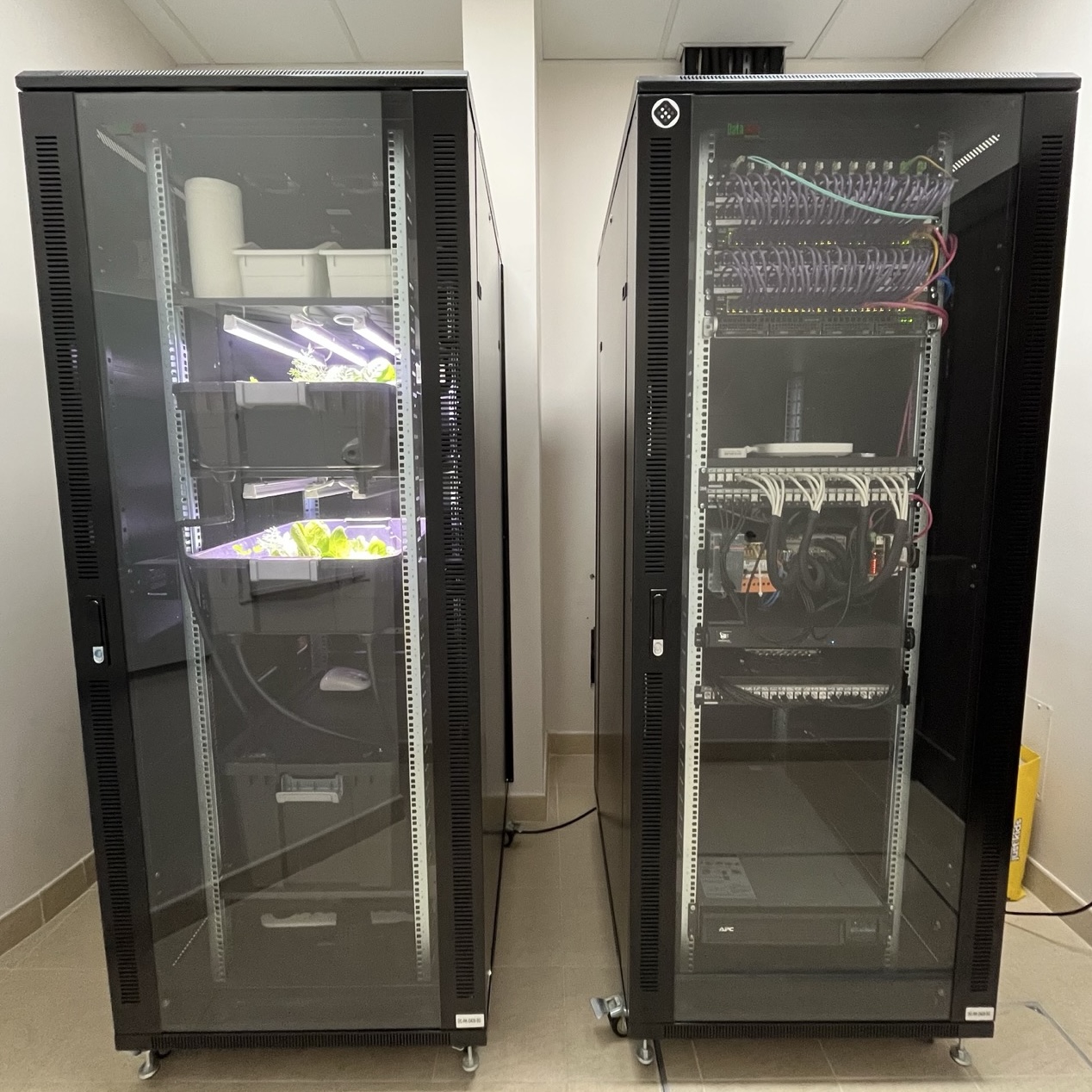
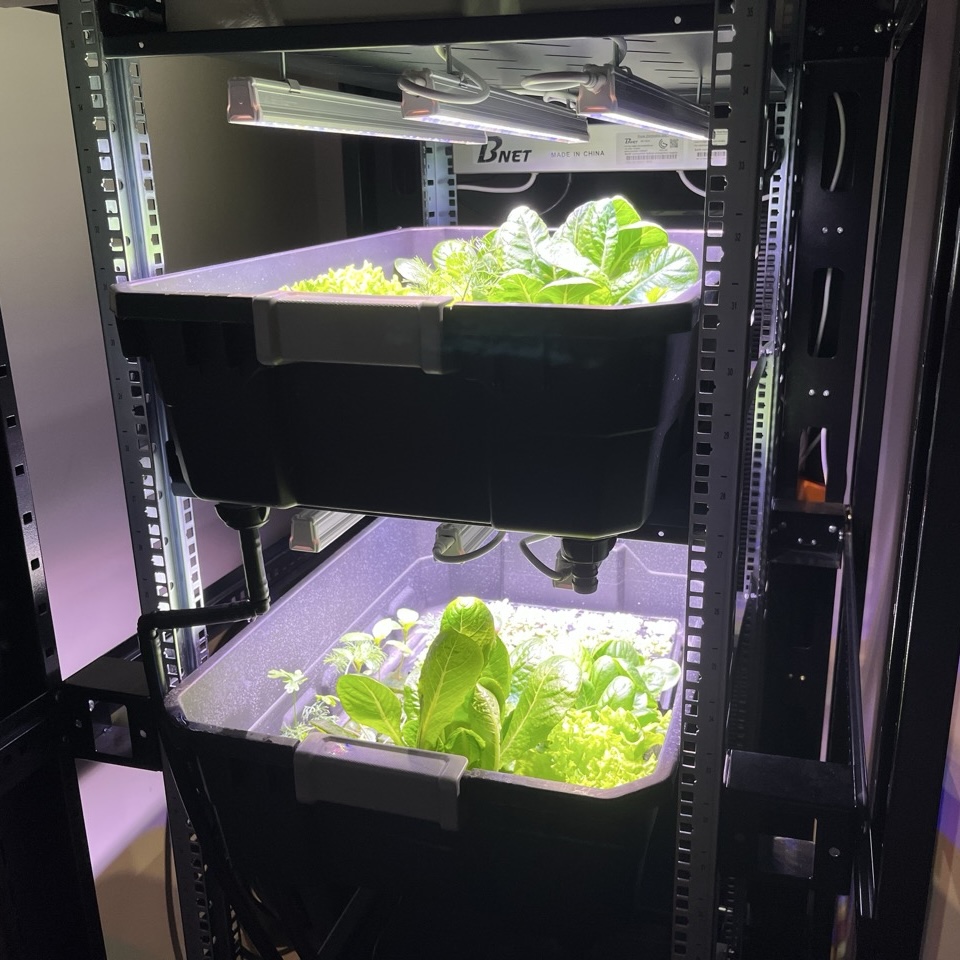
for reasons i won't explain here (because i genuinely can't) we ended up with two whole 42u rack cabinets when we only really needed about 10u. also, it seems like the door frame for this room was installed after these were wheeled in so simply pushing the extra one out without taking it apart isn't going to work.
as fun as it sounds to go out and hoard 42u's worth of equipment to fill the void of my empty cabinet, i simply have no interest in running any of it. i want less computer, not more. in fact i've always dreamed of quitting computers and starting a farm. growing lettuce in the extra server cabinet just seemed like a good stepping stone. maybe.
the design i went for is a flood and drain system. it's apparently also called ebb and flow. these work by growing the plants in growth medium (rock-wool, perlite, clay balls) in individual plastic or fabric pots. these are placed in trays that regularly get flooded with nutrient-rich water pumped from a reservoir.
an illustration of a flood and drain system. consistent perspective is not my strong point.
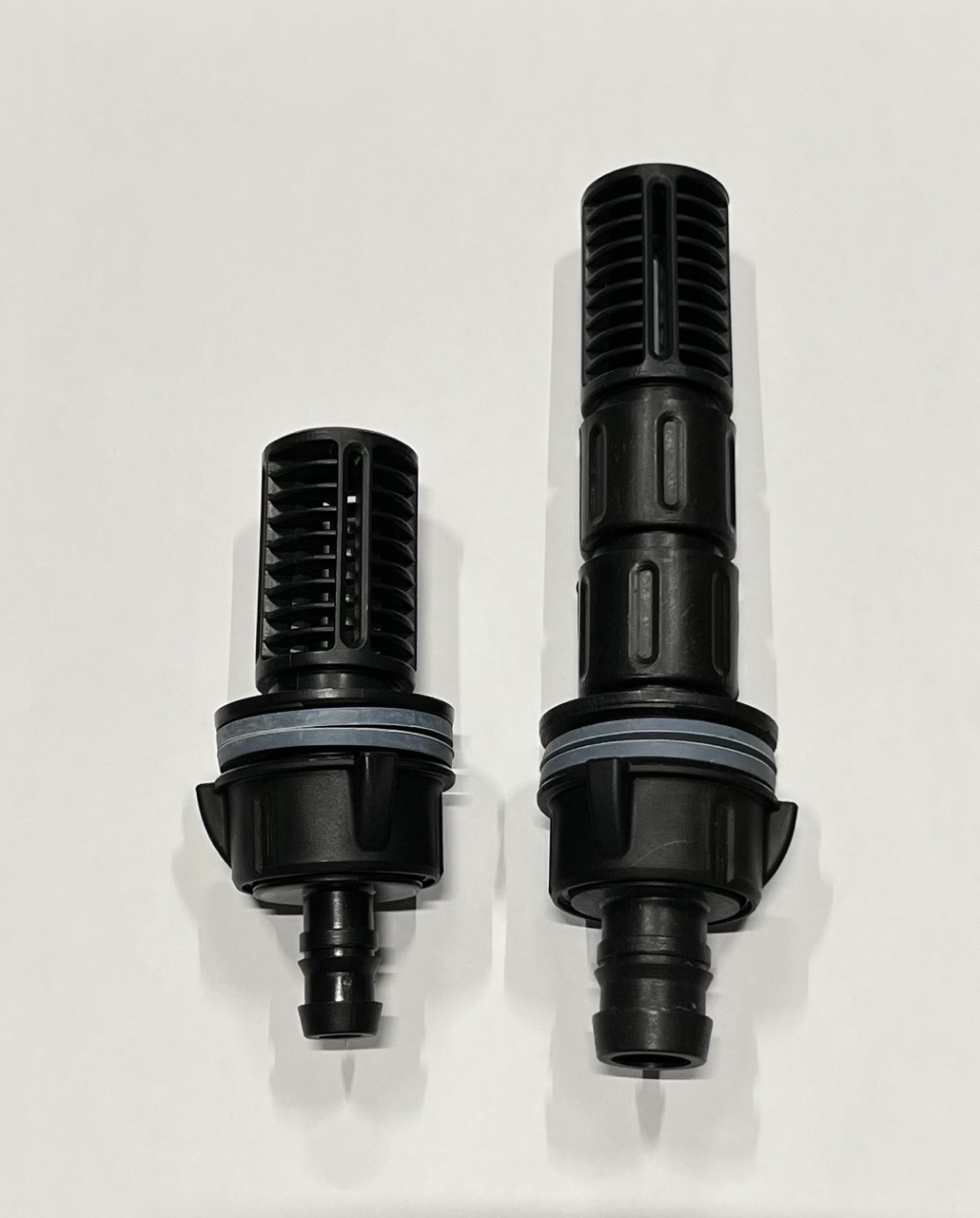
the flood cycle runs a few times a day. it is short, just enough to wet the roots of the plants. depending on your pump, this is usually in the order of a couple of minutes. to make sure the water does not go above a certain level in the flood cycle, most flood and drain tray designs have two holes at the bottom. one is an inlet connected to the pump. the other is a drain with an adjustable height, which drains away any overflow water.
the system during a flood cycle.
strangers on the internet often say flood and drain systems are the worst way to grow anything other than mould and algae. they are probably not wrong. however, these systems are also very simple, which means within my grasp. so here we are.
a server cabinet. preferably one you don't even know how it got there.
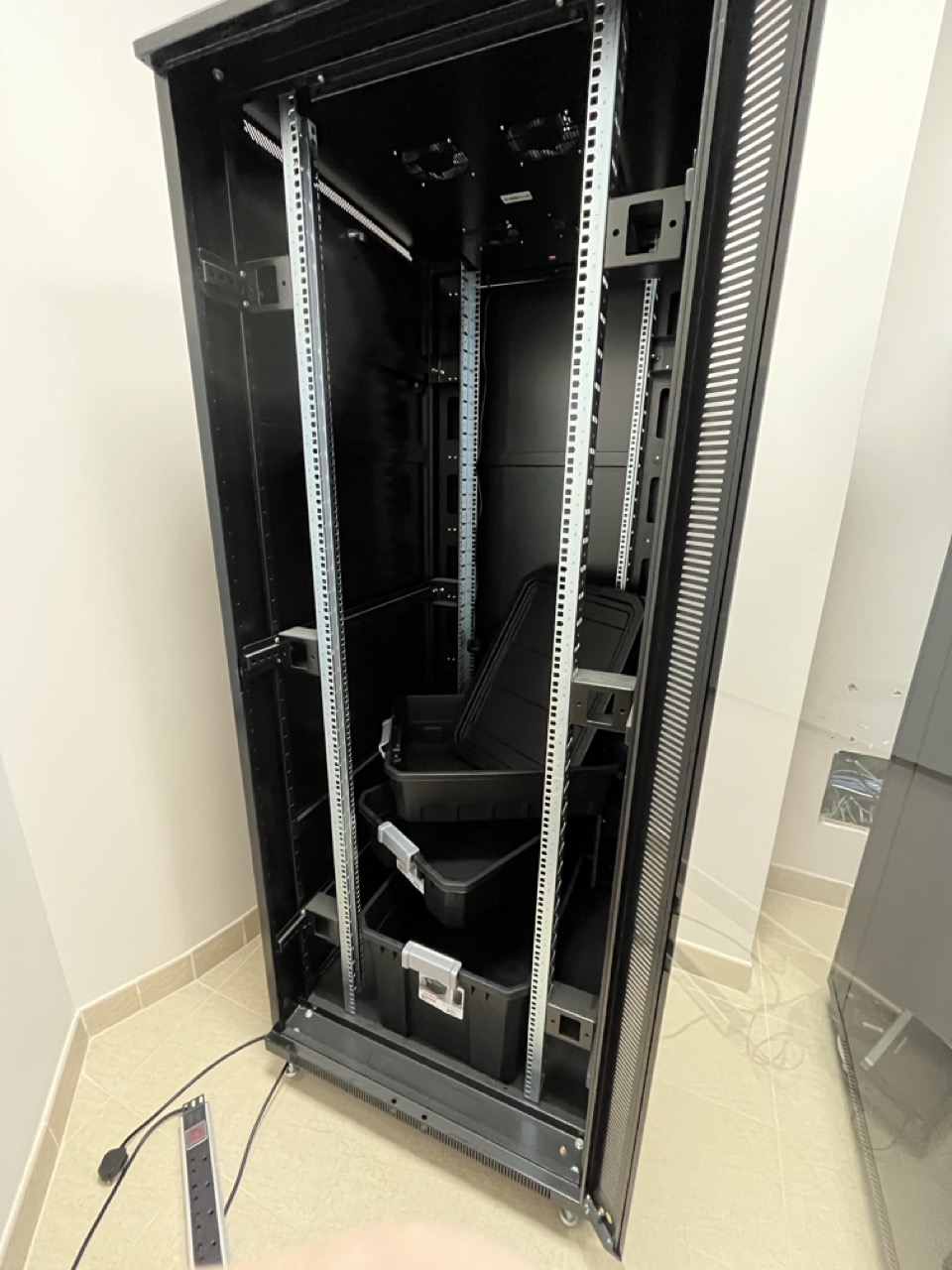
grow lights. there's a whole science looking into which frequencies work best for growing what. but i'm no light scientist so i ordered the ones with the quickest shipping.
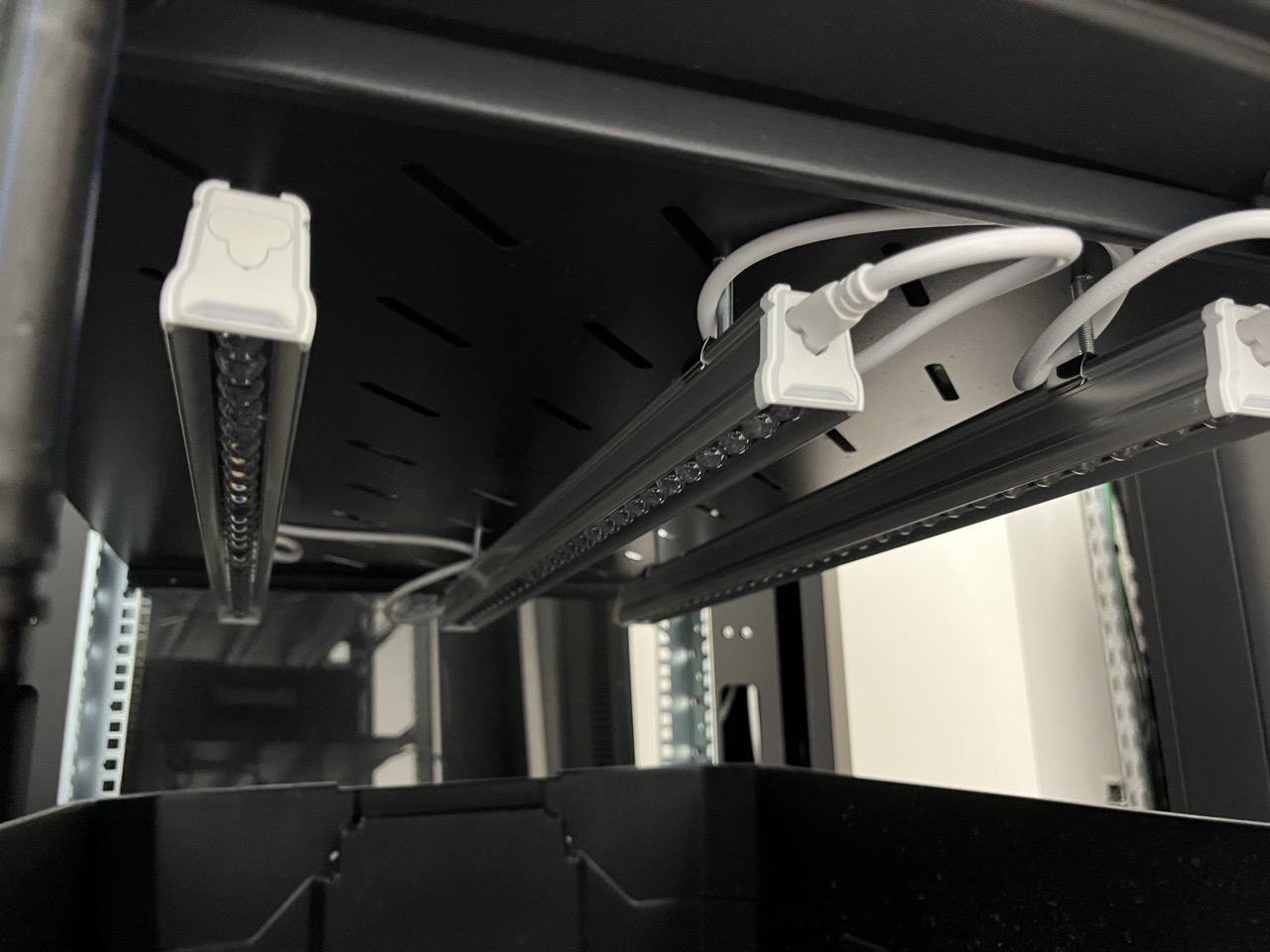
rack-mount shelves. i got mine from a local network equipment shop.
the shopkeeper fetched them from somewhere outside the shop and clearly made up the price on the spot. i chose not to ask too many questions.
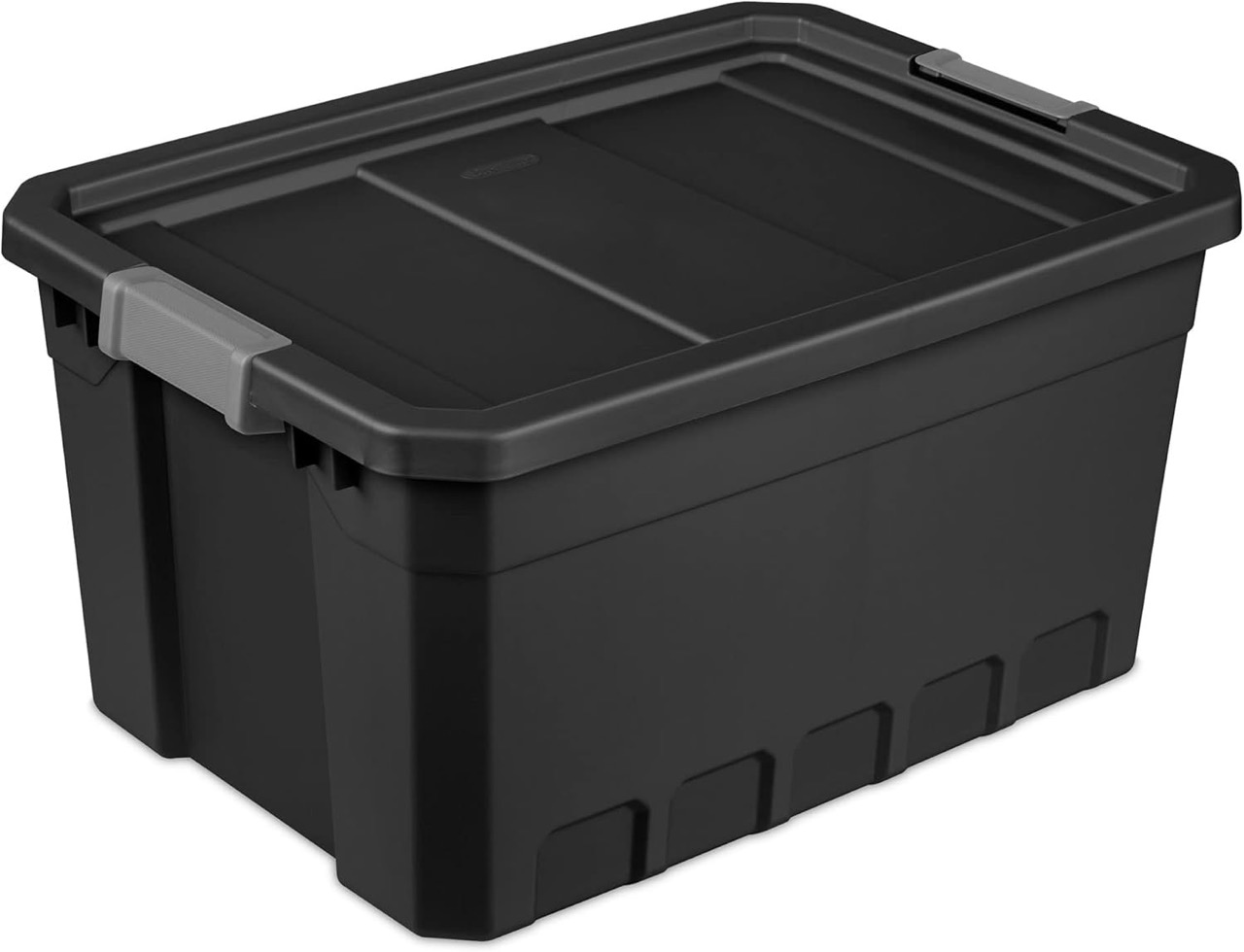
storage boxes to act as reservoir and grow trays. these sterilite modular stackers fit a server rack almost too perfectly. i have 38 litre ones for the plants and a 72 litre one for the reservoir.
they do make specialised trays for flood and drain systems, which have much better drainage. but they don't come in server rack size. otherwise this page would not be this long, now, would it?
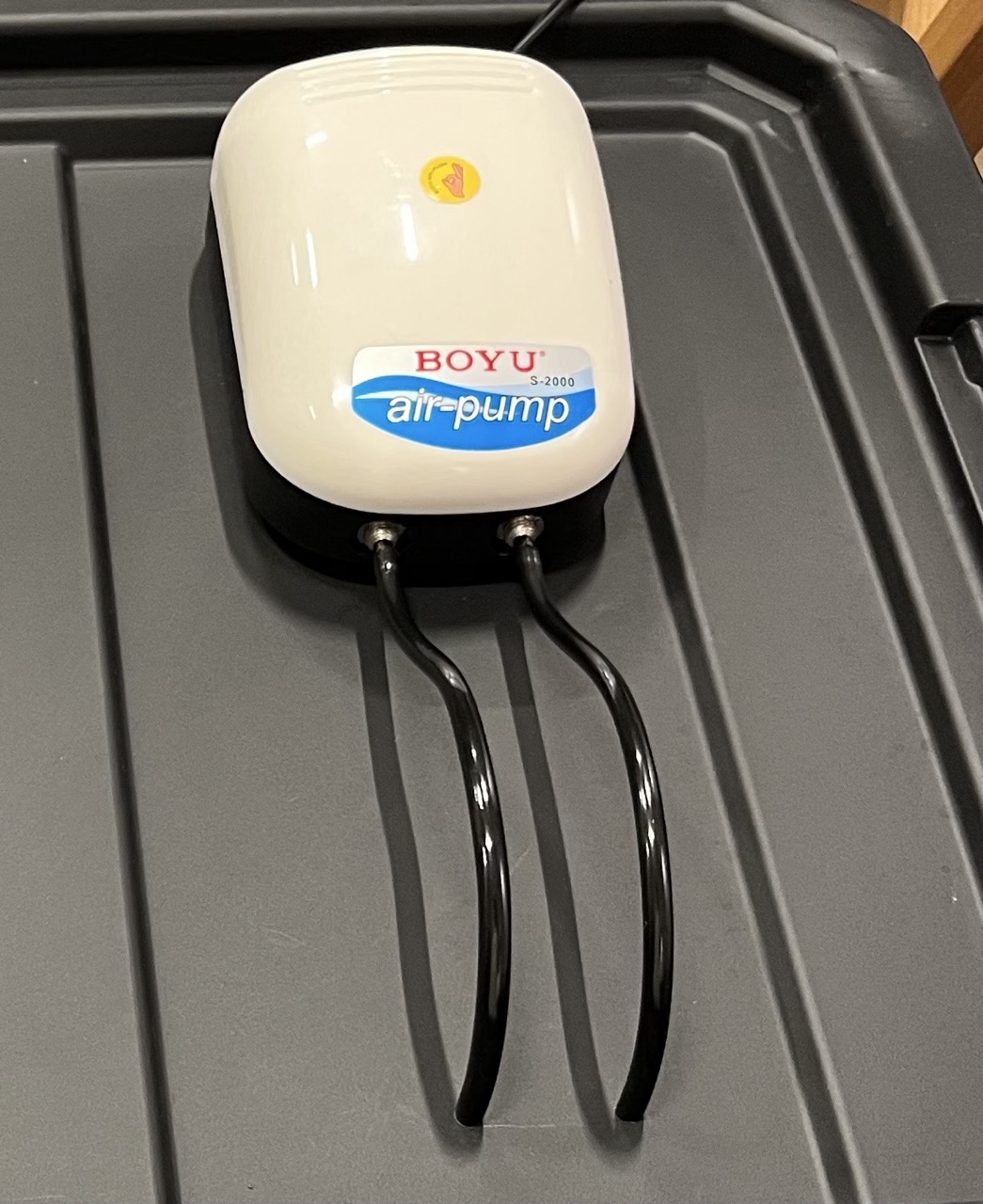
an aerator, an airstone, and tubing to connect them. this is to keep the water oxygenated. pet shops often sell these.
flood and drain kit. these are the two plugs for the holes that you're going to make in your tray. one's an inlet and the other one is a drain with adjustable height.
hose with the appropriate size for your pump and kit.
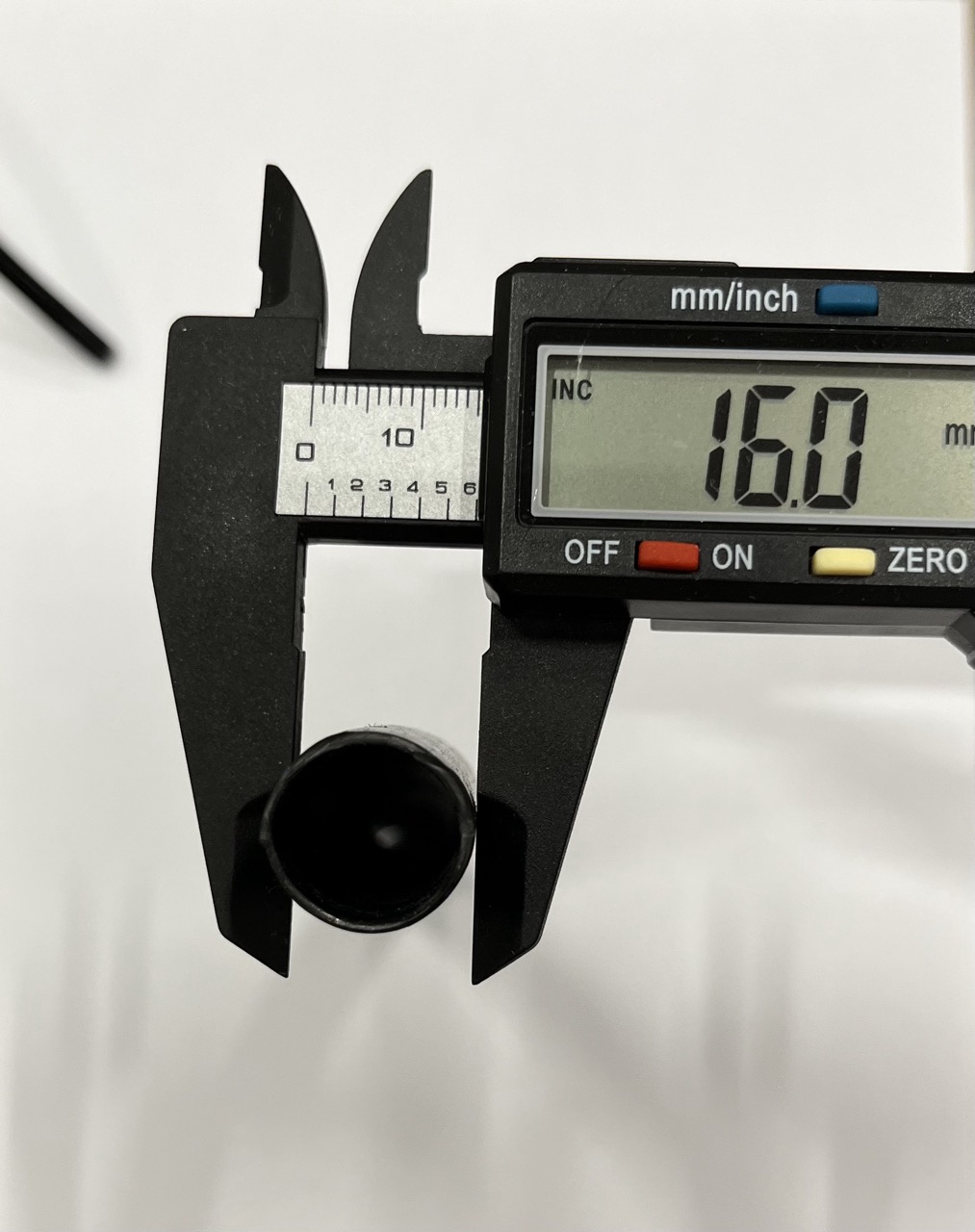
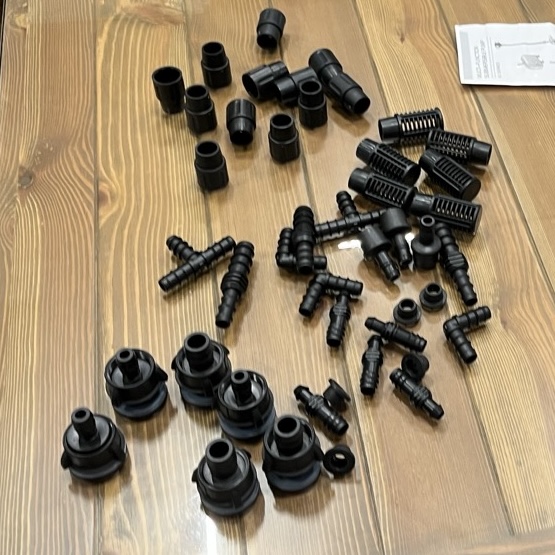
elbows, tees, connectors, and other hose accessories. i honestly had no idea what i'd need and just ordered a few of each.
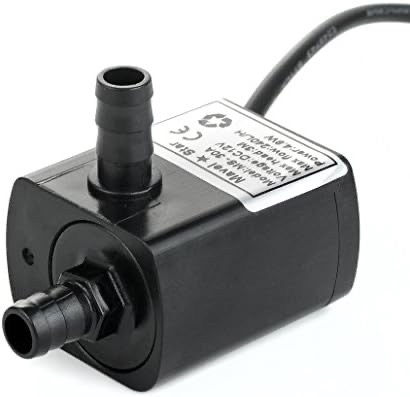
a submersible pump. pumps nutrient solution to the grow tray. i got an 85 watt one from a store that sells fountains.
some way to switch things on and off on a schedule. i happen to have an old switched pdu, but a couple of plain old timer switches or wifi relays (e.g. shelly) can do the job.
plastic mesh pots of various sizes, plastic trays, and grow mediums.
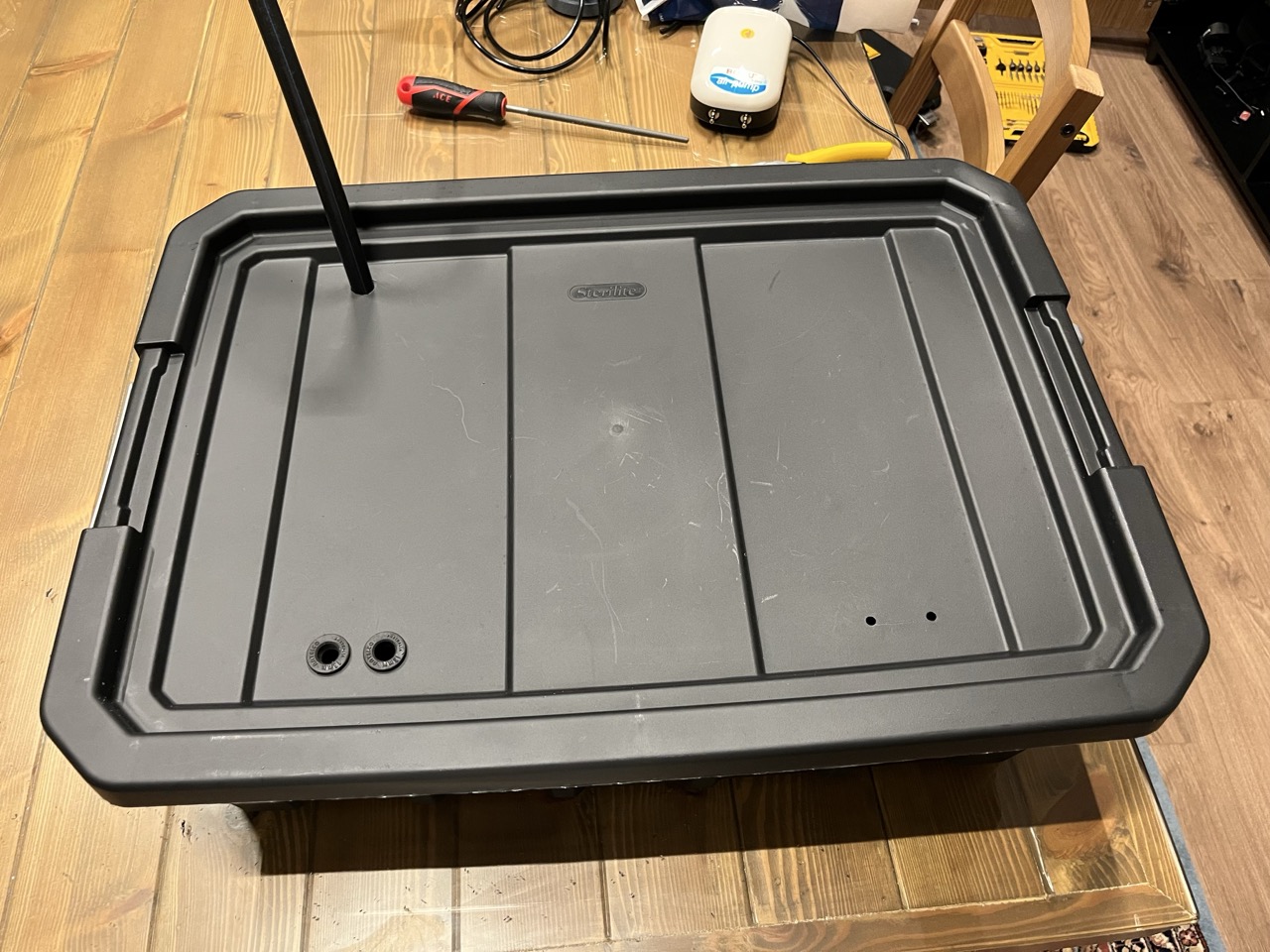
starting with the reservoir, you need to drill a number of holes in the lid:

side note: if you don't like plastic shavings all over your office, don't drill plastic in your office.
if you can find gaskets in the right size for these holes that's better. the less light that gets in your reservoir the less likely you'll have algae problems.
then for the trays themselves you need two holes the appropriate size for your flood and drain kit.
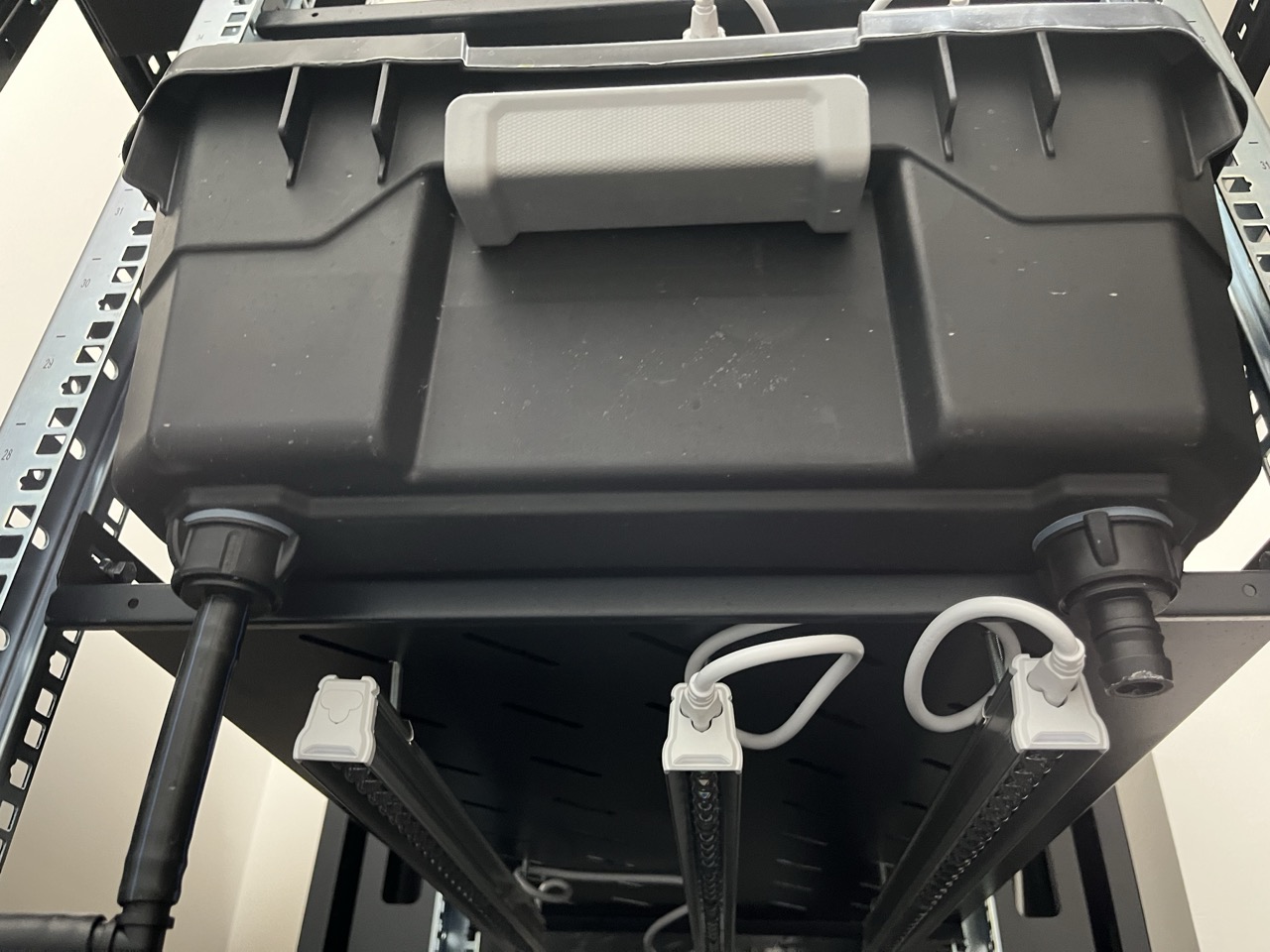
next, install the shelves, giving each grow tray around 10u. optional side quest: discover that they're not quite the right size for your rack and kludge it together with long and extremely rickety bolts.
the shelves i got had helpful holes in them so it was straightforward to hang the lights with a bunch m5 bolts.
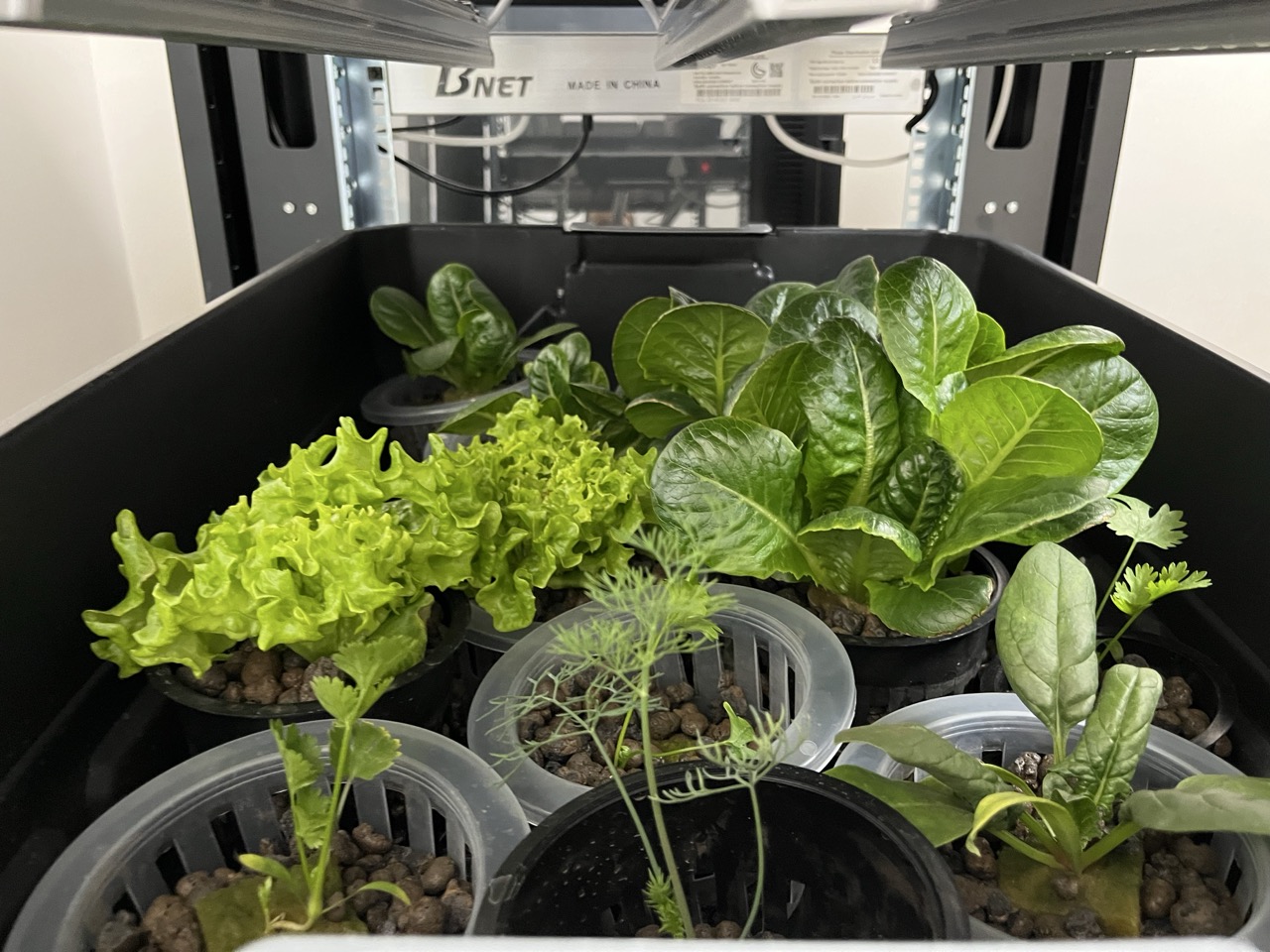
now put the boxes on the shelves, reservoir at the bottom, thread the pump and aerator pipes and cords through the reservoir lid, terminate all the power cords, cut and connect the pump and drain pipes, and you're almost ready to plant.
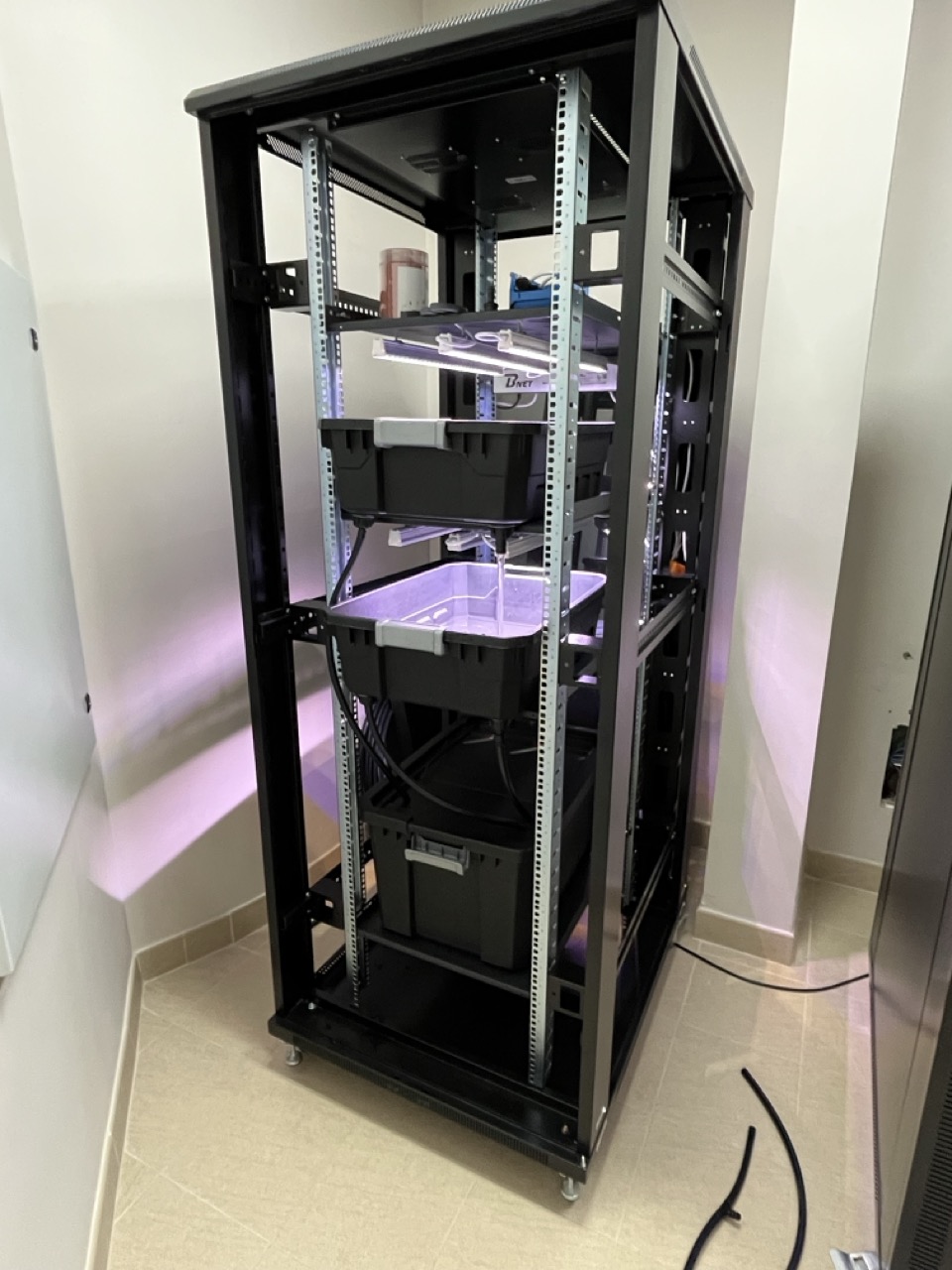
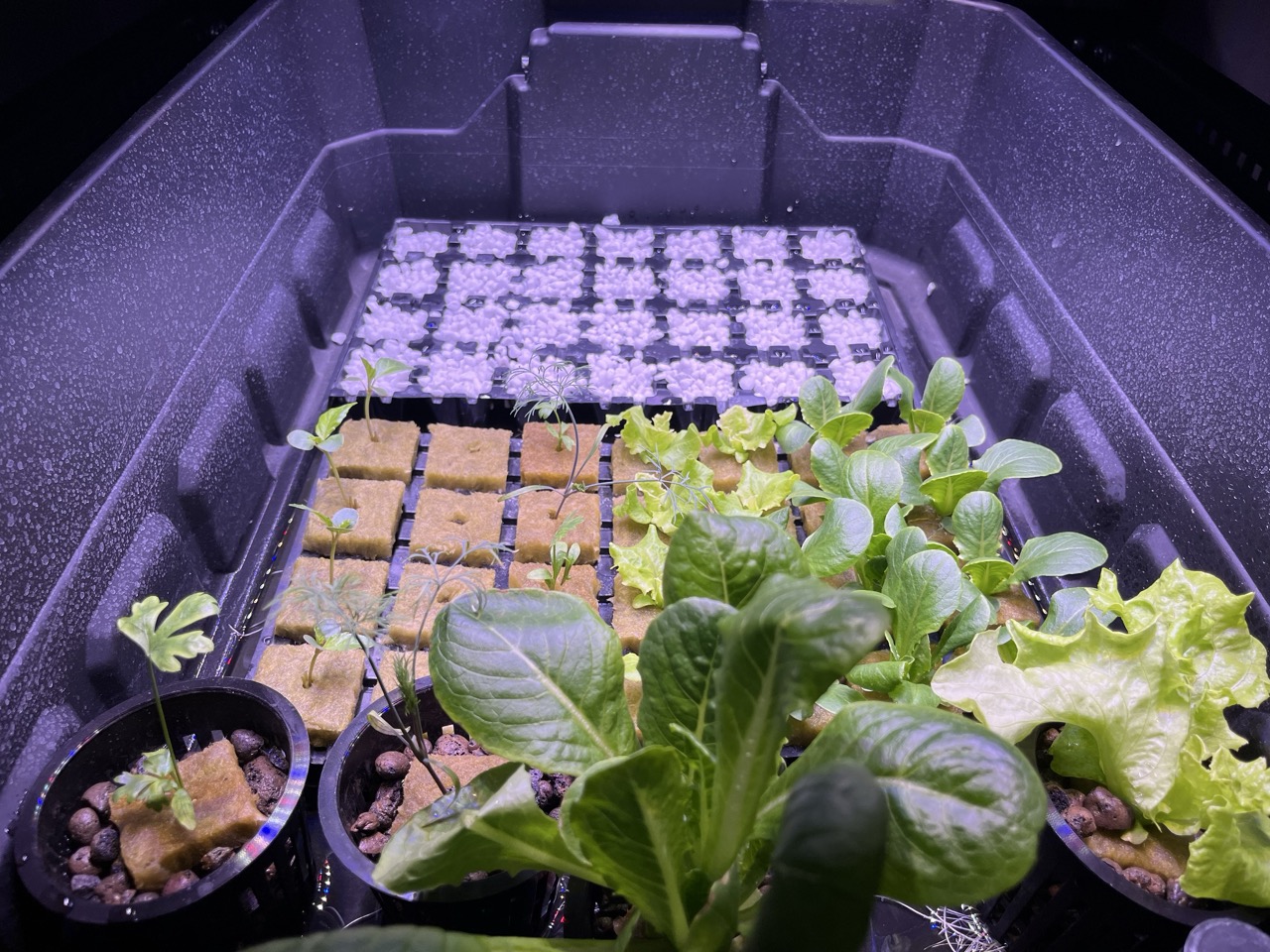
i started with seeds in a tray of rockwool. i was surprised how quickly the lettuces germinated, some in less than 24 hours. the other seeds (parsley, coriander, dill, spinach) took a little longer to germinate, and none of basil i tried sprouted.
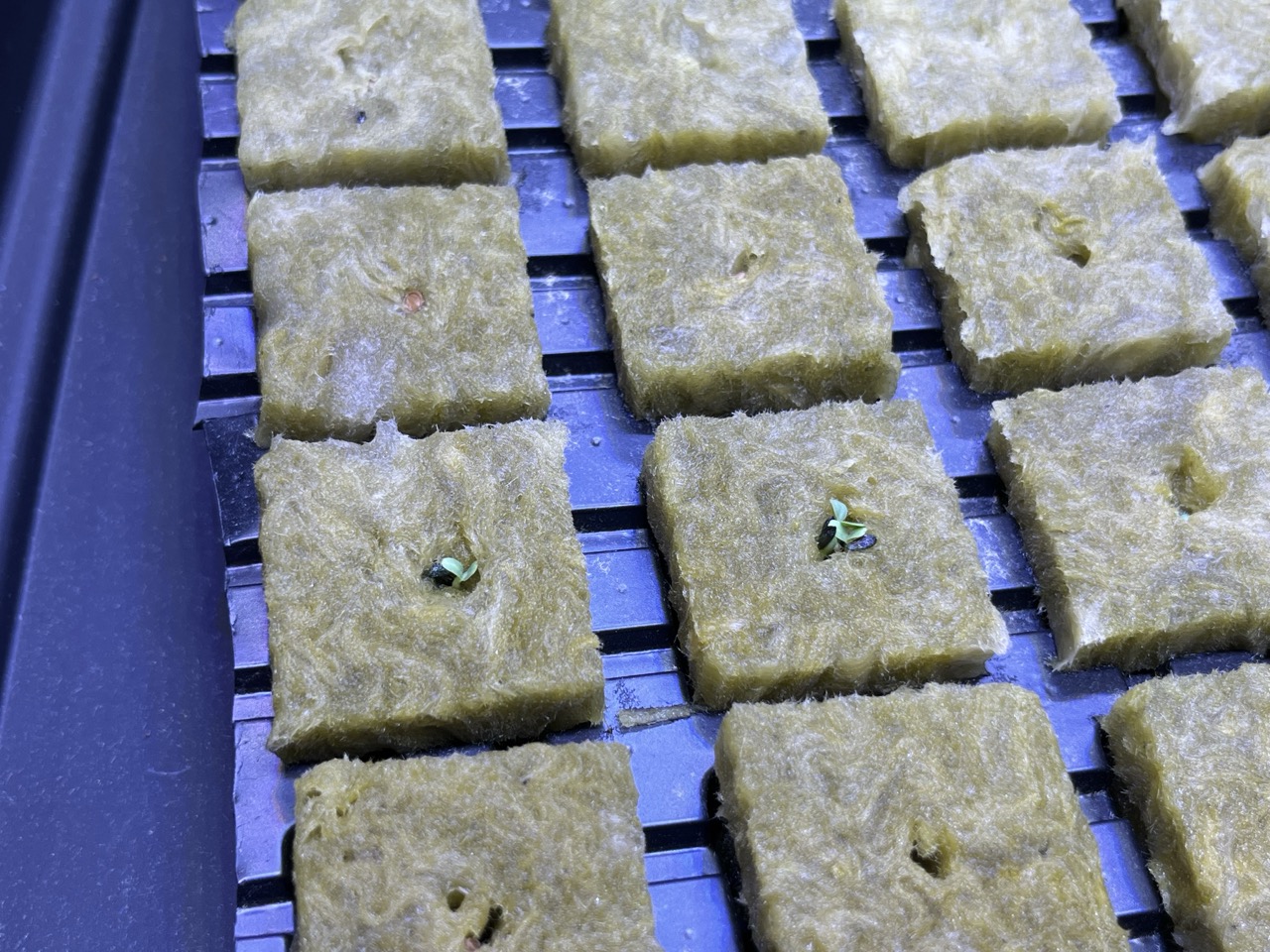
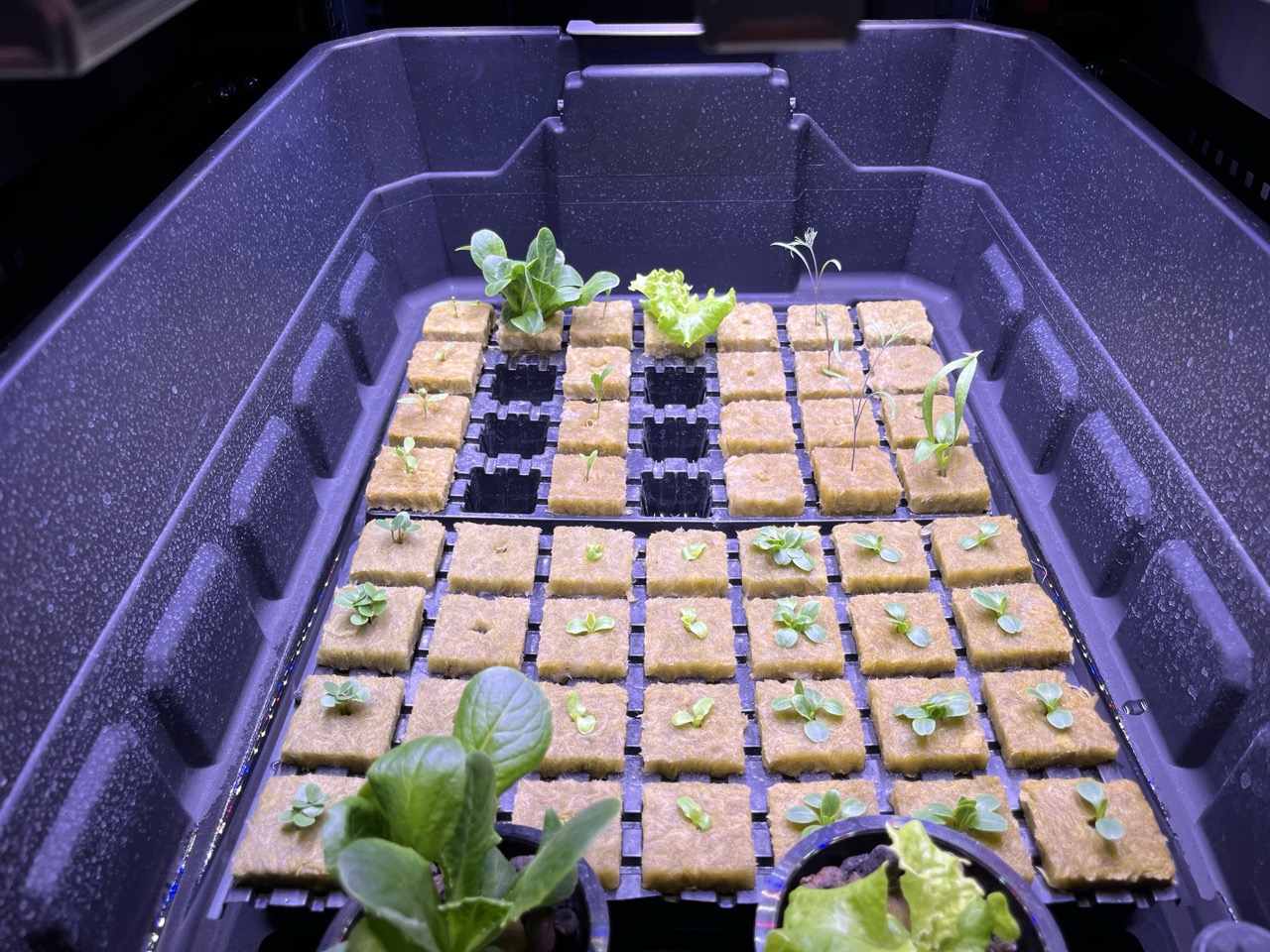
once they were large enough i moved them to individual mesh pots and added clay balls or perlite.
one thing that didn't go so well: when the tray is flooded, some of the pots would float and then comically tip over. i managed to deal with this by sterilising some rocks and putting them at the bottom of the pots, but it feels like this should not be happening in the first place. maybe i should look into making a framework to hold them in place.
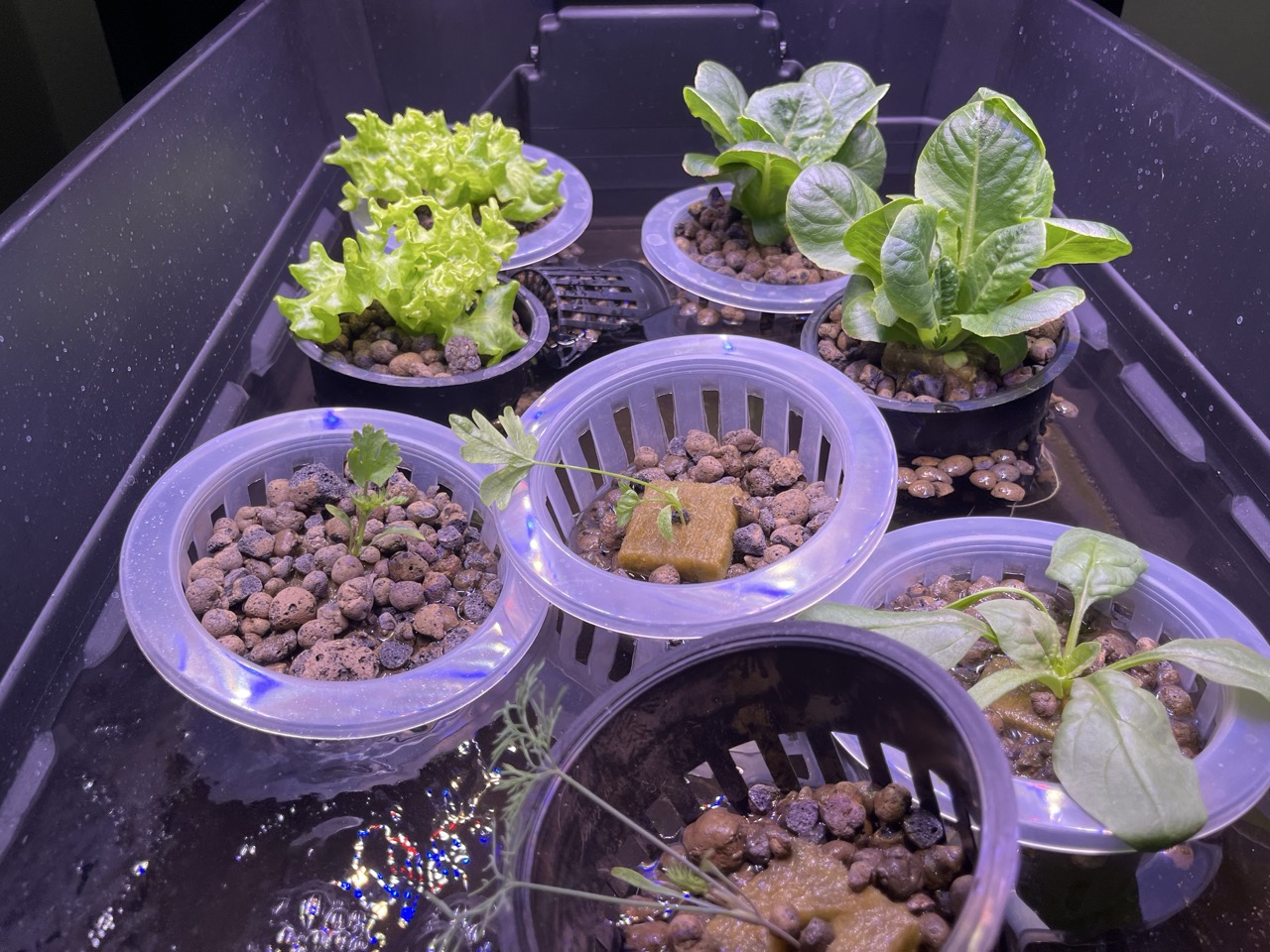
i started with 18 hours of light and 4 flood cycles a day. over time i adjusted the flood cycle count to deal with signs of algae or dryness in the plants, and ended up with just two.
naturally, since the equipments are plugged into a pdu they are controlled by cronjobs:
# (aziz,) light
0 4 * * * root ssh plantpower.internal on 2,3
0 22 * * * root ssh plantpower.internal off 2,3
# pump
0 7 * * * root ssh plantpower.internal on 1
2 7 * * * root ssh plantpower.internal off 1
0 16 * * * root ssh plantpower.internal on 1
2 16 * * * root ssh plantpower.internal off 1
i found some mystery pink powder that claimed to be an npk 12-12-36 + trace elements fertiliser. it came with absolutely no dosage information at all so i chanced it with 20 grams for 30 litres of water in the reservoir. that seemed to work well enough for the lettuce at least, so i stuck with it. i'll start to play around with this once i get repeatable results.
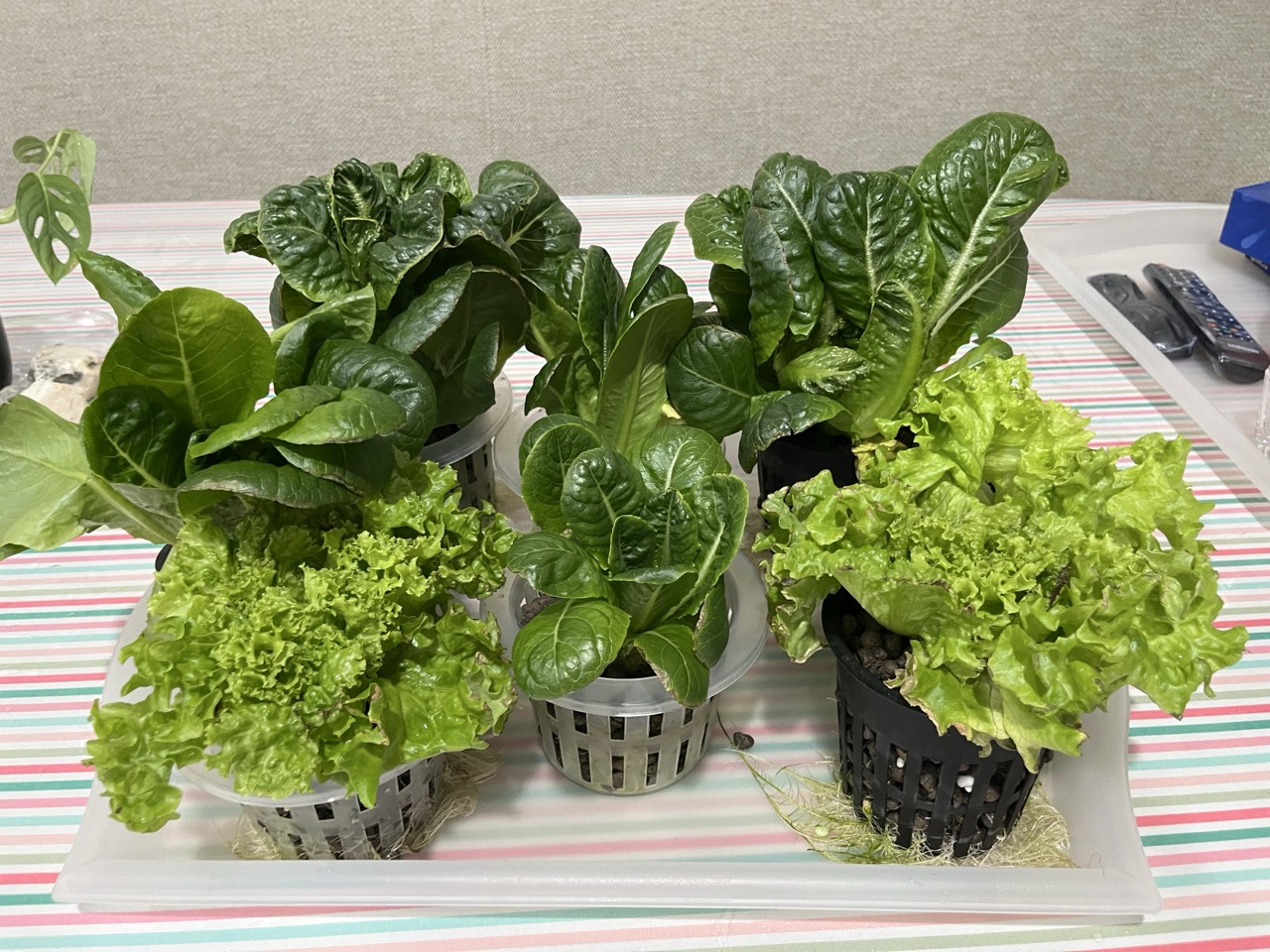
i was bracing for disaster, given how silly this whole thing is, but this worked much better than i expected. so far, i was able to successfully grow a few batches of different kinds of lettuce as well as various herbs, and it only leaked water all over our utility closet just twice.
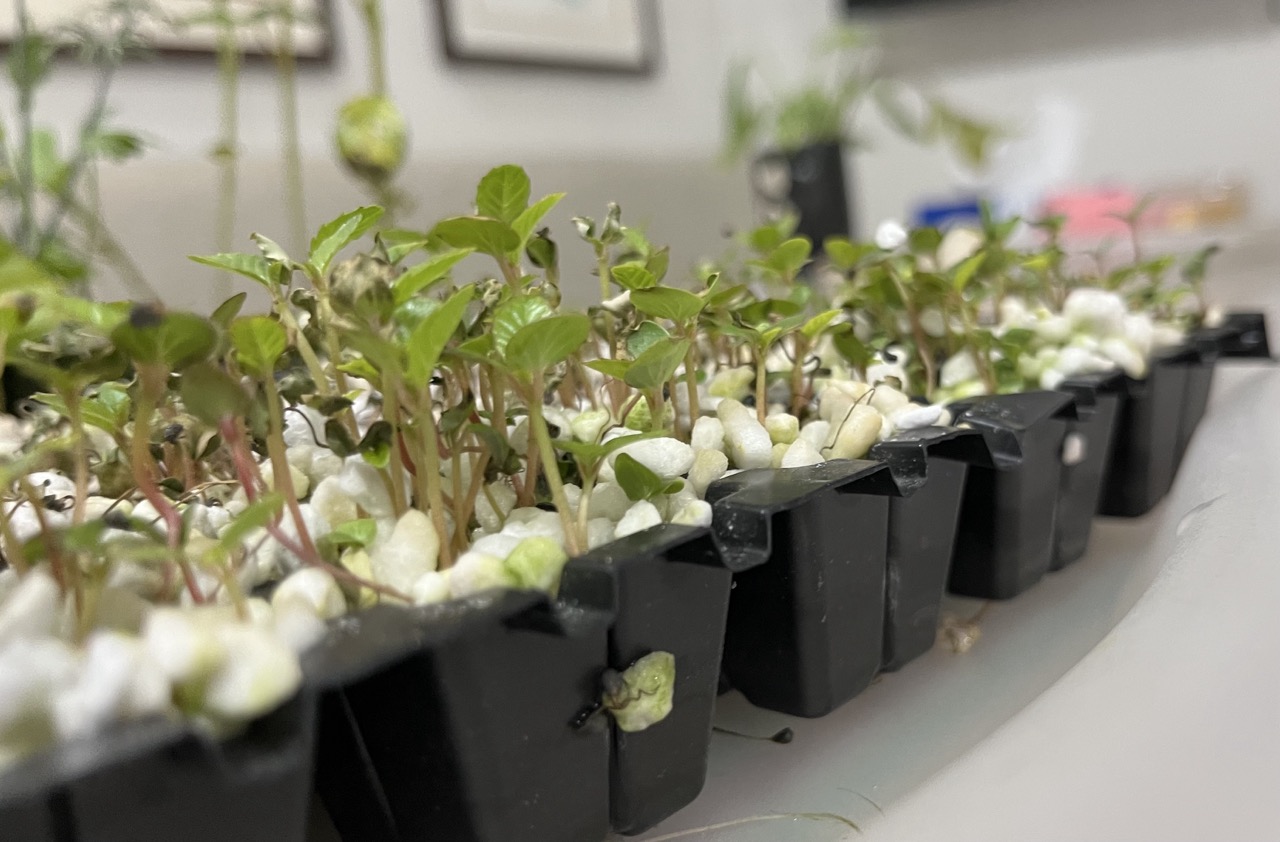
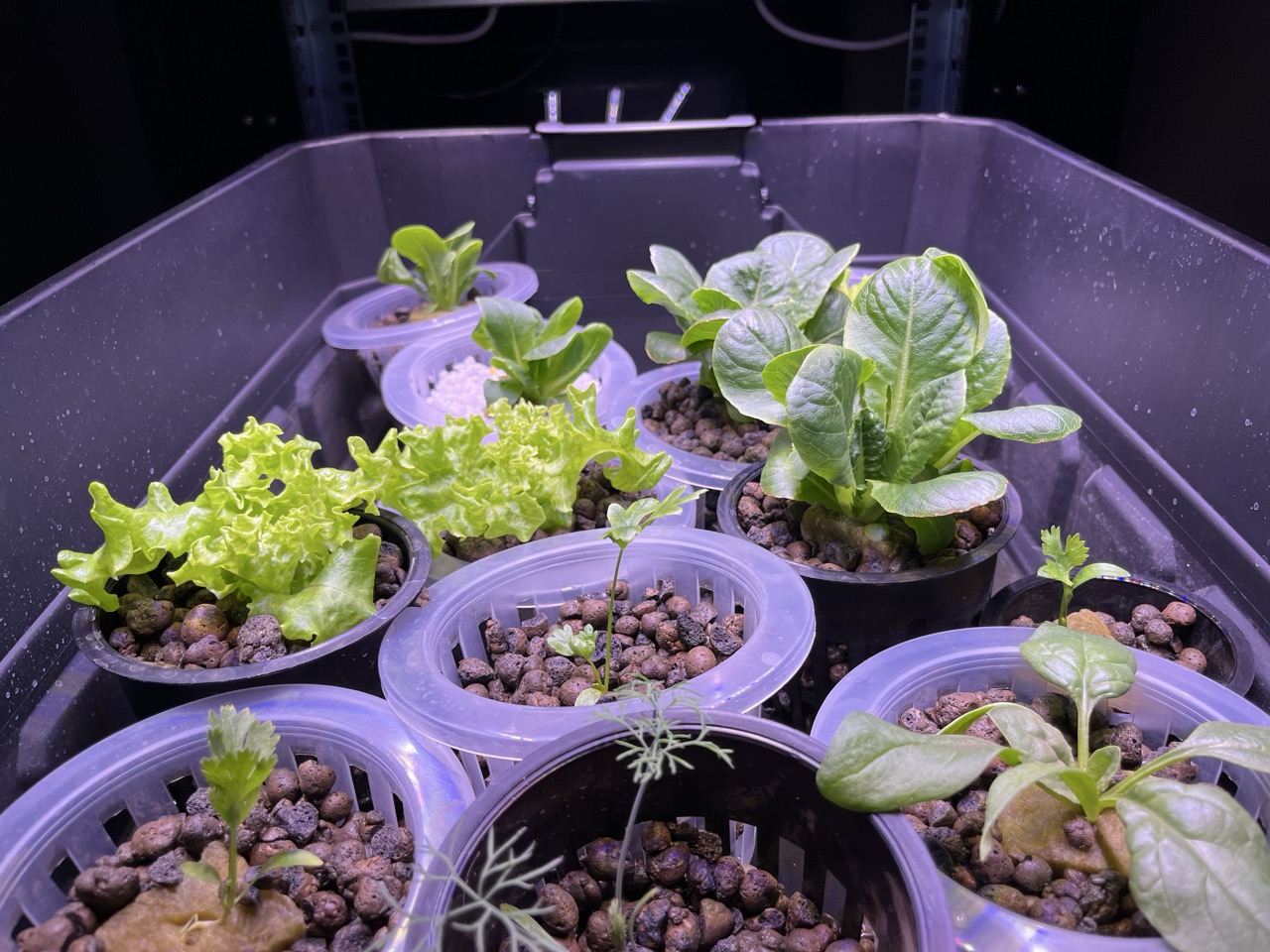
all that said, if you actually just want to grow stuff, you should probably not do any of this. this is not a serious guide and there are better approaches out there. but you do you. i had my fun with it, learned some things about hydroponics, and ate some delicious salads along the way.
That said, I prefer growing outdoors if you have the space. It’s a total different maintenance (with way more bugs) but it also doubles as decor better than my hydroponic setup ever could.
When I was growing up, there was a vogue among my fellow vegetarians for the book Diet for a Small Planet which suggested that we needed to eat a diversity of amino acids in each meal, hence "complementary" proteins at the same time. This concept then seemed to fade away completely because it appears that the body can actually successfully make use of amino acids even when consumed at different times. But they have to be consumed eventually!
You don’t need a $900 gadget to grow fresh herbs, either, of course. But that’s one way you could think of it “recouping” the capital.
Worth a mention as many door frames are easier to remove than a number of people might suspect .. fewer pieces to disassemble than many {object}'s and not an uncommon hack when moving furniture.
I'll water my indoor tomatoes, basil and thyme. It is way more productive than blabbering about gardening in the internet.
In a backyard 5gal/19l bucket, I could get 3lbs/1.5kg of potatoes or 3lbs/1.5kg of cherry tomatoes. The latter is a better deal.
Other nutrients like phosphorus or potassium come disolved in water, but in intensive farming they must be added to the soil, so it's the same that dissolving in the hydroponic solution. Perhaps it's more efficient in hydroponic than in soil.
Nitrogen is more tricky. There is plenty of Nitrogen in the air but not in a useful form, so in most cases it must be added as fertilizer. In some cases like soy the plants have helper bacteria that transform the nitrogen from the air into useful forms. This conversion takes a lot of energy, so I don't expect the lack of wind to be a problem, you still need some air movement to keep the CO2 high and the O2 low. (Anyway, farming soy under artificial light is probably not profitable for the same reason farming potatoes under artificial light is not profitable.)
The most important thing you lack inside a vertical farm that you get almost for free in a big faring field is sunlight (i.e. energy).