The canonical example is the automatic shift knob in a car. The shift knob is designed to 1) prevent you from accidentally shifting all the way back into reverse without pressing the shift button, and 2) prevents you from leaving park or neutral without depressing the brake pedal. This way you don't damage the drivetrain or accidentally cause the car to roll forward/backward.
Poka-yoke is a form of defensive design (https://en.wikipedia.org/wiki/Defensive_design). For a beautiful example of defensive design, see the average electric kettle. If water boils over the top it won't short the device, if it boils dry it'll stop operating, the handle and body are plastic to prevent burning yourself, the handle is ergonomic to make carrying 1.5L of sloshing boiling water not cause you to spill it, the cord is detached from the kettle so you don't yank the cord and spill the boiling water, the switches are located on the bottom away from hot steam, and the lids usually lock while in operation, again to prevent damage from spillage or steam. It's the simplest and safest possible way to boil water, and it's $20.
No, there's one worse feeling. Walking up to the machine that was supposed to work throughout the night, and seeing it had a surprise update that rebooted the system.
One of my favorite things about ditching Windows.
see https://arstechnica.com/tech-policy/2024/08/samsung-recalls-...
Luckily, there’s an easy solution recently devised that can prevent this safety hazard in homes across America, Samsung said. Customers concerned about unintentional activations can request free knob locks and covers that Samsung confirmed made it much harder to accidentally turn on the stove.
During the meeting, the CPSC shared data showing that across 338 incidents between January 1, 2018, and May 30, 2024, stoves from “ten specific manufacturers” were involved in fires causing 31 injuries and two deaths. Additionally, the CPSC had recorded “two other fatal incidents where a range was accidentally turned on when a knob was bumped, but the manufacturer is unknown.”
...Companies said the CPSC data would help them “fully understand the issues” and “make sure that reasonable and foreseeable circumstances would be addressed” without impacting compliance with the Americans with Disabilities Act.
After mentioning this article to relatives, one said they had nixed buying one product because of the front dials. Then we heard from a relative in another city who bought a house due to a newborn baby - one of the additional purchases was a oven/stove/range with front panel dials.Also, perhaps `rm` should be molly guarded to move things to the trash on all systems by default, and delete only if forced to by a flag.
Note: I’d have expected Molly to be a cat, because they tend to be pretty good at disrupting things in my experience.
My dad worked for Sperry Univac. For a while he was working on a ground-support trailer for the Sergeant surface-to-surface missile. He went in to work one Saturday for some kind of a major test. For some reason, he brought my mother and I along (maybe to give my mom a break). So this four-year-old (yours truly) goes into the trailer, and sees this bright red button...
It was not the launch button. It was the emergency shutdown button, which would have cost them an hour to bring the trailer back online. Someone stopped me before I actually pushed it, but still, this did not make me popular. What I remember from that day is actually the parking lot, because I spent far more time in the parking lot than in the trailer.
I never heard of any related injuries over here.
After that we installed molly-guard with a check for the number of active connections. Made it painless to reboot standby proxies and difficult to reboot active ones.
(We also instituted pairing on production proxy maintenance. I'm not a fan of pair programming but pair maintenance is great.)
I like telling junior hires about this incident because it teaches them that (a) anyone can make mistakes, (b) even serious mistakes usually aren't that dangerous, (c) you can learn a lot from mistakes with the right mindset, (d) we cannot prevent mistakes but with the right system design we can reduce their consequences.
Not all systems, but some (RHEL, I think?) default alias rm='rm -i', yes
It's a great opportunity to share knowledge and techniques and I very much recommend doing so. It's an important way to get people familiar and comfortable with what the documentation says. Or, it's less scary to failover a database or an archiving clutser while the DBA or an archive admin is in a call with you.
Also reminds me of an entirely funny culture shock for a new team member, who was on a team with a much worse work culture and mutual respect beforehand. Just 2-3 months after she joined, we had a major outage and various components and clusters needed to be checked and put back on track. For these things, we do exactly this pilot/copilot structure if changes to the system must go right.
Except, during this huge outage, two people were sick, two guys had a sick kid, one guy was on a boat on the northern sea, one guy was in Finland and it was down to 3 of the regulars and the junior. Wonderful. So we shoved her the documentation for one of the procedures and made her the copilot of her mentor and then we got to work, just calmly talking through the situation.
Until she said "Wait". And some combined 40 - 50 years of experience stopped on a dime. There was a bit of confusion of how much that word weighed in the team, but she did correctly flag an inaccuracy in procedure we had to adress, which saved a few minutes of rework.
However that was good, because after that I have always been extra careful at any changes that could affect the firewall in any way. (That is not restricted to changes in firewall rules, because there are systems where the versions of the firewall program and of the kernel must be correlated, so an inconsistent update may make the firewall revert to its default state of denying all connections.)
A guard I often make for myself is removing/disabling the delete key on my keyboard, and setting FN+Backspace to Delete with whatever control software is involved. I often then repurpose the delete key location to F2, which is typically used to “Edit” a spreadsheet cell or file name.
https://entropicthoughts.com/locking-yourself-out-with-firew...
To me, a button that forces me to wait for an unknown and indeterminate period of time before functioning is a FAIL.
* Yes, on some systems rm is aliased to rm -i by default.
* Some scripts will use rm -f because normal rm returns an error if the target already doesn't exist but -f doesn't care.
* Finally, sometimes files are just ... I think it's being marked read-only that does it? I've hit this while trying to rm a git checkout; you actually do need to add -f sometimes to succeed. So if you just add -f then it'll always work.
>> At 08:56 a ‘Trade Limit Warning’ pop-up alert appeared within PTE. This presented the trader with 711 warning messages, consisting of hard block and soft block messages, listed in a single alert where only the first 18 lines of alerts were immediately visible unless the person who received the alert scrolled down. The trader did not appreciate their inputting error and overrode all of the soft warnings in the pop-up.
> You get 711 alerts, you only see 18 of them, you are like “ehh 18 alerts is pretty much the normal number,” you override them all without reading.
This means a properly configured mollly-guard is invisible for routine actions but kicks in only when a genuine mistake is suspected because the operation would cause some sort of meaningful loss. That way, users aren't trained to ignore it.
That's clever. This is what I meant when I wrote, that software allows for better solutions.
I discussed this also here:
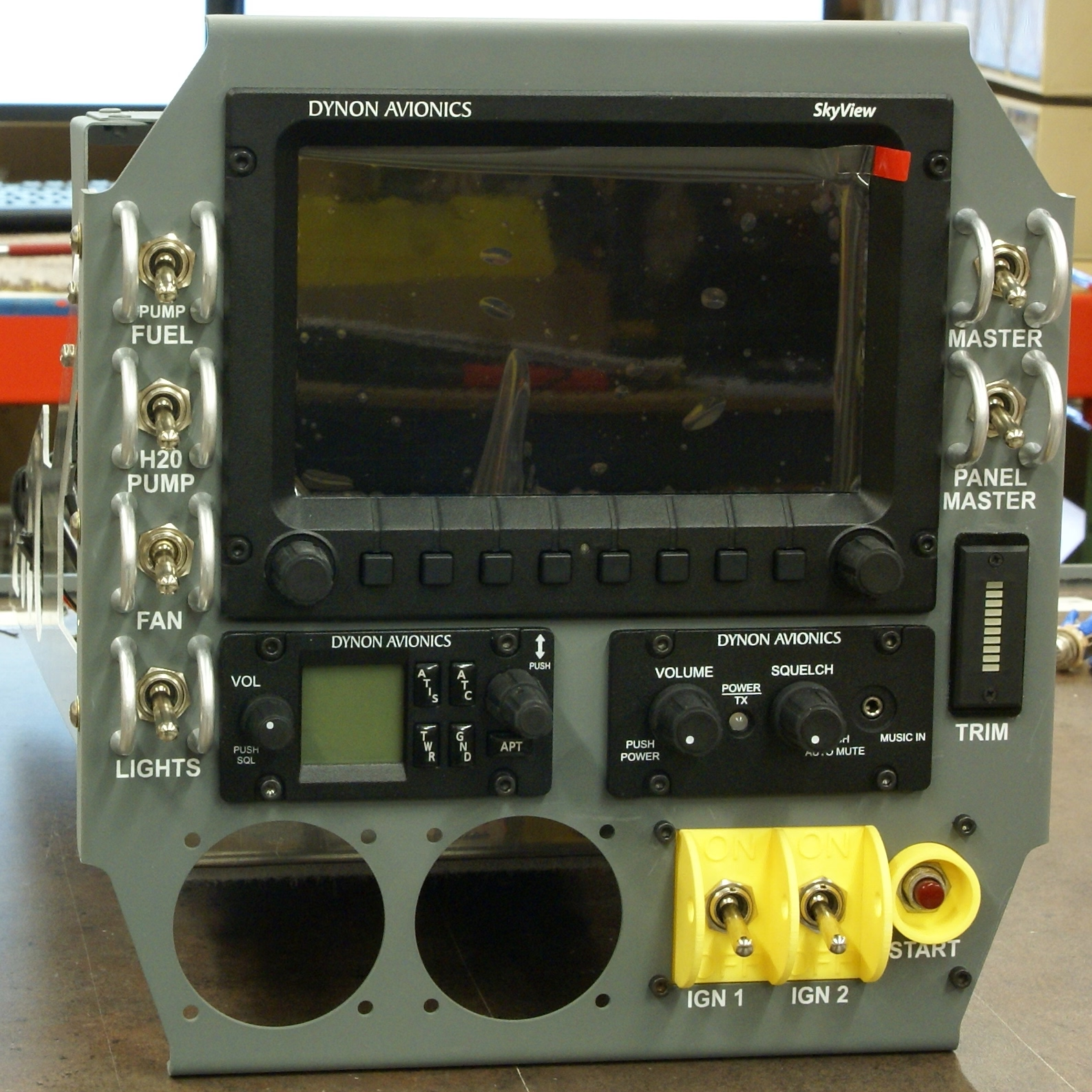
Old-school computing has a term “molly guard”: it’s the little plastic safety cover you have to move out of the way before you press some button of significance.
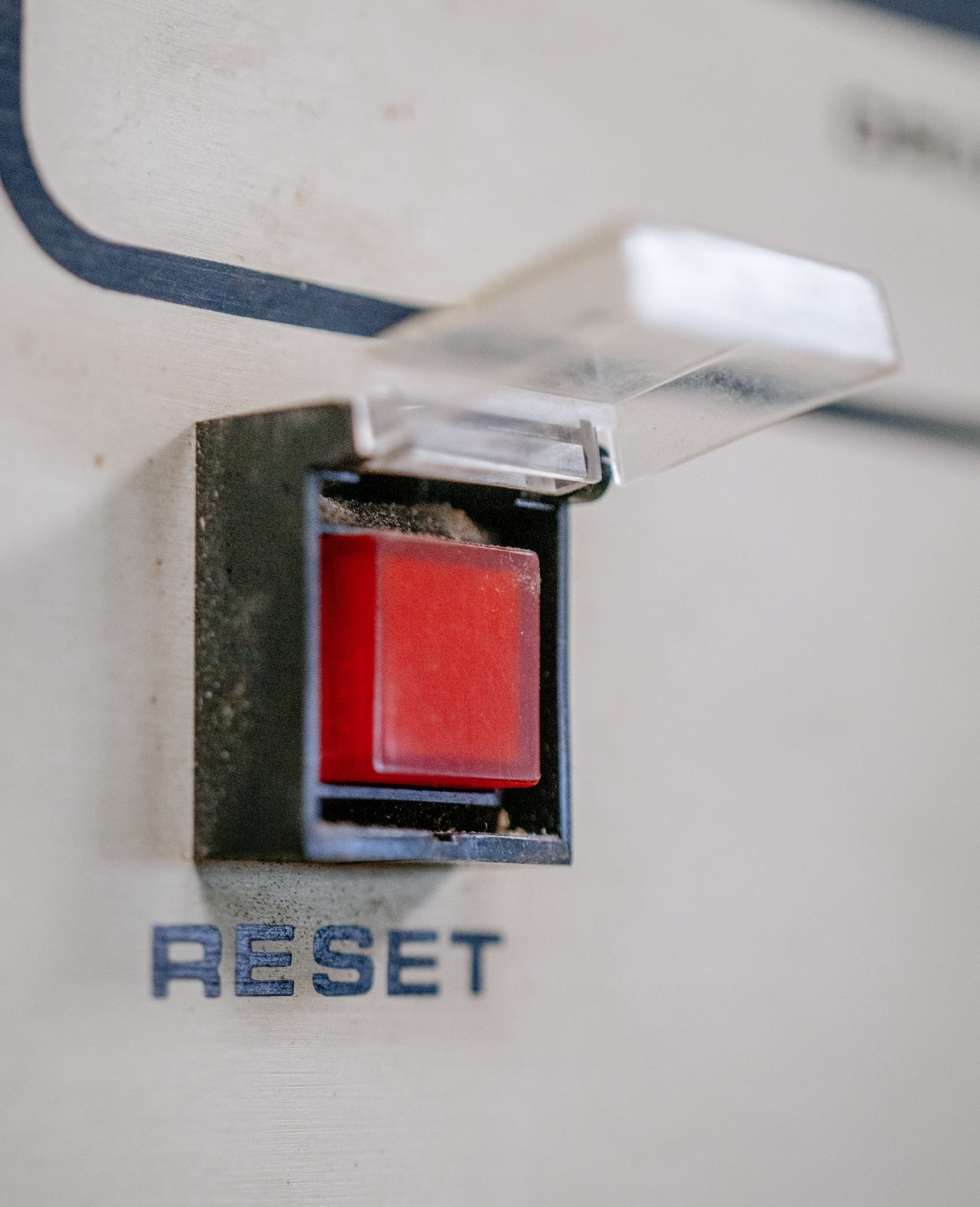
Anecdotally, this is named after Molly, an engineer’s daughter who was invited to a datacenter and promptly pressed a big red button, as one would.
Then she did it again later the same day.

You might recognize molly guards from any aerial combat movie you ever watched:
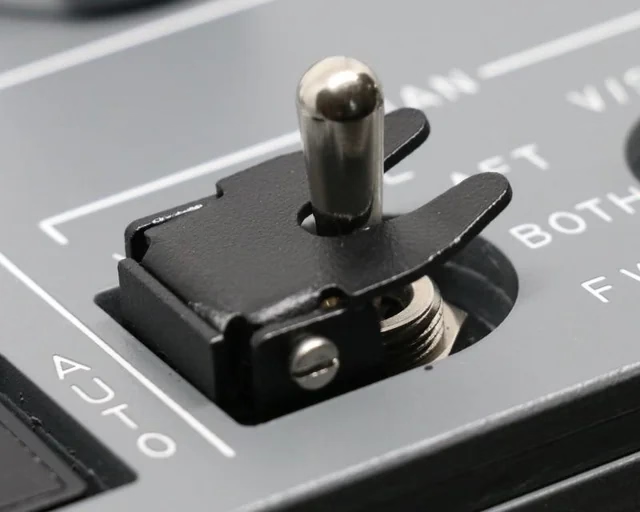
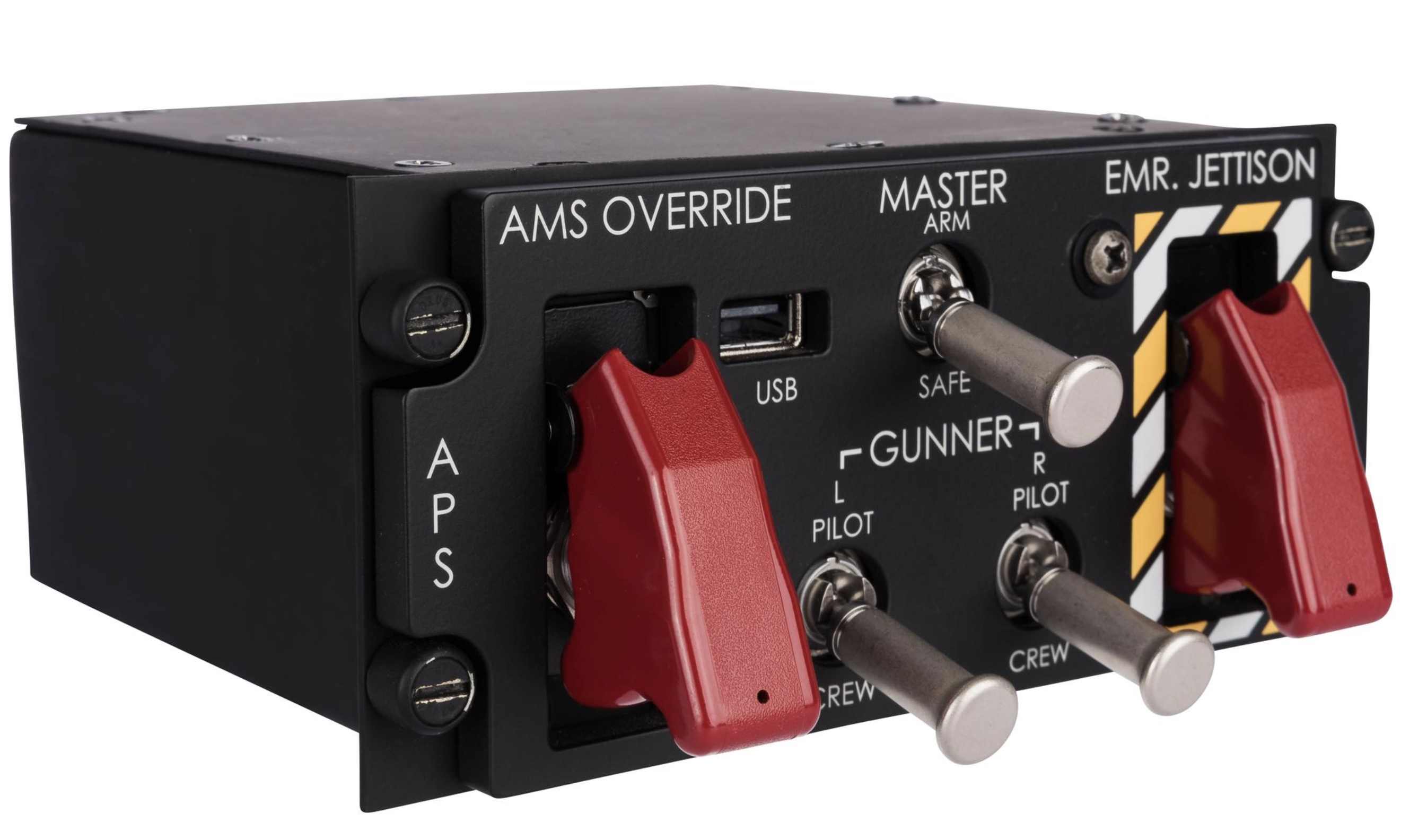
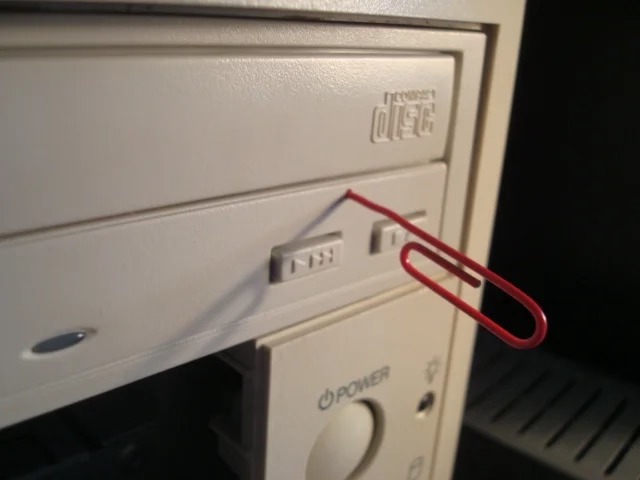
And some vestigial forms of molly guards exist everywhere in civilian hardware, too: from recessed buttons, through plastic ridges around keys, to something like a SIM card ejection hole.

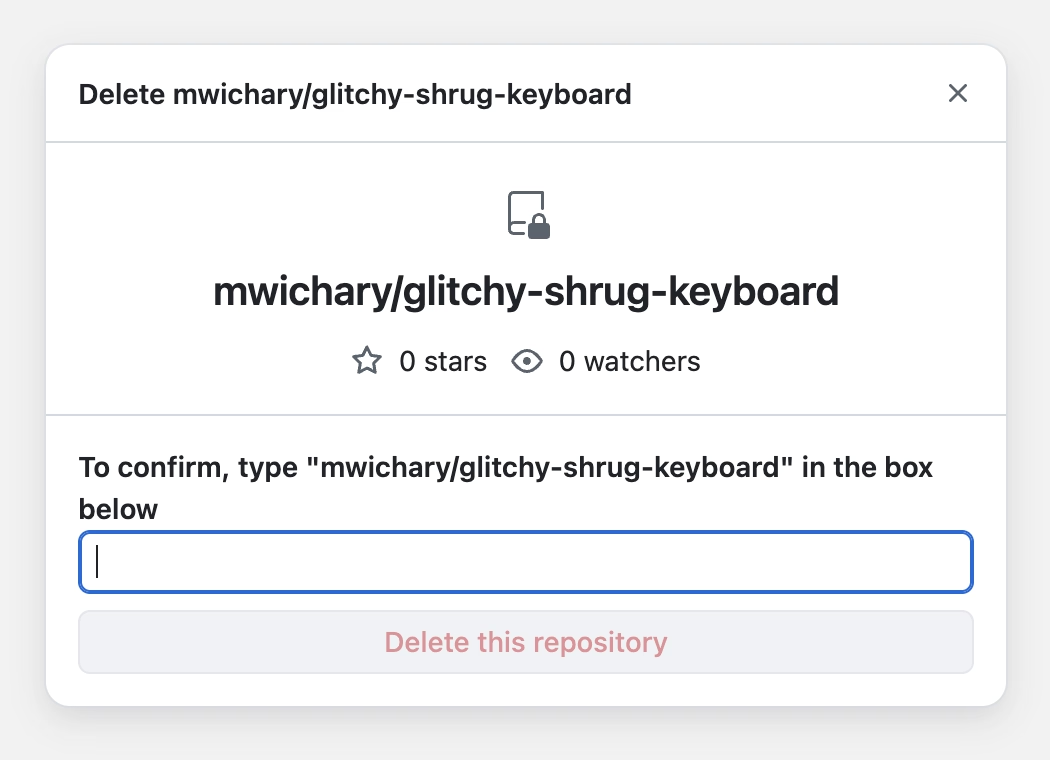
Of course, molly guards happen in software, too: from the cheapest “are you sure?” dialogs (which sometimes move buttons around or disable keyboard activation to slow you down), through extra modifier keys (in Ctrl+Alt+Del, the Ctrl and Alt keys are the guards), to more elaborate interactions that introduce friction in places where it’s needed:
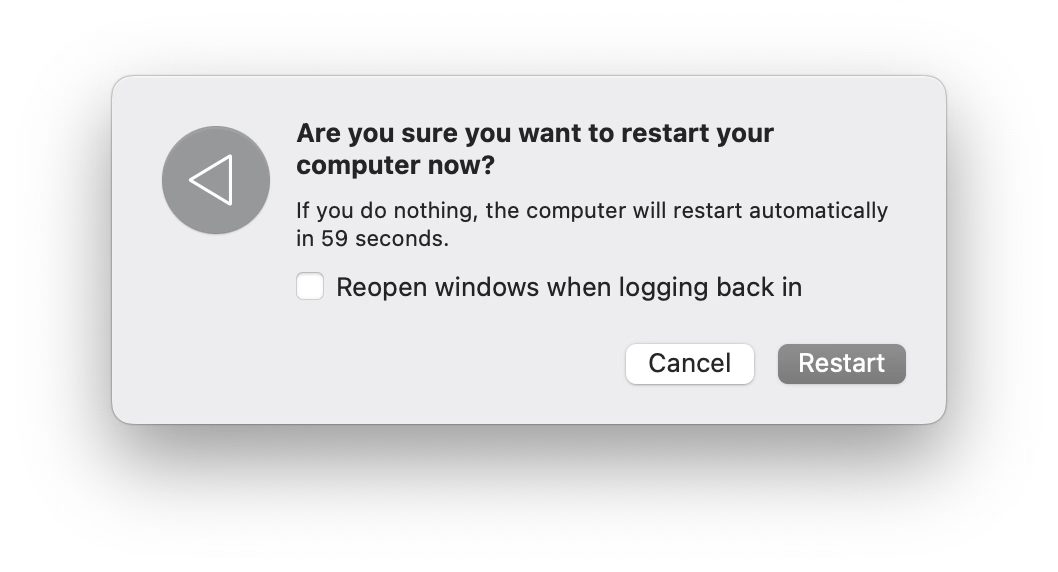
But it’s also worth thinking of reverse molly guards: buttons that will press themselves if you don’t do anything after a while.
I see them sometimes, and always consider them very thoughtful. This is the first example that comes to my mind:
Here’s what became a standard mobile pattern:
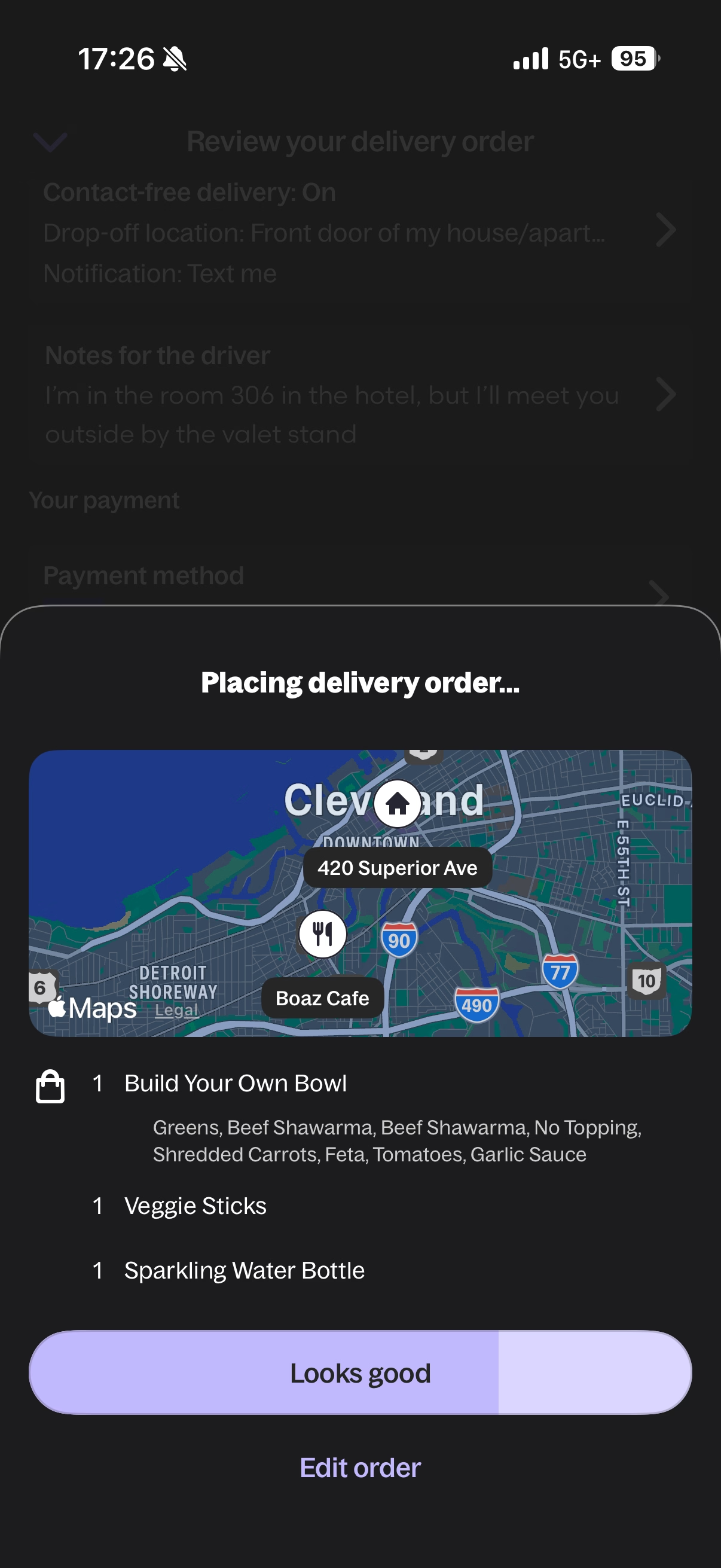
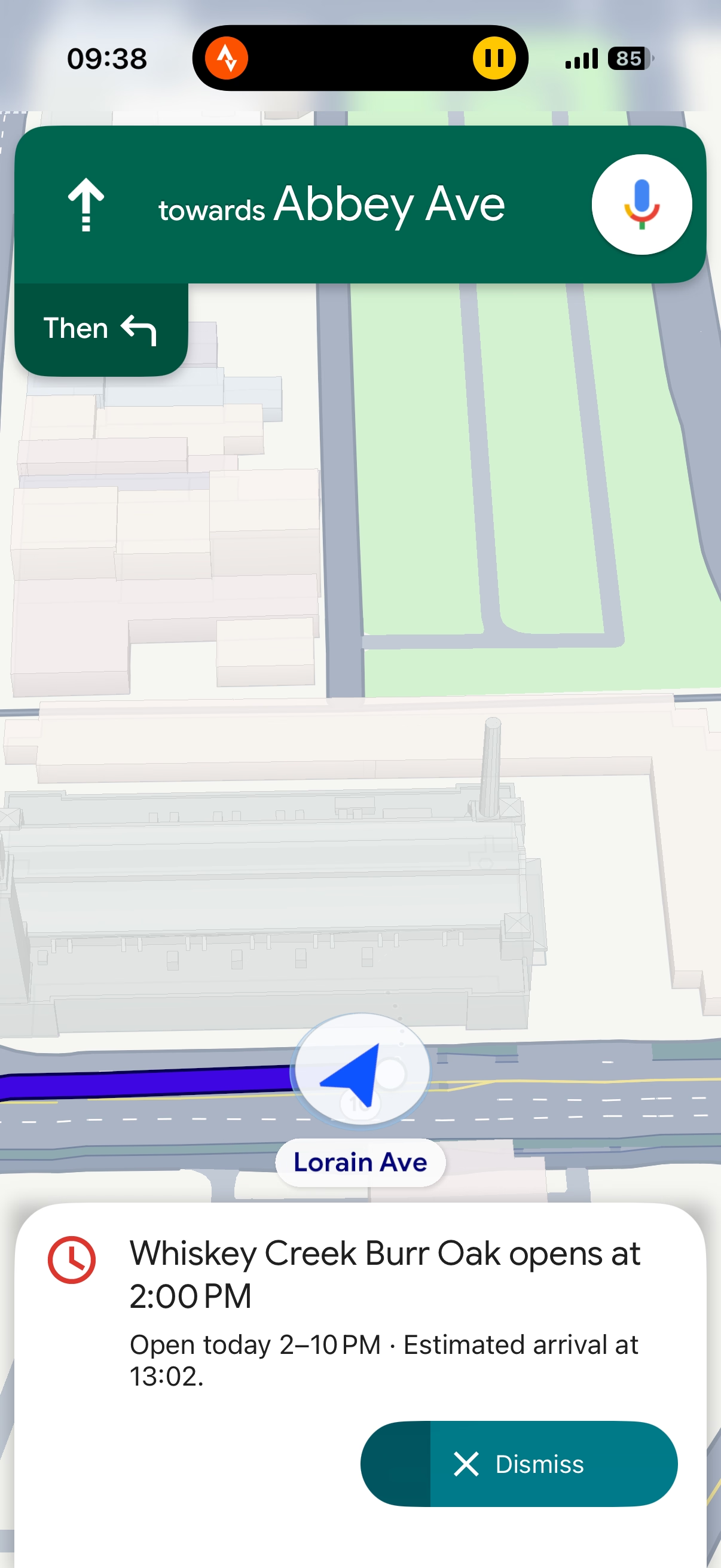
These feel important to remember, particularly if your computer is about to embark on a long process to do something complex – like an OS update or a long render.
There is no worse feeling than waking up, walking up to the machine that was supposed to work through the night, and seeing it did absolutely nothing, stupidly waiting for hours for a response to a question that didn’t even matter.
It’s good to think about designing and signposting those flows so people know when they can walk away with confidence, and I sometimes think a reverse molly guard could serve an important purpose: in a well-designed flow, once you see it, you know things will now proceed to completion.