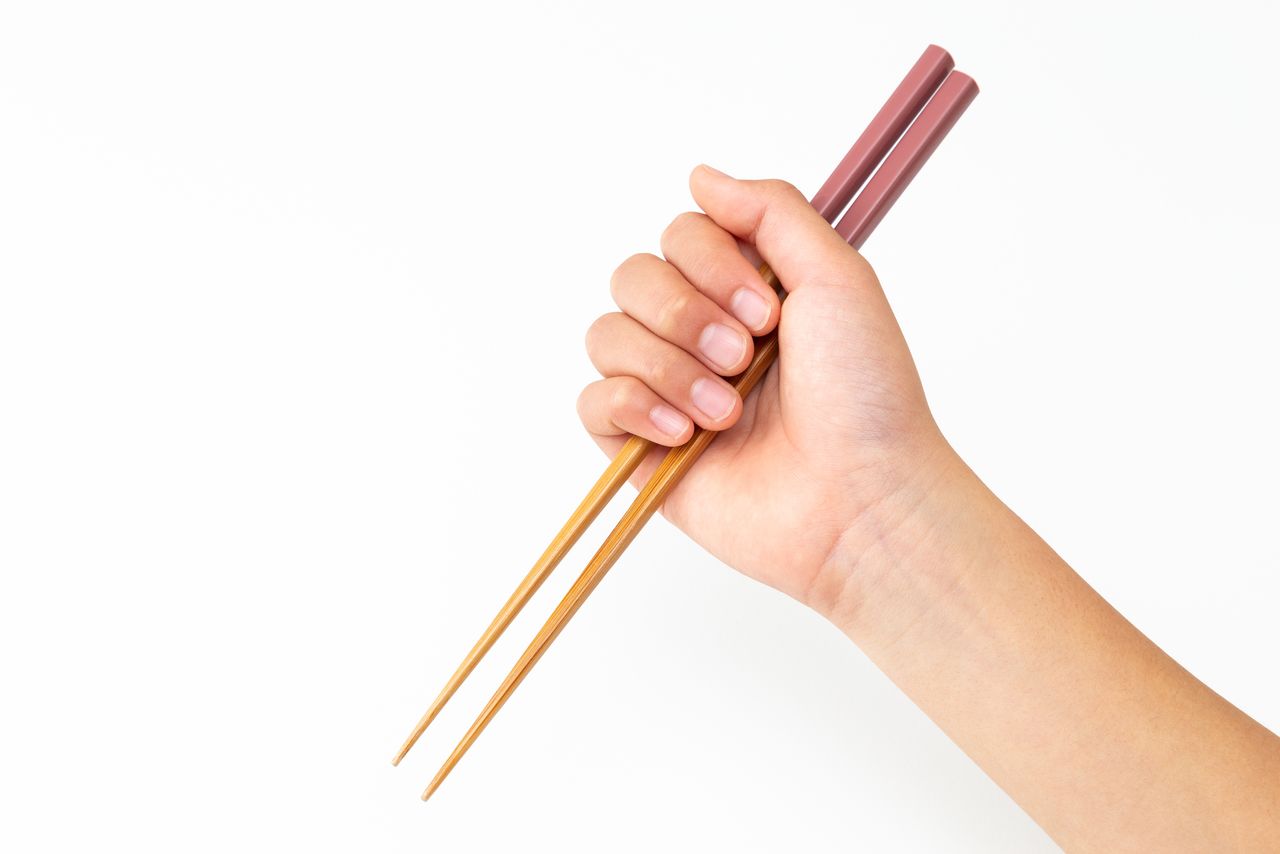
The waiter (who had a bit of a sense of humor) brought me exactly ONE chopstick. I laughed and repeated 請給我另一個筷子 (Please give me another chopstick) and he brought out another one.
Of course later my friend told me that I should have used 雙 to indicate I wanted a "pair" of chopsticks.
Most of these seem related to health/sanitary practices/being considerate more than anything. Just avoiding contaminating what others are going to eat with your own utensils is an easy way to describe several of them.
Others I don't know that I would have much of an inclination to do and haven't seen but am not sure if it's because it really is a faux pas or just because no one else really tends to do it either.
1. > 返し箸 Kaeshibashi (also known as 逆さ箸 sakasabashi)
> To turn the chopsticks around when serving food so that the tips of the chopsticks that have touched one’s mouth do not touch the food.
Does this mean it is preferable to use the tips that may have touched mouth to then serve more food? Or is this considered fine because it's also taboo to touch the tips to your mouth? (which only a BARBARIAN would do!)
2. > こすり箸 Kosuribashi
> To rub waribashi (disposable chopsticks) together to remove splinters.
Just proceed to eat some splinters, then? What is the good etiquette way to handle low quality el-cheapo chopsticks?
---
I have been guilty of the above as well as:
Chigiribashi - Hold one chopstick in each hand and use them like a knife and fork to tear or cut food into smaller pieces.
Soroebashi - Hold chopsticks together and tap them on a dish or the top of the table to align the tips.
Namidabashi - Allow sauce or soup to drip from the tips of the chopsticks when eating. Namida means “tears.”
Nigiribashi - Grip both chopsticks in a fist.
Neburibashi - Lick the chopsticks.
Hashibashi - Place the chopsticks like a bridge across the top of a dish to show one is finished. Chopsticks should be placed on the hashioki (chopstick rest).
Furibashi - Shake off soup, sauce, or small bits of food from the tips of the chopsticks.
Mogibashi - Bite off and eat grains of rice that are stuck to the chopsticks.
Yokobashi - Line the chopsticks up together and use them like a spoon to scoop up food.
.. growing up my mom used to say, "What are you, raised by wolves!?" .. apparently, yes!
こすり箸 Kosuribashi:
To rub waribashi (disposable chopsticks) together to remove splinters.
I don't know about Japan, but everybody does this in Taiwan.That said, chopstick etiquette is definitely evolving. Something like chobujubashi isn’t enforced as strictly anymore, especially with more awareness around left-handed users. Kaeshibashi, on the other hand, is becoming more common, and in some social circles, not doing it can actually come across as rude.
> To use the chopsticks to pick something out from near the bottom of the dish.
I think there must be some bits that are lost in translation for some of these. This makes it sound like you can't eat all of the food in a bowl with your chopsticks.
Also I'm not sure how you're supposed to eat e.g. fried rice without yokobashi or kakibashi.
Also! I thought kaeshibashi was a good thing. I've definitely seen people do that at parties.
(Not gonna direct quote because the damn site doesn't allow copy-pasting so they don't get a link, paraphrased):
Kirai-bashi would be literally translated to "dislike-chopsticks" and means bad chopstick table-manners. Hashi is chopsticks and bashi is the voiced form of it.
So the bashi suffix/word on the end of all of these just means chopsticks it seems.
- several things that are often quoted as good etiquette but nobody follows (elbows off the table, correct order of dishes)
- lots of things that are customary but nobody cares if you don't follow it (napkin on lap, placement of silverware)
- only a few things that actually matter and would be considered rude by normal people (don't touch shared food with used silverware, keep your mouth closed while chewing)
Of these several dozen "rules" for chopsticks, how many actually fall into the last category of things that actually matter?> To rub waribashi (disposable chopsticks) together to remove splinters.
Stopped reading there. If you're handing me crappy chopsticks to eat with I am rubbing them together first.
> To keep putting the chopsticks into the same side dishes. It is proper etiquette to first eat rice, move on to eat from a side dish, eat rice again, and then eat from a different side dish.
So keto itself is a faux pas?
> 返し箸 Kaeshibashi (also known as 逆さ箸 sakasabashi)
> To turn the chopsticks around when serving food so that the tips of the chopsticks that have touched one’s mouth do not touch the food.
Ewww. I’d rather be rude than share germs.
Related to eating, one pro-tip I got from a local is that when you're ready to close your tab or get your check at a bar or restaurant, you can make a small X with your index fingers.
Really useful in a busy bar!
I've seen people eat noodles and broth (e.g., ramen) like that a million times? What am I missing? How do you properly eat noodles and broth?
An overview of chopsticks gaffes that are best avoided when eating in Japan.
From bad manners to taboo, there are certain ways of using chopsticks that are considered as going against dining etiquette. These various acts, known as kiraibashi, are listed below.
(Listed in Japanese syllabary order)
To raise the chopsticks above the height of one’s mouth.
To clean the chopsticks in soup or beverages.
!!! (Serious) To pass food from one pair of chopsticks to another. This is taboo due to the custom after a cremation service of picking up remains and passing them between chopsticks.
To hold out one’s bowl for more while still holding chopsticks.
To keep putting the chopsticks into the same side dishes. It is proper etiquette to first eat rice, move on to eat from a side dish, eat rice again, and then eat from a different side dish.
To pick up food with the chopsticks and then put it back without taking it.
To hold the chopsticks between both hands when expressing thanks for the food. It is considered rude to hold objects in your hands when in prayer and it is taboo to hold the chopsticks while saying Itadakimasu, a phrase said before eating, giving thanks for the life of the food.
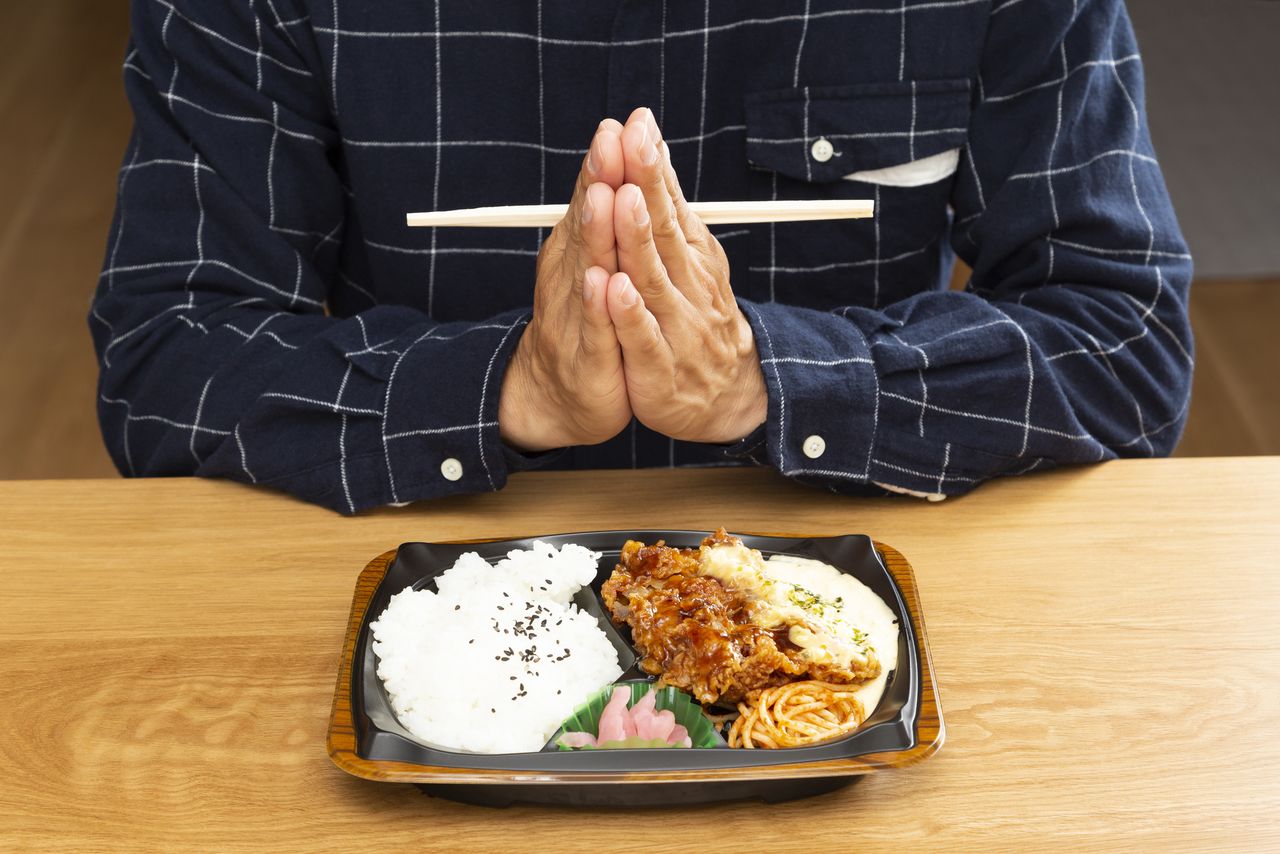
To use the chopsticks to push food deep inside one’s mouth.
To drop the chopsticks while eating.
To turn the chopsticks around when serving food so that the tips of the chopsticks that have touched one’s mouth do not touch the food.
To place one’s mouth against the side of a dish and push food in with the chopsticks. This can also mean to use the chopsticks to scratch one’s head or other parts of the body.
To bite the chopsticks.
To take the tips of the chopsticks in one’s mouth.
To use the chopsticks to pick something out from near the bottom of the dish.
To rub waribashi (disposable chopsticks) together to remove splinters.
To use the chopsticks to stir the food around to find something.
To use the chopsticks to stab food and skewer it.
To point at people and things using chopsticks.
To use one’s own chopsticks instead of serving chopsticks to take food from a large serving dish.
After eating the top half of a fish, to use the chopsticks to keep eating by poking between the bones instead of removing them.
To use the chopsticks to keep poking food around.
To hold chopsticks together and tap them on a dish or the top of the table to align the tips.
To make a noise by tapping chopsticks on a dish.
!!! (Serious) To stand chopsticks upright in a bowl of rice. This is taboo, as it is the way rice is presented as a Buddhist funeral offering.
To use chopsticks that are made of different materials (for example, one made from wood and the other made from bamboo).
To hold one chopstick in each hand and use them like a knife and fork to tear or cut food into smaller pieces.
To place the chopsticks on the table with the tips pointing to the right.
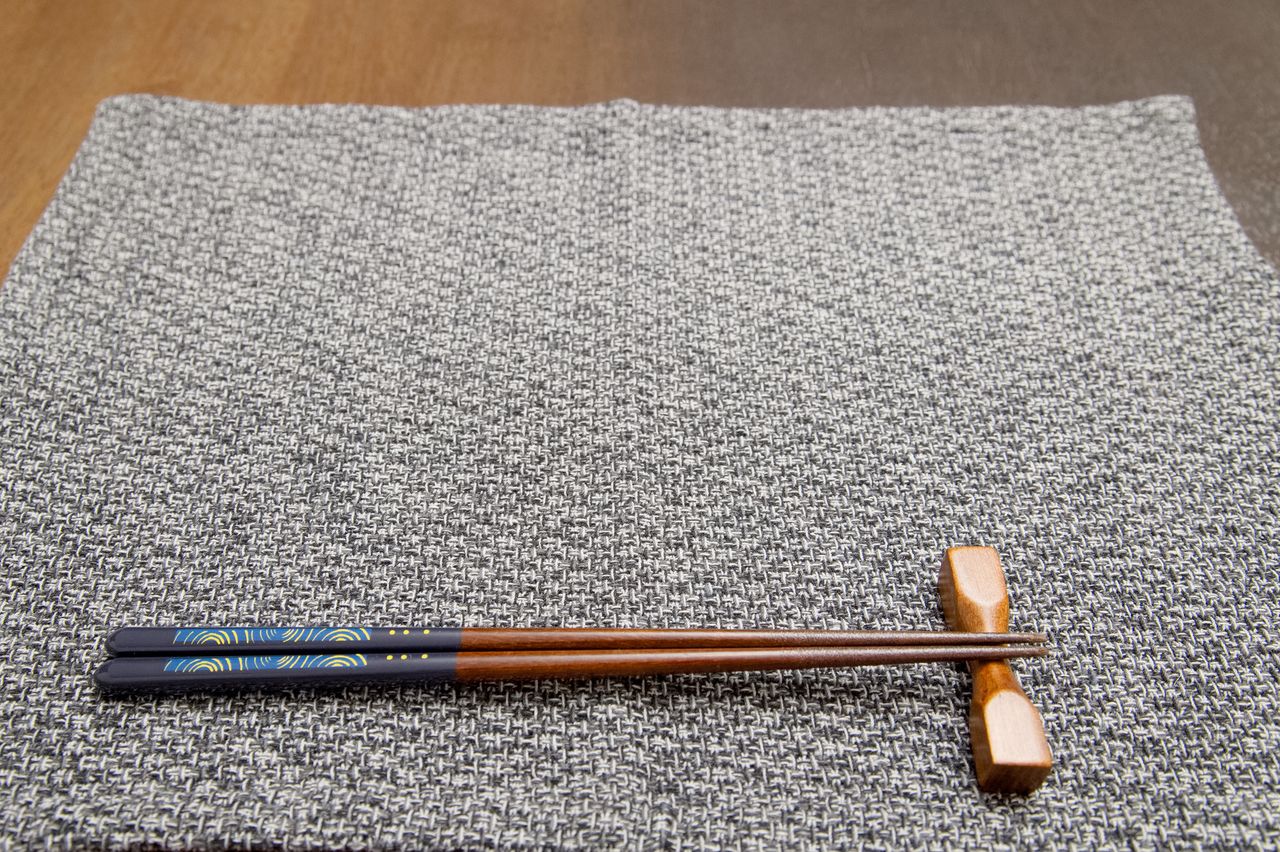
To allow sauce or soup to drip from the tips of the chopsticks when eating. Namida means “tears.”
To grip both chopsticks in a fist.
To lick the chopsticks.
To place the chopsticks like a bridge across the top of a dish to show one is finished. Chopsticks should be placed on the hashioki (chopstick rest).
To use chopsticks to push aside food that one does not want to eat.
To raise the tips of the chopsticks higher than the back of one’s hand.
To shake off soup, sauce, or small bits of food from the tips of the chopsticks.
To keep one’s chopsticks hovering over the dishes, unable to decide which food to eat.
To stir soup with the chopsticks.
To put chopsticks sideways in one’s mouth instead of placing them on the table when moving a dish.
To bite off and eat grains of rice that are stuck to the chopsticks.
To hold both chopsticks and a dish in one hand at the same time.
To use a chopstick like a toothpick.
To line the chopsticks up together and use them like a spoon to scoop up food.
To pull a dish toward oneself using chopsticks.
(Originally published in Japanese. Banner photo © Pixta.)
That's hard to guess. There are three common measure words meaning "pair"; 副 is for "pairs" that are connected, like a "pair" of scissors in English, but 双 and 对 are basically identical in significance as far as I know.
> The waiter (who had a bit of a sense of humor) brought me exactly ONE chopstick.
Slightly unfair, since 一个筷子, beyond being semantically anomalous, is more or less ungrammatical too. If you actually wanted one chopstick, you'd say 一只筷子.
What kind of path did you take that taught you how to say 另一个 before you learned about measure words?
But, yeah, I tap them to align them all the time, have seen Japanese people do it day in and day out. I've even done it in some fine dining places in Japan. No one yelled at me, but I am a gaijin, so...
The preference is to use a separate pair of communal chopsticks that is not used directly for eating.
> Kosuribashi
I have heard that this one is because it's considered to be an insult implying that the chopsticks are low-quality. (That said, if your chopsticks are indeed low-quality, then avoiding splinters is probably preferable to then visibly plucking splinters out of your fingers.)
It is definitely not appropriate. If you break the chop sticks and use them correctly your fingers will never touch the surface where there are splinters.
I was always under the impression this was the polite thing to do.
Whereas when I had a date with a girl from Kyoto, one of the first things that happened when we went to eat was she had to stop me from picking up my chopsticks impolitely and show me the proper way of doing it.
Suffice it to say my Osaka-learned table manners and speech patterns meant there was no second date.
Well first of all the chopsticks are joined at the non-eating end, typically. So the splinters would be bothering your fingers more than anything.
It's rude because it insults the host, in a way. Anywhere that would care about you doing it should not be giving you the cheap chopsticks in the first place. If you're in a place that gives you them, they probably don't care about you doing it.
That’s why you don’t need to rub to get rid of splinters.
Most of these are only for formal settings. Honestly, I haven't even heard of some of them. Aside from Tatebashi (sticking chopsticks in rice), they’re mostly avoided for hygiene reasons. As for Nigiribashi (clutching them in a fist), it just looks a bit strange for an adult to do.
> Ewww. I’d rather be rude than share germs.
I think this means you should use something other than your chopsticks to share food, and not just assume that "the back of my chopsticks are germ-free, I'll use that"
Given how many of these are clever tricks that I learned from seeing Japanese people eat, like aligning the chopsticks quickly in a plate or cleaning waribashi from splinters by rubbing them together, I’d not take all of these seriously, but it’s cool to know nonetheless.
when America was settled/founded by Britains, etiquette had not been standardized in GB either so the differences are due to parallel development, not island vs continent. That probably holds even more for differences between Japan and China.
I wonder how many of these words a typical Japanese person can list off the top of their head.
I suspect it mostly affects left handed people.
Just like the next term on the list does not prohibit eating food on the bottom but rather digging into the bowl instead of eating in top down order.
I dated many foreign girls and it was always fun to discover the cultural differences.
There are similar faux-pas in France but, really, nobody with an ounce of common sense cares. You like your red wine cold as I do? Someone will maybe mention that you will be loosing some aroma znd that's all. You add sugar and ice? This is probably not a drink for you and you will get some laughs but that's all.
I eat my starters after the main meal in the company restaurant, nobody cares.
You are there to have pleasure, this is not West Point
If you must mix soup, there is a spoon, or you simply bring it to your lips and it will mix as you tilt and sip from it.
If that was always true, there wouldn't be a word for it.
I've been given some pretty gnarly chopsticks at roadside places outside the main metropolitan areas.
2. The two listed as "serious" are related to Japanese funerary rites, and so are clearly culturally specific.
3. Several of the things listed are perfectly acceptable in other chopstick-using cultures. Many are also perfectly acceptable to do with a fork and/or knife in cultures that use forks and knives. I think I would go so far as to say that there is not a single thing on there for which it would be widely considered rude to do in all cultures.
Other than that, I agree. It's kind of like trying to apply Emily Post's etiquette to TV dinners: many of these "rules" would be viewed as prissy by Japanese and some (eg. giving your miso soup a swirl with your chopsticks before drinking) are very, very commonly ignored.
A lot of them are not common sense at all. Even the 'serious' ones require cultural knowledge to understand. Only a subset of the rest would be un-ideal across cultures, which is what I would use to measure 'common sense'.
It's like how in some asian cultures it's rude to bring the bowl closer to you by lifting it off the table, and in others it's the opposite. And of course there's some just-so story for why, that seems to make sense if you don't know about the opposing just-so story.
Things like that aren't what I'd call common sense.
But it's fast and efficient, which is why people do it anyway.
https://en.wikipedia.org/wiki/Eating_utensil_etiquette
Edit: The wiki on chopsticks has an etiquette section broken down by country.
https://en.wikipedia.org/wiki/Chopsticks#Chopstick_customs,_...
If people don't even know it, it's not part of the culture.
I don't know where you're from, so apologies if this is an unfair assumption, but in countries like the US or Australia people often seem less attuned to social class, whereas in places like the UK, France, and indeed Japan, those distinctions can carry more weight, even if they almost always go unspoken.
Anyone from a particularly wealthy family can probably add an additional couple contexts on the high end. Every single one of those situations has slightly different "rules" for what's acceptable.
Rendaku, i.e. the voicing of the initial consonant, happens in the native Japanese words (i.e. not in the Japanese words of Chinese origin), in most cases when they are a part of a compound word and they are not the initial word. This serves indeed to distinguish a sequence of unrelated words from a compound word.
There are exceptions when rendaku does not happen, but typically whenever a word like hashi becomes a part of a compound word it will be voiced to -bashi.
"H" is a special case among the consonants, because in old Japanese it was pronounced as "p", which is why it is voiced as "b". Later, in initial positions the pronunciation was changed to "f" and even later the pronunciation was changed to "h". The "f" pronunciation has been retained only before "u", like in Fuji. In non initial positions, the original "p" has become later "v" and even later "w".
These pronunciation changes happened after the creation of the hiragana and katakana syllabaries, so they were not reflected in writing. The orthographic reform that was forced after WWII has brought the written form of the words closer to the pronunciation, e.g. by writing consistently "w" where it is pronounced so. Before WWII, many words written now with "-wa-" were still written with "-ha-", a spelling that has been preserved now only in the particle "wa" (like the spelling corresponding to the old pronunciation "wo" has been preserved for the particle "o").
While the Japanese orthographic reform had some positive effects, in simplifying a little the Japanese writing, it also had the effect that for someone who knows only the modern written Japanese it is difficult to read the Japanese books published before WWII, where many different kanji are used and also their hiragana transcriptions are different.
I assume that this was actually an effect intended by the American occupation forces, as a similar policy was applied by the Russians in all the territories of the Soviet Union (except the Baltic countries), where they forced the native populations to change their writing systems to the Cyrillic alphabet, in order to make difficult for the younger generations to read anything dating from before the Russian occupation.
i see what you did there
There are people in Japan who are rude or who do not have as good manners or etiquette when they are eating alone!
If everyone followed all manners all the times they wouldn't really be encoded woould they?
Edit: In fact I think you're completely right - "picking out" something near the bottom of the dish does suggest that.
But you move away from break apart disposable chopsticks in Japan long before you get to high etiquette dining. In my experience, basically every restaurant in Japan that isn't of, like, fast food tier, provides actual chopsticks instead of disposable ones.
The difference between the American and European styles has been used as plot point in fictional works, including the 1946 film O.S.S. and the 2014 series Turn: Washington's Spies.[5] In both works, using the wrong fork etiquette threatens to expose undercover agents.
Nuts. Apparently I have been a German spy all this time. I don't have time to waste swapping a fork around.Jarvis Cocker-san.
This makes total sense to me. There is no monolithic “culture”— there are multiple related cultures, differing little in essence but differing greatly in the details. And each individual is usually only partially ignorant anyway.
Culture changes, too, and asymmetrically. So the “done thing” may be done be very few anymore.
1. Upper class stopped being formal because formality stopped being a signal of upper class.
2. Middle class stopped having social gatherings in general.
So, like, "it is a part of the culture" in the same sense as traditional outfits are a part of the culture - most people have very vague awareness, nobody really cares.
Poland has honorifics that are probably on par to those in Japan, but since the language is difficult to learn and frankly speaking nobody cares about Poland, barely anyone even knows this.
Also lots of corporations prefer "american style" approach of just refering by name (even to the CEO), so this dissapears.
Probably could write few pages about this, but nobody would care to read.
I guess that’s the cultural divide that occurs when one community is fishing and trading while the other does, like, competitive perfumed calligraphy or whatever.
It is definitely rude to use chopsticks that you just put in your mouth to go rooting around for something in those. You are supposed to take from the top and ideally turn them around using the back end. Some people frown on using the back ends however as it may have been touched by your hand...
Edit add: It means to dig food out, either from your own dish or a shared one. Like mixing the food up to look for something you like in it.
In all my decades of using chopsticks, I've never had a splinter poke me. But I've seen people rub their chopsticks then complain about splinters.
On a side note, I find interesting is that Czech language still naturally uses that plural form we abandon due to popularity of pan/pani forms.
This is unnecessarily flippant, trivializing, and reductive.
The upper classes had the time and position to refine manners. I think one mistake people make is to think manners are arbitrary nonsense. But manners, when fitting, honor the self and others with conduct that suits the dignity of the human person and functions as a sign of that dignity. You cannot tell me that a man hunched over a table cramming food down his throat gaping at a television is no different than one who eats according to the above custom of etiquette.
I’m not one for stiff artifice especially when slavishly applied, but I don’t think manners as such are arbitrary. That nobody cares would explain why so many people look like slobs and behave like boors.
If we begin with human nature and then view the virtues as perfections that actualize the fullness of that nature, then it becomes clearer that some behavior is more fitting and honored better by certain practices.
To turn the chopsticks around when serving food so that the tips of the chopsticks that have touched one’s mouth do not touch the food.
But the internet informs me that the composite chopsticks that I am used to seeing went away during covid and now disposable wooden chopsticks are the norm.
A quick Google search will turn up hundreds of results corroborating this.
This phrase is doing a lot of heavy lifting, because what one considers basic etiquette another considers a theatre. The end result is often that people gather in order to perform the spectacle of manners rather than use manners to facilitate a social gathering.
> I'm interested in learning more about this!
It's very simple, actually.
For strangers, you use the third person and the title « Pan » or « Pani » (Sir or Lady). You avoid pronouns, « The Lady has forgotten the Lady's purse on the table ».
For friends, you use the t-form ("ty", thou), and use a diminutive rather than the full name. « Johny, you've forgotten your bag on the table ».
For work colleagues, you traditionally use « Pan » or « Pani » with the full form of the first name. « Mister John, the mister's bag is on the table ». This is perceived as old-fashioned, and is increasingly being replaced by the t-form.
The v-form has fallen into disuse, as it was promoted by the Communist regime.
(The old-fashioned honorifics still exist, but they are only used in administrative correspondence: the only time when you're "the respectable gentleman" is when you need to pay taxes.)
I almost associate the cheapo reusable plastic chopsticks with some food courts or Matsuya at this point.
Also, the at-distance interaction between two tools requires much more dexterity than making your hand meet your mouth. The latter you should be able to do with your eyes closed.
You don't have to follow them, but you do you should be ready to accept the consequences of your choice.
Mind you, I'm not saying that standards must be followed. I am just saying the same thing I tell my kids:
- the standards are there, wishing they didn't exist doesn't invalidate them
- the reason rules and standards came to existence might or might not be applicable to our current context, but some people will expect you to follow them regardless.
- If a rule or standard seems silly to you, make your best attempt at understanding why people would still follow it. (Chesterton's fence)
- You are free to not comply to some rules, but always be ready to accept the consequences of your decisions.
- What your friends are doing or not doing is not reason enough for you to change your behavior or choices.
We just grow up with it because it’s how our parents and the parents of our friends speak.
If you want to change your accent you can, of course, get elocution lessons but most Brits do not. We just have a large variety of accents of which RP is one.
Most people have settled into Estuary, which has split into a high/corporate/media Estuary-tinged dialect, and low street Estuary. The BBC has its own special neutral version.
Fifty years ago the difference between upper class/BBC/RP and street English was almost hilariously obvious. Watch a BBC show from the 50s and 60s - even something like Dr Who - and everyone is speaking a unique RP dialect that doesn't exist any more.
But not observing them does. There are standards no one in the world follows anymore. They may still “be there”, but are only used for mocking purposes.
> If a rule or standard seems silly to you, make your best attempt at understanding why people would still follow it. (Chesterton's fence)
The corollary to that is that anyone who rebukes anyone else for not following a standard must be able to explain why it exists. “Because it’s rude” it’s not good enough, explain why it’s considered rude.
How so?
If people act like a standard doesn't exist, then the standard actually doesn't exist, because that's the only thing that defines a standard.
Standards are not absolutes.