YouTube / Paul Lagier
TL;DR
- A YouTuber has built a tiny e-reader with a 3D-printed shell and DIY electronics.
- The e-reader, only slightly bigger than an adult human thumb, can hold roughly six to 10 books.
- The creator estimates that the cost of building it is around $30.
Despite being available for nearly two decades, e-readers have largely been limited to a small sect of users who demand a distraction-free experience tailored for reading. While they have been nowhere near as popular as smartphones, e-readers have recently seen a surge in interest, especially among people who wish to escape the deluge of notifications. But despite being in high demand, they can’t fully replace smartphones (yet), and are reduced to the category of secondary devices, and wanting to carry them around might elicit more determination than most people can easily muster. But a YouTuber may have solved this problem by building a pocket-friendly e-reader that you can’t easily carry with you everywhere without even feeling its presence.
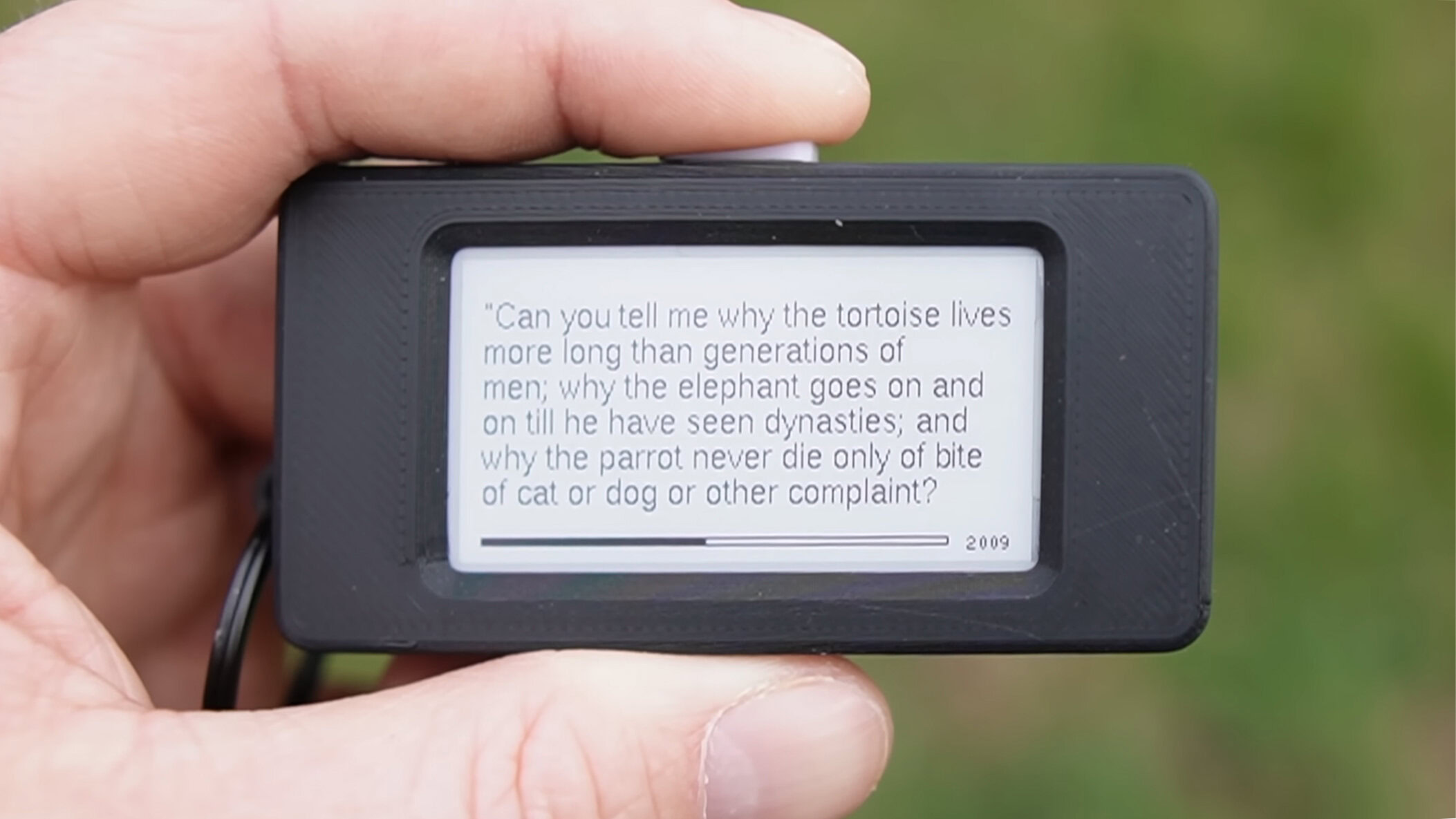
YouTuber Paul Lagier recently documented their process of building a compact e-reader, nearly the size of a car keyfob, from scratch. The tiny device diminished the pull of other devices by letting you fill the time between activities, rather than treating reading as a dedicated action. And instead of taking the route of some Android-based devices with E-Ink displays that offer wide app support and the potential to be a smartphone, the tiny e-reader specializes in letting you just read.

What’s more exciting is that Lagier built the device by themselves. That involves designing and 3D printing the outer shell, assembling key components like the logic board, with an ESP32 microcontroller, and attaching it to a battery and a Heltec Wireless Paper display. In a follow-up video, the creator has shared updates on iterating on various aspects, improving the firmware, and even resources for anyone who wants to build their own tiny e-reader.
The newer version brings design improvements that make it easy to print on a diverse set of 3D printers. The tactile button on the side is slightly adjusted, too, but the biggest improvement comes in the form of the firmware changes. Along with better visibility on the tiny screen, the creator has enhanced the web interface that is used to sync ebooks and store bookmarks. Another big improvement is the addition of folders, which will let users segment various books into different categories. It’s up to you whether you sort them based on genre, length, difficulty, or any other aspect.
The updated firmware also lets you replace the screensaver with a custom one. The firmware has also been updated for better power efficiency, more languages, and better system stability.
Since the ESP32 only supports 8MB of onboard storage, the creator has also optimized the space used by system files to make more room for books. According to them, it can now fit six to 10 books with roughly 300 pages. Note that these books are in simple TXT format and not PDF or EPUB. Finally, a new lists feature was also added, so you can not only save the titles you want to read but also your to-do lists.
The creator has shared all the files and instructions on their Ko-Fi, and you can unlock them for €4.90 (~$5.80). You’ll also have access to all the future updates without having to pay again. Add that to the roughly $30 estimate for filament, display, and the battery module, and you have a pretty useful reading accessory for about a fifth of a basic Kindle.
Follow
Thank you for being part of our community. Read our Comment Policy before posting.