Table of Contents
Intro
I flew Southwest to my first tech conference in August of 2017 and quickly learned how beneficial conferences would be to my career. In the early days, I had a shoestring budget, and would often apply for financial aid. The combination of Southwest’s Wanna Get Away tickets and flexible travel credit policy enabled me to attend many conferences.
A few weeks ago, I was offered the chance to tour Southwest Headquarters along with other fans. I jumped at the chance. I knew it would be a once-in-a-lifetime experience!
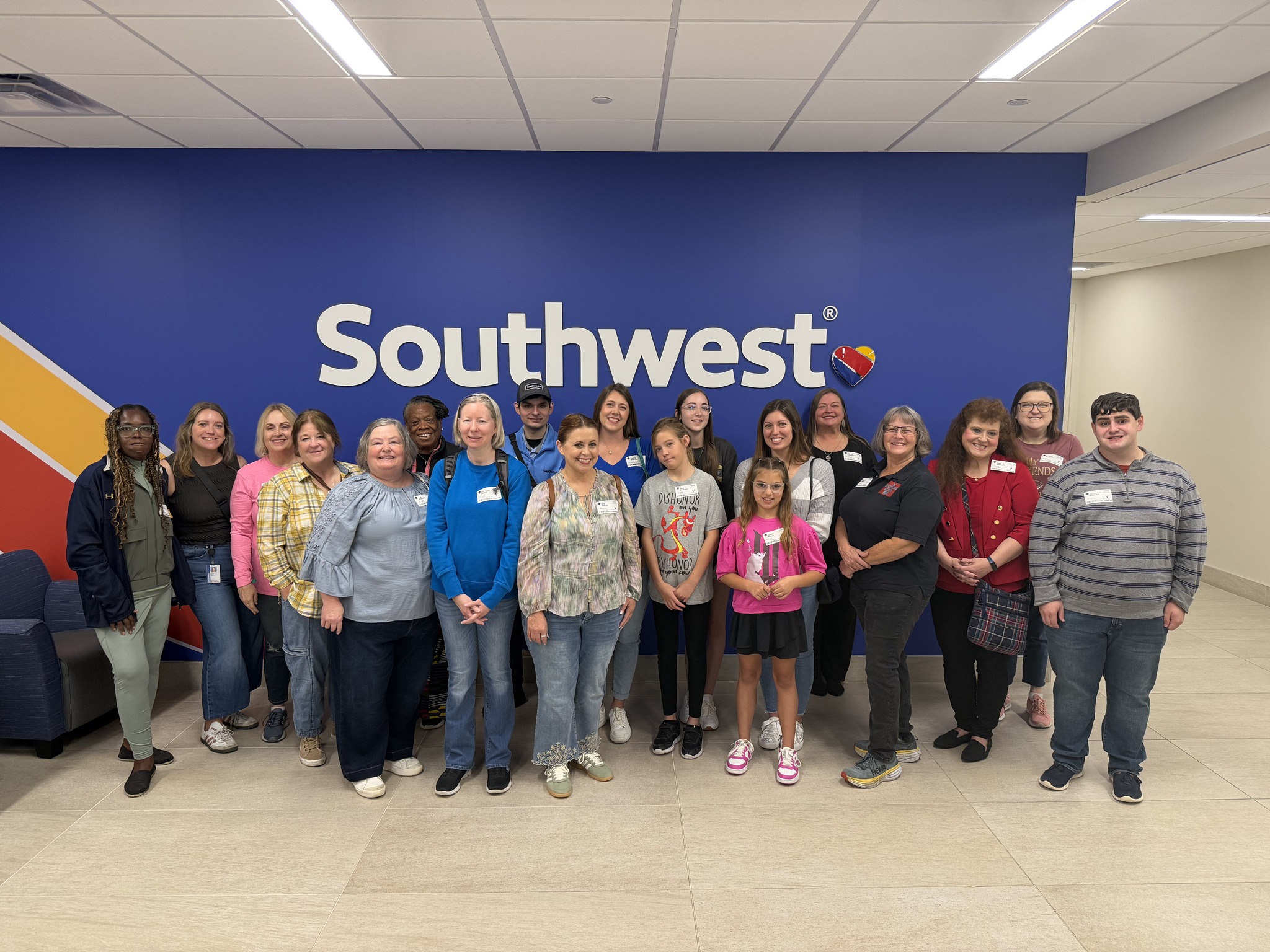 Our tour group gathered in the lobby of the LEAD Center (Leadership, Education, and Aircrew Development)! Our sweet host Carlye Thornton is the second from the left.
Morning
Flight Attendant Training
Dallas LEAD Center is one of 13 facilities around the US where Southwest flight attendants complete training. In addition to learning the typical service you see in a cabin, they practice land and sea evacuation, emergency tool use, fire fighting, and self defense. They return annually for short, refresher training that is regularly updated to address real world trends.
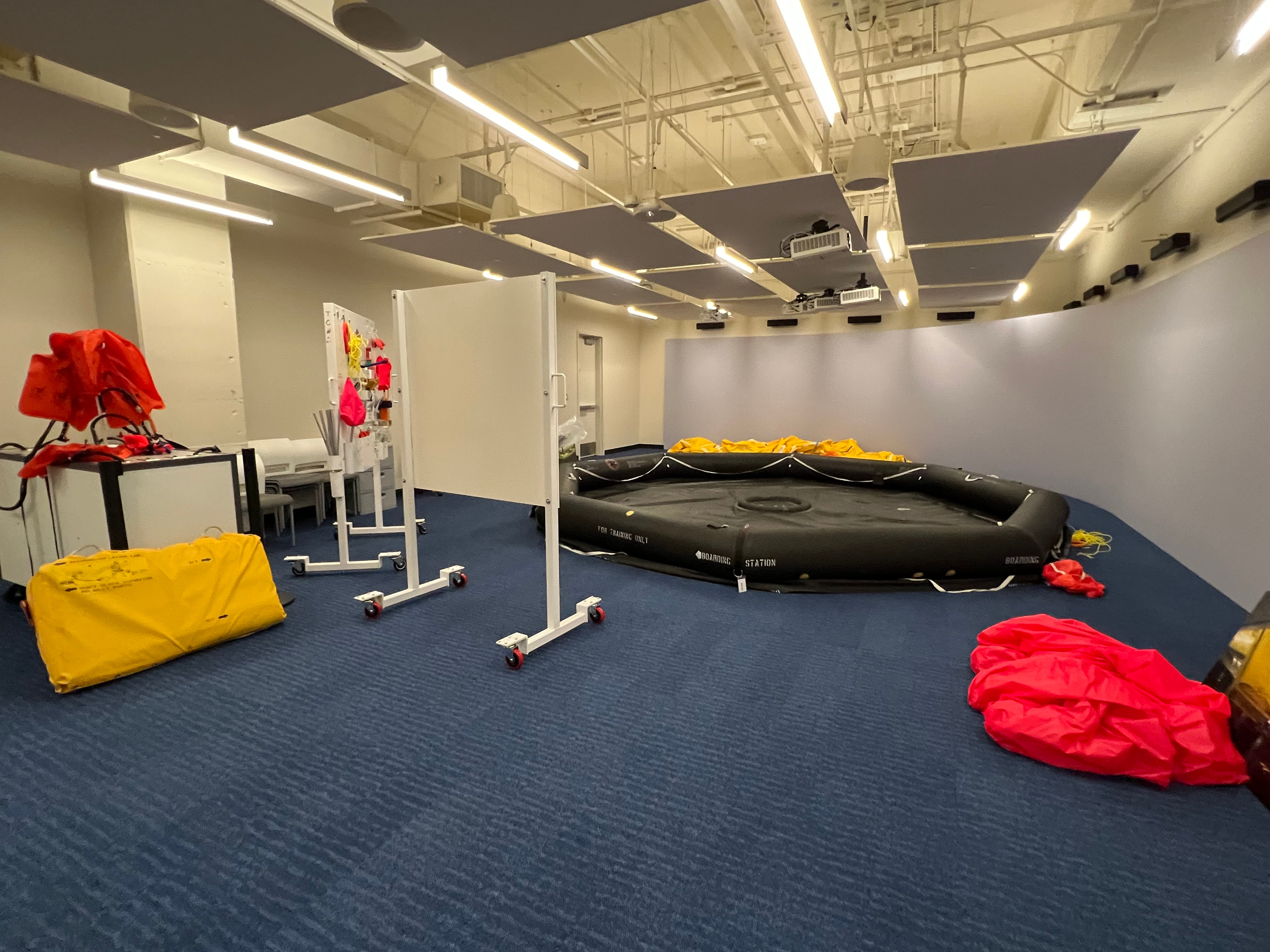 In this sea evacuation area, a replica of a 100 pound raft inflates to half its normal height. The flight attendants are not required to be good swimmers. The life vest will do its job.
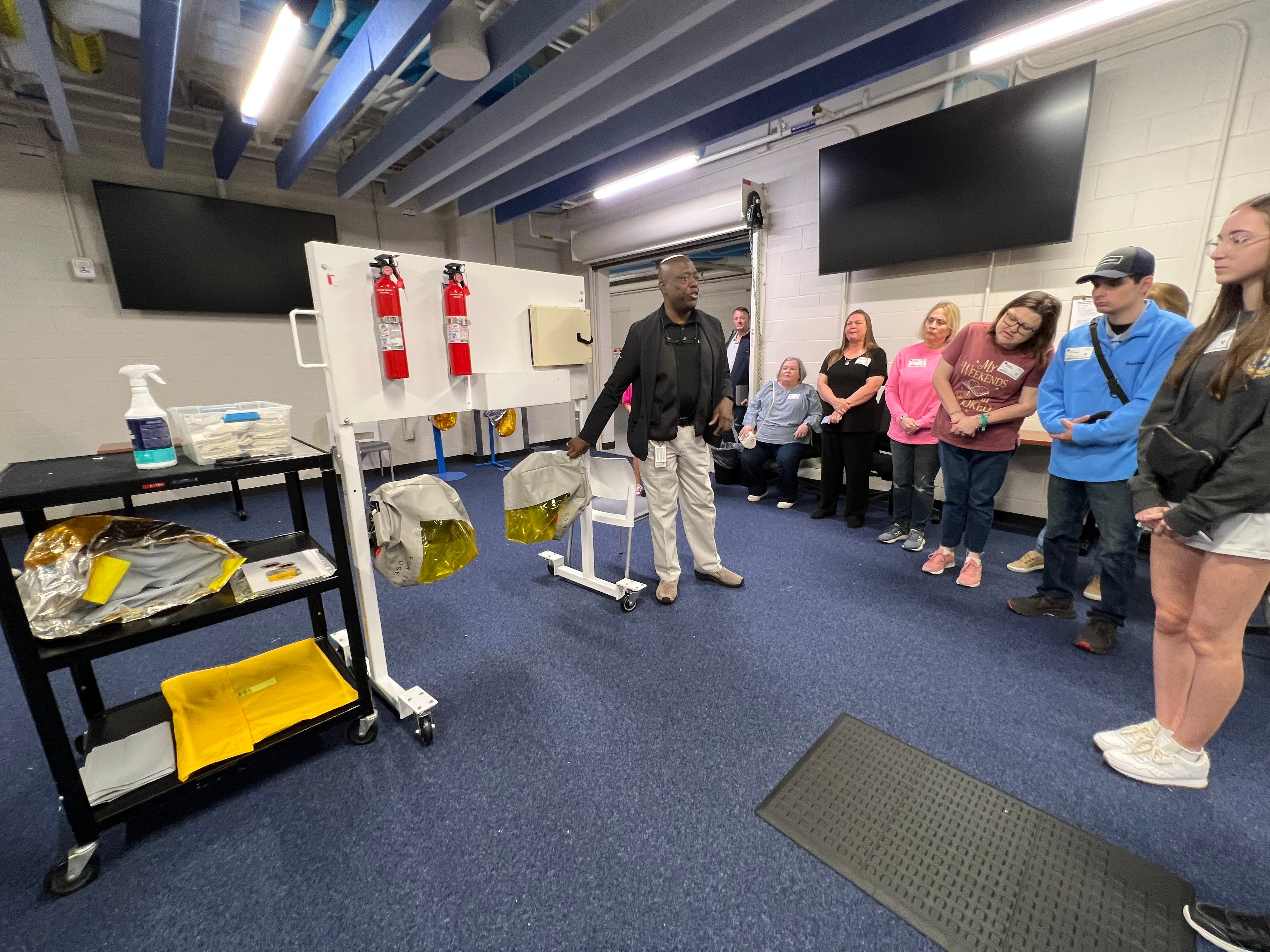 In this fire fighting area, we saw an oxygen hood demo and learned different methods of exinguishing fire. Flight attendants are taught to find the base of the fire.
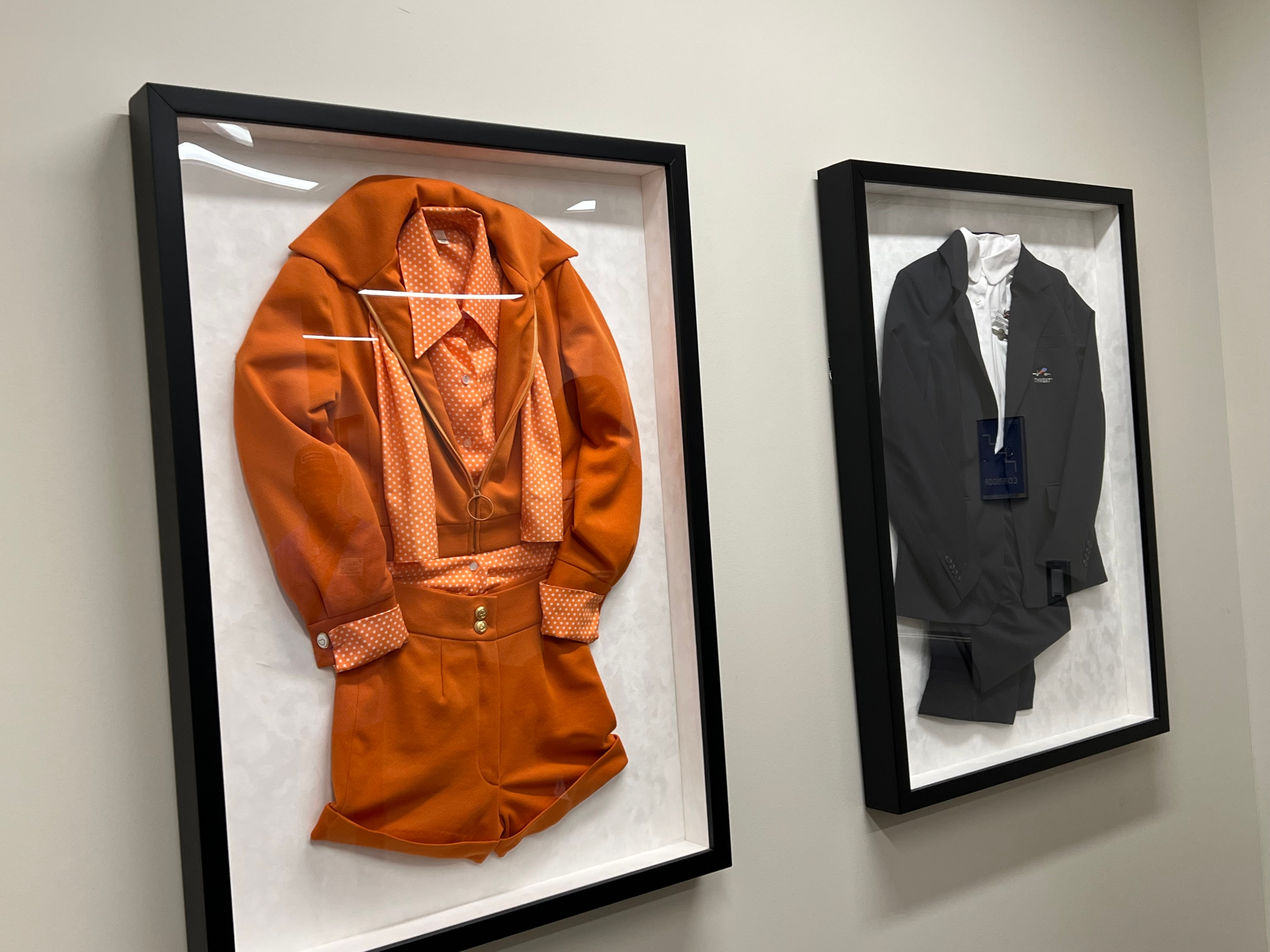 These Vintage uniforms are among what must be thousands of pictures and momentos covering Southwest campus walls.
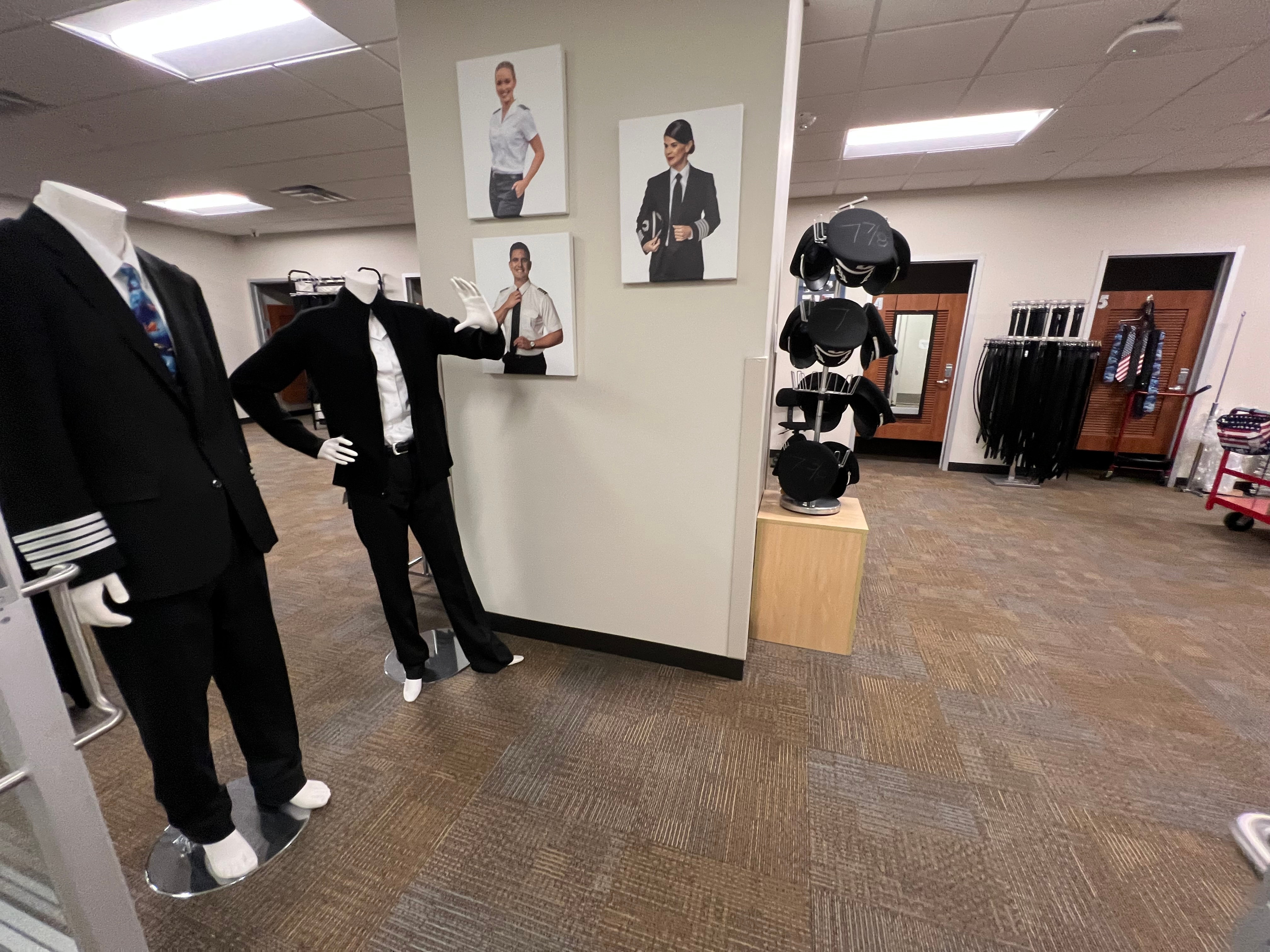 The pilot uniform shop. We later learned that sadly only 6% of Southwest pilots are women, which is in line with the industry as a whole. Southwest supports the Women in Aviation organization and would love to see that change.
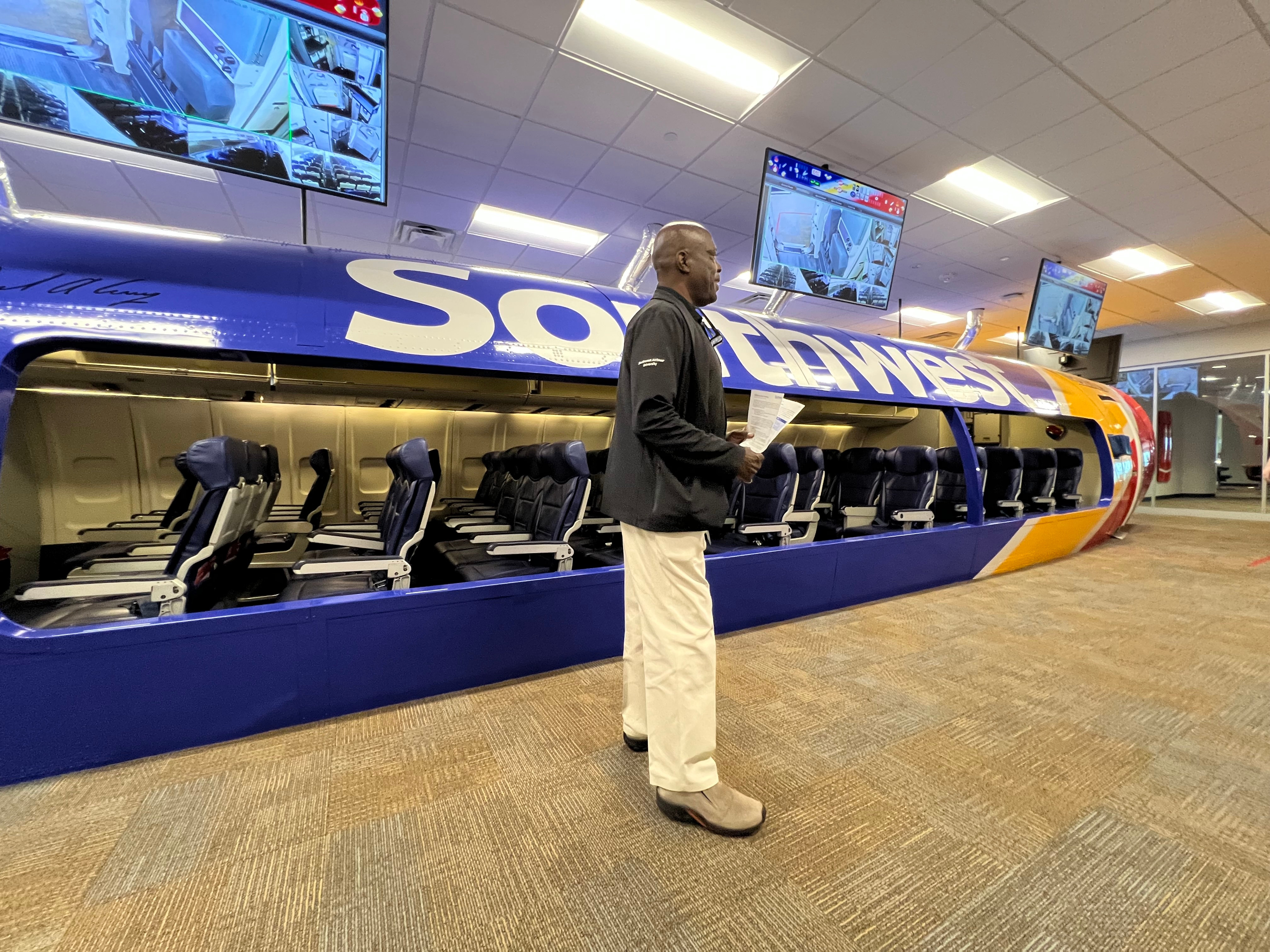 Our tour guide Glenn introducing us to a mockup plane used for training
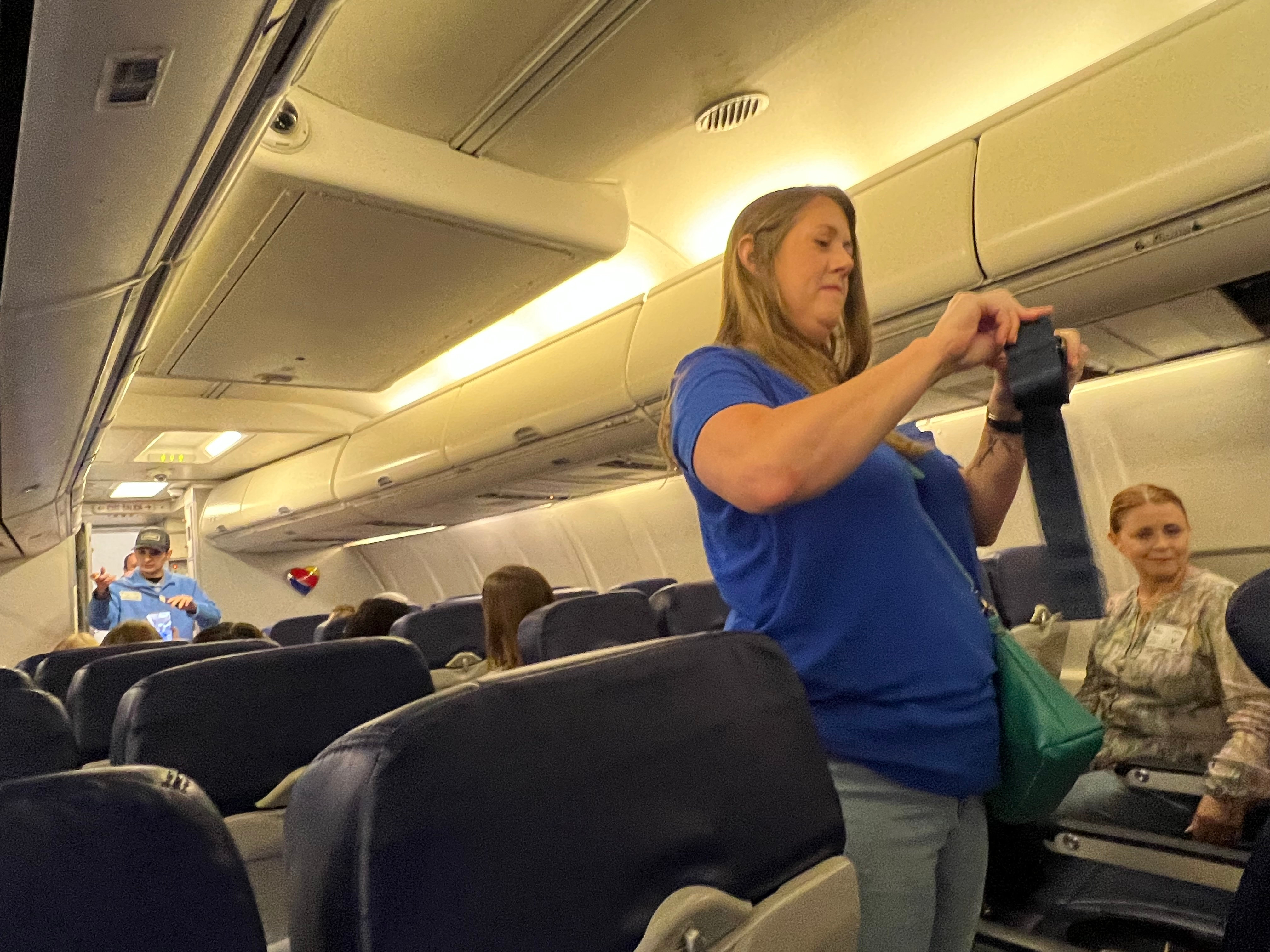 It’s not as easy as it looks. Tour participants volunteered to give the safety demonstration a try!
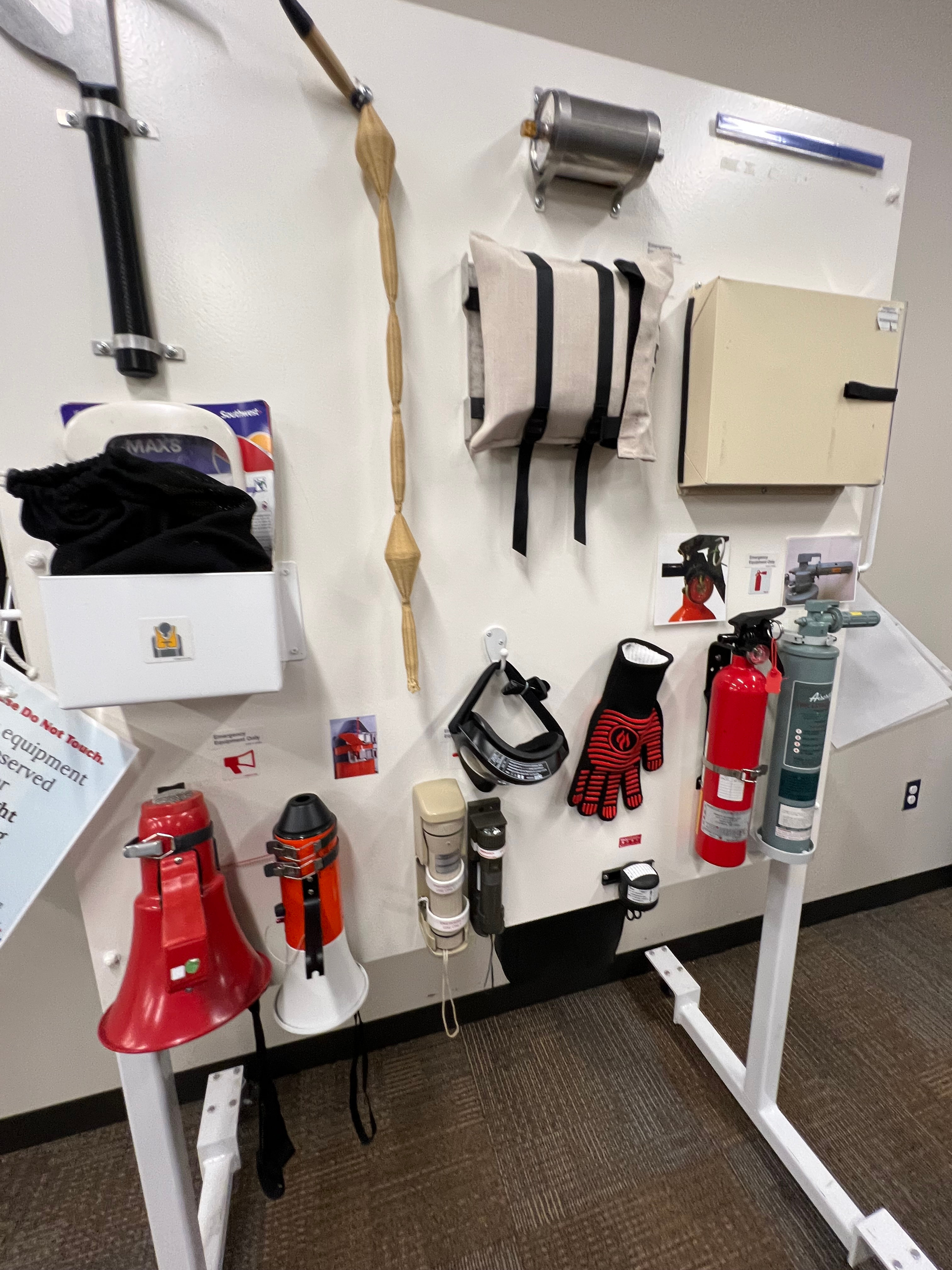 Flight attendants are required to demonstrate a mastery of emergency procedures and equipment.
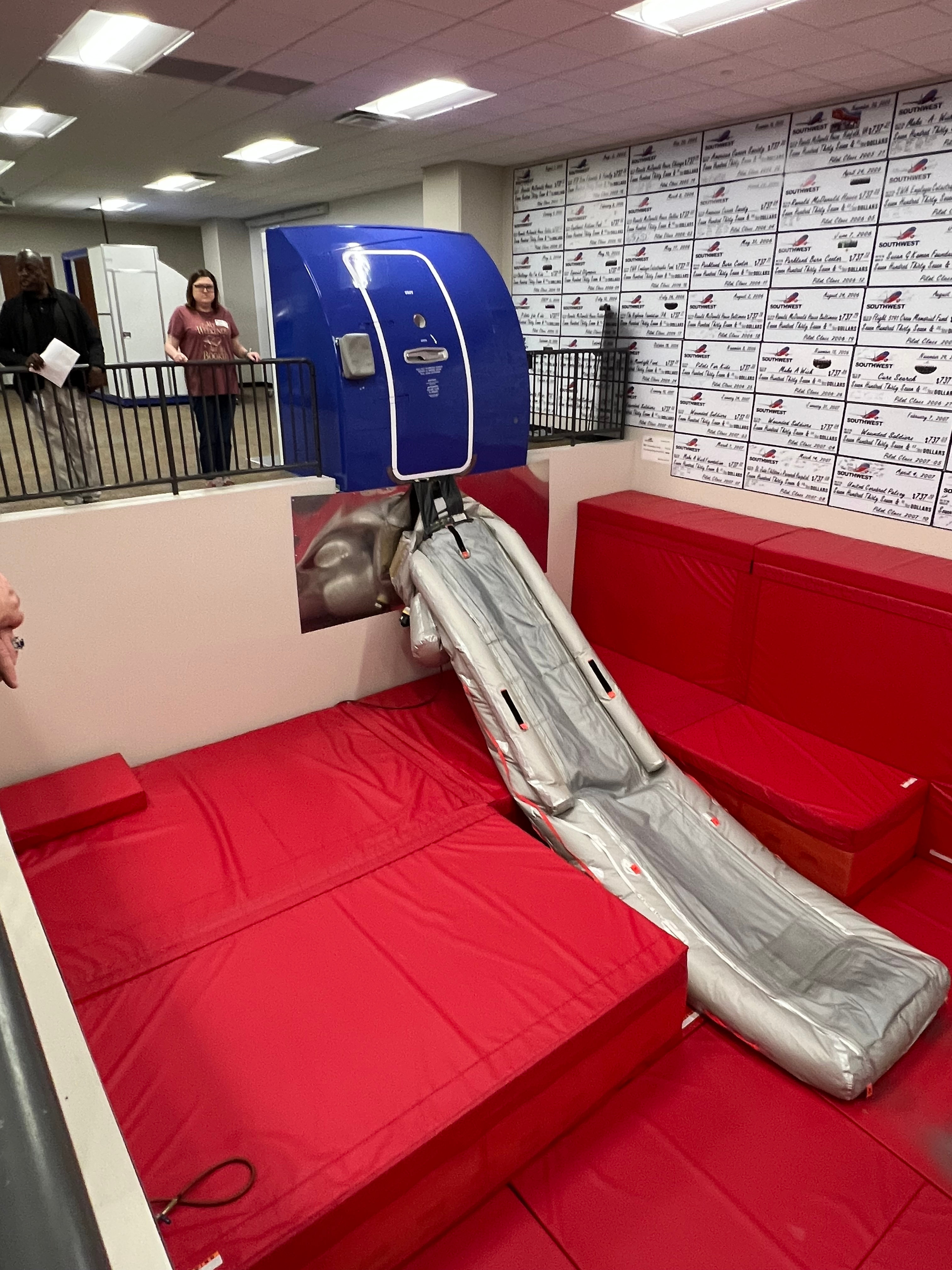 Emergency door demo and evacuation slide
Pilot Training
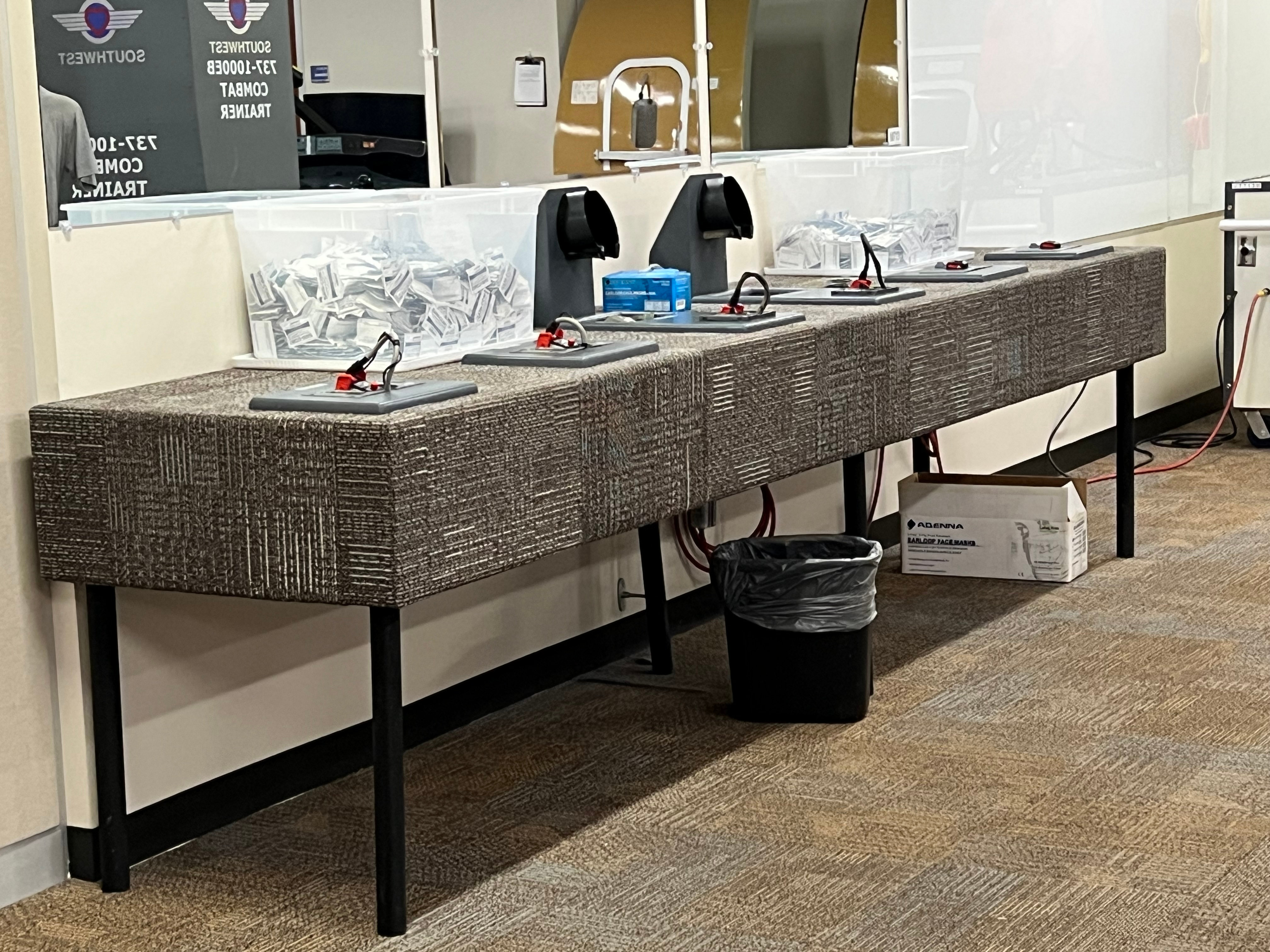 Southwest pilots must be able to put an oxygen mask on with one hand in eight seconds while their other hand is on the controls. They can have a moustache, but not a full beard, in order to be able to create the necessary seal. This testing station accommodates different masks for different types of airplanes.
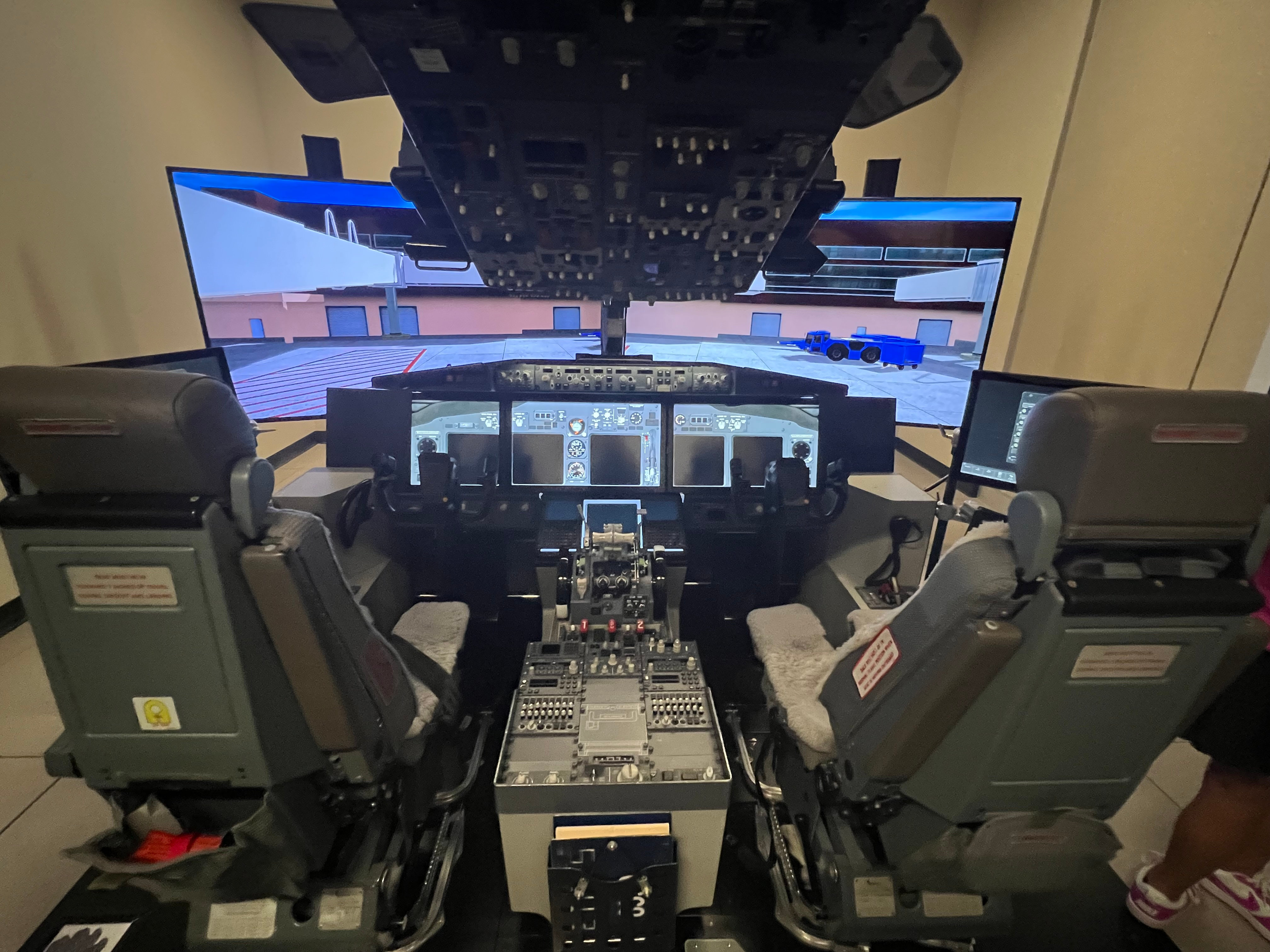 This fixed-motion simulator was our first simulator experience. 23 are in use and cost $1 million each.
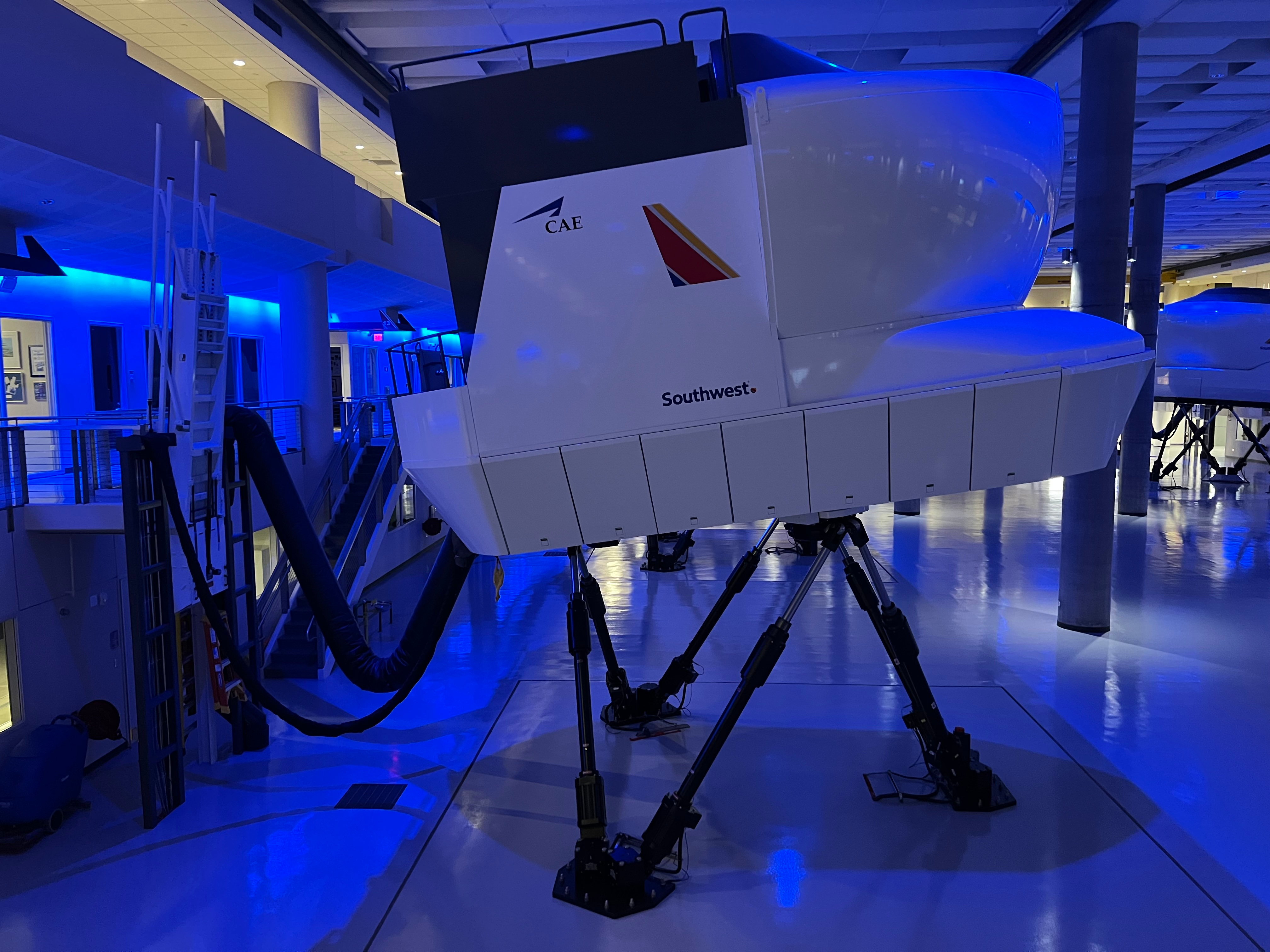 Next, we saw full-motion CAE 737 series 700, 800, and MAX 8 simulators. As we watched, a simulator would rise up, tip back, and rotate at angles that simulate real flight. An instructor saw our group and invited us inside of one for a look.
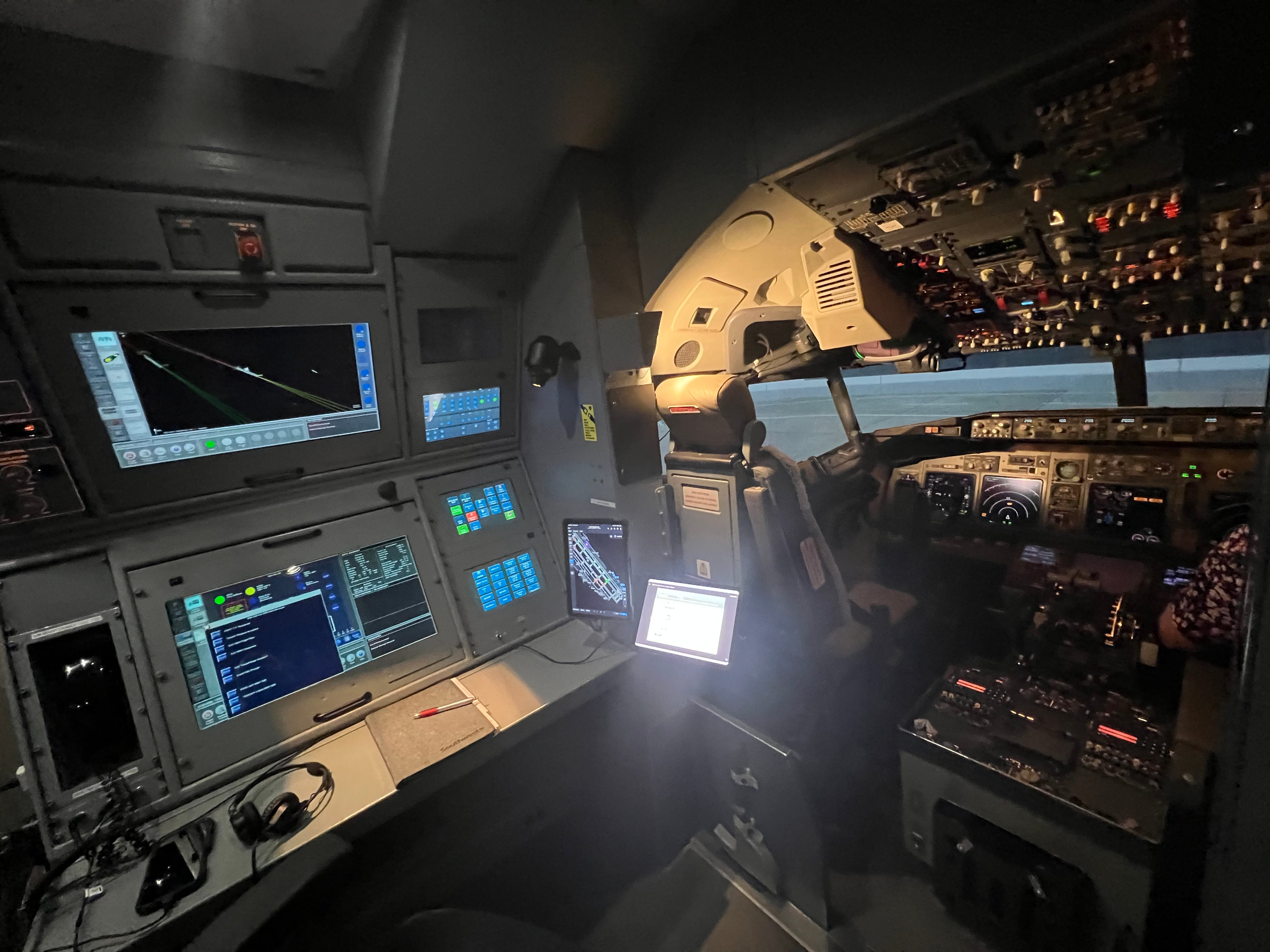 Inside a full-motion CAE 800 series simulator. These simulators can be programmed to fly any route and can replicate special scenarios such as ETOPs (extended range, over-water, such as Hawaii) and emergencies. While real “turbine hours” can be logged in this simulator, it can also cause real motion sickness. Ask them about the chickens hanging from the bottom.
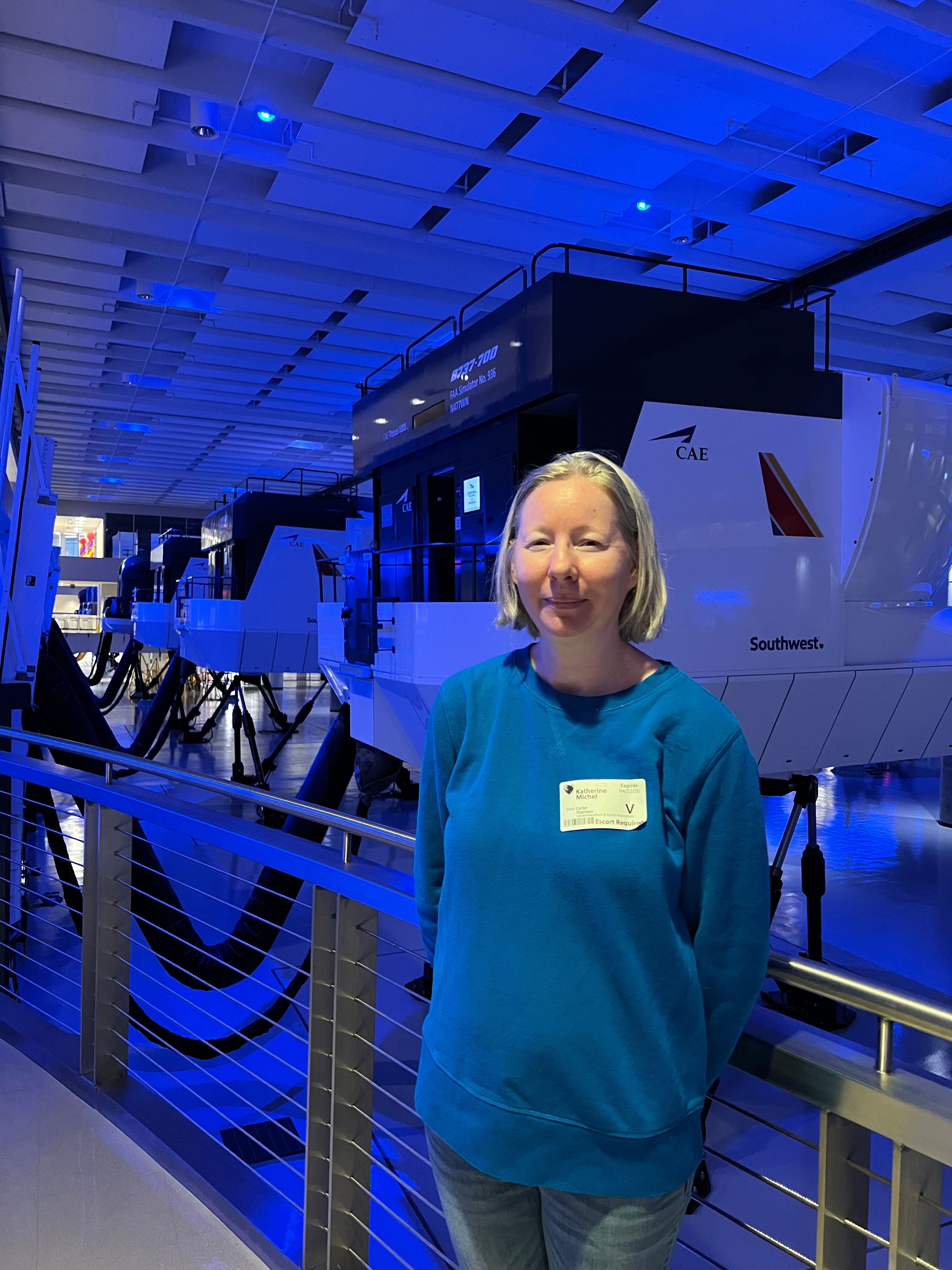 Me in front of a full-motion CAE 700 series simulator with the bridge raised, a sign that it is in-use.
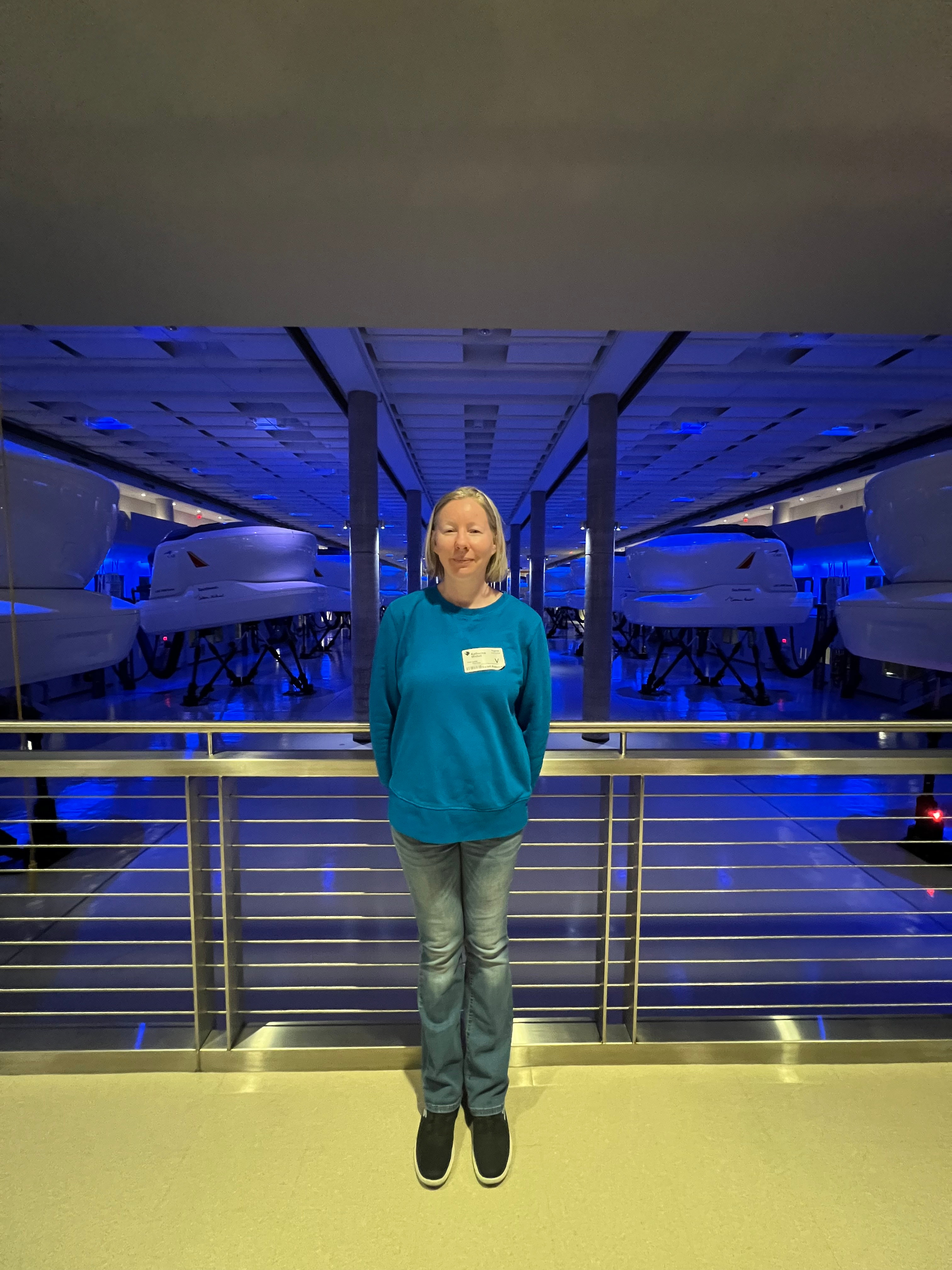 Me at one end of the hall. There are 26 simulators here. Each one costs $14.2 million.
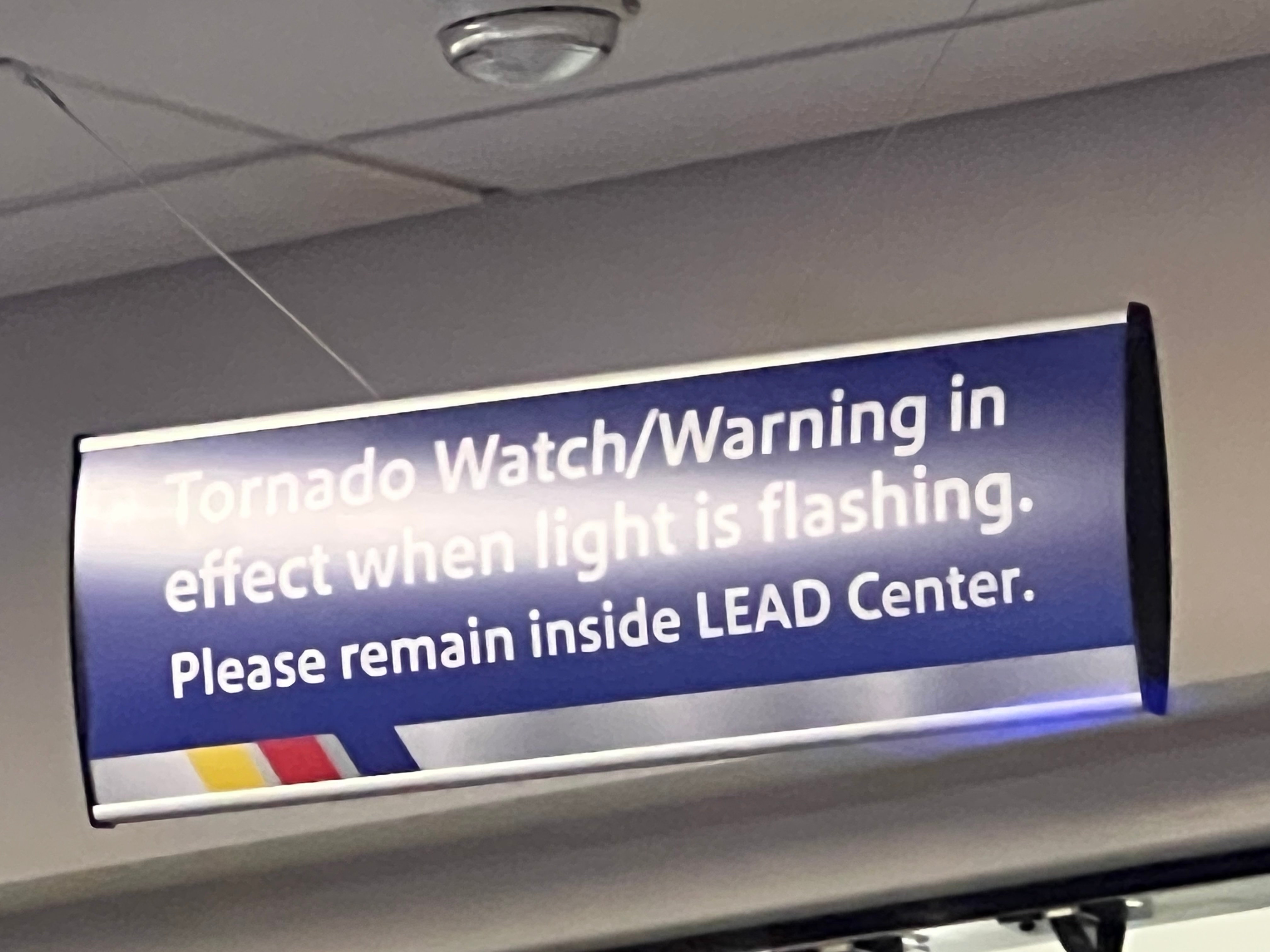 Given the risk to operations and equipment, this building could withstand an F3 tornado. Garage-like doors descend and inside, it is business as usual. The walls around the Network Command Center are fortified with 12 inch concrete.
Lunch
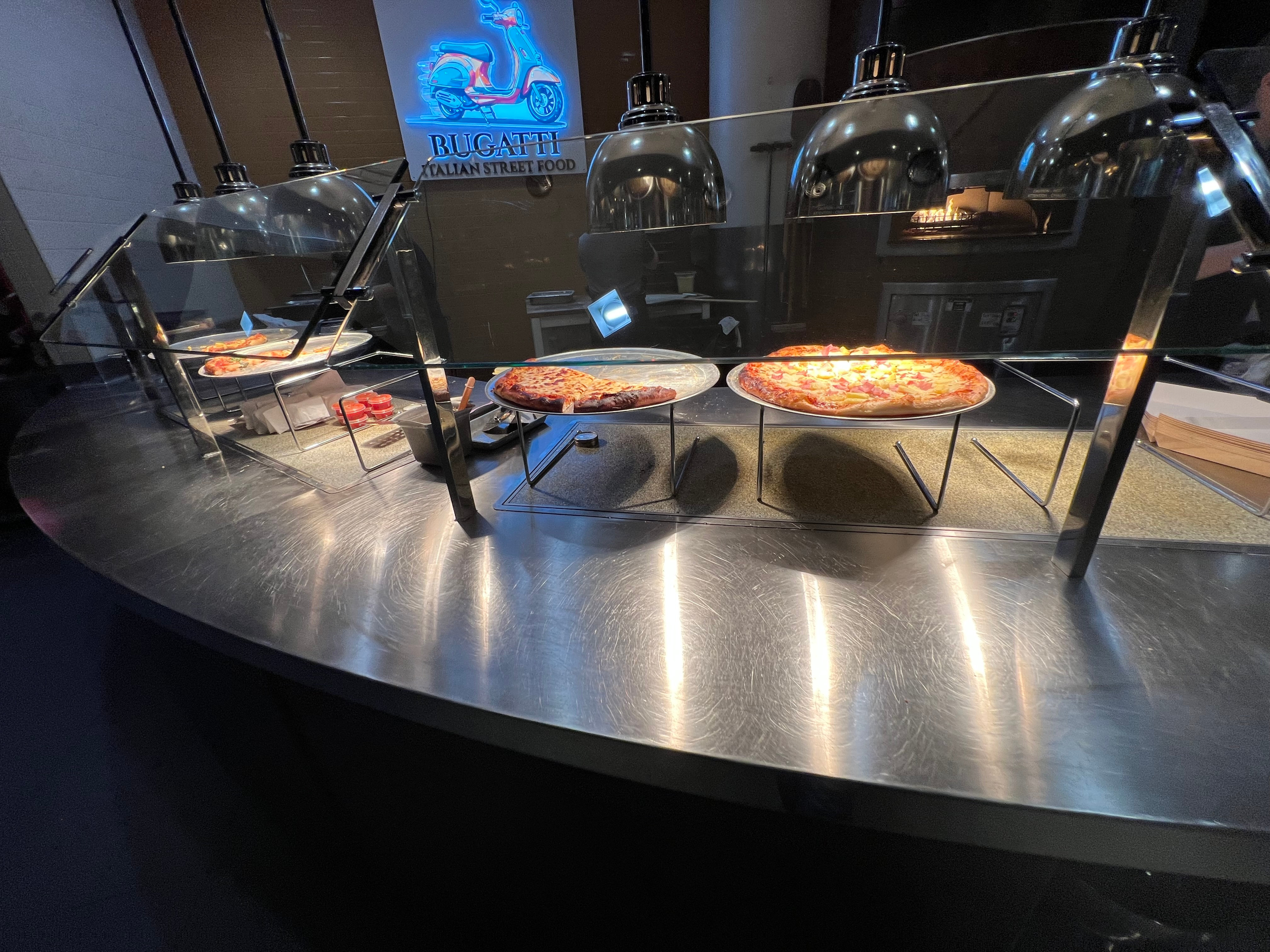 Thank you Southwest for a delicious complimentary lunch in the cafeteria!
Southwest Store
 An adult onesie that was a crowd favorite in the Southwest Shop
Afternoon
Network Operations Center
Our tour group was riveted by the Network Operations Center (NOC) livestream (NOC is undergoing construction), and bombarded our tour guide Jake with questions. Our session took place in a Situation Room where chief officers from each operational area convene three times a day to address flight issues. Jake shared that he prefers troubleshooting over business-as-usual. All of a sudden a runway might have a pothole and 10 planes are backed up, and he is scrambling to alleviate. It is an adrenaline rush. A scheduling optimization tool called “The Baker” was also a topic of interest.
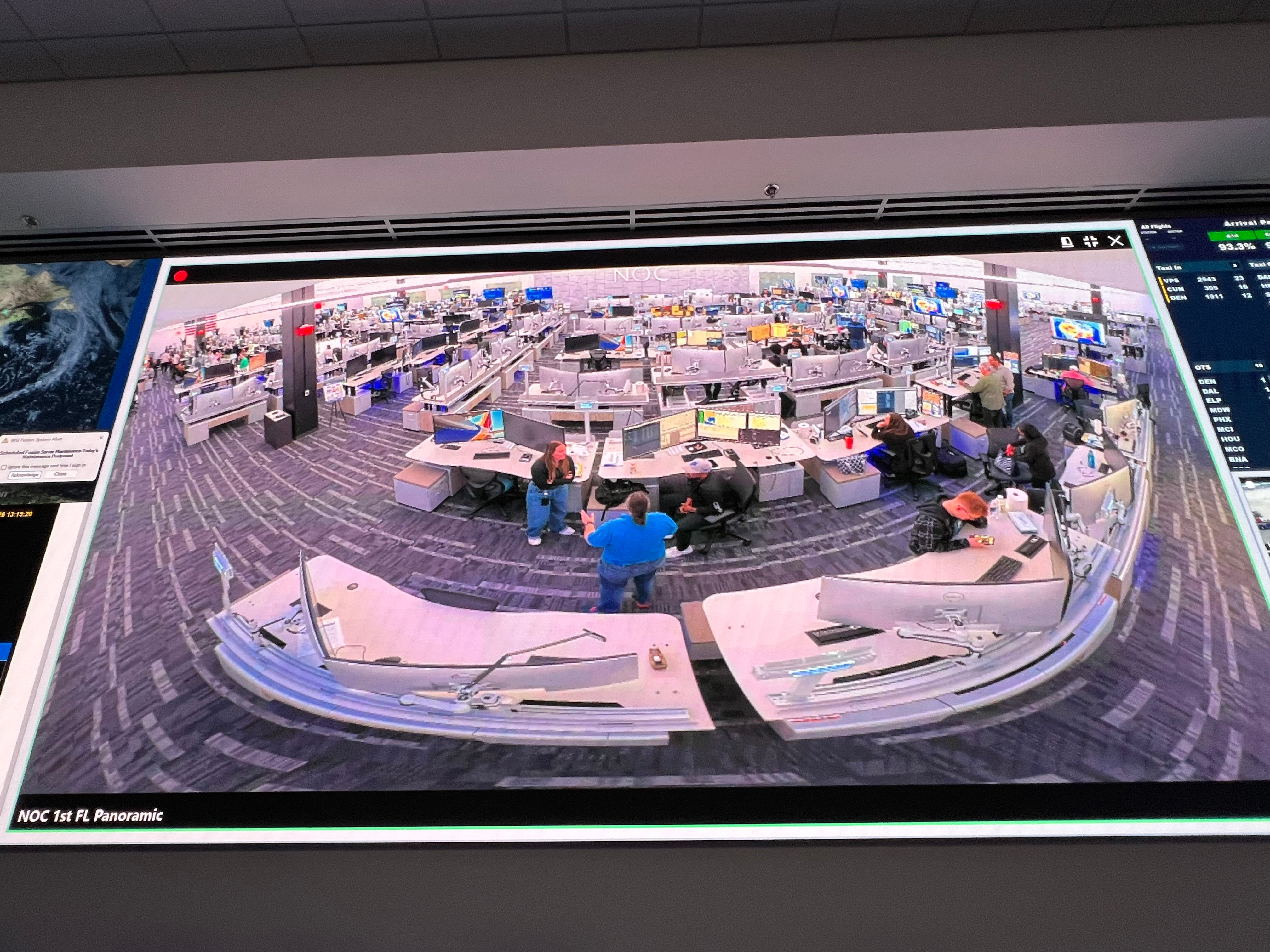 A livestream of the Southwest Network Operations Center. Although there are other small Southwest command centers around the U.S., there is only one Network Operations Center, the operational brain of Southwest. All of the coordination needed to plan and fulfill flights across the network happens here. In addition to flight dispatchers who plan and monitor flights, experts across disciplines plan and monitor flight schedule, crew, air traffic control, maintenance, meteorology, medical. The highest level decision makers such as Chief Pilot are also on-hand. A member of our group was interested in a career in dispatch and received some personal advice about dispatch school.
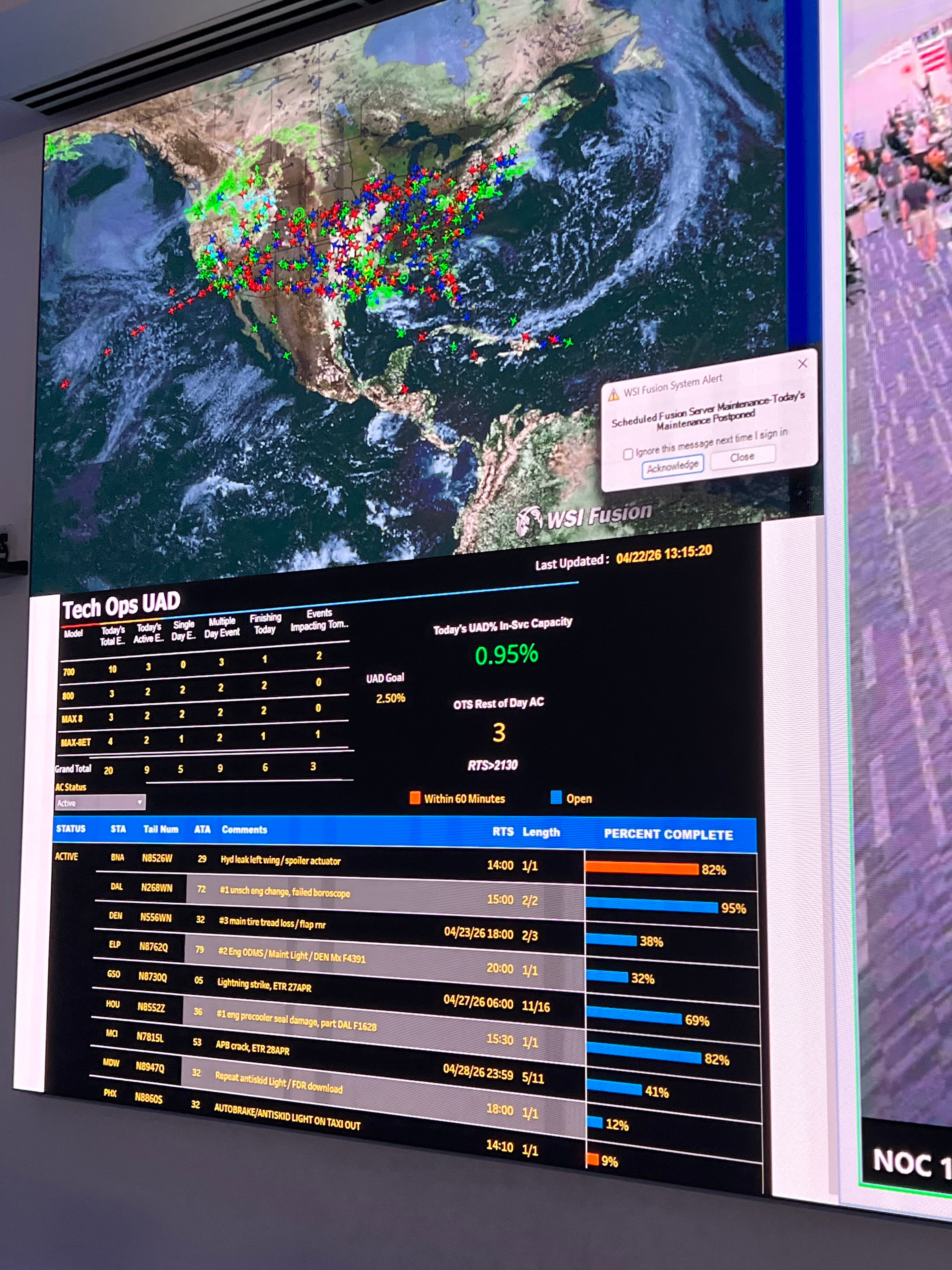 A visualization of Southwest flights and a breakdown of unscheduled aircraft downtime. While a broken coffee maker might not cause a flight to be cancelled, a tray table in an exit row that won’t stay upright is a deal breaker. Network Operations Command made a final call that an airplane with a out-of-commission lavatory be grounded.
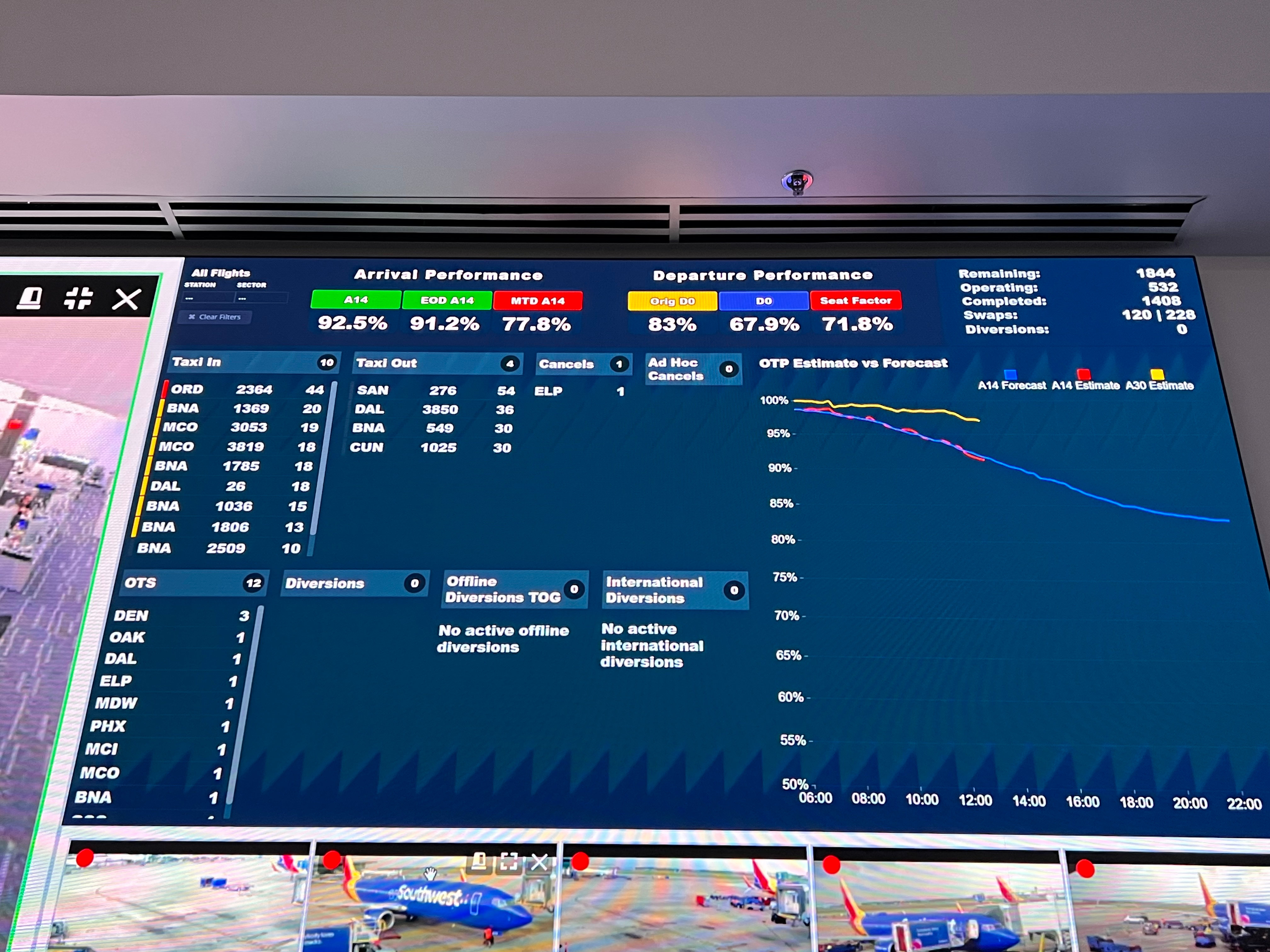 Southwest has 4,000 flights a day, more than any other airline. At the time of this photo, 1408 had been completed. 1 had been cancelled. Below the stats were livestreams of the Southwest gates at Houston Airport, perhaps due to inclement weather. Southwest can view a livestream of any of its gates anywhere with the flick of a switch.
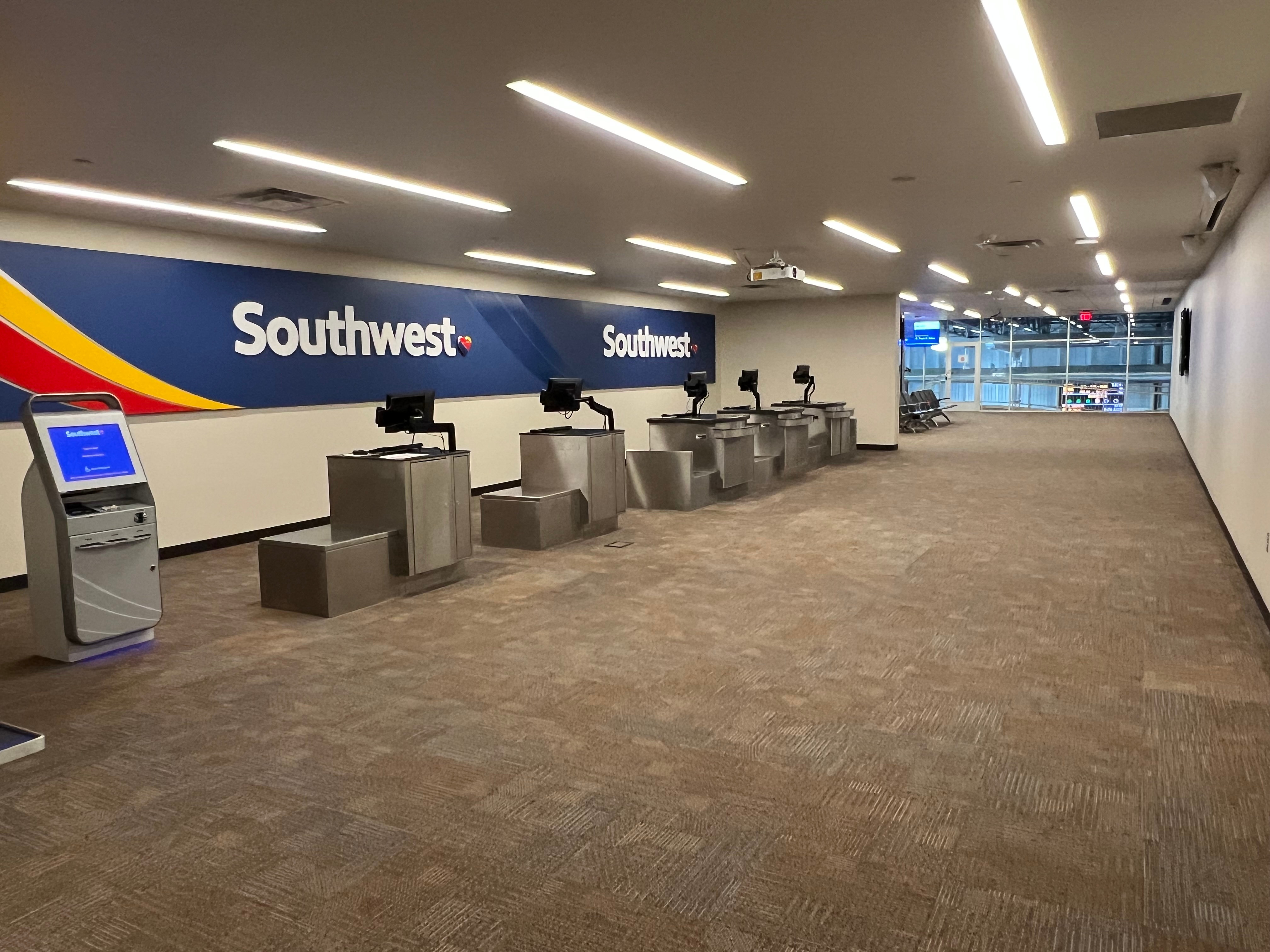 Around every corner, there are pieces of airplane and replicas. This area entitled “Airplane Experience” is a mockup of a Southwest counter and gate.
TechOps Hangar
Our final scheduled tour stop was TechOps. Southwest has 800+ Boeing 737s, the largest fleet of them in the world. Four are at the adjacent Dallas Love Field Airport.
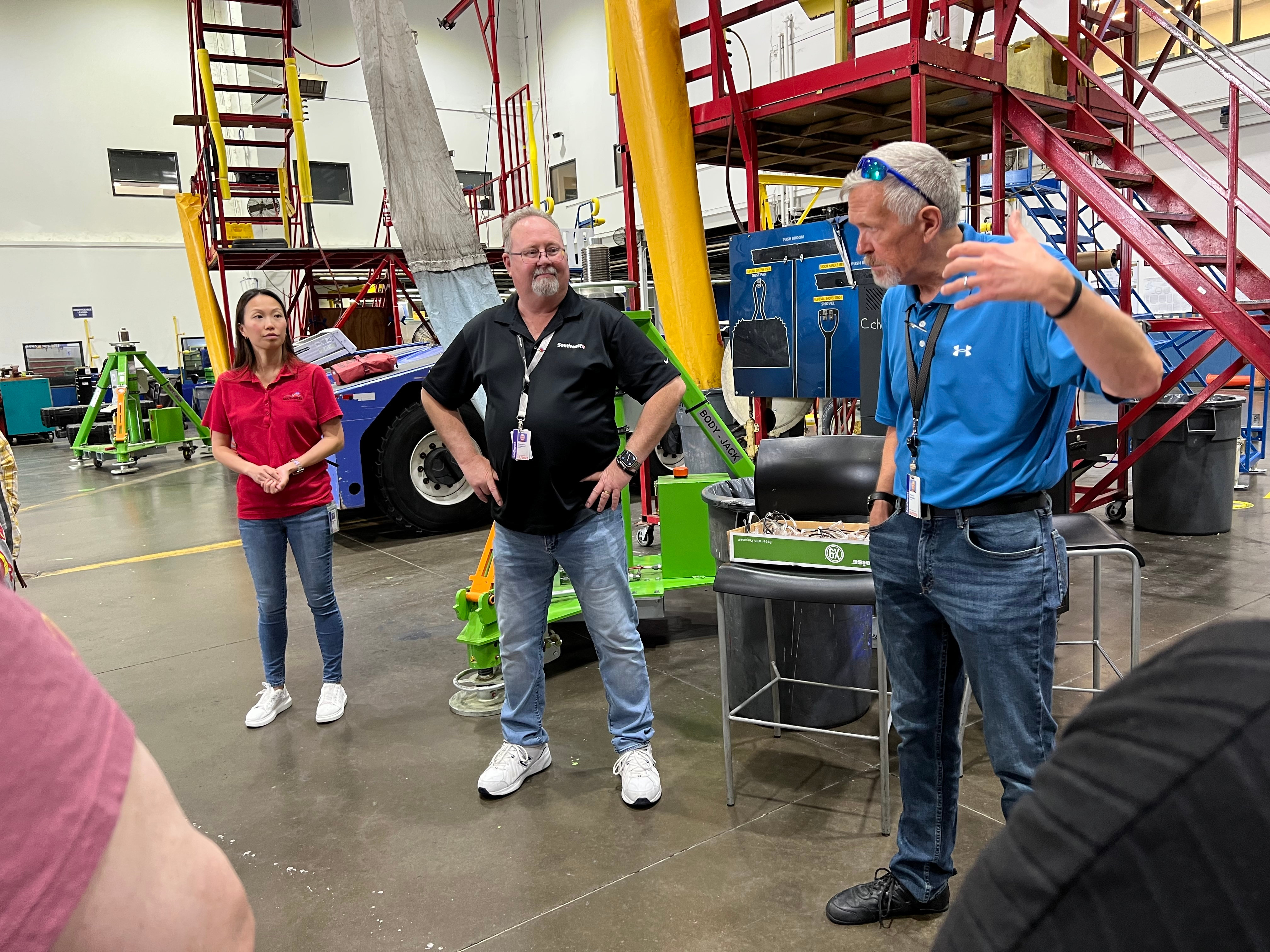 Michelle, Doug, and Jim welcoming us to TechOps in the empty “party hangar” where maintenance takes place at night. Plane “doctors” have been here as long as 30+ years. Sheet metal experts are particularly skilled and respected here. It’s a craft that takes around 10 years to master. Given how meticulously planned, recorded, and executed the airplane maintenance is, our tour guides have absolutely no qualms about flying.
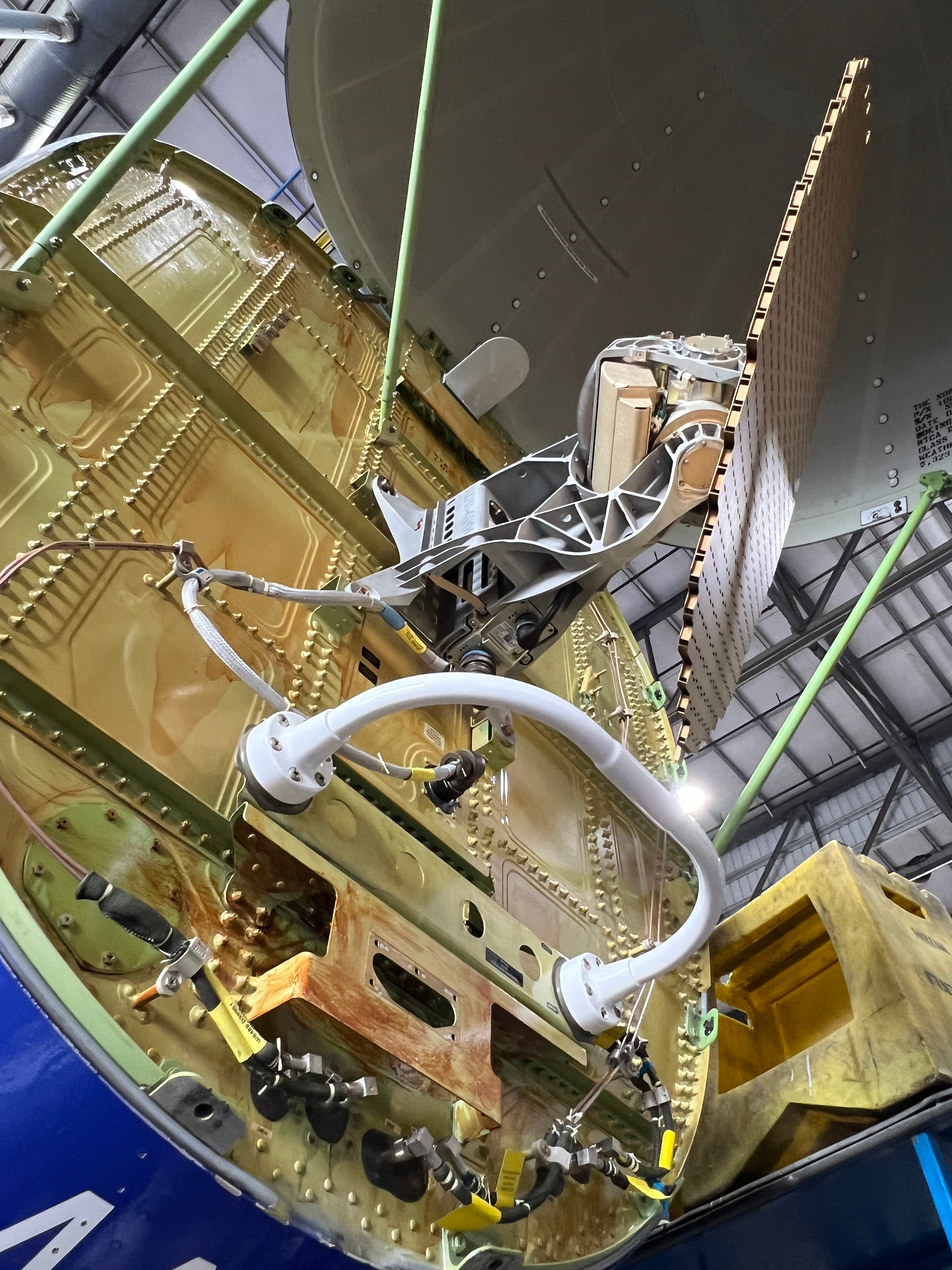 Getting up close and personal with a weather antenna at the front of a plane, before peering into the internals of the plane
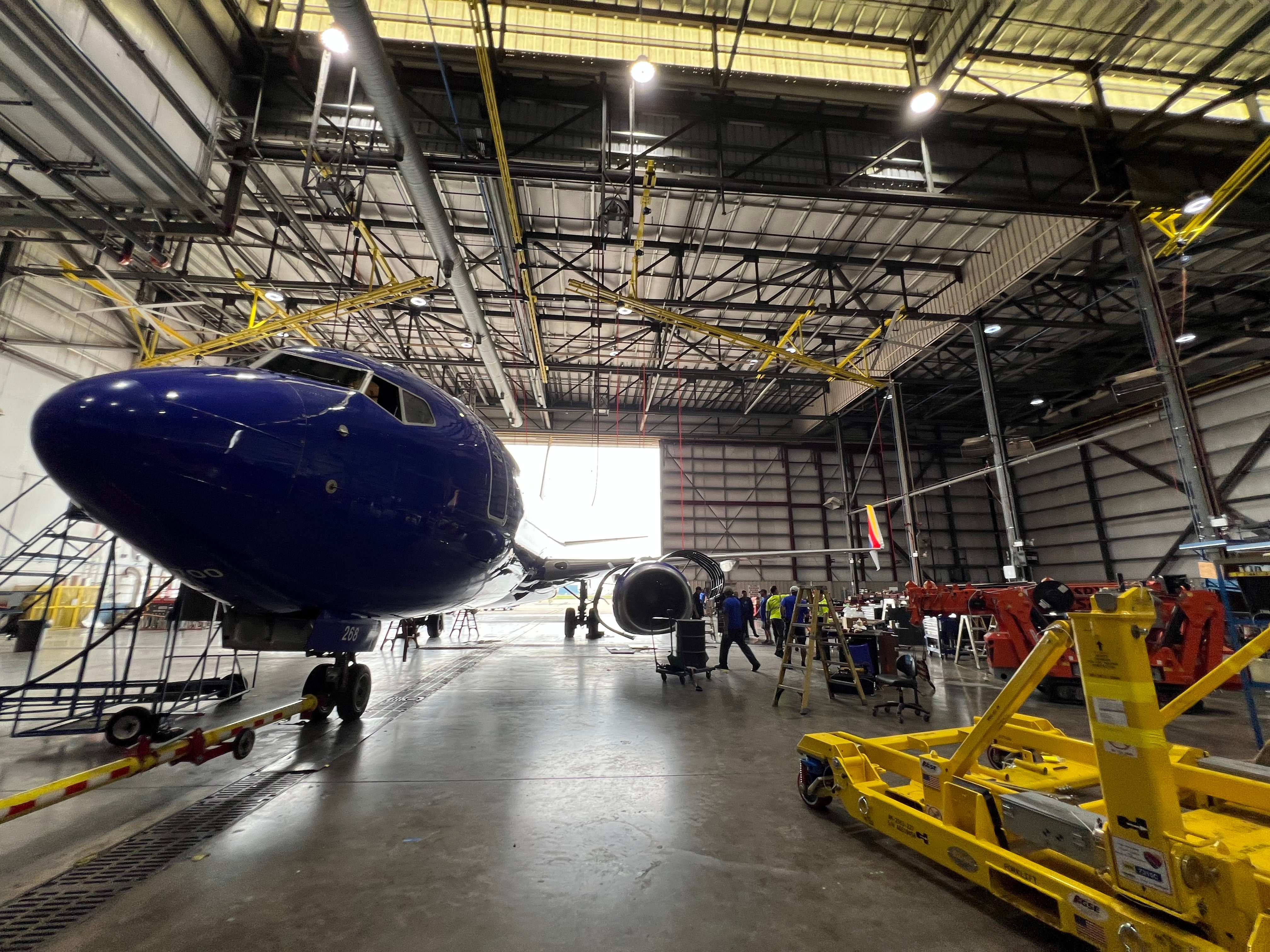 Master technicians gathered around this plane for a quick fix and the hangar door was soon opening
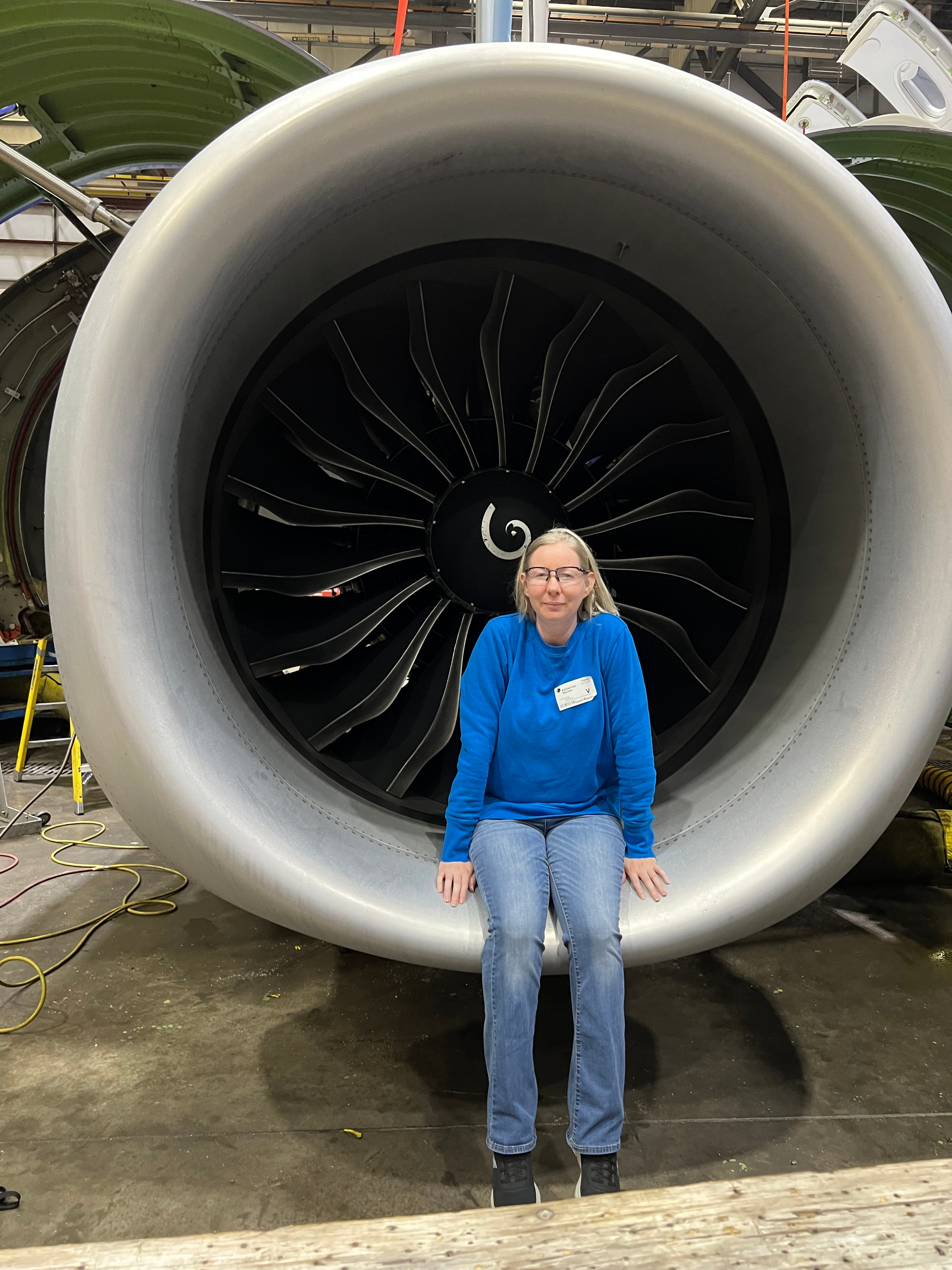 Me sitting in front of an engine fan. Gently pushing an $80,000 blade with your finger sets literal tons of engine into motion. Within the space of a few feet, temperatures can reach four times that of an oven. Holes dampen the sound. The swirl shape indicates to onlookers whether the fan is in motion.
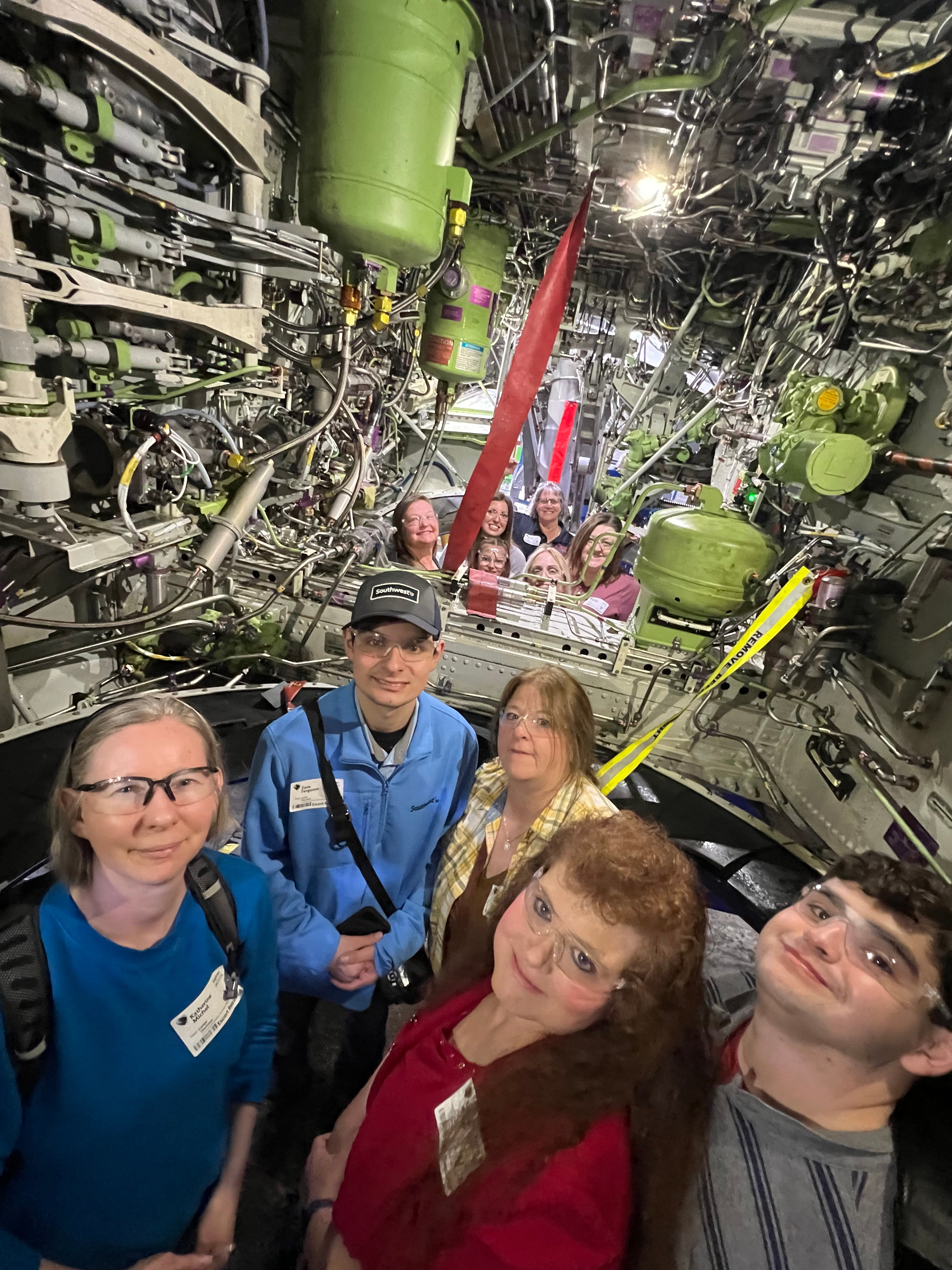 Me and a few of my new friends, hanging out in wheel wells. A moment we’ll never forget. Contrary to news reports, this area is not stowaway friendly.
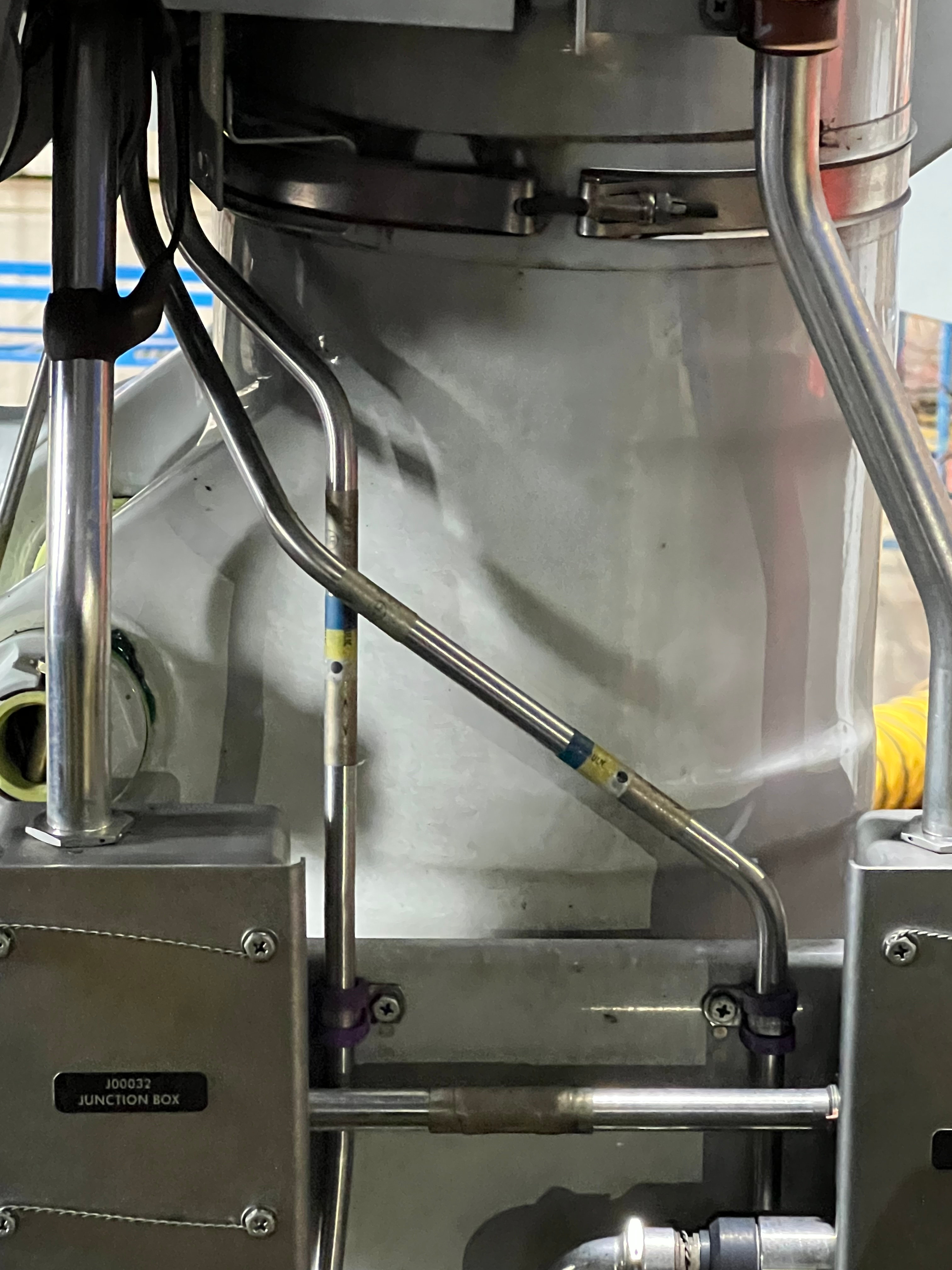 Our tour guide Jim shared some of his encyclopedic knowledge of planes and their millions of components. He pointed out uniquely strong, yet lightweight materials, for example, seen in the pipe in the center of this photo, that enable more weight to be allocated to fuel or elsewhere. A small quantity of precious material could easily cost $10k.
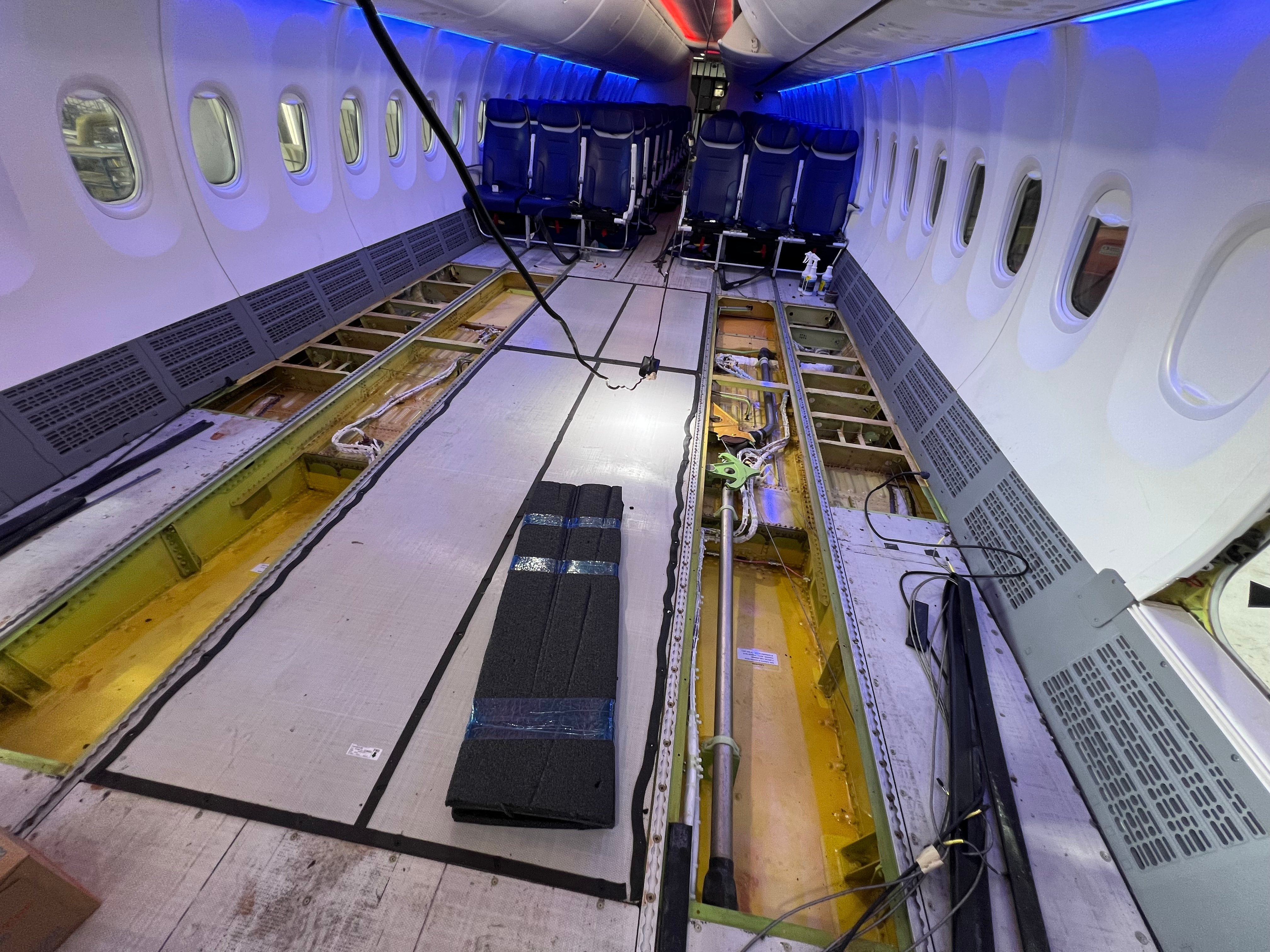 A “light” teardown that left overhead compartments and some seats in place. The seats removed were placed in rows in the hangar in a surreal scene.
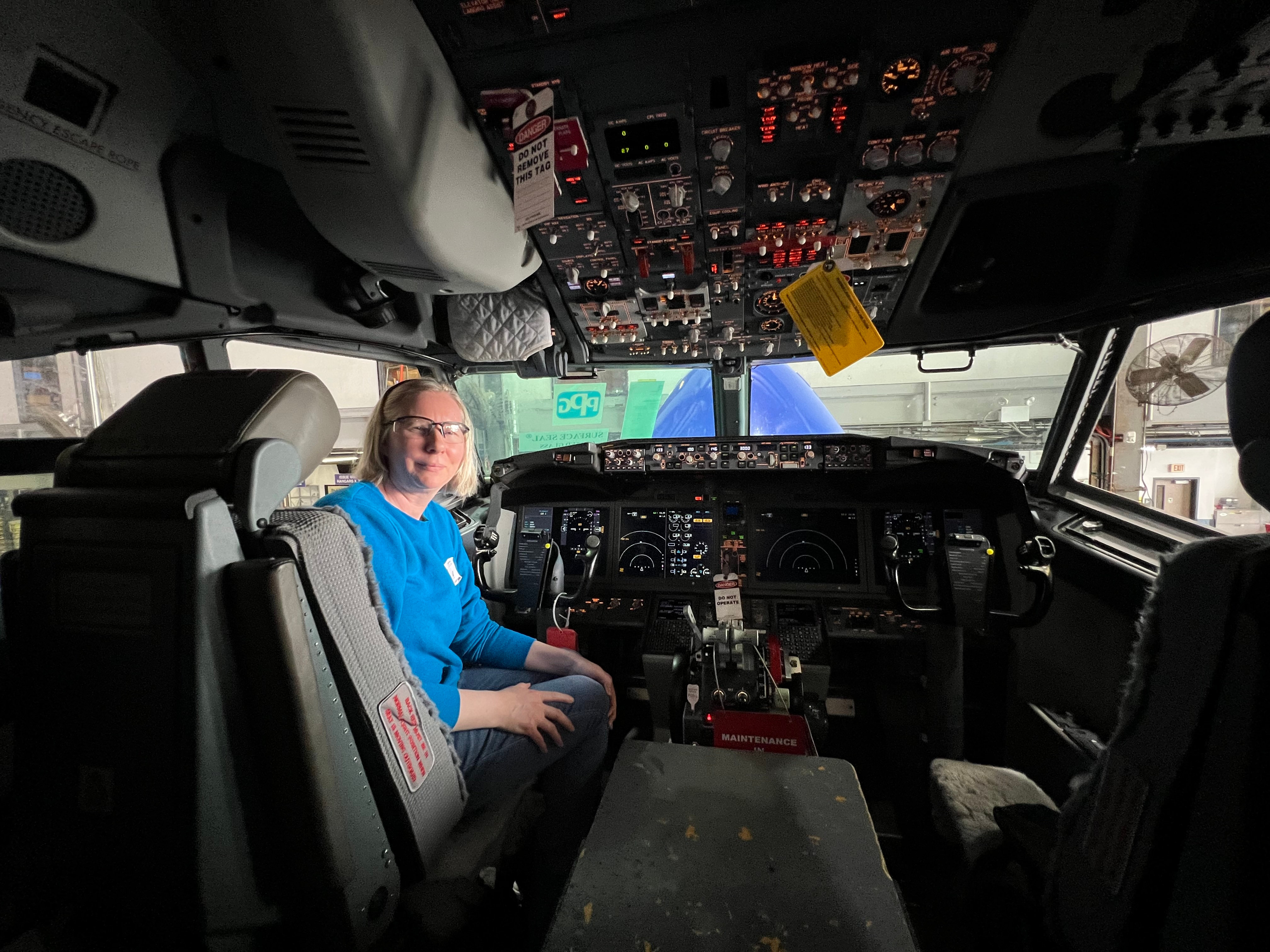 Me in a 737 cockpit
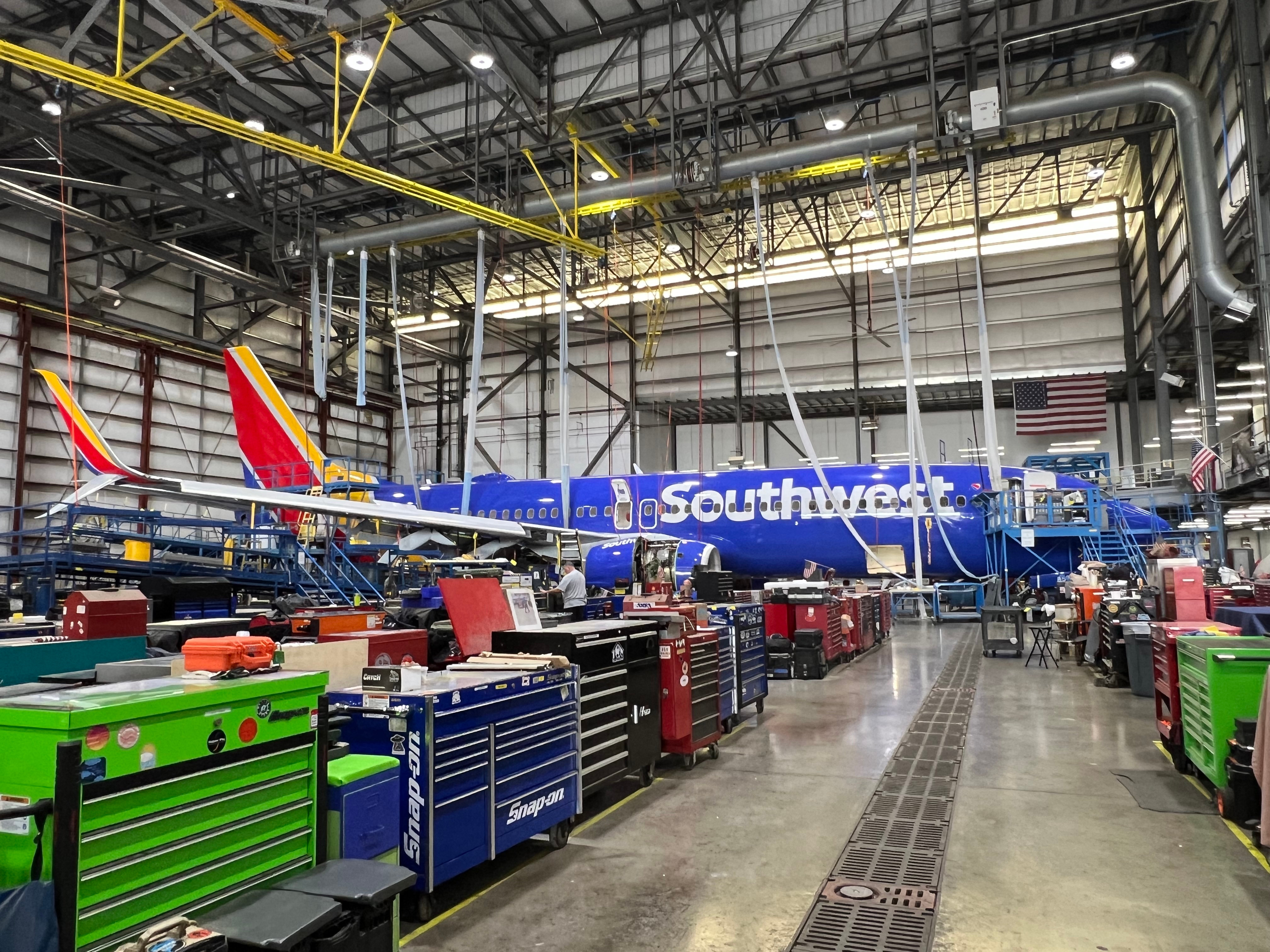 An amazing view
Herb and Colleen Offices
After the regular tour ended, we scored a bonus experience visiting Herb Kelleher and Colleen Barrett’s offices
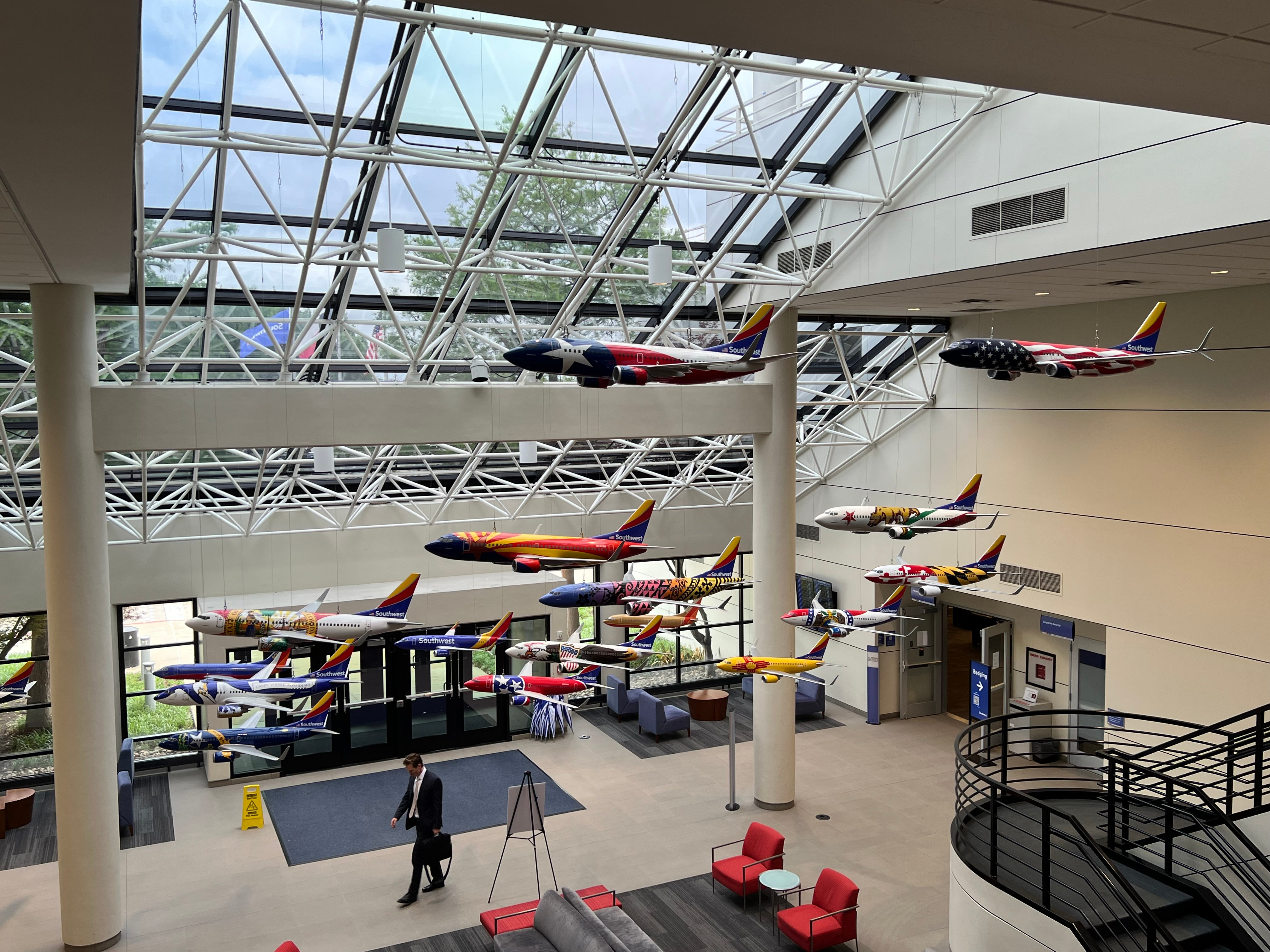 On our way, a sighting of minature replicas of all of the Southwest liveried planes
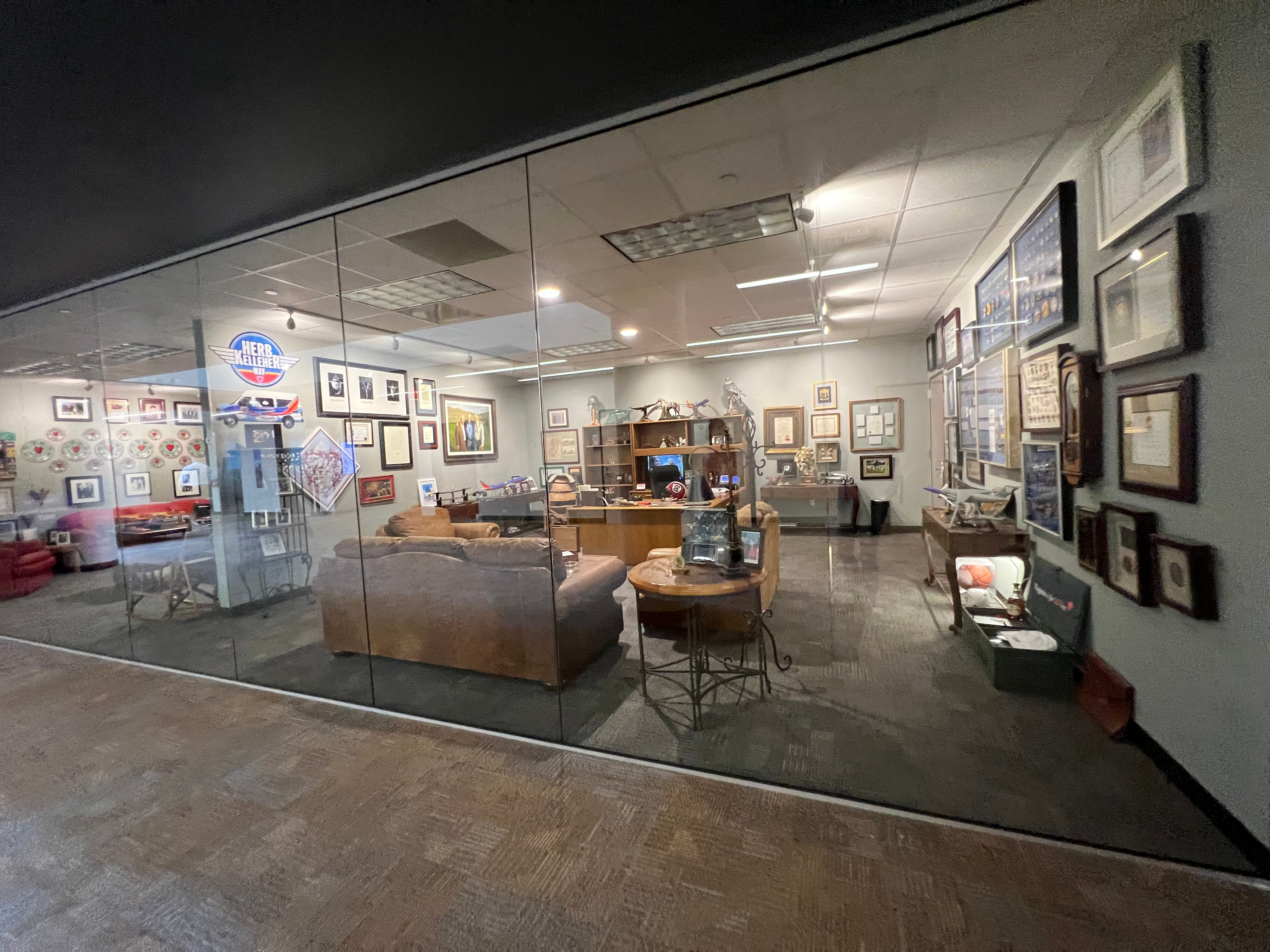 Herb Kelleher and Colleen Barrett’s offices as they were left upon retirement
Listening Center
We finished our tour with a visit to The Listening Center, the social media command center that monitors online trends in real time.
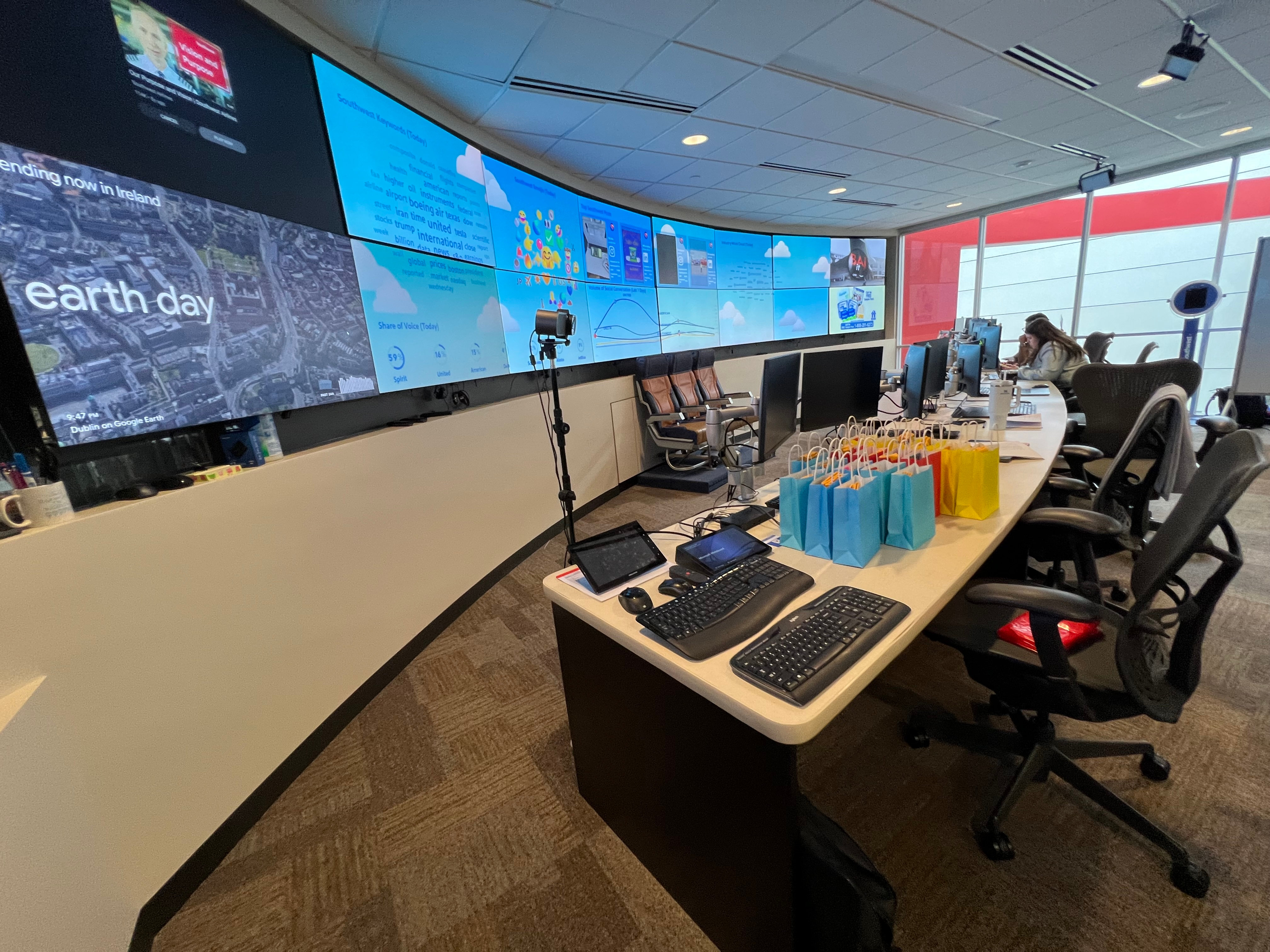 A wall of monitors displays top posts, keywords, emojis, and industry trends
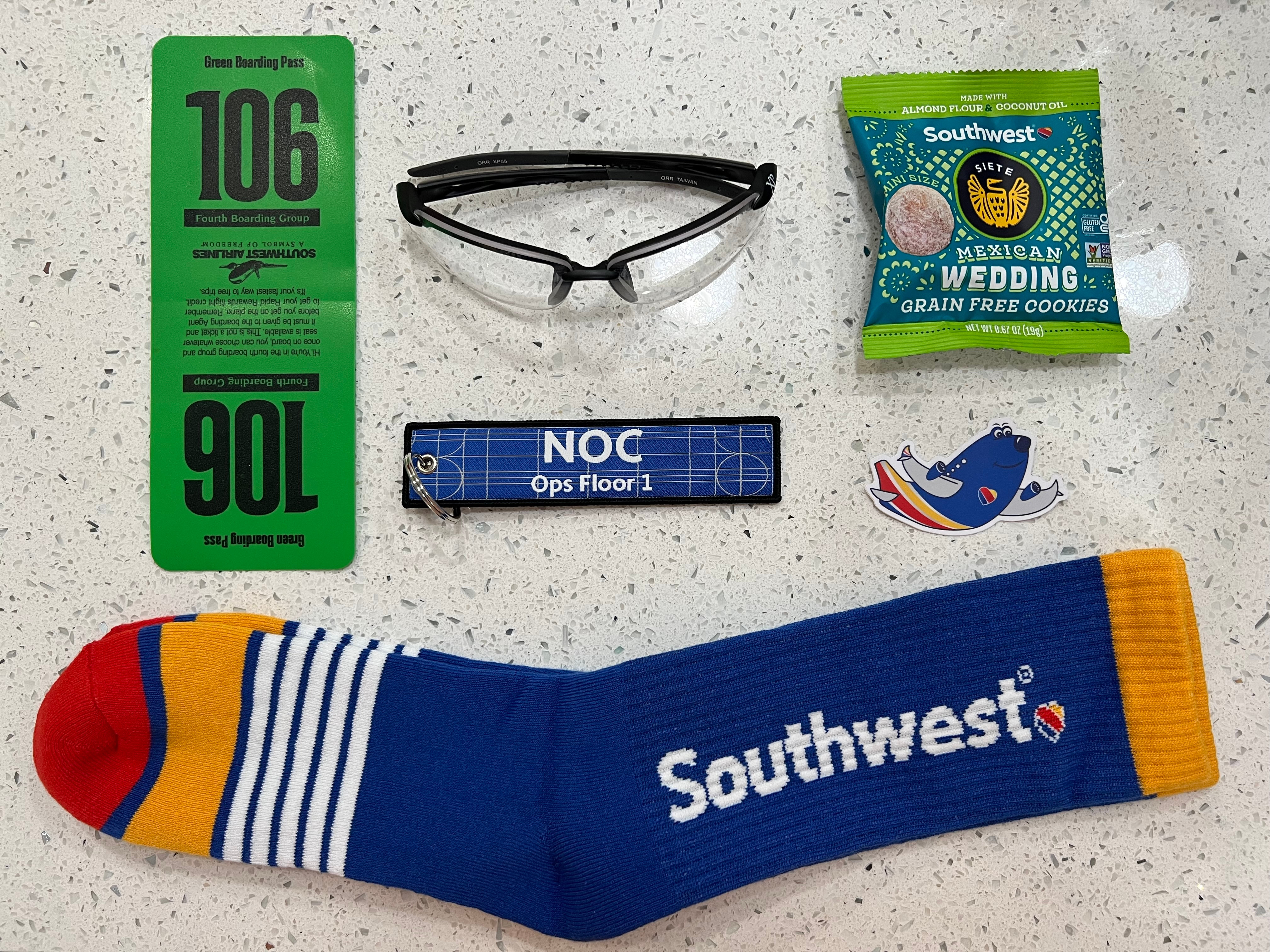 An unexpected surprise… a swag gift bag! Super cute Southwest socks, the new Mexican wedding cookie, sticker, and a real, historic boarding pass! We also left the Network Operations Center tour with an exclusive keychain and TechOps with souvenir safety glasses.
Thank You
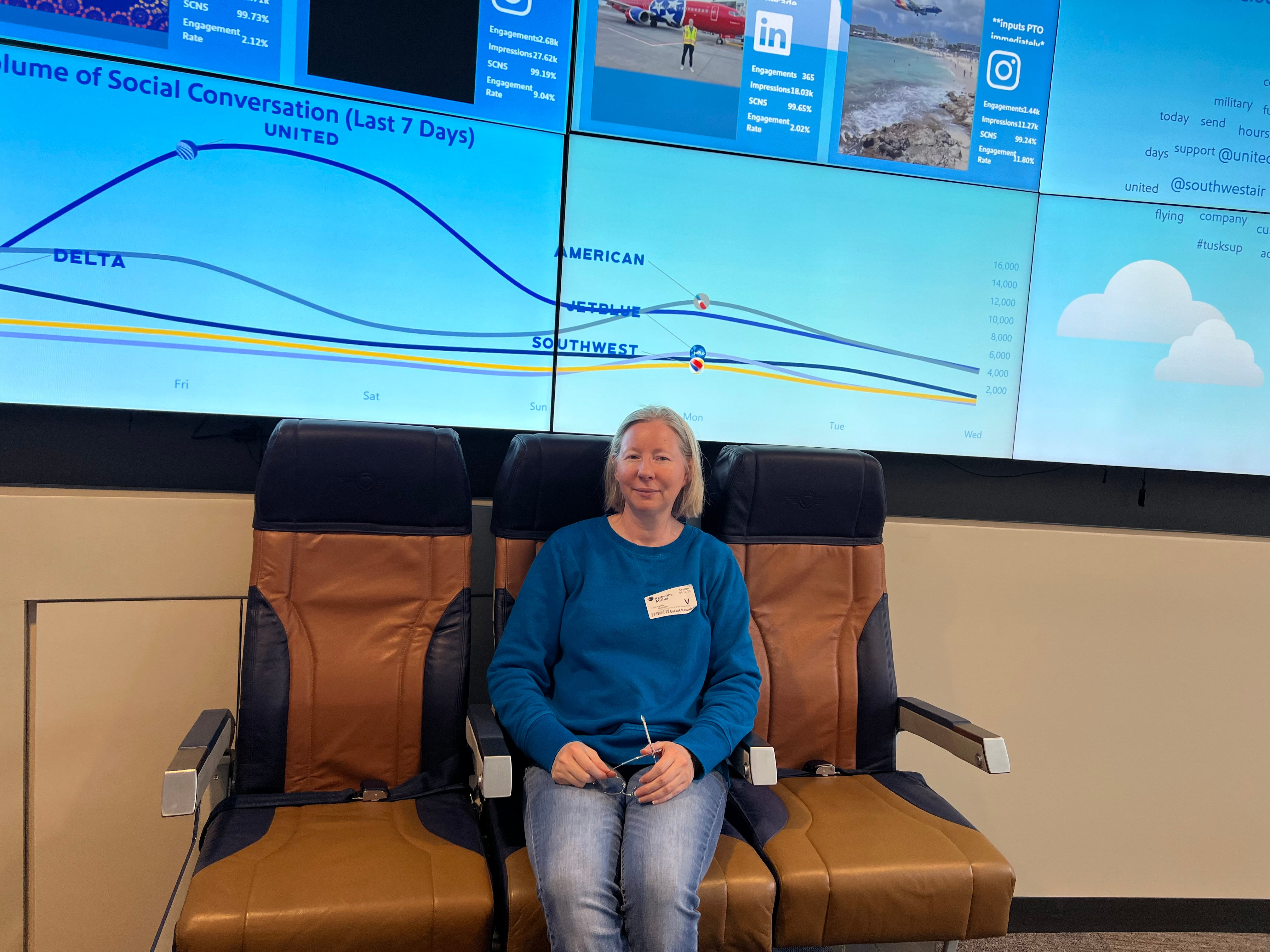 Me sitting in a vintage airplane seat in The Listening Center
In addition to the tour, it was fun to get to know other tour participants and experience their excitement, too. Superfan Zane’s passion was particularly inspiring to see.
Thank you to Southwest for an incredible day. We definitely felt the Luv!