Also it's kind of odd how nowadays everyone goes to the gym. Growing up as a late-stage millenial, gym goers were a niche subculture. Now it marketed to everyone everywhere as this integral part of modern daily life.
False! Find a gym with open hours and just show up! I used to do this all the time with my friends, but there were always a few people there on their own. There is always someone a couple players short for their team, so just ask around ("Hey, you need anyone else on your team?") and you'll find some people to play with. Keep coming back week after week and you'll make some friends eventually.
I assume this works equally well for most team sports that can be played casually such as basketball, soccer, and others.
Most big cities will have rec leagues that are popular with people in their 20s. Find a league that has a team happy hour after, I live in a transient city and I've made a few friends from people who get placed on my teams.
This post WINS Hacker News for the month!
This is much more durable, reliable, and (quite frankly) fun than the hub-and-spokes model of friendship, where you just have a bunch of 1-on-1 catchups with people who know you but not each other.
Also, it's somewhat easy to do! In this guy's story, this could be as simple as, "Hey I want to get a few of us from the gym together for dinner sometime. Would you be down?" People are usually more receptive to this than they are to a 1-on-1 invite, too.
Seems that the more you want something, the more you are able to sabotage yourself getting it.
One thing I have learned is that there are inviters and invitees for friends groups. Most people kind of just sit around and wait for things to happen. Some other people will make plans and invite people. Taking the initiative and talking to people first is the way to go, and looks like it worked out.
Experiment that worked for me : I now live in Buenos Aires , and missed playing ultimate frisbee.. so i posted around in various expat groups and craigslist.. "Ultimate Frisbee en Palermo! Beginners wanted - Experts welcomed" link to a youtube explainer vid.
Experiment 2: random street portraits with phone or digital handheld camera - followed up with a "who are you?" existential question (off record)
5. Always say thank you
when I've joined a social dance community, I was almost forced to talk and stand close with strangers. It is an emotional rollercoaster; it's all happy when I've met nice people but I've felt helpless when I had to dance/interact with people that I don't like, for whatever that is.
I've also practiced some type of acrobatics/solo dance for years and it is somewhere in between.
I think some type of intimacy heatmap can be made with all these activities.
Everybody knows a bunch of people by name, and nothing else, from various contexts. You go to matriculation, there's a bunch of people introducing themselves, too many to get to know. You work a job, there's 50 people whose name you know. You go to a party, your friends introduce you to 10 new people, and you don't have time to talk to them all.
The ones you don't talk to much, they are your friend seeds.
You move to a new town, and you know nobody, other than that one guy you never spoke to after the first week of university. Contact that guy.
In particular, the "rejection" will stop feeling awkward. I have random little one-or-two sentence exchanges with people several times per day, and usually it doesn't go beyond that, but I don't experience this as failure or rejection. I only engage further with the people who show (by words, body language, etc.) that they're genuinely interested in a conversation. For me, it's less than half.
The gym is an ok place, but not a great place, for what you're trying to do. Hiking clubs, running clubs, CrossFit gyms, rock-climbing gyms, and volunteer groups are all better options. The baseline level of socialization is very high in these places, whereas if you look around at a gym, most people have their headphones on, and are doing their own workout, so there's few natural opportunities to start a conversation.
Also, try to find people who are social and have lots of friends. If they like you they'll introduce you to their friends, which is a lot easier than starting cold. Don't be afraid to talk to women. Most of the people I know who are really good at connecting people are women.
However, I've been working remotely for 7 years now and recently became a solo founder, and I realized I'm having a fair amount of social anxiety. At the previous two companies, I was working remotely but still had people online to chat to, and would meet in person once in a while. Now as a solo founder I've just been working from home and I noticed that when I was leaving the house to buy groceries or work out that was my "break time" and I somehow just wanted to be more alone so I always had my headphones on.
That meant that I became someone who's running away from social interaction the more I actually needed it. And that when placed in a social situation I'm suddenly anxious whereas before this all came very naturally to me (I've also spoken in public very often etc).
How I'm coping:
- Got a WeWork membership
- Leaving the house without headphones
- Striking up conversation with uber drivers, cashiers, etc
- Making an effort to go to events (even flying somewhere at my own expense to speak at a small event for the first time in years)
My wife and I took on that role after college. Neither of us is particularly outgoing, but weβre not cripplingly shy either.
Meeting new people is about realizing youβre not alone in feeling lonely. When we pick up on positive vibes we just ask for a phone number βcan I have your phone number? You seem cool, and Iβd love to ___. (Fill in the blank with one of βget a cup of coffee/beerβ, βtake a walk,β βinvite you to a [thing I host].β Itβs not significantly different from the dating scene except itβs so much lower stakes. I recommend sticking to same sex or group invites for this reason. Rejections are rare, and almost certainly donβt reflect on you.
Secondly we start things on schedules. Things that happen regularly are super low pressure ways to start friendships: βhey, we cook an elaborate dinner and then hang out and play instruments/sing/watch a movie/hang out at the beach/take a hike once a month/week/whatever, join us!β
This makes it easy to invite anyone without it feeling like a date.
I say all this knowing that none of this is _easy_, but it is a kindness. Youβre not alone feeling lonely. With a little bravery you can totally be the person who makes it better for your new group of friends.
It's been nice to hear 60-something retirees chat about their health, quitting alcohol, sorting out the pickleball schedule, and sometimes politics (although honestly much more rare relative to the others listed)
I love the community some folks create in the gym.
It reminds me of one of my favorite parts of How to Win Friends and Influence People by Dale Carnegie, where he tells a story about complimenting someone, and a student asks what he was hoping to gain from offering the compliment. Carnegie is incensed:
> I was waiting in line to register a letter in the Post Office at Thirty-Third Street and Eighth Avenue in New York. I noticed that the registry clerk was bored with his job[...] So while he was weighing my envelope, I remarked with enthusiasm: βI certainly wish I had your head of hair.β
> He looked up, half-startled, his face beaming with smiles. βWell, it isnβt as good as it used to be,β he said modestly. I assured him that although it might have lost some of its pristine glory, nevertheless it was still magnificent. He was immensely pleased. We carried on a pleasant little conversation, and the last thing he said to me was: βMany people have admired my hair.β
> I told this story once in public; and a man asked me afterwards: βWhat did you want to get out of him?β
> What was I trying to get out of him!!! What was I trying to get out of him!!!
> If we are so contemptibly selfish that we canβt radiate a little happiness and pass on a bit of honest appreciation without trying to screw something out of the other person in returnβif our souls are no bigger than sour crab apples, we shall meet with the failure we so richly deserve.
> Oh yes, I did want something out of that chap. I wanted something priceless. And I got it. I got the feeling that I had done something for him without his being able to do anything whatever in return for me. That is a feeling that glows and sings in your memory long after the incident is passed.
> But over time, I came to accept that itβs ok if they didnβt want to talk to me. Thatβs just one of the things you have to expect when you do something like this.
People are complex! They have a lot going on. You almost never get someone responding with the same attention you are giving. That's just how it is.
What he is doing is developing a practice of friendliness. This won't develop close friendships - close friendships are what happen after you're successfully friendly to people who are good fit. But it will set you up to do well in semi-public spaces like the gym or your friends' party where you don't know anyone. It's an extremely good skill to practice and, unlike what I would have said at twenty, it does not reflect a lack of depth. Understanding that not everyone wants to have a deep conversation at every moment is maturity - doubly so if you can recognize it in yourself.
If I may toss out another recommendation: Volunteering is one of the best ways I have found to meet people.
A food pantry, house of worship, the library, a community theater, a political group, an environmental service group, local writers group, homeless shelter, women's center, whatever - there are so many things to choose from.
I found several advantages to making friends this way:
1. no/low stress because you are doing them a favor showing up. Any volunteer-based organization NEEDS people. YOU are people. They NEED you. Don't be stressed because you might not know what's going on. They will be GLAD to see you.
2. Volunteer onboarding processes force other humans to be nice to you and get to know you in order to place you in a service group or provide you an assignment. The people that most organizations have doing this are outgoing and friendly. I'm generalizing, but having served with a bunch of volunteer organizations, I have found this to be the rule. I was often one of them.
3. If you are volunteering for something that you care about / believe in / are passionate for, then you INSTANTLY know that you are meeting people with something in common. This gives you both something to talk about or bond over.
Source: I met my wife and many friends volunteering in different organizations.
Observation: people act like this challenge is unique to the young generation, but it certainly affected me (millennial). It was a long, scary process of getting comfortable talking to people. It's still hard! And I have to re-learn it in different phases of life:
>talking to people at school
>talking to people in college
>talking to girls at bars
>getting over the idea that I don't/shouldn't talk to girls at bars anymore, post-marriage
>talking to other parents, male or female, once becoming a parent
all different lessons, all challenging. all worth the effort.
Anyway, the fastest way I made friends outside of school was at a language course, where you have to speak a lot about something. You can switch partners during the course, so you can talk to other people. Another thing is sports clubs, it works out the same as the gym.
So the answer is, I guess, just going to gatherings where people learn new things with an instructor.
Fair enough if an introvert just wants to be left alone; we should obviously never force our company on anyone (nor do the mentally healthy among us have any desire to do so, because we have empathy). However, people like that will let us know that they don't want to talk when we approach them, either directly or via body language and the nature of their replies. For many others, they're starving for social interaction, and it might make their day for you to reach out. This is what makes outreach worth it, in the end, despite the risk.
*just paraphrasing a famous quote
I asked if he was Canadian. He wasn't. The endI joined a gym partially to get fit and partially to meet people with similar fitness goals. Working out alone just feels sad. I tried to be friendly with people, would smile and say "hi," when I walked past someone. I would ask someone a non-confrontational question about their workout. In months of trying, maybe a handful of people who at least said anything back. Zero conversations. The rest either responded with a blank stare or pretended to not hear me at all. Nobody ever approached me or said hi first the whole time I was there, except sometimes the people behind the counter.
I'm socially deficient but not THAT awkward and have no problem talking to people in other situations. I'm not sure if it was the kind of gym I was at, or just the wrong time of day, or if people in the gym only want attention from those who won the genetic lottery. But I didn't have much success.
What do we have to do to discourage you from touching us?
I mean I guess I'm glad that you're trying to resolve your anxiety. Self improvement is good for some people. I just wish it weren't at the expense of others.
Not sure if that's a typo or not in Week 3...
As the next one is
> Old guy who brought his own towel
If you have anxiety about talking to strangers, just remember that 99% of the time when someone doesn't really want to talk, this happens. Not really that scary after all
I wonder, why he did not have any friends from the years of studying. Usually, this is the place friendship forever happen :)
I am happy for him :)
Shared interest is a main driver and frequency of interaction/seeing each other... like you become friends at school since you see each other everyday kind of thing
Shared interest, I've recently gotten into cars though I still ride the clapped out POS and someone was showing me their Porsche, sat in it, pretty cool.
But I see that person at work. In general work people don't become friends but sometimes... one of em I go over to their house, when I used to drink I'd drink with them. I do find I have to do more message initiation myself to keep things going so idk. One old friend of mine sends me reels almost everyday on instagram random dumb shit idk. Right now though I only have like 5 real friends that I talk to almost everyday. When I was younger 10s/100s but yeah that goes away as you get older. Also doesn't help I moved away to another state so lost all my IRL friends. And real friends I mean one time when I was really in a bad spot my friend loaned me 10 Gs which not trying to say money is friendship but yeah.
Later I went for random people in the street and that was quite awkward. There was simply not much I could work with (what I thought at the time).
This turned out to become a low stake effort to improve my social anxiety. Helped me build humour around it and eventually become comfortable
Fast forward to today, I can literally talk about anything to anyone. The main pattern I follow is to break the pattern and make a joke, be sarcastic respectfully or give a compliment. No permission just something they don't expect. Almost works all the time. It helps with confidence and also makes you realise its all in your head.
And it is fun indeed
GenX here and I feel the same way. To me, "The Gym" has always been a place where bodybuilders and muscle heads go. In my mind, it will always be a niche hobby like autocross racing or horseback riding. And I know that I'm wrong! Everyone and their mom seems to go to The Gym now! But, it's hard to change the culture and learnings that you grew up with.
As opposed to what, our ancient hunter gatherer lifestyle? Going to the gym and talking to strangers at the gym isn't an "artificial replacement", it's a genuine activity lots of people do.
> "You try to form friendships with strangers because your daily routine lacks real and fulfilling interactions with other people."
How do you think people make friends? They make friends by interacting with people at shared spaces and activities.
Karl Marx' coined the term "Alienation" for describing most of the negative societal/human consequences of this principle, leading to isolation of humans "from themselves" (their natural will to construct something whole meaningful, not just complete a task in a process, but also isolation between humans themselves)
Now you look like a bit odd if you ask for directions since everyone has a smart phone now. So you have to go create artificial scenarios to socialize.
Aerobics classes have been a thing for decades. Pumping Iron came out in 1977. When I was in college (UVA, 95-99), there were several good gyms, plus they built a fancy new one about mid-way through my degree.
I suspect you just happened to be in a time/place where gym use was lower than average.
I'm lucky enough that I live in a city that has a newbie-friendly group that climbs every week and goes for dinner and board games afterwards.
I consider myself an introvert, but after going for a while, I got to figure out who are regulars, and they recognise me as a new regular too, at which point they're more open to socialising more, even outside the weekly meetups.
Even when I'm bouldering alone, I've had random people cheer for me when I'm about to send, or show me the beta for a route I'm struggling with, or ask for help with a problem. It just provides a very natural conversation starter, at which point you can pivot to other topics, provided they seem open to talking more.
Its a great space to meet new people, there are inherent breaks in the activity, shared problems to work on, and its a non-competitive space. Everyone just wants everyone else to send hard.
They work amazingly for that purpose, but I was not at all prepared for how much more social these would (re-)make me.
Listening to music helps me relax. If I could, I'd have something on at all times. (Jazz in the morning, KEXP in the afternoon, classical at night.) With these, I can talk to people and hear them crystal clearly while listening to whatever I have on. I don't need to compromise like I did (and do) while wearing AirPods (even in transparency mode). This has made me more receptive to striking up conversation.
On coworking: couldn't agree more. Being around other people has been great for my mental health, even if I'm not talking to them. I'm also the kind of person that needs work and home life to be physically separate and needs a commute to make work feel like work. Taking the bus into work is scratching that itch well.
Reading this books was a huge turning point for me as someone with diagnosed mild Autism. I think a lot of the things in this books are fairly obvious to non neuro-divergent folks. But for me, it was like a manual on how to handle myself in social situations, a thing that was mysterious and frustrating to me before. I wouldn't say I am now some sort of socialite, but I am far from the days of being being excluded from basically every social group I attempted to be part of.
There are societies where talking to strangers all over the place is normal, without any hidden agenda.
Or even dancing with random people at the club, many times never to be seen again. Just to give a more intim kind of example.
While in other cultures, seems that unless there is something to gain from the effort, people don't even try.
I highly recommend the book The Charisma Myth, it covers a lot of the same topics, including very good exercises, to help understand and develop human interactions in general
Personally, it helped me be able to get into, the situations that the first book assumes the reader is already in, or comfortable with (like talking to strangers)
I was at a Gurudwara (Sikh house of Worship) yesterday for a wake and everyone who enters the cafeteria perform shevas, that is, you take a turn serving everyone else food. It was very nice to do.
So if there is a cultural pathology it takes way more than what socializing entrepeneurs seem to think.
> Fair enough if an introvert just wants to be left alone; we should obviously never force our company on anyone (nor do the mentally healthy among us have any desire to do so, because we have empathy). However, people like that will let us know that they don't want to talk when we approach them, either directly or via body language and the nature of their replies. For many others, they're starving for social interaction, and it might make their day for you to reach out. This is what makes outreach worth it, in the end, despite the risk.
[deleted]
> However, people like that will let us know that they don't want to talk when we approach them, either directly or via body language and the nature of their replies. For many others, they're starving for social interaction, and it might make their day for you to reach out. This is what makes outreach worth it, in the end, despite the risk.
Nope.
Normal peopleβnot freaks like meβin my culture will fume in private. Yes: any slight by a stranger will be relegated to complaints to your friends. Much more likely than sending any bad vibes. Weβre cowards like that.
Iβm reminded of some anecdote about Westerners being struck by how helpful Japanese people are. (This is from memory and may be wrong.) The context is that they are tourists. Well, apparently Japanese people have very strict social norms about being polite and helpful. This is amazing for tourists: they get all of the social upsides while not having to pay anything in return (because they are oblivious to it).
crossfit became popular as a side effect of "bootcamp" style workouts in the 2000s-2010s, like the Spartan Run, Tough Mudder, Rucking, etc.
mark rippetoe, creator of Starting Strength, was heavily involved in crossfit. between that and him franchising his Starting Strength practice, powerlifting became more widely practiced. once Instagram started building lifestyle brands around this (gymshark, alphalete, nobull, darcsport, etc.), it was a lock.
Compared to what? Even the ancient Greeks and Romans spent a significant amount of time in gymnasiums. Or are you comparing modern times to cavemen?
Gardening, building things, maintenance, walking to the market etc.
I used to go to the gym but now I have a house and stuff to do it feels insane that I used my muscles to do useless work for so long.
- new climbers asks you for advise
- you can ask a new climber if they'd like some technique tips
- you finally top your project and someone commends you for it
- someone tops your project and you ask them for advise
- you're trying to top a boulder on a new set and are solving it with others
- you're _constantly_ in the gym so staff starts talking to you
I generally have a hard time connecting with people like OP but found that I was able to find good climbing partners outside as opposed to in the gym.
I now do crossfit and while I know it's not for everyone, it's a decent community. I still don't talk to folks in the gym, I don't want to but I like that we're all in it together and pushing ourselves pretty hard. I feel connected in that way.
I would really not like a stranger tapping me on the shoulder in the gym. That's my "alone time". That's just me though.
You don't get that with the high intensity training like Crossfit where you spend maybe 70% of the time working out and 30% of the time dying.
Itβs really quite dystopian and anti-human if you ask me. Weβve already lost so much shared mediumsβnobody watches the same shows, reads the same media, etc. which in isolation is completely fine. But something has to be shared with other real physical humans and it has to be more than just occasional grocery store visits, run-ins at the park, etc.
I dunno quite how to articulate it very well though. Itβs just remote work has a nasty side effect of making humans even more isolated from people not like themselves. It makes us all increasingly divided and βotheredβ. And that isnβt good for anybody.
Sure, there may be cultures where making comments of people out of the blue might not be seen as normal, but almost everywhere I've gone in this world allows for comments like these.
This is a very important part of learning how to have real conversations with people.
There is too much bad advice about using tricks or hacks to try to start friendly conversations with people. Itβs refreshing to see someone learning that a key to healthy conversation is having selfless motives.
Something surprising about How to Win Friends and Influence People is that itβs not as manipulative as the title suggests. A key theme of the book is that you need to be genuine in your interactions. You canβt pretend to be interested in what other people say, you have to actually approach the conversation with interest.
People will see through hidden agendas and ulterior motives. The bad social advice tries to use too many tricks and hacks to formulate a set of interactions that sound good when youβre reading about them but have the wrong effect when you go into the world and interact with other people with a hidden agenda.
This is why I caution against all of the conversation hacks that are recommended, like coming up with excuses to ask someone for a favor (that you donβt really need) as a way to get them into a conversation or pretending to be interested in their life story when youβre only interested in getting someone to talk to you. Others will recognize when there are hidden agendas. It doesnβt set you up for success.
It takes some effort to be good at doing this, if people aren't used to getting any kind of compliment then it can land as super awkward.
(hint: avoid commenting on peoples physical appearance directly, always clothing, or hair, make-up, jewellery/watches -- or ideally how they handle themselves)
The "trick" is confidence, knowing in yourself that you mean well and, if challenged doubling down with a broad genuine smile, don't try to half-ass the smile because it makes things awkward-er.
The other thing is that compliments can be broad, but criticisms have to be very specific.
Once you get the hang of it you can make peoples days genuinely better effortlessly, by just saying the positive thing that you're thinking.
"How are you today" β "Better, now you're here" -- Isn't cheesy, if you mean it.
They are mainly from proximity. You see people in class, you live near them, and you're near the same age. It's the same reason in person work would generate friendships/relationships. The challenge in today's remote world is proximity now has to be intentional.
You can find legions of people, particularly women, who do not want to be hit on unless they already find the other person attractive. Being hit on by an unattractive person may even quality for them as something akin to danger, already along the spectrum towards stalking or assault. Has nothing to do with being terminally online and has been reported since long before there was ever an internet.
> For many others, they're starving for social interaction
HN is an international forum, and while people are reporting increased loneliness in many countries, that doesnβt necessarily mean that they want attention from strangers. Where I live, a total stranger talking to you in public is annoying; it is strongly associated with foreigners who havenβt learned yet how to behave acceptably within the local culture. What people might be starving for are serious, long-term social bonds, of the kind that used to be common through large extended families, the parish church, team sports, and school friends who stay put and donβt move away. A mere friendly stranger in public could lead to such real bonds only rarely, so rarely that itβs not even worth considering.
Your comment made me consider reading it. This rant about radiating happiness towards people without expecting something in return gives me a different insight on his reasons for writing the book.
I might give it a shot. Thank you
Maybe it might not fail if the βfavorβ isnβt really a favor at all but instead something almost completely effortless like asking for the time or directions to the bathroom.
However when someone is at the gym and another stranger asks them to stop and do a favor that takes time out of their gym visit itβs just annoying, not a friendship starter.
If not, I will not let you know. I will just fume, blame and judge you for some time after.
Like you alluded to, the terminally online people who post the most tend to be those with neuroticism, isolation, severe anxiety, etc. There's a famous Reddit post about this I can't seem to find - "Everyone Online Is Insane" or something.
I really think this is why the past decade+ of American culture, politics, and society has been so off-the-wall insane. The Overton Window - another overused Redditism - of society has shifted towards the opinions of the neurotic and anxious. Those are the people whose words fill the comment sections and posts that we all read, which then infuse our minds to expect these thoughts as the baseline/median opinion of society.
"Korean girl Short I didn't know how to start a conversation with her, so I just asked if she was Korean and she said yes. Then I made her guess what kind of Asian I am. Then I rambled about being Asian in Syracuse before leaving. I initiated one more conversation but now we don't interact"
So endearing!
A lot of people on their own have earbuds in too,and clearly don't want to be spoken to.
I had one time where I asked someone for some help, he then went and did the route and shrugged and said it's easy in a really condescending manner.
I wonder if all the instructional content on Youtube makes training with weights and weight machines more accessible than ever. I was intimidated by weights and figured it would be boring. A guy I knew was talking about his weight training and I asked if he plans things out with friends/workout buddies and he said he learns about it on YouTube. So when I finally pushed myself to try weights, I found a video. It was a petite woman (I'm a dude) and I thought, ok she looks better than I do and this routine is a nice start. And I went from there, in my forties.
My funniest theory is that dating has been getting more competitive and strength-training is good for confidence.
Not that your's isn't valid, some people (like me) have a big surplus of energy that needs to go somewhere and sometimes the best available outlet is lifting weights.
I had like 20 years of social anxiety and itβs actually very anti-climactic when you can have a normal short conversation with a stranger. Not dramatic and no oneβs traumatized
Compared to a life rhythm that was intrinsically social: recurring gatherings of your community (which used to mean proximity, not hobby) at a building, being invited to others' houses, a social expectation to be social and host things, recurring interaction with the same people due to a smaller circle. Contrast: today we're expected to leave a group of people to go to school, leave those people to move to a job, leave those people for hobbies and romance, and to never let those circle overlap.
Gym wise: compared to life being heavy, and relatively full of physical effort. (Even just working on a car/wood/metal/house/farm with hand tools for example). Cycling to work has done wonders to bridge this gap for me. I think also the current beauty/attraction aesthetic is hard to approach without dedicated weight training. At the top end of lean muscle mass modern life just isn't heavy enough to stimulate enough muscle growth, and in preferred proportions, unless you're willing to do tons and tons of reps which is exceedingly painful compared to banging out 5-15 of a rep range appropriate weight.
Crossfit is just the name for HIIT training that's pumped as a new branded workout. Note that already it's now Hyrox. It will be something else in a few years.
If someone jumps on something I'm struggling with, I take it as an opportunity to really pay attention to what they're doing and try to learn. They might just be way stronger, but they probably also have some better technique ideas.
For #2, I just take it as a slightly awkward attempt to reach out and socialize. Advice isn't harmful. At worst it's a mild spoiler (oh well), or just wrong (then ignore it). At best it's a great chance to learn something.
I'm awkward and it's rare for me to start a conversation, so I just take someone else talking to me as an opportunity to connect without having to make the awkward first step, and try to spend a minute or two (at least) talking with the person.
The gym is not inherently social unless you are actively spotting / alternating uses of a single machine. You either join that group of gym rats (who in my experience spend 80% of their time talking) or you put your headphones on and crack on solo.
You are right, but the reason it's so prevalent is also because it is better for capitalism. Going to the gym isn't just a 1-off activity, it's an entire lifestyle & it doesn't necessarily come cheap. You need a membership, specialized gear, lessons, switch your consumption habits to high protein foods ... etc
I have a house and stuff, and still go to the gym at 5:30 every morning, as a supplement to my running and cycling.
I guess my cycling is an artificial substitute for riding a horse? ;)
From my experience "connectors" make the most friends and do the most activities.
Needless to say everyone starts talking to each other after a drink or two. This bar is enormously popular. I've never seen it not be packed. It's an incredibly successful strategy for them. With all the complaints about the death of third spaces, I'm baffled that more places don't do this. I see no reason a cafe couldn't do it as well.
All this to say I think it's a great loss that younger people aren't going to bars as much. I wouldn't say they're the best way to form deep connections, but I have zero fear of ever lacking random social interactions, because I know I can just go to a reasonably busy pub in the evening, sit at the bar, and sooner or later either I'll start a conversation or someone else will. It's also a great way to get good at handling opinions that are different from yours - if you have a thin skin or live in a bubble, being subjected to drunk people from every walk of life will rectify those issues quickly lol.
I get reels nonstop too
Tough luck, cupcake. Often you donβt know if she is into you til you approach. Often they are shy. If you keep overthinking this and afraid of being cringe, being filmed or being judged, then your genes will die out and your bloodline will end. But hey, at least you never made anyone awkward and lived a βsafeβ life. This will sit right with you at deathbed Iβm sure.
Oftentimes, a stranger coming up to you on the street spells danger, it has nothing to do with how attractive or unattractive they are.
It's hard to explain if you've never been in a woman's shoes, but you feel like prey. A chance conversation can quickly turn into a decades-long stalking event, one never knows. Unwanted attention for women can feel really dangerous, I have often been catcalled/followed when not with my husband (which is infuriating as an adult woman), and have been followed/catcalled on the street from the moment I turned 14, which you can imagine makes strangers coming up to on the street feel loaded.
If anything, modern social interaction has diverged from what is good for us and what we really want.
https://old.reddit.com/r/redscarepod/comments/1kkey4d/every_...
> Doesn't matter who you ask on this site. The incel, the rad fem, the regular liberal, the happily married person, the casanova; they will all tell you some variety to stay in your own lane and shut up. They will all use different language, but the meanings will always be the same: they live a life of constant loneliness and have found kinship with others who agree that to ever do something to counter that loneliness is beyond abhorrent behaviour.
Well, it's called "... and influence people", so I see where you were coming from in your assumption.
> This rant about radiating happiness towards people without expecting something in return...
This was one of my main takeaways from the book. I would argue that you do get some things in return: richer relationships with the people you already know, pleasant encounters with people you may not know well, and increased enthusiasm for your own interests compounded by hearing someone else explain how enthusiastic they are about their interests.
A college program required I re-read it. That time, I read it as genuine suggestions of good faith actions. In that light, it was fantastic. Almost 30 years later, I still quote from it.
Your admirable openness to reconsideration reminds me of, "I could be wrong. I often am. Let's examine the facts."
>
> On paper, the gym seemed like the perfect opportunity to meet people since I would go there nearly every day
Yeah, the gym is the authors interest.
Why should anyone entertain this theory? Youβre a comment box.
Edit: Thirty years ago us online freaks would just interact with other online freaks. Because normal people had real hobbies.
But now that we are all doomscrollers: why would normal people be interested in the comment boxes of online freaks? Theyβve got YouTube shorts and whatever to watch.
That things like 4Chan has had an outsized effect is a different matter. Itβs all mediated through twenty layers. Itβs not normal people reading 4Chan and other freaks directly.
https://old.reddit.com/r/dataisbeautiful/comments/1o87cy4/oc...
Redditors want you to cut contact with all your loved ones so you can spend more time on reddit, telling people to cut contact with their loved ones. It's like a cult.
Counterpoint: I have seen it succeed in person. Asking for a little help is a great ice breaker.
: After astrophotography, before cycling
You might be overthinking this, although I understand how it can appear that way for someone on the outside looking in. Your local gym probably costs less than your Netflix subscription, if you don't already have a free gym in your apartment building. You don't really need anything else other than looking up some routines on reddit.
Try me!
Though it is a social skill indeed. But there are some people who are always weird, so I don't buy into the "I can talk to anyone" claim.
For me it is easiest to talk to people who are like the dude in the big lebowski. People who rarely upset about anything. The true hipsters.
I'm having to learn this about online dating too. My online dates traditionally don't go anywhere because typically they've been about just exchanging information, which is frankly boring to both parties.
You have to (gently) riff and tease a bit or it's not going to go anywhere. If you're talking about your jobs, nothing is going to happen. Establishing that rapport is everything.
And people might say βwell if you know you didnβt do anything wrong so you shouldnβt be worriedβ but Iβve gotten into trouble many times for things I knew werenβt wrong but you canβt rationally argue with herd mentality when a group of people decide something is a faux pas.
In that sense, trying tricks in order to have a "successful conversation" will always fail so long as you are emotionally invested in advance in the conversation being "successful".
It's far better to be genuine and accept that you have only so much control over how things will go.
https://www.theguardian.com/society/2025/may/15/why-gym-plac...
This has been my big blocker keeping me from talking to most people. I feel quite adept socially once I get going, but I can usually only get to that point through mutual interests or a solid conversation topic to kick off from.
I seem to usually psyche myself out because most starters feels too fake or unsubstantive. Compliments make sense, but could you elaborate on "break the pattern and make a joke, be sarcastic respectfully"?
FWIW this book came out in the 1930s, long before "red pilling" was a thing. I've read it before and it's not about manipulating people unless you consider being a genuinely sincere person to be manipulative in some way. It's a good book, if a little outdated, and, if I could summarize it in one glib sentence, its lesson is "If you want people to like you, then be nice to them, be genuine, and show enthusiasm and interest in what they show enthusiasm and interest in."
Just trying to initiate a conversation with someone simply is not stalking nor assault, even if it is perceived that way. Their "perception" is mistaken in this case.
> HN is an international forum, and while people are reporting increased loneliness in many countries, that doesnβt necessarily mean that they want attention from strangers. Where I live, a total stranger talking to you in public is annoying; it is strongly associated with foreigners who havenβt learned yet how to behave acceptably within the local culture.
I don't know what country you are from, but it is highly probable that even in your culture, public conversations significantly decreased in the past 30 years. Which means that the amount of interactions was higher than it is now, even within the same culture.
> A mere friendly stranger in public could lead to such real bonds only rarely, so rarely that itβs not even worth considering.
The gym example of this article points in the opposite direction, or do you think that gyms in your culture work differently?
A lot of offices don't force you to interact with each other, much less in meaningful ways.
> And if you donβt take some fairly extreme steps to counter it, youβll be completely alone and isolated
Are "having more time to meet with friends and family" or "having time to do hobbies with other people" extreme steps?
Personally I would read this as a weak, but noticeable signal of being a person who is okay with taking advantage of others. Most people are too embarrassed to ask complete strangers for actual favours.
Yeah, I don't think you'll find it a red-pill kind of book at all. I know what you mean about books like The 48 Laws of Power feeling like the world is 100% zero sum, so everything is about dominating or outplaying people.
How to Win Friends and Influence People is very much focused on win-win. There is an agenda to make friends and influence people, as you'd guess from the title, but the strategies are about taking a genuine interest in people and making them feel good.
It's almost 100 years old, so the style is kind of hokey, and only about half the advice resonated with me, but there are 3-4 lessons that had a major impact on me.
I've personally done this twice this year (I genuinely wanted to learn, I'm not using it as a strategy) and it worked very well. I suppose culture plays a role but I'm in one of those countries where people don't usually socialize with strangers and it still works.
> "How are you today" β "Better, now you're here" -- Isn't cheesy, if you mean it.
To me that's super creepy. It's like a cheap pickup line. It's only something I'd say to someone I'd been dating a while.
> avoid commenting on peoples physical appearance directly
Gym bros love compliments on their muscles. It has to come across as "bro to bro" and not with a "broad genuine smile" (as a gay guy, you'd come across pretty gay IMHO lol)
Might be the place you live; this is not my experience at all. I ask randos to spot me every week. People love to help out. Sometimes they'll even keep an eye on you in case you have another set and come offering.
"Hey man, can you spot me?" Is a pretty universal request, and frequently honored. Once you are done with your set, offer to spot them, and while you are both resting after your respective sets, start up some small talk. If small talk works, continue to bigger conversations.
Places of worship, community spaces like libraries/clubs - sure...but I had to develop these skills years before I moved to remote work.
https://podcasts.apple.com/us/podcast/how-to-win-friends-and...
If being friendly with people is manipulation then I don't really know what to say. I'm more likely to help someone if they are not being a jerk and vice versa.
That takes less than 10 seconds to say, let's you protect your time and peace of mind, and as a bonus there's no need for fuming, blaming, and judging that the other person won't ever even know about.
Explains the rise of various political leaders very well.
I find it funny that even the people who comment on the "Everyone Online Is Insane" post sound obsessive or outside the norm.
I find it messes with my mental health when I read too many comments. In the real world I normally find people to be nice and kind. But then I go online and the world is totally different - I have to keep in perspective that its just a small outsized fraction.
I can confirm it's really good. It's not manipulative at all. The book can large be summed up as "if you want other people to care about you and your desires, you need to care about them and theirs and SHOW them that this is the case: here's how."
Published: May 1, 2026 Updated: May 4, 2026
A couple months ago, I was the Wizard of Loneliness. I had graduated from college almost two years prior and, while I had luckily found a job, I was unsuccessful in finding friends.
Each night, I would look up βhow to make friends after collegeβ and find the same advice given every time: βdo your hobby with other people, frequentlyβ.
On paper, the gym seemed like the perfect opportunity to meet people since I would go there nearly every day; however, according to Reddit, thereβs a number of people who want to be left alone and can be irritated if you interrupted their workout to talk.

Figure 1: Redditors who don't like to be interrupted at the gym
I am deeply afraid of irritating someone or being in awkward situations. Hereβs a list of things that I did as a result of that fear:
Hesitated for a couple minutes before waking up my roommate when the fire alarm went off
Pretended I didnβt know a childhood friend when they said hi because I didnβt know how to act around people I used to know
Ignored people I knew from class instead of saying hi because I didnβt know for sure if they remembered me even though the class had only 10 people in it
So you can understand when I say that walking up to someone and starting a conversation with them at the gym of all places is kinda terrifying for me.
Unfortunately, there was no other good option. My other hobby is programming, but the Syracuse Development group only meets up once a month, and activities suggested by r/Syracuse like volleyball and trivia night require you to already have friends. I didnβt have a choice. If I wanted friends, I would have to put in the work at the gym.
I am lonely and have no friends.
I decided to run a little experiment to find some friends.
Each day, for one month, I picked out one person to approach. Usually it would be someone I saw frequently at the gym.
If they were in the middle of an exercise, I waited for them to finish their set.
Then, I would approach them, stand near them and wave to get their attention, and then give them my opening line.
Initially, my opening line for everyone was βHey I see you here all the time. Youβre pretty strong. Whatβs your split?β After a week or so, I began customizing the opening line per person based on what I found interesting about them.
For instance, someone was wearing a Boston hat and I was curious whether they went to school in Boston like I did, so I asked them about it. After the opening line, I tried to talk to them for 5-10 minutes until they let me go. I tried not to be the one to end it because I have a habit of ending conversations early, but I did leave them alone if they obviously did not want to talk.
Hereβs the raw data. I split it up by week and put it into these collapsible things because it takes up a lot of space. Click on each week to see the data for that week.
Description is a short description of the person.
Length is how long the conversation was. A short conversation is 0-2 minutes, a medium conversation is 5-7 minutes, and a long conversation is 10+ minutes.
Notes are just anything interesting about the conversation or the person I was talking to.
Aftermath is what happened after that conversation.
Week 1 (7)
| Description | Length | Notes | Aftermath |
|---|---|---|---|
| Upstate Medical University Student | Medium | He is indeed an Upstate Med student | He sometimes comes up to me to have short conversations. I don't see him anymore |
| Big guy who wears a brown hat | Long | I actually reached out to him on Instagram first. Then I met him that same day to continue the conversation | We say hi and talk about our lives sometimes. He is a very friendly guy who is always down to chat. He knows a lot of people at the gym and gives good advice on fitness |
| CS major looking for a job | Long | Very talkative and friendly | He found a job and moved away |
| Medical coder | Medium | He noticed I did weighted dips and said I was strong | Usually I wave, but I don't see him at the gym anymore |
| Guy wearing Boston hat (nurse) | Medium | I was unsure if it was a good conversation because he started lifting while I was talking. But I think he just wanted to do both at the same time | I initiated two more conversations |
| Guy who lives downtown | Medium | I asked him if he worked downtown since he looked familiar; he said no, but he lived there. | We chatted every day for a couple weeks. We're busier now but we still chat every week |
| Mech eng with moustache | Short | I asked him a question, he answered and left. I guess he didn't want to talk | We don't interact |
Week 2 (10)
| Description | Length | Notes | Aftermath |
|---|---|---|---|
| Guy with deep voice and likes to wear green | Medium | Reserved. I made him laugh bc I said he seemed scary. He also ended up using my opening line to introduce himself to someone else at the gym! | We say hi when we workout nearby |
| Big guy 1 | Medium | I asked him for his split and he sent me his training regimen on Instagram | We say hi sometimes and he gives advice |
| Guy with curly hair and likes to wear black | Short | Gave me tips on chest press and offered to let me borrow his straps, but didn't want to talk much. I thought it went badly... | I rarely see him, but we fist bump each other whenever we see each other. So, not as bad as I thought it was |
| Girl with glasses | Short | Curt. Didn't ask any questions back. Felt like she was waiting for me to finish | We don't interact |
| Guy who wears darcsport | Short | Very chill and reserved. Prefers not to talk much | We wave to each other when we're near each other |
| Guy wearing maple leaf hat | Short | I asked if he was Canadian. He wasn't. The end | We don't interact |
| Woman who comes with her friend | Short | Comes with a friend to workout. I think she's from Columbia | I say hi to her each day. Our conversations are short but sweet |
| Guy who works at lotte biologics | Medium | He likes to golf and eat salmon | We say hi and talk about our exercises whenever we see each other |
| Guy who bought a protein drink from Crunch | Medium | I asked him about his protein drink. He said to buy it in bulk at Walmart or get a chicken bowl from Chipotle | I initiated one more conversation and we say hi when we're near each other |
| Wiry older guy who sprints across the gym to warm up | Short | He asked me to guess how old he was. I said 25. He was 54. | We smile and wave sometimes |
Week 3 (14)
| Description | Length | Notes | Aftermath |
|---|---|---|---|
| Guy who wears wrestling shirt and has a home gym | Medium | Talkative. He likes to chat but doesn't initiate | I initiated one more conversation but now we don't interact. We would probably have another good conversation if I approached him though. |
| Landscaper who boxes | Medium | First conversation was good. We talked about boxing and Hyrox | We wave to each other if we're near each other |
| Girl who goes to Syracuse University | Short | My opening line was "Do you go to SU?" When she said yes, I didn't know how to continue, so I said I think I saw you at CVS. She was like probably and I didn't know what to do next but luckily she said "I gotta finish my workout." So I left. | I never saw her again |
| Guy who was tutored by my dad | Short | A small catchup conversation. I overcame my past perception anxiety to talk to him | We say hi when we're near each other |
| Cousin of the guy who was tutored by my dad | Medium | Connected on the both of us being Vietnamese | We don't interact |
| Girl with red dyed hair | Medium | She dyed it herself and wants to try green next. She was fun to talk to | We wave to each other if we're nearby |
| Woman who brings her own barbell | Medium | Friendly. Her barbell is a special women's barbell. All the barbells at the gym are for men | I rarely see her |
| Girl with blonde dyed hair | Short | I asked her about her hair and she said she dyed it herself after watching TikToks. I didn't know what else to say after, so I left. | I never saw her again |
| Guy with good facial hair | Long | Seems like he's looking for friends too | We say hi to each other whenever we meet |
| Korean girl | Short | I didn't know how to start a conversation with her, so I just asked if she was Korean and she said yes. Then I made her guess what kind of Asian I am. Then I rambled about being Asian in Syracuse before leaving. | We say hi when we're near each other |
| The other Asian guy | Medium | I approached him because he was the only other Asian guy. He took the opportunity to ask me to spot him | We started working out together after realizing we did the same exercises. He made dinner for me and we watched a movie |
| Male SU student | Short | I talked to him on a whim because I was doing calf raises near where he was squatting. He said yes and I let him do his thing | We say hi to each other at the gym. When we finally had a full conversation, we exchanged Instagram. He later revealed that he was struggling with making friends in Syracuse. We went to Kofta Burger for dinner |
| Old guy with tattoo of Osiris eye | Medium | He said it was a mistake made in his youth | I rarely see him but we usually don't interact |
| Old guy who brought his own towel | Short | He was sweating like crazy | I never saw him again |
Week 4 (3)
| Description | Length | Notes | Aftermath |
|---|---|---|---|
| Guy who was doing exercise where you pick up barbell and lift it above your head | Short | I asked him what exercise he was doing. He explained but I wasn't really listening. | I never saw him again |
| Girl | Short | Nothing interesting really. Just said hi | We wave to each other |
| Guy with big calves (nursing student) | Short | I asked him for tips on growing calves and he didn't know. He said he did box jumps a lot. I did not want to do that | I never saw him again |
Week 5 (1)
| Description | Length | Notes | Aftermath |
|---|---|---|---|
| My old manager at Cake Bar | Short | They remembered me even though I only worked a weekend. We had a short catchup conversation | This was very recent so I have no updates |
The first couple days were extremely difficult. I had been conditioned to believe that initiating a conversation with a stranger was weird and it was tough to break free from that. As a result, for the first few people, I would always make a detour at the last second, i.e. make a trip to the water fountain. I chickened out! The solution was to approach the person as quickly as possible so that I didnβt have time to think about running away.
Luckily, most people were receptive. I got a rush of dopamine whenever someone responded positively to my conversation, so talking to new people became strangely addictive. I kept talking to more and more new people each day until I talked to a whopping seven (SIX SEVENNN) new people in one day (this is why Week 3 has a lot of entries). It was crazy.
Something interesting I learned early on was that even if someone had headphones on, there was a good chance they were open to conversation. I mean, I had my earbuds in and I was willing to talk to anybody. Most people were just listening to music and took the headphones off to talk.
People didnβt always respond positively though. In Week 1 and Week 2, I came across a number of people who were really short with their responses and didnβt try to continue the conversation. They gave off the vibe that they didnβt want to talk to me. It was really awkward and almost made me end the experiment.
But over time, I came to accept that itβs ok if they didnβt want to talk to me. Thatβs just one of the things you have to expect when you do something like this.
And being in an awkward situation is actually not that bad. It sucks in the moment, but then you just take a few minutes to calm down and then you move on with your life. Youβre ok.
However, I did end up pulling back in Week 4 and Week 5. I felt like constantly talking to more new people was producing diminishing returns. I had already established a connection with many people at the gym, so it was a better use of my limited time (remember I still have to work out!) to nurture those existing connections into meaningful ones.
I ended up prioritizing the 5-6 people who seemed the most interested in me.
| Description | Conversation Length | Notes |
|---|---|---|
| Big guy who wears a brown hat | Long | I actually reached out to him on Instagram first. Then I met him that same day to continue the conversation |
| Guy who lives downtown | Medium | I asked him if he worked downtown since he looked familiar; he said no, but he lived there. |
| Woman who comes with her friend | Short | Comes with a friend to workout. I think she's from Columbia |
| Guy who works at lotte biologics | Medium | He likes to golf and eat salmon |
| The other Asian guy | Medium | I approached him because he was the only other Asian guy. He took the opportunity to ask me to spot him |
| Male SU student | Short | I talked to him on a whim because I was doing calf raises near where he was squatting. He said yes and I let him do his thing |
One of these people is someone I will refer to as βthe other Asian guyβ. I got a lot closer to him than expected. We realized we had the same workout routine so we became gym buddies and started working out together. A few weeks later, he invited me to his apartment, where he cooked me a smash burger. His girlfriend showed me graphic pictures of what she was learning in PA school too. Then, we watched a movie with their cat. Iβm really grateful that they were kind enough to have me over as a guest.

Figure 2A: A burger at the other Asian guy's apartment

Figure 2B: Cat in the other Asian guy's apartment
Also, something new happened: instead of scaring people away, I had a positive impact on someone.

Figure 3: Texts from the male SU student
These texts were from one of the people I prioritized, the male SU student. He had recently moved to Syracuse and was struggling to make new friends. He related to a couple of my videos where I talked about the same struggles and was super appreciative that I talked to him that day. The following week, we tried out Kofta Burger after a recommendation from my friend who lives downtown.

Figure 4: A Kofta Burger with the male SU student
The burger was delicious and we had a great time.
Despite my successes, my work isnβt done. I realized near the end of the month that what I truly wanted was to consistently hang out with people on the weekends. Unfortunately, most of the friends Iβve made are busy on the weekend. Theyβre taking trips to visit loved ones, going to the bar (Iβm not that into drinking), or running errands, so itβs hard to plan anything.
But I guess thatβs a better problem to have than eternal loneliness.
A few months ago, I was googling βhow to make friends after collegeβ every night. Now I have people to text, people to wave to at the gym, and people who notice when I donβt show up for a few days. AND I became a more resilient person who is unafraid to do hard and scary things.
No more Wizard of Loneliness for me!
Heh this blew up on HackerNews. I want to give some more context for people who are unsure if the gym was the right place to do this. And this is all in hindsight; I did not realize this until now.
The gym I go to, Crunch Fitness, has a social aspect to it. While many people keep to themselves, itβs common to see people chatting. Sometimes theyβre chatting in between sets. Other times, theyβre chatting on the treadmill. The staff go out of their way to interact with us, and often the people who didnβt want to talk to me talk to other people! I guess they are more open with their friends.
The people at the gym are also really supportive. I forgot to mention this but once, when I was doing hip thrusts, I messed up and didnβt rerack the machine correctly. I fell on my butt and the machine made a huge CLANK sound when it fell. Everybody turned to look at me. I was really embarassed. But then, one guy came and helped me return the machine to the starting position while another guy swung by to make sure I was ok. He assured me that it happened to everyone and to not let it get to me. I didnβt know either of these people! They just wanted to help.
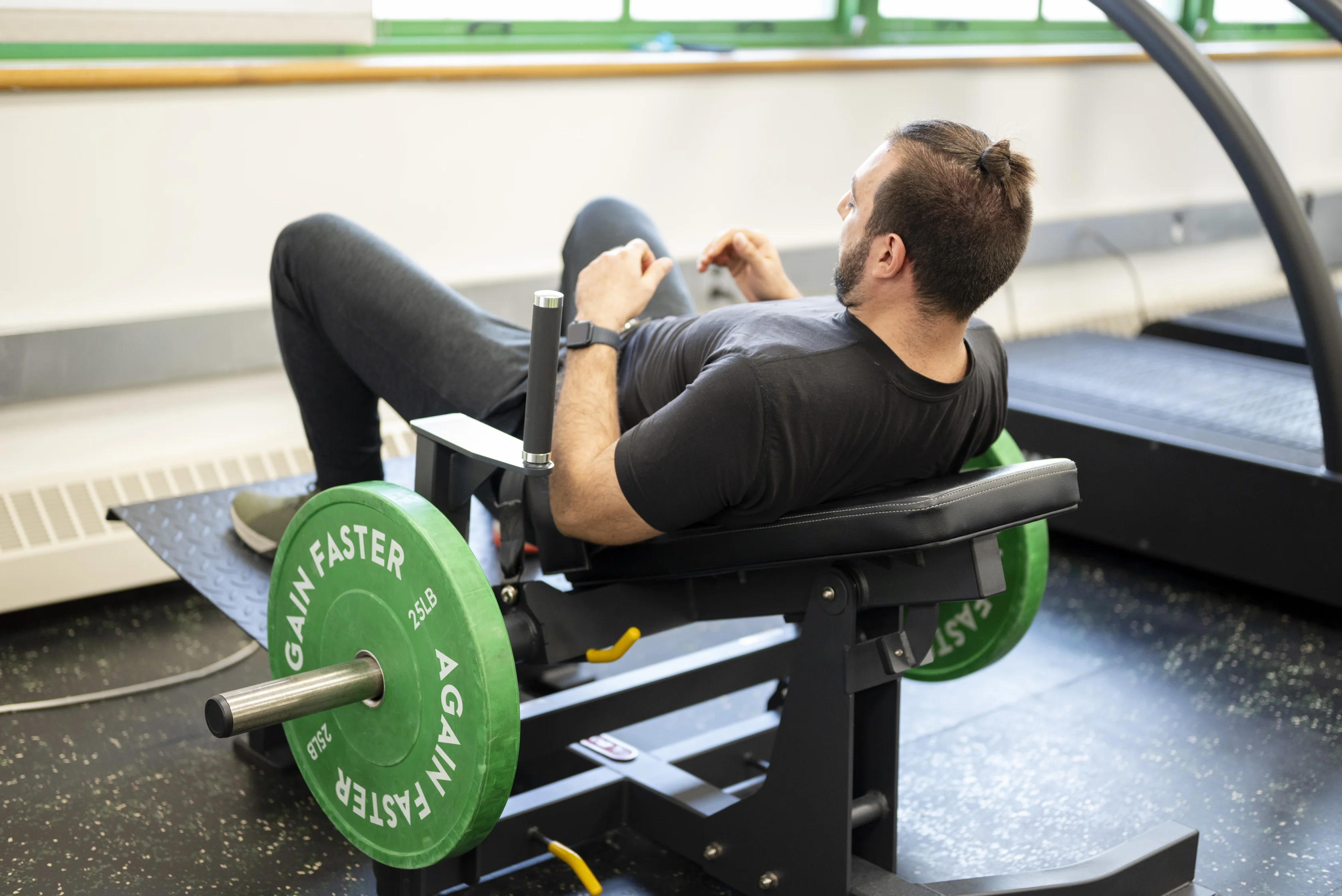
I donβt disagree that the gym is primarily a place to workout, but I think that itβs also a place where you can find community. Maybe my gym is special in how social it is but maybe people are friendlier than they appear to be. Iβm betting on the latter.
What I want is to have a laugh or an interesting intellectual conversation.
That reminds me of when I first moved out of California and away from the tech scene after being immersed in it for some 10-odd years. People just don't talk about their jobs! They'd much rather talk about their interests, hobbies, friends and family, ... literally anything else. Their job is just not an important part of their identity. Was quite the change in perspective and honestly and took some getting used to.
> thinking they're the live of the party, while everyone else is just silently annoyed by them.
Not saying this is you, but my impression is that people who lean into silent annoyance also depend on passive aggression, fueling it with resentment that they aren't as outgoing (or whatever) and deserve the attention instead, and those who are especially anxious and/or neurotic imagine that everyone else shares the apparent negative feelings, effectively acting as they imagine everyone else wants them to act. People have a hard time letting themselves just vibe and roll with it if they think it might make them less appealing by association. Maybe they are the life of the party, since it's not much of one if people can't pump some life into it
I don't doubt people that are, exist, but I highly doubt it's a high percentage and certainly very far from "everyone else".
Most people donβt mind someone initiating a casual conversation in a non threatening manner. Most will enjoy it, at least sometimes.
Iβm happy for the author here, especially that he was able to shrug off these awkward interactions and move on.
What trouble have you gotten in for doing what exactly?
The stupid things you see on TikTok are (nearly?) all fake.
Wow, ok. There is a huge space between alcoholic at the bar every night and someone who likes to have a drink with their friends on a Saturday night.
Going out and risking embarrassment is the price of admission for leaving the house. If you do say something silly, you have the opportunity to learn from it and grow a little bit.
Those TikTok videos are usually fake or bait. 99% of people do not think youβre weird or creepy for existing.
That detail is probably unnecessary.
When I still had a personal Reddit account, I would be on the dating and relationship subs and promote the idea to do something every week where you see the same people. even better do two or three such things every week. That's what I did, and I quickly went from zero local friends to dozens.
The gym is a fine place to do that but only if you're doing classes where there's an expectation that people will be socializing. I made some of my best friends in such gym classes including my current best friend. She indirectly introduced me to my fiancΓ© because she suggested I join a running club to train.
And yes, many gyms are filled with nerds. Once you get past the basics, it's very much a thinking sport.
If a stranger is light and friendly and asks to hang out, no problem. If they start getting subtly frustrated about your response, your spider sense goes off.
I started wearing hats outdoors to keep the sun off my balding head (I've had a sunburn up there, and I don't want another one), and the hat I had around to wear was from when I went as Ash Ketchum for Halloween. Or even just looking at my hat and smiling...
Nearly everywhere I go with that hat, I'll get someone saying nice hat, or professing their love for Pokemon, or asking me if I've caught them all.
This provides an opportunity for conversation and a shared interest. I can ask them if they're into the show, the books, the card game, the video games. How did they get started? What Pokemon is their favorite? Who's the best trainer? When did they start liking Jesse and James? Do they like old stuff or new stuff (I've got the OG hat from season 1).
It takes almost no effort to wear a hat and it helps me use my social skills when I'm out and about. And keeps the sun off my face a bit, and is handy for napping at conventions. You don't have to be Ash Ketchum, any character hat will do.
Also, bonus secret. When I'm sleep deprived, I get chatty... You may or may not, but if you do, use it for practice when it happens... and if you say something embarassing, you can always blame the lack of sleep. I was just at First Robotics worlds and the setup is harsh for sleep hygiene, but I had a ton of nice conversations with random robot people. Shared interest, opportunities and sleep deprivation combined. Otoh, much fewer notices of my hat at the convention center than I expected.
"Do you like that bag? I've been meaning to get a new one, I'm so tired of this one." -
"Now see, if we were as good looking/rich/smart as him we could have figured that out." -
"Is that thing broken again? I'm telling you, we're in the wrong business man." -
"Nothing to do with talent, it's a money and equipment problem, we're awesome at this." -
I've used each one of these in the past week with complete strangers, in neutral-to-unfamiliar surroundings, in passing, and the most hostile reaction I've gotten is "hahaha, I know right?" :)
Like, I don't even disagree with what he wrote, but most of the stuff just felt a little out of place and intruding on people who generally want to be left alone or keep it to small talk on a different level.
I need to read it again, I think about it a few handful of times a year, many years later.
I read it though thinking "I'll bulwark myself against manipulators by understanding their tactics" whilst the "Influencing People" book just sounded like manipulative self-interest.
You've changed my mind; I'm going to read it right away.
At least that's what I do. If someone I don't know at all asks me for a spot and then starts immediately hitting me with a bunch of questions/chitchat I'm suspicious. The last time this happened it turned out to be a guy who fancied himself a powerlifting coach and was looking for new clients.
For example, I was in the elevator with a neighbour and they were carrying a lot of mugs. I said "that's a lot of mugs" and we ended up having a quick conversation.
In my case at least the conversation starters are all there in my head, but I'm discarding them hunting for the "perfect" one which obviously never comes and the moment passes.
>> "How are you today" β "Better, now you're here" -- Isn't cheesy, if you mean it.
> To me that's super creepy. It's like a cheap pickup line. It's only something I'd say to someone I'd been dating a while.
Really, if the person actually means it? I think that's the key point.
I think that particular line would come off as creepy pickup line if it came from a stranger, who couldn't possibly mean it except in the most superficial way. I don't think it would come off that way if your relationship with the person is such that it's plausibly true and they don't overuse it.
On that last point, if you actually want to do something like this, I feel like you'd have to have familiar and confidence to use hundreds of phrases like that, for different situations. I'm reminded of an anecdote I read about Ronald Reagan: he was apparently known as being good with little quips and jokes. He apparently spent a huge amount of time working on them so he'd have something ready at any given time.
Full disclosure: I'm bad at complements and do none of this stuff.
> try to talk to someone > run out of things to talk about > feel awkward or dumb
is not really a bad outcome, physically speaking.
IMO ost people's anxiety about things X is not "fear of X" but rather "fear of fear" or "fear of embarrassment": they'll avoid something because it could go wrong and then... what? what if it goes wrong? nothing physically bad happens except that you're uncomfortable for a moment. But it's your subsequent reaction to the discomfort that is the actual source of the issue, not the discomfort itself. Which is why a lot of progress on anxiety can be made by focusing on the response: find ways of practicing being in the situation and being uncomfortable to a survivable degree such that you can learn to not be averse to the situation and can thus start adapting to it.
And when I am in an office, I do interact with people, in meaningless and meaningful ways, whether I am forced to or not.
I know this does not apply to everybody, but I function best with constant low level social interaction. I should have picked a different career, but I didn't have that foresight.
Well, that's basically the point.
Well, yeah. I agree with the statement that "everyone online is insane", while also recognizing that I myself am online a lot, and think and behave differently from societal norms.
I think that's part of what is needed. There's absolutely nothing wrong with thinking and behaving differently from other people. What's abnormal is when people become absorbed in the internet, to the point that they fail to recognize that people in real life, people outside their Internet echo chambers, think and behave very differently.
βHi, How are you?β
βWell I woke up this morning and stepped on my dogβs tail by accident. He was not happy with me, but weβre all good now - how about you?β
And you know what everyone else is feeling how?
But where I am from: - bars are 'a third place' where people hang regularly without getting wasted - bars serve dozens of different non-alcoholic drinks - most people in the bar are not "looking for a one night stand" but for some socializing, fun, and a chance to meet interesting people
But as I said, maybe your part of the world has bars that attract different clientele.
It's two sides of the same coin. Many techniques in that book are things that both genuinely kind people and manipulators do, the difference is intent. In that sense the idea of the book is a bit of a Rorschach test, although the way the author goes about it makes it pretty clear it wasn't meant to teach manipulation.
When I read the book over a decade ago, it did not feel like a red pilled book, it felt like a guide for well-intentioned people to learn how to express that more effectively. On the spectrum between "people orientation" and "task orientation", I was a task oriented person learning how to navigate personal and professional relationships more like a well-adjusted person would, and I suspect I and everyone around me was happier for it.
source: I'm on the younger end of gen z and I can't drink yet
"... and Influence People" makes it sound like that's the purpose of befriending someone, i.e. getting them to do what you want, or to do something for you.
Thatβs not what I was talking about. The part that fails is when someone asks for a favor but then it becomes apparent that they didnβt actually need the favor, they were just trying to find a way to talk to you. Like when someone requests a spot and then you come over and realize the weight theyβre lifting is so light that there is no reason they needed a spot other than as a conversation starter.
If you actually need help then asking is fine.
If you donβt need help but youβre coming up with reasons to trick someone into giving you help so you can talk to them, thatβs a situation with an ulterior motive. People are good at identifying ulterior motives and it doesnβt set you up for conversational success.
If someone just wants to talk, I donβt recommend playing these mind games. Just learn how to strike up conversation. The honesty will be appreciated and it wonβt trigger other peopleβs ulterior motive detectors.
Personally, salespeople have randomly complimented me and repeated my name over and over, and on the receiving end it weirded me out. So the problem is that in certain situations there is an overarching "what did you want to get out of that person?". Don't be those people.
Strike up conversations because you enjoy people and their stories.
What I donβt enjoy is when someone ropes me into doing something for them when it becomes clear that they had other intentions for the request. Itβs the ulterior motive part that can have the opposite of the intended effect.
When you realize someone asked the favor not really because they needed it but because they thought it would be an opening to get you into conversation, you start wondering what their real motive is. In this case it may be benign enough, but itβs not a great way to start a conversation
Bill & Ted said it most pithily: be excellent to each other.
- Waiting for an elevator that never comes with two strangers. What I may say: I guess we'd be camping here tonight. Do you have your tent with you?
- Embarrassing moment: I hit my head lightly to something in front of 5 people: Act funny saying Oh can someone call an ambulance.
- Someone dropping yogurt from their spoon on their shirt and locking eye to eye with me realising I've been watching the moment: I would have an empathetic look and then act with an imaginary spoon picking from my own shirt and eating it.
Basically the kind of mild jokes/acts you would do and say to close people would work on strangers as well
but long after The Prince was a thing.
Itβs their right to decide how they perceive being approached by a stranger. And most of society is going to empathize with them and their feeling of unsafety, not with the stranger approaching them.
> even in your culture, public conversations significantly decreased in the past 30 years
The culture in my country never really had many βpublic conversationsβ from one stranger to another. This is something that has been noted by foreign travelers for generations now, at least back to the nineteenth or eighteenth centuries. What has changed are that the substantial family and institutional bonds I mentioned earlier have declined.
> do you think that gyms in your culture work differently?
They definitely do. This has already been mentioned by various people from different countries in this thread.
Even they said that he seemed to be a pretty alright guy who was genuinely nice to people in his personal life, not just in his public persona.
If youβre just asking for advice or a legitimate assistance and then moving on then there is absolutely no problem with that because itβs honest from beginning to end.
My point is donβt go out of your way to seek favors from people because you think itβs a hack to trick them into being more friendly with you.
Just be honest.
Maybe the trick is not caring if it comes across as creepy.
If you take my genuine happiness to see you as creepy, maybe thats a you problem.
"Hi, can I ask you for a spot?" - hard to argue w/premise of ask and many people would be happy to assist you and see you achieve whatever goal you have for that lift.
Isn't this highly manipulative?
Not even close.
Your suggestion would work when both people are in the same place for some time, e.g., waiting in line for a coffee, or for a meeting to start or for a lift (elevator) to arrive, etc.
I sometimes go to concerts by myself and like to arrive early to catch the support act. Thereβs usually a gap of at least half an hour before the main act comes on stage and I make a point of looking around for other people who arenβt on their phone so I can start a conversation. In that situation, I already know we have something in common.
There are a lot of "regulars" in most who need to "get a life". I won't object to those who are visiting once in a while, but there are far more bars everywhere I've been than could exist if people "had a life", my general observation is 5-10% of the population is a regular.
You also never know what you might experience from talking to someone. You may make a life-long friend. Or learn about something you didn't know.
It doesn't mean blab about things you shouldn't, being insensitive, etc - but isolation is not the answer.
Makes me think that anything taken too far can be a bad thing. Pity in its raw form is an incredibly empathetic side of our human nature and can be extraordinary.
However, if pity is made a reward system for the people receiving the empathy, it can be used manipulatively. I believe CS Lewis called it "a passion for pity" (I could be wrong).
This is the big one. People like to talk about themselves, and often use others' stories to segue it into something about themselves.
I realized at some point if you can avoid doing that, and instead commit yourself to investing in a person's story - ask questions, make comments, etc, they'll think the world of you and often won't even realize why.
They disappear to you, but not to all of the other people who you share a society with who are still staring at their little boxes. And, for better or worse, you still have to live in a world with and share elections with those people too.
I agree, completely, that it's good to get offline. But the pervasive societal effects of extremely online psychology can't be solved simply by opting oneself out of the game.
I find camaraderie is excellent through sports leagues and board game events, stuff like that.
In general I am of the opinion that a happy woman is a happy woman and that this doesn't look fundamentally different in 2026 than it did in 1926.
Martin Luther King Jr. influenced people. Gandhi influenced people. Mozart influenced people. Your favorite teacher influenced you.
(Poor Charlie's Almanack, Charlie Munger)
For me, one of the main motivations is suspicion of ulterior motives. If it really is just "hey I like your hat okay bye" that's one thing, and is generally harmless. But usually when someone approaches me they want something, either they're selling me something, or asking me to sign something. It's not that the initial comment is necessarily an issue, it's guarding against people pretending to have an innocent interaction as a foot-in-the-door technique.
Okay, I suppose everyone is entitled to their own delusions. But believing that initiating a conversation with a stranger is stalking or assault is just false.
> The culture in my country never really had many βpublic conversationsβ from one stranger to another. This is something that has been noted by foreign travelers for generations now, at least back to the nineteenth or eighteenth centuries.
How then do people come to know each other in the first place? Every familiar person has been a stranger at some point.
> They definitely do. This has already been mentioned by various people from different countries in this thread.
I read one of my home country (saying that you would get arrested if you did this) and I assure you it is false.
Being nice so that people might like you is not manipulative. Itβs pointing out that if youβre nice to other people, then other people will tend to like you. Itβs something we teach to toddlers.
It will be one sided.
For what it's worth, I agree with your last position about just being honest. If anything, a finding like this should just move the asking of small favors from a stranger towards the norm.
Conversely, there's something I've used as a guiding principle for a while now that isn't quite the same, but in the same direction: to receive help, be helpful.
Both of these also fall under the greater umbrella of "treat others as you would like to be treated".
Let's rephrase that.
If you want people to give a f... about you, you need to actually give a f... about them and in a way that comes across. Here's how.
Still manipulative?
Influencing somebody is only wrong if you fail to care about their needs in a reciprocal way... the line you quoted specifically addresses that.
being on the older end, I can ASSURE YOU that you do not miss anything if you do not drink/cant drink right now.
Though, it took me some decades to realize this :-(
Lmao unless you're a female... I've never seen this happen in a gym. And im a religious gym-goer of the past 10 years.
Once the readers are drawn in, whether from base or nobler instincts, the book can try to influence its readers into being nice.
Only trouble is that it may push away those who are "already nice" enough to feel bad about manipulating people.
World is not your amusement park, people are entitle to NOT wanting to talk to you as much as you feel entitled to talk with everyone.
I'm convinced that 99% of the people who criticize or even just talk about that book have never actually read it, and have zero idea what they're talking about. It's just in that Ayn Rand bucket of books that people talk about, because they see other people getting likes and upvotes for it.
I ask because I'm bad at conversation. I hear this "genuinely care" and I just, usually, can't get myself to do it. I don't care. I would like to have a nice conversation and I try to care in the moment but the odds are pretty high that 5 minutes after it's over I'll not even know their name and move on with my life. That's not "genuine care" to me.
Imagine someone instead asked you to wipe down the equipment for them or help putting the weights back. Different signal altogether.
No, that obviously false. They might be more likely, but they are certainly not likely.
If you wear nice clothes and exercise, then are you just trying to manipulate people into thinking you have taste and are attractive?
If you work hard at your job and are responsive to your boss's requests, then are you just manipulating them into thinking you're a good worker and giving you a raise?
These tools can certainly be misused (see shitty salespeople), but I don't "attempting to convince others that you are cool and likable" is problematic and manipulative.
Just don't fake it. That's the part people have a problem with. I just read it as "if you want people to care about your shit, then it's only fair you care about theirs first."
Is the only way to not be manipulative to be a curmudgeonly jerk?
If being pleasant means being manipulative, then indeed everyone should try to be a bit more manipulative.
He was as nice as they can be for a white man living in 1930. Good for fellow white men, not good for anybody female or a different skin tone.
But the book has been changed over time to make it seem like he was always an "pretty alright guy"
Itβs not manipulative if you cultivate the tendency to actually care about others, and not treat them like NPCs who are only important for your goals.
This is 100% completely on you, then. If you don't inform people you're being interrupted or that what they are doing is bothering you, they have no data to telling them to stop, and any energy you spend on silently judging them or being frustrated is only harming yourself.
Another reason, though, is to me one of the main benefits of social interaction in the first place: The brain rewiring also makes you think about what other people would think, want to hear, say to you, etc, even when they're not around. That sure can give you better answers in conversations, but more importantly, I think this is just genuinely a nice way for the brain to be. In the same way that dogs are happy playing fetch, humans are happy living with other people in mind. Maybe because it feels like not everything is your responsibility, or that you worry less about what you should be doing, or that you look forward to laughing about disasters later... I'm not entirely sure. Whatever it is, it's nicer than the alternative.
Alternately, instead of trying to prepare for every possible answer, you can constrain the possible replies significantly by being the one who asks the question in the first place. "How's your day going?" is only ever going to get some variation of "good" or "bad". You only need to respond with "great to hear that", or "sorrt to hear that, hope it improves soon". That's it.
If there is alcohol involved with that, it's a personal choice that I don't think deserves shame unless it's consumed in a shameful way. I would have to assume any adult should know their limits, be resilient against peer pressure, etc.
I would actually argue that the fights you have with yourself regarding addictions are just as much of a rite of passage as the fights you have with others while drunk.
If you so strongly wish you could eliminate negative experiences, you'll eventually have to ask yourself "compared to what?" and realize such a treadmill of misery is your true source of regret, not your actions or the consequences.
I think it's puzzling that so many people here attach such a negative connotation to "influencing." I mean, my partner made me really hungry tonight when they cooked dinner and it smelled great. It influenced me. MLK influenced people. Etc. etc.
BTW, Dale Carnagey changed his name to crease a false association with Andrew Carnegie.
So there is good reason to distrust Dale and his followers.
I wasn't saying it was normal. I'm trying to explain why it's not normal to do that as a way of discouraging readers from thinking it's a trick they should use to start conversations.
I'd argue that there is a very strong value in doing something good, not just because it's genetically or socially imprinted on you, but because you actually decide to do it.
This applies to everything, there is no merit in being good at something just because you were born that way.
That being said, if you go through a bit of game theory and apply it to the real world - the experience of the last few millennia of recorded history is the strategy most likely to get people what they want is lots of communication and setting up win-win deals for everyone. Someone who reliably offers win-win deals has a natural advantage over the more common person who thinks in terms of win-lose deals. Communities that make a habit of setting up win-win deals for their members have an overwhelming advantage over those that don't. If you tap in to that type of thinking it tends to translate into taking a real interest in how other people are going because it is easier to set win-win deals up if you know what their problems and goals are. And a sensible sub-strategy is making sure to be as kind as possible to everyone to get into the habit of thinking empathically and keep channels of communication as open as possible.
So if "genuine care" means you literally feel something... nobody has much use for your feelings, we can't tell what your feelings are anyway and you probably can't call them up on demand. If "genuine care" means you try to figure out what other people want and then help them get it then that's simply good strategy and most people should find their way to it if they think about it for long enough. Some people have to think a bit harder than others and there are a few rare maniacs who really just want to cause pain and suffering. The maniacs are bad news.
Obviously tips are a factor, but it's common to see overtly friendly service in the US even for untipped positions (cashiers at Trader Joe's is one example that comes to mind). Being friendly in service positions in the US is just part of the culture. It's not universal of course, it depends on the specific business, but it is very common.
1. You don't care about X until you do. Like, you can go for years without worrying cholesterol. And then you can have a reason to care about it and all of a sudden you do. The reason can come from something that forces your hand or just because you take an interest in a subject.
2. Altruism. Think less about care and more just doing without expecting anything back. People notice, especially with selfless conversation.
Doc Rivers is an awesome name though.
No literal red-pill as in the Matrix but the ideas that mainstream "red-pilling" espouses are those of The Prince.
I do both. But why I like a spotter: someone to coax another rep (or two) out of you. I'll coach them on that point in advance, too.
That's literally what the world is. It's the amusement park for all of us. Some of us like sharing our joy with others. It's up to you whether you are open to receiving it.
I do think Dale Carnegie overemphasizes the importance of saying people's names, and in fact saying people's names in conversation often sounds forced and manipulative, but maybe that's just a cultural shift over the past century.
If you see every request for help as someone taking advantage of others, I'd encourage you to reconsider why you view everyone that way. It might also be preventing you from seeking help yourself, out of fear of being seen as a leech.
Inspiration for the red pill (which represents choosing knowledge, however ugly, over pleasant ignorance) would be more like... the apple in the Garden of Eden. Or the Allegory of the Cave maybe. Or Alice in Wonderland (which Morpheus directly mentions in the Matrix)
Redpillers latched onto that red pill imagery because they view themselves as, you know, having the best grasp on reality. Unlike the poor ignorant masses. Or so they believe.
"Redpilled" views do have some things in common with Realpolitik, and The Prince, in the sense that they're kind of nakedly amoral and rather ugly.
Ask people for help where help is actually needed, not to act as your servant cleaning up behind you.
I suppose this is the question: can caring about others be "cultivated" or is it something we do without being able to affect how much we do it?
This is exactly what suave people do to get to know strangers outside of professional context. It's a common TV/movie trope. Asking a stranger's name puts them on the defensive.
"Why should I have to change? He's the one who sucks!"
I started out by anticipating that somebody would tell me their name at some point and repeating it in my head a few times when I heard it in the conversation. It helps to round off the conversation with "thanks $NAME, pleasure meeting you." so the name is something that gets used and isn't a bit of stale trivia. After the exchange I'd consciously go through what their name was and what they said, trying to attach associations to it. You've got to give them some space in your head. It was kind of a ritual I'd do, like how before I go out I do the "wallet, keys, phone" thing. Now I just do it automatically because of all the repetition.
Honestly I think the biggest things are:
- remembering to make the effort - the anticipation of hearing it, and - using of the name
But, yeah, it usually sets off my spidey sense when somebody keeps using my first name in conversation. It's just seems weirdly unnecessary, so it makes me wonder why they're doing it.
Let me rephrase, because there seems to be some kind of misunderstanding here:
To me this advice applied broadly would take the appearance of such a signal, even if weak. The framing of "do it because people like to help" is something which wouldn't even occur to me as motivation to ask for help.
- neighbour watering lawn Jack, wife Gemma, daughter Jane
Then I try to remember it later in the day and confirm with the note. I do that the next couple days and it's locked in and I can delete the note.
Even if one doesn't "naturally" care about others, it's also true that even from a totally selfish perspective it still kind of pays dividends to be a good person, be concerned with the welfare of the people around you, and build interpersonal connections.
There's limits to that, for sure. There are a number of biological bases for empathy. And being biological, it stands to reason that different people will have different capacities. But, it also certainly feels like a skill.
Here's another angle. A lot of people, perhaps maybe a lot of engineer types, struggle with empathy because the needs and wants of others just feel like a confusing sea of infinite possibilities. But here's a trick. At any given moment, any given human being is probably just trying to fill one of the needs on Maslow's Hierarchy of Needs.
Most people like watching movies or reading books. Other people are the main character of their own life, and I think you can learn to enjoy learning about them.
Also, there are counterexamples to that person's claim, such as the film Before Sunrise, which is an excellent romance film that doesn't involve an arc where the characters are indifferent or dislike each other at first. The films Sideways and even Office Space defy that trope as well.
I completely support the defensive adoption of a sardonic butler-persona for everybody on the other side of a cash-register. :p
Yoshihiro or Yoshiyuki would likely be called Yoshi by their friends.
Its kind of weird they have such degratory views on sex and
gender, given the directors of their favorite movie they
cant stop talking about.
Yeah. I think the connection they see is that the reality Neo chose to confront (a humankind enslaved by machines) was unpleasant, and the redpill gang knows their version of reality is very ugly as well.Just a quick note somewhere (phone is easy-enough, or for a long time I carried a waterproof Field Notes notebook with a Fisher Space Pen and that worked a bit better), to be reviewed later.
Maybe that review happens an hour from now. Maybe it happens in a week, or a month. Or maybe all of these. Refreshers are good.
I don't even have to write much, if anything, about the person; the mere act of taking down the names usually helps a ton with my ability to recall the context later.
If I can remember when and where I took that note (which I can often do very easily), then the rest of the details fill themselves in quite nicely.
(I don't erase the notes, so as to let them remain useful to me later. I don't care if that creeps anyone out; my intentions are pure and the problem I'm trying to solve is very real. Its creep-value is really no worse than the contact lists that I've transferred between cell phones, pocket computers, and now pocket supercomputers for nearly a quarter of a century.)
I just delete the ones from mine after a while since they aren't needed and makes it more likely to lose focus on the new ones I'm still actively remembering.