I am european and proud.. but what has europe created in the last 20 years worth of mention
The real win would be if batteries are replaceable without specialized tools, parts are available for several years, and manufacturers are not allowed to use software pairing to block third-party repair.
Otherwise we may technically get “replaceable batteries”, but not the practical right to keep a phone alive longer.
Also curious whether the "specialized devices" exemptions are AND requirements. Even if those are AND, wouldn’t smartphone manufacturers try to satisfy all three of them?
Real legal question: What prevents this "legal hack"?
What is the share of the smartphone market that this applies to?
That’s a reasonable exemption, in my opinion. I don’t want to pay the extra penalties of reduced structural rigidity and water tightness for a battery that I don’t need to replace for 3-4 years anyway.
I do wish one manufacturer would make a flagship phone with replaceable battery so all of the uncompromising replaceable battery fans could have a phone that fits their niche demands rather than trying to force everyone else to pay the extra costs (price, size, water intrusion, structural rigidity) that would come with laws forcing all phones to have removable batteries.
* Regulation 2023/1670 provides, inter alia, that smartphone manufacturers must make replacement batteries available to consumers, except where the 80%/1000 cycle criteria is met, in which case replacement batteries can be made only available to professional repairers. There is also a requirement for it being able to replace the battery but this does permit use of non-trivial tools under certain circumstances.
* Regulation 2023/1542 provides that portable batteries (not limited to smartphones) must be readily end-user replaceable if they meet certain criteria unless the strict waterproofing/medical industry criteria are met.
It be nice if this was true of laptops as well, along with a requirement that they can run plugged in, with no battery installed, so people don't have to keep their puffy proprietary battery even though it can't hold a charge any more.
I don't think this trajectory is going to change, rather Europe seems to be doubling down on whatever hasn't been working. Sucks for young Europeans.
From my view, this is a _perceived_ downgrade in luxury status. Not even a real downgrade in luxury status -- and not a downgrade in convenience whatsoever.
If I want a thicker, clunkier, less waterproof phone with a user-replaceable battery, I can already buy a Fairphone or a Samsung Galaxy XCover6 Pro, or whatever.
The reason people buy iPhones and flagship Samsung phones is they want the benefits that come from a design that doesn't have to make sacrifices to accomodate a user-replaceable battery.
I can't remember a phone that died because of the battery since the era of Ni-Cd cells in early cell phones. I don't think I've never discarded a phone with a li-ion battery because of the battery. It's always physical breakage or getting too slow to be usable, because of age.
Sure, I don't spend a cycle per day. Not even every other day. That's probably rare, I get that. But much rather than because of dying batteries I'd like EU to mandate
- the phone should come with full keys so that I can own the machine if I want to - or at the very least the hardware must become unlockable once the support period ends - individual components should be made available for independent repairs - repairs must not need software pairing of hardware components on unlocked devices
because of right to own and right to repair which shouldn't be "rights" but nonnegotiable traits of physical properties like they used to be.
If people wanted removable batteries in their phones, they would buy them a lot. They don't.
I never put my phones in my back pocket nor do I wear butt hugging leggings, so having a thick phone stick out my ass and make it look bad isn't on my list of worries. I end up purchasing thick waterproof cases for these slim phones anyways.
What's most confusing is the premium phones lack replaceable SD cards and batteries - it's like they are trying to take the worst ideas from the Apple ecosystem and simply don't understand why some people use Androids.
Surprisingly, it's the cheaper models that carry replaceable SD cards and batteries - I would have imagined the opposite!
I often go on trips and hikes with poor cellular coverage and having some SD cards with useful information or being able to swap them out as the camera gets full is really helpful. Attaching drives over the USB port isn't really practical.
When I do have cellular coverage, I might have to rapidly download a LOT of data, which overheats the phone and discharges the battery. With a replaceable battery, this isn't even an issue.
The benefits of replaceable batteries cannot be overstated when you're not on the grid or take great care of the phone where they last more than a few years. I can have a few batteries charged, during the day using solar that I can then just swap them in as evening sets in, instead of having to plug the phone into a powerbank and pray it doesn't shut off as I keep using it.
They're the ones paying for repairs, so it doesn't seem that unreasonable? That said: If you can prove the car is being maintained according to the manufacturer's specifications they can't require you to go to a brand dealership. That's just not necessarily easy to prove.
I guess the law won't say that though.
(My Kyocera Duraforce came close; too bad it was locked to AT&T.)
It turns out market consolidation is usually the biggest innovation killer.
The simple issue is that the EU market is a rather large market that Apple can't really afford to lose a major portion of. Iphones are a good chunk of their revenue and a lot of that is EU customers. Also, most iphone users get their phones via their mobile subscription and don't buy direct from Apple. Those phones would have to comply with local rules.
When the EU says our way or the highway, the highway could be rather costly. As others are suggesting, all Apple needs to do is certify their phones water proof and/or put a slightly better battery in their phones (> 1000 cycles). That sounds like it should be doable for them.
They'll probably emphasize their awesome new batteries and water proofing of their devices in the usual announcements later this year and that will be it. Expect that to be something you hear a lot about in phone announcements from other manufacturers in the next half year. And maybe some vendors will actually do the other thing, which would be implement actually easy to swap batteries. It might a good way to differentiate in the market. And lots of Android phone makers struggle with that right now.
(I suspect the health figures displayed are already somewhat fudged to try and downplay the reality of battery degradation?)
IMO Nothing legal would need to be done. I think practical reasons like shipping time, shipping cost, and the annoyance of using a phone from one region with telecoms in another region would drastically reduce sales. Also you're not going to get 1st party support and that effects Apple devices more than others.
You don’t have any idiosyncratic product preferences?
It would save you an $80 trip to the Apple Store (or non-Apple equivalent) every three or four years. What am I missing?
It's quite simple. While you can charge a "good old" Lithium ion battery to 4.2V, you already start getting slow degradation at that point. Charging it to 4.1V or 4.05V massively reduces that. But at the same time, those 100 or 150mV are a notable amount of charge, up to 20%. So… yeah. It's a tradeoff.
For reference: https://nenpower.com/blog/how-does-charging-voltage-impact-t...
https://e2e.ti.com/cfs-file/__key/communityserver-discussion... page 15
There is a difference between:
- Having a manufacturer promise that the battery will last with little oversight on how testing is done and no specific warranty.
- A lifetime warranty where any battery that gives less than 80% of its rating for 1000 cycles has to be replaced free of charge. With the added obligation that measurements should be user-readable and accurate (no cheating the cycle counter and battery gauge).
If Apple wants to keep any of their other services and products, they will also be subject to consumer protection regulation meaning they can’t geoblock consumers and they have to ensure their unsafe products don’t end up with EU citizens.
Wait, that’s not true: In true regulatory capture fashion, I’ll bet the exemption requires some sort of testing/certification that makes it significantly more expensive for smaller firms to bring devices to market.
This is not just about battery replacement. I used to keep several fully charged batteries stocked in my rucksack whenever I went hiking or anywhere else that was remote. After a day of taking photos in the wild its nice to be able to just chuck in a fresh batttery and off you go.
I feel like this feature of phones was not only lost, but pretty much forgotten about after smartphones stopped including user replaceable batteries.
This is a BS excuse. Lots and lots of gadgets with removable batteries and waterproof design as evidence.
What are you doing to your phone that needs all that? Using it as a hammer? Temporary support while building a tunnel?
Will the manufacturer simply be prohibited from selling those phones (which are probably no longer sold by that time anyways), will they be fined a "cost of doing business" level fine, or will customers have an actual remedy (e.g. full refund even after the 2 year warranty period)?
They're not real you know.
And having multiple batteries would enable me to swap the battery and charge the expended one in near real time. No cord, no puck, nothing. And if the phone had an internal 100 or so mah battery also, I wouldn't even have to restart the phone!
But other than that, I don't really care.
Ohh sweet summer child... We are in an era of obscene consolidation, in pretty much every sector, wealth is being consolidated to degrees unseen before, oligopolies enshrine their dominance via regulatory capture and a plethora of unfair practices. There's just no competition left to suggest that "markets can decide" of anything beneficial for our skinny bottom lines..
Not sure what the behavior is like on Android, but iOS will throttle performance if your battery has degraded past a certain state. So I'm sure that there are many iPhone users that are replacing their phone due to what they think is poor performance related to the age of the phone, when it's really due to the age of the battery.
> That is significantly more than many batteries on the market today can achieve (often around 500–800 cycles).
Lots of non-flagship phones making e-waste. This is a sensibly-tailored regulation, targeting the problem instead of specifying a solution because some bureaucrat likes replaceable batteries.
This argument gets thrown about every time companies make anti-consumer changes, and it completely ignores the information asymmetry and other dynamics at play. When I go to the store to buy a new phone, where does it list on the box how repairable the device is? Where does it show how expensive the repair will be? If I'm locked in the apple ecosystem, where do I buy an iPhone with a replaceable battery?
Your assumption that the market is driven by informed consumer choices presupposes that every buyer is an expert.
for example my iphone 15 pro is at 83% with 654 cycles. clearly it will drop below 80% in less than 1000 cycles
Thats great news - manufacturers who want to ship sealed phones have to charge intelligently.
In fact, I'd take this constraint:
> There's an exception for batteries that "retain at least 80% of its original capacity after 1,000 charge cycles."
even further: retain at least 80% of capacity of 5k charges and commit with escrow money to maintain the software for 10 years. If the manufacturer is unable to commit, with money, to a 10 year support cycle, then the must provide at least ability to root the phone without needing manufacturer consent.
It would be nice if manufacturers stopped shipping disposable phones...
https://randsinrepose.com/guides/apple-charging/apple-chargi...
> To ensure the safety of end-users, this Regulation should provide for a limited derogation for portable batteries from the removability and replaceability requirements set for portable batteries concerning appliances that incorporate portable batteries and that are specifically designed to be used, for the majority of the active service of the appliance, in an environment that is regularly subject to splashing water, water streams or water immersion and that are intended to be washable or rinseable. This derogation should only apply when it is not possible, by way of redesign of the appliance, to ensure the safety of the end-user and the safe continued use of the appliance after the end-user has correctly followed the instructions to remove and replace the battery. Where the derogation applies, the product should be designed in such a way as to make the battery removable and replaceable only by independent professionals, and not by end-users.
Also, it's water - resistance.
Software people (generally) have a limited idea of just how complex and rigid customs enforcement can be. Moving physical product between countries is actually a very hard problem.
Maybe that would be the case in the US but since that is the EU it will likely be some kind of self-certification where the manufacturer swears that they're not lying, and if enough people complain then maybe one of the national regulators will look into it and ask the manufacturer to do better.
It's also not really that expensive to have phone batteries replaced. Apple will do it for $120 including the battery for their flagship models that cost over $1000. Cheaper for lower end models.
I can't take any arguments seriously that claim these phones are becoming e-waste after 2.75 years. Battery replacement is a common process.
- The batteries regulation is a general regulation and article 11 specifically says the following:
> This paragraph shall be without prejudice to any specific provisions ensuring a higher level of protection of the environment and human health relating to the removability and replaceability of portable batteries by end-users laid down in any Union law on electrical and electronic equipment as defined in Article 3(1), point (a), of Directive 2012/19/EU.
- There is a different regulation, the ecodesign regulation for smartphones and tablets[2], that is more specific and therefore might supersede the batteries regulation on this front, which says:
> (ii) manufacturers, importers or authorised representatives may provide the battery or batteries referred to in point (i)(a) only to professional repairers if manufacturers, importers or authorised representatives ensure that the following requirements are met:
> (a) after 500 full charge cycles the battery has, in a fully charged state, a remaining capacity of at least 83 % of the rated capacity;
> (b) the battery endurance in cycles achieves a minimum of 1 000 full charge cycles and after 1 000 full charge cycles the battery has, in a fully charged state, a remaining capacity of at least 80 % of the rated capacity;
> (c) the device meets IP67 rating.
[1]: https://eur-lex.europa.eu/legal-content/EN/TXT/HTML/?uri=CEL...
[2]: https://eur-lex.europa.eu/legal-content/EN/TXT/HTML/?uri=CEL...
So the headline is misleading. Removable batteries aren’t mandatory. They’re only mandatory if the battery fails to meet certain performance standards.
The other exemption criteria is for specialized (medical) devices and devices where a removable battery would be unsafe.
What is this whicraft?
I assume you mean the battery would have to be replaced free of charge. But what if I don't want to hand over a computer full of my personal data to a corporation with no oversight of how it will be handled? What if I can't afford to part with that computer?
I would be stuck with having to replace that battery on my own since I don't want to risk giving physical access to my computer to untrusted parties.
There needs to be a different way to handle this. For example, send me a new battery and the tools needed to replace it, with monetary compensation if certain features would be lost, like waterproofing. Or something else - not sure. But I don't believe in the honor of the people who would service my computer.
This will only impact bottom barrel phones.
This is a serious suggestion, as I think it’s actually net beneficial for the consumer.
Requiring common tools or technical skills for replacing something that last 4 years is not a hassle to justify enshitiffying phones design as long as you're not vendor locked for such replacement, and a technician can do it in a reasonable amount of time, with reasonable tool and without the risk of degrading the functionality of the device doing so.
There are several high end phones with removable batteries. You should buy one of them if this feature is important to you.
This movement to force everyone's phones to pay the costs of removable batteries to address these really niche use cases is not great.
And this is a BS rebuttal. None of them achieve the same miniaturization and water tightness as iPhone.
This law is basically government being co-opted by a tiny vocal minority to force their unpopular opinions onto the rest of the public.
If any modest percentage of the market cared about replaceable batteries above all else in their phones, the market would already be packed with removable battery phone options.
I ran my LG G5 with replaceable batteries from 2016 through 2021, at which point there were no affordable replaceable-battery phones left. I bought quite a few replacement batteries, even trying aftermarket batteries with varying levels of success after the OEM LG ones were discontinued.
That is, of course, a problem for manufacturers that want to sell a lot of phones.
> No barriers: The use of adhesives that can only be removed with heat or solvents is prohibited.
> Tools: If a special tool is required for replacement, the manufacturer must provide it free of charge.
> Spare parts guarantee: Replacement batteries must be available to end users at a reasonable price for at least 5 years.
When it comes to most phones I've seen...
Easy replacement: Currently, special tools are needed to heat the glue holding on the screen, picks to pry it up, and then there are various ways to release the glue holding in the battery.
No barriers: Currently, there are adhesives used for both the screen and battery. Depending on the phone this may require a solvent, heat, or electrical release... maybe a combination of these.
Tools: Currently, tools are not provided with the phone and kits need to be purchased in addition to the battery to complete the repair.
Spare parts guarantee: I think this is very hit and miss based on the manufacturer, but I suspect most replacement batteries people are buying are not coming from the OEM.
> (50) 'basic tools' means a screwdriver for slotted heads, a screwdriver for cross recess screws, a screwdriver for hexalobular recess heads [Torx], a hexagon socket key, a combination wrench, combination pliers, combination pliers for wire stripping and terminal crimping, half round nose pliers, diagonal cutters, multigrip pliers, locking pliers, a prying lever, tweezers, magnifying glass, a spudger and a pick;
(Excepted devices can require "commercially available tools" which is defined exactly as you'd expect.)
> Commercially available tools are considered to be tools available on the market to all end-users without the need for them to provide evidence of any proprietary rights and that can be used with no restriction, except health and safety-related restrictions.
This does not happen. There is a thriving market for used phones, many of which have had the battery replaced.
https://eur-lex.europa.eu/legal-content/EN/ALL/?uri=CELEX:52...
> Consequently, in the case of portable batteries included in products covered by Regulation (EU) 2023/1670, the removability and replaceability obligations set out in Annex II of that Regulation prevail over those set out in Regulation (EU) 2023/1542.
The ecodesign law (spare part but 1000 cycle exemption) pevails over the batteries law.
My old 2018 Hyundai Kona EV did the same thing: officially it was a 64kWh battery, yet when you count the cells they come out at 71kWh or something. They built in some margin to extend battery life as capacity declines. Coïncidentally this also meant that regen braking worked even when the battery was 100%. The car is at 110,000km and the BMS still reports 100% SoH.
Samsung was the last major brand in the US to have one, and they made the choice to remove it.
For that to happen there obviously needs to be a supply worth writing home about. Furthermore, speaking purely for myself, a removable battery is not a must but a nice-to-have. A lot of slabs that have removable batteries are out of the game for entirely different reasons.
AFAIK, this is the regulation:
https://eur-lex.europa.eu/eli/reg/2023/1542/oj/eng
I don't see that exemption listed. The other ones are, but not that one.
the choice for budget devices is now
1. better battery
2. removability (likely more expensive and complicates water-tightness )
you can look at the lightning connector as an example. if you said "if people wanted usb connectivity they wouldn't buy iphones", nobody would take you seriously. and when apple was forced to switch, it absolutely didnt tank their sales because people just loved the lightning connector so much. the bad thing went away and it was great.
Unless your device complies to MIL-STD-810G CN1 and has the certification to back it up your product will be required to add user replaceable batteries
The real problem I think is the hostility towards repair, glue everywhere, no spare parts, etc.
Back to my original claim. Most manufacturers already meet the exception. Some of the low end garbage phones may not but it’s unclear how meaningful of the market share that will be.
They can be charged with the same power adapter you use to charge your phone, without the need of an extra docking thing.
They can be used to charge any USB-chargeable device.
They are not tied to your specific model, and thus you're not vendor locked with them, making them cheaper and easier to find anywhere in the world.
They come in multiple capacities, allowing you to plan in advance your energy needs and choose the right size bank for your situation.
They are far more sturdier than any modern battery, which makes them more resistant to puncture and bending.
They don't have external contacts that could potentially short in contact with conductive surfaces.
That said, I am afraid how one can play with the definition of removable. Everything is removable given enough force.
I think the next mandatory laws EU should pass is that manufacturers should either allow people to upgrade/replace the OS by themselves or provide mandatory upgrades for the next decade (i don't care how the manufacturers handle it, that's up to them, but the easiest way out of such a law is to allow people upgrade/replace the OS by themselves).
These phones exist. Companies have been producing them intermittently. When they do, few people buy them and there are always complaints that it's too big, too ugly, not fast enough, or something else.
The vocal minority demanding this feature but refusing to buy phones with the feature believe they can have their cake and eat it too. They want phones with all the benefits of built-in batteries and none of the downsides of removable batteries.
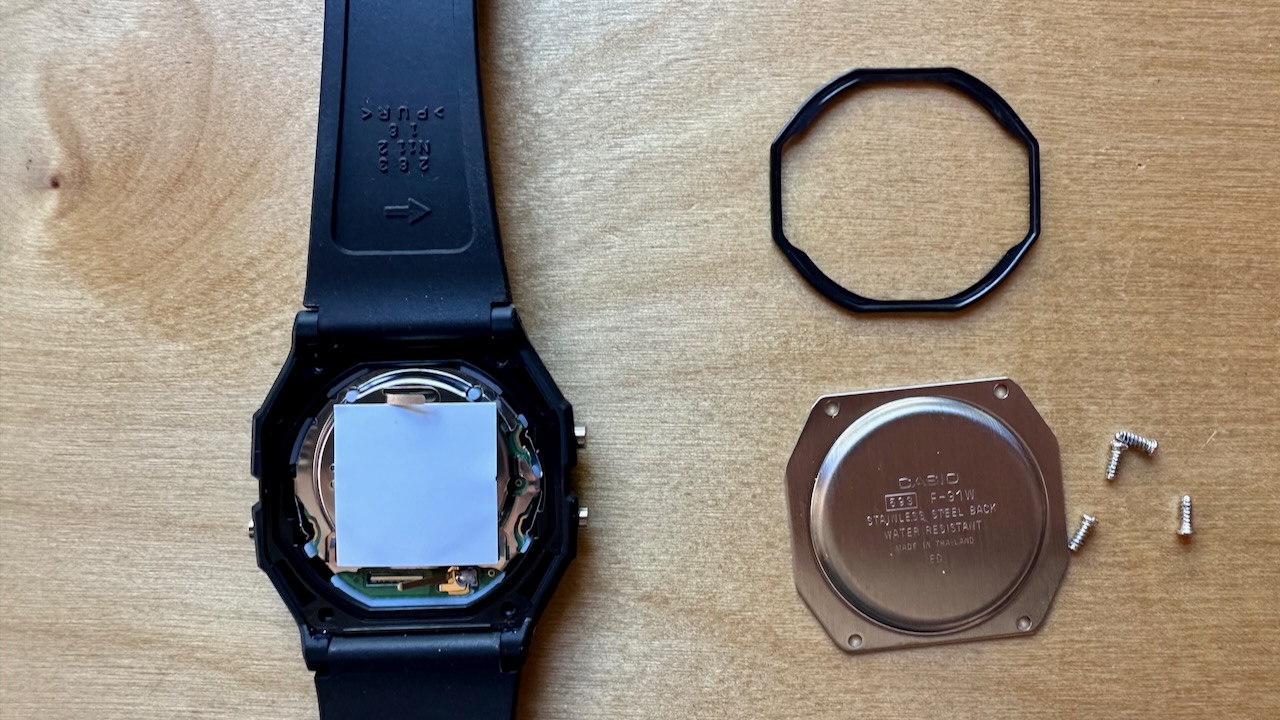
https://www.casio-intl.com/asia/en/wat/water_resistance/
> Even if a watch is water-resistant, do not operate its buttons or crown while it is submersed in water or wet.
Somehow we made it work back then.
It is my assumption that any cover that still requires screws that it will be both more sturdy and easier to close flush.
The current status quo of having sleek devices while having batteries relatively easily replaced yourself or even quite cheaply in every phone shop. I’m not so bothered by the status quo.
And by the way, the "water proofing" is only 30 minutes with pressure equivalent to 6 meters deep, tested with water nozzles. That's not a lot. Other gadgets that employ gaskets or positive pressure achieve more. I'm sure they can design for the same rating without hurting easier battery replacement ability with the right incentives.
They also don’t have the long aspect ratio of phones (bending moment).
This doesn’t compare to phones at all. It’s like trying to compare your TI-83 calculator to a MacBook Pro
My 2014 Kyocera Duraforce Pro is STILL waterproof and I use it for underwater photography incessantly.
I'm equally paranoid, so I back up and wipe any device I hand in for repair.
> What if I can't afford to part with that computer?
No perfect answer for this, but I've always kept my last phone in a drawer in case my current phone breaks. It's saved me a couple of times. Maybe not everything works, but basic calls and texts always have, and I can use a browser for banking and other "complicated" stuff for a few days.
I'm OK if the perfect doesn't get in the way of the good - both personally, and in this sort of legislation.
Playing fast and loose with the numbers, I'm sure that if 100% on the display was 80% in the battery and 0% was 20%, you'd have an amazing number of charge cycles. You could program that 40% of unused capacity to be reduced as the battery ages very slowly, and by the time the used capacity is only at 80% of its original revealed capacity you're at many thousands of cycles. But you'd have a phone or car that weighed 40% more and cost 40% more than one that had no buffer and ran at the bleeding edge on day 1.
Absent breakthroughs in battery chemistry, this basically regulates the amount of buffer capacity that manufacturers are required to include in their ~~lies~~ marketing materials.
You seem to have completely missed the primary point of all this, which is to reducew ewaste. That fact that it also satisfies some niche uses cases is a great bonus!
That may be good or bad, I do not know.
* Samsung Electronics
* Apple
* Xiaomi
* Oppo (includes OnePlus)
* Vivo
* Huawei
* Honor
* Motorola Mobility
* realme
* Google
* Sony
* Nokia
* Asus
* Nothing
* HTC
* ZTE
* Fairphone
* LG Electronics
But yeah, "no competition left," okay..79-pound hyper-elaborate repair kit. Expensive for them to send out, but since only two people will ever want them to, probably amortizes well.
Can you provide your source for this? If nothing else, it's very surprising to me that an EU regulation uses a US standard as the baseline!
Edit: Having done a bit of reading on the standard, it also seems like the regulation needs quite a bit of detail if it really does rely on the MIL-STD, since the standard only defines test procedures, not pass/fail criteria?
Why? That might make alignment easier, but I don't think the screen plays any role in the touchscreen digitiser working. I've even seen videos of them still working when separated from the display.
I argue that easier they make for user to swap batteries themselves, higher the demand for the batteries will be, thus lower their price.
> The needed mechanism and the protective shell the replaceable battery needs definitely takes up space
This is true
> The real problem I think is the hostility towards repair, glue everywhere, no spare parts, etc.
I think when a manufacturer isn't designing to allow a regular customer (the owner) to be able to replace the battery themselves, using glue and restricting spare parts is a natural consequence of financial realities: Most people are not going to take a $500 phone that has been used a few years to a shop that will need to charge $100+ in just labor to swap out a battery. So there's no incentive to have a bunch of spare batteries.
I'm a huge fan of user replaceable batteries because in addition of obvious benefits, you can also just remove the battery and power it simply off USB-C when running something heavy on the phone for extended periods of time. A battery used in that scenario wouldn't just overheat itself but stop the phone from cooling off too.
For comparison: The feature I look for the most is a microsd slot. The last time that option existed that was in the quality range I want, I bought it. For anyone buying a phone right now, samsung has dropped microsd support from multiple more tiers, google and apple have never offered it, motorola and some others have the physical hardware but won't properly update the phone...
That's a feature that has been demonstrated to have no meaningful downsides, and manufacturers won't put it in to good models. I'm not convinced batteries are very different. People's refusal to make huge unnecessary compromises doesn't prove any features are DOA. I can guarantee that the above phone using LCD instead of OLED isn't a compromise for the battery's sake.
The biggest downside of removable batteries is that it's not an option on good phones. There might be some solid physics-based reasons, unlike with microsd, but I'm skeptical.
Now, with much higher capacity batteries that work better and are more efficient at handling all the demanding displays, high end gpu's and now AI tasks running the background? There's really no need to have removable batteries any more.
Sure, you're going to get a few lemons here and there, but for the most part, batteries these days have no problem lasting the 4-5 years that you need them. You still see three or four year old iphones on ebay with 80-85% battery being sold like hot cakes.
False. This is my work phone and the last update was less than a month ago. It's still supported.
It's not just a matter of buying a battery and using some tools the average person has on hand. A whole kit of specialty tools and parts needs to be ordered to facilitate the repair. Apple's own repair kit is the most extreme form of this, where they ship 70lbs of tools, which would be comical if it wasn't so sad.
In other words, I absolutely see the need for waterproof phones, even for ordinary people doing ordinary things, and am never going to buy one that isn't.
Most of the Kyocera Duraforce line has this ability.
0: https://eur-lex.europa.eu/legal-content/EN/TXT/?uri=CELEX%3A...
Not really. If there’s no supply, it’s probably because the manufacturers did a market analysis and decided it’s not even worth it to offer that. So either their analysis is extremely wrong and it actually would sell, or the consumers don’t want to buy it that bad.
To me this seems like saying you can sell a car with a sealed gas tank as long as it “gets 40 miles per gallon.” And GM gets to decide the test course for measuring MPG, which will be a 2-mile slightly downhill coast with no stopping. Surprise! All our cars get 40-60MPG!
The unspoken implication here is that if your phone still retains 80% after 1000 cycles, then it’s probably so old and obsolete by then that battery replacement would be a silly waste of time, so why burden people with these “onerous rules” in that case.
But in reality, nothing about that metric, even if it’s true, means that customers don’t need to replace their batteries. My iPhone 15 Pro Max is in dire need of a battery replacement, at 82% after only 714 cycles. Aside from the battery, I have literally zero motivation to replace this phone. The phone manufacturers hate the idea that the battery might get replaced, because in this day and age it’s pretty much the only reason a 2 to 3-year-old phone (especially a flagship) isn’t extremely adequate for 99% of the population.
The reality is people don't want it, at all. At least not enough to warrant action. So the story ends there.
Also, the lighting connector is better than USB in every way. Mandating an inferior technology is an odd choice.
You’ve concluded because you don’t have the data nobody has the data and thus the legislation “is a waste of money.”
Your ask for data is warranted. Your premature conclusion is inaccurate, or at least unsustained.
it will be seen how the actual requirements will be validated, likely in a way that favors the "best case" scenario for apple.
There's a reason professional devices (e.g. cameras) still have replaceable batteries.
I plug mine into the charger when I go to bed, and unplug it in the morning when I start my day. I don't have time to think about phone charge levels much beyond that.
Because my experience has been that the cycle count doesn't matter that much as the battery gets old. Old batteries just lose capacity.
https://eur-lex.europa.eu/legal-content/EN/TXT/?uri=CELEX%3A...
This is the text:
> the battery endurance in cycles achieves a minimum of 1 000 full charge cycles and after 1 000 full charge cycles the battery has, in a fully charged state, a remaining capacity of at least 80 % of the rated capacity;
> (6) Operating system updates:
> (a) from the date of end of placement on the market to at least 5 years after that date, manufacturers, importers or authorised representatives shall, if they provide security updates, corrective updates or functionality updates to an operating system, make such updates available at no cost for all units of a product model with the same operating system;
https://eur-lex.europa.eu/eli/reg/2023/1670/oj
There's some weasel wording there ("if they provide ..."), so I'm curious how the courts are going to interpret that clause.
I like how you didn't even bother checking if that was true.
Also, they committed to a rather long support cycle for the xcover6 (5 years I think?) - I have one and it is still going strong. I've replaced the battery twice - not because I desperately needed to, but... why not. They are cheap, and I use the older ones still as backup battery packs since they are fast to swap in.
I had to reflect on that statement for a bit. I've always bought a new phone when there are battery problems or something else. BUT, that's because I can easily afford it.
There are plenty of people in this world who just can't go out and buy a new phone because one part wore out.
Or, to put it differently: I'd really like to replace the battery in my spare phone that I bring into my hot tub.
Thus, companies put in a big effort to seal their phones against dust and water, which ought to have dramatically reduced these service issues and led to a better customer experience overall!
Of course I don't have to actually _use_ the phone while swimming, so it goes into a waterproof pouch - but having a 2nd layer of defense is nice.
But it would also behave on day 1000 just as well as when the user agreed to buy it on day 1, meaning they’re likely still ok with it.
Everyone acting like iPhones and mainstream Android phones become e-waste after 3 years is just making specious arguments.
Why does the average phone user know more about phone batteries and replacing them than all of these commenters acting like iPhones are becoming e-waste after a couple years?
I think I know more people with 4-6 year old iPhones than with an iPhone 17.
Apple stores will replace the battery for you for a very reasonable fee and the phone will carry on for many years more. This is a common thing to do and you can find battery replacement services for popular Android phones too.
Believe it or not, yes!
It will likely boil down to "typical use" so in the event that someone wants to bring Apple to court over it and demonstrate the issue, it could solidify what's currently a little vague. Laws aren't required to get it perfect out of the gate.
> then it’s probably so old and obsolete by then that battery replacement would be a silly waste of time
obsolescence is a spectrum, if a swappable battery mandate gives a small % of devices a few extra years it would be worth it... I already give old devices to family members and kids on the "free is better than nothing" spectrum and a swappable battery would have extended the life at least a few of said devices, in my personal experience
Imagine the lasting havoc the Nazis could have wrought if they adopted a + instead of a swastika
My point was about incentives and scope: the exemption looks broad enough that most major OEMs can comply without going to removable batteries, especially at the high end where cycle-life claims are already trending toward the threshold. If that holds, the regulation mostly adds compliance cost while only forcing changes on a narrower slice of lower-end devices.
If you think that’s wrong, the useful counter is data: what share of shipped units in the EU would actually fail the exemption and be forced into redesign? Without that, saying the conclusion is “unsustained” isn’t doing much more than asserting the opposite.
> No barriers: The use of adhesives that can only be removed with heat or solvents is prohibited.
The whole "removable (but only) with a jackhammer" is negated immediately.That.
It’s also nice to be able to wash them under the tap
But on those watches with 4 screws on the case, the gasket seemed fine to me to keep reusing.
It failed soon after from water damage. I had to get it dried out and a new screen fitted, and some functions never worked properly since then.
I expected better as the specs claim IP67 ("Submersible in up to 1 meter of fresh water for up to 30 minutes"), and I used only a little water.
For malware that could be inserted in a targeted manner, even with desktop computers we don't have access the every firmware of every part.
When we're talking about mobile "phones", we usually have an interface that tells us "sure, it's wiped", but is it? Without full root to every part of it, can you be certain that it is? When you press "wipe" on an iPhone or a closed Android flagship (or whatever the UI is), what happens exactly on the filesystem that you can't even access fully?
Telling people to hand over their devices willy-nilly is far from "good". We shouldn't settle for this. The hardware companies can ship us the tools to replace the battery ourselves. Maybe not "ourselves" - my aunt can ask me to do it for her if she can't do it on her own. But she trusts me more than she does people she's never seen ever. If the tools are expensive, we can ship them back. There are many options so we should discuss them.
- The ergonomics story is: all those devices look and handle the same
- operating system is: a duopoly between Android and iOS
- chips: a triopoly between Qualcomm, Samsung and Apple
those manufacturers are not innovating as much as copying each-other's formula, using a very short list of identical suppliers, with no room for error. If that's not the definition of consolidation, please show it to me.
https://www.anker.com/products/a1665-5k-ultra-slim-qi2-power...
I'd say these are more convenient than extra swappable batteries. They have integral charge controllers and charge via USB. There's no need to charge them in the phone or have to buy some extra external battery charger.
Speaking of which, does anyone want to do a list of "features added to smartphones over the last 10 years" vs "features removed from smartphones over the last 10 years" so we can see just what innovations are at risk?
You got it surrounded. Why offer devices that you have to support for a longer time (e. g. enterprise models) when there's more money to be made when you enshittify (which obviously goes beyond just batteries)?
well we agree that it will work at least a little, which looks like a good start to me
This whole thing becomes more obvious in the Android world, where models with various features do exist, but only in certain markets
Even then, this whole line of argument seems moot because if the battery still holds enough charge over time the regulations don't even require it to be replaceable
sort of missed the point. market dominance and lock-in means they already are the 800-lb gorilla, and removable batteries sit below where it'd move most people to switch
> The reality is people don't want it, at all.
lmao thats a good blither
https://www.androidauthority.com/removable-battery-poll-resu...
> Also, the lighting connector is better than USB in every way. Mandating an inferior technology is an odd choice.
right, except in the ways that matter and that people care about
There's challenges adopting standardized rechargeable batteries, e.g. trying to recharge alkaline batteries risks fire/explosion (and you know that will happen far too often given the number of people out there), but if we have had standard battery sizes, voltages, and capacities for rechargeable batteries, things would be so much better.
So even when you don't use them, you have to babysit lithium-ion batteries. That's why I still love devices with those crappy AA batteries. In general, those have lower capacity, but you can just dump a device into a drawer for 3 years (remember to take the batteries out or use rechargeables) and just put fresh batteries into the device when you need it.
For example, I have those wireless Sennheiser over-ear headphones, which are probably 10+ years old, but they just keep working because they use AAA rechargeables.
It's not clear to me which takes precedence, though, as it sounds like the wording of the phone and tablet-specific rules leaves open the possibility that it can be made more strict by other sets of rules.
Motorola already seems to be testing this interpretation of the law.
https://www.androidauthority.com/motorola-eu-software-update...
The lack of standardization of handled devices is also another factor, they might look similar or even identical but they often are different per region and have some hardware revisions.
Android does have a separate driver partition nowadays but that doesn't help too much.
Why is this strawman all over this thread? Battery replacement services are well known and honestly affordable. Apple will even do a first-rate job of replacing an iPhone battery for a fraction of the price of a new phone.
This topic is so strange on Hacker News because everyone is either actually unaware of how cheap/easy it is to get battery replacements, or they're feigning that you have to throw away the entire phone to try to make a point.
Reading the comments here, it's obvious that the replaceable battery fans can't even agree on what they want. One commenter wants the back covered in tens of screws for waterproofing. Other commenters want the battery quickly replaceable so they can do hot swaps without missing a beat. Some people are sharing links to phones that have replaceable batteries and getting responses from people saying they'd never buy that phone because it's too big, too ugly, or other reasons.
This is an impossible debate because one side has convinced themselves that it's possible to have their cake and eat it, too: They believe that removable batteries can be implemented without any tradeoffs and the only reason they're not removable is so the phones are forced to become e-waste, which requires you to ignore all of the low cost battery replacement services available.
This is what we use them for and they do stand up to the abuse. Of course people treat them very badly as it's not something they paid for. Really long support too.
They're not good in terms of specs for the price but that is not what these phones are about.
Replaceable covers used to serve the same purpose.
At most the EU should tax externalities like electronic waste, though that would be a rounding error compared to the cost of the phone itself.
At what cost though?! And no, I am not talking about money. Any device (and any product really) is a set of tradeoffs.
I like it when different producers select a different subset of priorities for their offer. Competition at work. One of the reasons we witnessed such an awesome evolution in the smartphone market.
I hate it when a bureaucrat dictates a set of demands with absolutely zero regard to the cost or the tradeoffs involved in product decisions and market competition.
Do you also consider yourself incapable of jump starting a car because you might have to look up instructions first?
If I not being precise, keeping your phone in your jeans deep tight pocket when you are sweating or raining will cause you problems. It might seem too many coincidences for you, but it is common enough that some of us avoid keeping the phone in the pocket.
https://www.homedepot.com/p/Lukyamzn-P2-P5-P6-Pentalobe-Scre...
At first it looks like a normal torx head, but then you realize it has 5 lobes instead of 6. Apple used these on early iPhone models when you actually could open them with this proprietary screwdriver.
Dont let the marketing spin white-wash your long term memory of an event.
But I mean that's just similarly true of Samsung products. I avoid them like the plague. I haven't had a good Samsung device in almost 20 years, and used to be a Samsung fan
As for ergonomic differences, I see sliding phones, folding phones, big phones, small phones, minimal phones, phones covered in buttons.
I would still prefer replaceable batteries back though, and you really dont need to convince me otherwise!
And it’s not just wireless that’s inefficient; with a usb connection you’ll typically lose at least 15% in a good buck/boost stage and there’s 2 involved in a usb battery pack: one in the battery pack itself to step up/down from pack voltage to the negotiated PD voltage, and then another lossy stage in the phone stepping down to 3.7v.
If this bill had just targetted all battery devices it would have made an incredible change. But as usual it was lobbied into near non existence.
Why do we have to be content with tiny chips away at a serious issue instead of insisting it is dealt with properly?
lmao.
"• To maintain water resistance, have the gaskets of your watch replaced periodically (about once every two or three years)."
Not everyone has someone with technical skills in their family, so making policy that fits only that minority doesn't make sense to me. The majority will, as you say, "hand over their devices willy-nilly".
I'd rather pursue this as a two-part problem: get the best accommodation we can for hardware, and also impose (very, very) strict data-privacy rules. Trying to do too much at once risks accomplishing too little.
"Due to a 30% to 45% energy loss in battery cells and conversion circuitry, a fully charged 5,000 mAh power bank typically offers an estimated 2,750 to 3,500mAh to power devices"
EDIT: Wait no it's a carousel of completely unrelated products because the page redirected (without my input) to https://ankernordics.com/.
Id like my user replaceable 100% full batteries back if its ok with you?
Kyocera's 'flagship' is high-reliability phones in absolute garbage environments.
Samsung's 'flagship' overheats and earns them class-action lawsuits.
Motorola's 'flagship' is a hinged throwback to the 90s.
Apple's 'flagship' is an overpriced piece of vendor lock-in.
Meanwhile my phone takes serious abuse and laughs at it. I've dropped it and watched it go more than 700 feet down the side of a mountain (Chambless Skarn) and BARELY chip the screen protector. Waterproofing still intact. Case barely scratched.
What you consider a flagship phone is a brittle piece of junk in my hands.
People generally like small, thin phones, as evidenced by the billions sold. It really isn't much more complicated than that.
Currently Qualcomm decides when your phone stops getting updates, pretty much regardless to who actually made your phone.
Shoutout to fairphone who actually updated the firmware themselves, surely a loss leading project, but a very respectable dedication to end users.
From the narrow point of view of "this option or nothing", yes.
For the more general purpose view of "imagine a non-rugged version", such a phone would have a lot less of a size/weight penalty.
Or does that mean thinness matter just that much more?
I generally agree with that sentiment, except we don't have a vibrant market of many options with many different trade offs. Finding headphone jack, solid reparability, user swappable battery, easily replaceable USB port, and all the other things that one might want is basically impossible. The vast majority of phones are highly unrepairable, have no headphone jack, have everything soldered to a tiny number of internal boards, and are full of anti repair dark patterns.
maybe just a little less margin for apple...
It's because of those "bureaucrats", that car manufacturers were forced to implement catalytic converters and ECUs for emissions controls, and why the air in your city isn't a smog cloud like in the 70s.
I hate it when people assume the environmental and societal problems caused the unregulated free market, are gonna be fixed by the same unregulated free market which only optimizes for profit.
There are many food additives with very useful properties, but health effects. There are many perfumes too where the original formulation had a particular compound layer found to be carcinogenic.
Regardless of whether an individual prefers to use such compounds at their own risk or not, large companies will use whatever is the cheapest ingredient for their product.
In some cases, that's better for the consumer - who, often, has almost zero choice.
(And if you think you truly have choice as a consumer, I challenge you to use a phone that isn't running either Apple or Google's code.)
If a truly well made phone was common and made by many people, then there'd be much less argument for this regulation.
How about vendors get on their asses and design thinner and lighter phones that are not e-waste from the moment they leave the factory?
I bet you when forced to make the right decision they can go even thinner and lighter than the current flagships...
Incumbents will remove and enshitify a number of features in order to maximize returns... Your new clothes dryer has a 10 year mechanical warranty.. but the control board isn't covered, will die in 12-24 months and won't be produced again. Oh and there's some clunky DRM in the mix on top. Guess you get to buy a new dryer, but this time you'll go with $OtherShittyBrandThatDoesTheSameThing.
My $200 Moto G3 in 2016 had a removable back cover (admittedly not battery). It was also waterproof (and had a headphone jack.)
The engineering of making things waterproof is in the realm of "A bit more annoying but easily doable if anyone's interested in doing it", not "Doable at the cost of everything else".
I know plenty of people that would never even consider jump starting thei car. However are also quite happy with poppping open a battery cover and doing a simple swap like any other battery powered device.
Starting in 2027, there will be a noticeable change for smartphones in the EU: The removable battery is making a comeback. What used to be standard is returning due to legal requirements for new models.
Starting February 18, 2027, new smartphones and tablets must be designed so that end users can remove and replace the battery themselves using standard tools. Adhesive bonds that require heat to be removed will then be largely prohibited.
The main driver is the transition to a true circular economy. Currently, smartphones are often replaced as soon as battery performance declines, which wastes enormous amounts of resources.
That is the key challenge for designers.
Manufacturers are already working on solutions, such as:
Many users fear that cell phones will break immediately if they get wet in the rain or fall into water. That’s not true: It is entirely feasible to make smartphones waterproof despite having a removable battery. The principle is similar to that of rugged outdoor phones. A rubber gasket running around the battery cover, which is pressed into place by screws or a secure clip, ensures that the interior of the housing is sealed.
It is therefore quite possible that smartphones will become slightly thicker, but significant increases are unlikely, as design remains a key selling point.
Yes, but only in specific cases:
In addition, the EU is introducing a digital battery passport.
Users and recycling facilities can access important data via a printed QR code. It stores information about the battery’s carbon footprint, the proportion of recycled materials, its chemical composition, and its “state of health.” This represents a huge step forward, particularly for the second-hand market and professional recyclers.
The new EU regulation marks the end of the “disposable” era for smartphones. Starting in 2027, users will benefit from longer device lifespans, easier repairs, and lower costs.
Even though manufacturers will have to adapt their designs to improve water resistance and aesthetics, the benefits for the environment and consumers -including less electronic waste and greater transparency – outweigh these changes.
Contact us for comprehensive advice on your compliance issues relating to electrical and electronic equipment, packaging, batteries, and PV panels.
www.ecopv-eu.com/en/contact/ |
E-Mail: info@ecopv-eu.com
Supported over 20,000 customers with EPR compliance
Rated 5.0 on Google
We look forward to your message!
65760 Eschborn
I don't remember, but there was a story about deleted photos on iPhones resurfacing by mistake. Or deleting a file on Windows or Linux most likely removes the entry for that file, not the contents of the file itself. Or the "quick" format or whatever it was called in Linux. Or not being able to delete everything from an SSD because it moves things around and deallocates some regions. But even if a wipe is a wipe, a random employee is more likely to insert a hardware or firmware malware targeted to someone than the company is likely to insert just malware to every computer sold. Using "paranoid" in this case implies that there aren't many people with actual secrets to keep who could be targeted.
> Not everyone has someone with technical skills in their family, so making policy that fits only that minority doesn't make sense to me. The majority will, as you say, "hand over their devices willy-nilly".
Sure, offer both options then. Also, notwithstanding the fact that I agree with offering both options, not having technical skills should be frowned upon. Everything is computers. Not knowing (someone who knows) how to use a screwdriver or a heat gun is inexcusable.
> I'd rather pursue this as a two-part problem: get the best accommodation we can for hardware, and also impose (very, very) strict data-privacy rules.
Data privacy rules don't accomplish much when the adversary doesn't care about rules. Reminds me of the "We don't have any criminals in Sweden because it's a crime to break the law" meme.
> Trying to do too much at once risks accomplishing too little.
That's another sad part of our reality, I agree.
https://www.androidcentral.com/best-android-phone-removable-...
Maybe it is more complicated than that
I am not sure how much of a shout-out they deserve. For example, Fairphone 4 is still supported until this year. They ship with firmware from 2023 and with a kernel patch release from 2024. Every one of their phones is full of holes because their software lags so much.
Even on their most recent model, they are frequently more than a half year behind firmware updates, ship 1-2 year old kernels, and are late with major Android releases (meaning you miss out on security patches not classified high/critical).
Good examples of software longevity are iPhone, Google Pixel, GrapheneOS, and to a lesser extend Samsung flagships.
> Splash, water, and dust resistance are not permanent conditions and resistance might decrease as a result of normal wear. Liquid damage is not covered under warranty, but you might have rights under consumer law.[0]
If a gasket has a predictable life, there could be a warning after that period that the water resistance may be compromised and to replace the gasket if this is a concern for how the user use's the phone. With glue, it seems less certain and Apple goes so far as to say even dropping your phone can compromise the seal enough to risk liquid damage.
Meanwhile, a G-Shock was designed to have a battery life of 10 years, have a water resistance of 10 bar, and survive a fall of 10 meters. Dropping the watch doesn't nullify the water resistance claims, the goal was to be able to do all of those things at once.
The Anker Nano Power Bank (5K, MagGo, Slim). No screen, charges via USBC.
I don't know much about Android but assume there must be some way to do similar automations (because I've never seen in any of the Android vs iPhone arguments someone say go with iPhone because of superior automation support).
I recommend going with Matter for the smart plug because if you use the manufacturer's app to control it those often require that you be logged in. The problem with that (beyond any annoyance you might have at needing to make an account to use your device) is that the login might occasionally expire, then your automation breaks.
¹I can't use Apple's charge limit setting because for some reason I can't even guess at when they finally added it to iPadOS they only added it iPads newer than my iPad 10.
The externalities of integrated batteries are that people probably replace their phones sooner than otherwise, resulting in more electronic waste. But phones are only a tiny fraction of e-waste. Most e-waste is from household appliances, displays, & HVAC equipment. Phones are less 10%. I mean, how could it be otherwise? Phones are small and people use them for years before upgrading.
I’m not sure what the Android/iOS duopoly has to do with removable batteries. Mandating removable batteries would not change the operating systems available. And while there isn’t much choice in which OS you can run on a phone, there is enough choice that you can buy phones with removable batteries. If anything, this is an argument against mandating removable batteries, as governments are not mandating/subsidizing another phone OS despite far less choice in that area.
Lastly, I don’t see how banning people from having phones with integrated batteries gives them more choice. Most people (such as myself) don’t really care about removable batteries, and would rather have a phone that is smaller, cheaper, and/or more resistant to the elements. The way to give people the most choice is to tax externalities commensurate to the harm they cause, and let the market figure out what people actually value.
I and millions of others want a phone that is smaller than the current offerings. Heck, my 13 mini is too big for my tastes. But I don’t think that means the government should force phone manufacturers to make smaller phones. So too for features like removable batteries, physical keyboards, or headphone jacks.
Beyond this, hell, make the "internal" battery solid-state with minimal capacity and have an external power pack from the get-go as part of case designs. Get the size of battery you want... if you want a big booty phone with battery for days, you can get it.
It also did diddly squat in the market place and the company producing it ran out of business.
Again, a product is a set of tradeoffs. Those tradeoff include functionality, cost, logistics to build, even marketing and sales. Maximizing a feature to serve a loud minority (headphone jack!) but thus ignoring other features will simply make a product fail in the market place in time...
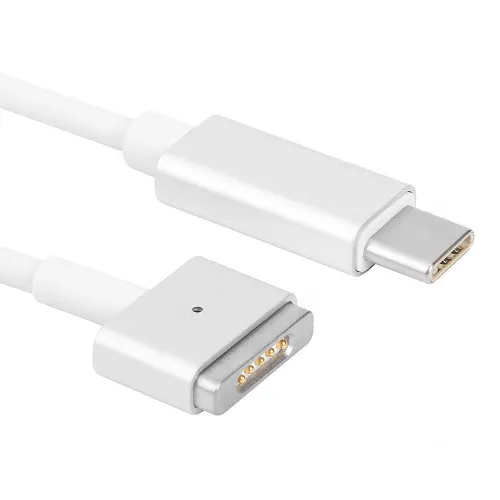
Note that these connectors are in violation of USB standard and potentially harmful as they expose the pins in an unintended way. For instance, notice that all the connection on the USB port are not all the same length, it is a form of protection, to make sure the power lines are well connected before the data lines make contact. With magnetic USB connectors, you lose that feature, in addition to potential issues with ESD, short circuits, etc...
I have a friend who swears by them and never had a problem, but still, that's good to know.
Why doesn't this count as a choice? Was it more of a choice when Windows Phone was still around?
But I don’t see how mandating removable batteries helps this situation with phones. I don’t replace my phone when the battery degrades, as it’s pretty cheap & painless to replace the battery after a few years. I upgrade when my phone stops getting security updates, or when a new phone comes along with some feature I want.
1. https://www.nytimes.com/wirecutter/reviews/speed-queen-revie...
Really?! So instead of the person hired and paid specifically to select and decide what the product should cost, look and work like, the person whose very pay depends on how well she chooses those product features for you - instead you'd rather have a faceless nameless bureaucrat who never pays the cost of his wrong decisions, who instead gets more power and money the more he panders to the vocal minorities that push populist agendas completely detached from the market place.
> not giving a fuck about any other criteria
That is simply not true, such a company would go out of business fast. As I said before, any product is a set of tradeoffs. Cost (and profit) is just one of the factors. Ignoring the others does not make successful products.
> profit
I love it when a company I buy from is successful. That means it's gonna be around to create more stuff for me to enjoy. It also means the awesome people working there get paid and are successful themselves. Finally, it means that its investors will back up more of this kind of companies that create useful products and services. Profit is great!
Yeah, that would work. The first party Apple MagSafe power bank is also a decent alternative.
These things _do_not_break_. Once I rashly dropped mine on a concrete floor to show off to a friend. I regretted it immediately, thinking oh no, I didn't have to take it that far... it turned out it was completely fine. I washed it with soap when I got mud over it. It also weighed a ton in my pocket.
It specifically has an option for 80% (const) or an "Adaptive Charge" predictive algorithm that charges to 80% and then only fully charges to 100% right before you typically unplug it from the charger.
There's also a difference between not wanting to do something, and not being capable of it.
Cheap aluminum boats are still riveted, welding preferred for obvious reasons. I have an old riveted aluminum John boat and is leaks through the rivets and seams...
It is my preference to have user replaceable batteries, and my belief is that they were only removed to make phones become obselete quicker and cause higher turnover of purchased phones.
No amount of battery packs can bring that back.
And I say that as an absolute supporter of the mandatory USB C. But I don’t think the average consumer cares enough about it that apple would have switched without being forced.
This was noticeable on USB-A connectors when you look closely where the two outside pins were slightly longer than the two inside pins: the Make-First, Break-Last (MFBL) principle. You can also see the same thing on SATA edge connector pins.
The ~2015 Macbook Magsafe 2 connector had 2 slightly longer spring pins (two pins furthest from centre). See https://ir.ozone.ru/s3/multimedia-3/wc500/6020365815.jpg
Take care googling for photos because many are CAD mockups misinform (because they are drawn pretty incorrectly and show no physical length differences).
USB-C does have longer pins for the ground, and the CC (configuration channel) connects last. A USB-C host doesn't deliver power until it is negotiated using the CC pins.
So USB-C via a "magsafe" connector is safe.
But maybe look for the two outermost pins to be longer.
You mention ESD which could be riskier since charged fingers or worse could touch contacts directly. However the lip around the contacts is usually grounded so any spark should be grounded first. I would also assume modern electronics are well protected against ESD (nobody wants occasional undiagnosable failures leading to refunds). Sure that stuff from earlier this century wasn't so well protected. YMMV if you are a sparky person in a sparky environs: weigh the downside costs of different approaches appropriately.
(that plus the comments from the more knowledgeable person below)
Eventually they start wearing out, and I just replace them. I've had no issues with high voltages (45W+ charging on phone and steamdeck) and with peripherals (hub for example).
If (phone) OSes were truly healthy free markets, there would be a lot of healthy competition. Even cars and automobiles (which still are almost oligopolies, as it's extremely hard to compete) have more options.
I said that sentence primarily as counter to anyone who thinks the mythical "free market" is a panacea to all ills, as many anti-EU folks often have such a view. I was trying to demonstrate that an unregulated market is (very) often unhealthy, and can paradoxically can result in viewer choices.
You could argue that the market already reflects people's desires via, eg., Apple's market research. They could argue that democracy in the EU also reflects people's desires.
Three viable options are by definition, more choice than two options.
Many milions of people are scared by things such as red and black wires and wont touch them with a barge pole.
> Cheap aluminum boats are still riveted
I think you may need to think out your entire post before typing such contradictions.
Riveted hulls worked for hundreds of years and well maintained they can last forever. Just bacause welding makes it cheaper to maintain in the long run does not detract from the fact that riveted hulls are very performant, which is why they were used everywhere that needed not only waterproofing but pressure containment too.
At least if it had registered memory there might be an argument that it has some radiation resistance, but no it's plain old LPDDR4x.
Ulefone Armor 29 Ultra has the same MIL-STD-810H conformance with "radiation hardening", 16GB of RAM and a flagship Dimensity 9300+. Just not a removable battery.
Usually, in consumer electronics, the unencumbered market tends to gravitate toward what people actually want to buy. Totally possible this could be an exception to the rule, but I doubt it.
In the absence of such phones, I compromise on adding a cover.
My iPhone 12 is six years old. I replaced the battery last year. While it probably won't be workable on cellular networks in six years, outside of physical damage there's little reason it'll stop working. My original iPhone from 2007 still boots up and runs. There's no GSM service for it to talk to but it runs as a WiFi only iPod just fine if I really wanted.
The idea that non-replaceable batteries is a conspiracy to lower the lifetime of devices is sort of silly. Flagship phones are made of incredibly sturdy materials. If they were designed to be disposable they'd have a bunch of sacrificial structural elements to limit their lifetime. Instead they're built as well as they can possibly be built.
A flagship phone will be left behind in CPU power running bloated JavaScript blogs or cellular service long before any internal component fails. Non-replaceable batteries are about hitting a capacity/size target more than anything else. Replaceable batteries enforce constraints on a phone's design that non-replaceable ones do not have.
Ships != Boats
Ship vs boat is also not a contradiction.