I think the main difference between this and 2023 (the previous "mud burn") was that this time we had all the rain in the first half of the event, and then had relatively great weather for the second half. In 23, it closed out with the mud and people fleeing, leading to a spike.
Is this what's helping with that?
> the most striking trend is that the community has steadily improved at Leave No Trace
Probably not only? But shame and avoidance of shame can be good motivation
These big events usually leave a giant mess behind. Glad to see they take the cleanup and restoration so seriously.
At the end of April, I ran a short campaign to find 15 more paying members of Not-Ship. And we did it! Thank you to the wonderful souls who chose to back this work. It means the world to me.
💙 Amanda
Each year, 70,000 people gather on a dry lakebed in Nevada to build a city from scratch. This is Black Rock City, home to the infamous Burning Man event. Eight days later, it's gone.
But 150 people remain. They line up — side by side, an arms width apart — and slowly walk the 3,800 acres (15.4 km²) of dusty playa. They're looking for MOOP: Matter Out of Place. A screw, a sequin, a cigarette butt.
This forensic-style sweep takes weeks; everything they find is removed and logged. At the end, they're left with a remarkable accounting of what 70,000 people left behind: The MOOP Map. And I'm obsessed.
Indicates effort and time spent on MOOP cleanup across Black Rock City.
The map is colour-coded by severity of cleanup. Yellow indicates moderate MOOP conditions, where crews slow their pace to make sure nothing is missed. Red are the zones most heavily affected — difficult enough to stop progress entirely.
"In simple terms, the MOOPier an area is, the more labour and field time it takes to clean until crews are no longer finding debris," Dominic Tinio, who goes by DA, explained to me. As Burning Man's Environmental Restoration Manager, he's in charge of the MOOP process.
The future of the community depends on getting this right. Black Rock City is only allowed to return to the playa each year if it passes a strict post-event inspection from the Bureau of Land Management (BLM): No more than one square foot of debris can remain per acre (0.23 m²/ha).
The BLM tests the playa at 120 points across the site; no more than 12 can exceed the one square foot per acre limit. In most years, Burning Man passes comfortably — but not always. In 2023, 11 of those 120 tests came back over the threshold, the closest the event has come to failing in recent memory.
During cleanup, the MOOP team also documents what kind of debris they find. In 2025, lag bolts were by far the biggest problem. They anchor tents, art pieces, and other infrastructure into the ground, and can easily disappear beneath the dust.
Types of debris found during the 2025 MOOP.
Since the MOOP is so meticulous, the team can determine whether debris problems are widespread or isolated. For lag bolts? There's no main culprit; everyone is just missing a few.
"The MOOP Map is about shared responsibility in our use of the land," said DA. In addition to helping uphold the BLM standards, it "helps participants, camps, and art projects understand their impact."
Groups in MOOP-heavy areas receive a breakdown of what was found on their footprint, with the hope they will improve the following year. Persistent or serious offenders are flagged to the team responsible for assigning camps their future spots in Black Rock City.
And while it's not the MOOP Map's aim, its release inevitably fuels a bit of public finger-pointing. The "MOOP Map shame thread" on Reddit calls out individual camps that perform poorly.
The MOOP Map has been around for two decades. Over that time, the data show a relatively clear picture. "Since 2006, over the long arc of the MOOP Map, the most striking trend is that the community has steadily improved at Leave No Trace, even as Black Rock City has grown dramatically in size, complexity, and population," says DA.
Debris per 10,000 people, 2006 to 2025.
Leave No Trace is one of Burning Man's ten guiding principles. Principles are easy to declare. But the MOOP Map makes it something the community actually has to face. After 20 years, DA is confident it's working.
"The strongest effect of the MOOP Map is that it drives improvement. Year after year, the community adjusts, learns, and returns better prepared to leave no trace."
While the Not-Ship member drive is over (for now), this work continues to run on reader support. But after two weeks of writing "pay if you love this work" emails, I'm tired. All my pitches have been pitched. So I'll just leave the button here, and trust you know what to do with it.
Here's what I found interesting, important or delightful this week:
Marblelous music. Wintergatan is a quirky instrument that relies heavily on marbles to make music. It's beautiful to watch, and doesn't sound anything like you expect.
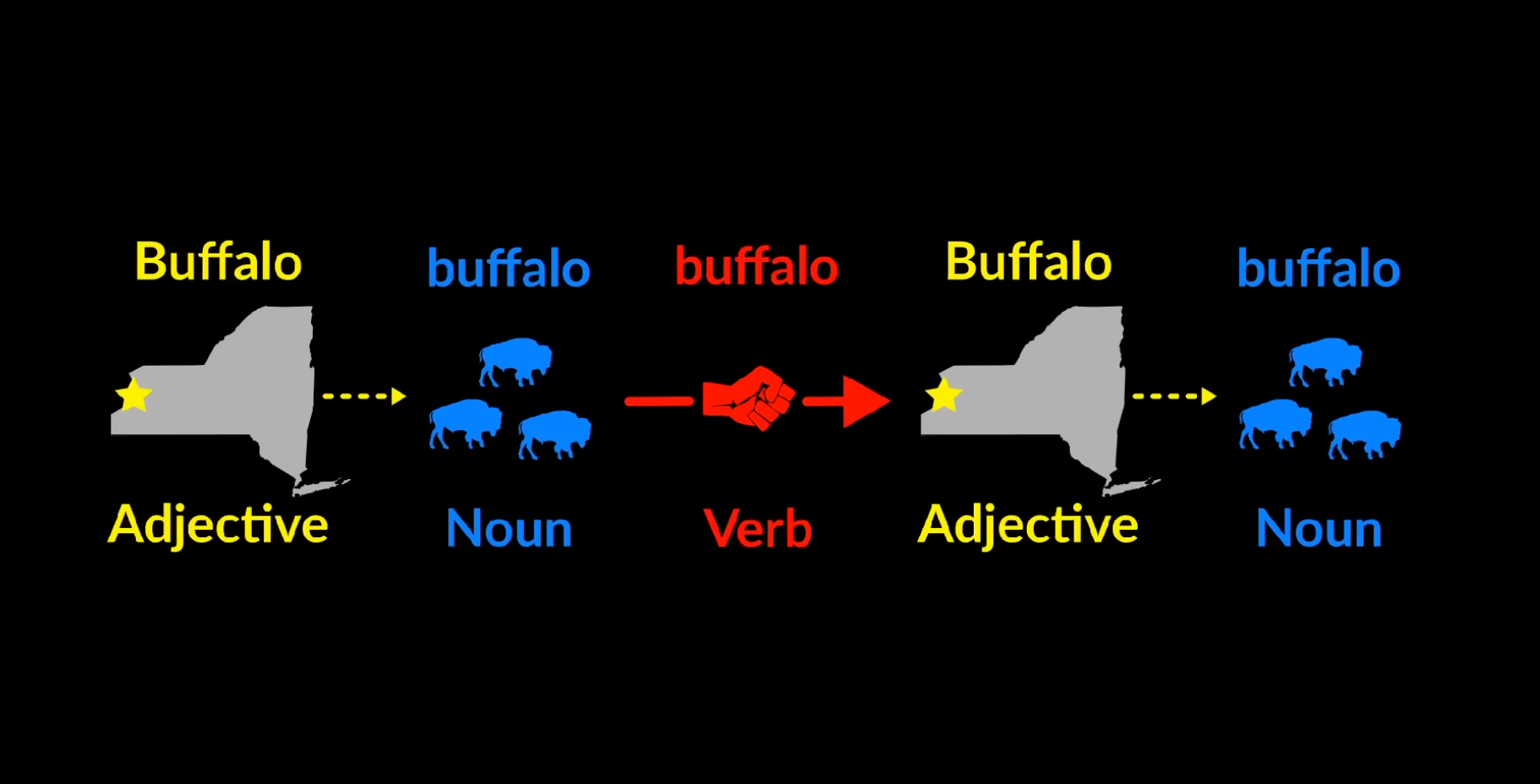
The infinite buffalo sentence. It's a grammatically correct sentence, using just the word buffalo. The video explanation benefits from some useful visuals, but you'll still probably hate this. Or absolutely love it. There's definitely no middle ground here.
Those principles tend to attract the kind of people associated with counterculture and anarchists, but it’s hardly representative, especially when you include the family zone and all the specialized camps.
But as highlighted elsewhere, it's definitely more of a cultural problem than anything. It's always depressing just casually observing the amount of abandoned tents on the way out and the amount of litter either put in the wrong recycling bins or just discarded less than yards from them. And the problems isn't just the cost which could be spent on good causes - £750,000+ [0] but the accidental effect of say a cow eating a tent peg (it's a working farm).
As someone who litter picks and talks to litter picking groups it's definitely a big problem nationwide sadly.
Probably unsurprisngly this always seems to be much worse in the higher traffic areas with the main stages than it is in say the Green or Healing field areas though their might be demographic and contextual reasons for that also. I've not been to any of the other main UK festivals in a long time, e.g. Reading, V Festival etc. but I'm guessing they aren't going to be any better?
[0] - https://www.somersetlive.co.uk/whats-on/music-nightlife/glas...
I thought of a few potential solutions but then clicked through to the journal entry for last year and it turns out they're way ahead, the journal article is very interesting with some ideas: https://journal.burningman.org/2026/03/black-rock-city/leavi...
For example - you won't get kicked out for leaving trash all of the ground but you will absolutely be shunned and shamed by everyone around you for doing so. That notion simply doesn't scale to a place like the US with 350M people with varying cultures, values, etc. because the social contracts are simply all over the place and inconsistent.
During the rains we were one of the few places still open and where you could party, eat, and grab a solid drink. Being on Esplanade also meant we were a shelter for people to wait out the weather.
Loads of great moments by doing that.
That's okay, your attendees just dump it on the roadside or overflow public trash bins at random businesses and parks along their way.
The Day Before The Revolution, U.K. LeGuin: https://en.wikipedia.org/wiki/The_Day_Before_the_Revolution
The Dispossessed, U.K. LeGuin: https://en.wikipedia.org/wiki/The_Dispossessed
Mars Trilogy, Kim Stanley Robinson: https://en.wikipedia.org/wiki/Mars_trilogy
The tactics to avoid it are also hilarious, there is one where you put a sock on, then a plastic bag, then another sock on top. Apparently this makes you immune to the mud stacking
but the event isn’t possible to run without internet. DPW has wifi at every station. internet has become a core planning and organization tool
Fortunately in 1998 it happened after almost everyone had left. It was Tuesday after the burn, and we were packing up. Clouds coming in from Gerlach were worrying, we could see the downpour happening over there and heading our way rapidly.
We closed the trailer door as the rain started. It came down so fast that by the time we were half way to the road it became almost impossible to drive in the mud, we were jackknifing with the trailer, almost losing control. There was an RV also racing to the exit that I witnessed doing accidental 360 spins in the mud, they totally lost control of the vehicle. I'm not sure they made it out.
I heard that the heavy rain continued for a few day, and the cars that were still there sunk into the mud. If you didn't get out before the rain, you were stuck there for weeks.
Now imagine this happens on Saturday, burn night. People have gone through almost all their food and water by then. Then the rain makes it impossible to leave, for weeks. All the vehicles sink into the mud. You can't even really walk through that mud to make it to the road, because it sticks to everything. "Playa platforms" are what you get when you try to walk through the mud. Now add 70,000 people, running out of food and water, and unable to exit the playa for possibly weeks? That's National Guard rescue territory. I doubt Burning Man would be allowed to continue after that.
Ever since 1998 I watch the weather closely, and you can bet I'll be the first one out of there if it's looking serious.
are there similar events in europe? you sound like an experienced oldhead :)
The idea that a stranger would effectively be a free Airbnb host (back when Airbnb actually had hosts) was baffling. Turns out:
1. Travel is expensive in time and money. Hosting someone gives you a travel-adjacent experience without having to leave home.
2. People who are willing to host strangers tend to be cool/open/interesting/friendly people. Opting-in to CouchSurfing is a good filter for someone you might enjoy spending time with.
Burning Man is similar.
One of the mainstays of Burning Man is the Hug Deli. It's like a lemonade stand, but instead of sugary beverages, they serve affection. You can order hugs ranging from warm + fuzzy to long + uncomfortable, each for 2 compliments to your server. Want an extra pep in your step? Add a kiss or a spanking for an additional compliment.
The staff at the Hug Deli are all volunteers. You just roll up, toss on an apron, and start serving. (The guy who started it isn't particularly affectionate. He's a performer from LA who wanted a way to get strangers to try on characters.)
You would never stand in Golden Gate Park offering kisses to anyone who asked. Burning Man is a container that allows experiences like that to flourish, because opting-in to Burning Man is a good filter for the kind of people you might be willing to try stuff with.
Got a chuckle out of me there.
And Jeff Bezos, Mark Zuckerberg, Sam Altman, Elon Musk, Elizabeth Holmes, Sergey Brin, Larry Page, Eric Schmidt... you get the idea.
https://www.businessinsider.com/tech-ceos-founders-attended-...
Burning Man is to the stated principles what Kraft singles is to cheese.
Just more empty American platitudes, advertising, marketing; watch! as rich capitalists role play rural community their capitalism tore apart!
The Party in 1984 is not just metaphor for a government but any group that puts its rhetoric before reality. Just some first world LARPers telling a story about themselves while the output is there for all to see.
I am the type of person who thinks many, many things about the way the world currently exists need to change, but I am incredibly skeptical of the purported mission of the Burning Man Project to "extend the culture" of these principles to the wider world.
It’s certainly worse than not having the event in the first place, but it is quite literally better about garbage than any large scale gathering on the planet. Burners do still need to be better about leaving their trash in Reno, but even with that it’s hard to see how it’s not monumentally better than virtually anything else.
Wacken got really bad a few years ago. Like, it's normal to rain here, and it's normal for cars to not get off campground, so a dozen of farmers or two are around with their tractors to evacuate people back to asphalt. Except that year, the rain escalated to badly that cars sunk deep enough into the mud that their undercarriage sat on the ground and the mud started to seep into the belly and the engine area.
At that point, dragging the car out has a decent risk of ripping rather important resources out of the rig, and then you got a scrapping job left. That was a fucking mess. They also closed off the Autobahn near Wacken that year, because the massive amount of mud the cars dragged onto the Autobahn turned into a rather slippery affair -- and hitting slippery mud at 100km/h, 60mph without expecting it can easily turn into a life-changing ad-hoc roller coaster.
Doing all of that at your distances in the middle of fucking nowhere would not be enjoyable or fun. Folks drowning in mud in northern Germany is now mostly a funny story among metal heads and rescue folks.
Isn't the whole point of Burning Man to be self sufficient? Why not bring food and water? It is not that difficult to pack a few weeks of rations in your RV.
The moop map, and community holding itself accountable, seems to be a decently functioning system.
Not to mention the administrative overhead, at the org level and at the camp level.
Frankly being a camp of 100+ people, not just taking dues but also handling this Deposit, and distributing the cost fairly?
Running a camp is enough of a pain in the ass without adding on this kind of thing.
Monetary incentive systems like what you're suggesting are just a way of enforcing culture. If culture spreads organically, why bother with the overhead of bringing money into the picture?
Requiring a clean-up deposit up front will encourage people who were already inclined to clean up to do so, and encourage people disinclined to do so to leave trash behind.
The communal honor / shame culture that is in place is much more effective- people tend to care more about their reputation than they do money they've already spent.
Not just tents, but all sorts of camping gear, carts, clothes, food, gimmics, and so on. Many in good condition. Aside from the waste having to be cleared, it's very wasteful to throw away good stuff.
I am convinced this is a cultural problem indeed. Stuff like a tent or a gas-burner is cheap. Cheap compared to what it cost (in % of monthly income) decades ago, and cheap compared to the ticket and other spendings on that festival.
The cost of a tent (or the costs of some cans of food, some shirts, a funny hat, an inflatable flamingo, a chair) is nothing on the total bill of a festival. That new tent you bought, costs about as much as that beer you spilled when you bumped into that drunk dude.
So, purely economically, it makes sense to just leave it behind. Why carry your (now dirty) tent, food, cloths, etc home, when you can leave it, have a more pleasant return trip, and just buy new stuff next year.
I think this is a very good analogy for why we are unable to stop ruining the world in an ever increasing pace.
I can't find it right now, but I think it was used in deserts in the US or Australia
2023 was a weird one, because of the heavy rain and so many people not being used to it.
But it also seriously churned the Playa, revealing what was hidden for a whiiile
From: "Are You An Anarchist? The Answer May Surprise You!", David Graeber, 2009, https://davidgraeber.org/articles/are-you-an-anarchist-the-a...
Firstly, there's a ton (TONs) of water left at the end of the burn, unless things have changed a lot in the past 20 years, nobody is running out of water. I'm guessing a few people have snacks left over.
Some people are getting pissy and hiking out, and the rest are going to party on until the road is rebuilt, helping one another the whole time, and some will be dancing their butts off.
I remember being with a group that had a van breakdown on the way into the playa, and the only sensible thing to do was tow it into the playa to get help from mechanic friends who would help fix the van on the playa.
There are lots of people out there who would happily pay fines or not get deposits back if they didn't have to do the less glamorous parts of the event. You have to take something away that they actually care about.
If a camp does a really bad job at moop cleanup, Burning Man organization talks to leads to understand what happened. Frequently what they will take away is the camp's placement in the event, or sometimes even the ability to attend the event as that camp at all.
For reference: I am one of the leads for a fairly large and famous Burning Man camp. We camp on Esplanade most years. We do exactly what you proposed: We have deposits, and the more people put into the camp before, during, and after the event, determines if we offer them a refund and an invitation to camp with us next year. One of the factors is if you help us during setup and strike.
An invitation to camp with us guarantees them a ticket at one of the cheaper tiers. We have plenty of campers that come in, pay the dues, do nothing for the camp, are generally useless during the event, and bail out leaving a huge mess.
Conversely, we have a very small (10-20%) team of highly dedicated individuals who stay past the event and pick every piece of string, fuzz, fluff, lag bolt, rebar, and debris out of the dust and take it out. These people get nearly their entire camp dues back. If they attend next year, the social capital that they've built doing so compounds into them becoming increasingly popular and famous on Playa.
If there's one thing that Burning Man has taught me, it is that very few people are motivated by financial incentive. If you really want to motivate someone, figure out what they genuinely desire. It's rarely money.
Biggest problem is it’s a pain in the ass to chop up all that chain, and nobody sells them in pre-cut lengths.
As she tells it, a lot of people had a great time!
https://www.lewrockwell.com/2005/03/butler-shaffer/lx-what-i...
> almost all of your daily behavior is an anarchistic expression. How you deal with your neighbors, coworkers, fellow customers in shopping malls or grocery stores, is often determined by subtle processes of negotiation and cooperation.
Some anarchists agree with Graeber's definition. A majority probably disagrees, in many different ways.
I expect this post will be met with disagreement. Wouldn't want it any other way!
"what a privilege to be tired from the work you once begged the universe for"
I'm not sure about the intent of the quote and its provenance. But for me the meaning is: To have wanted meaningful purpose and to get to look back and see that you have achieved that.
The fact that it gets cleaned up is only due to the requirement to get a permit for the next year.
In 1997, BM was held on a private property, and the playa there was absolutely trashed, for as far as you could see. Bottles and cans littered everywhere. In the morning after the burn, I saw one woman was going around picking it all up. Others started to join in. It was not pretty. I think we made a dent in cleaning it up, but the trash was everywhere.
Unlike today, where people actually do make an attempt to clean up, but obviously some still do not give a single fuck about it.
Unfortunately, money and power corrupts, and lo and behold, one day you wake up to find you have become the very thing you once swore to destroy.
The idea that rich people are all right wing conformist republicans does not survive getting to know a few of them.
If it were that simple, then every FOSS project would be considered to operate under Anarchists principles. After all, the license and software forkability made it so that no one is forced to conform to whatever social structure is used to maintain a given project. But in real life, Anarchists will still argue that a Benevolent-Dictator-For-Life governance approach is wrong, even if it applies to digital artifacts that have zero marginal cost.
There may be plenty of good reasons for them to argue that, but none of them are "very simple notions" as your definition would imply.
Charge $1,000 fee per acre (eyeballing it, that seems reasonable). There are people who will clean an acre to be spotless for $500: not bad for a day of honest, actually contributing to the environment, outdoor work!
If I'm missing something and it actually costs more than I know, raise it to $2,000. If heavy trash needs to be removed also, charge that too, by weight.
And if you don't pay, you're banned.
It's worth a try if you ask me.
Also, I have been to quite some anarchist places, but I did not found one without a hierachy. It is usually just informal. (But at times even formal and everyone pretends it is still not hierachy)
Parents started treating "x shekel fine for y minutes late" as "buy an extra y minutes for only x shekels!".
This is why I suggested an increasing deposit for repeat offenders. Leave a huge pile of trash? Next year's deposit is $100k. Do it several years in a row? $10MM deposit.
Naive thought: I could use a large bolt cutter to cut chain links. Started trying to cut a link, felt it was sketchy, went and put on some safety glasses.
Restart cutting (had these bolt cutters with like 1m long arms), apply full force, jaws slip a bit on the chain, jaws bite hard. Chunks of steel fly into my chin and face, metal chunks embedded in chin, cracked safety glasses. Dodged a bullet.
Ended using a small welded up jig so I could stretch the chain and then use angle grinder to cut the chain links. Still sketchy, but no flying metal chunks.
Wish I had a plasma cutter.
Worked in low voltage wiring through college. Have been a part of groups rallying behind large infrastructure projects; on farms, new office buildings, rapid response to weather related crisis (tornado alley). It's actually a very common human thing.
Been to many an art fair around the world and the minutiae of Burning Man blends right in.
Leave no trace while blowing fossil fuels into the air hauling tons of stuff to the desert. Nice loophole.
Why didn't you plan ahead and bring enough gas??!?
Well what happened was, we stopped at the gas station in Wadsworth where we usually fuel up the RV before heading to the burn. I put the gas nozzle into the RV and flipped the nozzle auto-shut-off thing up while I went inside to buy some last minute stuff. I came out, the auto-shut-off thing had popped and I thought the tank was full. But no, it wasn't. The scene there was a bit chaotic, I was distracted. So we only got about 4 or 5 gallons into the tank, and that's only enough to get the RV about 40 miles, so we roll into BRC with an almost empty tank. I did not notice this until we were actually inside the gate and the fuel tank was really low. Give me a break, I was driving for 14 hours, I just didn't notice the fuel level.
So we had some fuel for the art car, which I was hoarding, but when I heard they were selling gas for the first time ever at BM, I dumped all the art car gas into the RV and then got on the art car and headed over to the gas station with every available gas can we had.
> Would it though?
Rather than immediately shoot down your idea, let's talk about logistically implementing this:
1. Cleaning/non-compliance is already fined, if it's not cleaned properly or in a timely manner. This is serious waste like blackwater spills ($500+).
2. This would impact the the self-reliance, decommodification, and leave no trace principles. Burners don't need to be expected to clean up after themselves, they can pay someone else to do it. Yes, lots of wealthy burners would do this.
3. We'd need to set up a system of accountability. Sure, we can create a new department within the org, The Waste Accountability Department. Who do we charge for the bike graveyards (https://imgur.com/a/PolJDcI)? These are bikes that get abandoned in large clusters at the end of the event. Do they get assigned to whichever camp space they end up near? Do we start to add in plenty of surveillance (human or tech-based) to see which burner left their bike? Do we add in facial or other recognition to make sure we fine the right person? 3a. Currently bike graveyards are handled by nonprofits and volunteer orgs that take those bikes, fix them, and donate them to kids in Nevada. If we continue that program, do we pay them for taking the bikes? Do we need to appraise bikes based on their value, or do some other system of cost to repair vs value? Do we just sell blocks of "1000 lbs of bike"?
4. A core element of burning man, as mentioned in 2. is "Decommodification". This would commodify cleanup, and there are loads of first and second year burners who would absolutely pay someone $500/$1000 to clean their plot. Accountability here gets hard, as the people who are willing to pay are also the people who are unlikely to verify the quality of work. There are loads of people who would prey on burners in a rush to get out, pocket the $500, and walk off. Accountability and prosecution here, again, gets hard. The decommodification principle prevents this.
5. Who would issue the fine? Burning Man is a non-profit, the fine would require legal enforcement, collections or some other method to threaten people into paying. It would also require accounting for where that money goes and how it is used. Bureau of Land Management? They already do issue fines for blackwater spills and other serious environmental hazards (see 1).
6. Currently cleanup is handled by the Department of Public Works and Playa Resto. Both are volunteer-driven. Once we start paying people to clean up, why aren't we paying the people who deploy the porto-potties, make the streets, maintain the vehicles, and operate the core infrastructure? DPW spends 3-6 months before the event preparing the site for the event.
As I hope this demonstrates, it's not as simple as just having a group of people you can pay to clean up. There's a lot of logistical challenges, not to mention a pretty big shift in the culture.
I vote we stick with making people clean up after themselves, independent of their ability to pay.
It's kinda the opposite of "responsible for yourself," it's a civic sense that extends to include everyone and everything around you - including things that weren't directly caused by you-as-individal.
In the case of the cherry blossoms, they were planted for the enjoyment of the people, and thus the people who come to enjoy them are a part of that system. The cherry blossom viewing events where thousands of people come to picnic, only is a "thing" because thousands of people come - everyone there is a participant by virtue of attending. Thus they hold part of the responsibility for the outcome of the event and the aftermath.
no they won't, FOSS project's governance model has no relevance to anarchist discussion. anarchists are against coercive authority, not leadership in general, and FOSS does operate under anarchist principles, which is why anarchist community is a strict subset of FOSS community.
- The site conditions and trends of the day changes amount of moop per year
- Some people dump their trash on other people's campsites
- Wind carries moop onto campsites that already cleaned
- Complaints about "unfair" deposit revocation would cause strife in the community
- 10k attendees make <$50k/yr but must pay full price; doubling the price is a huge burden, even if temporary
- Everybody already cleans as much as they're willing to clean
- Rich people will all moop if they think they can pay to be exempted.
They don't mind being banned because the event doesn't matter to them, it's just a party
- There aren't many people who can/will stay for weeks after the burn, even if you paid them
- The risk of increased moop increases risk that the event becomes banned
So basically it would result in more moop, would make people angry, would make it harder for poor people to attend, and would risk the status of the burn. Current system is working, no need to introduce additional downsides.Probably the closest example is if you ever read freakonomics introducing a late fee for parents picking up their child late from daycare increase late pickups.
https://freakonomics.com/2013/10/what-makes-people-do-what-t...
The Japanese clean up after everyone including the shitty few who don't clean up after themselves.
Start a topic on democracy here and at least a handful will argue against regular people governing society and their own lives.
That’s more than no-one.
Again though, any time you get such large numbers the "core" group will tend to get dwarfed. That's about time when people start noticing it more and think the hangerons are the event so the original culture is sort of lost to the zeitgeist.
Like if people can put in this much time and effort in a remote desert environment to meet regulatory requirements, and document their efforts so thoroughly, why can't corpos?
Going back to the event itself, I attended Lightning in a Bottle once. I was absolutely disgusted at the end of it. Entire camps quite literally just left, abandoning everything. Brand new equipment and the boxes it was sold in just left for others to deal with. And not just isolated groups either, people had done this absolutely everywhere.
Overflowing private dumpsters, leaving garbage in the rental car, just leaving it in a heap somewhere, etc. The tell tale dust gives it away. The issue isn't people who stop by the Reno waste processing facility and pay for it to be tossed, it's the people who decide to dump in the city instead of in the desert.
If you have a lot of trash, most economical option is often to go to the public transfer stations or landfills in the Reno area (but that only works if they are open).
Also, there are services on the side of the highway that accept trash for $N per bag. Only give your trash to someone if you can see the dumpster it’s going into and the dumpster is not full. There have been scams where people charged to accept trash and then just left it there to get blown around the desert. Alternatively, you could drive your trash all the way home and let your local utilities handle it. But when I’ve had my cargo trailer piled with leaking garbage bags I’ve wanted to get rid of it ASAP.
Some camp leaders spend famously x m$+ just to bring their art to the playa. They wouldn't care about some fine.
Similarly the fine would make it impossible for others to stay after.
This is one event that somehow resisted economic behavior IMO
Many camps did this, and were actually turning a profit at Burning Man by taking advantage of the community of volunteers.
A few years ago the Burning Man organization put a stop to this by decreasing or eliminating camps considered to be Luxury or Plug N Play. Not just because they were antithetical to the event, but because they became famous for a slew of problems.
White Ocean is one of the more famous camps in this domain. A luxury camp that charged exorbitant fees for extremely wealthy individuals to come and party without any responsibility. They had loads of sexual assaults, dosing incidents, and campers generally being shitty people. The leads also refused to pay the hired help. This led to a now-infamous vandalism incident.
White Ocean basically has a permanent ban on attending now.
You cannot incentivize people out there with money. You have to take something away that they actually care about.
> Really difficult for me to name anyone who’s caused more impact / disruption than the list of names here.
And from that you make the conclusion they are "counterculture"? I don't think it means what you think it means.
Easier to regurgitate some old philosophy you read than think. You look educated in philosophy if not intelligent in logic.
My first question is: but what if they don't?
The average household consumption of electricity per day in the US is about 28kWh, which would take around 7-9 liters/day of diesel. Assuming an average US household of 2.6 persons, that's about 3 liters/person/day for electricity alone - does not include gas/electricity spent driving. So, at least for this camp, the average person is using less electricity at the burn, than if we weren't at burning man.
The fossil fuels spent getting to and from the event are more substantial than those burned at the event, but this is a separate discussion I think as to whether or not people should be flying to conferences, events, or taking vacations. COVID was great for reducing travel-related fossil fuel consumption, so we have the data and the experience on how to reduce that, but probably not the will.
The power logs are pretty interesting to look at. On average the generator is lightly loaded, so a lot of energy is going towards idling the generator, but batteries are expensive and these generators are not made to be stopped and started repeatedly.
Now, I'm aware that when you need to say something is "gateway" that's a bit of a red flag, i.e. "milk before meat" (describing something as friendly and innocent at first, then only later showing the more aggressive indoctrination) is exactly what cults do. Having said that, I'd grant that the late David Graeber is quite the straight shooter so I think he's in the clear here.
There's distinctions between power and violence (see Hannah Arendt), between social and structural power (see The Tyranny of Structurelessness).
And then there's this ancient Chinese text that has been slopified for a million management manuals:
The best leaders are those their people hardly know exist. The next best is a leader who is loved and praised. Next comes the one who is feared. The worst one is the leader that is despised.
The best leaders value their words, and use them sparingly. When they have accomplished their task, the people say, "Amazing! We did it, all by ourselves!"
"Black Rock City is only allowed to return to the playa each year if it passes a strict post-event inspection from the Bureau of Land Management (BLM): No more than one square foot of debris can remain per acre (0.23 m²/ha)."
I know. Use the $600/person or whatever cost is now to have trash service out there. Ever think of that?
Basically every name listed meets this definition
I have to say, I don't identify myself as a anarchist (maybe a bit of a sympathizer), yet I'm middle aged and finding myself a little dissatisfied by many things I see around me, so if I see people making the equation anarchist = degenerate, my immediate reaction is "yeah let's slow it down shall we."
To me this essay was an eye-opener, both because it's well argued and also because it's so obvious once you read it. Even outside the specific niche of feminist groups in the US, who hasn't witnessed this phenomenon in action? Those supposedly flat groups where everyone has a voice, yet it's always the same subset of people who are heard and ultimately influence or direct all decisions? And the unwritten rules who are both invisible and "the law".
> Everyone believes they are capable of behaving reasonably themselves. If they think laws and police are necessary, it is only because they don’t believe that other people are. But if you think about it, don’t those people all feel exactly the same way about you?
Woah, mindblown! If you think about it, aren't you kind of a huge hypocrite and elitist for doubting that others can control themselves? Well, no! We know that plenty of people do, in fact, decide to act criminally and selfishly of their own accord. This line, and many others in Graeber's article, are goofy and I wouldn't take him seriously on this topic.
Oh no. Anyway.
Yet again, different idea of “privilege”, I guess?
https://en.wikipedia.org/wiki/List_of_countries_by_number_of...
Burning Man is a community and society, and often pitches itself that way, and attendees come away feeling that way - they're "Burners," any city in the world they go to they can probably find other Burners they've never met and hang out, and to truly understand the Burn you really just have to attend.
But the values, and event, and many attendees, reject this fact with the "radical self reliance" value. People try to work around it by doing Theme camps - tribes within a tribe. Oh you're self reliant all right, you and the rest of your suburb with whom you organized to bring water and toilet paper. But no no no, that line stops at the edge of your camp, beyond that lies only community WITHOUT responsibility.
In reality there is no community without responsibility. MOOP blows around. Your sound affects other people. And if someone is suffering from thirst or hunger at the Burn, you absolutely have a responsibility to them as a member of your community to share food and water.
This radical self reliance thing just shifts the burden of managing people to the theme camp level, without any guarantee that any given theme camp is actually itself a good member of the community (other than processes that take a while e.g. the MOOP map).
The Burn is big but so are towns. There's already infrastructure for sewage, there should be as well for trash, and imo food and shelter as well. That doesn't require violating any of the principles, and a form of "radical self reliance" can be maintained through "radical participation" wherein people can identify a problem they want to resolve about the Burn and resolve it, or organize a working group or syndic to do so.
The argument—to which I'm quite sympathetic—is that these non-anarchic institutions perpetuate the environment which incentizes "bad behavior."
If you turn the event into a giant plug and play (if the org is providing food and shelter and trash and everything else), you've just created some variant of Coachella instead, and I sure as hell don't want that. The difficulty is part of the point and what makes it so worthwhile, the kind of people who self-select into doing all that work are people I want to be around. It's supposed to be a community of builders and doers (i.e. participants), not people who show up for a fun time while everything is catered for them.
Edit: You can even see their financials here
https://burningman.org/about-us/what-we-do/financials-public...
Surface feels a bit fairer in that sense. Or at least, easier to measure.
> people STILL find reasons to burn to a crisp.
You make it sound as if turning to crime is less the criminal's decision and moreso nature's.
Exactly my point, so why do we maintain this illusion through one specific principle that we are "radically self reliant" when that evidently isn't the case? Just look through this thread: multiple people rejecting the idea of shared trash bins as "opposed to the values." How is a shared trash bin opposed to the values when we very easily all share toilets that we all as a community keep clean?
Coachella is a for-profit event with Organizers and Spectators, I don't think it's a good comparison, just because of shared trash bins at the Burn.
> It's supposed to be a community of builders and doers (i.e. participants), not people who show up for a fun time while everything is catered for them.
Right, it already is that, and adding shared trash bins won't make it not that. We've just shifted responsibility for managing that onto the theme camps. And in any case, we don't have a magical enforcement mechanism for the values - nothing about changing what we consider a "shared community responsibility" causes our ability to gatekeep lazy people to diminish, the same mechanism of social pressure is there either way.
Meanwhile, our community is failing to handle the very real fact that people are dumping their trash in the streets of Reno, and Reno is, appropriately, attributing this failure to our community as a whole.
Conservative political scientists like James Q. Wilson have historically argued that the root of crime is an essential moral and cultural failure, rather than just a byproduct of poverty. They maintain that social programs squander investments on those who will simply continue their destructive ways, and that society instead needs punitive mechanisms to regulate inherently destructive human urges.
On the other hand, sociologists and criminologists argue that while the decision to commit a crime belongs to the individual, the conditions that make that decision likely are structural.
Criminologists have long studied "social disorganization" as an engine for bad behavior, analyzing why certain neighborhoods suffer from persistent vandalism, street crime, and violence even as the specific individuals living there change over the decades. Critics of this theory often share your skepticism—arguing that high-crime neighborhoods might simply be the result of "birds of a feather flocking together," and that individual choices or family nurturing are far more important than neighborhood effects—but, ultimately, research demonstrates that people are profoundly motivated not only by their own choices, but by the circumstances and choices of those around them. When community social capital is high, networks of trust enforce positive standards and provide mentors and job contacts. When those adult networks and institutions break down, individuals are left to their own devices, making them far more likely to act on shortsighted or self-destructive impulses.
My Coachella comment was more in response to your suggestion that even infra for food and shelter should be provided. FWIW I also love Coachella, but that's because I love music - many people there sure don't follow leave no trace principles and that doesn't sit well with me either.
> How is a shared trash bin opposed to the values when we very easily all share toilets that we all as a community keep clean?
I think it's a spectrum. From completely no services at all to everything provided. My view is that providing things like toilets and medical services are something that we all (or at least most) agree makes the city a better place with no real downside. Trash is more complicated - I believe that does compromise the principles too much because of how people behave if dumpsters were to exist. I think people would be more irresponsible than they are now, because "someone else will take care of it" on playa. You also end up with tragedy of the commons problems like some camps dumping way more than others and perhaps filling things up so much that other camps can't even dispose of their stuff, and at that point how do you enforce or manage that? You could start charging by volume or something, but then that just starts to degrade the principles even more and commodifies things. I'd rather people figure their garbage problem out on their own and not expect someone else to handle it, even if it means that sometimes people do the wrong thing. How we manage the problem in Reno, I'm not sure - TBH, if people started getting in trouble for doing it in a real way, like getting charged with illegal dumping, that'd be fine with me. It would certainly be a disincentive to do it once enough Burners get in real shit for doing irresponsible things like that. I'd have no sympathy for them, that's a personal accountability thing.
While not the only reason, one reason that my coworkers won't steal my wallet if I leave it somewhere is that the $20 is mostly irrelevant to them given the general level of prosperity at my office.
Good thing I never said that!
> Oh, and the only solution is more welfare
Nor that!
I said that for many people crime is a rational approach to more prosperity. That doesn't mean folks are near starvation and have no other choices, it just means that criminal options may be more appealing than other ones. If you create accessible, non criminal pathways to prosperity, crime decreases..if you remove them, it goes up.