All these others syntheses with multiple steps up the chances of weird toxic solvents or contaminants creeping in. I think it’s a contaminant issue that’s exacerbated by the drug use.
The government should just regulate it, control purity and production and let people access small amounts for recreation/performance. It’s not an evil drug per se - long history before it was criminalized. Plus that would neuter the cartels and protect people’s health more than pushing it underground.
The phrase “small amount” is doing a lot of heavy lifting in this statement.
The government does regulate and control amphetamine and methamphetamine (Desoxyn) as prescription drugs. The former is not all that hard to access. For a while it was as easy as signing up for a service through a TikTok ad and filling out a form, after which you were guaranteed a prescription. Those mills got shut down but it’s not hard to find a doctor willing to write a prescription in your area with some Internet searching (Side note: Lot of people get surprised when they get a prescription from some random doctor and discover that all of their other doctors know about it. Controlled substance prescriptions go to shared databases and it will be on that record for a while)
> It’s not an evil drug per se - long history before it was criminalized
Dose makes the poison, the recreational users aren’t going to be satisfied with your government regulated small amounts.
These discussions always end up with two parties talking past each other because one side wants to focus only on the ideal drug user who uses small amounts and has perfect education and self control, while ignoring that the meth users wouldn’t be stopped from seeking their larger quantities than a theoretical government regulated small amount program would allow.
I should also mention that methamphetamine appears to be quite neurotoxic at recreational doses. Maybe even smaller doses too.
We should also mention that the “long history” you speak of isn’t actually that long and was associated with small epidemics of overuse and addiction, too. It’s not like addiction is a modern phenomenon.
the new is just the old that came back. The old meth, "biker meth", was P2P. Then was ephedrine, and with a crackdown on ephedrine - back to P2P.
Another noticeable thing - the recent shortage of ADHD medication while supposedly illegal meth production has been growing. Demand is present in both cases while the capitalism model of responding with supply seems to work very well only in one.
> Does this rule out the idea of contaminants? No. Even if it’s 97% pure d-meth, there could be something very nasty lurking in that last 3%. But I don’t see the need for such an explanation. We know there are many more heavy users, so there’s no need to go beyond the idea that quantity has a quality all its own.
It's fine if the author finds it an uninteresting problem because the probable answer is staring us in the face, but still, he only has a plausible hypothesis.
If Sam Quinones is correct in that there is a fundamental difference in meth then and now that is causing major issues for addicts, it would certainly be in society's interest to figure that out and rectify it.
Now I can't say that I led a P2P network anymore.
The main thing about Phenylacetone meth is that there's so much of it - https://news.ycombinator.com/item?id=29027284 - Oct 2021 (359 comments)
It certainly seems like prohibition is just making things worse and making it more lucrative for the least ethical of black market producers.
Similar situation with fentanyl when compared to previous opiates.
3 lines later..
>.. The Drug Enforcement Agency tests the meth they seize to see how it was made.
quick answer!
I think the biggest takeaway for me is just how insanely ineffective banning pseudoephedrine over the counter was.
Price went down, usage went up overdose went up, seizures went up, the production just changed quickly and there wasn’t even a blip.
Billions of uses of bullshit decongestant products that didn’t work at all… and to get the good stuff you still need to buy it from behind the counter and give ID.
The thing is, drugs are addictive. ESPECIALLY meth. How would you prevent people from just getting as much as they want and then becoming drug zombies? Fentanyl is similar. Cartels perfected its production, so now it's pure and widely available.
It's even worse than meth in some regards. Once you start using fentanyl, you're going to become a hardened addict. And there will be almost no hope of recovery, the success rate of drug rehab treatments is in single-digit percentages.
I guess the idea is that people will just keep using "safer" drugs like cocaine instead? I'm not sure it's working, we legalized cannabis and it made zero difference.
It doesn’t necessarily follow that it’s impossible to have a legalized or decriminalized regime that works, but it is non-trivial to get right.
The difference between most amphetamines and Desoxyn is that extra methyl group. That methyl group helps it cross the blood-brain barrier a little faster but the chemical that reaches the brain is the same in both cases.
Pseudoephedrine restrictions drove the search for new chemistry and the new chemistry brought in the large scale labs.
I think the various pieces of evidence presented in the article basically all point against this. Is there a reason you think the evidence in the article is flawed?
Famously, the US spent about 15-20 years attempting this with opioids. They were widely available to people via a pseudo-medical process, or via secondhand dealing. Opioids were/are manufactured by regulated, publicly traded companies with inspectors who controlled purity and production. The result? A shattering drug addiction crisis that at its height killed more people annually than the entire Vietnam War.
(For people saying 'no, that was illegal heroin or fentanyl that did all that damage'- the Wiki page for the opioid crisis is quite clear that at least 50% of all deaths were due to perfectly legal, regulated opioids).
When you make drugs legal & easy to get, lots & lots of people do them- who develop life-shattering addictions and OD en masse. They also build tolerance and then move on to even harder stuff. AFAIK out of the 300ish countries on the globe, there is not 1 that has decriminalized hard drugs in the modern era. And no don't say Portugal, contrary to widespread myth they forced people under threat of jail to attend drug rehab, and anyways they've recently curtailed even that.
I realize this is not going to get a lot of upvotes on HN, but yes making it difficult to do hard drugs is a reasonable public policy goal. (Which again, is why literally every country on the planet does it). There's room to argue about the exact tactics, but the broad goal is perfectly legitimate
Capitalism isn’t the problem at all with prescription medications. The annual production amounts are regulated by the government. There has been an explosion in demand for ADHD prescriptions between the way it’s trending on social media and the recent shifts in how easily prescriptions are handed out.
I don’t agree that inducing artificial supply shortages is the right way to regulate it, but there is no “capitalism bad” story here. If anything this is a good example of how central command and control of production doesn’t work.
> These discussions always end up …
Before your comment i wouldn’t say anyone is lacking curiosity here. Tho your comment about fixing into a stereotype, seems the example of itself. I think it’s better to listen and discuss than assume the futures settle into a mischaracterization that you’ve already decided. That doesn’t seem very useful - except for ideology…
On the toxicity side, do you have any studies to cite? I wasn’t aware of toxicity, but it’s plausible.
Big picture tho, I’m not an expert in drug policy. It just sounds like a logical way to reduce harm overall. Reduce harm overall - worth repeating; on average, create a better society.
The conceivable parties who would lose out are: government funded agencies charged with fighting drug crime because their caseload and budgets would probably decrease; and on the other side the cartels and dealers. Although what seems to happen with the latter is once something is legalized, the supply chains morph into legitimate businesses somehow.
I still think it would work. I’m not convinced by what you said. Thank you tho
Heavy disclaimer: I am neither a chemist nor a doctor, so this is speculation on my part.
The craziness of so many legal things being pretty bad for health is also something worth addressing (alcohol, cigarettes).
There is a world of difference between something like that and government dosed methadone, meth, etc.
The problem was not in fact opioids. It was the profit structure behind the distribution network. Remove that and the bulk of the problems go away too.
If the drug is socially stigmatized only true addicts will use it. Those are exactly the people you want to have access to it because they can be gradually tapered off on a controlled dosage, they can be targeted for interventions, and it keeps them from stabbing you and stealing your wallet to get more meth.
Its incredibly counterproductive to just outlaw a thing that people need on a level that they will do almost anything to get it.
[0] https://improbable.com/wp-content/uploads/2025/02/Pseudoephe...
[1] https://www.science.org/content/blog-post/pseudephedrine-mad...
I’m so glad these policies made it so meth isn’t super easy to find anymore.
Oh wait, meth is still dirt cheap fucking everywhere, but now I also can’t get effective cold medicine either. Can we please just admit this policy doesn’t have any effect on the meth supply curve and please put pseudoephedrine back in Dayquil?
In many states it wasn’t banned. It just moved behind the counter and you could only by a limited amount per month.
Which was actually fantastically good for those of us who actually need it, because this made it available again instead of the empty shelves.
A typical therapeutic dose of amphetamines is around 20mg, topping at around 60mg for serious narcolepsy. Recreational doses can go up to around 1000mg for long-term users with 360mg as the median: https://pubmed.ncbi.nlm.nih.gov/40385390/
That's the area of crazy toxic side effects just from vasoconstriction. Never mind direct effects on the brain.
Except that you're wrong. The war-on-drugs kept drugs under control. It did not _eliminate_ them, but they also were not available on every street corner.
Once we stopped the war-on-drugs, the abuse rates skyrocketed. Not just opiods, but also meth. You can see it on the graphs in this article, the general wind-down of drug abuse policies started around 2008-2010.
Really? Seems to me that, in general, we suck at it.
The real issue is actually measuring results. I think we have to design society to factor higher order effects in. That means a fundamentally new approach to things like voting and tracking accountability.
Is it even possible? Who knows. Sometimes I think our problems have outstripped individual life spans which makes them intractable.
https://en.wikipedia.org/wiki/CIA_involvement_in_Contra_coca...
Yes but that's different from 'every random person can buy some meth at 7-11 or the government store' though. I'm fine with a controlled program for registered, hardcore addicts- the 2% who do 50% of the drugs or what have you.
>The problem was not in fact opioids. It was the profit structure behind the distribution network. Remove that and the bulk of the problems go away too
I mean, states & countries that have completely state-run liquor stores still have alcoholism and serious alcohol problems though? If 'removing the profit structure' worked magically, more countries would do it. AFAIK rates of alcoholism aren't even different between state-run and private sector models
I suspect higher purity & potency of street drugs has much more to do with more sophisticated operators operating outside of the US than strict prohibition. Same with fentanyl.
What America continues to ignore, intentionally or not, is the root cause of drug addiction which tends to be a more complicated and nuanced
A better comparison is probably countries where prescription drugs can’t be advertised to the general public. But, then you’re dealing with a lot of differences in other government policies.
That’s why I think the psychoactive legislation that’s introduced recently about psychedelics is so important because those things can rapidly accelerate processing and healing psychological trauma.
My view, is if this was done 20 - 30 years ago there wouldn’t be such a large demand for opiates. I take it further and say that probably some in the drug companies understand this already and were lobbying against the introduction of more curative psychedelic treatments so that they could sell subscriptions to painkillers.
Instead the pressure to consume alcohol comes at a grassroots level. Social alcohol consumption is deeply rooted in human culture, and it's generally the people around you who will push you to consume. This pressure is independent of any profit motive, so removing the profit motive does nothing to affect it.
> AFAIK rates of alcoholism aren't even different between state-run and private sector models
Looking at some 2016 WHO statistics, the US seems to have ~3x the rate of alcholism as Iceland, but I recognise these are cherrypicked examples and I'm not interested enough to do a deep dive aggregating countries. Still, it seems plausible that government intervention can reduce alcholism rates. The fact that it's not 0% means nothing; nothing in the world is 0%, outlawing murder doesn't mean murder doesn't happen, but you can strive to reduce it as much as reasonably possible.
It is disingenuous to claim that something doesn't work if it doesn't eliminate it completely. It is pretty well recognized that tight regulation of alcohol sales and marketing together with taxation helps reduce overall consumption. Alcohol consumption was also not eliminated during the prohibition in the US.
It's also important to recognize that making a drug legal is not the same as regulating it properly, and just making it legal can very well bring more harms than keeping it prohibited if no regulation of its sale and marketing is introduced.
Surrendering to the drugs was a mistake.
Yeah, we should have changed tactics. Zero-tolerance policies were terrible nonsense, long prison terms were not helpful, and we should have clamped on prescription pills way sooner.
> but ineffective or counterproductive at eliminating drugs
It was effective in _controlling_ their level. And alternative approaches are just not working.
I believe this explanation is too simplistic...
"the harder the enforcement, the harder the drugs."
Sam Quinones was recently on Econtalk and in the Atlantic talking about methamphetamines and homelessness. He points out that “old” meth was made from ephedrine and that “new” meth is made from a chemical called Phenylacetone or P2P. He suggests that new meth might be chemically different in a way that caused people to go crazy, starting around 2017:
Ephedrine meth was like a party drug. […] You could normally kind of more or less hang onto your life. You had a house, you had a job. […] P2P meth was nothing like that. It was a very sinister drug. It brought you inside. You didn’t want to be around other people. You wanted to just kind of be alone with whatever bizarre thoughts your mind was now cooking up, and conspiracies.
I was curious about this. What do we know about the difference between old meth and P2P meth? What evidence is there that these have a chemical difference?
Meth in the US shifted to P2P synthesis between 2009 and 2012.
In the before times, meth was made with ephedrine or pseudoephedrine. However, in 2006, the US banned over-the-counter sales of pseudoephedrine, and in 2008 Mexico banned almost all sales. In response to this, meth makers switched to a synthesis based on P2P, which can be made from many different, widely available, source chemicals.
The Drug Enforcement Agency tests the meth they seize to see how it was made. Here’s their data starting in 2009, where you can see that P2P synthesis (in red) rapidly displaces the older ephedrine-based synthesis (in blue).
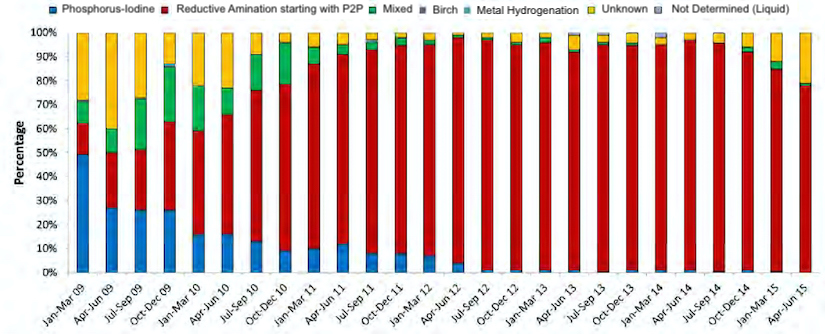
How could P2P meth be different? There are two ways: Either it could be a different type of meth, or the meth could be contaminated with some other chemicals.
Let’s talk about different types of meth first.
A naive P2P synthesis would produce an even mixture of l-meth and d-meth.
For many complex molecules, you can take the atoms, and “flip” them to get another stable version of the same molecule, called an isomer or (more specifically) an enantiomer. These different versions of the molecule can have very different effects on the body.
Methamphetamine happens to be one of those molecules. The one that produces the effects we call “meth” is d-methamphetamine (d-meth). That’s the one that increases dopamine in the brain, causing euphoria. (It’s also the one that is sold at pharmacies in the US to treat ADHD and obesity.) On the other hand, l-methamphetamine (l-meth) has no effects on dopamine and presumably isn’t nearly as much fun.
Anyway, a synthesis that turns P2P into meth will create an equal mixture of d-meth and l-meth, basically because atoms bouncing around randomly are equally likely to end up in either of two equally low-energy configurations. Older synthesis methods using ephedrine would create only d-meth.
P2P initially had a fair amount of l-meth, but it was almost all gone by 2019.
Here’s data from the DEA again, where “potency” is the percentage of d-meth among all meth. This data is assembled from the National Drug Threat reports from many different years:
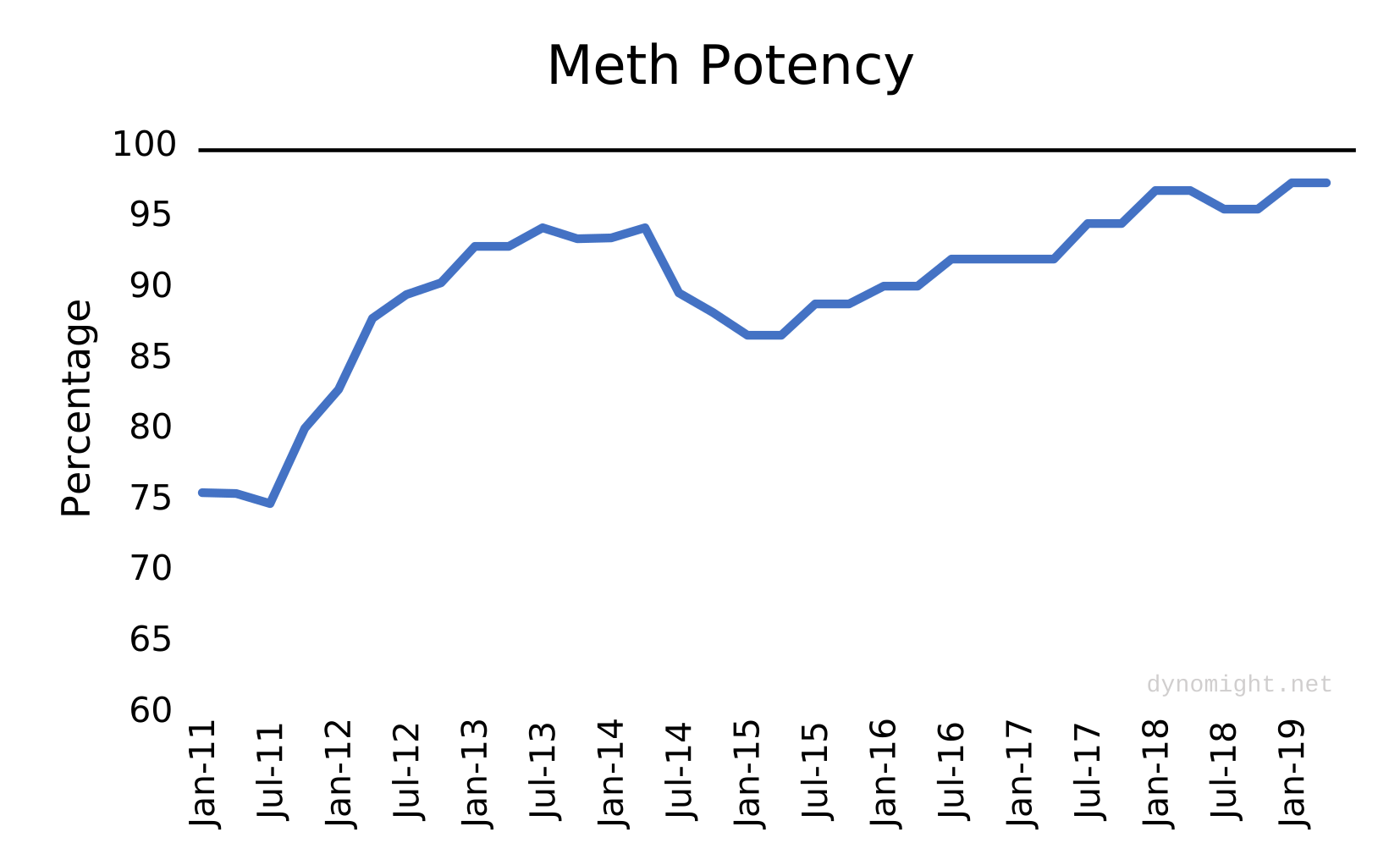
Be careful here: Take a sample of meth that’s ¼ d-meth, ¼ l-meth, and ½ other impurities. This would count as 50% potent because 50% of the meth is d-meth. (Other impurities are accounted for with “purity” below.)
The dip in 2014 might be explained by the introduction of a new synthesis method (NTS), which we’ll talk about below.
Unfortunately, I can’t seem to find any data going back further to before when P2P meth was introduced. It’s likely that d-meth was higher before P2P synthesis become popular, though this paper analyzes meth in Australia and finds that, for some reason, ephedrine-based meth often has fair amounts of l-meth, too.
L-meth is in various easy-to-obtain drugs.
Vick’s VapoInhalers contain 50mg of l-meth, which they spell in an unusual way probably to reduce the number of people who notice what’s in there and freak out.
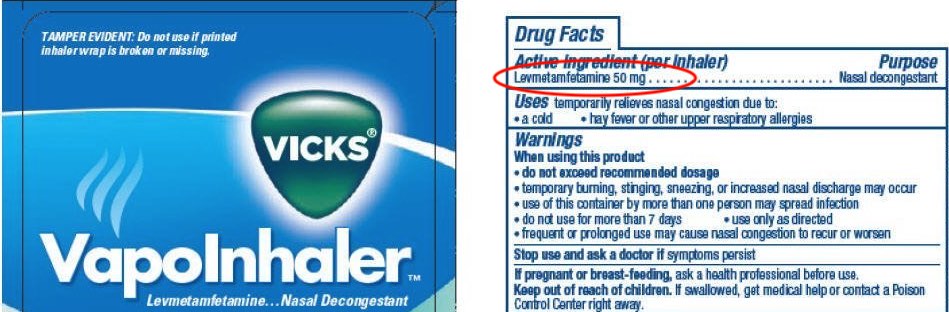
L-meth is also produced as a metabolite of Selegiline, a drug for Parkinson’s and depression.
The purity of meth is now higher than ever.
The DEA has tracked purity in meth that they have seized for a long time. They define purity to be the percentage of meth (d or l) amongst all chemicals in the sample. Here’s a plot of all the data I could find:
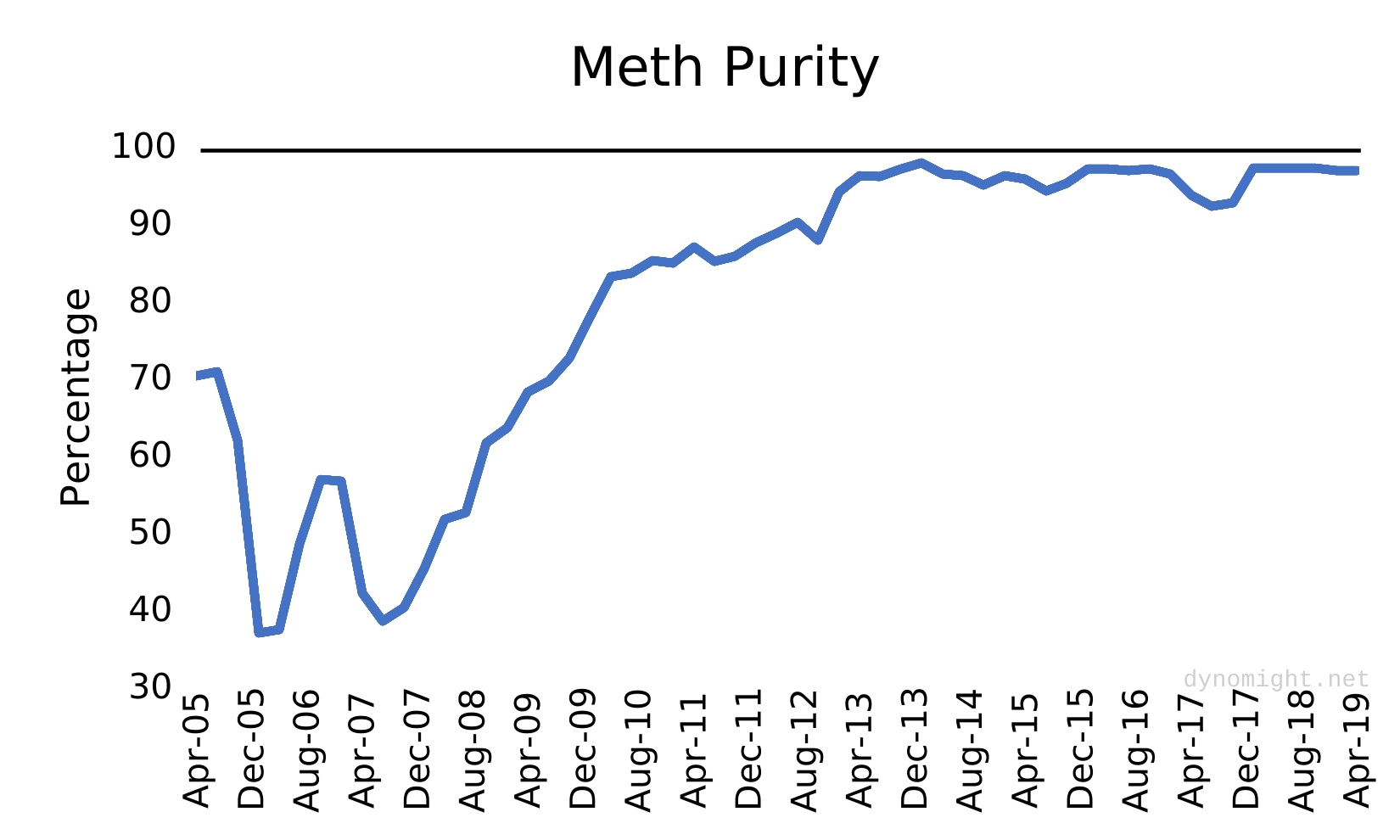
Now, the terms “purity” and “potency” as used by the DEA are a bit confusing. A consumer of meth probably cares about the percentage of d-meth amongst all chemicals in the sample. You get this by multiplying the purity and potency:
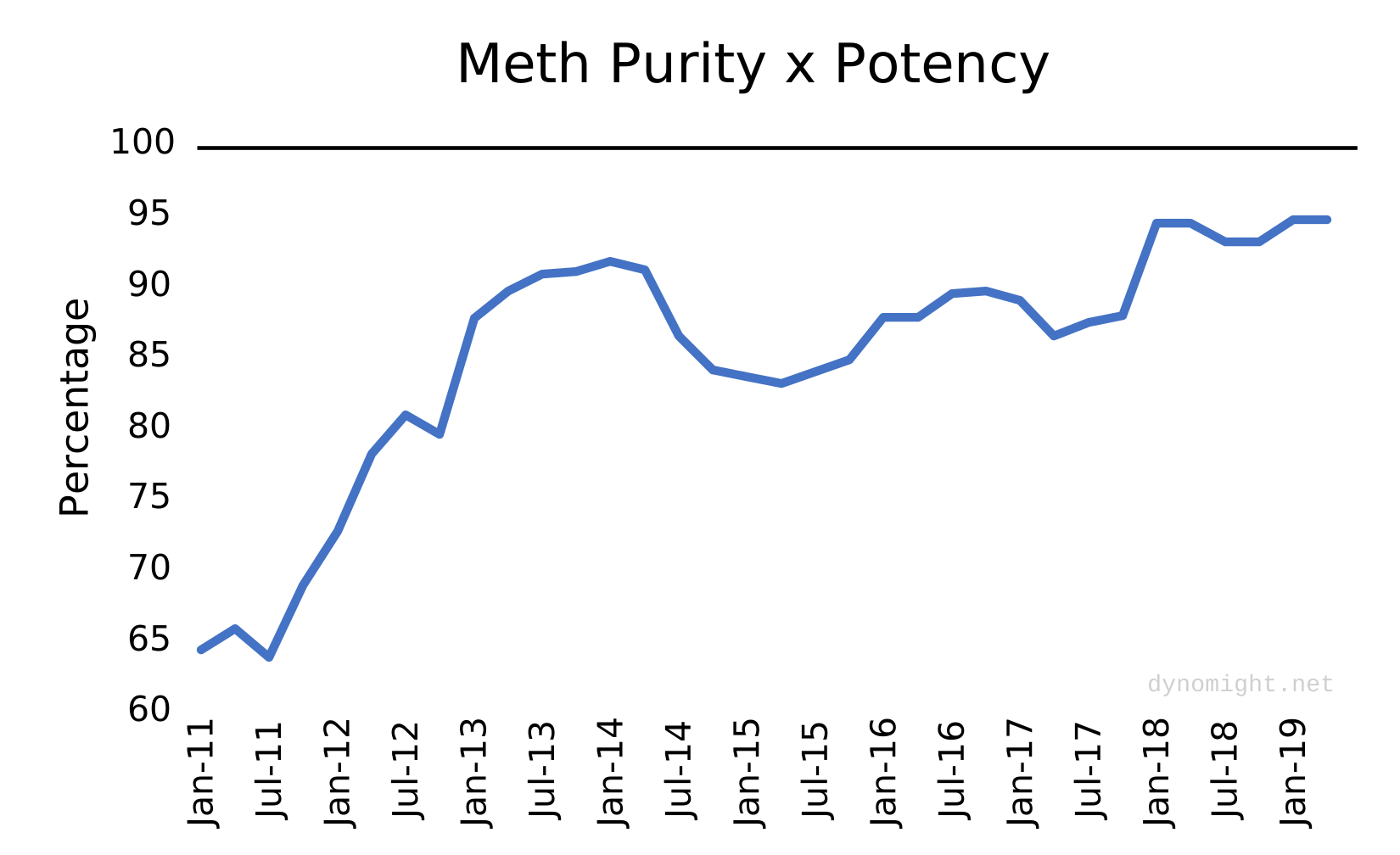
Modern street meth is higher quality than ever, around 95% d-meth on average.
There are many ways to make P2P meth.
Here’s a figure that shows how P2P might be produced from source chemicals, simplified from this paper:
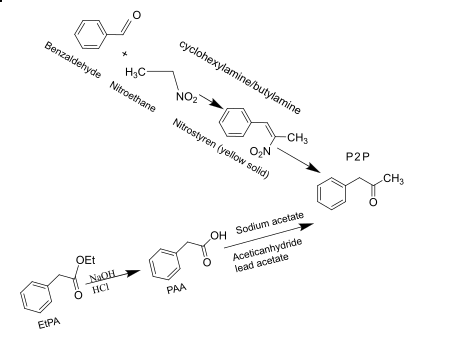
This shows two routes to make P2P. The top route uses benzaldehyde and nitroethane to produce nitrostyrene (NTS), which is then made into P2P. The bottom route uses ethyl phenylacetate (EtPA) to make phenylacetic acid (PAA), which is again made into P2P. Note that lead acetate (which has been raised as a concern) is only used in the PAA synthesis route.
Synthesis methods for P2P meth have changed repeatedly.
This paper by DEA scientists goes over the profiling of different types of P2P meth. Here’s the history, as far as I can make out:
It’s much messier than this implies: The transitions were gradual, and the DEA finds a fair number of “unknown” samples each year that they can’t classify.
On top of these different methods to make P2P, there are different methods to convert P2P into meth, and these have probably changed over time as well. The DEA seems to attribute most impurities to the P2P production step. However, they seem more interested in the meth supply chain than how impurities might affect the health of users.
This history of synthesis methods does not support the theory that lead acetate in meth is causing schizophrenia: Lead acetate was used much less between 2014 and 2018 when NTS synthesis mostly displaced PAA synthesis. This doesn’t correlate with reports of schizophrenia at all.
How much meth is used, by how many people? It’s hard to say exactly, given that we’re talking about a black-market supply chain and a product that’s illegal to consume. Still, we have various windows into things.
The amount of meth seized at the border is skyrocketing.
Here’s a figure, modified from the UN’s 2021 World Drug Report.
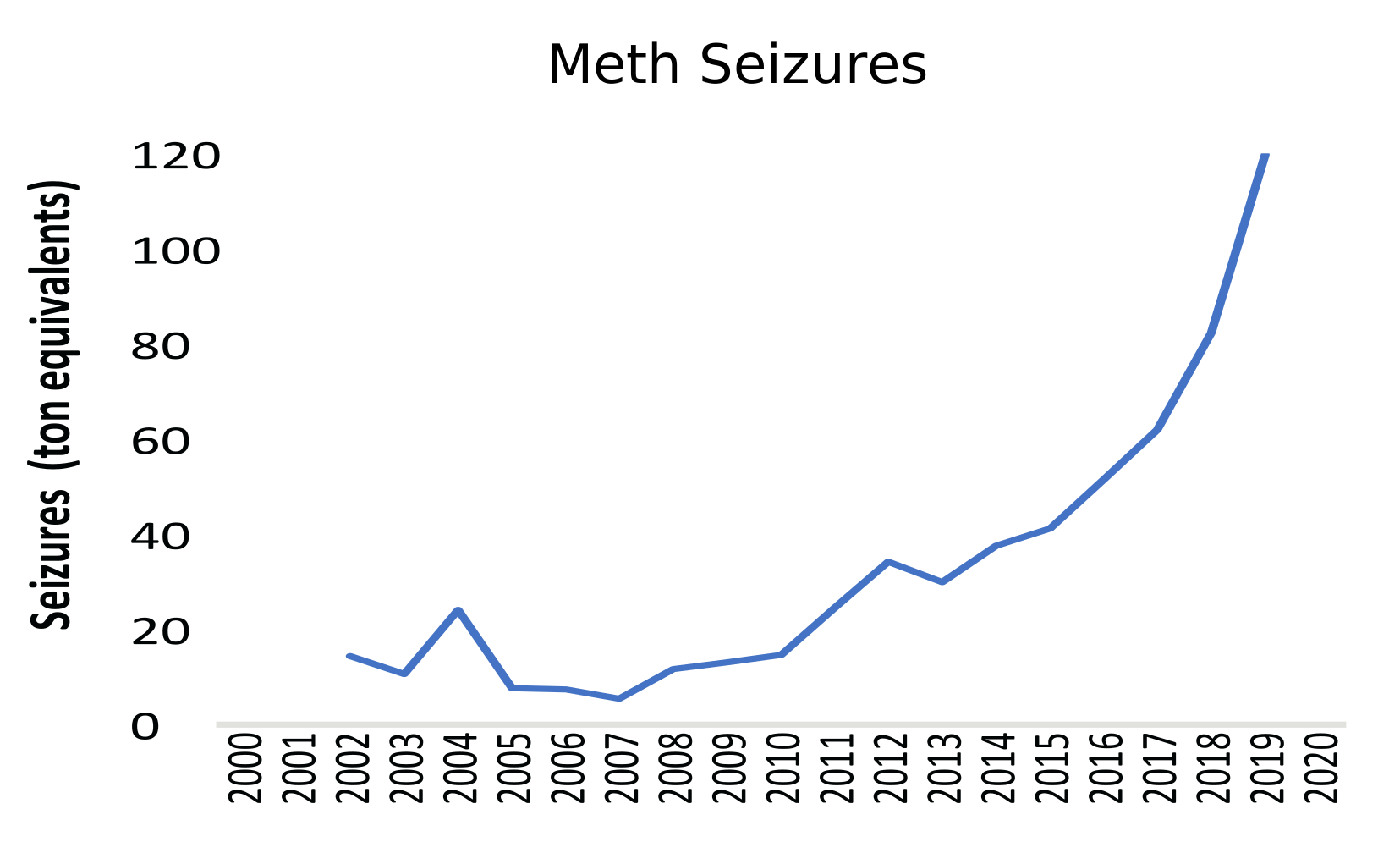
To some degree, this reflects Mexican-made meth displacing US-made meth, but this isn’t a major factor: Already in 2012, the DEA estimated that 80% of meth in the US was Mexican-made.
Sewage measurements suggest a doubling of usage in Seattle around 2017.
There’s an impressive project in Europe to measure drug use from biomarkers in sewage. They invite participation from cities around the world, which Seattle does. Here are their measurements (extracted from measurements in the 2020 report):
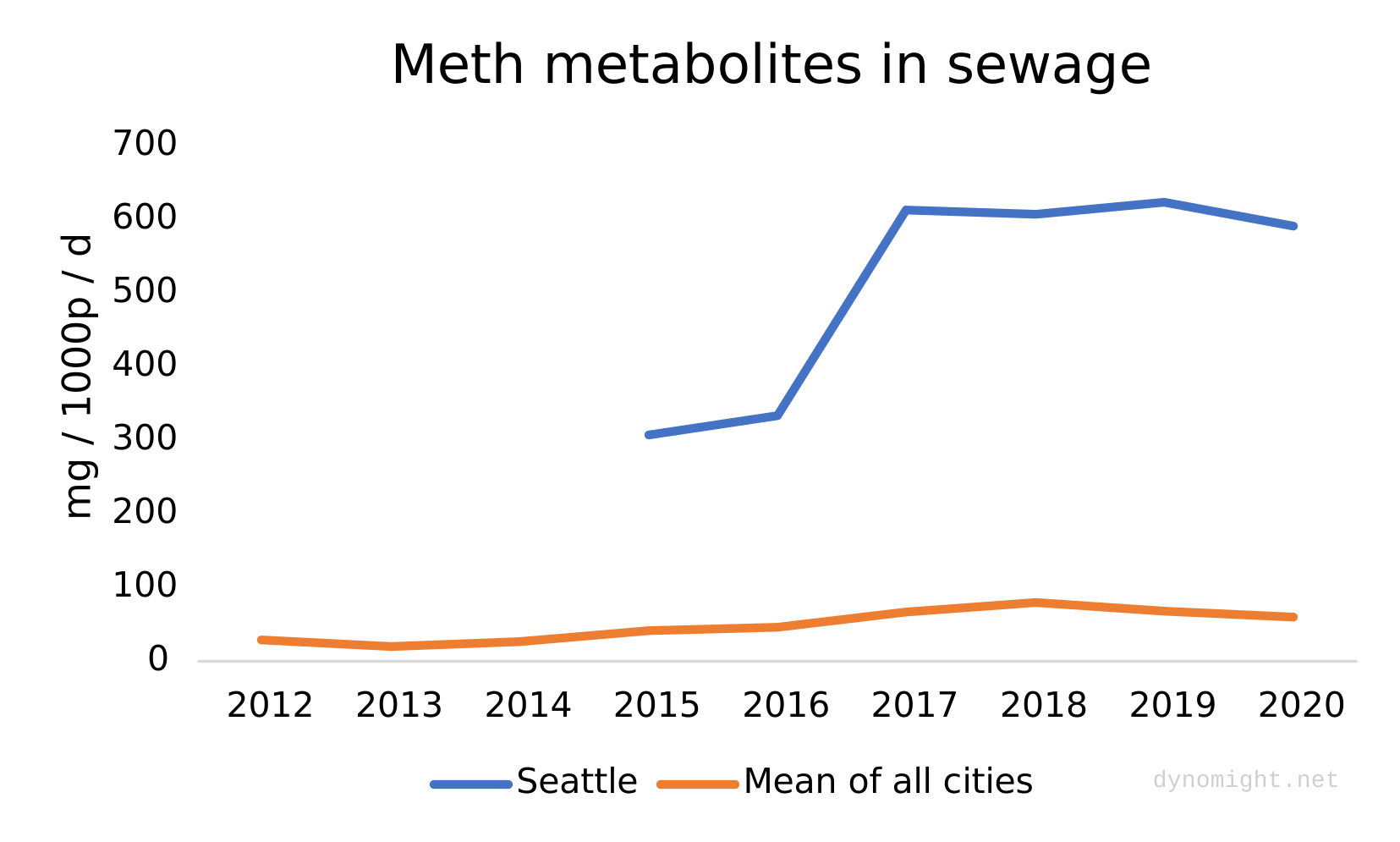
In 2016, Seattle already had the highest levels of any participating city in the world, but these doubled in 2017 and then stayed roughly constant after.
More people now report using meth, especially using a lot of meth.
One way to estimate how much meth people use is to ask them. The US Department of Health and Human Services maintains the Substance Abuse & Mental Health Data Archive with data going back to 2002. I used this data to get two numbers: The percentage of people who used meth at all in the past 30 days, and the percentage of people who used meth every day in the last 30 days. (The latter is only available since 2015). These are proxies for the number of casual users and the number of serious addicts.
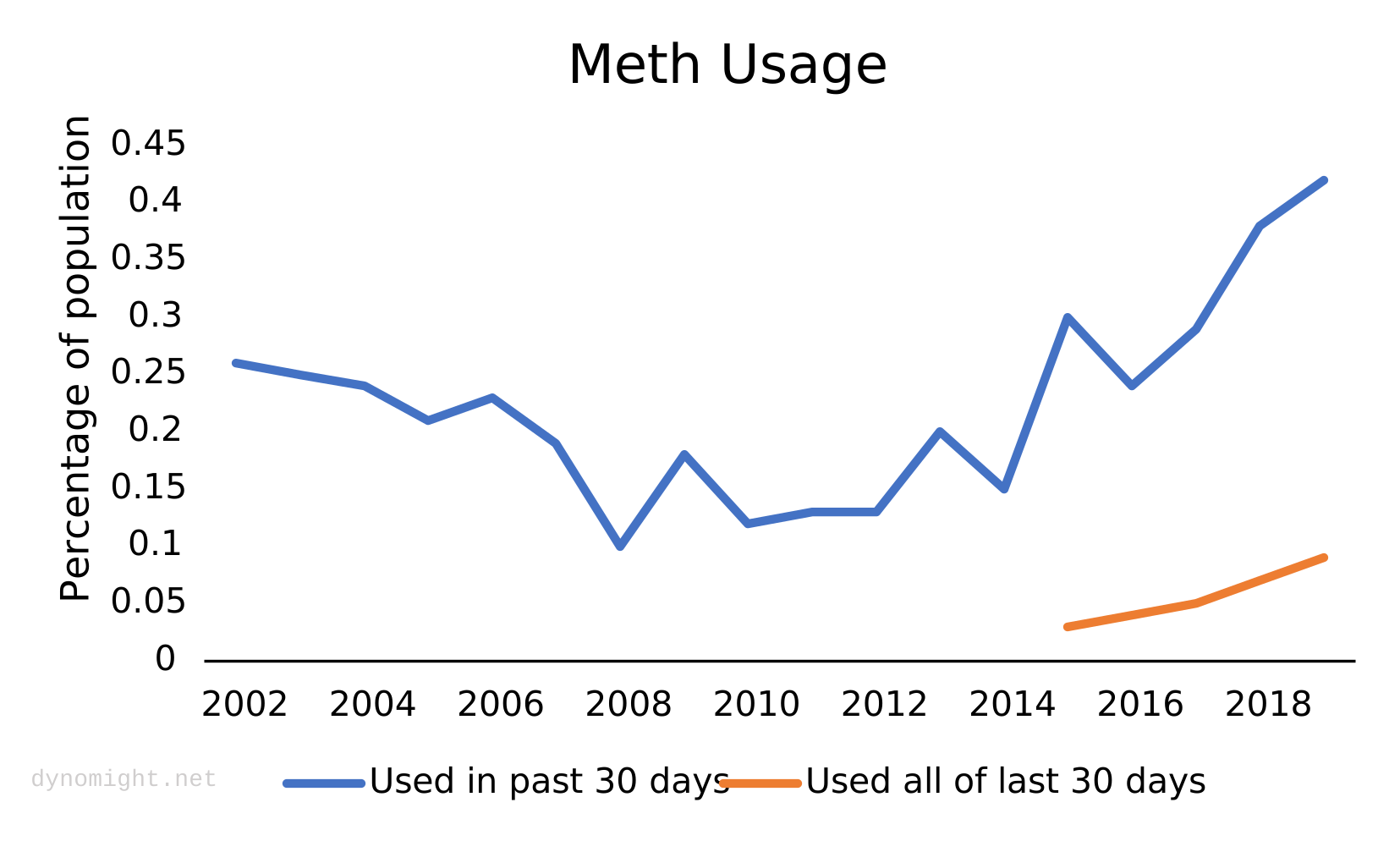
The number of people who use meth has increased. However, the real growth is in the number of heavy users, which tripled just between 2015 and 2019.
Here are some details on the data used in the above graph, in case you'd like to play around with similar analyses.
These are the raw cross-tables:
After following one of those links, turn off all table display options except for row %, then click the “Run Crosstab” button.
Meth prices have come down.
If supply is increasing, we would expect prices to come down. Have they? The DEA tracks prices in seized meth going back at least as far as 2005. After cobbling together (sometimes contradictory) numbers on National Drug Threat Assessments, here’s the best series I could find:
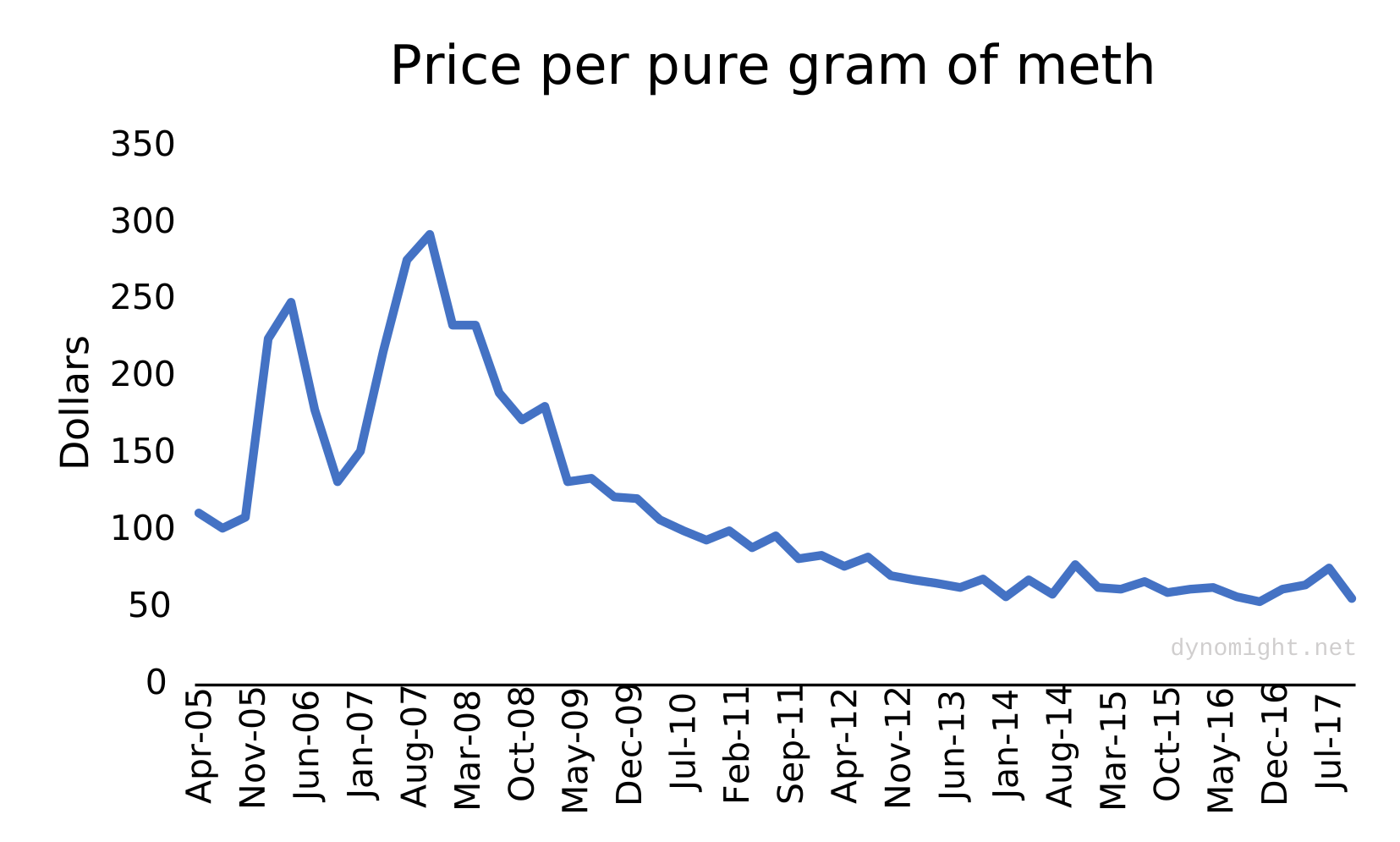
The DEA continued to track prices after 2017, but they noticed that lots of researchers found this data useful and therefore stopped publishing it because screw you.
I’m not sure how reliable these numbers are. They vary a lot based on the quantity being bought and the location in the country. The RAND corporation estimates numbers that are 2-3x higher overall, but show a similar relative decrease from 2008 to 2016.
There are also random quotes scattered across the media: The Kansas Bureau of investigations (2017, 2018, 2019, 2020) reports the price of a pound of meth dropping from around $15k in 2014 to around $4k in 2019, and slightly rebounding to $5k in 2020 during the pandemic. (Apparently, the meth supply chain is more robust than that for semiconductors.) A public television station in California in 2019 quotes a law enforcement officer in Fresno as saying a pound of meth had dropped from $6k for a pound a few years before to only $1k per pound now.
Meth overdoses are skyrocketing.
From the National Institute on Drug Abuse, here are the number of overdose deaths per year. This includes other psychostimulants like caffeine and MDMA, but the deaths overwhelmingly come from meth:
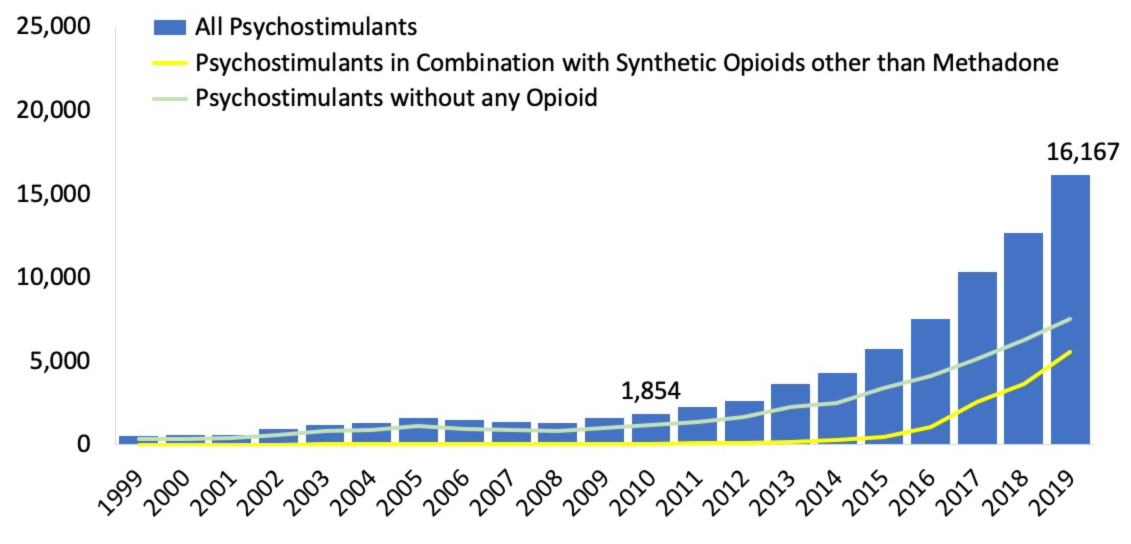
This isn’t slowing down. More recent data (not plotted) indicates that that 2020 had 24,076 deaths, and things sped up even more during early 2021. While a lot of these deaths come in combination with opiates like Fentanyl, a lot don’t, too.
We can put these numbers in context with some very rough arithmetic.
Let’s compare to someone who takes amphetamines/Adderall for ADHD, typically prescribed 5-20 mg per dose. Meanwhile, a strong single dose of meth is 40-150 mg, on top of which people say that meth is around 2× as potent as amphetamines. So meth users take roughly 15× as much per dose as the typical Adderall user. Meth addicts often dose several times per day, due to the short half-life, meaning a total of 300-800 mg per day.
That’s a lot, but let’s talk about overdoses. It’s actually pretty hard to overdose on meth. One way to estimate it is to look at animals This paper says that 50% of rats and mice die at a dosage of around 55 mg/kg. This suggests that an 80 kg (175 lb) person would need to take 4400 mg of meth to have a 50% chance of dying. Now, it’s not safe to extrapolate numbers between animals and humans, and there’s a blurry boundary between lethal and non-lethal doses. But there are many reports out there of people taking 500 mg of meth at a time without overdosing. That’s something like 100× a clinical dose of 10mg of Adderall.
That’s an insane amount of stimulants. I find it difficult to understand how anyone would want to do that to themselves. But they do, enough that meth overdoses kill half as many people as die in car accidents, and the numbers are still increasing. I guess drug users use a lot of drugs.
What to make of all this?
First, I think it’s unlikely that l-meth is causing people to go crazy. Modern P2P meth is nearly pure d-meth, and the percentage of l-meth peaked before 2011, before these reports of schizophrenia.
Second, the evidence we have is against the idea of contaminants in P2P meth. Almost all meth was produced using P2P since 2012, before most reports of schizophrenia. And P2P meth synthesis has changed several times in the interim, resulting in higher purity than ever before.
Third, the major impact of P2P synthesis is that a lot more meth is available. We have many sources of evidence for this: Border seizures, sewage measurements, usage surveys, prices, and overdose data. All these indicate that people are using historically large amounts.
Does this rule out the idea of contaminants? No. Even if it’s 97% pure d-meth, there could be something very nasty lurking in that last 3%. But I don’t see the need for such an explanation. We know there are many more heavy users, so there’s no need to go beyond the idea that quantity has a quality all its own.