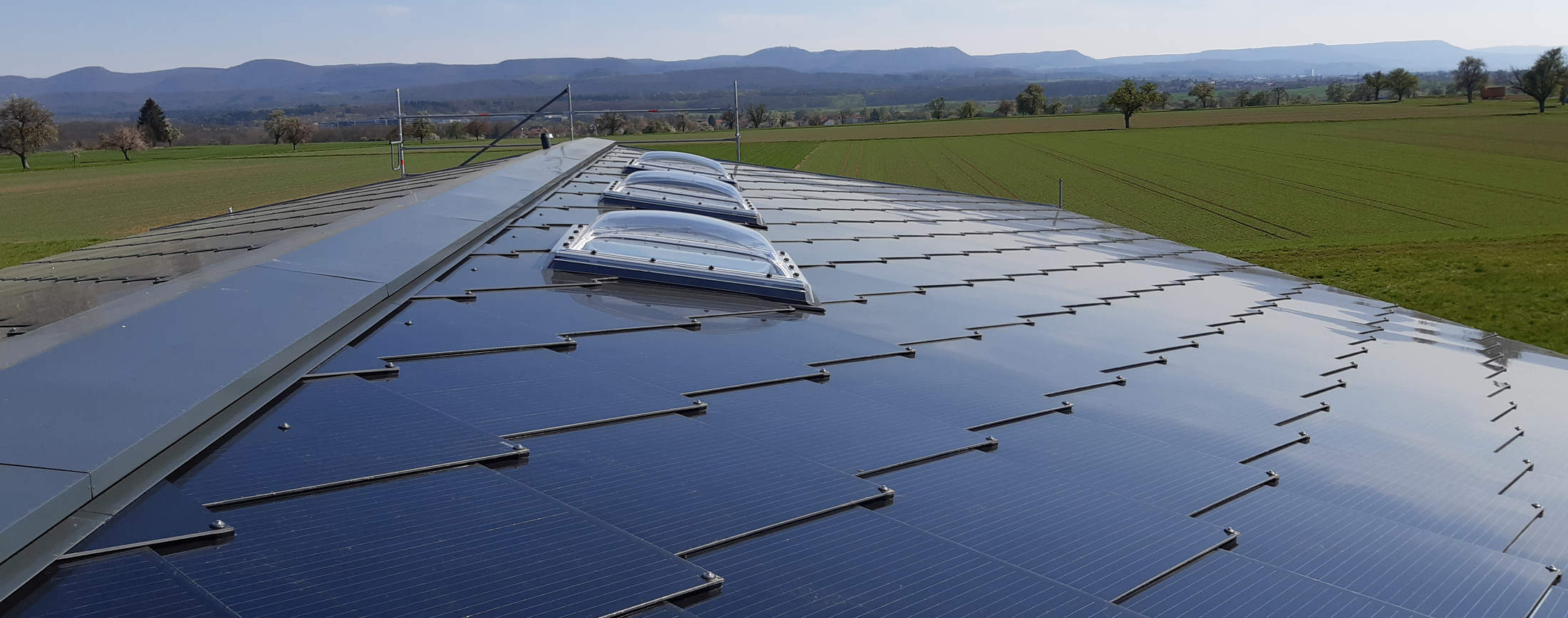
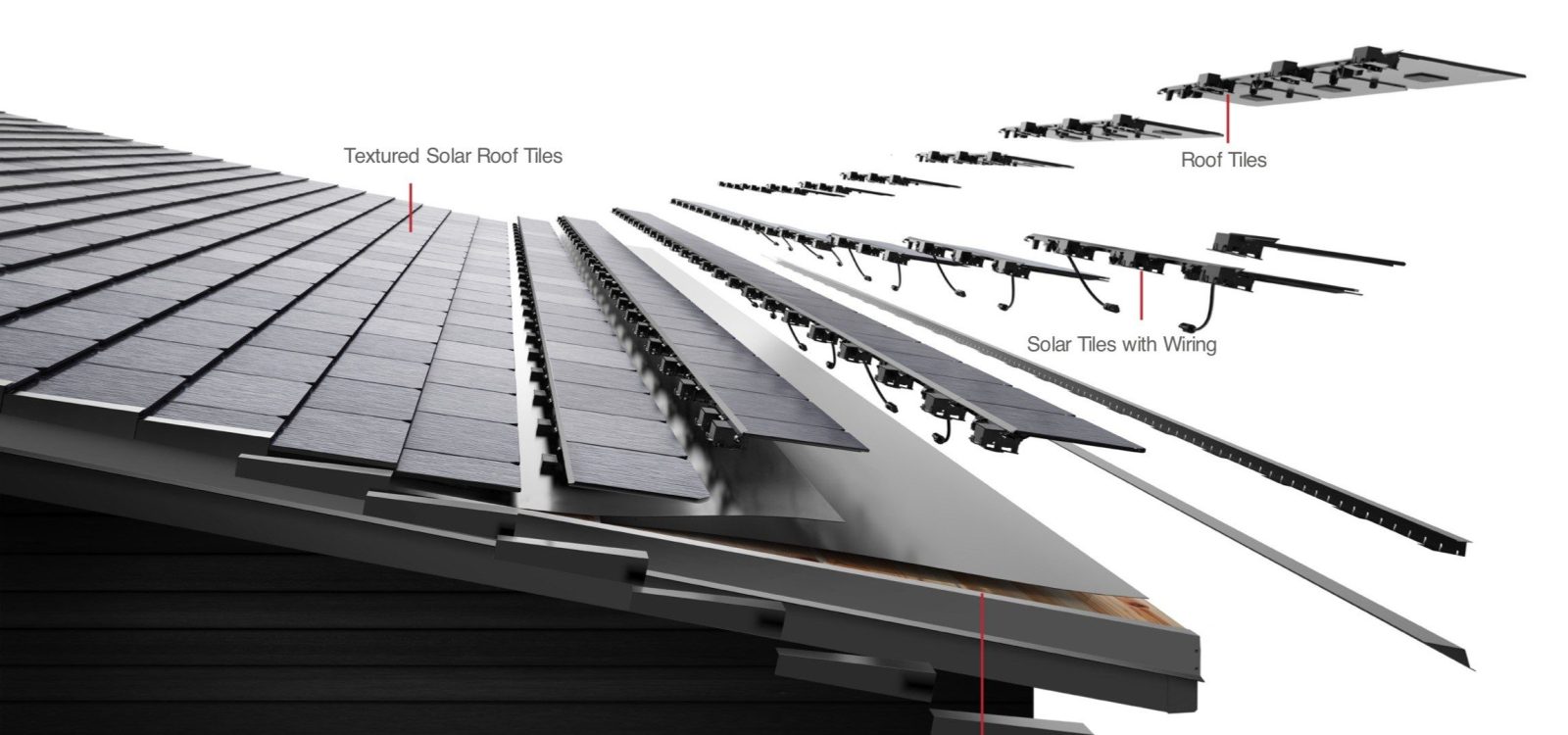
Hmm actual solar panels are so cheap now could you use them as large shingles on a new build?
Their cars have build quality issues, self driving continues to be "just around the corner", their service centers are cheap, the solar roof is it's own nightmare, the pivot to robots is laughable, the robot taxis are a PR stunt that are amusing but in a cringey way...
And the promises over the years of automatic chargers, replaceable batteries, sensors, etc.
The company had a great idea early, had tons of goodwill, a growing manufacturing capacity, and squandered it chasing whatever Elon dreamt up.
At one point after signing the contract, Tesla mailed him and notified that his previous signed contract was void and they sent him a new contract where the price had doubled to over $100k. They told he he had to sign the new contract in order for it to go forward.
This is classic Elon Musk tactic, which is to do whatever the fuck you want, laws be damned, and then try to bully your way through it. My friend didn't budge. They would call him or email him and kept harrassing him to sign the new contract and he said no. I don't remember there being a lot of news about this but I couldn't believe they had the gall to try this, although as I said, this is classic Elon Musk tactics.
Eventually I think other solar roof customers started to band together, and eventually Tesla caved and honored the original contract, as if they were doing him a favor. I'm not surprised that this technology is going to fail because it's too expensive and Musk's promise of dropping prices, surprise surprise!, never manifested.
Yikes that’s a lot of money. For most people buying solar, I think payback period is probably the biggest consideration.
I forget who but it reminds me of electric cars with speakers to restore the engine noise. There is nothing beautiful about noise.
Everyone gets caught up in the thermal management stuff and the power density stuff and whatever but to me that's a red herring.
The real issue is that Tesla has never known the ability to produce solar panels at scale and Musk said in that recent interview with Dwarkesh that he intends to do all the solar production in house.
So where's he getting the sand from? How are they going to purify it at scale? How are they going to turn it into ingots and then wafers and then cells and panels when they haven't even been able to produce a slim fraction of panels without all those extra steps over the past decade for their roofs?
And if the goal is to have the industrial capacity to do all this in a few years and produce solar panels on the scale that he's talking about -- why doesn't he just lay those bad boys down en masse on Earth and solve the impending climate crisis and our current energy shortages?
It just doesn't make sense.
I recently had 9.2kw of solar panels installed in the SE of England, the actual cost of the panels themselves was ~£1k. I’ve seen new installs going up with standard cheap panels nicely inset, flush into the roof itself. The roofers themselves have told me they are cheaper than a traditional roof due to the decreasing price of panels and ever increasing price of tile. Got a listed property with a slate roof? Solar could save you potentially £10k+ according to one roofer I spoke to.
Panels were and always were going to be dumb commodity items. There’s literal fields literally filled with the things everywhere. Compare to say something like the PowerWall which they still sell bucket loads of and I have one myself, Elon be damned…
However, the PowerWall still suffers from that worst of all tech bro sins of trying to limit YOUR access to YOUR data. I wanted to add an ESP CYD to display all my Home Assistant data when we had solar installed to help us as a family see what was happening in realtime. It’s incredibly useful - In typical HN fashion I rolled my own and avoided ESPHome, making it just how I wanted and I love it! 3d printed case and all! Boots in 2 seconds and just works!
I had obviously and wrongly assumed the PW3 would be easy as pie. Getting realtime data out of the PW3 is a freaking Kafka-esque nightmare… the only workable solution to which was setting up another dedicated ESP32 to connect directly to the PW own perm on wifi and weird custom API and shunt the data over BT. Tesla could break it all at a moments notice with an update and i’ll be out of hours trying to fix it. The whole thing is cat&mouse hoop jumping, the likes of which I haven’t seen since the earlier console hacking days. Tesla will display the realtime data through their servers, through their app, but if you want that…
Anyway, please everybody who’s all gung ho on the Anthropic and OpenAI hype trains remember - every single big tech company has had the exact same disregard for you, your family, your home and your planet since the start. It’s probably more consistent than Moore’s law at this point. Nothing is going to be different this time around.
The main issue was that normal large panels got a lot cheaper way faster than expected and custom sized ones like that end up costing too much by comparison.
In Australia where North is “optimal”, even South facing panels produce only 20-30% less and East/West about 15%. It does vary a bit by latitude but it’s not at all pointless to install them in other orientations in many places. I have not done the math to see how much of the world this extends to, but it applies to a fairly large chunk of Australia. Source: https://www.solarquotes.com.au/panels/direction/
Tesla’s system also had non solar tiles so you could just skip the panels in whichever parts you wanted.
Roof construction is quite different here to the US though. We never have the plywood layer, it’s either ceramic tile or Colorbond steel directly onto usually wooden sometimes steel beams.
They actually had to develop it (with Tesla shareholders' money) after buying out the failing SolarCity.
The Australian market is largely adding trad PV panels to existing housing, but there are signs of greater uptake of integrated PV + weather proof + thermal insulation roofing panels by architects and hopefully will be seen more on new mass produced housing plans.
~ https://arena.gov.au/projects/integrated-pv-solar-roofing/
I'm split on the datacenter-in-space stuff. I don't know whether I should disbelieve it because there is, obviously, no good way to evacuate heat in space, or because Musk talked about it, and he has an uncanny track record of not upholding his promises.
Ouch. The whole point was that it was supposed to be cheaper.
[1] https://mansionengineer.com/2018/08/10/elon-musk-tesla-and-t...
The simplest explanation is that they did all that and the market didn't want it. The economics of traditional panels outweighed the aesthetic advantages of tiles and they're pivoting. No conspiracy or fraud need be invoked.
The article seemed fine to me.
I tend to think garages are an eyesore, and yet, basically everyone (including me) wants one included with their home.
Next best thing aesthetically are full-roof racks, where one face of the roof is 100% covered in panels. Nowadays you just have to select the right panel and you can make it tile the plane perfectly.
- Magnitude higher number of interconnections which impacts reliability and efficiency
- Uniform roof tile style
- Requires entire roof rebuild which is always more expensive than retrofit of panels on top
- Complex installation resulting in less installers available overall for the market
- Crossing of trades between roofing & electrical
A slightly better solution would have been to make the big traditional solar panels your actual roof panels but really retrofitting them on top of panels solves most of those issues above.
The market shrank because standard panels and their mounting techniques got more aesthetically pleasing and cheaper.
I have a system this size and it's fairly rare for me to make less over the day than I use (we have pretty sunny winters where I live and at -27 degrees latitude am not super far from the equator). In summer I tend to produce at least twice as much energy than the house draws.
The economics have skewed a bit as export tariffs have dropped (due to there being so much solar) but batteries have become so cheap and are now subsidised quite a bit too that most people aren't getting just solar systems anymore but now are doing solar+battery.
It would probably technically be a bit more efficient to do larger neighbourhood arrays and batteries, but if they're cheap enough it works fine to do individual homes.
E.g. Disconnecting your energy supplier or a power outage will still result in no power usage, despite solar panels generating power.
More expensive inverters and battery systems allow this, although this is far from the norm.
No they don't, they procure them from Taiwan Solar Energy Corp. They do not produce or manufacture their own cells, they're using off the shelf components.
The market pitch is different tho, they are aimed at providing less effective solar for places where you have a hard need to keep the old look, old churches, monumental buildings and such.
On the other hand, Tesla's solar shingles are tiny compared to panels, more in the shape of actual shingle strips, means tons of connectors, wiring losses, dangerous shorts (these things carry 10s of amps) etc. and probably a nightmare to troubleshoot.
I would not get these for any reason other than aesthetics.
Multiple tiles also need to be connected in series to get reasonable efficiency, so you get plenty of failure points where one bad connection can cause a significant part of your solar roof to become useless. And you won't be able to easily fix it.
You can obviously fix all these issues, but it makes tiles too expensive.
https://nabendynamo.de/wp-content/uploads/2021/06/20210426_1...
While not quite panel-sized, it's much larger tiles and there's not another roof underneath. Probably makes most sense with a new roof, though. The problem is that when a roof lasts 50--80 years, that's not a very big market just for new roofs.
The big problem is that because there is no real ventilation, the panels get hotter and don't produce as much power.
What you put under them also has an effect on how waterproof your roof is long term, plus when you need to replace them finding ones that are the right size are also a pain.
The electricy is consumed in the houses and not on the empty land.
Parking lots become a win-win with electric cars. They also keep the cars cleen and sun protected.
Not saying it is a huge factor but it is there.
> There’s a reason that they announced the idea on a fake block in a fake neighborhood with fake houses!
Interesting read.
Financially it was part of SolarCity bailout (Musk's cousin). It heavily heavily penalized Tesla shareholders and smelled of a family bailout. Solar Roof was announced so hastily in October 2016 justify the merger and stave off massive shareholder lawsuits. There was little effort in the roof development after bailout was a success, minus the bait-and-switch lawsuits.
There was genuine concept level development at some point, but it was developed into product after they knew it did not work to keep lawyers happy.
https://news.ycombinator.com/reply?id=48166411&goto=item%3Fi...
https://arstechnica.com/cars/2024/08/heres-what-the-electric...
IMHO a pergola or carport is going to be better. You lose solar efficiency but gain the benefit of something that provides shade. Especially as solar panels have become an economical roofing option if you don't care about perfect waterproofing.
Essentially, you are adding another zero to the cost to have hidden solar. A 20k solar install becomes a 200k+ solar roof install.
Even if the final result is great, the economics shrink the possible customer base. Basic solar has gotten so cheap that people aren't worrying if the investment increases the value of the house itself. But very few people are willing to pay 10x for a thing that will never pay itself back in energy or home value. It's like putting a pool in your house - a few buyers will want it, but a lot will run from it because they don't know what to do with it.
So as a result, the target market ends up being super rich dudes in gated communities - the same kind of people buying custom 100k hifi systems and home cinema rooms. It becomes an upsell for people with unlimited budgets.
It's just not a mass market product when the competition is 10x cheaper and dropping daily.
Thanks for sharing.
Apologies, my google-fu is weak; I couldn't find more details. It's SON's building? I couldn't find that roof top at that address (using Google Maps).
Here's as far as I got: https://gemini.google.com/share/bef19f2b145c
Flush with the rest of the roof seems like a mistake. What if you need/want to replace them with a different sized panel?
Also see https://roofit.solar/ used in a few houses… mainly self build a or architect designed
Plus, most solar installs are grid connected so a significant portion of the electricity tends not to be consumed where it is produced. It’s not as if installing solar is an alternative to grid connections for most practical reasons.
I'm aware of the arguments about how it can be that much cheaper when deployed at mass centralized scale rather than decentralized across a bunch of rooftops, however the way the electric markets are prices is based primarily on the cost to produce the marginal supply, which is usually gas.
So while the power company might flood a bunch of solar panels trying to capture the profit between cost to generate solar vs. cost to generate using gas, those profits haven't been lowering electric costs at residential rates. If anything those costs are still climbing.
It's actually not hard to get rooftop solar to pencil out in that situation, especially if you assume even moderate growth in future electricity rates or inflation. In my own tracker it would even be superior to paying down additional principle on my home mortgage!
Admittedly it would be less of a slam dunk if the net metering was less generous around here as you'd basically be required to add battery to the mix if you weren't already. But even that just prolongs the time to payoff, it still ends up having good ROI economically speaking.
Electricity generation in the event of a power outage was another consideration for me.
But yeah as a techy I also just enjoy having them.
These things carry a lot of current though, so I would certainly not trust anyone without proper tools and training to put them on a roof.
This is mostly only cost-effective for remote properties where power cuts are common, but it works.
I on the other hand, Maximus Virtus, am a net gain to humanity when I hack into tech products for visualizing my home’s data.
"FSD disengages just before the collision." The other video angle shows that the driver presses the brake, which disengages FSD. "Tesla consistently hides information from the court." There are two different cases separated by years. The police got all the information they needed in the first case. "FSD is 10x worse than the average driver." The uncertainty of the number due to insufficient statistics makes the comparison moot.
That's the problem though. Thinking your product will get by on looks when it's clearly outcompeted on performance, price, availability and longevity. That's not just optimism, it's delusion.
From this to self-driving cars in 2 years to tunnels that will change public transport… maybe Musk should prototype and see what’s actually possible before telling the market. I mean come on - it’s borderline fraud in order to pump stocks - there’s got to be stockholders that are forming class actions as we speak
He might not specifically lie, but puts such a negative spin on anything Elon-related that the overall result is essentially a lie.
> Customer service complaints are pervasive and consistent. Tesla Energy has a 2.6 out of 5 rating on SolarReviews
May I present to you the Apple corporation, at least until recently.
Musk just takes car centric society pipe dreams and sell it back to them.
Like OMG you transiting to work and can safely stay in your phone 99% of time. In other countries this called train or a bus. Solved in London with 1863 tech.
The article from which I've linked the image is here (in German, though): https://nabendynamo.de/unser-neues-produktionsgebaeude-steht...
The roof is from Sunstyle, as detailed in the article: https://www.sunstyle.com/
Gemini seems to have read that article, taken a few details, embellished a few more, and not answered your question.
It is really condescending to dismiss their choice as motivated by vanity rather than assuming that other people might have done their homework and made a rational decision. It might very well be that you have done your own homework and it doesn't make sense for your situation, but other people face different tradeoffs which make it worthwhile.
To be fair that's not a contradiction. If FSD is designed such that a user braking because FSD was about to plow into something, sure the user started driving at the last second, but that is Tesla making a design choice to artificially blame users for FSD being fundamentally unsafe.

Tesla’s Solar Roof was supposed to revolutionize residential solar. Elon Musk unveiled the product in 2016 with the promise of beautiful solar tiles that would replace your entire roof — and he set a target of 1,000 new Solar Roofs per week by the end of 2019. Nearly a decade later, Tesla has installed roughly 3,000 Solar Roof systems total, stopped reporting deployment numbers, and is now quietly pivoting to conventional solar panels.
The gap between Tesla’s Solar Roof promise and reality is one of the most stark examples of unfulfilled ambitions in the company’s history — and it has left thousands of customers stuck with an expensive product that Tesla appears to have deprioritized.
When Musk first presented the Solar Roof in October 2016, he positioned it as a cornerstone of Tesla’s energy future. The pitch was compelling: solar tiles indistinguishable from premium roofing materials, integrated with Powerwalls for whole-home energy independence. Musk claimed it would cost less than a conventional roof plus traditional solar panels. Tesla acquired SolarCity for $2.6 billion partly on the strength of this vision, and Musk even said at the time that SolarCity’s Gigafactory would produce up to 10 GW/year.
None of that materialized.
Tesla didn’t reach even small-scale volume production until 2020 — three years behind schedule. At its peak in Q2 2022, Tesla deployed approximately 2.5 MW of Solar Roofs per quarter, equivalent to about 23 roofs per week. That’s 97.7% short of the 1,000-per-week target.
According to Wood Mackenzie, Tesla installed roughly 3,000 Solar Roof systems in the US through early 2023. Tesla disputed the figure but never provided its own number — a telling response.
Then came the quiet retreat. Tesla’s solar deployments across all products (panels and Solar Roof combined) declined for at least four consecutive quarters after Q4 2022. In Q1 2024, Tesla stopped reporting solar deployment figures entirely, simply removing the line item from its quarterly report. The company acknowledged energy generation and storage revenues were up, driven by Megapack deployments, “partially offset by a decrease in solar deployments.”
Since then, Tesla has virtually stopped even mentioning the solar roof tiles.
For existing Solar Roof owners, the situation is arguably worse than the deployment numbers suggest.
Tesla has largely exited direct Solar Roof installation. The company no longer provides online quotes for Solar Roof and instead directs customers to third-party certified installers — a small network of regional roofing contractors. In Florida, Tesla has canceled solar projects entirely, and field workers report that all available crews are devoted to repairs, leaving no resources for new installations.
The third-party installer model creates a structural problem for consumers: when something goes wrong, the installer blames Tesla’s design, Tesla blames the installer, and the customer is stuck in the middle.
Customer service complaints are pervasive and consistent. Tesla Energy has a 2.6 out of 5 rating on SolarReviews, and forums including Reddit’s r/TeslaSolar, Tesla Motors Club, and Bogleheads are filled with reports of months-long service waits, no-show appointments, and unreachable support teams. One Bogleheads user described Tesla having only one authorized third-party installer in all of Los Angeles.
The 2024 company-wide layoffs hit the solar division hard. Tesla laid off 285 employees at the Buffalo factory as part of a 14% workforce reduction, and service and support functions were clearly gutted — explaining the collapse in customer service responsiveness.
There are also unresolved product issues. Tesla’s Solar Roof uses string inverters rather than micro-inverters or power optimizers, which means that partial shading on any section of the roof can shut down production for that entire string. This is a significant design limitation that competing solar installers address with panel-level optimization technology from companies like Enphase and SolarEdge. Solar Roof owners have reported systems underperforming contracted estimates by 20% or more, and Tesla has reportedly declined some service requests, attributing underperformance to “low usage and weather conditions.”
The economics never worked either. An average Tesla Solar Roof costs approximately $106,000 before incentives, compared to roughly $60,000 for a traditional roof replacement plus conventional solar panels — a $46,000 premium. The payback period stretches to 15-25 years, compared to 7-12 years for traditional panels. In 2023, Tesla settled a class-action lawsuit for $6 million after customers accused the company of bait-and-switch pricing, with one plaintiff seeing their contracted price jump from $72,000 to $146,000.
Perhaps the most revealing indicator is Tesla’s own marketing behavior. A search of Tesla’s official X account shows the last dedicated Solar Roof post was on June 23, 2023 — nearly two years ago. Since then, the only mention was a passing bullet point in a June 2024 “achievements since 2018” recap thread.
Tesla regularly promotes Powerwall, Megapack, and its new solar panels on social media. Solar Roof has been erased from the marketing.
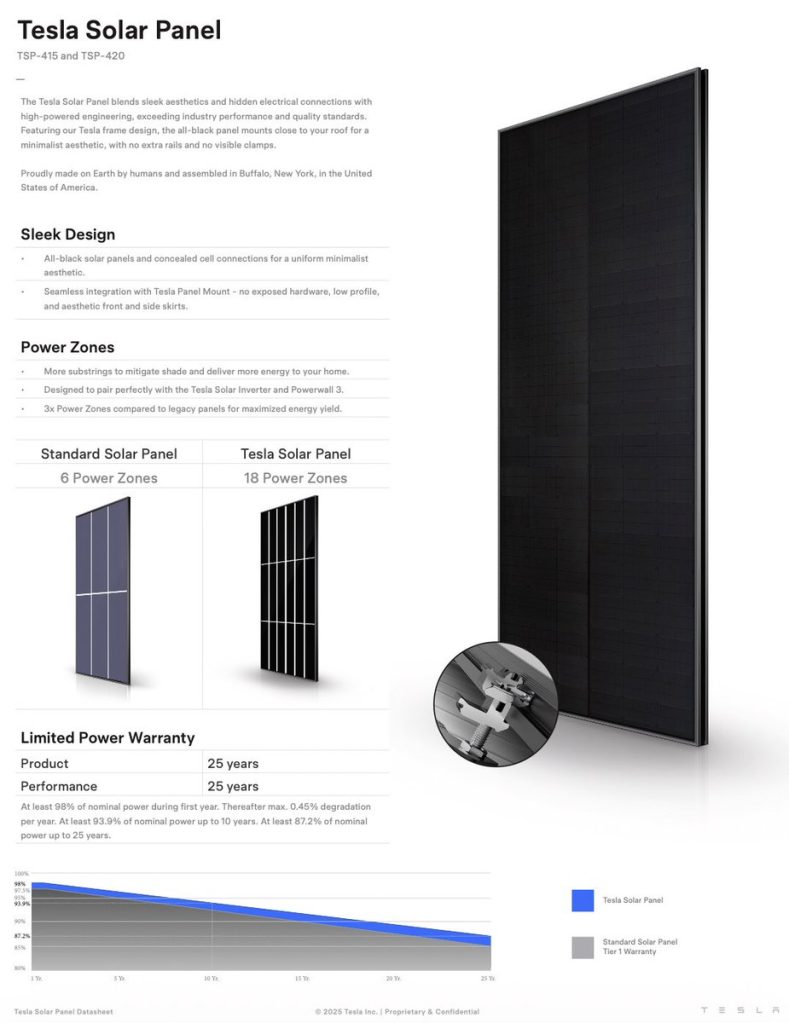
On earnings calls, Solar Roof barely registers. When Tesla’s VP of Energy Engineering Michael Snyder announced a new residential solar product during the Q3 2025 earnings call, it was a conventional panel — the TSP-420 — not a Solar Roof update. The language was carefully chosen: “industry-leading aesthetics” echoing Solar Roof marketing, but applied to a standard panel mounted on existing roofs.
Tesla’s actions make the strategic pivot clear. The company launched the TSP-420 panel assembled at Gigafactory New York in Buffalo in early 2026, featuring a proprietary 18-zone power optimization system — ironically addressing the shading problem that plagues Solar Roof’s string inverter architecture.
In January 2026, Musk announced at Davos that Tesla aims to build 100 GW per year of US solar manufacturing capacity. Tesla is reportedly in talks to buy $2.9 billion in Chinese solar equipment to achieve this goal, primarily from Suzhou Maxwell Technologies. A Tesla job posting confirms the target: “100 GW of solar manufacturing from raw materials on American soil before the end of 2028.”
To put that in perspective, total US solar installations in 2023 reached about 32 GW. Tesla is currently at roughly 300 MW of annual capacity in Buffalo. The 100 GW target represents a 300x increase in under three years and should obviously be taken with a giant grain of salt.
The company also announced it would expand its solar team for the first time in five years and launched a new solar lease product to ride what it sees as a surge in residential demand.
This is all conventional panel manufacturing. Not Solar Roof tiles.
I really feel like this product could have worked, but Tesla dropped the ball. Tesla sold thousands of customers on a vision of integrated solar tiles that would be the last roof they’d ever need. The reality — for many — has been underperformance relative to contracted estimates, a customer service infrastructure gutted by layoffs, and a company that has clearly moved on to its next big thing while existing customers are left managing systems that need support Tesla isn’t providing.
The pivot to conventional panels is probably the right business decision. Panels are cheaper to manufacture, faster to install, and the economics actually work for consumers. The TSP-420’s 18-zone optimization system even solves the shading problem that Solar Roof’s string inverter architecture cannot. And if Tesla actually achieves even a fraction of its 100 GW manufacturing ambition, it could meaningfully accelerate US solar deployment.
But it doesn’t change the fact that Tesla made specific promises to Solar Roof customers — about production levels, about energy independence, about lifetime durability — and has quietly walked away from those commitments without ever publicly acknowledging what went wrong. The company stopped reporting the numbers when they got embarrassing, shifted installations to third parties, and redirected its energy team to a different product entirely. Solar Roof isn’t officially dead, but it’s been left to fade away while Tesla chases its next headline.
Whether you’re considering a Solar Roof, conventional panels, or a home battery pack, the first step is getting competitive solar quotes. With electricity rates up almost 10% last year and expected to keep climbing, going solar is one of the best ways to protect yourself against rising costs. And with lease and PPA options, you can do it with zero upfront cost and start saving immediately. If you want to find the best deal, check out EnergySage. It’s a free service with hundreds of pre-vetted installers competing for your business, so you save 20 to 30% compared to going it alone. No sales calls until you pick an installer. Get your free quotes here.

FTC: We use income earning auto affiliate links. More.

Most US cities aren't dense at all. A lot of them were built with transportation in mind. London and European cities in general are so much older that their city centers have no real way to accommodate that.
So what do you do? You provide non car options. Technically they exist in US cities too, but especially on the west coast they're just not a viable alternative. Nobody who can choose will take a 2 hour public transit trip over a 20 minute drive. Heck, in a lot of cases biking might be faster than your transit option, albeit riskier
Quote from the article:
In Sydney, south-facing panels typically produce around 30% less energy than north-facing ones. The steeper the roof, the less they’ll produce. They’ll also produce much more energy in summer than winter.
In the far north, the difference isn’t as great and in Townsville south-facing solar panels will only produce around 15% less energy overall than north-facing ones. Because Queenslanders generally use more electricity in summer than winter due to air conditioner demand, the fact that south-facing panels have considerably higher output in summer can improve self-consumption.
In Darwin, south-facing panels produce about 17% less electricity overall than north-facing ones, and, like in Townsville, they have considerably higher output in summer than winter.
All-in-all, the trick that can't fool anyone and that doesn't make any sense. If this claim was true, the only explanation would be that Tesla is evil for the sake of evil and to the detriment to itself. Evil and dumb.
On the other hand, pressing the brake is a common way of disengaging ADAS. Tesla is no better and no worse in this regard than other ADAS manufacturers.
On the other hand, the suburbs don't have much that is even comparable to city taxis in price or availability today, so maybe if it existed that price point would indeed do just as well away from cities too.
On top of that there’s an inverter, and if you can’t use all the power immediately you’d need a battery too, which tends to increase the cost.
The biggest cost though is installation.
It obviously take decades not years, but again Tesla full self driving was promissed back in 2016 and something tells me it would be a big success if it will be deployed on scale in 2036.
Off the top of my head the only thing that's really doable without replacing a depreciating asset are certain kinds of insulation upgrades. (And I guess potentially ceiling fan installs.)
https://www.thedrive.com/news/24025/electreks-editor-in-chie...
https://www.citizensinformation.ie/en/housing/housing-grants...
You do make a good point about VAT on electricity bills also being a factor in the break even calculation. In Ireland it's 9% and that's a temporary cost of living measure and will revert to 13.5% in 2030.
Couldn't be more different in the big European cities, using a car there is (made) cumbersome.