May 31, 2026 5:00 AM
From specialized motors to the use of machine-learning algorithms, Turkey’s billion-dollar hair-transplant industry is the result of a constant process of innovation.

Photograph: byakkaya/Getty Images
The astounding growth of the hair-transplant industry in Turkey is not just a medical tourism success story; it’s also a tale of “hacked” medical equipment and algorithmic craftsmanship.
From a biological and evolutionary perspective, human hair is often viewed as an unremarkable mass of keratin that still plays some important functions—protecting our scalps from the sun’s harmful ultraviolet rays and regulating our body temperatures—but, for the most part, is no longer essential to our survival.
Yet, since ancient times, our subconscious perceptions of whether another person is healthy, young, or fertile have been based on visual cues such as skin radiance, the integrity of teeth, and hair density. Deep within our perceptions, hair has become one of the most powerful representations of our identity and self-confidence. It’s key to social communications and perceptions.
Today, the global hair-transplant and restoration industry, which has evolved around this deep psychological and evolutionary need, has grown into a massive, multibillion-dollar industry. Various research firms have estimated the total size of the global hair-transplant market as sitting somewhere between $7.33 billion and $11.61 billion in 2024. And those figures don’t include the underground economy. According to Ministry of Health data, 1.39 million people visited Turkey for medical treatments in 2025. The revenue generated from medical tourism is $3 billion in 2025 (roughly the same as in 2024). While there is no data about how many of these individuals came for hair transplants specifically, it is estimated that one-third of them visited for aesthetic treatments.
The role that hair transplantation plays in promoting Turkey is also noteworthy. For example, Turkish Airlines is occasionally referred to as “Turkish Hair Lines” or simply “Turkish Hair,” a nod to how significant hair transplants are when it comes to tourism to the country. (Similarly, Istanbul Airport has been jokingly referred to as “Istanbul Hairport.”)
It’s possible to see current examples of this in virtually every aspect of popular culture. In March, a social media user shared a post titled “There Won’t Be a Single Bald Spaniard Left in the World,” accompanied by an image of the famous soccer player Andrés Iniesta with long hair. It was in response to Spanish prime minister Pedro Sánchez’s stance against the war in Iran, a position that Turkey supports. The post went viral and made headlines on Spanish news channels. Similarly, American basketball star Shaquille O’Neal’s joke in Turkcell’s 5G ads—“I’m here for a hair transplant” while wearing a long curly wig and footage from Turkey’s seven regions—is likely to be talked about for a long time.
Turkey’s global success in hair transplantation and the dominant position the country has achieved are issues too complex to be explained solely by affordable labor, low costs, and favorable exchange rates. Instead it is the result of a bold and at times chaotic yet highly innovative evolution. This includes everything from the adaptation of motors designed for dental devices and sapphire blades used in eye surgery to Anatolia’s ancient craft culture and the master-apprentice relationship transferred to microsurgical techniques.
Makeup for the Modern Man
The development of the institutional infrastructure needed to meet this massive demand in Turkey dates back to the late 1990s. At a time when Turkey’s most famous figures were traveling to Europe for cosmetic surgeries, Mustafa Tuncer, who attended the Medica trade show in Düsseldorf in 1999, adopted a radical new vision. Tuncer laid the foundation for the Esteworld plastic and aesthetic surgery clinics when he announced, “If Turkey’s celebrities are going to Europe for cosmetic surgery, I will build the best hospital, hire the best doctors, and bring Europeans to Turkey.” Thus, Health Tourism 1.0 began, characterized by fully equipped institutions that combined plastic surgery and hair transplantation under one roof while raising standards to the highest level.
As medical director of the Esteworld Health Group and a member of the second generation of his family to share this vision, Burak Tuncer says that at the heart of this innovative evolution lies a philosophy with psychological and medical depth—one that does not view the matter merely as a cosmetic procedure. “Hair is a tissue that cannot be replaced or cloned,” he says, adding, “If roots are damaged during the hair-transplant process—whether while being extracted or implanted—we permanently lose that unique tissue. That is why we treat every single strand of hair with the same value and care as we would a kidney or a heart.”

Burak Tuncer with a patient.Photograph: Dinendra Haria/SOPA Images/Getty Images
Over time, the hair-transplant industry has grown so significantly, and the global demand directed toward Turkey has reached such a massive scale, that the sector has transitioned to a second phase, Health Tourism 2.0, through its own internal dynamics. Tuncer describes this period, which gained momentum around the 2010s, as a golden age in which the first generation of corporate hospitals effectively functioned as academies, operating within a framework of medical ethics and high quality. “In the past, in the medical world, when doctors happened to learn something from somewhere else, they would keep it to themselves—adopting an attitude of ‘I’ll keep this secret’ and not sharing it with anyone,” he explains.
In Turkey’s hair-transplant journey, however, the exact opposite has occurred. Doctors and health care professionals who were trained within institutional settings and developed unparalleled hands-on experience through thousands of cases eventually left to establish their own boutique clinics. This organic process, similar to a master training an apprentice, has built a massive-quality ecosystem centered on a health-care-focused perspective. This situation has ushered in a golden age where patients come to Turkey for the unwavering quality and trust offered in this field.
According to Tuncer, the secret to this era lay in the fact that the system was built not on commerce, but entirely on a health-care-focused perspective. While doctors in Europe or America were performing only a few surgeries each month, clinics in Turkey had built up a vast pool of practical experience and succeeded in standardizing surgical procedures to a level that surpassed European competitors. What drove foreign patients to fly thousands of miles to sit in the chairs of Istanbul’s doctors instead of visiting local clinics in their own countries was not the advertising budgets of brands, but rather this network of medical excellence and unwavering trust built on thousands of successful transplantations.
However, by2015, as the market reached unprecedented proportions, the balance of power began to shift. Non-health-care actors, digital marketers, agencies, and investors, recognizing the sector’s high-profit margins, entered the field, ushering in Health Tourism 3.0. The singular focus on health care gave way to sales and marketing, spread across the globe accompanied by aggressive advertising. The heightened self-awareness brought on by the pandemic has increased demand. Doctors’ clinical histories demonstrate that hair serves as a sort of “makeup” for the modern man, and the psychological toll of this biological loss on the individual is often far greater than can be measured by clinical metrics alone. For many people, their self-esteem—from having confidence in social settings and work environments to their communication with prospective partners—is directly tied to the presence of this hair.
Tuncer says that patients who come to his clinic are not just there to address their thinning hair, but to restore their lost self-confidence. He points out that the real global upheaval that triggered this psychological need on an unprecedented scale was the Covid-19 pandemic. People were confined to their homes and often forced to spend hours seeing their own faces, their asymmetries, and their thinning hair on Zoom calls. An “if I don’t know what tomorrow will bring, at least I’ll do something for myself” mindset emerged, leading to a global surge in cosmetic procedures and hair transplants.
Enter the Machines
The biological mechanism underlying hair loss is a topic on which modern medicine and pharmacology have spent billions of dollars in research. Androgenetic alopecia, commonly known as male-pattern baldness, primarily results from a genetic predisposition and hormonal changes. In men, the hormone testosterone, which is secreted in high amounts, is converted into dihydrotestosterone (DHT) via the 5-alpha reductase enzyme found in the scalp. In individuals genetically predisposed to hair loss, the number of receptors sensitive to this enzyme in the capillary network that nourishes the hair follicles is significantly higher than normal. Over time, the capillaries narrow under the influence of DHT, reducing blood flow to the hair follicles. Hair strands that cannot receive sufficient nutrients and oxygen gradually become thinner, weaker, and eventually lose their vitality. This leads to permanent hair loss.
Although Turkey has established an industrial ecosystem in the field of hair transplantation, the key factor determining the fate of the patient on the operating table still lies in the unique manual dexterity of the human hand. From a sociological perspective, the Anatolian region has a deep-rooted tradition of handicrafts—such as carpet weaving, ceramics, copper work, and calligraphy—that has spanned thousands of years. These crafts require hours of focused attention on a single point, infinite patience, and working with zero margin for error in hand-eye coordination. Hair transplantation is a modern craft that also requires fine motor skills and uninterrupted concentration for the careful removal of thousands of microscopic hair follicles without compromising their vitality, and their precise placement at the correct angle and with a millimeter-level depth.
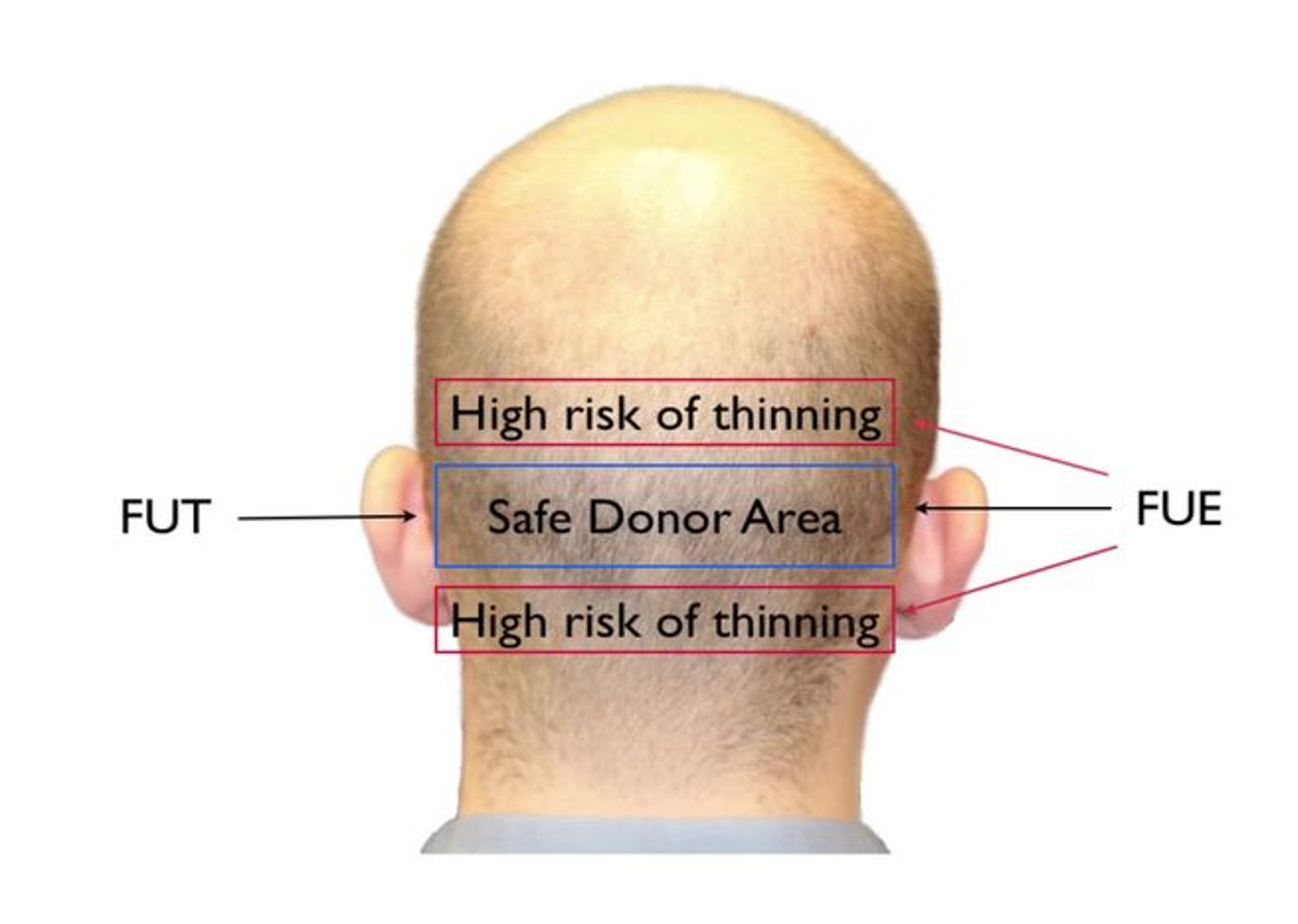
Koray Erdoğan stands out as an exceptional figure in the fusion of this craft with modern techniques. Erdoğan is also one of the pioneers in Turkey of the renowned FUE (Follicular Unit Extraction) technique, in which hair follicles are extracted one by one using microscopic tools rather than removing a strip from the back of the head. Compared to the previously widely used FUT (Follicular Unit Transplantation) technique, FUE is a method that carries fewer risks and side effects, shortens recovery time, and offers a more comfortable patient experience. The widespread adoption of this method was followed by Sutureless Hair Transplantation advertisements on the Teletext pages of TRT, Turkey’s national public broadcaster. Interest snowballed as American patients served as volunteer ambassadors at various international forums. Turkey was in the process of being transformed into a unique reservoir of practical transplantation experience.
However, this surge in demand led to the emergence of so-called hair mills—unlicensed, underground operations—after 2015. Rushed and unqualified procedures resulted in “overharvesting incidents,” where hair follicles were disproportionately extracted from the back of the head to implant a denser amount of hair in the patient’s frontal area. Erdoğan says that during that period, clinics began to proliferate where 50 to 80 patients were treated daily, the doctor entered the room only to say hello to the patient, and procedures were performed by unlicensed, untrained technicians.
This observation marked the beginning of a major technological leap that entered the global literature with the aim of eliminating the margin of error associated with the human eye in harvest planning and establishing a mathematical standard for hair transplantation. Combining Erdoğan’s vision with the engineering expertise of Oğuzhan Urhan, a professor at Kocaeli University in Izmit, Turkey, an AI and robotics-based system known as KE-BOT was born.
KE-BOT is a system that uses a 6-axis robotic arm to perform a 360-degree scan around the head. It creates a map of the scalp using nearly 400 photos taken against a 3D topographic map generated by an active infrared depth camera. It then uses deep learning algorithms to identify each follicle on the scalp and calculate the thickness of each hair strand in microns.

Photograph: Chris McGrath/Getty Images
The algorithm behind these calculations is based on machine learning trained using thousands of counts performed by Erdoğan and his team on real images. “After a while, things reached a point where the robot started counting more accurately than we did,” says Erdoğan, adding: “By analyzing environmental data—such as skin tone, light reflection, and the number of fine-haired roots—that we never even considered, artificial intelligence can identify, for example, that a root the human eye perceives as having two strands is actually a triple strand, with much greater accuracy.”
When combined with the Coverage Value formula developed by Erdoğan, this dataset evolved into a system that reports to the physician, with mathematical precision, the maximum number of grafts that can be harvested without causing permanent damage to the patient’s nape. By sharpening the surgeon’s vision at the microscopic level, it has established a “hybrid medicine” model that combines human craftsmanship with the data-processing power of artificial intelligence.
Well, couldn’t this have gone a step further? With multimillion-dollar, highly precise autonomous robots like Da Vinci available, couldn’t a similar system have been designed that directly implants the grafts itself? “Robots like Da Vinci are excellent devices for performing endoscopic micro-movements in narrow spaces where the human hand struggles to reach. However, hair transplantations are performed in an open area. The human hand’s sense of touch and its ability to instantly adjust pressure based on the skin’s resistance are still far superior to even the most advanced autonomous robots,” says Erdoğan.
To return to the issue of unlicensed clinics, according to reports from the International Society of Hair Restoration Surgery (ISHRS), the vast majority of procedures performed at these clinics—often referred to as unlicensed or black-market clinics—are carried out not by licensed physicians but by unqualified technicians. So how can you be sure you’re putting yourself in safe hands?
According to Erdoğan, the first step should be to verify whether the person you’re dealing with is actually a licensed physician and to check the clinic’s license as well. However, the key factor lies in how the person approaches the issue. Experts recommend to be wary of commercial approaches that make quick promises. If someone looks at a single photo of a prospective client and says, “We’ll implant 3,000 grafts for you; it’ll look great,” there is reason to be skeptical. Erdoğan says, “A reliable doctor will first examine the thickness and distribution of your hair and thoroughly review your medical history and any conditions that could prevent you from undergoing a procedure.”
From Days to Hours
While doctors meticulously applied their manual skills along patients’ hairlines, the existing surgical equipment also had to be completely “hacked” to meet the massive demand flooding into Istanbul from all over the world. In the early 2000s, as the FUE technique gained popularity, hair follicles were extracted manually using small, handheld drills called “manual punches.” This method took two to three days per procedure, causing significant fatigue for both the patient and the surgeon. At that time, the medical micro-motors used by surgeons in Europe and America—which could be sterilized in an autoclave—were priced between $10,000 and $15,000, making them far from a practical choice. Additionally, during a procedure like hair transplantation that involves bleeding, if even one drop of blood seeped into these delicate motors, the device became inoperable, and the entire investment went to waste.
The steps that pulled Turkey out of this operational crisis lie in the incredible pragmatic engineering ingenuity coming from the field. Mustafa Er, the CEO of Ertıp Medikal—a company originally focused on the manufacture of surgical hand instruments which has been central to the development of the Turkish hair-transplant industry—describes how they became involved in the process. “When plastic surgeons returned from conferences in the U.S.,” he explains, “they complained about the slowness of the manual system. Instead of copying those expensive surgical motors, we chose to modify the inexpensive motors that dental technicians use in laboratories to grind prosthetics.”
By converting the motor into a closed system, they prevented blood from seeping inside. To prevent clipped hair from accumulating and causing blockages, they added special vents and channels to allow airflow through the system. As a result, procedures that used to take three days manually have been reduced to as little as six hours. The fact that the equipment became affordable and accessible led thousands of health care workers to purchase these devices with their own salaries, causing the industry to grow exponentially.
This engineering feat has made a huge splash not only in Turkey but also beyond its borders. Mustafa Er recalls the time he attended an aesthetic medicine conference held in the Bahamas in 2006. Since they couldn’t ship materials through customs to the exhibition venue, four or five staff members traveled to the fair carrying 15 suitcases full of modified motors and punches. Not only did they sell all the materials they brought with them at the fair, but they returned with another 15 suitcases worth of new orders.
Turkey’s emergence as a global hub for hair transplantation has brought anatomical challenges specific to different regions of the world to the laboratory tables of Turkish clinics. For example, it became necessary to devise new approaches for patients of African descent with curly hair, whose hair follicles curve in a “C” or “U” shape beneath the skin. “When classic cylindrical tips—which are straight and rotate continuously—enter the skin, they cannot follow this curved path and end up cutting the follicle in half, killing it,” says Er. To solve this problem, they invented the Afro Punch tool, which features asymmetrical star-shaped or U-shaped slits at its tip. By combining this with motors that perform a half-right, half-left motion, they succeeded in wrapping around the root and extracting the follicle without causing damage. Building on the same concept, they produced special sawtoothed tips resistant to dulling during surgery for the calloused and thickened scalps (caused by sun exposure) of Middle Eastern patients.

Photograph: Osman Orsal/Xinhua News Agency/Getty Images
The ability to think across disciplines has also brought about a major transformation in the process of creating channels into which hair is implanted into the scalp. Observing that tissue was being crushed, bleeding increased, and healing times were prolonged during the channel creation process performed with surgical steel blades or razor blades, Er discovered while visiting trade shows that synthetic sapphire tips—as hard and durable as diamonds, they are used in eye surgery to cut the eyeball—could be adapted for this field.
The cost of these tips, which initially reached $300, has dropped to the $40 to $60 range thanks to rising demand increasing order volumes and tough negotiations. They are now used in 80 percent of surgeries performed in Turkey. “Thanks to the thin, clean V-shaped channels created by synthetic sapphires, we not only prevent tissue damage but have also reduced the wound healing time from three months to 10 days,” says Er.
Current innovations make it possible to transplant long hair directly without the need to shave the donor area. According to Er, this technique—which is used particularly in eyebrow transplants—is in high demand worldwide.
Turkey’s multibillion-dollar empire in the fields of hair restoration and cosmetic surgery is no mere mirage. This remarkable success is the result of a unique blend of skills—rooted in Anatolia’s millennia-old tradition of craftsmanship—an engineering instinct that swiftly overcomes gaps in medical equipment, and a culture of deep compassion focused on the patient’s psychology and self-confidence.
However, this rosy picture must contend with the “hair factory” crisis—which has emerged as digital-marketing agencies and greedy investors have come to dominate the sector—as well as the problems caused by unlicensed personnel and the growing loss of global reputation in Western media. Furthermore, the fact that technicians trained in Turkey are taking their skills to other countries and, over time, enabling local entrepreneurs to learn the trade is also gradually eroding the transplant industry in Turkey.
Most experts agree that Turkey’s strategy for success in hair transplantation no longer relies on low prices or volume; instead, it hinges on creating an unshakable brand value through innovation, purpose-built technological equipment, and medical expertise that has proven itself on a global scale.
While it may be possible to copy surgical instruments or undercut prices by exporting technicians abroad, it is impossible to replicate the clinical expertise gained from tens of thousands of cases, solid medical ethics, and a culture of hospitality overnight.
This story was originally published by WIRED Turkey and has been translated from Turkish.
Read More