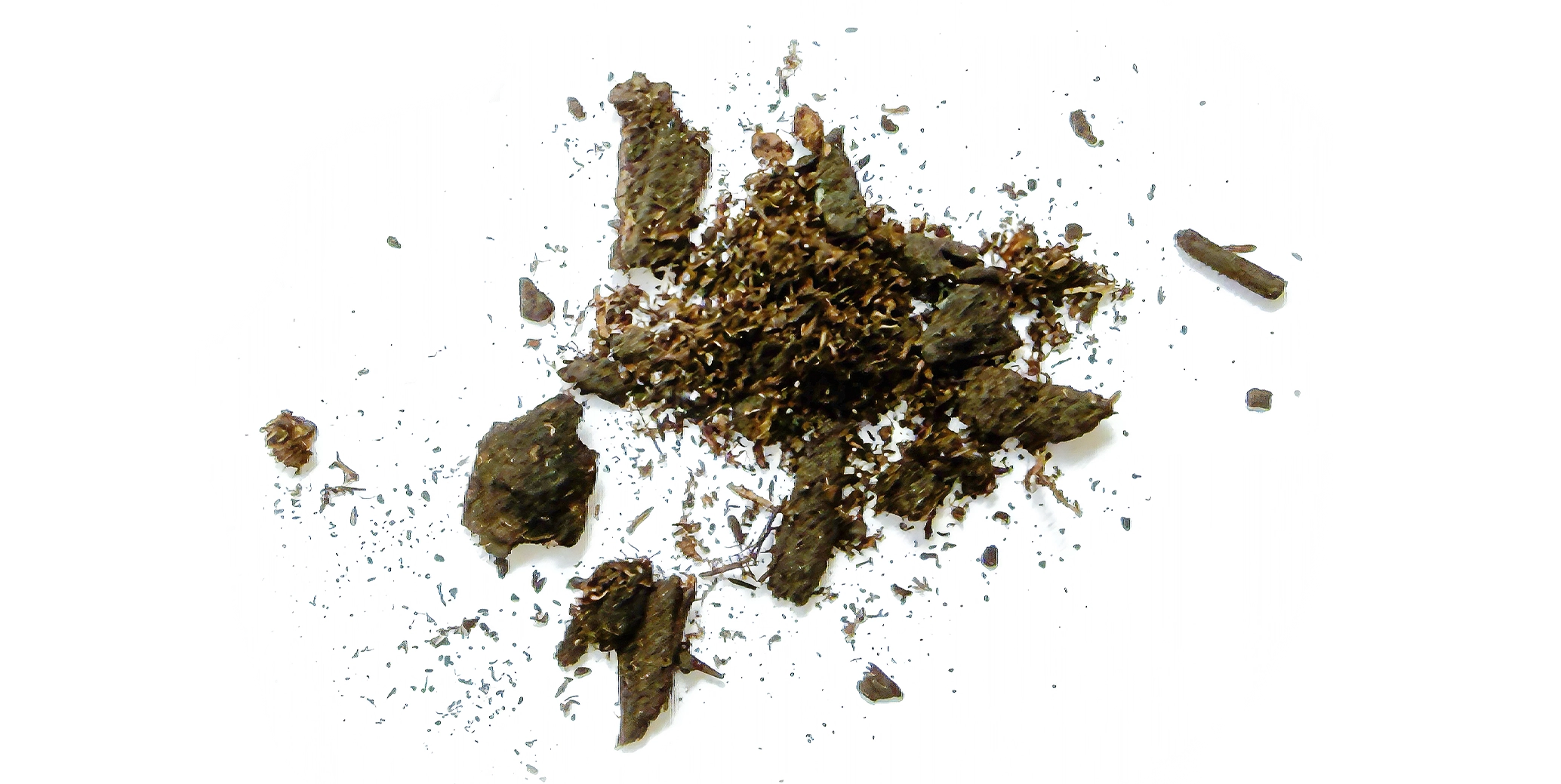
For 15 years, Sébastien Fontaine has been trying to kill dirt. The biochemist, who runs a lab at the French National Institute for Agriculture, Food, and Environment, wanted to know how much carbon is released by soil — just dirt alone, completely devoid of life. His team sealed dirt into jars and blasted them with sterilizing gamma radiation. Then they waited for the carbon dioxide released by the soil — a sign of ongoing microbial respiration — to drop.
They waited, and waited, and waited some more: weeks, then months. Under a microscope, the irradiated soil showed no signs of life, but it continued to emit carbon dioxide. The soil wouldn’t stop breathing.
Fontaine’s lab repeated the experiments and produced the same results. Finally, convinced that they weren’t dealing with an artifact of the experimental setup, they set out to find the source of breath in dead soil.
Now, Fontaine and his colleagues have reported that their soil samples continued to consume oxygen and spew carbon dioxide for six years. In a 2025 paper in Science Advances, they proposed that a metabolic process that powers much of life is also possible outside living cells. Their experiments point to how it could work in dirt, absent the living proteins that would typically organize it. If they’re right, some biochemical reactions, such as those that release the energy of carbon-rich sugar molecules, may not be unique to living things. Such reactions — known as metabolism when performed by cells — could even predate life on Earth, Fontaine said.
The experiments show “what happens to biomolecules when they’re left to their own devices,” said Joseph Moran, an organic chemist at the University of Ottawa who was not involved with the research. They’re finding that the chemistry of life is not exclusive to life, he added. “It’s the chemistry of geology.”
The Living Dead
When he made this accidental discovery, Fontaine was trying to establish a baseline for carbon in lifeless soil. Using a sterile syringe, the researchers periodically sampled the air in a hermetically sealed jar containing soil and measured its carbon content using a mass spectrometer. After radiation wiped out the soil microbes, the carbon emission rate declined quickly but didn’t disappear. It remained stable for over 100 days.
When he shared the results with other researchers, they advised him to treat it as an experimental artifact — a source of error not worth ferreting out — and move on. But he couldn’t. He needed to understand whether a metabolic process only known to occur in biological cells — a precisely orchestrated sequence of chemical reactions, requiring several molecules and enzymes — was unfolding in sterile soil. To see what was happening, his team added a dash of enzymes extracted from yeast cultures. Immediately, the soil’s carbon emissions spiked. This, they speculated, was because the enzymes had ramped up a reaction that was already happening.
Convincing the scientific community, however, was an uphill battle. When Fontaine submitted the manuscript to journals for publication, some reviewers “were highly positive, and others were really suspicious, especially concerning the sterility of the soil,” he recalled. In 2013 the results were published in the journal Biogeosciences. Still, Fontaine could not rest. Bruised by the harsh reviews, he decided to definitively prove that his irradiated soil samples remained free of life. Over the following decade, his lab would, in fits and starts, chip away at their obsession.
They considered the possibility that the soil wasn’t really dead, and tried to kill it harder with more radiation, pressure, and heat. Still, the soil continued to emit carbon for months.
Through an electron microscope, Benoit Kéraval, then a graduate student in Fontaine’s lab, found cells in the irradiated soil. But staining showed no RNA or DNA molecules, indicating that the cells were definitely dead. When they experimentally added microbes to simulate contamination, the cells rapidly recolonized the soil microcosm and released much more carbon dioxide. So what they were observing in the sterilized sample likely wasn’t a result of inadequate antiseptic measures.
By 2018, when Clémentin Bouquet joined the lab, the team was confident in its findings and ready to dig into the underlying mechanisms.
Dirty Electrons
For six years, Bouquet and Kéraval studied two sets of sealed, irradiated soil samples — one of normal soil, and one that was supplemented with glucose. For 142 days, they took regular air samples and saw the daily rate of carbon dioxide emissions decline but not disappear, just as they had before. Then the samples sat in an incubator for over 1,000 days, as the researchers focused on their other experiments into how microbes process and store carbon in soil.
When they measured the samples again, at days 1,606 and 2,442, the emissions had slowed further, but the soil was still breathing. The glucose-augmented samples showed higher emission rates, which strengthened Fontaine’s suspicion that nonbiological catalysts in soil can induce reactions that resemble the metabolic breakdown of sugar.
During metabolism, sugar is broken down into smaller carbon molecules, which feed the Krebs cycle — a series of reactions in which high-energy electrons are stripped from carbon-rich molecules. Electrons liberated by the Krebs cycle then pass through another set of reactions that consume oxygen. For some researchers, it was a stretch to suggest that this process could unfold outside a cell. Fontaine would need to show that soil can play the same role.
He devised a fuel cell that could detect electrons zipping through soil in the form of a current. His team added soil that had been irradiated almost five years earlier, and then closed the circuit. A current passed through the soil that was several times higher than in a control setup involving a saltwater solution. According to Fontaine, the experiment demonstrated that sterile soil supports a flow of electrons indicative of processes that resemble the oxygen-dependent metabolism of the Krebs cycle.
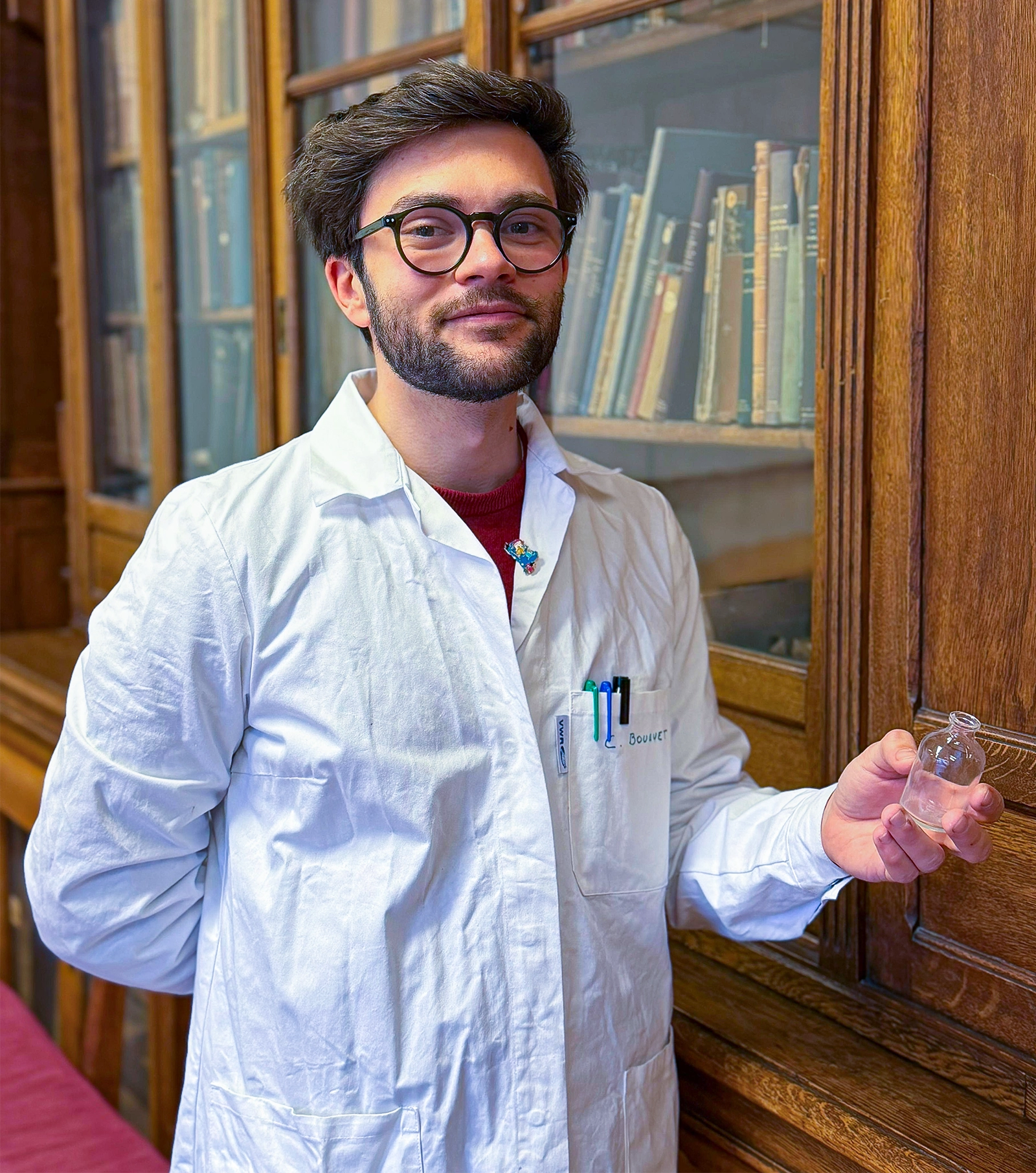
When Clémentin Bouquet joined the lab in 2018, he co-led a six-year experiment that suggests that lifelike biochemistry takes place even in sterile soil.
Öykü Ataytür
It was once thought that the Krebs cycle cannot occur outside the controlled confines of a cell, which teems with enzymes that keep everything ticking along and increases the chances that biomolecules will bump into each other. In a 2025 preprint on biorxiv.org, Fontaine and colleagues reported observing four of the eight intermediate molecules known to be part of the Krebs cycle in 6-month-old sterile soil samples. Many of these molecules formed after the irradiation.
According to the authors, their results suggest that clods of earth can indeed catalyze these reactions without the presence of life.
An Origin of Life?
For Joshua Schimel, a soil ecologist at the University of California, Santa Barbara, Fontaine’s findings were not too surprising. “Glucose naturally, in the process of being oxidized, is going to form some of these Krebs-cycle intermediates,” he said. Many soils are rich in iron oxides and aluminum oxides, which can catalyze this conversion, he added.
The idea that metals can catalyze biochemical reactions is central to a theory about the origins of life that has emerged over the last decade. Metals such as iron and zinc sit at the core of many of the most ancient enzymes found across life forms. Some researchers, including Moran, believe they might have catalyzed these reactions before life emerged. Studies, including his, suggest that the chemical reactions that break down and construct glucose derivatives, which are normally associated with life, might have existed before the enzymes and genes that enable them in living cells.
“There’s a handful of researchers like myself that think, actually, we should organize our thoughts about life in a different way — that we actually should put metabolism at the base of what life is doing, and then genes are a way of controlling that at a higher level,” Moran said.
Cell-free metabolic reactions could be more common than previously thought and don’t need special conditions to get started, said Markus Ralser, a biochemist at Charité University Hospital in Berlin, who found some of the first enzyme-free metabolic reactions.
“This fits a bit into my thinking about how metabolism started in evolution,” he said of the new work. “If it would be very hard to do, then the planet would not be full of life now.” This idea is complicated, however, by the low-oxygen conditions in which life arose.
Another explanation for the observed results could be that enzymes, loosed from the irradiated cells, might be hanging around in the soil and continuing their biochemical jobs. Even when degraded, enzymes have stable backbones that might be capable of catalyzing reactions, said Sudha Rajamani, an astrobiologist at the Indian Institute of Science Education and Research, Pune who wasn’t involved in the study.
Ralser agrees with her. “My gut feeling is they still have a lot of enzymes there [in Fontaine’s irradiated soil], even after six years,” he said. To know whether metals and minerals in soil could spontaneously carry out these reactions, the researchers would have to eliminate enzymes from the mixture. But that’s really hard: They would have to get the soil so hot that it would damage the soil structure itself.
However, the activity of such enzymes diminishes “exponentially” after they spill out of cells, Bouquet said. Plus, no enzyme is known to last six years, Fontaine added. He doesn’t doubt that enzymes released by living and recently dead cells contribute to carbon emissions in real-world soils, but the long-term experimental results make it “very unlikely that the respiration we observed is due to enzymes,” he said.
For Bouquet, chasing this years-long obsession has highlighted that “even in a context as close and familiar to us as terrestrial soil, we are not always able to distinguish or recognize processes that indicate the presence or absence of living organisms.” Now a researcher at the Collège de France and the National Museum of Natural History in Paris, he is looking for prebiotic origins of other biochemical cascades.
“I find it particularly interesting to imagine the survival of processes that may predate life itself,” Bouquet said, “right there under our feet.”