What's New
DaVinci Resolve 21 introduces the Photo page, bringing Hollywood's most advanced color tools to still photography! A new generation of AI tools let you search media by content, read slate data, perform de-aging, blemish removal and more. The Edit and Cut pages have improved keyframing and greater graphic format support. Color page workflows are optimized with MultiMaster trim passes, layer list node graphs and group versions. Fusion offers over 70 new graphics via the powerful Krokodove toolset. Fairlight’s folder function simplifies audio track management and navigation. Plus, increased support for immersive and VR workflows puts you at the forefront of the latest deliverable technologies.
AI Tools
Search Content with AI IntelliSearch
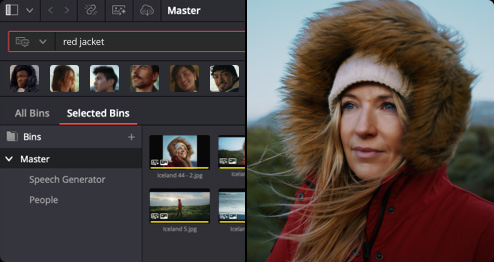
Instantly search for people and content with AI IntelliSearch! Analyze media and use the IntelliSearch tool to find specific objects or key words in dialog. You can even search for individual faces! Results appear as whole clips in the Media Pool for faster clip organization and editing.
Advanced AI Speech Generator
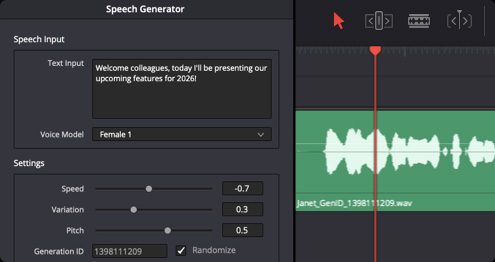
Generate speech from written text using one of Blackmagic’s voice models or a sample of your own. The DaVinci AI Neural Engine can create a unique voice from as little as a 10 second clip! Adjust speed, pitch and even inflection, to create multiple performances for voiceovers, narration and more.
Before
After
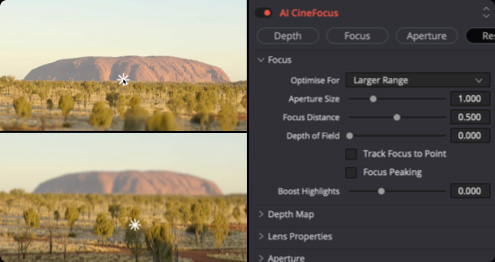
Adjust Focus with AI CineFocus
Define the focal point of a shot with AI CineFocus! Click to focus on a particular area of a scene and adjust aperture and focal range to change the depth of field. Advanced controls let you select the aperture shape and add optical effects like bokeh. You can even keyframe parameters to rack focus!
Before
After
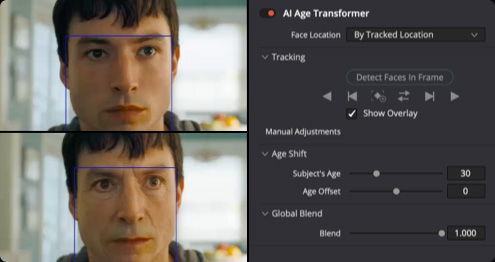
AI Face Age Transformer
Change an actor’s age with the AI Face Age Transformer tool. Analyze a face, enter the subject’s age and adjust the age offset slider to add or remove age-related features, such as wrinkles and facial fullness. Perfect for maintaining continuity in flashbacks and flash-forward scenes!
Before
After
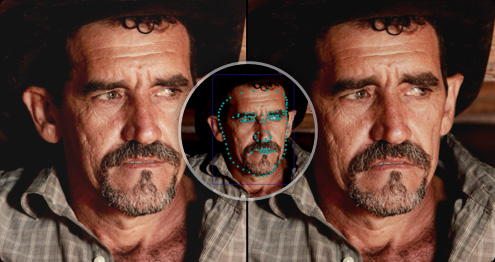
AI Face Reshaper
The AI Face Reshaper lets you change facial features’ shape and position on a moving subject. After detecting and tracking a face in a clip, use the AI Face Reshaper parameters to adjust the eyes, nose, mouth, eyebrows and overall face shape. Manual controls let you fine-tune the resulting face.
Before
After
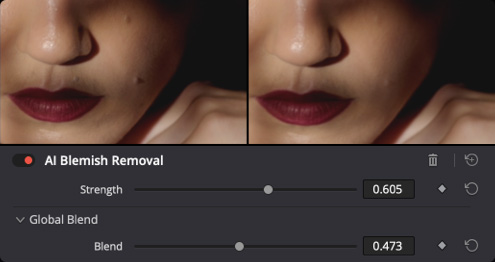
AI Blemish Removal
The AI Blemish Removal tool is perfect for reducing the appearance of superficial skin imperfections such as acne, discoloration, spots and pores while retaining texture of the natural skin. Use the strength slider to adjust the intensity of the tool to better suit the subject in the scene.
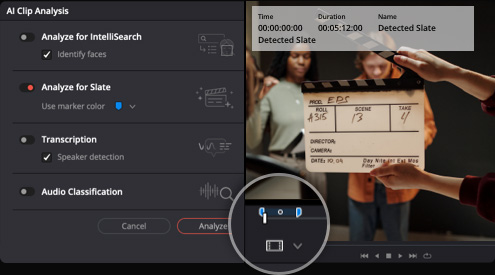
Sync with AI Slate ID
AI Slate ID automatically detects the slate clapperboard details! It intelligently extracts metadata from the slate in the frame, even in dark or out-of-focus clips, saving hours in metadata entry. Media is ready for editing, faster than ever before!
Before
After
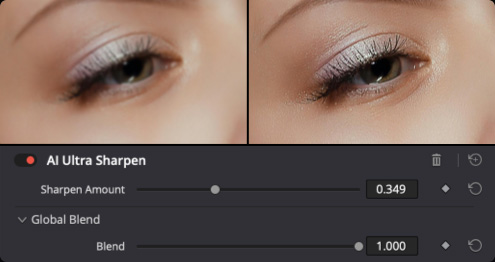
Extreme Quality AI UltraSharpen
DaVinci’s most advanced sharpening tool to date lets you produce significantly clearer, high quality moving images. Use AI UltraSharpen with upscaled videos to make previously unusable footage sharp in higher resolutions. AI UltraSharpen can also be used to improve or fix slight focus errors.
Before
After
Before
After
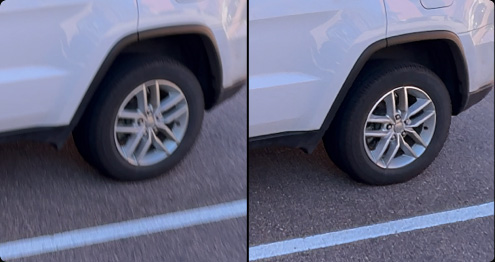
AI Motion Deblur
Remove common motion blur artifacts, such as streaks and softness, from video content. AI Motion Deblur analyzes the source media file and generates a new render with significantly reduced blurring for more dynamic images. This tool is perfect for more impactful slow motion and freeze frame effects.
Photo
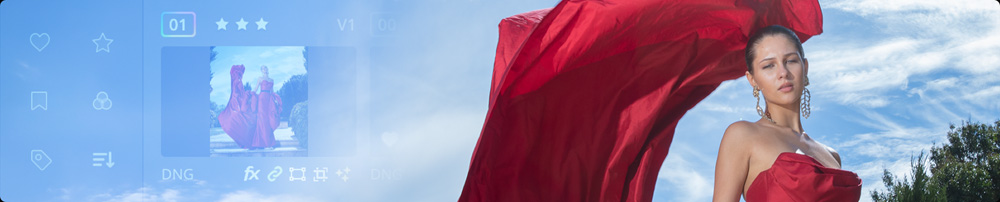
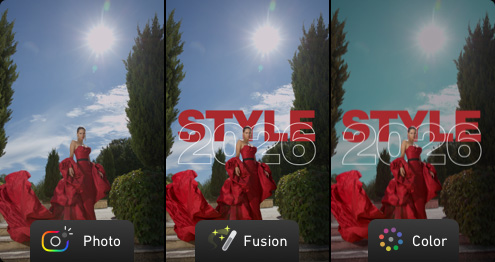
Hollywood Grading Tools for Still Photography
DaVinci Resolve’s powerful post-production workflow now fully integrates photo image editing! The new Photo page lets you import and manage photographs, integrating with the color page for node based grading. Now colorists and photographers can use Hollywood color grading tools on still images!
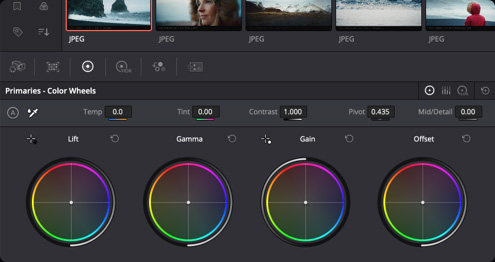
Support for DaVinci Color Tools
Now you can easily use the legendary DaVinci color page tools for still images! Use primary color correction, curves, qualifiers, power windows and node editor to adjust color in artistic ways across your entire project. Plus, you can use a DaVinci color panel to adjust multiple parameters at once!
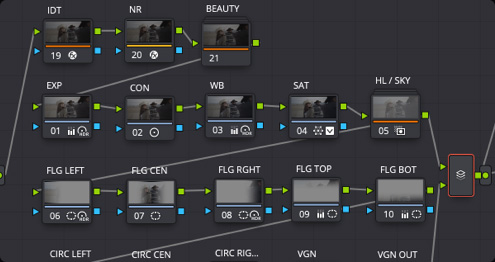
Node Editor for Non‑Destructive Edits
DaVinci Resolve's powerful node based workflow can now be used on still images. Add nodes in series or parallel to build complex grades, apply different corrections to different parts of an image simultaneously and use shared nodes to apply the same look across an entire album of photos at once!
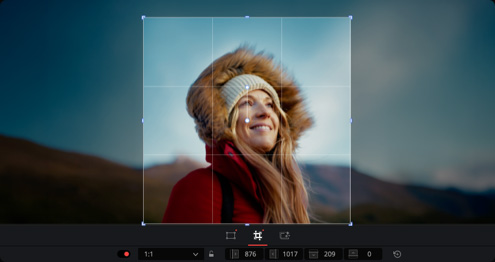
Cropping and Reframing
The Photo page lets you reframe and crop images at their original source resolution and aspect ratio. Every adjustment preserves the full quality of your original file, so you can refine your composition at any time without ever affecting image quality.
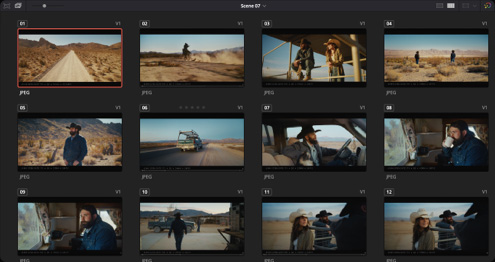
LightBox View
LightBox view on the Photo page gives you an overview of your entire album with grades applied. Select any image and grade it live while seeing the results update across the whole collection in real time. Filter by graded, ungraded, star rating, flag and clip color for fast library management!
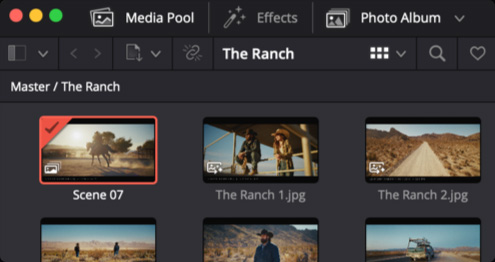
Organize Images in Albums
Albums let you build and manage collections directly in DaVinci. Create albums based on shoot days, camera models, or any desired criteria, and save countless hours by tagging and making raw setting adjustments in batches. Albums appear as timelines on the Color, Cut and Edit pages for easy access.
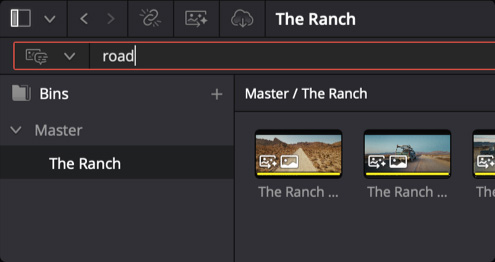
Instantly Search Library
AI IntelliSearch lets you instantly find any photo across your entire project using plain language search. Analyze your albums and search for specific people, objects, animals or scenes without manual tagging. You can even label individuals to search for them by name!
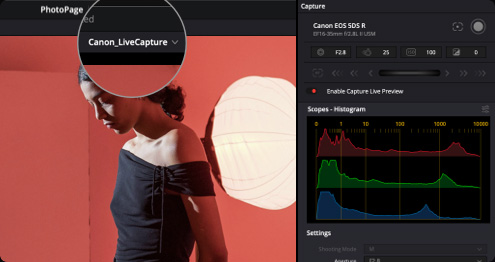
Direct Image Capture
Camera Controls let you tether a Sony or Canon camera directly to DaVinci Resolve for live image capture. Adjust camera settings such as ISO, exposure, white balance, monitor with live view and save capture presets to lock in a consistent look before you shoot. Images save directly into an album!
Full Resolve FX Support
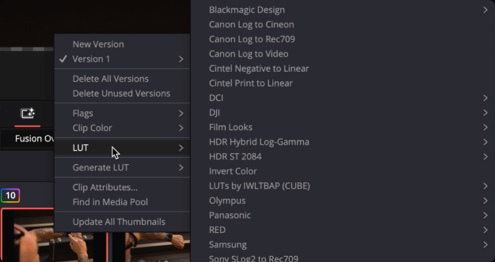
Resolve FX and Open FX plug-in support is available for still images on the Photo page, allowing you to apply effects, graphics, transforms and DCTLs. You can apply looks directly in the Photo page with the help of LUTs or generate LUTs to later apply looks in-camera or while monitoring.
DaVinci AI Toolset
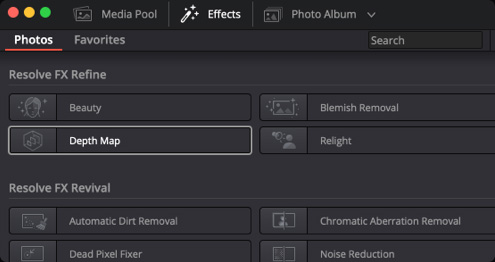
You can access DaVinci Resolve’s powerful native AI tools within the Photo page. Tools like the AI Magic Mask let you make one click selections of an object or person, and separately color grade different elements on an image. Or use the new AI UltraSharpen to upscale low resolution images.
Blackmagic Cloud Collaboration
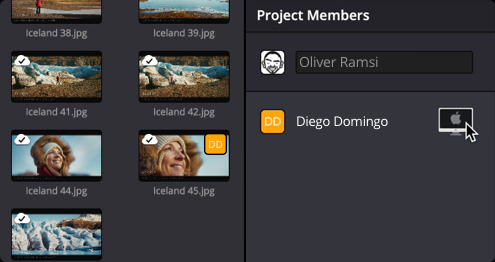
The Photo page is integrated into DaVinci Resolve’s multiuser collaboration workflow using Blackmagic Cloud. You can share the contents of albums, all associated metadata and tags, and all grades and effects with colorists, visual effects artists and editors, simultaneously anywhere in the world!
Cut and Edit
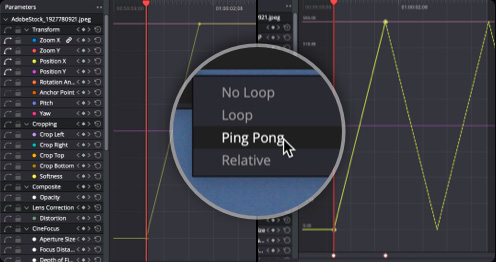
Keyframes and Curves Editor Updates
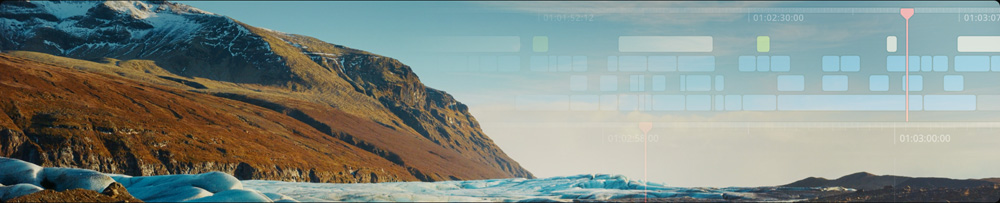
Keyframing updates include new ease animations with loop, pingpong and relative modes plus simultaneous adjustments to multiple clips. The curves editor’s normalized zoom mode automatically scales curves to fill the available vertical space. Four-point Bezier easing supports complex video retiming.
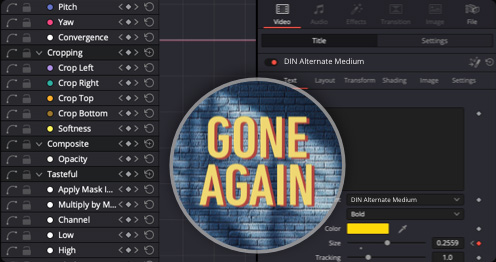
Animate Fusion Effects
You can now adjust Fusion effects directly in the keyframes and curves editors of the cut and edit pages. This allows for more seamless workflows as you tweak text, transitions and motion graphics without leaving the editing pages. For advanced VFX adjustments, simply click the Fusion button!
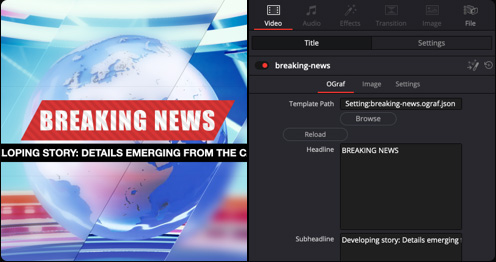
HTML Graphics and Lottie Support
Native support for OGraf HTML graphics and Lottie animations means that you can now drag .json and .lottie files directly into the media pool, where they will be treated like fully rendered animation clips. Alpha channels are recognized, allowing you to layer graphics and titles over video tracks.
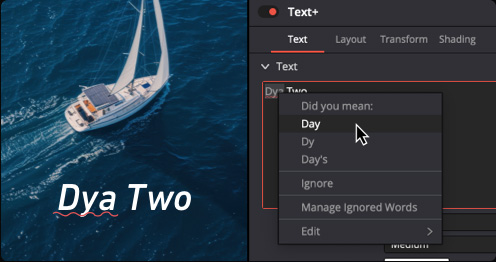
Improved Text+ and MultiText Tools
You can now enable multi-language spell check for all text elements, preview fonts in a dedicated font browser window and use emojis in your text. Character level styling lets you assign different attributes such as font size, weight and color within a single text box, simplifying title design.
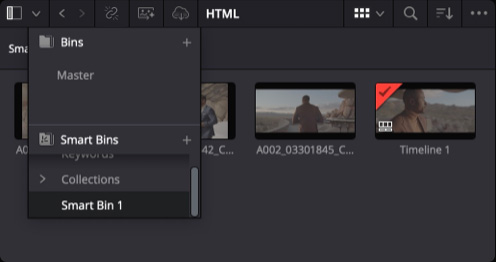
Smart Bin Views in Cut Page
In the cut page, the bin list dropdown now features smart bins and quick access buttons for creating new bins. Smart bins allow you to design sophisticated media pool filters based on a wide range of rules and criteria. For example, filtering to display only .braw clips that have been flagged green.
Color
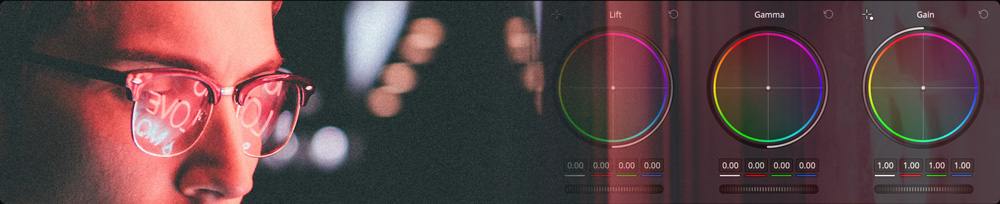
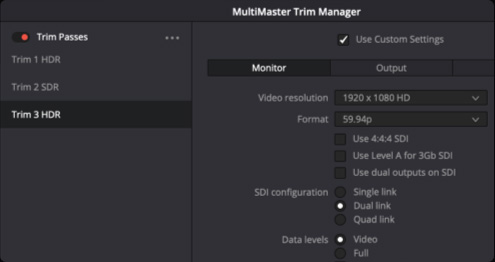
MultiMaster Trim Manager
The MultiMaster trim manager allows you to generate multiple HDR and SDR trim deliverables from a single timeline. When enabled, the node editor will display additional layers for trim operations, allowing you to color manage the timeline for each output standard and render each iteration in one go.
Before
After
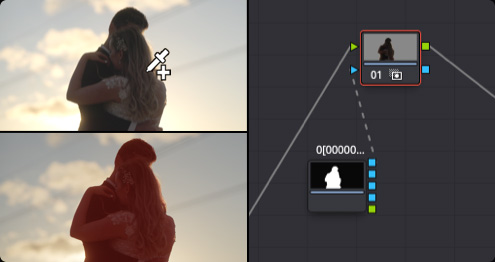
Magic Mask Render in Place
The Magic Mask palette now features a render in place option, allowing you to cache a tracked mask as a traveling matte node. The resulting matte will automatically link to your active node, allowing you to continue grading and applying effects in real time, with significantly lighter processing.
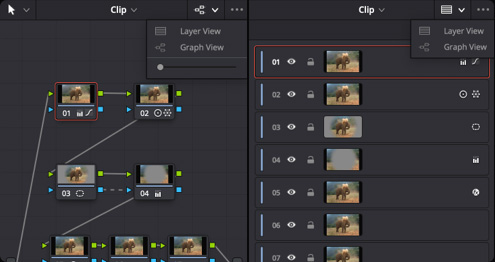
Layer List View in Node Editor
You can now change the color page node editor to layers view. Nodes are listed in rows according to their number in the node graph. This typically results in a less crowded interface and allows for easier node management when adding, labelling, switching, locking, bypassing and removing nodes.
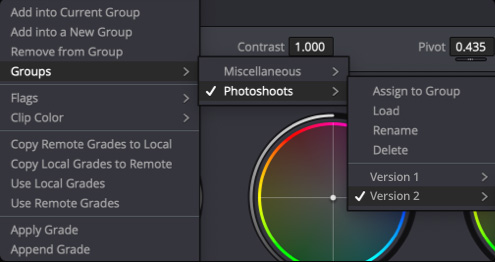
Group Color Grade Versions
When using groups in DaVinci 21, you can now create and manage multiple grade versions. Right-click to add a new version or to change the group version of pre-clip and post-clip node graphs. This affects all clips in a group uniformly. Remove clips from groups for individual grading.
Fusion
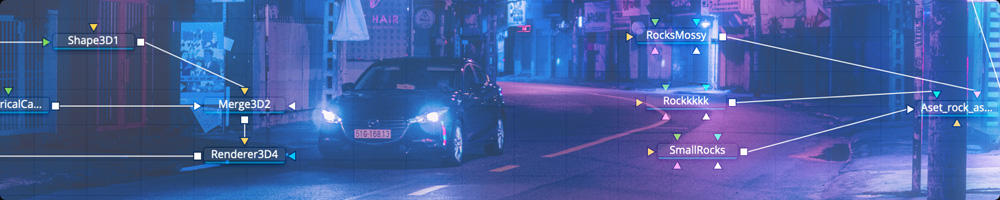
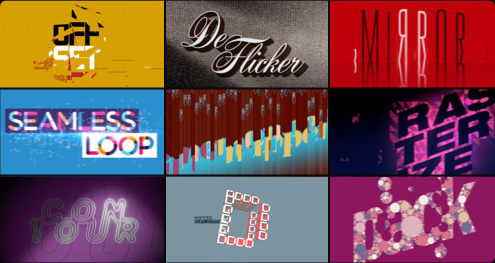
Krokodove VFX Library
Fusion now proudly features Krokodove, the popular and ever-growing library of compositing tools. The collection ranges from utility tools that improve productivity, to essential vector and data tools, to customizable 2D and 3D graphic templates that can be used throughout DaVinci Resolve.
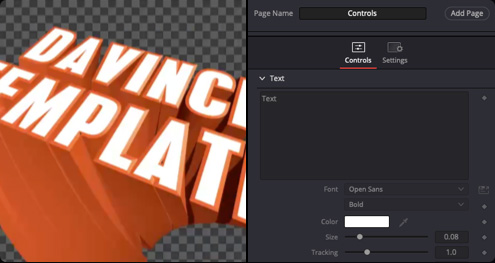
Macro Editor Inspector View
Building Fusion tools and templates is now even easier with the updated macro editor. Significant interface improvements make developing custom tools and templates faster and more intuitive. Use the newly supported inspector view to effortlessly set up, format and publish macros for immediate use.
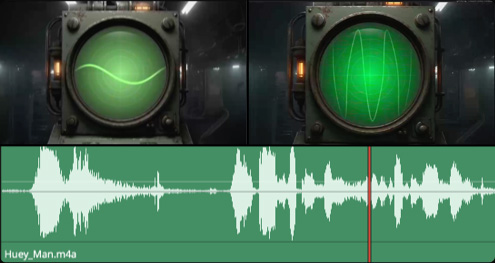
Audio Driven Fusion Animation
The Fairlight Animator modifier connects Fusion to Fairlight’s audio engine, enabling automatic animation based on audio analysis. The audio levels from timeline clips or media pool sources are used to drive the control of parameters such as eyes and lips giving you dynamic animation!
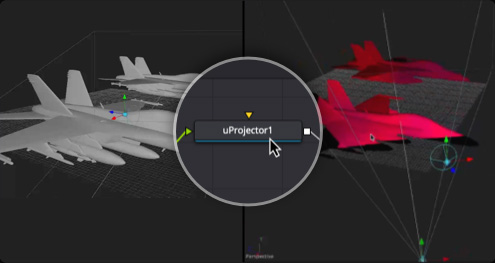
Upgraded USD Toolset
The USD toolset has been updated to USD SDK 25.11 with Hydra 2.0 API for the Storm renderer. This gives VFX artists an improved Fusion USD environment, with support for 3D matte objects and textures, USD Texture Projector and Catcher, plus global in and out controls for the USD loader.
Fairlight
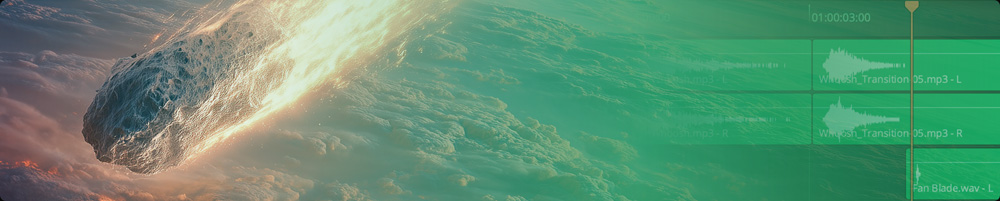
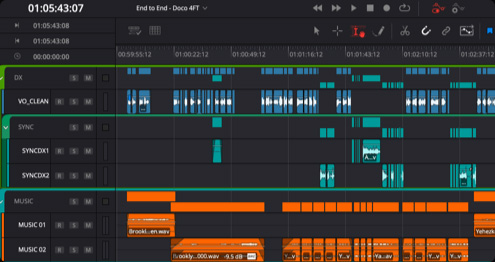
Manage Audio Tracks with Folders
To optimize Fairlight timeline space, you can now assign audio tracks to a folder and collapse into a single composite view. When collapsed, mini rectangles represent the folder contents, indicating the number and duration of the contained clips. Expand a folder to access to individual tracks.
Before
After
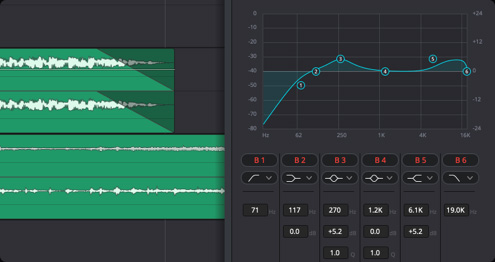
6 Band Clip EQ
Clip EQ now features 6 bands on the cut, edit and Fairlight pages. This allows for more tonal control at the clip level, and matches the track EQ in the mixer. So now you can easily copy and paste settings between the clip, track and EQ plug-in for more consistent, flexible and precise control.
Before
After
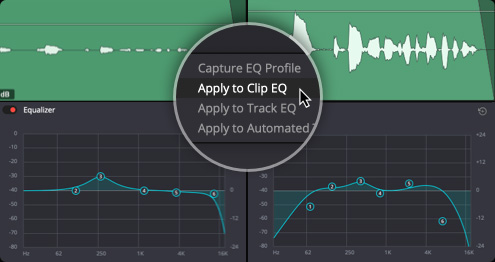
EQ and Level Matcher
Two new clip processing options let you adjust a target clip’s audio to match a reference clip’s level or tonal spectrum. EQ match is dynamic and is automatically automated across your clip to maintain a tonal match. Level Matcher lets you seamlessly intercut clip sections without manual changes.
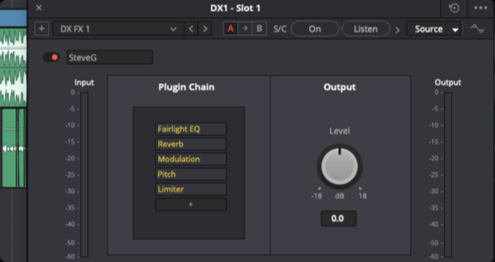
Chain FX
If you have a favorite group of plugins that you need to apply together, you can now build a Chain FX to include them, each with customized settings and saved as presets. You can have up to six effects within a chain and also combine Chain FX plugins for longer chains in the channel effects slots.
Next Generation
Engineering
DaVinci Resolve features some of the most cutting edge technology in the industry today. The DaVinci AI Neural Engine is an advanced machine learning system powering many of the software’s most powerful tools, and is fully supported in Apple M series and Snapdragon X Elite. The inclusion of the latest version of Dolby Vision means users can view HDR on supported monitors, including laptops. The future proof DaVinci Wide Gamut and Intermediate log grading environment let you work on media from any source. You can deliver to every projection, monitoring and archiving standard in use today. Plus DaVinci Resolve is the only software that you can use to edit and grade 8K footage in real time!
Apple Immersive Foveated Rendering
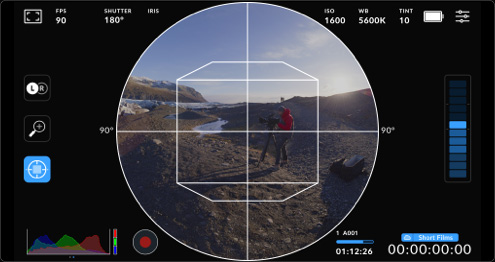
Apple Immersive’s powerful image processing now includes support for foveated rendering for improved playback and enhanced viewer experience. Foveated rendering simulates human vision by prioritizing high-resolution rendering only where you are looking, reducing GPU workload in peripheral vision.
MainConcept H.265 and MV-HEVC Encoding
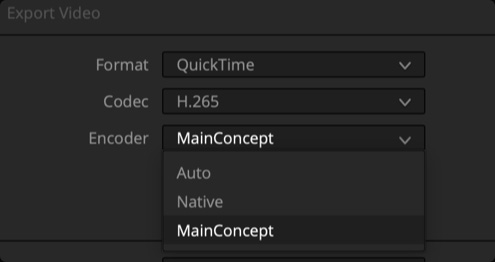
The render settings now feature the new MainConcept render option for H.265 and MV-HEVC 4:2:0 and 4:2:2. This allows accelerated, higher quality 2D and 3D renders for supported systems and hardware capable of 3D video content playback. You can select MainConcept in the encoder parameter for H.265.
VR180 and VR360 Immersive Workflow
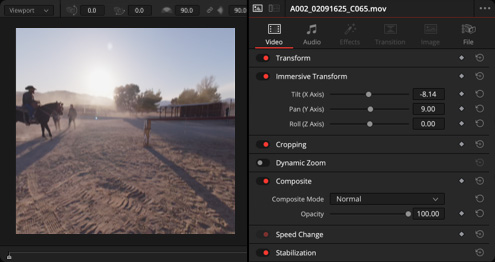
DaVinci Resolve 21 features the most comprehensive support for immersive tools and workflows to date. The standard immersive option in the master project settings allows you to work with any supported immersive formats for delivery to platforms, such as Meta Quest and YouTube VR.
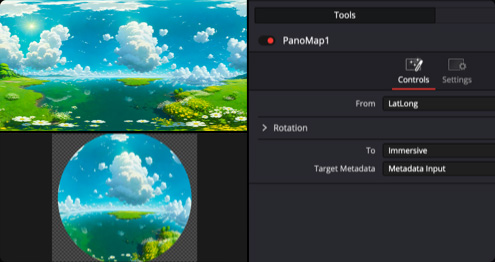
Panomap Immersive Rotation and ILPD Retargeting
It is now possible to orient immersive media using spherical Panomap rotation for more intuitive pitch, tilt, pan, yaw and roll adjustments. Additionally, it is now possible to apply ILPD retargeting data in the Fusion page, allowing for more advanced stereoscopic media handling and compositing.
Tools for Content Creators

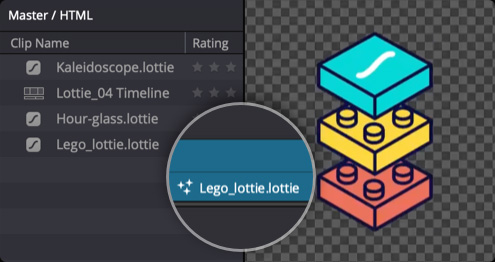
Native Support for Lottie Animations
With native support for .lottie files, you can now add graphic animations to a project with a simple drag and drop. When placed on a timeline, the file is treated as a rendered animation with maintained transparency, so you can use Lottie graphics as stingers, lower thirds, transitions and titles.
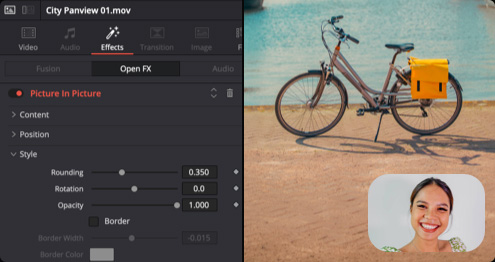
Instant Picture in Picture Layout
The new Picture in Picture Resolve FX allows you to quickly resize and reposition a video clip over the top of another clip as a floating frame. Perfect for presentations, reviews and reaction videos! You can adjust parameters such as size, placement, frame rounding, drop shadow and many more.
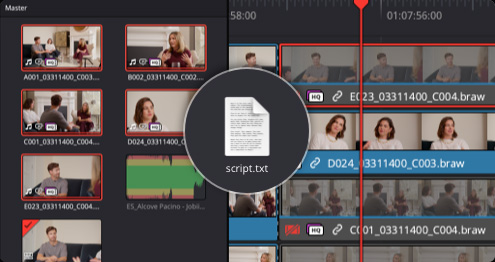
Final Draft Format IntelliScript Support
IntelliScript now supports Final Draft and plain text screenplay formats, allowing you to assemble timelines quickly! Upon import, it compares the script text to the original transcribed audio and creates a cut of the scene. You can then fine tune the result using standard editing tools.
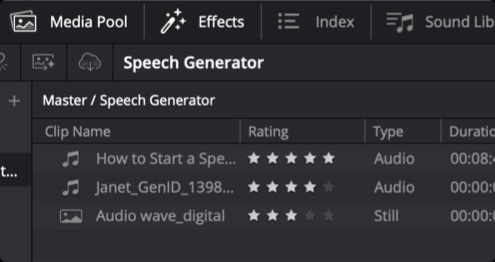
Star Rating and Tagging Columns
New media pool columns help further improve media management. Access the new rating and tagging parameters in the shot and scene category of the metadata panel. You can rate clips on a five star rating system, or use the tags Good Take, Untagged, Rejected to filter optimal takes and performances.
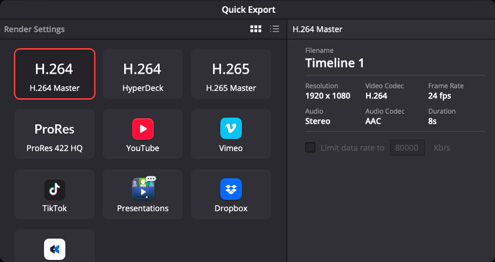
Vertical Resolution for Social Media
For content creators on TikTok, Instagram, X, YouTube Shorts, Snapchat and more, there is now a selection of square and vertical video resolutions available in the project and timeline settings. Combine with Smart Reframe to quickly setup your timeline for vertical or square resolution videos.
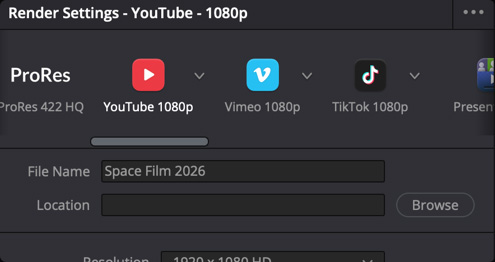
Upload Directly to Social Media
Link your social media accounts to DaVinci Resolve in order to upload videos directly to YouTube, TikTok, Vimeo and X as you export. Compression settings have been developed based on each site’s best recommendations, meaning your videos will be optimized for visual quality and playback speed.
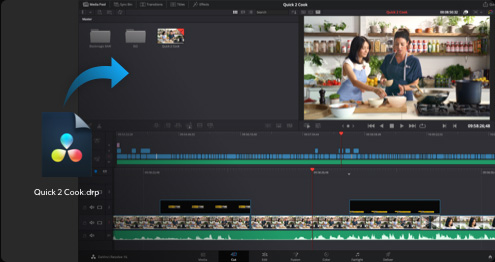
Import ATEM Mini Projects
Live production projects from ATEM Mini ISO models can be opened as a timeline. The sync bin with multiview lets you fine tune edits from the original live production or even replace shots. You can use the ISO recordings from ATEM or relink to Blackmagic RAW camera files for finishing in Ultra HD!
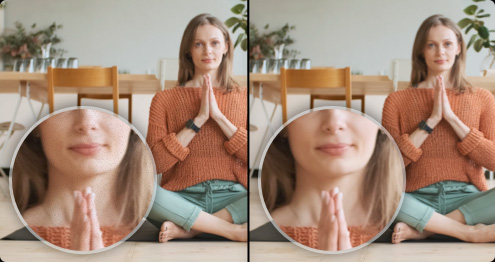
Advanced Noise Reduction
Two powerful tools restore noisy digital footage, even if captured in low light. The GPU accelerated temporal noise reduction algorithm removes noise while intelligently retaining areas of high detail. While the spatial noise tool analyzes the remaining noise pattern to lift it from the image.
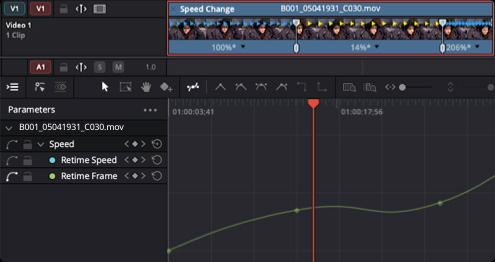
Optical Flow Speed Change
The advanced retiming algorithm analyzes a scene’s content, building new frames so you can slow down and extend the action in a sequence without repeating or blending frames into each other. Every frame created with optical flow is sharp and intelligently constructed from existing visual data.
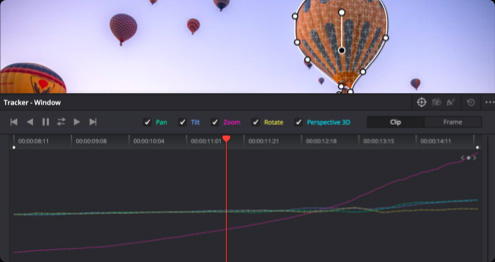
Track and Follow Objects
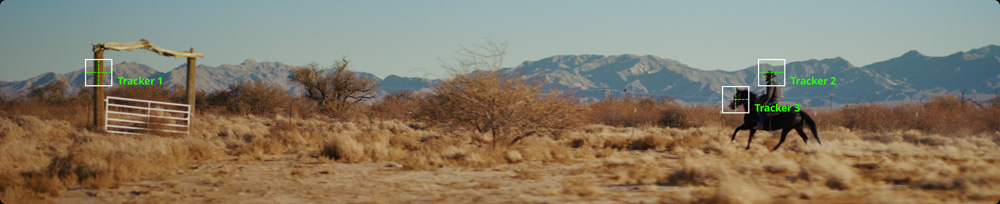
The tracker palette lets you effortlessly follow objects and people to apply secondary grading or effects. When a window is placed on a subject, the tracker can follow its contents in 3D space, resulting in a quick and accurate mask. You can easily emphasize vital elements of a scene!
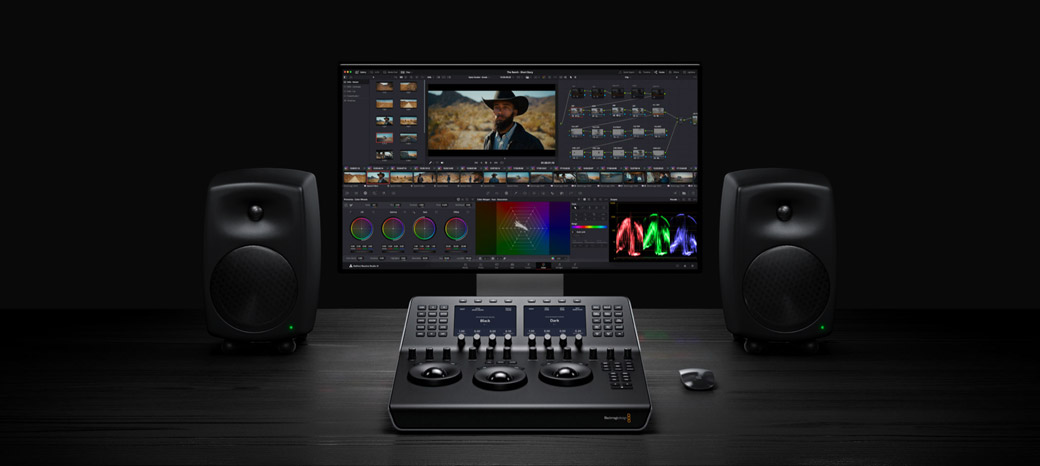
Hardware and Software Integration
Streamline your workflow with editing keyboards, grading panels and audio consoles designed to work with DaVinci Resolve software. Faster than just software, dedicated features are placed directly at your fingertips. Adjust multiple parameters simultaneously on the same panels used in Hollywood!
DaVinci Resolve
Software
DaVinci Resolve 21
Hollywood’s most popular solution for editing, visual effects, motion graphics, color correction and audio post production, for Mac, Windows and Linux. Now supports Blackmagic Cloud for collaboration!
Free
DaVinci Resolve Studio 21
The most powerful DaVinci Resolve adds DaVinci Neural Engine for automatic AI region tracking, stereoscopic tools, more Resolve FX filters, more Fairlight FX audio plugins and advanced HDR grading.
$295
Editor Keyboards
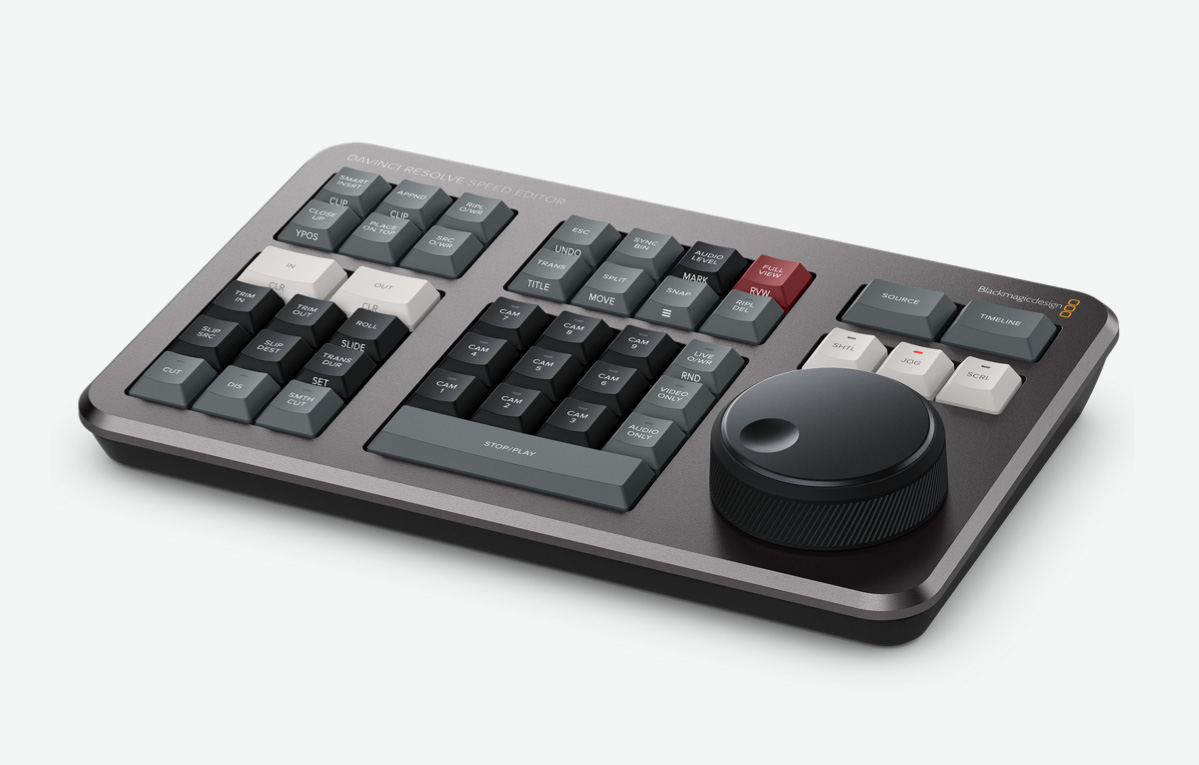
DaVinci Resolve Speed Editor
Includes large search dial in a design that includes only the specific keys needed for editing. Includes Bluetooth with battery for wireless use so it's more portable than a full sized keyboard!
$435
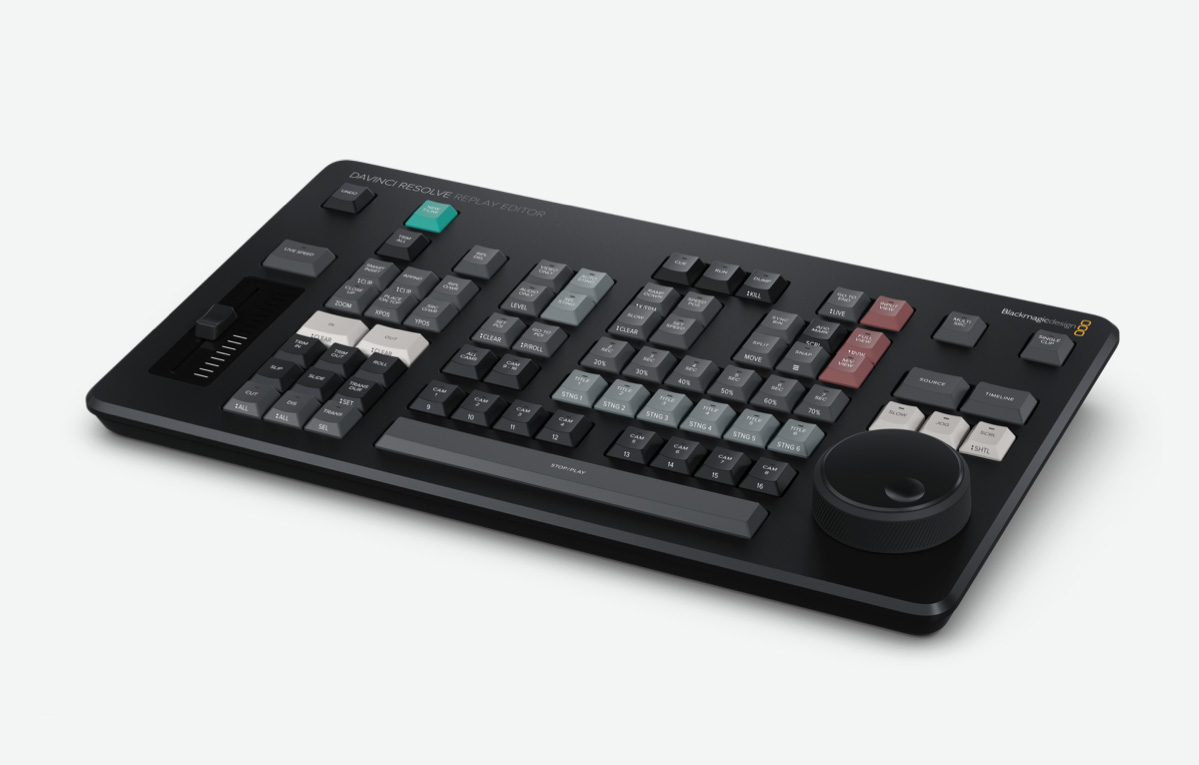

DaVinci Resolve Replay Editor
Editor panel specifically designed for multi-cam editing for news cutting and live sports replay. Includes buttons to make camera selection and editing extremely fast! Connects via Bluetooth or USB‑C.
$559
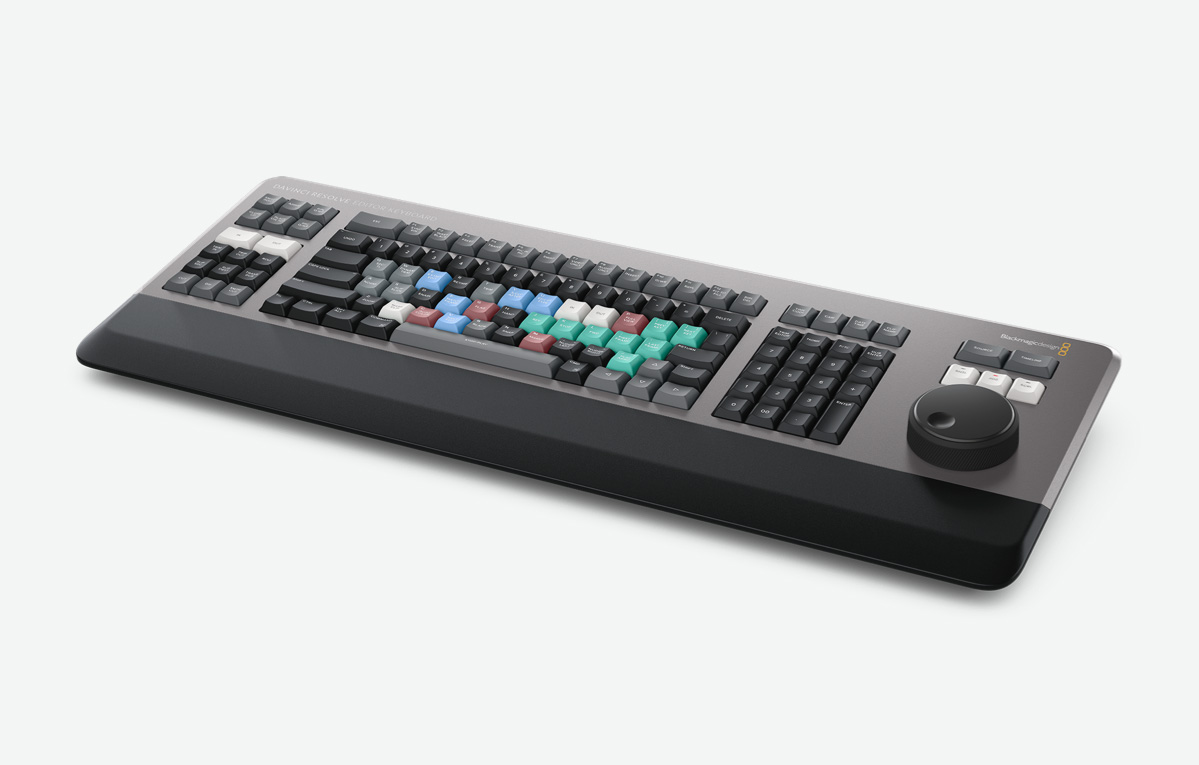
DaVinci Resolve Editor Keyboard
Full sized traditional QWERTY editor keyboard in a premium metal design. Featuring a metal search dial with clutch, plus extra edit, trim and timecode keys. Can be installed inset for flush mounting.
$669
Color Panels
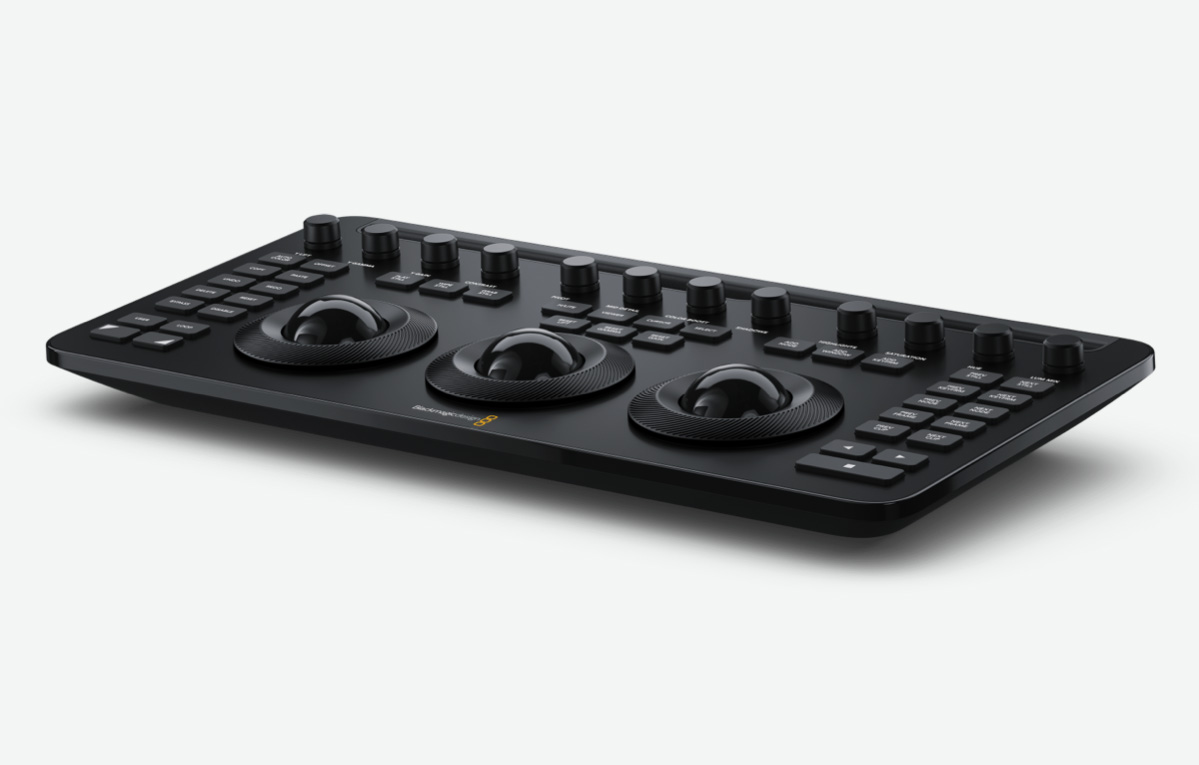
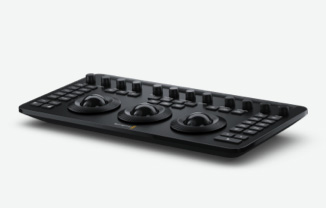
DaVinci Resolve Micro Color Panel
Powerful color panel gives you all the control you need to create cinematic images. Includes controls for refined color grading including adding windows. Connects via Bluetooth or USB‑C.
$559
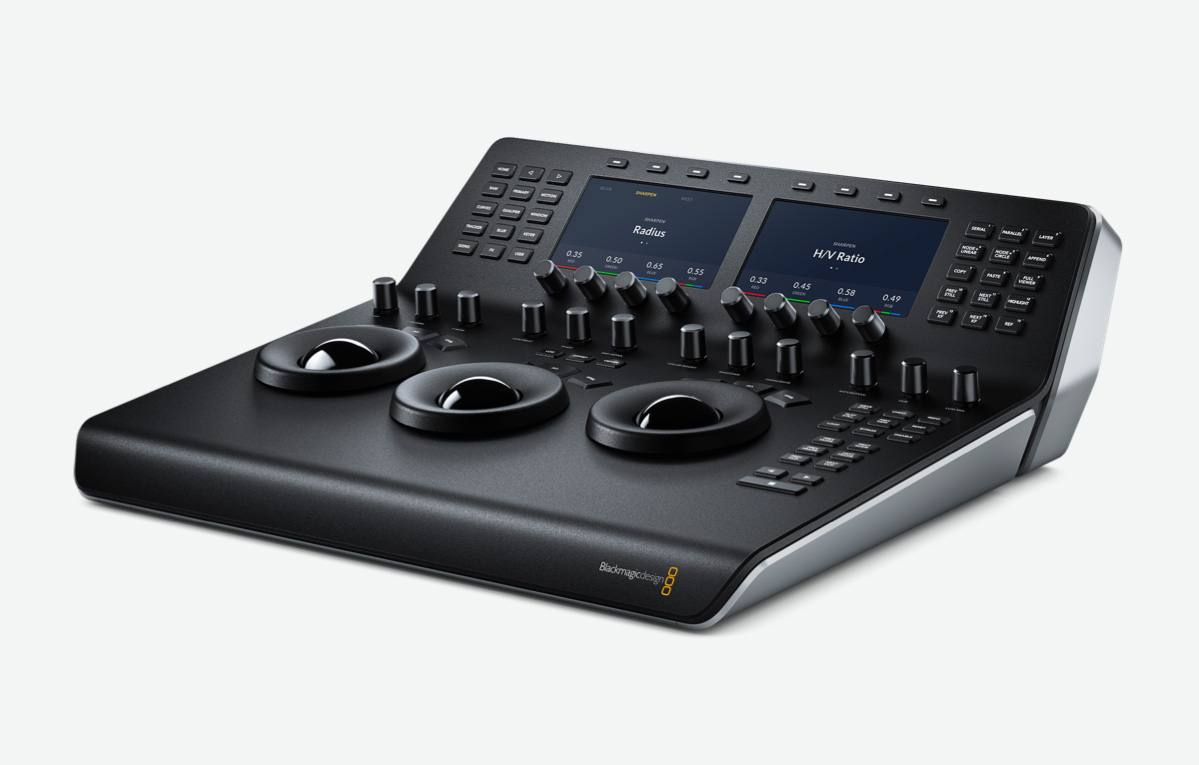
DaVinci Resolve Mini Panel
Portable DaVinci color panel with 3 high resolution trackballs, 12 primary corrector knobs and LCDs with menus and buttons for switching tools, adding color nodes, HDR and secondary grading and more!
$2,319
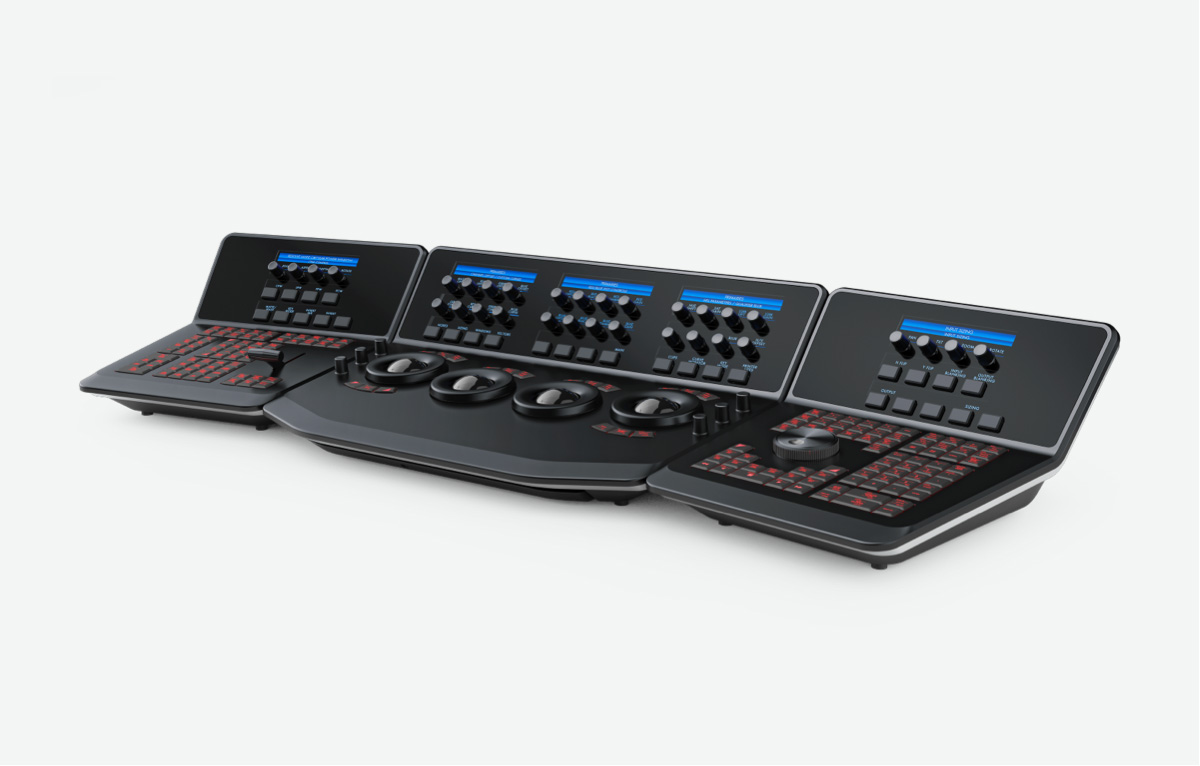
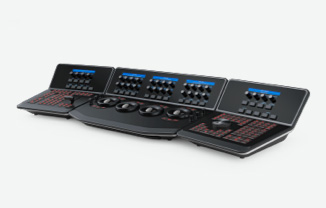
DaVinci Resolve Advanced Panel
Designed in collaboration with professional Hollywood colorists, the DaVinci Resolve Advanced Panel features a massive number of controls for direct access to every DaVinci color correction feature.
$33,915
Fairlight Audio Consoles

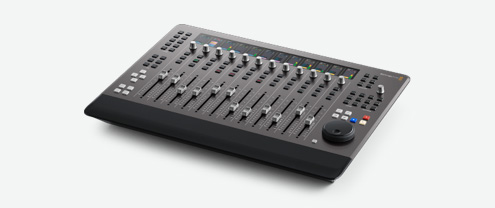
Fairlight Desktop Console
Portable audio control surface includes 12 premium touch sensitive flying faders, channel LCDs for advanced processing, automation and transport controls plus HDMI for an external graphics display.
$3,445
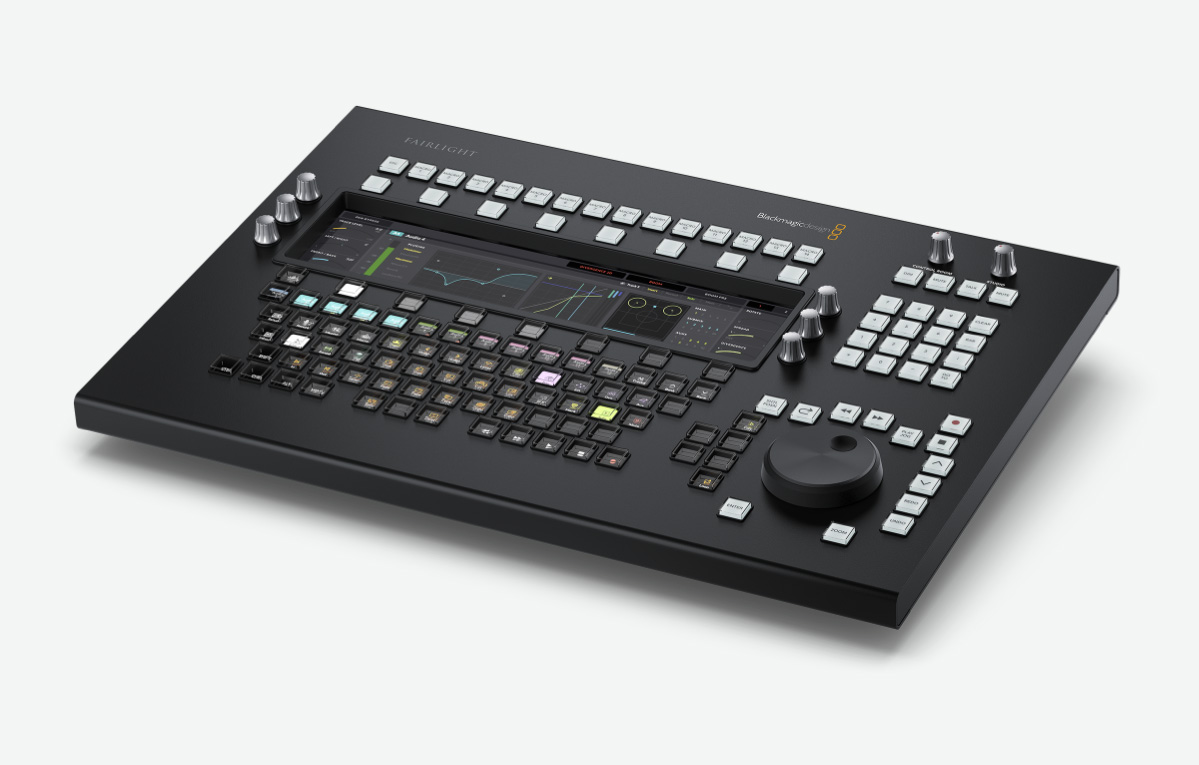
Fairlight Desktop Audio Editor
Get incredibly fast audio editing for sound engineers working on tight deadlines! Includes LCD screen, touch sensitive control knobs, built in search dial and full keyboard with multi function keys.
$5,055
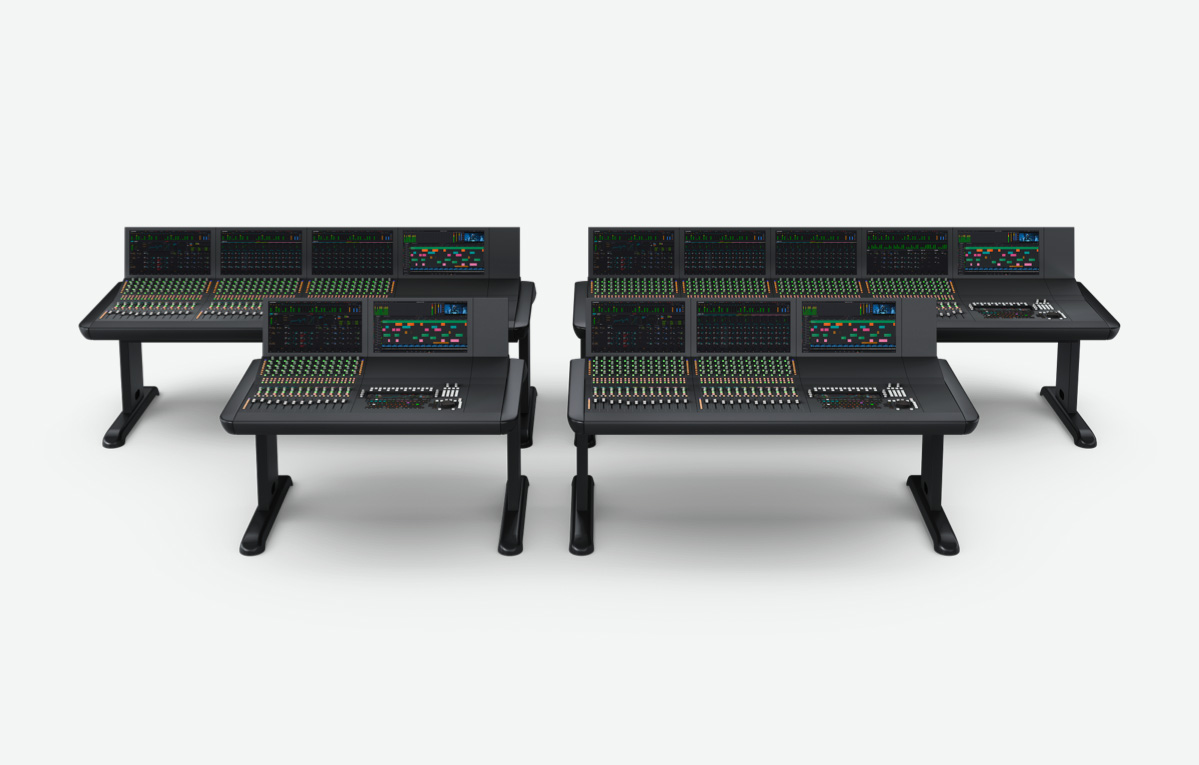
Fairlight Advanced Consoles
Used by Hollywood and broadcasters, these large consoles make it easy to mix large projects with a massive number of channels and tracks. Modular design allows customizing 2, 3, 4, or 5 bay consoles!
From $24,195
Fairlight Studio Console Bundles
Fairlight Console Bundle 2 Bay
Complete Fairlight studio console with 1 channel fader, 1 channel control, 1 audio editor, 2 LCD monitors and 2 bay chassis.
$24,195
Fairlight Console Bundle 3 Bay
Complete Fairlight studio console with 2 channel faders, 2 channel controls, 1 audio editor, 3 LCD monitors and 3 bay chassis.
$32,995
Fairlight Console Bundle 4 Bay
Complete Fairlight studio console with 3 channel faders, 3 channel controls, 1 audio editor, 4 LCD monitors and 4 bay chassis.
$43,995
Fairlight Console Bundle 5 Bay
Complete Fairlight studio console with 4 channel faders, 4 channel controls, 1 audio editor, 5 LCD monitors and 5 bay chassis.
$53,895
Fairlight Console Chassis Leg Kit 0 Deg
Fairlight studio console legs at 0º angle for when you require a flat working surface. Required for all Fairlight Studio Consoles.
$465
Fairlight Console Chassis Leg Kit 8 Deg
Fairlight studio console legs at 8º angle for when you require a slightly angled working surface. Required for all Fairlight Studio Consoles.
$435
Fairlight Studio Console Individual Modules
Fairlight Console Channel Fader
Features 12 motorized faders, rotary control knobs illuminated buttons for pan, solo, mute and call, plus bank select buttons.
$4,595
Fairlight Console Channel Control
12 groups of touch sensitive rotary control knobs and illuminated buttons, assignable to fader strips, single channel or master bus.
$2,815
Fairlight Console Audio Editor
Get quick access to virtually every Fairlight feature! Includes a 12” LCD, graphical keyboard, macro keys, transport controls and more.
$5,115
Fairlight Console LCD Monitor
Features HDMI, SDI inputs for video and computer monitoring and Ethernet for graphics display of channel status and meters.
$1,495
Fairlight Studio Console Unpopulated Chassis
Fairlight Console Chassis 2 Bay
Empty 2 bay Fairlight studio console chassis that can be populated with various faders, channel controls, edit and LCD monitors.
$9,455
Fairlight Console Chassis 3 Bay
Empty 3 bay Fairlight studio console chassis that can be populated with various faders, channel controls, edit and LCD monitors.
$10,555
Fairlight Console Chassis 4 Bay
Empty 4 bay Fairlight studio console chassis that can be populated with various faders, channel controls, edit and LCD monitors.
$13,675
Fairlight Console Chassis 5 Bay
Empty 5 bay Fairlight studio console chassis that can be populated with various faders, channel controls, edit and LCD monitors.
$14,295
Accessories For Custom Furniture
Fairlight HDMI Monitor Interface
Use alternative HDMI or SDI televisions and monitors when building a Fairlight studio console.
$309
Fairlight Console Mounting Bar 2 Bay
Mounting bar with locating pins to allow correct alignment of bay modules when building a custom 2 bay Fairlight console.
$415
Fairlight Console Mounting Bar 3 Bay
Mounting bar with locating pins to allow correct alignment of bay modules when building a custom 3 bay Fairlight console.
$689
Fairlight Console Mounting Bar 4 Bay
Mounting bar with locating pins to allow correct alignment of bay modules when building a custom 4 bay Fairlight console.
$805
Fairlight Console Mounting Bar 5 Bay
Mounting bar with locating pins to allow correct alignment of bay modules when building a custom 5 bay Fairlight console.
$925
Fairlight Console Side Arm Kit
Side arm kit mounts into Fairlight console mounting bar and holds each fader, channel control and LCD monitor module.
$265
Fairlight Narrow Blank Kit
Blank 1/3rd wide bay for building a custom console with the extra 1/3rd section. Includes blank infill panels.
$545
Fairlight Console Channel Rack Kit
Allows mounting standard 19 inch rack mount equipment in the channel control area of the Fairlight studio console.
$285
Fairlight Console Channel Control Blank
Blank panel to fill in the channel control area of the Fairlight studio console.
$219
Fairlight Console LCD Monitor Blank
Blank panel to fill in the LCD monitor area of the Fairlight studio console when you're not using the standard Fairlight LCD monitor.
$469
Fairlight Console Channel Fader Blank
Blank panel to fill in the fader control area of the Fairlight studio console.
$289
Fairlight Audio Interfaces
Fairlight Audio MADI Upgrade
Adds 3 MADI I/O connections to the single MADI on the accelerator card, for a total of 256 inputs and outputs at 24 bit and 48kHz.
$229
Fairlight Audio Accelerator
Add up to 2,000 tracks with real time processing of EQ, dynamics, 6 plug‑ins per track, plus MADI for extra 64 inputs and outputs.
$1,265
Fairlight Audio Interface
Adds analog and digital connections, preamps for mics and instruments, sample rate conversion and sync at any standard frame rate.
$2,729