As a developer or manufacturer, if your software or device absolutely requires a server that costs money to maintain, then your business plan should take that into account: You should be charging customers monthly to keep that service running. You shouldn't promise a one-time payment, take the customer's money and then yank the service away on a whim.
Nobody is asking for free labor to keep services running. I'm asking that you 1. only tether your product to a server if you absolutely need to, and 2. charge for that kind of product monthly so that you can leave it running while you still have customers. That doesn't seem like too much to ask.
The California state assembly has passed the 'Protect Our Games Act'
Then let gamers decide.
Example: If I'm reminded, at purchase time, that this $70 game will work online for 24 months and single-player offline for 36 months, then I can make an informed decision before I buy. Studios would be forced to bring their business plan into visibility and be held to a level of service, and then gamers can't complain when a game is "switched off" according to plan.
This is already implied, just not explicit and quantified in advance.
Personally, I wouldn't buy a game that had early expiry of online already contemplated. And offline play should be rich and complete indefinitely. But I still live in the glorious console cartridge era in my head and in my emulators.
Yes, a big company can take it away, but I think they have to leave it online long enough to get your money’s worth.
So if I have a game for a year I paid $70 for, that’s fair, if it goes away, I hope I had a few hours of fun with it.
Nothing makes me as hopeless for the future as reading people trying to one up the negativity about any initiative at all, and if no one did anything, they’d hit you with the snarky ‘go vote to make your voice heard instead of complaining’
It takes big balls to fight publishers and even more massive to fight the internet and the pseudo-intellectual snark of internet commenters. The entire SKG initiative has my support and perhaps it’s the only thing that might convince me that ordinary citizens actually have any say at all in directing legislation.
And it makes these devices worse. I should be able to control my oven using a simple REST api and home assistant. The fact that in order to interact with my oven with a home assistant I first have to reach out to my manufacture servers is just insane. It's an oven. It only has so many sensors and nobs to twist.
About the only grace I give these manufacturers is the fact that google and apple both make it an annoying pain to maintain applications in their app store. A manufacturer can't simply drop "oven app" once and expect it to be available on the store forever. But that too should be solved with the same regulation that says "Ovens, refrigerators, washing machines, thermostats, and doorbells must not connect to the internet". We can teach the world about VPNs if they want remotely access their devices.
It should not be allowed for a developer or device manufacturer to kill or nerf any product remotely, once it was bought and paid for.
This is silly. No developer should be obligated to support an online game forever.Imagine a highly complex online game that requires a few people and tens of thousands a month in cloud costs to keep it running. Now imagine that this game is 25 years old and only has 100 players total left. Are you saying that this developer must maintain the exact same quality of online play for 100 people?
I think we need to stop treating it as a dichotomy.
There's an understanding it won't last forever, when you buy a multiplayer game, ans making devs make offline versions in the cases where its trivial is going to bite indie game studios.
Gamers have repeatedly shown they dont like subs. Its hard to model "we want to charge you 40 cents per month, escalating with inflation" but thats what youre asking for
The whole thing seems absurd when you remember that no one needs video games. This doesn’t need to be legislated. Let them kill video games and then stop buying their video games if they’re just going to kill it off. Why are people still buying games that cash be killed off?
If enough people are still buying these games then clearly the game being killed off is not an important factor. If it was, they wouldn’t buy them.
What does need to be legislated is how these games and services are marketed: it must be made clear latest date the service is guaranteed to be up.
That might be your future. But as long as there are computing platforms that users can run in their own home there will be games for them.
Nor do I think Nintendo will simply drop their hardware efforts to focus on cloud, and their customers have proven willing to pay higher prices for the types of gaming experience Nintendo will deliver.
>On September 29, 2022, Google announced that it would shut down Stadia, citing its lack of traction with users. The service was shut down on January 18, 2023, and Google refunded all purchases for hardware and games made through the Google and Stadia stores.
even more fortunately, further attempts will fail for the same reason - input lag.
This example is humorously short and this is why there is backlash to game companies shutting down games. What about the people who bought it towards the end? They just get nothing? All that time and money spent just gets thrown in the trash because they don't want a cloud bill? They either need to opensource the games and servers or keep supporting them for a decade or longer.
as long as there is a market the producers will come, even in a super capital intensive industry like this. and it looks like nvidia is partially going back on the whole data center push with rtx spark. its just one high end product but it shows they know a lot of people want local gaming and local inference.
Companies would just default to saying "we reserve the right to shut off online connectivity at any time."
the basic function of a multiplayer server is to keep the players game state synched, large numbers of players, and very fast gameplay vs connection rate and jitter is fly in ointment.
I enjoy low-latency competitive games, and I'd say those are unlikely to get replaced by cloud, because many players notice latency spikes immediately. But I'm a bit skeptical of how much market value can be sustained by people who like the feeling of owning their own hardware, or feel the need to have lower latency in games.
I'm sure if someone built a data center within two blocks of my home and I was able to stream from it, many of these issues would disappear as well.
Consoles might as well already be cloud for all you control them. But I guess I should've specified PC gaming. I thought it was indicated from the context of "stop killing games". Also, to be clear, I'll never "cloud" game or use consoles. I'll just remain in the past with old hardware and old (and new indie) games. But the "PC gaming industry" as an economic block larger than movies is dying and that's a shame.
Ideally a free subscription through packed in keys and such but we'll probably end up being nickel and dimed even further.
That article is paid for by the lobbysts and completely incorrect and wrong.
Good riddance. Online features suck. Make your game multiplayer or make it singleplayer. Don't add pointless online features.
PS all you need to make sure it works is release the server once you stop supporting it yourself.
> They rely on a huge network of interconnected cloud micro services.
Give people the docker file.
> A single match might require separate proprietary systems for matchmaking, player inventories, anti cheat, metrics tracking, and database management. Many of those come with licenses that don't allow you to just give away the code for free.
That's more AAA stuff not indie.
Edit: oh, it's yours. Spend 5 minutes understanding exactly what SKG have said they are not asking for.
even games are not really a moat for owning hardware - next Gears with its timing-sensitive reloading mechanic can just get adapted for cloud.
if cloud gaming gets another hype wave for one reason or another, this time I am pretty sure they will lock in a much bigger user base. me personally? still committed to owning my hardware, but I can totally imagine my mother playing some RTS on a GeForce Now-connected tablet and having zero complaints.
You?
The companies making the games?
Why should they get to destroy games—gone, forever, with no chance of retrieval or resurrection—that hundreds of people put their time and love into, and millions of people want to play, just because they think it'll make this quarter's stock price numbers look better?
Copyright was created to protect the rights of the creator for a limited time to promote the useful arts. Creations are supposed to become part of the public domain once the creator is no longer getting use out of them. Game companies want to break that bargain, scorched-earth style, and ensure that no one can ever use the things that they create to make anything new.
In my gaming circles, people who work on SaaS solutions are against SKG even though they are avid gamers and even open source contributors. They just recoil on a thought of an EOL plan. Same on HN.
"Think of the indies" is just same old "Think of the children" astroturfing.
If the app doesn't use the Internet then the natural way to provision it is to have it pre-loaded on the device anyway. Why should the goal of "avoid needing to hit the manufacturer's servers" involve hitting Google's servers?
I feel a carveout for total says, say $200k USD or less, would be reasonable. Otherwise you're just conscripting indie time.
I was working on a game, but I'm not looking forward to releasing updates everytime steam changes their relay. Considering scrapping multiplayer completely.
It had its server reimplemented by enthusiasts [1] with no access to this "one of a kind cloud" for decades now. Heck it even supposedly had game client ported to new engine [2].
> B-but we can't release the binaries due to licensing...
Release the source. As a developer you should be able to write code that allows to stub out all the propriety parts. The community will replace your speedtrees, matchmaking, netcode, anticheats and so on.
Change is hard we get it, but the excuses are on par with any other industry..
IMO, the move from community servers over to matchmaking & vendor only servers being the only viable option was a huge disservice to the long-levity of games. If I find the code around here, I could still get a Tremulous server running today for a few bucks, even if I haven't played that game for 20+ years.
These sorts of EULA should be flat out illegal.
Why should profit be the first, last, and only consideration when it comes to deciding whether the art of today is even possible to view tomorrow?
This is what the post was saying:
1. No nerfing to the game/service whatsoever. This means you can't just kill online play. Ever.
2. Charge a monthly price or significantly increase the purchasing price.
Clearly neither of these are viable for most games and the game industry.
Pretending that not doing that is bad design would have a chilling effect on novel games.
I'd be 100% for "if your game has an easily releasable server you have to release it on EoS" but this bill isn't it.
And any and all EULAs or similar documents presented after a sale should be completely null and void. But any corporation attempting to that should be fined a signficant portion of their revenue. Past that, dissolution of company.
But no, we live in a shit society that someone who signs up for a demo of Disney+ and then has his wife die due to bad food, and they tried to slap indefinite arbitration on him.
https://lawreview.missouri.edu/infinite-arbitration-how-one-...
This whole country feels like one big fucking company store scam.
2. It's not just a country. Sadly this is a worldwide problem, this is the global standard. And it's sickening.
But I think there is an argument to be made that the EULA has no compensation. Since payment has already been made for the product, it's completely one sided.
20 hours ago
Laura CressTechnology reporter

Ubisoft
The Crew was released by Ubisoft in 2014, and discontinued in 2024
Can a company take away something you've already paid for?
In the world of online video games, some already do. Publishers can decide to switch off a game's servers, often leaving it effectively unplayable.
Stop Killing Games, a growing consumer rights campaign started by American YouTuber Ross Scott in 2024, is challenging that practice.
In January, the group submitted a petition featuring nearly 1.3 million signatures to the European Commission, triggering a public hearing in the European Parliament in April. What began as an online campaign is now awaiting a decision from one of the EU's most powerful institutions.
Scott's campaign began following an announcement from the major studio Ubisoft, saying it would shut down the online-only racing game The Crew in 2024.
The French company said it was taking the game, which attracted more than 12 million players during its lifetime, offline, citing "upcoming server infrastructure and licensing constraints".
For players such as Chemicalflood, who told me he had been playing The Crew for nearly a decade, the move - which left the game unplayable - felt personal.
"I was around 18 at the time of the launch - it was a big part of my adult life growing up," he said. "It was a great escape from hardship at the time, so it has always been something special to me."
Over the years, he said, the game became something he shared with his children, who enjoyed exploring its virtual recreation of the United States.
"The shutdown itself wasn't upsetting," he explained. "But how they handled it was the kick in the teeth."
For Chemicalflood and many fans like him, the issue was not that Ubisoft ended support. It was that players lost access altogether.

Stop Killing Games
Ross Scott is the founder of the Stop Killing Games initiative, which he started in 2024
The announcement from Ubisoft caught the attention of Scott, also known online as Accursed Farms, who had already been creating content around the issue of ownership around games for several years.
"I just hate seeing creative works effectively destroyed," he told me.
He quickly decided to start a campaign, naming it Stop Killing Games - the killing referring to when "every copy of that game that's ever been sold has been disabled, and no one on the planet can run it".
Whammy4, a gamer who founded the fan community The Crew Unlimited and helped lead efforts to preserve the game after its shutdown, likened it to "someone just breaking into your home and stealing your bike or your car".
"You buy a physical copy of a game, you bring it home and install the game, you play it for some amount of time. Then all of a sudden the publisher completely destroys all copies of the game worldwide, including yours."
"No refunds, no actual heads-up at the time of purchase, and nothing you can do to keep it at all," he said.
The lawsuit was dismissed without prejudice in June 2025, after the plaintiffs voluntarily withdrew the case.
The wider games industry has also pushed back against the campaign.
It also warned that some of the campaign's proposals could make online-only games significantly more expensive to develop.
"In no way are we asking companies to keep servers running or services going, they can end it any time they want," said Scott.
Instead, he and his fellow campaigners argue that when a game is shut down it should be done "responsibly", with publishers considering "end-of-life plans" such as updating the game to work offline or releasing software that allows players to continue running it.
While The Crew may have lit the touchpaper for Stop Killing Games' launch, there have been many games before and since which have suddenly been shut down.
The issue has become more prominent as online-dependent "live-service" games have grown across the industry.
In May, Sony announced plans to discontinue support for the multiplayer title Destruction AllStars.
Sony
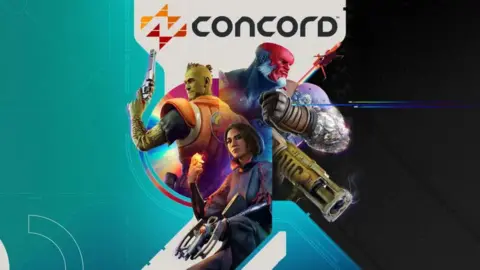
Concord was launched by Sony in August 2024, and taken down just two weeks later
Joost van Dreunen, a professor of games business at NYU Stern, argues that unlike books, films or music, many games are built around communities and online interaction.
"Games, especially live-service games, are more like digital communities and much less so consumable experiences," he said.
But sustaining those communities has become increasingly difficult in a market dominated by long-running successes such as Fortnite and Call of Duty, he explained.
As audiences shrink, publishers often decide to shut down servers and move on.
"Every new live-service game invents its own demise," van Dreunen said.
The campaign is now being fought on multiple fronts, and as such features a team of people, including organiser Moritz Katzner, advocating for it alongside Scott.
The European Commission must respond to the European Citizens' Initiative - the petition brought by the group - by 27 July.
In March, French consumer group UFC-Que Choisir launched legal action against Ubisoft over the shutdown of The Crew, arguing that players were misled about the permanence of their purchase and that some of the company's contract terms were unfair. The case remains ongoing - Ubisoft said it did not comment on ongoing litigation when asked for comment.
The UK government has so far resisted calls for new legislation.
Although a Stop Killing Games petition secured a parliamentary debate, with over 100,000 signatures, ministers said they had no plans to amend consumer law.
"Those selling games must comply with existing requirements in consumer law, and we will continue to monitor this issue," they added.
Stop Killing Games
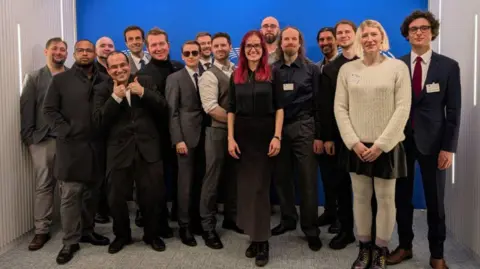
The Stop Killing Games team has grown since the campaign was first launched by Ross Scott in 2024
Meanwhile, in the United States, campaigners have backed California's proposed Protect Our Games Act, which would require publishers to either keep games playable after online support ends or offer refunds.
The bill has already passed the California State Assembly and is now being considered by the State Senate.
For Scott, the journey from campaign launch to parliamentary debate has been a long and exhausting one, although one he could also not imagine abandoning.
Both he and his team are aware there may still be many months, maybe years until they can potentially put the campaign to rest, but the debate it has sparked shows no sign of disappearing any time soon.