That's the predominant theory, but nothing affecting them has yet proven to be efficacious so far (AFAIK).
Likewise, at one time everyone "knew" aluminum was a culprit, because it showed up in autopsy analyses of affected people. However, it turned out that correlation wasn't from aluminum causing it, so avoiding aluminum didn't affect the disease.
In the words of Derek Lowe:
Amyloid-directed therapies truly, truly do not appear to be the answer for Alzheimer’s treatment. When I started work in the field back in the early 1990s, I was convinced of the opposite - the evidence looked very strong that defects in amyloid processing were indeed the cause of the disease. But that was thirty-five years ago, thirty-five years in which therapy after therapy after therapy aimed at amyloid mechanisms has failed.
[…] We’re way past persistence, way past focus, way past optimism and multiple shots on goal and old-college-tries. Do something else! For God's sake, do something else.
— https://www.science.org/content/blog-post/anti-amyloid-antib...
For humans, not yet progressed to trials though safety has been evaluated for other diseases, so possible for trials to happen quickly?
" the compound has strong potential to quickly transition into human clinics because it has already undergone safety evaluations for other diseases."
What makes alzheimer's difficult is that it is not really a single uniform disease. There are subtypes.
Since my mother has it, I was presented with an option of a genetic test. There are several genes which increase your risk. However, if one has PSEN1 that will 100% guarantee early onset alzheimer's at some point.
I'm still on the fence if I want to know.
I really hope we get some viable treatments for this terrible disease. Early onset azlheimer's is awful. I cannot imagine having malfunctioning brain.
they found people who use glucosamine (joint pain, knees etc)
have a 25% higher chance of Alzheimer's progression
https://thesciverse.org/scientists-found-that-a-supplement-t...
(still can't figure out if that website is "AI" but they have great articles)
Isn't the current thinking that amyloid-beta buildup is a marker, not a cause? The therapy may be working here, but it isn't clear whether clearing amyloid-beta proteins is the mechanism or an outcome.
I don't have a dog in this fight and I don't remember that much but I read someone's "in defense of the amyloid hypothesis" with interest. So if you want an counterpoint, you can go read https://www.astralcodexten.com/p/in-defense-of-the-amyloid-h...
Don't get me wrong, if you are in this area of research this debate is important. There may be other types of Alzheimer's that have a different means. This drug may actually target something else. There might be some other truth I haven't thought it - but to me as an outsider the important part is a treatment that works, not why it works.
The TLDR is that the researchers were publishing doctored images to support their hypothesises, which is why the Amyloid hypothesis was such a dead end.
If the accusation is "the field has been captured by a group with a vested interest in a model based on fraudulent research, strongly biasing what gets funded and what gets published" I wouldn't expect "studying the literature" to be particularly helpful in assessing the claim. It's sort of like saying "I read all of Enron's press releases and SEC filings, and they sound legit."
The defense reads more like a special pleading or sunk cost fallacy. There has been a lot of research done on one hypothesis, actively excluding alternatives, so that hypothesis deserves to be considered until disproven (he does, iirc, allow for a test that would de-privilege the amaloyd hypothesis).
"I am David Schneider-Joseph, an engineer formerly with SpaceX and Google, now working in AI safety. Alzheimer’s isn’t my field, but I got very interested in it, spent six months studying the literature, and came away believing the amyloid hypothesis was basically completely solid. I thought I’d share that understanding with current skeptics."
6 months of reading literature when you don't know how to read biomedical literature isn't very confidence inducing. I know this site really likes it when smart outsiders come in and disrupt the status quo, but... probably not in this case.
To be clear this isn’t about whether it’s right or wrong it’s about that science involves investigating all avenues with evidence, proof, and rigor. Group think is how we end up incorporating bias into science, which is anti scientific.
> Glucosamine mimicked the effects of a low-carbohydrate diet in a prior animal research, resulting in increased lifespan [21], and studies consistently showed that a low-carbohydrate diet protects against dementia [22, 23]. An animal study suggested that glucosamine may promote cognitive function by impacting energy metabolism [20]; other animal models have indicated the neuroprotective and anti-neuroinflammatory effects of glucosamine
I am working with invitae to get her DNA tested. Unfortunately, her stage is considered moderate and very little treatment options.
> The 2006 paper suggested an amyloid beta (Aβ) protein called Aβ*56 could cause Alzheimer’s.
https://www.science.org/content/article/researchers-plan-ret...
But again I am not saying you are wrong and I am even sympathetic to this narrative but ultimately, unconvinced, either way
Given the decades of emphasis on clearing / preventing amyloids I would be fairly jaded. If someone (biotech) wants to spend $$$ chasing this down, good on them.
But a paper curing a mouse model of a human neurological disease does not move the needle for someone with or watching someone suffer from this disease.
Are you a mouse, perhaps? We already have a plethora of treatments for mice suffering from human-induced Alzheimer's. None of those treatments have ever been shown to work for human patients, and this one is no different.
There are dozens of studies that show mice improving their memory/spatial reasoning as Alzheimer's models. None of them have led to a proven improvement in longevity or quality of life for human Alzheimer's patients. Some of them slightly slow the progression, but even then you're getting into a gray area - is it really "better" to be stuck in the Alzheimer's fog for longer? Are we actually improving quality of life? It's unclear.
So no, in order for us to say that this approach "works", we would need randomized controlled clinical trials in humans showing a strict improvement in quality of life and/or longevity. This is not even close to that level of evidence.
The problem is that claimed success in these rat models has never transferred to humans. Either the problem is that rat Alzheimer’s is a poor model for human Alzheimer’s or the science being done is poor quality.
> Because reducing amyloid burden is clinically proven to improve functional outcomes, these preclinical results strongly support the rationale for testing this drug in early symptomatic Alzheimer’s disease
I believe this is the critical criticism of others. There’s now two camps. One side claims that the Amyloid movement is based on faulty science and outright fraud (true AFAIK) and the other side claims that there’s still evidence the amyloid hypothesis is accurate despite the flawed start to the hypothesis (possibly true). Generally I don’t trust a lot of effort being pushed behind a hypothesis that’s got such shady behavior from proponents and that rely on fast tracking drug approvals for drugs that reduce amyloids but clearly don’t benefit Alzheimer’s. Everyone gets to choose the priors they choose to evaluate the situation on.
BTW, many physics people pick up the mechanical bits of machine learning/AI very quickly since they have all the foundational mathematics. The harder parts are understanding all the methods/tricks/complexity that got us to the state of the art- similar to biomed, you just sort of have to immerse yourself amongst knowledgeable people and let their knowledge diffuse in.
Is putting your thumb on the scale against Lowe. When a few replies down from here some commenters have provided an article demonstrating the exact fraudulent science in favor of what Lowe is saying.[0] It seems you may very well be disrupting it because he has a minority opinion. So you’ve possibly spent 6 months understanding an incorrect and fraud supported thesis. That seems like an outsider trying to disrupt it by using their “Google/SpaceX” creds to claim authority on the work of insiders.
From a Lakatosian perspective, the amyloid hypothesis is not necessarily wrong, but it is not paying off in terms of empirical insights relative to the amount of attention and funding it has received.
So there's some benefit. Sounds like their next step is a much larger trial to answer the question you are posing.
That has stopped, presumably, but alternative approaches haven't had much success yet either.
2. I would never want anyone to believe what I say because of "Google/SpaceX creds" (I didn't even write that line, Scott added it, and only to provide a brief biography and acknowledge that I do not work in the field, not to lend an air of authority to my words).
3. There's no need to cite the fraud to me, since I already discuss it in my article. You are welcome to read that article and form your own opinion about the arguments therein.
If your view is merely that there is a "camp" of experts that disagrees, then sure, but in that case, I do not think it is honest to frame this as a choice between believing in the authority of a single expert from that camp, vs. the (lack of) authority of me, a non-expert.
(I also think your read of the evidence is wrong, but I won't restate the arguments in my article.)
You are correct that a series of clinical trials, which would take 7-10 years, would clear things up. But for now, we simply don't know.
In mice. This is a repeating trend in Alzheimer's research, where the amyloid-beta treatment works in the mouse model but not on humans, because the mouse model induces the amyloid-beta issue (mice don't really get Alzheimer's) and then we treat it.
Sure, maybe an eventual useful Alzheimer’s therapy will remove amyloid deposits, and maybe it won’t, but it needs to actually treat or at least meaningfully slow the actual disease.
Also, I didn't say anything about the evidence (I don't have a "read" on the evidence, because I don't read Alz literature). My point is entirely that my priors indicate that Derek is a more reliable reader than you.
>I don't have a "read" on the evidence, because I don't read Alz literature
these two sentences seem contradictory to me. i am not sure how you would keep up on the research (to know it's moved from majority-held to minority-held view), and know that the move is not reflected in the literature, without reading the literature.
Why do you continue to frame this as a choice between a single cherry-picked expert's opinion, and my own non-expert opinion? Either fairly represent the spectrum of experts' views, or decide based on the actual evidence and arguments.
The raw literature for alzheimer's, as well as biomed in general, is not really easily interpretable. It's rife with errors, misleading statements, and intentional obfuscation.
I've seen this happen before, btw- overturning establishment paradigms, especially ones where the underlying etiology is complex- is extremely hard and often takes decades of experimental results.

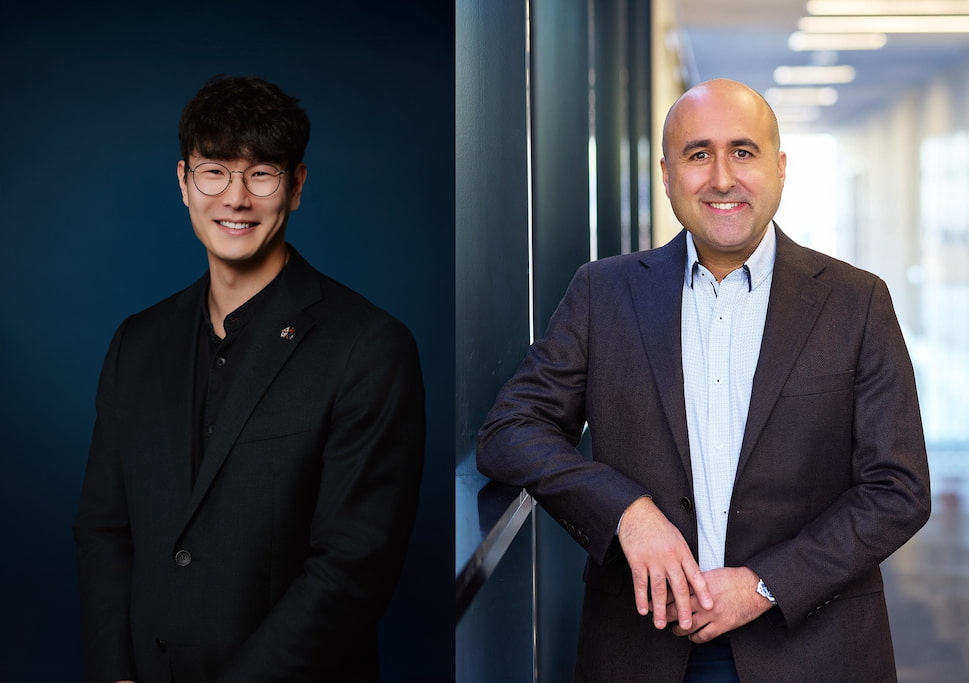
Lead author Dr Jae Pyun (left), senior author Professor Joseph Nicolazzo (right).
Monash University researchers have found in laboratory experiments that a drug which delivers copper to the brain significantly reduces toxic Alzheimer’s proteins and improves long-term spatial memory.
The study, published today in the journal ACS Chemical Neuroscience, shows the compound Cu(ATSM) repairs a vital waste-clearing pump at the blood-brain barrier – unlocking a potential new avenue of therapeutics targeting neurovascular dysfunction, caused by one of the world’s leading causes of death.
Alzheimer’s is driven by the buildup of toxic proteins called amyloid-beta. Normally, the brain flushes these out into the bloodstream through the blood-brain barrier. In Alzheimer’s, the pumps doing the heavy lifting, called P-glycoprotein (P-gp), weaken significantly, clogging the drain and trapping the toxic proteins in the brain.
Lead author Dr Jae Pyun, from the Drug Delivery, Disposition and Dynamics theme at Monash Institute of Pharmaceutical Sciences (MIPS), whose work on the study marked the final part of his PhD project, said the treatment successfully engages the brain’s blood vessels to lower toxic protein levels, which results in behavioural benefits.
“This is the first study to show that Cu(ATSM) can increase the abundance of P-gp clearance pumps in an Alzheimer’s model, by 24.1 per cent, effectively linking the repair of the blood-brain barrier to a reduction in toxic proteins and improved cognitive function,” Dr Pyun said.
“By improving the pumps, the brain can finally clear out the trapped waste. Over 56 days, the treatment reduced toxic amyloid-beta by 42 per cent and improved spatial learning by nearly 44 per cent.”
Senior author Professor Joseph Nicolazzo, the Director of the Centre for Drug Candidate Optimisation at MIPS, said the compound has strong potential to quickly transition into human clinics because it has already undergone safety evaluations for other diseases.
“Cu(ATSM) is a copper compound with anti-inflammatory and neuroprotective properties that has already progressed to clinical testing for conditions like Parkinson’s and ALS,” Professor Nicolazzo said.
“Because reducing amyloid burden is clinically proven to improve functional outcomes, these preclinical results strongly support the rationale for testing this drug in early symptomatic Alzheimer’s disease.”
While the compound reduced amyloid buildup, researchers are still mapping the exact biological routes the proteins take to leave the brain. Beyond repairing the blood-brain barrier, the researchers suspect the copper treatment may empower the brain’s own immune cells, called microglia, to consume and degrade the toxic plaques.
Future studies will focus on tracking the precise clearance mechanisms to find how the proteins exit the brain into the bloodstream. The current findings establish a strong foundation for exploring biometal therapies like Cu(ATSM) to combat blood vessel dysfunction and memory loss in Alzheimer’s disease.
Alzheimer’s and other forms of dementia are a growing global health problem that recently became Australia’s leading cause of death, overtaking coronary heart disease. As mortality rates continue to climb and the population ages, finding effective treatments to halt cognitive decline is crucial.
Read the research paper: doi.org/10.1021
RESEARCHERS
This research was led by Dr Jae Pyun with co-authors Pranav Runwal, Oliver Fuller, Casey Egan, Professor Mark Febbraio, Associate Professor Jennifer Short and Professor Joseph Nicolazzo from the Monash Institute of Pharmaceutical Sciences, along with Dr Asif Noor, Celeste Mawal, Professor Paul Donnelly, and Professor Ashley Bush from the University of Melbourne.