As others have pointed out, they're not just ALPRs or traffic cameras, and their use-cases, official and unofficial, are extremely dynamic and expanding fast. They are not the only thing of their kind, but they justly earned the lightning rod status for their conspicuous cooperation with the administration's immigration thuggery and the douchy--but highly consequential--pronouncements of their CEO. Moreover, there's a ticker tape of daily news about police misuse of Flock's database, mainly for stalking exes and things like that.
This _is_ a stop on the way to a Chinese-style surveillance state, and there's nothing inevitable about it. But it will happen if we allow it to happen.
Ben Johnson's video on the security vulnerabilities, linked in the article, always deserves an explicit shout-out. It's likely to intrigue the tinkerers here:
However:
> This makes AI powered cameras like Flock's distinct from traditional surveillance or traffic cams, which require someone to manually look over footage in order to find a specific vehicle or individual.
Is a bit misleading. These days, anyone can give an LLM footage from any source, and get this kind of information.
This includes "ancestry tests", security cameras with AI in them, upload IDs to "verify", and even social media where you are allowed to upload pictures with others in them.
And since we "supposedly" live in a democracy, we should be allowed to have a vote to decide on this, the group that wins is the majority, right? I don't understand why we're allowing our rights to erode before we have an informed election about this, in democracies.
Skeptical me seriously doubts this is an effective solution for crime. But maybe that's because this country has a history of being willing to do a million expensive and privacy violating things, and only if it's a punitive measure.
There's been over 70[1] documented wins.
Don't feel like this is a lost cause, it clearly isn't. If everyone who was going to comment on this thread instead or additionally got involved by going to a city council meeting and explaining the problems to friends/family, many more cities could reject them.
So the Nth generation group of townies that run any given rural shithole will happily slap them up, the government represents them as far as they're concerned.
And meanwhile in some snooty inner ring Chicago suburb that fancies themselves "progressive" (but in what direction?) they slap up the same damn cameras because they see it as a means to make more efficient the enforcement of the myriad of rules on which their enclave depends and they are wealthy and well represented so they have no fear of it being used against them.
Rural Georgia probably has a little of column A, little of column B going on.
Cameras recording tour activity in malls, and on public roads has been the case since the 90s. Flock became a lightning rod of attention due to ICE, but they don't actually represent any change from the status quo.
The way to beat this isn't vandalism, it's getting them banned from every municipality and county in the country, while fighting at state levels for more bans.
It's also silly talk from kids online, just like "Don't vote, burn your local Wal-Mart" is only meant to impress other online children. The rest of us know that you'll neither vote, nor burn down the Wal-Mart.
Hopefully the absurdity of broad scale surveillance can't be so easily lost in hyperbole
An LLM isn’t going to help you here, but basic Computer Vision and a SQL database has been a solution _if you have the cameras_. I wrote a license plate reader as a university project using OpenCV almost 20 years ago.
There's a very important difference between "anyone could walk through my door and steal my stuff" and "this person walked in my door and stole my stuff".
Police setting up a 1984 monitoring system throughout your city, tracking every car, person, activity -- yields lots of questions, oversight, concerns, debate, challenges, etc.
Some private business doing the same, and then letting the same police use it at will as a paying customer -- yay, all of the invasive monitoring with none of the oversight.
Is a bit misleading itself, to do this at scale requires all those iffy data centers.
The operating theory of all of these cameras is that anything happening in public sight is by its nature not private. The federal government is dumping millions and millions of dollars into grant programs for municipalities to buy it… It’s a giant federal surveillance program disguised as decisions made by individual police departments.
It’s hilarious and depressing to contrast the HN community reaction to Snowden versus the mostly meh response to flock.
I did this with Gemini 3, mostly for fun and to test it's capabilities. Teslausb records all dash cam videos and auto syncs it to my nas when in wifi range. Yolo and opencv extracts and does ocr on any defected license plate, and puts it all on a map, along with trip information. Not particularly useful or interesting, and not something I would have done pre-llms, but the difficulty was basically writing a one paragraph prompt and using some free tokens
Privacy laws now.
One of the risks of LLMs is that a lot of tasks go from "an expert could do this easily given a few weeks" to "anyone who thinks to ask an LLM can do this easily and get results the same day"
(I can't speak to any places that might have a lot of corruption or ill intent.)
Places that aren't too corrupt, you'd be better off encouraging a partnership among citizens, police, lawmakers, and other officials. Which is how it's supposed to be. Everyone in the government has their respective duties, and they operate within a framework that's ultimately decided by the people.
If, for example, police propose certain surveillance, to help keep everyone safe, within their scope, then sometimes someone with different or larger scope might need to say, yes, but there's also these other considerations. Eventually a decision is made by the public or their elected representatives, and everyone nods with respect, and aligns, and continues their respective duties.
Furthermore surveillance isn't just an all or nothing thing. For example, the government can record your activities in public without a warrant, but they can't subpoena your phone calls without a warrant. That degree of surveillance has more checks and balances.
How you somehow try to go from recording people in public to "ancestry tests" is a pretty nonsensical argument.
> And since we "supposedly" live in a democracy, we should be allowed to have a vote to decide on this, the group that wins is the majority, right?
No, you'd have to win much more than the majority to change the constitution, which defines a lot of privacy rights. But if you have enough votes, then sure you could change the constitution.
You can take notice of beautiful women in public. You cannot take upskirt photos.
You can eavesdrop on a conversation at the park. You cannot put mics under all the benches.
Privacy is a situational continuum of invasiveness. Just because there is no expectation of privacy from the state in using public roads does not mean we should tolerate corporations building profiles analyzing the comings and goings of citizens.
I'm fond of pointing out on HN that the muni I live in is likely one of the 10 most progressive-leaning in the country (it's the most progressive-leaning municipality in Chicagoland). Even here, Flock had an ardent cheering section, of normal people who think expediting the interdiction of stolen vehicles (which are vectors of violent crime) is a perfectly reasonable thing for a city to invest in.
1) I tried posting on Craigslist's "Community" section, in a simple attempt to reach out and connect with others who may be concerned. The posts were automatically blocked before even being published on the site. I tried multiple versions of this (i.e. with links and without, with pictures and without, etc.), from multiple accounts. Same result every time; the posted did not go through.
Obviously the word "Flock" would be easy to filter on, but if memory serves, even my very pared-down attempts that only used "surveillance" or "cameras" were blocked.
Why would Craigslist stop Flock-related posts from going through? The only answer I can think of is something along the lines of a National Security Letter. Certainly others here are much better informed about this realm than I am. Any other possibilities or perspectives, I'd be interested in hearinng.
I would also be interested in seeing what results other people get when they attempt to post on this issue to Craigslist.
2) So far my initial efforts to reach locally out via online contact channels to the City Council for more information have not been fruitful, and seem to be getting stonewalled (I'm not giving up yet though). In the meantime, I was able to do find the Flock contract, initial proposal, and other related documents using the City Council's agenda and minutes search tools. These search tools seem to vary by city, but may be worth looking into in your area.
No law is that simple. You can be photographed when you’re out in public most places, yet stalking is also illegal most places.
Flock cameras are roughly that secure.
- Benito Mussolini
I don't think anyone other than the manufacturers have made claims of cameras reducing crime. You can put all the AI bells and whistles on them, but they're still just cameras.
They're a fallback option, not a dragnet. The police are generally reactive to reports of crime, not proactively trying to piece together the details of everyone's lives and nail them the moment their dog poops on the sidewalk. No AI can even do that anyway and it would be a waste of money.
There are two vocal camps of people on these threads that are eroding HN: fearmongerers and grifters. I don't understand how it got this bad, but that's the real crisis here.
There is an expectation you are not constantly tracked everywhere you go by a nationwide surveillance apparatus, that your location is not constantly monitored, indexed and shared. Unless you expect to live in an Orwellian distopia.
I'm not totally sure, but it may even be the stupidest of all possible outcomes: they still exist, the cops can't access them, and their only value is selling private information.
Flock is a clever workaround that should be illegal, but before that can happens we can get them removed at the city council level.
At the end of the day, a camera in public can only record images of people in public. That does not and never did require a warrant.
A friend of mine (white guy) married a Chinese woman and when they visited China they were subject to slurs and dirty looks in public.
There's a whole category of videos on social media of Japanese furiously angry at Westerners acting like fools on their subways. They're not happy about it.
https://usafacts.org/answers/what-is-the-crime-rate-in-the-u...
But if the choice is between liberty and safety, then Americans are supposed to choose liberty, that's why America is what it is.
Ben Franklin famously said, "Those who would give up essential Liberty, to purchase a little temporary Safety, deserve neither Liberty nor Safety."
I'm frequent surprised by how many people think that privacy laws block the police from recording their activities in public. For whatever reason, Flock is getting a lot of press, but this is hardly a new field.
"I gave the person keys to my house and then I trusted they wouldn't open bathroom doors while somebody was there".
Like law enforcement is being given access to the systems, the door isn't "left open", a key was given to them.
"You can't get a breath of fresh air ... without us knowing."
bluestork/Shutterstock
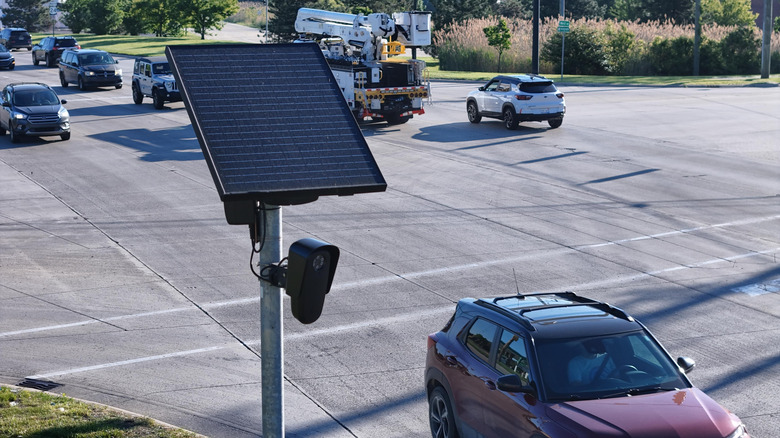
Thanks to the rise of AI, a new kind of surveillance camera has rapidly proliferated across the United States. Typically referred to as automated license plate readers, or ALPRs, they're most often mounted along roadways, where they log the movements of cars which pass through their field of vision. Though various companies offer them, the most well known come from Flock Security, and the company has consequently been a lightning rod for public opinion. Shocking exactly nobody, there has been widespread public backlash to cameras that track everyone, whether or not they've been suspected of a crime.
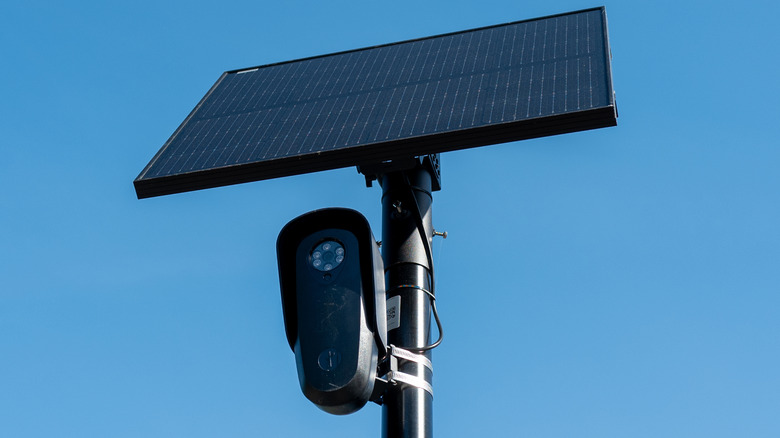
Although Flock cameras are often referred to as license plate readers, that's reductive. Reading license plates is their primary task, but they can be used to track just about anyone or anything. Even without a license plate, law enforcement officers can search for things such as, hypothetically, "green sedan with American flag bumper sticker," or, "pickup truck with paint scratches on left side and dirt bike in truck bed." Reducing Flock ALPRs to license plate readers is a bit like calling your own eyes "Engadget article readers" simply because that's what you're using them for at this particular moment. The company also offers AI surveillance cameras which do track individuals.
The issues with Flock Safety cameras are well documented: Flock has been plagued by security vulnerabilities, rampant misuse by law enforcement officers and AI malfunctions which land innocent people in trouble with the law. And once Flock cameras take root in a city, weeding them out can be nearly impossible. There are now over 100,000 ALPRs installed nationwide, with the vast majority coming from Flock.

Smith Collection/gado/Getty Images
Flock Security cameras are, like most smart devices, small computers. They run a modified version of Android and wirelessly transmit footage to a database, where it is cataloged using AI for searched natural language searches by anyone with access to the system. Flock contracts with cities, towns, neighborhoods and businesses.
In addition to Flock's infamous ALPRs, the company also offers AI security cameras, mobile security trailers, and — just in case you're a creep looking to point an AI camera into someone's backyard — quadcopter drones. All of them operate on the same principles. Just type what you're looking for, and the system will show footage of anything it thinks matches your description. This makes AI powered cameras like Flock's distinct from traditional surveillance or traffic cams, which require someone to manually look over footage in order to find a specific vehicle or individual.
The Flock network can be restricted to a contracted area, but many departments join a nationwide network. As the ACLU of Massachusetts pointed out, police as far away from the state as Texas can search its Flock footage. While Flock does not have a direct contract with federal law enforcement agencies, Immigration and Customs Enforcement (ICE) and other Homeland Security agencies are often granted access to the system through data sharing programs with local police departments (a practice which began before Flock arrived on the scene). In Denver, the ACLU of Colorado obtained logs showing that local police had conducted over 1,400 searches on ICE's behalf as of August.
That's not to say the cameras never prove useful for crime-solving. Flock has helped to solve at least one murder case and to take down a vehicle smash-and-grab operation. But its AI-enhanced capabilities track everyone, innocent or not.
Flock vehemently insists that its cameras are secure. The truth is that Flock cannot seem to go very long without vulnerabilities becoming exposed. Many of the most critical exploits have been discovered by Benn Jordan, a musician and YouTuber with no formal background in cybersecurity research.
In December 2025, Jordan found that at least 70 Flock Safety cameras were exposed to the Internet and could be accessed through a commercial search engine. No password was required to view live footage of children at parks, couples having intimate arguments, and other moments people did not know were surveilled. Many exposed cameras belonged to Flock's Condor cameras which track people, not vehicles. Jordan was even able to record Flock's flippant response to his previous investigations onto a Flock Condor camera and then download the footage to include in his video.
That came after Jordan had already exposed numerous security holes in a November expose, many of which could be exploited with equally sophomoric techniques. With physical access to the outdoor cameras, Jordan and researcher John Gaines were able to press a physical button and connect to the camera over Wi-Fi, debug it with basic Android development tools, and gain root access — even installing malware. There were also exposed USB ports vulnerable to a malicious USB drive. There were too many other findings to list, but Jordan's video is comprehensive.
Most tech companies invite information about critical exploits with bug bounty programs, or at least by crediting independent researchers. Flock Safety, by contrast, has responded by smearing security researchers including Jordan as "activist groups who want to defund the police, weaken public safety, and normalize lawlessness."

Matthew G Eddy/Shutterstock
How intoxicating must it be, as a police officer, to gain access to the Flock network? Like Batman toward the end of The Dark Knight, you would instantly be able to spy on any individual, the entire city baring up its secrets to you with a few keystrokes. But unlike Batman, some police have used Flock to harass and stalk women, while Flock employees used footage of preschoolers to sell more cameras. That's because there are very few guardrails, if any, to prevent abuse. A warrant is rarely required for a database search, and there's no paperwork.
As reported this month by 404 Media, there have been dozens of documented instances in which cops have abused Flock to track the whereabouts of ex-girlfriends, current partners, and other individuals. In most cases, the stalking was only discovered when a victim searched their plate in HaveIBeenFlocked or a similar tool and discovered their whereabouts had been searched hundreds of times. That may sound bad, but it's worse than it sounds. Since the only known cases are those where the offending officer was caught and arrested or fired, the true scope of abuse is likely much larger. Flock told 404 Media that "15 incidents of abuse" had surfaced because of "the transparency and accountability features" built into its platform, adding that its Audit Assistance tool "proactively flags unintended use."
There have been issues inside of Flock itself, too. One particularly shocking report from 404 Media found that Flock employees had been watching children swimming in the pool and during gymnastics classes at the Marcus Jewish Community Center of Atlanta, and even showing those camera feeds to police departments as part of a sales demo. Flock responded belligerently, writing in part, "The employees being named online are well-intentioned employees who accessed a camera network with the city's explicit permission, as part of their job. They are now being called predators for it."

Kali9/Getty Images
We can look to just one of the many cities Flock operates in to see how its cameras create issues, even without explicit abuse. In May of 2024, Denver, Colorado installed 111 cameras across the city. The contract was renewed in 2025 when Mayor Mike Johnston overruled a unanimous city council vote against the extension.
One Denver woman, financial advisor Chrisanna Elser, was stunned when Columbine police officer Sgt. Jamie Milliman knocked on her door and delivered a summons for theft. According to Milliman, she'd been caught on camera stealing a package from a front door. "You know we have cameras in that town. You can't get a breath of fresh air in or out of that place without us knowing," the officer can be heard saying in Ring doorbell footage from the September 2025 incident. Elser was lucky. Her Rivian truck has cameras of its own, and she was able to deliver footage from the day of the alleged crime, proving she had not stopped while driving through the area from which the package was stolen. The charges were eventually dropped.
Others haven't been so lucky. Multiple Colorado drivers have been pulled over and treated as suspected criminals when Flock ALPRs mistook a number zero for a letter 'O', or vice versa. One driver told the local 9News he feels his safety is at risk because officers are alerted every time a Flock camera sees his vehicle. Police claimed they were unable to remove him from their hotlist.
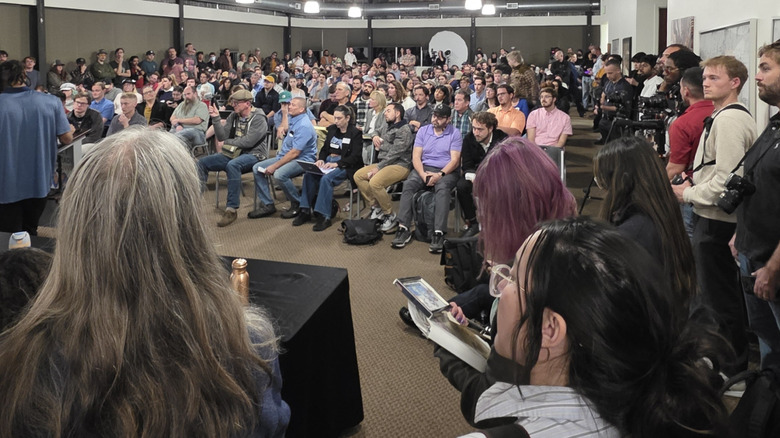
After widespread protest, including a packed town hall in October attended by city council members and nationally known privacy advocates, Denver cancelled its Flock contract... and awarded it to Axon, a company which already provides body cameras to police departments.

Max Miller for Engadget
With so many alarming issues around Flock Safety, it's hard to understand why these AI surveillance cameras keep cropping up. There are a few reasons, ranging from citizen disenfranchisement to restrictive Flock contracts.
While average citizens dislike the technology, especially those from marginalized groups most likely to be targeted by AI surveillance, they often have little to no say in the matter. Flock markets directly to law enforcement, and if you're a cop or pro-law-enforcement city official, it's easy to see why blanketing your locale in AI-powered cameras is a tantalizing prospect. Despite little evidence that Flock cameras actually reduce crime, the company markets its products as powerful crime-stopping and deterrence tools.
In Denver, Mayor Johnston defended his decision to retain Flock's services by claiming in a 9News interview that the cameras had aided in solving the murder of a transgender woman, Jax Gratton, whose body was found in the nearby town of Lakewood. The case had become a rallying cry for LGBTQ safety in the Denver area. But the mayor's claims were doubly false. Not only had Flock not assisted in the case, but no arrest had been made. Gratton's mother publicly demanded a forthcoming apology from the mayor.
Shooing Flock away is made more difficult by its ironclad contracts. When Dayton, Ohio and Evanston, Illinois wanted out of their Flock deals, they were unsure whether removing the cameras would constitute a breach of contract. Their solution? Both cities covered the Flock cameras with garbage bags. The only way to evoke a more heavy-handed metaphor would have been to cover them with lampshades.
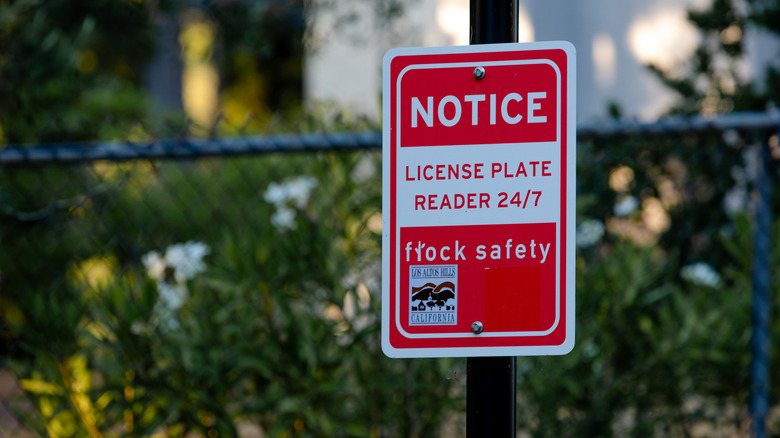
To see whether any Flock cameras are lurking near you, you can use the map created by DeFlock, an open-source tool tracking the proliferation of ALPR cameras.
If you're really committed to fairness, you'll take away the off-duty/unofficial privileges and immunities that they have which are not shared with "people too."
Here's another way to look at this. Municipalities are the primary operators of ALPR cameras. Any municipality that would scan bumper stickers looking for Trump opponents is not going to be receptive to any appeals for regulation.
One problem with this whole debate is that people are coming to it with movie plot concerns rather than understanding what's actually happening with them. That wouldn't be a big deal if this was a slam dunk public policy case, but it isn't: there is broad bipartisan support for these devices.
There are deeply problematic things happening just with license plate pings!
Even the Yakuza participate in society. When they have big disasters, the local mobsters are usually helping people out, before the authorities can get going.
Traffic cameras, by comparison, only record people's in public. A police officer isn't violating privacy laws by standing at an intersection and writing down the plates of cars passing by is he? Flock is just automating that task.
The whole reason why we have license plates is to facilitate monitoring cars. If we really think that people have a right to keep their vehicular activities private, then surely the bigger privacy violation is the fact that we require cars to display unique identifiers in a prominent manner?
I have relatives who are cops and lawyers and city councilmen. No cop is sitting in a back room somewhere tracking all the cars on every street trying to do, uh, whatever it is people here are claiming they are going to do to them.
Last I checked the Lowes and Walmarts of the US share this data as its locks down shoplifters quicker.
I’m not going to pretend that an anecdote fully captures a problem but considering I spent over a month there just living a normal life I imagine that if the problem were widespread I’d have many chances to experience it.
My elderly parents were there for two weeks too and they have nothing but positive things to say.
And finally, my wife’s cousin married a White man from Ireland and he has loved the place for the many years he’s lived there.
Not for free, they can't. Flock isn't a charity. So your local cops can't get the data, but others can.
Ultimately I do agree with the original thesis around monocultures.
Although Tokyo does have a system of traffic cameras which log traffic movement and license plates, that's most all that it does. Except in cases of murder or kidnapping (or political influence), it's quite rare to request the recordings of many private cameras. Outside of big cities, it's even more rare.
The largest connected system of cameras I'm aware of are for the subway camera systems (Shinjuku, Shinagawa, etc). Although independent systems, together they can do facial recognition to track individuals. Not a lot of AI yet, though.
In Tokyo, it is not uncommon to see bikes parked on residential streets with keys left overnight in their wheel locks (as if there aren't even mischievous 12 year olds?!). Oh, and outside of the cities, crime is even more rare. It is common in youth hostels for there to be open cubbies where personal items are stored in the front near the door. Nothing is taken. Most common thefts are: umbrellas (considered a fungible public good?), unlocked bikes (in high traffic business areas), women's underwear (off of outdoor drying racks).
> However, ANPR did not become widely used until new developments in cheaper and easier to use software were pioneered during the 1990s. The collection of ANPR data for future use (i.e., in solving then-unidentified crimes) was documented in the early 2000s.
Now of course your narrative is rude and more entertaining but sadly far from the mark. Saying “that’s not what I paid for” is all fine and dandy but it’s cuts both ways.
Then come the big police department.
Allowing a private company to profit of holding information about me is innerving to me.
I would feel better if it was 100% run by the police. ( better, not good )
Still, a few some areas of Asia achieved this reputation back when cameras were still extremely rare.
And I’m an Indian who grew up in and spent the majority of my life in India as did my parents. I’ve lived in a few countries for years and stayed in many for months. My frame of reference is unlikely to be the American context for racism.
It's not like Red cities have flock cameras and Blue cities don't.
It's really just that the Fairness Doctrine [1] needed to apply to more than radio. If you can constantly just repeat your point and then deny an opposition time then of course you'll get your point through.
Although maybe if super-pacs got outlawed then the Equal-time rule [2] would suffice.
Data centers seem to be widely unpopular on both the left and right, so I'm wonder where the representative democracy comes into play. More often than not local politicians approve these projects despite there being majority opposition from the public.
How sure of that are you? I’m thinking it’s mostly a mix of indifference and ignorance. Has anywhere you know of voted specifically on these cameras?
Taiwan’s treatment of many Southeast Asian migrant workers is a commonly discussed example. People can be welcoming to tourists and expatriates while still having structural biases toward certain groups. Those aren’t contradictory observations.
Likewise, we wouldn’t dismiss concerns about women’s safety in India simply because a visitor spent a month there and had a wonderful experience. An individual’s experience matters, but it doesn’t settle broader questions about how different groups experience a society.
My opinion comes from having spent a lot of time around Asia and more than a month of “tourism”.
The original comment used this as the explanation for why there's low crime. Here's a reminder of the context we are conversing within.
> > > > East Asia built a uni-culture by being extremely racist against outsiders. I don't think you can get away with that anywhere else.
I think "extreme racism to outsiders" is detectable within a month. I am as outsider as they come - being a brown-skinned South Asian Indian[0]. I also think that "I don't think you can get away with that anywhere else" means "uniquely". I guess we could argue about whether "extreme racism" means "universal racism" if you'd like but I don't think it's interesting as an explanation for safety. And the other statement I'm replying to there is
> > > > A friend of mine (white guy) married a Chinese woman and when they visited China they were subject to slurs and dirty looks in public.
My wife's cousin is married to a White Irish man who has lived there over a decade. This is not his experience anywhere in Taiwan, in particular, as opposed to the GP's China experience.
I think his decades of living there prior to and then after marrying my wife's cousin probably provide some experience. There's a lot of Planet of Hats thinking from Westerners visiting Asia. But different countries there are clearly different, just like France and Switzerland are different.
And in the end, if racism is not unique then it cannot explain difference in crime outcomes. To quote the great sage pj evans: "Cars have windows and can move. Houses have windows and can't move. So it's not the windows that make the car go. It's something else entirely."
And as a little epilogue, we may consider other countries with a foreign-born populace similar to Taiwan's: Poland, Argentina, Uruguay, and South Africa. None of them match Taiwan's broad lack of crime while having a similar degree of foreign-born people.
Which brings us again to whether the windows make the car go or not.
0: website in profile, feel free to take a look at my face
I’m not claiming “Taiwan is extremely racist, therefore low crime.” I’m saying cohesive societies often have stronger in-group preferences and social expectations than Americans tend to recognize, and those coexist with being welcoming to many foreigners.
Your experience and your relative’s experience are perfectly compatible with that. One or two positive anecdotes don’t tell us much about how a society views every minority or lower-status group any more than one bad anecdote proves pervasive racism.
As for crime, I agree it’s obviously not explained by a single variable. That’s a much stronger claim than I was making.
No desire to look at your profile but I hope the point I am trying to argue for is clearer to you.
> > > We need some way to address the low level crime in the US. If you look at cities in east Asia, they're both much larger than typical US cities and much safer. It -is- possible to have safe large cities. The fact that we don't is a choice.
> > East Asia built a uni-culture by being extremely racist against outsiders. I don't think you can get away with that anywhere else. A friend of mine (white guy) married a Chinese woman and when they visited China they were subject to slurs and dirty looks in public. There's a whole category of videos on social media of Japanese furiously angry at Westerners acting like fools on their subways. They're not happy about it.
The claim is precisely what you're saying you're not claiming. So you must understand that I am having this conversation in that context. Though I suppose we can both interpose unrelated facts into the conversation and claim contextual irrelevance in the motte and bailey style. Here are a few I present for discussion:
2 + 2 = 4
The sky is blue
https://prospect.org/2026/05/21/home-depot-lowes-downplay-cu...
The “motte and bailey” accusation followed immediately by schoolyard sarcasm is an odd combination. If you’re going to accuse someone of rhetorical gamesmanship, it’s probably better not to end with rhetorical flourish instead of argument.