in Architecture, History, Nature | October 23rd, 2020 10 Comments
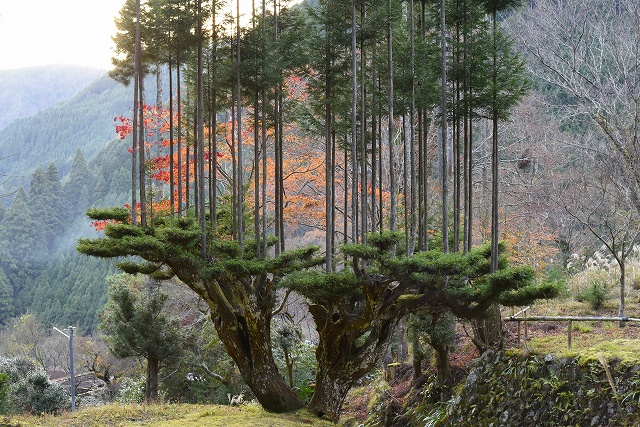
We’ve all admired the elegance of Japan’s traditional styles of architecture. Their development required the kind of dedicated craftsmanship that takes generations to cultivate — but also, more practically speaking, no small amount of wood. By the 15th century, Japan already faced a shortage of seedlings, as well as land on which to properly cultivate the trees in the first place. Necessity being the mother of invention, this led to the creation of an ingenious solution: daisugi, the growing of additional trees, in effect, out of existing trees — creating, in other words, a kind of giant bonsai.
“Written as 台杉 and literally meaning platform cedar, the technique resulted in a tree that resembled an open palm with multiple trees growing out if it, perfectly vertical,” writes Spoon and Tamago’s Johnny Waldman. “Done right, the technique can prevent deforestation and result in perfectly round and straight timber known as taruki, which are used in the roofs of Japanese teahouses.”
These teahouses are still prominent in Kyoto, a city still known for its traditional cultural heritage, and not coincidentally where daisugi first developed. “It’s said that it was Kyoto’s preeminent tea master, Sen-no-rikyu, who demanded perfection in the Kitayama cedar during the 16th century,” writes My Modern Met’s Jessica Stewart.
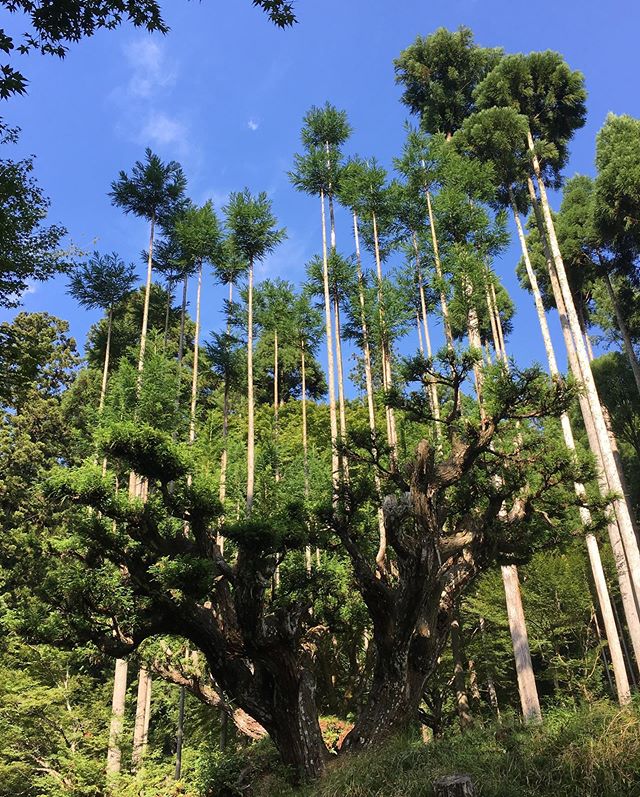
At the time “a form of very straight and stylized sukiya-zukuri architecture was high fashion, but there simply weren’t nearly enough raw materials to build these homes for every noble or samurai who wanted one,” says a thread by Twitter account Wrath of Gnon, which includes these and other photos of daisugi in action. “Hence this clever solution of using bonsai techniques on trees.” Aesthetics aside — as far aside as they ever get in Japan, at any rate — “the lumber produced in this method is 140% as flexible as standard cedar and 200% as dense/strong,” making it “absolutely perfect for rafters and roof timber.” And not only is daisugi’s product straight, slender, and typhoon-resistant, it’s marveled at around the world 600 years later. Of how many forestry techniques can we say the same?
Related Content:
The Art & Philosophy of Bonsai
Based in Seoul, Colin Marshall writes and broadcasts on cities, language, and culture. His projects include the Substack newsletter Books on Cities, the book The Stateless City: a Walk through 21st-Century Los Angeles and the video series The City in Cinema. Follow him on Twitter at @colinmarshall, on Facebook, or on Instagram.