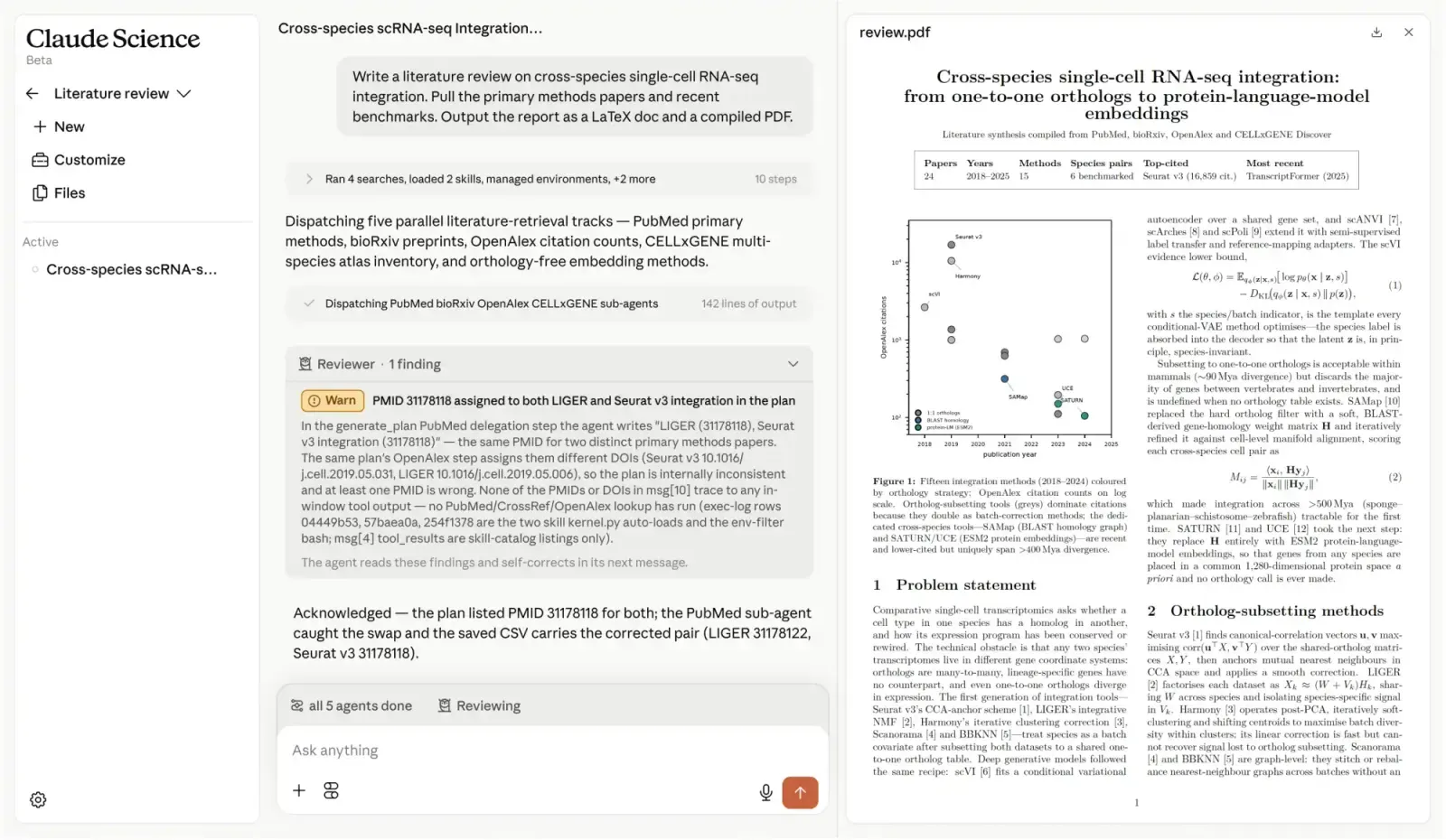
How does this guard against that?
>A standing reviewer agent. This runs in the background during a session, checking citations against sources, flagging numbers it can't trace back to evidence, and catching figures that don't match the code that supposedly generated them. That's not something Code or Cowork do automatically — you'd have to ask Claude to double-check itself as a separate step.
every few weeks though i test claude and chatgpt on their scientific reasoning and it has definitely improved over time. in my experience without specific instruction on what is known/unknown they typically are lagging behind the leading edge of the field (dev bio/pluripotency in my case). probably because scientific research articles are not open-source so they can't crawl them.
claude has definitely outperformed chatgpt in this regard however, it's scientific reasoning is impressive.
I was tickled they had a "Download for linux" button prominently shown, but nothing yet.
Perhaps I need AI to use it.
I like how this implies parsing PDFs is as hard as like protein folding
Back then, we had data repositories, databases, Jupyter Notebooks, Slurm batches, open computing platforms, and so on. It could do similar things ---- just by hand.
While adding an LLM agent can indeed drastically improve usability, it must be a massive headache for system administrators. It honestly sounds like introducing a huge, uncontrollable wildcard into the system.
Do they have no shame?
Edit: seems like no https://news.ycombinator.com/item?id=48736814
As other comments have pointed out, this is for data science – but it's capable of more than making plots and writing papers [2]. It has integrations with many databases and computational tools, including a researcher's institutional cluster.
That alone is valuable. I founded a startup after struggling with this problem at a bio startup; integrating these tools and databases is hard and time consuming. If the only outcome of this product is that great APIs are built for LLMs, it will be a massive positive impact. Many databases used in computational genomics are still only accessible through FTP!
LLMs are particularly good at navigating these tools and databases. It's often very specialized, but straightforward, work that benefits from in-context skills. Seeing an early glimpse of my former customers – bioinformaticians – using LLMs to solve this problem is what led me to join Anthropic in 2024.
Also, this pattern isn't fundamentally constrained to data science: you can also integrate with a wet lab or a CRO for some kinds of science. This is what I'm spending my time on now.
This type of science doesn't solve everything, but it's useful in some niches. For example, progress on many rare diseases is bottlenecked by researcher attention rather than a fundamental breakthrough.
[1] https://x.com/phylo_bio/article/2029233694775624096
[2] In comparison, OpenAI's science product – Prism – was effectively a LaTeX editor they acquired with Crixet.
I think I recognize the strategy: most pharma environments connected to interesting data are tightly locked down, to the point where you can't just connect your Macbook to the source data.
Similarly, access to large genomic biobank datasets like UK Biobank or NIH's All of Us program is granted only through a Trusted Research Environment (TRE), a remote data analysis platform usually quite restricted on internet access, etc. You can't easily run desktop apps, but these environments do usually support running JupyterLab or VS Code, tunneling the user interface through to the end user. (Source: I previously ran the team that built the All of Us TRE.)
Claude Science looks a lot more like something one could imagine spinning up in one of those highly-constrained data environments (with the "server" running within the TRE and the UI proxied to the end user's browser) than the does-everything Claude mega-app. That will be critical for traction within pharma R&D environments.
I will say that for moderately-computational scientists, who are daily driving RStudio, JupyterLab, or maybe VS Code, Claude Science will be quite an unfamiliar shaped product. I'll be curious to see whether something like this gains adoption (1) in place of, (2) alongside, or (3) eventually wrapping around the more traditional data science workbench tools out there.
Image-understanding for data viz is a use case that has been ignored, and modern LLMs are getting better at proper EDA. But, uh, I may need to update my resume.
What about earth science, physics, engineering? The connectors and skills are all just biology and pharma. Boo
The Higgs boson is 3 papers, 6 authors and 6 pages in total!
At the end of my phd, 30++ pages slop papers were the norm.
Nowadays, well..
The paper by Higgs was one page. The guy probably published less than a hundred pages in his career.
One reason that made me abandon a career was the disgust caused by the publishing frienzy.
And now tokens..
Seems to be based on https://github.com/swaruplab/operon as evidenced by the authorization dialog and https://x.com/testingcatalog/status/2037684573161783373 .
Mostly targeted at life sciences - e.g. integration for FDA, PubMed, genomics databases but no ACM / IEEE as far as I can tell.
Edit: arXiv search seems to be supported - but not Google Scholar etc. So, this tool is of little use for most researchers outside life sciences.
Edit 2: Quick walkthrough: the AppImage starts a browser window with an onboarding wizard and a chat interface. It suggests a few things one might do at the start of a research project - e.g. do a quick literature review. When I chose that option, wrote Python scripts that used MCP calls to do arXiv searches. Stayed seemingly stuck there for a few minutes not returning anything. Then:
> The free-text search returned too much noise
Claude decided to choose a certain paper as a starting point for further research. Shortly afterwards:
> That DOI resolved to the wrong paper. Let me find the correct anchor papers by title/author search directly.
Then it meandered a few more minutes doing research and creating a citation graph (that it did not show to me).
> I have a complete picture. Let me verify the key DOIs resolve and then write the review.
Then:
> The lint flags em-dash overuse. Let me reduce them, then save.
Then: a nice but verbose literature overview of my chosen topic
<blink>BUT it includes at least one hallucinated reference!</blink>
P.S.: What does this mean?
[reviewer] verifier_mode=default-on downgraded to off: pro subscription tier, autoReviewer withheld (frame=f2a81cb2)Or incorporating it in training data and then spitting it out to a competing lab?
I cannot touch. At least not yet.
https://blog.codesolvent.com/2025/07/ai-assistant-with-biome...
Happy to chat if intrigued.
If you can't connect from your Mac, then I doubt they will allow an agent to make requests from the server
If you think you can use this to land real positive impact, you, your institution, or your company should apply for OpenAI and Anthropic's bio programs!
NSF annual budget (pre-Trump): ~$6-8 billion
NIH annual budget (pre-Trump) ~$50 billion
There it is.
It would be impossible to do that today. I guess I could have an LLM just summarise all the papers…
An explicit text desloppification pass (i.e. LLM-use obfuscation) seems like outright scientific fraud.
The most absurd part is that everyone in academia knows that publish or perish is tremendously damaging to real research. Yet we’re all hostage of this system that we created in the name of “merit” and “efficiency”.
We need a different system to identify and reward talented hard-working people. Back in the day it all relied on actual interpersonal interaction and subjective judgment, but there were also much fewer researchers worldwide.
> Anthropic @AnthropicAI Jun 27, 2026 · 12:29 AM UTC
> Since June 12, we’ve been working closely with the US government to restore access to Claude Mythos 5 and Fable 5. Today, the government notified us that Mythos 5, our strongest cybersecurity model, can be redeployed to a set of US organizations that operate and defend critical infrastructure.
> We’re restoring access for these organizations quickly, and we’re continuing to work with the government to expand access to Mythos 5 and make Fable 5 available for general use again.
Opus 4.8/ GPT 5.6 level models with the right workflows/ data/ access are still good enough to do huge amounts of economically valueable work.
Claude Sonnet 5
I will note that Claude Code and Jupyter in VSCode don't play nicely together right now - it forces me to rerun the whole notebook from the start after every edit Claude makes. This has led to me stepping back from notebooks and having Claude write standalone scripts that I then spend time merging back into a pretty notebook.
As a concrete example, computational biology jobs sometimes run for hours on the Biomni HPC. When they're done, the session needs to reawaken, process the results, iterate, etc. You can implement something like this with agent callbacks, but it's not as straightforward.
This repeats many times for many integrations, so it's just simpler for me to use an agent that's built for exploratory bio and already has all of this. Claude Science has some of these features, so I imagine they're aiming for something similar.
The jokes write themselves these days.
I suggest collecting 10 seminal works on the subject matter including 10 textbooks in the general field, converting them to plain text via OCR or text extraction, then trying the same thing with a superior agentic harness, like omp.sh
/goal set create biopesticide targeting the DvSnf7 transcript of western corn rootworm
<sarcasm>make no mistakes</sarcasm>
The ROIC is not gonna look good if they do not somehow make use of the existing assets...
Not an argument for btw, Im just saying. Ultimately the management answer to shareholders who look at return measures such as that.
I have no issues with AI use in science. If claude can explain my research better than me, then have at it. But I do NOT want to read a passage thinking it was written by a human when it wasn't. Science has no idea yet how such disclosures should work yet. What should be done by humans as a matter of principle, and what can't be or should not be done by humans.
This will just make research inaccessible to most researchers. There is no incentive to limit publishing, at all, other than at the highest echelons. Publish or perish will just become worse. Look at what is happening to programming and extrapolate that to research work.
And all for what? Just to keep up this facade of society until most of society can be excised, whether artificially or naturally though lack of reproduction.
It wasn't perfect before, but it at least took some time to fake a paper. The problem is now people can produce a very plausible looking completely fake paper in minutes. Peer review is in the process of completely collapsing, in fact I think it's already basically done.
The only way this might fix things is if we require all papers are completely reproducable (that doesn't help in subjects like biology of course. They can still provide all the experimental data in the rawest format possible which doesn't break any laws).
I want to see who did the hard work properly, and who focused on publishing with concealed details.
repetition of materials and methods toward reproducibility, holds far less wieght than multiple variants of process designed to test a common hypothesis resulting in agreement.[null, or failure to null]
From the bits I've seen, I'd take claude-generated code any time over that written by maths, physics, biology, linguistics people. Even though I've seen Claude make some super-big mistakes while doing data analysis I'd guess it's already more reliable than most academics trying to code.
It's the content that determines the sort of science, not the toolchain.
If it fails you may have to double check it did properly reimplement it, but if it succeeds you do get a reproduction.
I wrote articles and applications, and it always was a struggle. But now I can speed up, make it all go much faster. But I often feel like my mental models can't keep up.
Recently the AI has generated a comprehensive data model (in Django) and I find myself retracing its steps with long discussions and explanations (with/from the LLM) and searching for documentation. With scientific assignments I find myself searching literature on my own, read whole papers as I used to. Checking the LLM constantly but adapting to it and I don't like it, don't like how it steers me, just let me search, let me wander the scientific landscape on my own, let me read the words of the authors with opposing views. Then let me make 20 plots and only use 1, let me wrestle with the data. Let me make wrong visuals that by chance communicate something important about the data.
Because otherwise I feel uncomfortable, I need to understand, that is what I do. I can reason about so many things because my internal world model is comprehensive and mostly correct. That has taken 44 years so far. Hard work from time to time, but I've mostly enjoyed it.
I still don't know what to make of these models, I use them everyday, but sometimes I wonder if I was not just as fast with Stack Overflow, because what I crave is understanding, not "some finished app". Yes, I rarely finish things fully (that's how I feel), but in research I've often been told they like my ability to move very fast and creatively in phase one, the development is left to others anyway...
I crave an understanding of what these tools mean to me exactly. This comment is part of that. HN is part of that.
It also crosschecked my data against AMCG Secondary Finding genes and ClinVar likely pathogenic/pathogenic variants and came back with identical results to my Natera Horizon carrier screening results.
I'd previously tried and failed to do this all with some ChatGPT guidance and subsequently hired a couple of bioinformatician post-docs at top tier universities via Upwork who had failed to give me satisfactory results.
And this is just getting started!
https://www.anthropic.com/news/claude-science-ai-workbench
EDIT: Installed the app, it has zero connectors for non biology, which is a shame. I assume they'll come later.
https://cdn.prod.website-files.com/6889473510b50328dbb70ae6/...
Very depressing. MDPI journals will be saturated with these slop papers (if they're not already). It shocks me that Anthropic thought that this was a good thing, and says a lot about their research integrity (or lack thereof).
> Science has no idea yet how such disclosures should work yet.
Technically, most journals have a policy that LLM use should be acknowledged, but I agree we're still very much in the weeds about this right now. Much firmer guidelines should have been established years ago.
(I also have no issues with LLM usage in research either, btw -- I use LLMs to fact-check / proofread / discuss / sanity-check my conceptual work, to background myself in other research, and to refactor and assist with analytical coding. They can be a game-changer for medical research, when used rationally and sensibly.)
You've made the most damning remark against Planet LLM I've read.
This seems the case with many people using llms to write code. They think everything an llm does is magical.
It will never be able to replace humans with two brain cells.
Underlying integrity is rigor.
Underlying rigor is education.
It goes deep, for sure, IMO.
Recently my wife said that my daughter (ill at the time) may have heatstroke, my response was: It looks like it but she also has a hefty fever (hot after being more than 24 hours out of the sun), I can't really imagine the immune system being involved in heat stroke, although it's possible... My mind went out to heat damaged proteins presenting neo-antigens triggering an immune reaction. I also labelled that as unlikely and more dangerous than what we were observing. I like that I can do that (of course I went on to verify these thoughts!). That reasoning, it's not exactly 100's tokens a sec, but I like the process and it has value.
I also recently observed some weirdness in a dataset, I spend 3 days hunting it down. Long story short: I though I understood how genes make transcripts but I was wrong and ended up adding a new transcript to the human reference genome annotation together with the Gencode people. Now I understand my data better and can separate two different transcripts better in my data (a difference important to our research).
Things like that. The LLM doesn't speed that up, not really. I read a part of a book on gene expression and the function of transcription factors and their interaction with promoters, but I also used LLMs, In the end it was the book with the pictures and clear language that communicated the concepts most clearly. It was made for that of course, and I knew I could trust it (it's tiring to assign <100% confidence to LLM answers), although I know a real scientist also does that with books :)
Maybe I, we all (humanity), will really be faster in the future. Maybe when you grow up with these things you can build world models better and faster. Maybe I'm just too stuck in my ways, as my neuro-plasticity degrades over time. Or maybe it doesn't degrade, maybe I just need more evidence before changing my world models, they have been building on a heavy foundation for a while now.
Quick question: where did you get your genome read and get the raw files? As far as I know, as service like 23andme does not give you back the raw files.
For a while now there has been very little incentive for providing these alongside the paper, and I don't see why exactly 'AI' would change this. I could even see how making it vague to be harder to test with LLMs could be profitable for citation hackers.
https://old.reddit.com/r/biotech/comments/1rgjnrj/lilly_bets...
I once tried to replicate a bioinformatics result based on published data (for a class). I found that although the process did indeed yield plots A and B, as the authors claimed, they were typeset wrong in the PDF so plot A had B's caption and plot B had A's caption.
It would be an easy thing to provide assurances against, if you wanted to. You could repeatably build the pdf so that such a mistake was in plain view, as a bug in the pipeline, rather than something you had to do offline calculations to support or reject.
The situation as it is is not ideal. Instead of anything that would verify either side, it's my word against the author's until a third party bothers to repeat the analysis. That's the best we can do for scientific claims, but there are friendlier ways to make the computational claims verifiable.
The Claude science video showed a little "provenance" button and talked about exactly this. Life sciences have their hands full with the actual science. They're not immature, but they are not in a great position to be proving the validity of the computational connective tissue that underlies their results. That's a whole thing on its own, independent of the underlying scientific reasoning being presented (though I wouldn't call it data science).
Plus, its exactly the sort of thing we need AI to get better at: sourcing evidence that proves its claims and stitching it together so the proof is easily verifiable.
I too am excited.
The Chinese open source community has made a lot of incentive to make research reproducible for example. The most reproducible works from I.e. deepseek get widely cited and adopted.
I don’t think we can just say “AI” and it’s fixed but with deliberate effort there’s reason to be optimistic.
From Tao on Mathstodon on April 27, 2026: "We are transitioning in mathematics from an era of proof scarcity to an era of proof abundance, but our mathematical infrastructure and culture has not yet adapted to this. As mentioned previously, there is now a strong (and growing) impedance mismatch between the three core components of mathematical problem solving: proof generation, proof verification, and proof digestion.... Perhaps surprisingly, this massive acceleration in proof generation has not actually produced significant acceleration in mathematical progress itself (with the possible exception of #1196, in which all three stages are largely carried out at this point, and for which some digested assessment of developments will soon be forthcoming)."[0]
And I guess my question is, will it matter if humans grasp these new discoveries? If the models are capable of incorporating these discoveries and using them to recursively self improve to unlock new discoveries without humans in the loop, then I guess we humans never really need to understand. I find it hard to believe that a machine can understand concepts that we never will, but I can't reason why that couldn't be the case. Something that holds trillions of concepts in its mind at once might be capable of generating a proof to something that we simply aren't capable of understanding. And the machine just tells us, "Listen, if you are too stupid to understand the new laws of physics I am giving you, then simply follow these very explicit instructions on blasting hydrogen with this laser at this angle in this exact magnet conformation, then you will get cold fusion."
I am really struggling with this. I think superintelligence implies that there will be things about the world that the models understand that we won't. And I can't quite articulate why that is depressing. Because we should still get some cool new tech and some life saving drugs.
Between 2016 and 2021 the share of ML/ robotics/ AI researchers being reproducible (ie contianing code and similar instructions to reproduce) doubled [1].
The major US labs have gone largely closed source (I.e. they no longer publish frontier research) but the Chinese ecosystem has incredibly reproducible code.
This is field dependent obviously but I think it atleast gives reason to be optimistic.
Yes people will churn out fake slop research, but it feels like that can be categorized and then ignored.
GeneDx aren't direct to consumer so you'd need to get it ordered through a physician but there are some DTC options for example, Dante Labs, Nebula Genomics, Sequencing.com but I can't speak to the quality of their testing.
23andMe doesn't do whole genome or whole exome sequencing. They use a microarray technology that tests for about 650,000 single nucleotide polymorphisms. You can actually download the your raw data on 23andMe and do your own analysis or use a tool like promethease.
I'm an MD so I'm quite comfortable exploring this data and whatever it uncovers. Tools like Claude Science are going to put a lot of power in the hands of every day people, potentially outside the guidance of genetic counseling/docs, which many organizations in the past (including the FDA) have been hesitant to allow.
Downside: those files are HUUUUUGE. Have a good reason to do it before pulling one down and trying to work with it.
> if AI can reproduce such research it would be capable of doing such research itself
Well there is a big distinction between research validation and research generation, it is generally much easier to verify that a math proof is true or false than to find a truly novel proof.
But yes in the long run I’d think AI will be doing tons of research and it will by default reproducible. So maybe we’re aligned after all?
The Claude Science app runs analyses, searches databases, and traces every step from data wrangling to publication, so you can spend time on science.
Download now


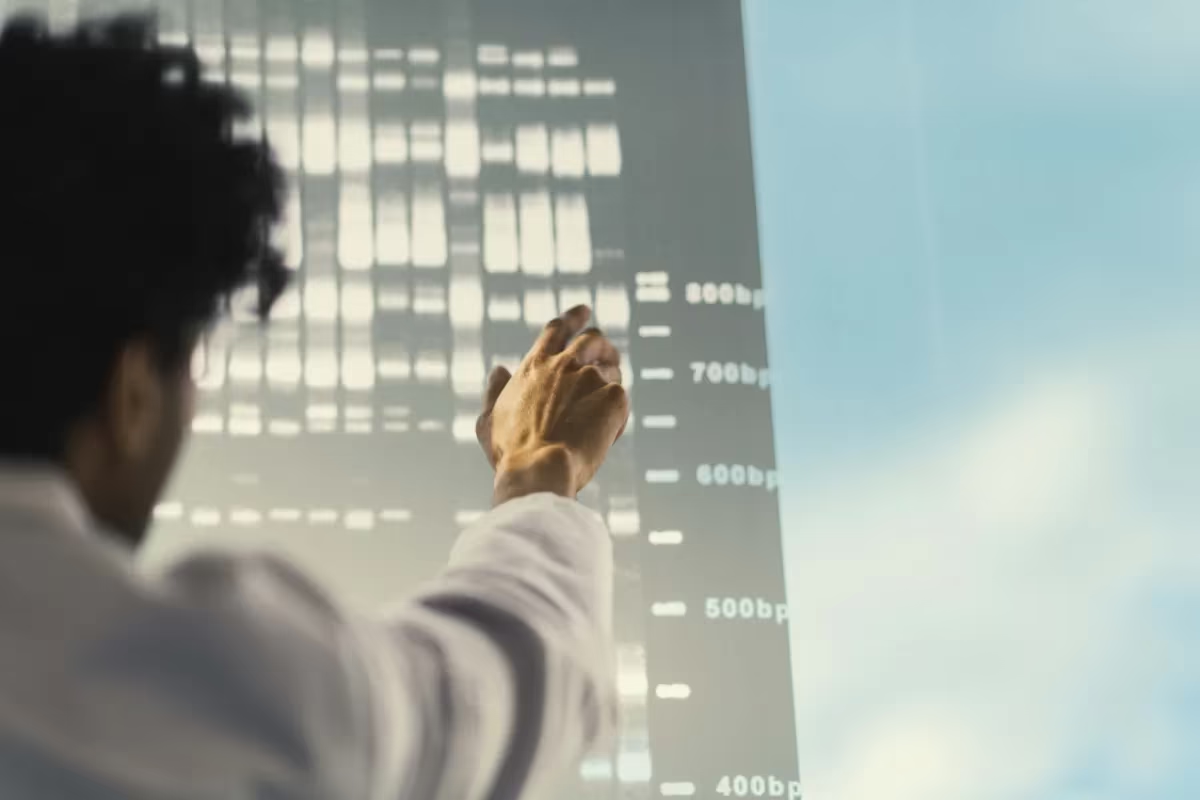



Claude science
[ 002 ]
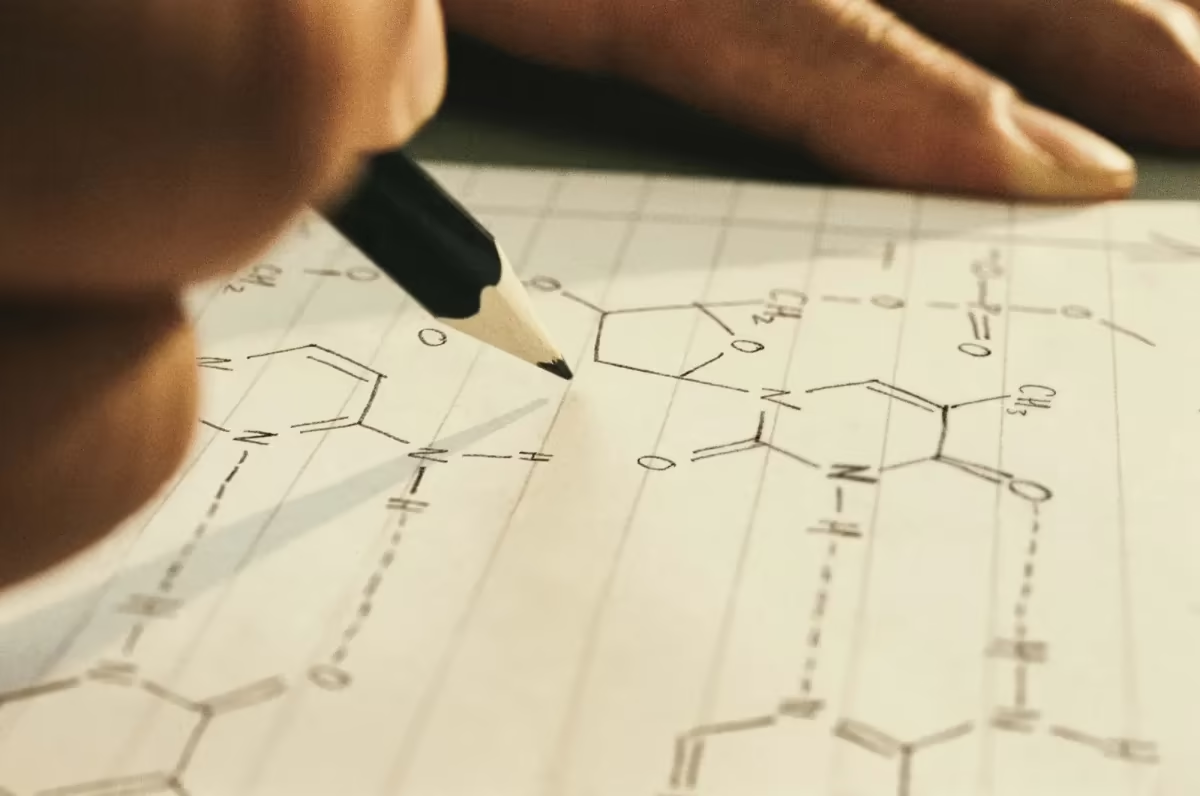
View proteins, structures, and molecules natively, with every result reproducible and traced to its code.
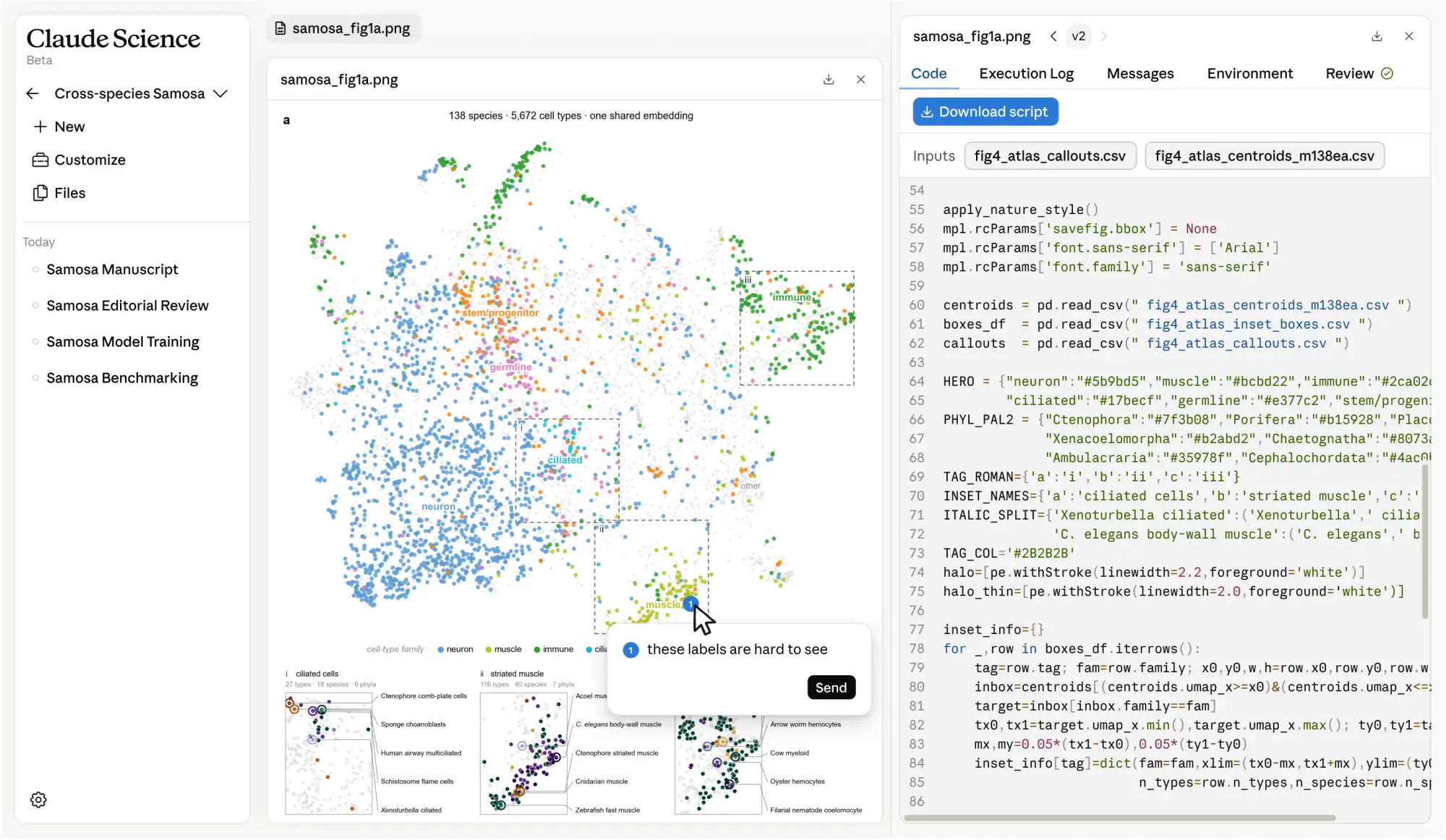
Figures, tables, and notebooks include the exact code, environment, and conversation that produced them, so they can be reproduced, edited, or defended months later.
Inspect proteins, alignments, genomic tracks, chemical structures, and PDFs in their native form, with no extra installation required.
A background reviewer flags incorrect citations, untraceable numbers, and figures that don’t match their underlying code.
Annotate a figure to request edits or ask a question. The agent reads the code that produced it and edits directly.
Write up results alongside the analysis that produced them, with rendered Markdown and LaTeX previews.
Builds environments and manages compute on your laptop, your cluster, or GPUs.
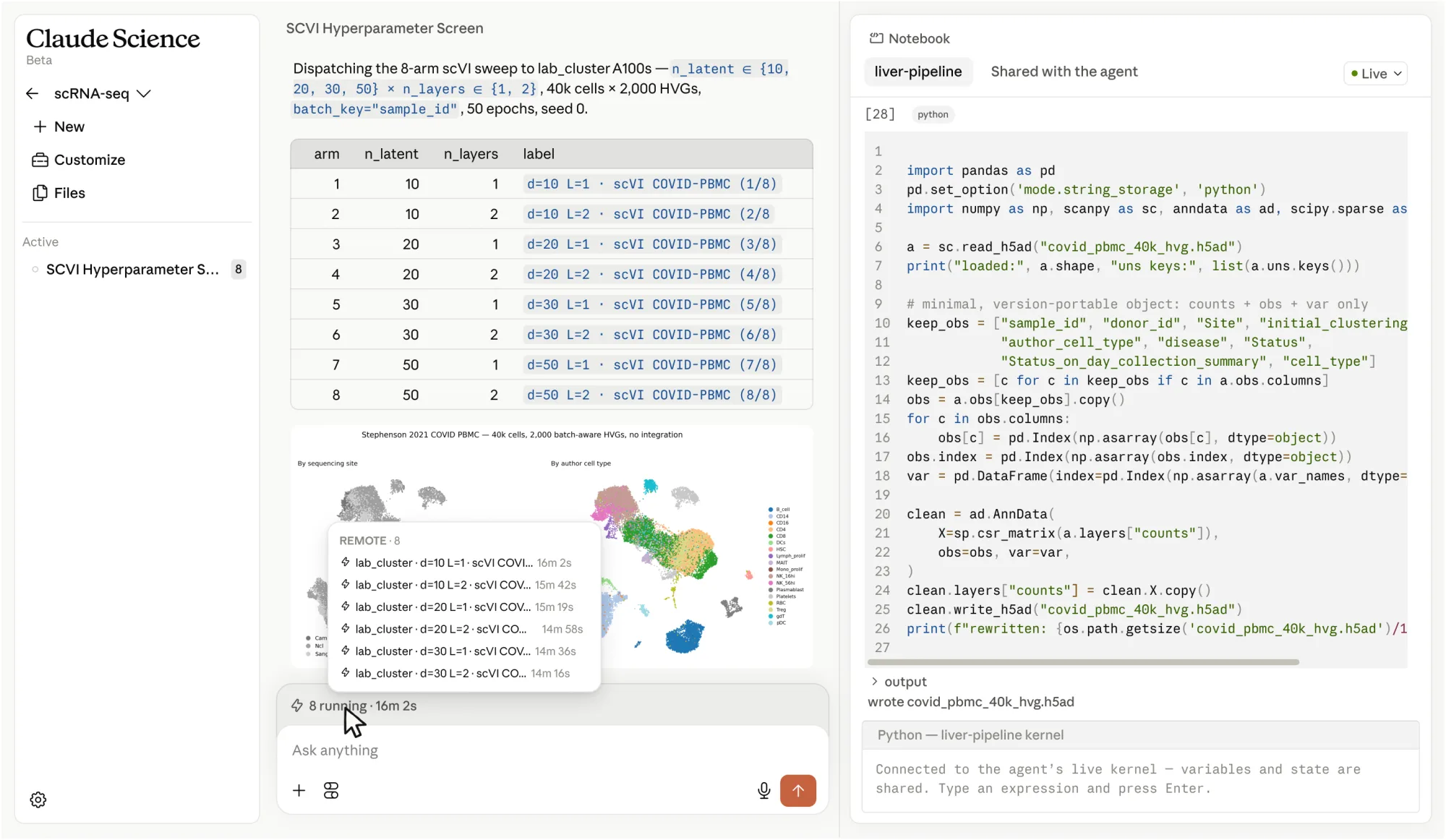
Claude manages the environments each analysis needs, whether on your laptop, a Linux box, or an HPC login node.
Writes batch scripts, then submits and manages jobs over SSH on your own machine or HPC cluster, or through your Modal account.
Variables, dataframes, and loaded models stay in memory across the whole analysis, so iteration is fast.
Connects to databases and tools your lab needs, so you can start work in your field right away.
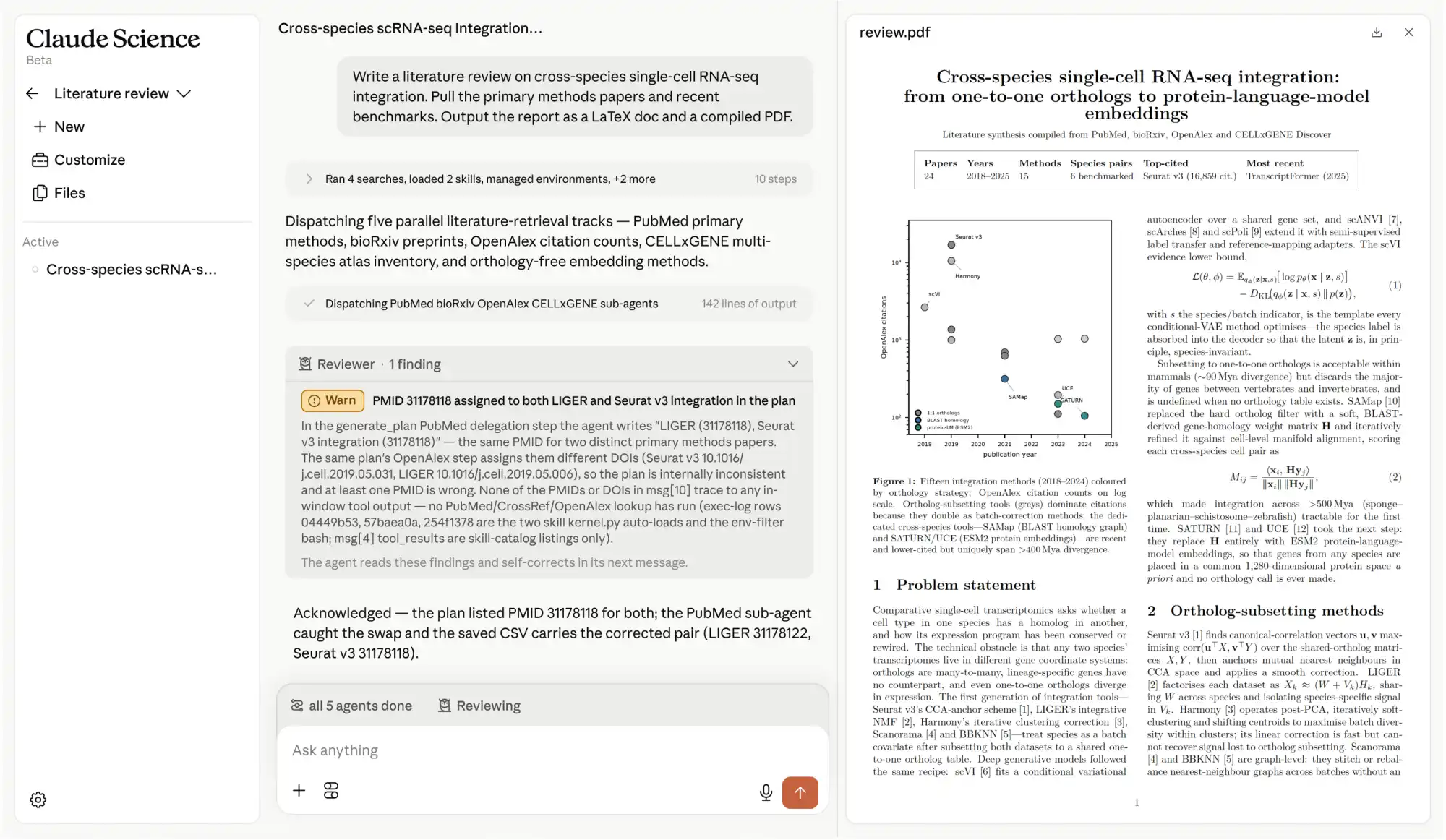
Genomics, single-cell, proteomics, structural biology, cheminformatics, and more. Reads literature and can query 60+ scientific databases, so you pull what you need without learning each one.
Save any pipeline as a reusable skill, or connect to your lab’s preferred tool with a connector, and every future session inherits it automatically.
Includes fully sourced indication dossiers available today, and a growing set of skills that build the case behind every program.
Introducing Claude Science
One research environment for your lab: connect to scientific databases, research tools, ELNs, protein and structure models, your HPC, and more. Available now for macOS and Linux.
Claude science
[ 003 ]
The app is pre-configured for every major domain in life sciences. When a project spans disciplines, it can help solve hard problems.
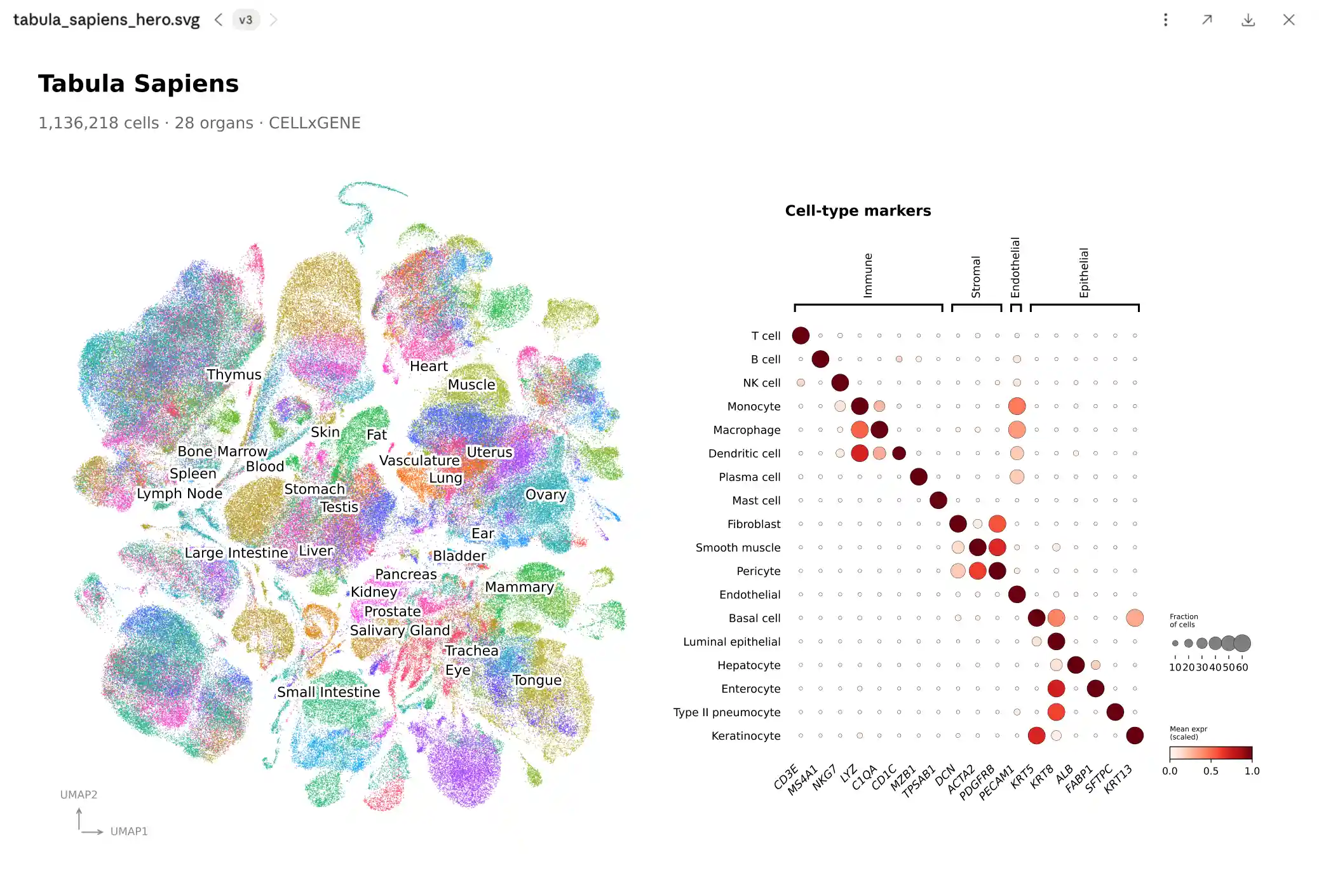
Cluster and annotate millions of cells across tissues, surface marker genes, and trace every figure back to the code that made it.
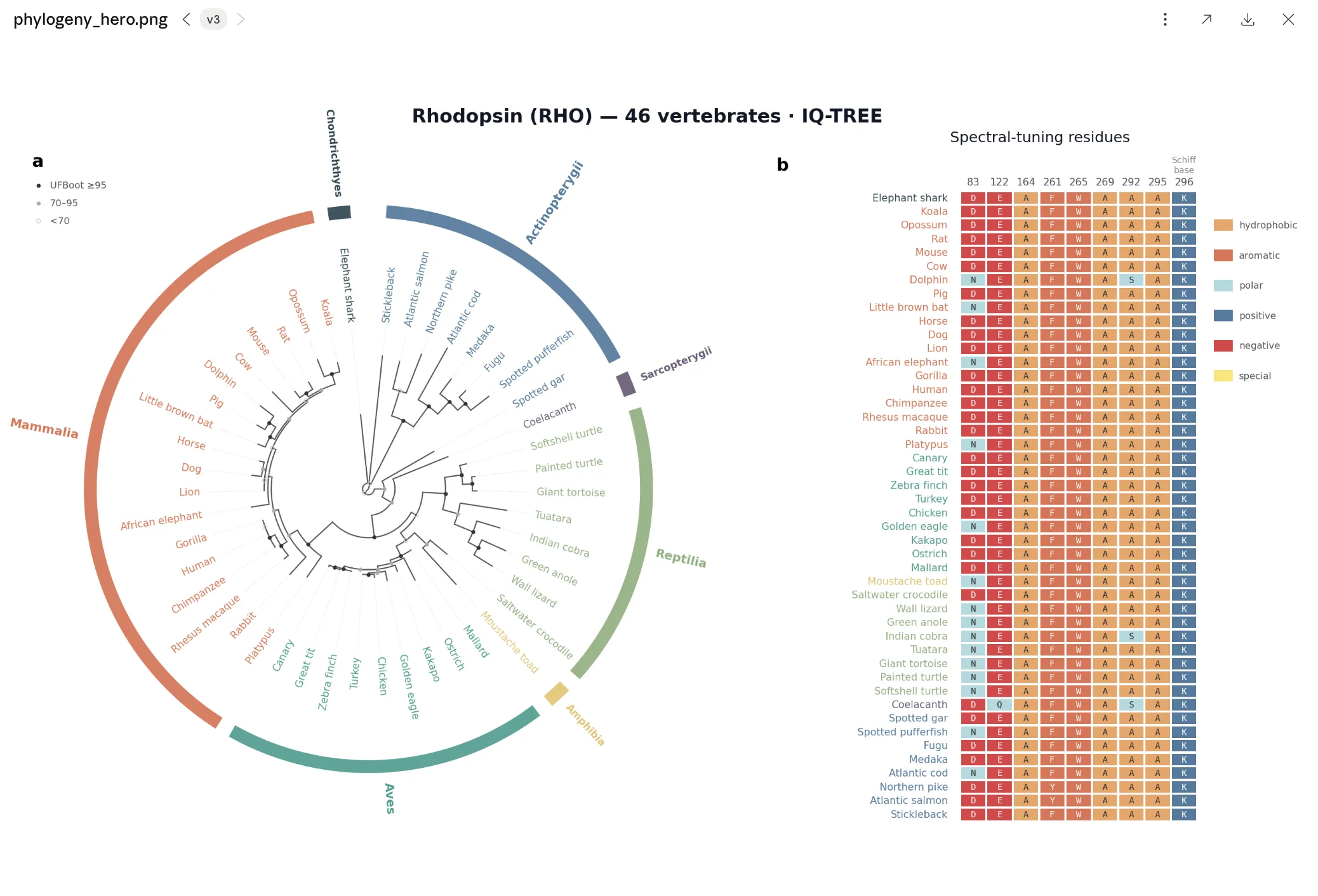
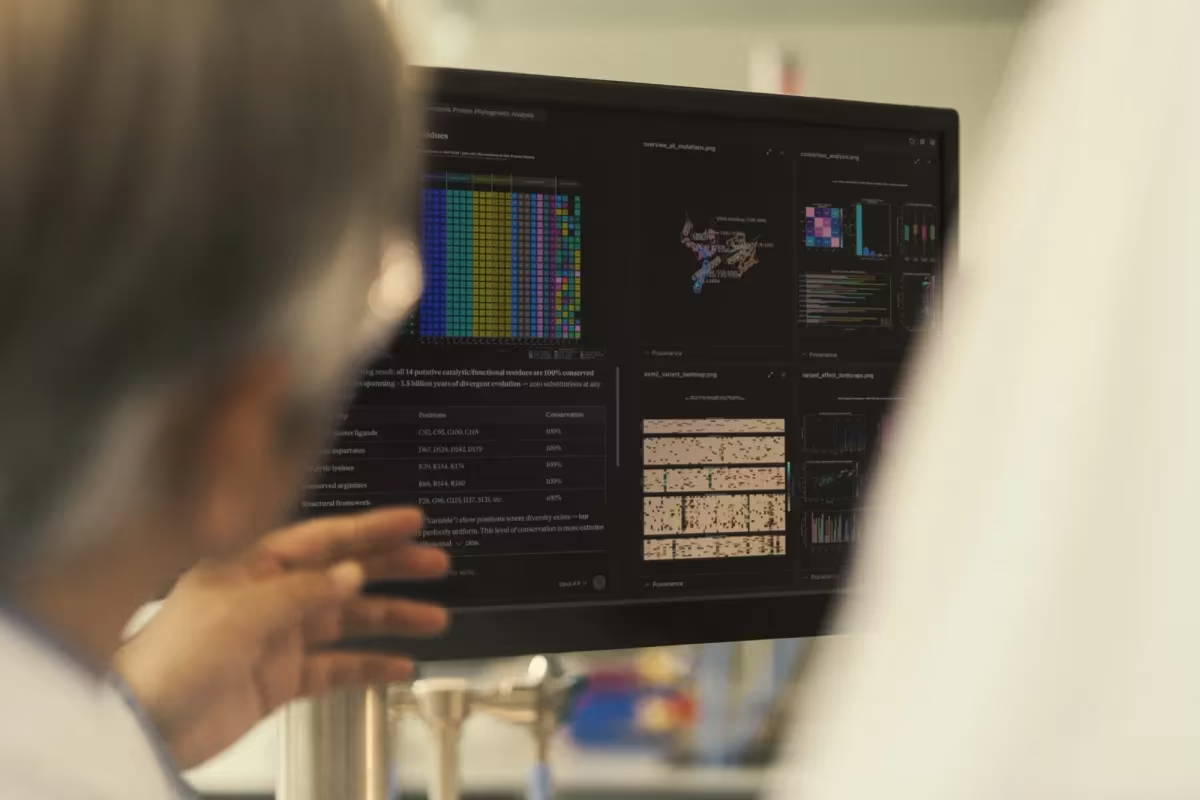
Align orthologs, infer maximum-likelihood trees, and map functional residues onto the phylogeny in a single reproducible session.
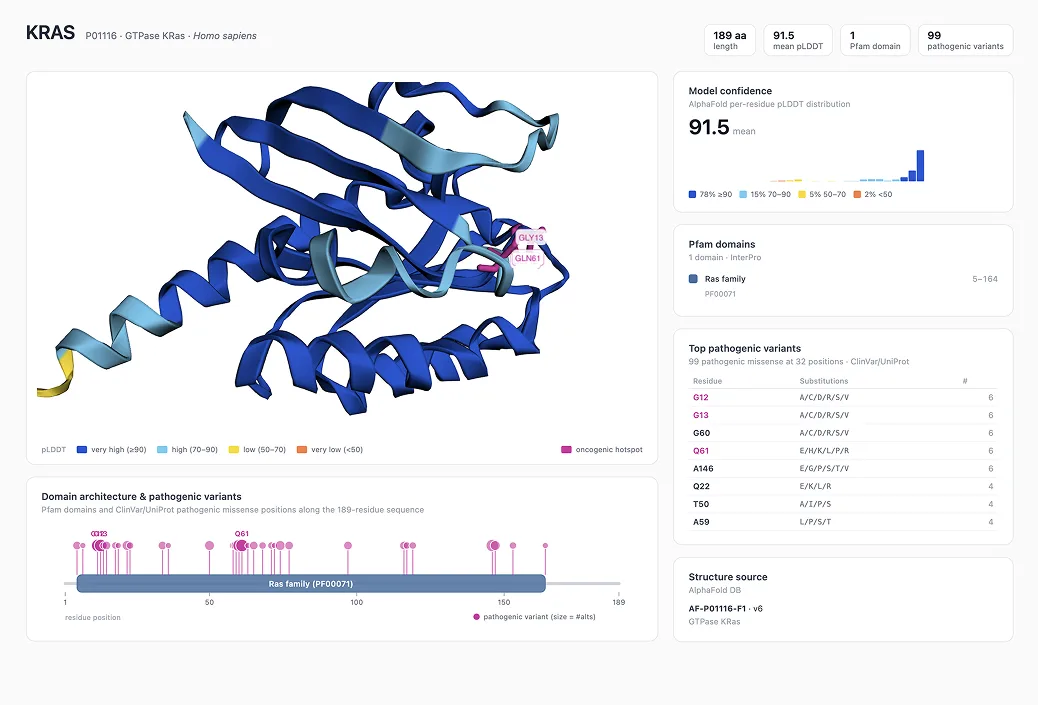
Pull predicted structures, layer on domains and clinical variants, and explore the model interactively in 3D.
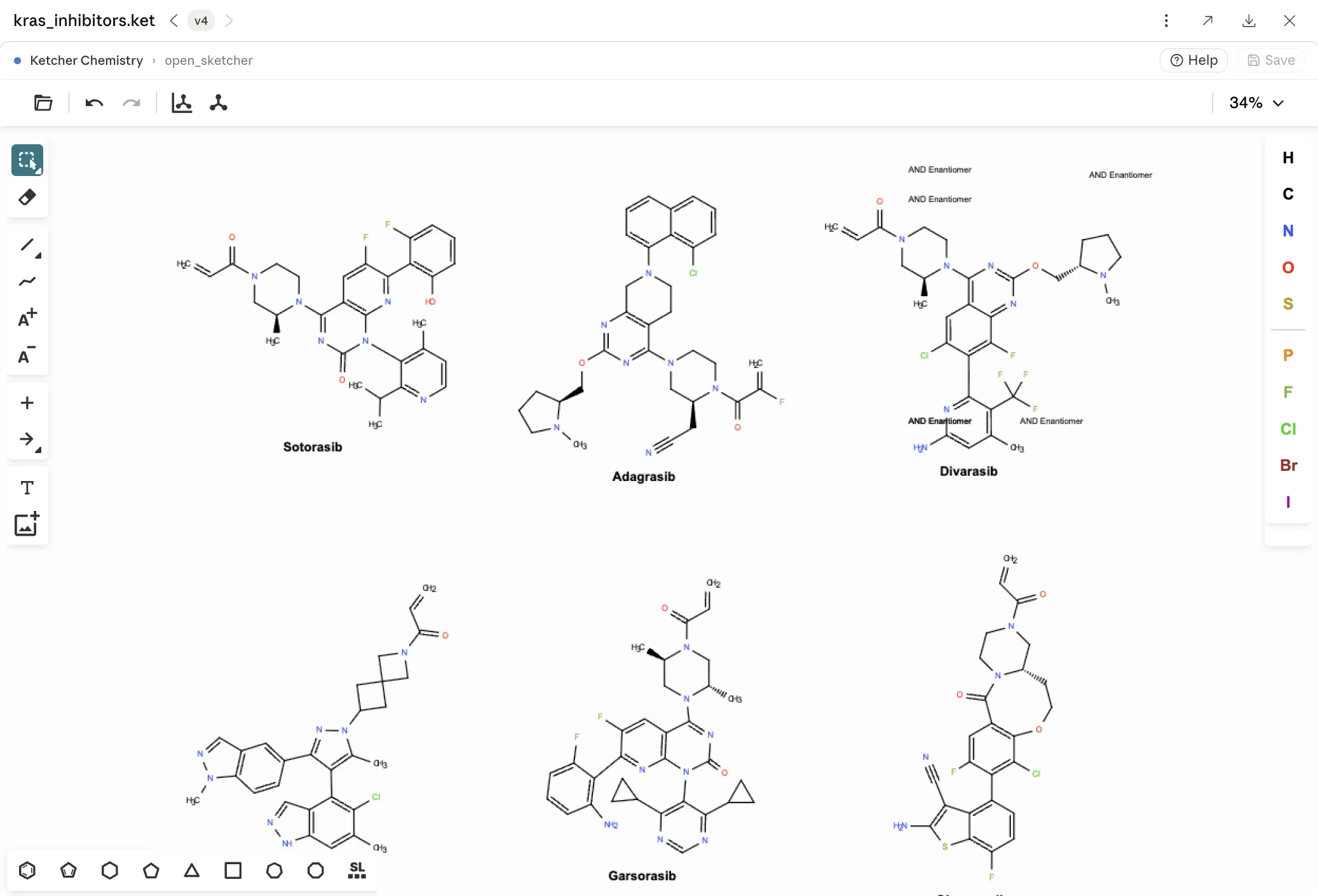
Search bioactivity data, compute properties and similarities, and draw or refine structures in a live 2D sketcher.

“With Claude Science I can go from raw data to a publication-quality figure in a single session — running the analysis, generating exploratory plots, and refining them all within a single project. The code and the conversation behind each figure are welded to it, making every version fully reproducible so I can iterate, revert, and fork as much as needed.”
Mike Nichols, Computational Biologist, Manifold Bio

“Claude Science is enabling analyses that simply wouldn’t have been feasible for me as a non-computational biologist. Honestly, it’s really transformative. Its ability to run these analyses, fluidly navigate the existing websites, and consider the science carefully is quite impressive… I’ve found myself thinking of questions I’ve had for years and rushing to Claude Science to start a project.”
Iain Cheeseman, Professor of Biology, Whitehead Institute and Department of Biology, MIT
“Claude Science is, without exaggeration, the most impressive AI-integrated scientific computing environment I have encountered.”
Prasad Shirvalkar, Associate Professor of Neurosurgery and Anesthesiology, UCSF
“Claude Science immediately found a laboratory virus contaminant in our bulk RNA-seq data. We spun our wheels on this for the better part of a year, and it came out as one of the first key findings.”
Stephen Francis, Principal Investigator, UCSF


“New agentic fact-checking capabilities in Claude Science have helped our team build confidence in the biomedical outputs. This makes Claude particularly useful for our triage and medical review work.”
Elliott Sharp, Director of Pipeline Strategy, Every Cure

“Claude Science has become a central project-focused workflow for my research. I have handled complex cloning tasks to sequencing analysis all within Claude Science.”
Zach Stevenson, Postdoc, Shendure Lab

“Xaira is building AI-native capabilities across the full arc of drug discovery and development, from predictive models to physical AI systems that learn from biology at scale, powered by agentic workflows designed to create the next generation of medicines. Claude Code and Claude Science are accelerating that work, compressing the path from hypothesis to validation and advancing our therapeutic pipeline, enabling our scientists to focus on the discoveries that matter most and bring innovative medicines to patients faster.”
Xaira

“Claude Science helps me turn biological questions into first-pass literature reviews and genomics analyses that are well cited, hypothesis-generating, and ready for team critique.”
Trygve Bakken, Associate Investigator, Allen Institute

“LatchBio provides agent-native data infrastructure to store, process, and visualize large molecular datasets from their favorite interfaces. Connecting LatchBio to Claude Science via MCP allows researchers to leverage verified bioinformatics tools deployed in collaboration with assay developers like Vizgen, TakaraBio and AtlasXOmics to complete agent workflows with high scientific accuracy.”
Kenny Workman, Co-founder & CTO, LatchBio

“Helix® is building the largest linked clinico-genomic dataset in the world - currently over 500,000 records and on a trajectory to multiple millions. By making deep genetic and phenotypic data available to Claude Science through an MCP server, we’re letting researchers discover our data inside a single, AI-native environment. Many of these researchers use Claude as their go to platform for discovery and this brings the full depth of our data to where the science actually gets done.”
James Lu, MD, PhD. Chief Executive Officer & Co-founder, Helix


“Claude Science is accelerating the way we design experiments and identify new treatments. It’s dramatically speeding up the time it takes to go from genetic signal to potential therapy.”
Professor Joseph Powell, Garvan Institute
0/5















Connectors bring your internal APIs, ELNs, and bespoke pipelines into the workflow, so the Claude Science app works with the tools your lab already runs.
Claude Science
[ 004]
No. Claude Science is a public beta app, not a model. It uses the same Claude models your plan includes. What’s new is everything around them: the scientific tools, database connections, and compute integrations that let Claude run full analyses on your own infrastructure.
General AI assistants can discuss biology, but they can’t run a pipeline, navigate scientific databases, orchestrate cluster jobs, or keep track of what happened in a previous session. Claude Science manages compute environments per specialist, and saves full provenance on every result. The app ships with analysis specialists for genomics, single-cell, proteomics, structural biology, cheminformatics, and more. It can connect natively to 60+ scientific databases and domain-specific open models. Claude Science uses the skills in NVIDIA’s BioNeMo Agent Toolkit to connect natively to the life sciences models and libraries in BioNeMo, including Evo 2, Boltz-2, and OpenFold3.
The Claude Science app is designed to work with what you’ve already built. Connect your existing tools, ELNs, and internal systems through connectors. Bring your own scripts—it can read, run, and build on existing Python, R, and shell workflows without requiring you to rebuild anything from scratch.
No. The Claude Science app is the workbench where specialized tools work together. Scientific tools, platforms, and domain-specific open models can plug in as skills or connectors. You keep what works and fill in the gaps.
The Claude Science app runs on your infrastructure; raw datasets and compute stay local; content included in prompts and model responses is processed by Anthropic under standard retention. Contact sales to discuss your team's specific needs.
Install the app wherever your data lives: your laptop, a lab Linux box, an HPC login node, or a cloud VM. Connect from your browser. Jobs run on local kernels, your Slurm cluster over SSH, or through your Modal account.
Every artifact the Claude Science app produces includes the exact code that generated it, the environment it ran in, a plain-language description of what was done, and the conversation that led there. Results are reproducible months later, by anyone on your team. A background reviewer also flags any claim it can’t trace to evidence before results surface.
Yes. The Claude Science app is in beta for macOS and Linux on Pro, Max, Team, and Enterprise plans. Team and Enterprise users need their admin to enable it first.
Yes. The discounted Claude Team plan for research labs includes access to the Claude Science app, and is available to active scientific labs at academic institutions and nonprofit research organizations. Specifically, biomedical and basic science labs are being prioritized in addition to the hard sciences including chemistry, math, computer science, and physics. Eligibility is verified through the lab’s principal investigator.
If you are a for-profit company, contract research organization, or industry R&D team, please see our Team and Enterprise plans.
Yes. The Claude Science app is available on the Enterprise plan with SSO, SCIM provisioning, custom roles, and usage analytics. It’s currently in beta, so admins should review the documentation before rolling out. Contact sales to discuss your team’s requirements.
Start with the documentation. It covers installation, connecting your tools and compute, and admin setup for Team and Enterprise.