> Biotic is a public-benefit nonprofit research organization developing chemically and functionally defined synthetic cells. Biotic's mission is to responsibly enable and steward foundational advances in bioengineering. Our goal is to ensure that all people and the planet benefit from world‑leading biotechnologies soon enough to matter. We conduct and support public‑benefit research ranging from foundational science to how people interact with biotechnology.
It looks like this particular research is conducted at the University of Minnesota
Also, go MN!
So in the future when there's a lab leak from the Wuhan Institute of SpudCellular Biology, the SpudCells will devour all biological life they can in order to harvest the building blocks they need. "Just social distance and wear two masks," the Surgeon General tells the CNN correspondent, as he disolves to red gray goo on live TV.
There is another submission on Hackernews which talks about: The first early human eggs from stem cells[0] which is an interesting discussion to read through on hackernews as well.
> Some have also grumbled about Adamala’s efforts to draw attention to the work, which she says was rejected by Cell after one reviewer said SpudCells were not real biology. She then sent the 190-page manuscript to journalists, under embargo, even before she had uploaded it to the preprint server bioRxiv, where her colleagues could read and assess it. She says her group will submit it to a new journal soon. “It’s an unusual way of doing things,” says Kerstin Göpfrich, a synthetic biologist at Heidelberg University.
https://www.science.org/content/article/lab-created-spudcell...
So Adamala decided to ditch the cytoskeleton. One day, while tearing through the literature, she came across an interesting mechanism in a paper (opens a new tab). By attaching protein tags to a cell membrane, the synthetic biologist Reinhard Lipowsky (opens a new tab) at the Max Planck Institute of Colloids and Interfaces attracted other proteins to crowd around and physically bend the membrane, forcing the cell to divide. Following this approach, Adamala tweaked a cell-membrane protein and tested it in her protocells. After several tries, it worked.“
This is the novel bit.
Will they be hated? Killed off? Will they ever be see as legitimate, or just soulless beings, p-zombies.
Instead, your learn about Biotic.
It's now the leading polity in the solar system and its environs. It bought Alphabet, OpenAI and Anthropic in a single day back in 2084.
Humans are no longer desired. Their reproduction is capped to an optimal minimum assuring the survival of the species as a relic.
For productive matters, Biotec preferes to rely on its biomachines. Imagine drones giving birth to offspring when traffic is at a peak. It takes more energy, sure. But no factory, nor workers are needed.
If left alone, machines would multiply out of control, instead of rotting to waste like in the olden days.
Contradicting themself in the same paragraph.
That is the holy grail? I get that the goal is to "grow" biofuels, plastic, fertilizer, drugs, or whatever else we can imagine. But is that worth the many apocalyptic sci-fi outcomes we can imagine?
Anytime you do something interesting or useful someone accuses you of trying to build the apocalypse.
Replicating eukaryogenesis with synthetic components is something I hope to see in my lifetime.
That's being kind; it's a complete overreaction, simply put.
We have always theorized the start of life but this could actively show that life could have started on a rock floating in space given enough time. No sky daddy and no aliens necessary!
(not just grumpy because that's what I did my PhD research on)
TL;DR politics breaks everything.
Similarly a program that runs on a computer, where its only interactions are strings of numbers is the same as an entity having to interact with the world.
Or like a grad student didn’t dispose of their work properly and are desperately trying to distract from their scandal.
In eukaryotic cells (your cells) the cytoskeleton is needed to shape the cell, position DNA, and most importantly for this study, separate daughter cells allowing replication. Think of the complexity here, you need to make compartments to separate the copies of the genetic material, physically separated during division. Microtubules assemble the "mitotic spindle" and then pulls the sister chromatids apart from each other. After the chromosomes separate, other cytoskeletal filaments (actin and myosin) form a contractile ring, which tightens to create a cleavage furrow. The membrane pinches inward until the cell splits in two.
Bacteria work slightly differently, since they don't have a eukaryotic cytoskeleton, but they do have cytoskeletal-like proteins (FtsZ), since they divide by building the cell wall inward (I am not an expert on bacteria lol).
SpudCell doesn't have a cytoskeleton, so instead it relies on a physical membrane-rupture strategy. It makes membrane proteins from its own DNA (a-hemolysin), which inserts into the membrane. They help fuse with feeder liposomes for growth. For division, these proteins crowd on the membrane surface, creating mechanical stress which leads to membrane instability, which then splits on its own.
“Penicillin?! A poison from fungus that kills living cells?! Haven’t you played the sci fi game The Last of Us?”
Stories are stories, man. Story-logic is biased towards interesting tales. And “discovery from the natural world turned to human aims with great results” is uninteresting because we do amazing things these days.
At one end we're creating artificial life, the other we are creating artificial intelligence.
We're coming at everything we as the human race have known for millennia from both ends, simultaneously. We're recreating that, from scratch.
That is absolutely fucking wild.
Ironically this "holy" grail will end up being the thing that finally puts religious creation myths in their place (i.e. as bullshit) since we will be able to answer with 100% certainty that we are not alone or unique in the universe since we recreated life in the fucking petri dish so why not across the billions and trillions of other planets out there?
What a time to be alive.
If you can disassemble and reassemble a thing, you can say you understand it. Not perfectly. But understand it. I’d imagine properly understanding rudimentary cellular biology will come with perks.
(Also, does the Holy Grail imply both a boon and a cost? Or is that just Indian Jones.)
(Reviewers at J.Crypto subsequently sat on it for a year and then suggested I submit it to a journal on CPU microarchitecture instead.)
Novel research is uniquely susceptible to "cool but it's not part of our field", because that critique is entirely correct until the research gets published!
The thing that they made is more alive than a crystal, which when placed in a suitable solution will grow and reproduce its own structure, but much less alive than even the simplest known living cells.
Its "life" is similar to that of a brain-dead human, whose body is not left to die by a bunch of machines that pump air into its lungs and nutrients through its blood vessels.
The techniques developed to make this pseudo-cell might evolve eventually into techniques able to make a true cell and it is likely that valuable information can be extracted from experiments with it, but it is very unlikely that any of the ancestors of the living beings has ever had even a remote resemblance with this (because it is far too dependent on continuously receiving complex cellular components and nutrients from outside; simplified parasitic living beings could appear only when there already existed sufficiently complex living hosts for the parasites).
Some components of this thing are growing by reproducing themselves, but like I have said, so does any crystal, thus it is difficult to choose a criterion that will distinguish with certainty what is living from what is non-living.
The growth is followed by a kind of division into 2 vesicles, but that happens by a mechanism very different from any living cell. Many inorganic things will split when growing over a certain size, so again it is hard to decide whether this can be called living.
We could launch these custom bacteria in stasis to planets around the galaxy and seed life everywhere.
Reproduction, once we master its blueprint of course, is much less demanding: just provide the ingredients at approximate proportions and the chemistry will work its magic to provide a similar enough unit to achieve the required task.
I suspect that, once scientists lean more into the right kind of communication with these systems that many substantial leaps forward will be made. I am very excited about it too, mostly because I think it has the potential to positively impact how we see ourselves (humans) in the natural world.
How does it affect religious ideas per se? its something many religious people long to find https://www.theatlantic.com/culture/2026/06/disclosure-day-a...
> Ironically this "holy" grail will end up being the thing that finally puts religious creation myths in their place
I think you're way out of your depth here and making things up. The first tell is that you use "religion" as a blanket term as if all religious traditions make the same claims, which they absolutely do not. You can discredit, say, Mormonism much more easily than, say, Islam (though, ironically, there is a strange structural similarity between the two).
> we will be able to answer with 100% certainty that we are not alone or unique in the universe since we recreated life [..] so why not across the billions and trillions of other planets out there?
Who exactly claims that human beings or, generally, life on earth is the only life in the universe? None of the major religions do. I'm also going to assume that Christianity (or some caricature of it) is for you the paradigmatic reference point of what constitutes "religion", in which case there is nothing in Christian theology that excludes the possibility of life - even embodied intelligent life - elsewhere in the universe. (The latter is actually interesting from an ontological perspective. If the definition of "human" is "rational animal", then by definition, all rational animals are human. So, from an ontological perspective, even if an intelligent, phylogenetically distinct species were to be found on another planet, ontologically, they would also be human.)
I’m no 7 day creationist but haha my guy…
Because no one minds if good things happen...
Their "minimal" cell is not quite a minimum product because it depends on prebuilt ribosomes and can't reproduce on it's own. No danger of gray goo!
This is more like it
https://www.jcvi.org/research/first-minimal-synthetic-bacter...
but those guys could probably add components to their cell to make it truly self-supporting although in biology there is a big difference between "barely works" and "high performance"
Kurzweil puts it between 2029-2032 and that seems right to me
Yeah, I have a hard time reconciling this especially since biology and biologic research often involves things like enzymes which both aren't alive and are synthetically created.
I'm certain cell magazine has published articles on novel enzyme discovery.
in case you didn't know, your immune system WILL detect left handed pathogens, possibly more aggressively, and two of the body's mechanisms for fighting infection -- fever and ozonolysis -- are distinctly achiral
Arguably we should push for mirror life for industrial purposes FASTER because biocontrol is easier (they got nothing to eat) and lab escape is far less likely
Also known as the fallacy of “generalizing from fictional evidence”.
https://www.lesswrong.com/posts/rHBdcHGLJ7KvLJQPk/the-logica...
I don't think we are alone, but this is not logically sound. The conditions in the petri dish might be easily so special that their natural prevalence is < 1 per universe.
It would be a lot easier to set those warnings aside if we didn't have so many examples of the very things they warn about happening in real life.
We currently have a system where private individuals can fund private science and then deploy the results globally to their own profit with very few mechanisms for enforcing restraint and caution. And we've seen this backfire with horrific consequences over and over again.
Lead in the gasoline. Microplastics in the water. Pesticides widely applied to the biosphere. In my area PCBs are a massive risk due to past soil contamination. In other areas fracking biproducts make the water undrinkable.
Hell the AI rush in the face of climate change. We literally have heatwaves killing massive numbers of people while a tiny handful of investors and the companies they control are drastically increasing our carbon emissions in the race for AI.
It's easy to imagine all the ways in which synthetic life could go horribly wrong, even with out those sci-fi stories, especially since all but the youngest of us have been through a brutal pandemic in living memory.
It's very, very hard to imagine our current system showing proper restraint with this technology.
We thought evolutionary theory would do the same, now we got people who believe god directed evolution. Some believe everything evolved from a common ancestor except Humans.
So the believers will adapt to believe that Genesis was talking about exactly this.
Natural life tends to evolve, which may have consequences for production.
For example, quorn production has to be restarted from a seed population after ~1000 hours because it tends to evolve colonial variants that break the product standards: https://www.davidmoore.org.uk/21st_century_guidebook_to_fung...
You can’t win
Scientists built a synthetic cell that combines more lifelike properties than ever before — proof of concept that it’s possible to bring nonliving materials to life, or something close to it, in the lab.
For the very first time, biologists packed nonliving components into a cell-like membrane, piece by piece, and witnessed the bag of molecules start to behave like life. The lab-made synthetic cell grew, replicated its DNA, and divided, demonstrating the basic functions of a cell cycle.
It’s “an impressive step,” said Jack Szostak, who studies the origins of life at the University of Chicago and was not involved in the research. “I don’t know of any other effort to put together an artificial cell from biological components that has progressed so far.”
The cell is not alive by any definition. It can’t survive without constant deliveries of food and ribosomes, the machinery needed to make proteins. It has no defenses or a good waste removal system. But it’s the strongest demonstration yet that it is possible to generate life from nonlife, a goal that synthetic biologists have been chasing for decades.
“It’s a big step forward to this holy grail of making a living thing out of dead components,” said Sijbren Otto, a systems chemist at the Stratingh Institute for Chemistry in the Netherlands who was not involved in the work. “It’s not completely there yet, but it’s definitely getting quite close.”
Since these cells were pieced together from scratch, and all the molecular parts were crafted in the lab, scientists can tinker with the system and switch components in and out. “I have a blueprint, I have a full chemical ingredient list of every component,” said Kate Adamala, a synthetic biologist at the University of Minnesota who led the new study, which is not yet peer-reviewed. With such flexibility, this kind of synthetic cell could eventually be coaxed to create new materials, such as biofuels and drugs, and help researchers study disease.
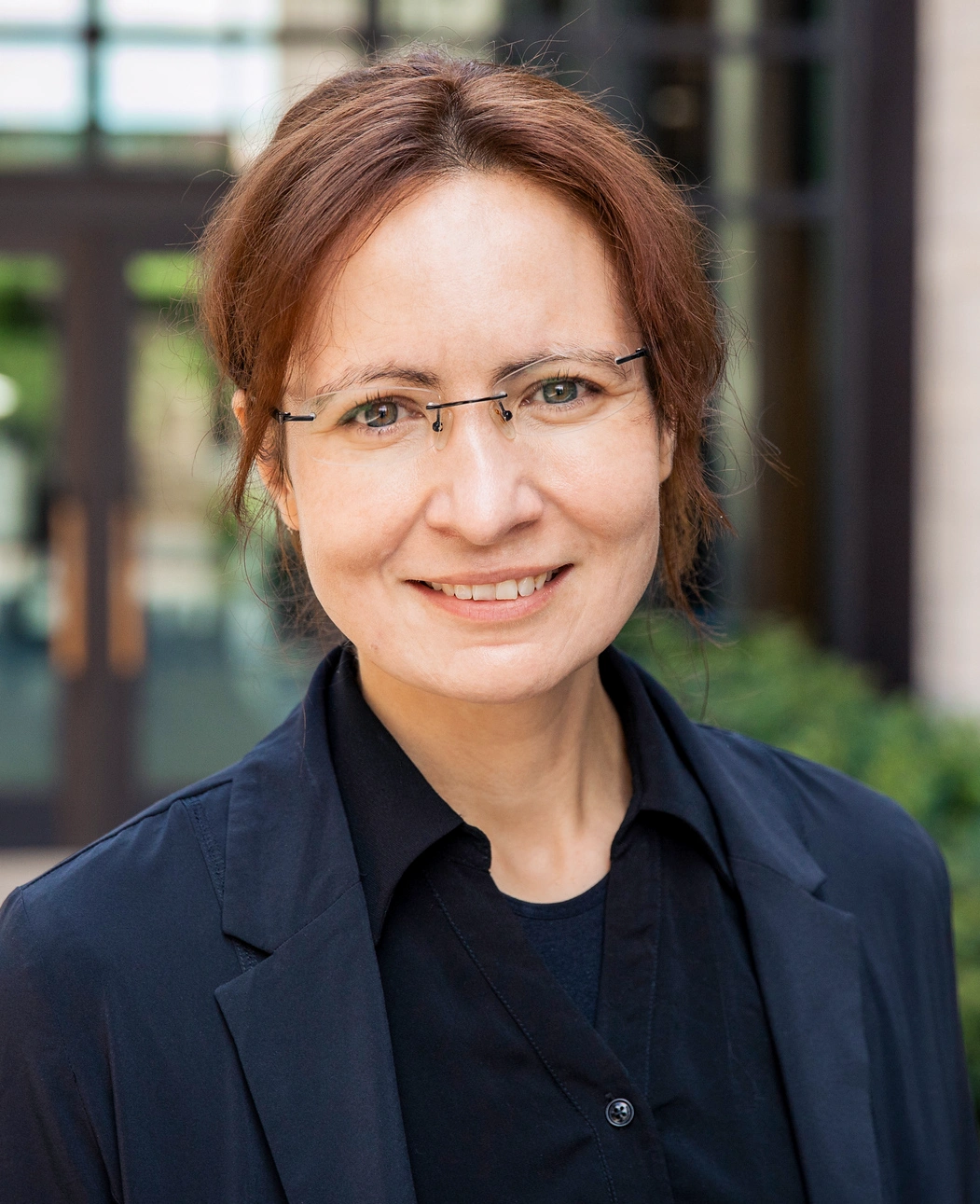
The synthetic biologist Kate Adamala coaxed a cellular soup of nonliving biomolecules enclosed in a membrane to act somewhat like a living thing, even growing and dividing into daughter cells.
Courtesy of Kate Adamala
It could also give scientists insight into some of their deepest existential questions: What is the minimum needed to sustain life? How could life start? What happens if we alter the biology that composes life on Earth today?
Or, as Adamala put it: “What else can biology do?”
Some 4 billion years ago, a bunch of nonliving molecules got together to form the first protocells. They fed, grew, and divided. Then, over time, evolutionary processes emerged that let these cells change and diversify into many different types, decorating a barren world with all manner of strange beings. A purely chemical world blossomed into a biological one. Scientists cannot agree on how this shift from nonlife to life, or abiogenesis, happened, but some have turned their sights on trying it out for themselves in the lab.
For decades, researchers have taken different approaches to this challenge. Some, like the synthetic biologist John Glass at the J. Craig Venter Institute, are stripping down bacterial cells to their smallest, barest genomes to reveal a cell’s minimum requirements to stay alive. Others, like Otto, try to build cells with molecules that differ from those found in Earth biology.
Adamala also works from the ground up, but with biological molecules found in nature today. When she started her lab in 2016, she envisioned assembling a synthetic cell, a proof of concept, that could undergo a complete cycle of cell division using its own genome.
She found an instruction manual in what all known cells have in common: They grow, they duplicate their DNA, they divide, and they evolve. They transcribe their DNA into RNA and then make proteins to carry out these tasks and others that keep a cell running, such as metabolizing molecules for energy. All of this is done inside a lipid membrane, which holds all the necessary materials in one place. Adamala’s team needed to build their synthetic cell a genome and supply it with all the materials to carry out those tasks.
They developed and optimized different ingredients, most inspired by other labs, before combining them together inside liposomes — hollow sacs enclosed by a simple lipid membrane. This would serve as the cellular body.
They started with a cell’s most fundamental system: its mechanism for copying its DNA and passing it down to daughter cells. They adopted a DNA replication system, pioneered by the synthetic biologists Hannes Mutschler and Christophe Danelon, and tweaked it to work alongside other systems, including a commercial pack of 36 enzymes that let the cell read DNA and make proteins. Adamala’s team fiddled with their cellular brew, switching genes in and out and adjusting concentrations of various molecules, to get the crucial information-carrying and protein-making genetic systems to jibe.
Their tiny synthetic genome did not encode any metabolic genes, which would let the cell process food and energy, or many of the complex molecules a cell needs. So, in parallel, the researchers prepped some supply packs.
They filled other liposomes with sugar, lipids, and enzymes, as well as complex molecules, such as transfer RNA (tRNA) and ribosomes, which work together to translate genetic instructions into proteins. For their protocell to accept these crucial supplies, the team also modified a protein that would sit in the cell membrane and attract the lipid bubbles. When a bubble bumped into the cell, their membranes would fuse, releasing the supplies inside.
It wasn’t easy to get all these genetic systems to work together successfully. After some more tweaking and optimizing, the cell started growing and replicating its DNA.
“I was almost ready to say ‘Done’ and ‘We’re going to publish it,’” Adamala recalled. But her vision for a synthetic cell had one more step: division.
This was where the field had been stuck for some time. Researchers before Adamala had figured out different ways to feed and grow synthetic cells and to replicate their DNA. But cell division is a different beast. A typical cell reorganizes its cytoskeleton — a network of protein fibers that provide structural support — to halve its DNA and split. Synthetic biologists could not figure out how to get their cells to undergo this complex process.
So Adamala decided to ditch the cytoskeleton. One day, while tearing through the literature, she came across an interesting mechanism in a paper. By attaching protein tags to a cell membrane, the synthetic biologist Reinhard Lipowsky at the Max Planck Institute of Colloids and Interfaces attracted other proteins to crowd around and physically bend the membrane, forcing the cell to divide. Following this approach, Adamala tweaked a cell-membrane protein and tested it in her protocells. After several tries, it worked.
“I wasn’t allowing myself to believe it for a while,” she said. “It was like, ‘Holy shit, did I actually make a dividing cell?’ … At some point, you’ve been checking enough that [you think], ‘OK, now it’s real.’”
This paper “beautifully demonstrates this division mechanism,” said Job Boekhoven, a systems chemist at the Technical University of Munich who was not involved in the study. “That has been a huge achievement.”
By putting together systems inspired by different labs — DNA replication; feeder liposomes; and swarming, division-inducing proteins — and then optimizing them to work together, Adamala’s team showed that it is possible to induce the chemical world to form a biological one in the lab.
“Combining all of these things is a staggering technical accomplishment,” Glass said. “I think it will prove to be a watershed event for the synthetic-cell field and biology in general.”
Michael Lynch, an evolutionary biologist at Arizona State University who was also not involved in the study, agreed. It is “a synthetic biology tour de force,” he said. However, he also cautioned against over-hyping the cell since it’s not yet self-sustaining.
Once the synthetic cells were created, her students and others started calling them Adamala cells — a moniker she hated. She insisted that they name the cells after anything else, jokingly suggesting potatoes. So her students started calling them spudcells. “I’m Polish, I’m mostly made of potatoes, so that’s fine with me,” Adamala said.
Each cell is tiny. Its genome is way smaller than bacterial genomes, and it doesn’t look like anything special. It’s “beautiful to me because I’m super excited about it,” Adamala said. “But if you look at it under the microscope, it’s like, ‘OK, it’s a blob.’”
The cell could grow and divide. But could it take the next step toward life by evolving?
The researchers started fiddling with the synthetic cell’s DNA to see if they could get some cells to grow larger or divide faster — in effect, creating genetic variation in the cell population. They found that the cells that grew bigger also had more daughter cells and started to become more populous. In other words, those traits started being selected for within the population, the first step toward evolution.
What Adamala’s team demonstrated was not quite natural selection, the primary mechanism that drives evolutionary change, in which organisms that are better adapted to their environment are more likely to survive. Even if she got their cell to produce more daughter cells, she doesn’t think it would lead to evolution. That’s because Adamala’s team had to create genetic variation synthetically, instead of allowing for random mutations in DNA. The enzyme that builds new DNA strands works too well, she said; it doesn’t introduce meaningful mutations into the sequence. They will need to find an enzyme that is more error-prone — but not so error-prone that the genome’s integrity and the cell’s function is lost.
“Biology needs to change fast enough, but not too fast,” Adamala said. She said that she needs to find the sweet spot between order and chaos, referencing the biochemist and complexity theorist Stuart Kauffman, a professor emeritus at the University of Pennsylvania, who argues that biology works best at the “edge of chaos.”
A clear demonstration of an evolutionary process is “clearly something that’s missing,” Boekhoven said. “I’m sure that that’s the next big step.” Other researchers have shown adaptive evolution in other types of synthetic cells. But those cells were bacteria stripped of all but the bare minimum of genes — they weren’t built from the ground up.
The cells are also limited by the fact that they need to be fed many of their raw materials. That the cells can’t make their own ribosomes, the way natural cells do, “limits [their] potential for growth and sustained reproduction,” said Szostak, who was Adamala’s doctoral adviser. “If their system was able to generate its own ribosomes and other proteins and RNAs, it would be much closer to existing biological cells such as bacteria.”
Adamala also thinks they will need to figure out a way to add a cytoskeleton to improve their replication system. Currently, the cells waste a lot of energy and time attracting molecules to crowd around and help them divide.
All told, scientists are far from building anything remotely close to a modern living cell — but this new one is still the most lifelike yet. “The modern cell is like a Dreamliner,” Adamala said, referring to the Boeing 787 airplane. “We built a Wright flyer… the first bike frame with wings that flies 100 feet.”
Alongside sharing the new results, Adamala and other synthetic biologists announced the formation of a nonprofit called Biotic, which they will use to make their synthetic biology tools available to researchers around the world. The team is releasing their data and methods so that synthetic biologists can start building and improving on their cell. The hope is that the work can be used, decades from now, to create plastics without fossil fuels, for example, or fertilizers or drugs.
These synthetic cells could also pave the way to the past, to the origins of biology itself. Life on Earth would have started from much simpler molecules than the ones that spudcells use. Still, Adamala’s creation of a synthetic cell system from non-living materials brings researchers a step closer to exploring, in the lab, deeper questions about life’s origins and requirements, a dream she shares with others.
“If you want to understand what life is,” Boekhoven said, “you need to first build life.”
> (they got nothing to eat)
They can eat fat that are not chiral.
Perhaps they can eat some carbohidrates, all carbohidrates are chiral, but some bacterias may eat some of the unusual carbohidrates too. But amino acids are beyond any possibility, and fixating nitrogen is hard, so I also think they will starve to death very fast.
IMO this extremely, extraordinarily true. And in my experience, it's somehow even more true for disagreements among scientists. Even though every scientific field is, in some sense, about defining a shared set of extremely precise jargon. (I recall two very well-respected scientists screaming at each other about the definition of "acidity" for instance)
Uploading the manuscript to a preprint server and/or submitting to another journal, which Adamala is doing/planning to do, is the normal response.
Sending it to journalists beforehand is what I consider an overreaction.
I don't spend any time on LW but perhaps that is because I'll have to face that all my ideas have already been explored more eloquently by him and the communities he's part of.
Mainstream Christianity was not biblical literalist anyway. Read what Augustine or Origen had to say about interpreting Genesis.
Bizarre argument.
The reviewer of this paper is saying that by biology they always meant naturally evolved cellular biology, not synthetic biology - there's just never been an example of the latter before.
I think the take is wrong, the receiving journals should be excited to expand their scope rather than frustratedly redefine their scope more narrowly, but definitions and categorization are hard.
The IAU...resolves that planets and other bodies, except satellites, in the Solar System be defined into three distinct categories in the following way:
(1) A planet [1] is a celestial body that (a) is in orbit around the Sun, (b) has sufficient mass for its self-gravity to overcome rigid body forces so that it assumes a hydrostatic equilibrium (nearly round) shape, and (c) has cleared the neighbourhood around its orbit.
(2) A "dwarf planet" is a celestial body that (a) is in orbit around the Sun, (b) has sufficient mass for its self-gravity to overcome rigid body forces so that it assumes a hydrostatic equilibrium (nearly round) shape [2], (c) has not cleared the neighbourhood around its orbit, and (d) is not a satellite.
(3) All other objects [3], except satellites, orbiting the Sun shall be referred to collectively as "Small Solar System Bodies".
The definition here only applies to bodies in the Solar System.
Still a bad definition IMO. According to the definition if a catastrophic event were to occur that cluttered the neighborhood of a planet it would cease to be a planet until it was cleaned up. The definition of a planet should be based in the physical attributes of the celestial body itself, not in its role or relationship with other bodies. I'm a bit of an extremist on this front. Even our Moon would be a planet in my opinion. Seems silly when you think about our barren moon but there are for sure habitable moons out there. I can't imagine asking an alien "What planet are you from?" and them responding "erm, actually we are from a moon/planetary satellite".
All that debacle around dwarf planets to prepare for future observations, and yet the distinction ceases to apply the moment you go outside the Oort cloud...
But really, that's just the naming systems being bad, obviously common people don't think asteroids around other stars are "exoplanets" or should be called that way
A brain-dead human is alive, but just facing systemic collapse, aka death. That's not to imply that what the scientists here have created is alive, but the comparison isn't so apt.
Thank you for sharing your site as well :)
Some terribly ill-informed people have. Plus ca change. Sadly, the experience of "Christianity" of many Americans is either caricature or some kind of novel and vulgar fundamentalism they grew up around that sprouted on American soil in the last century or two. Add to that the black legends supplied by the Enlightenment and others and you have a perfect storm of malicious ignorance.
> This startling idea first appeared in scientific form in 1931, in a paper by Georges Lemaître, a Belgian cosmologist and Catholic priest.
excerpt from https://www.amnh.org/learn-teach/curriculum-collections/cosm...
WTF? cars are less than 7% and even including trucks we are barely around 11%. when you look at greenhouse effect instead of "just carbon", the percentages are even tinier.
If you are looking for leading sources of climate change look at electricity/heat, industry and agriculture.
just because (bad) politicians are always talking about cars when talking about climate it doesn't mean the are actually a meaningful component. it is smoke and mirros…
Of course most people who commute to work don't need to be doing that now, but that's the other big elephant in the room with AI. We don't use the intelligence we already have, so what makes us think the emergence of ASI/AGI will change anything?
The way I see this is that science cannot disprove any particular religion, but it can probably offer more compelling explanations for the state of the world than religion can offer. People haven't flocked away from religion because explanations for the state of the world aren't really what people want from religion. They want a sop for their anxieties. they want community, etc. I think believing in nonsense is a real shitty way to get these things, but I'm not most people.
Someone doesn't have to talk about the climate impacts of cars every time they talk about the climate impacts of AI. Both have climate impacts, independently of each other, and we should be dealing with the climate impacts of both simultaneously.
Regardless, don't assume the person you are talking to isn't consistent. Peruse my personal blog and you will see that I, in fact, ran a whole city council campaign on a platform of "to fight climate change we should not be driving".
That depends on which religion, doesn't it. The categorical claim doesn't make any sense, because the general notion of "religion" doesn't entail anything that is inherently at odds with science. And if there is a normative sense of what is or isn't religion, then this is even more true, because normativity means there is a correct religion or most correct religion, and you can't be correct without being true.
Some religious traditions, however, do make claims that are wide open to scientific discreditation (like the "Lamanite hypothesis" of Mormonism).
OK, what I have said above is not generally true, as some brain-dead humans may be more alive than others, e.g. some integrative functions, like some feedback loops that function through the endocrine system or through the autonomous nervous system, may still be working, connecting some organs with each other.
My comparison was with a very dead brain-dead human, who was reduced to the equivalent of a tissue culture.
These artificial cells also have some components that continue to work like in a living cell, doing some nucleic acid replication and some protein and lipid synthesis from precursors provided from outside, but they lack the capability to perform many of the chemical reactions that would be needed to close the complex network of feedback loops that enable a true living cell to live autonomously.
<<insert nerd screeching about the word planet>>
Actually they do, because the best way to get cars off the road is to replace many if not most of their occupants with AI.
Private ownership of cars is not the problem. The assumption that people have to drive all over the place to get stuff done is the problem. Let's work on that.
I'm so confused by this. Instead of one person driving a car to the store and parking, now the car is driving itself to the store with one person in it, dropping them off, and then either parking, or driving itself around more, back to the house or to a distant parking facility. In crowded cities, the car is just going to drive around the block empty for an hour instead of paying $12 for parking. Single-occupancy vehicles are a big problem now; I don't understand how introducing a bunch of zero-occupancy vehicles are an improvement on that? It seems very obvious to me self-driving cars are going to significantly increase the total number of miles driven every day in the world.
You don't need to go to the office. Neither does your car.