This article was featured in the One Story to Read Today newsletter. Sign up for it here.
Twenty-three hundred years ago, the legend goes, King Ptolemy I of Egypt asked his court adviser to assemble a comprehensive collection of the world’s written works. Ptolemy, who had served under Alexander the Great, envisioned a library that would safeguard the sum total of humanity’s knowledge. His successors inherited this mandate. Royal forces ransacked every ship that arrived at Alexandria, searching for scrolls. These were stored at the Mouseion, a shrine to the Muses modeled after Aristotle’s Lyceum. Aristotle’s own book collection was said to be among the holdings.
Explore the August 2026 Issue
Check out more from this issue and find your next story to read.
Much of the history of the Library of Alexandria has been lost. But we know that it was the site of many of the premodern world’s greatest intellectual achievements. The king paid scholars to live and work in the library, and the collection was available to anyone “eager to study, an encouragement for the entire city to gain wisdom,” a visiting Greek rhetorician wrote. It was at the library that Eratosthenes calculated Earth’s circumference and Zenodotus edited the earliest manuscripts of Homer’s epics. Euclid, who wrote the Elements of geometry, may have studied there as well.
This run of scholarship would not last. By 400 C.E., the library had disappeared. Many scholars regard its destruction as the greatest loss of knowledge in history and the beginning of the Dark Ages. Historians have spent centuries parsing fragments of papyrus in an effort to understand what went wrong.
Traditionally, the answer was believed to be war. During the Siege of Alexandria, in 48 B.C.E., Julius Caesar started a fire that incinerated at least 40,000 scrolls. The library survived in diminished form until the fourth century C.E., when followers of the archbishop of Alexandria sacked the pagan temple that housed the remaining manuscripts. But contemporary historians tend to dismiss the importance of these dramatic incidents in favor of a more mundane cause of death: negligence.
Maintaining the collection was an enormous expense. Humidity, mice, and insects slowly ate away at the papyrus scrolls. Scribes had to continually copy old texts before they deteriorated and became illegible. Eventually, the challenges of maintaining the library became greater than the will to preserve it. “It is not that the disappearance of a library led to a dark age, nor that its survival would have improved those ages,” the classics scholar Roger Bagnall has written. The fact that the library was allowed to die showed that the dark age had already arrived.
Some 2,000 years later, under very different circumstances, the darkness is gathering again. Americans, once members of a proudly literate society, read much less than they used to. According to the National Endowment for the Arts, which conducts the most comprehensive survey of the nation’s reading habits, fewer than half of all adults reported having read a book of any kind in 2022. Only 38 percent read a novel or short story. A study analyzing 236,000 responses to the American Time Use Survey found that the proportion of Americans who read for pleasure on any given day fell from 28 percent in 2004 to 16 percent in 2023. (The study looked at people who had read a book, magazine, or newspaper; listened to an audiobook; or read an e-book.) Gambling has become a more common leisure activity than reading a book: Last year, 57 percent of Americans placed a bet.
The decline in reading cuts across age groups, gender, and education levels. Even the demographics that traditionally read the most—retirees, women, and college graduates—have seen a collapse.
The books that people do read are simpler than they used to be. New York Times best sellers today have sentences that are about one-third shorter than they were a century ago. Longer sentences aren’t inherently better. But their former ubiquity suggests an age when Americans had the inclination and ability to read serious works of literature. In 1958, the English translation of Boris Pasternak’s Doctor Zhivago was the best-selling novel of the year, according to Publishers Weekly. Pasternak writes in long, complex sentences: “On that warm gray morning in the mountains, Zhivago felt sorry for the Tsar, was disturbed at the thought that such diffident reserve and shyness could be the essential characteristics of an oppressor, that a man so weak could imprison, hang, or pardon.”
Last year’s top-selling novel was Sunrise on the Reaping, the latest in the Hunger Games young-adult series. Brian Bannon, the chief librarian at the New York Public Library, told me that young-adult fiction is one of the library’s most popular offerings—including among decidedly not-young adults. (Other titles in the top 10 include the children’s books Partypooper, the 20th installment in the Diary of a Wimpy Kid series, and Dog Man: Big Jim Believes.) The most popular novel written for adults was the romantasy adventure Onyx Storm. Whatever the book’s pleasures, it isn’t Pasternak: “A muscle in his square jaw ticks as he stares down at me, rippling the tawny-brown skin of his stubbled cheek.”
Americans also get much less of their news through reading than they once did. In 1975, about half of 20-somethings said they read the newspaper every day. Today less than 10 percent do. Most Americans now get the news on their phones and laptops, and 40 percent say they prefer to watch or listen to online news rather than read it.
This shift is often referred to as a literacy crisis. And it’s true that Americans’ basic reading skills are declining. Fourth- and eighth-grade reading scores have slid for the past decade. Amanda Kordeliski, who is on the board of the American Association of School Librarians, told me that she and her fellow librarians have had to buy new books to accommodate students’ diminished reading levels. Some of the most popular are graphic novels: updated classics such as the Magic Tree House series for elementary-school students, and manga for middle and high schoolers.
In 2024, in a national test, just 35 percent of high-school seniors were “proficient” at skills such as analyzing complex fictional themes and evaluating the effectiveness of an author’s argument. About the same number scored below “basic,” meaning that they may struggle to draw conclusions from concepts explicitly included in a text, or to use context clues to determine the meaning of an unknown word. Adult-literacy scores have also dropped: Nearly 30 percent of American adults cannot paraphrase or make inferences from a multipage text. In 2017, that number was less than 20 percent.
And yet, strangely, Americans are probably reading more words than ever before. What has changed is what they read, and how. People are bombarded with emails, text messages, X posts, Reddit threads, Instagram captions. This explosion of textual fragments has come at the expense of devoting sustained attention to longer written works that convey rich and complicated information. Maryanne Wolf, a cognitive neuroscientist at UCLA, argues that people are losing the ability to think deeply about writing. That doesn’t mean they are forgetting how to decode individual words. Rather, they are losing the higher-order abilities of comprehension and synthesis. America, in other words, isn’t illiterate. It’s postliterate.
Things are about to get worse, and fast. The next generation reads much less than today’s adults did when they were kids. Kindergarten teachers say that many of their students don’t know nursery rhymes or fairy tales, Benjamin Powers, the director of Yale and the University of Connecticut’s Haskins Global Literacy Hub, told me. (In the study of 236,000 American adults, only 2 percent read to a child on a given day.) From 1984 to 2025, the percentage of 13-year-olds who said they rarely or never read for fun rose from 8 to 29 percent. Every year older a child gets, the less they like to read. Robert Townsend, a program director at the American Academy of Arts and Sciences, recently ran focus groups asking high-school students how they felt about reading for pleasure. He told me that most thought of it as an alien practice.
Reading has come to seem extraneous even to some of the best-educated members of society. Margaret Rennix, Harvard’s assistant director for humanities and social-sciences support, told me she’d spoken with a student who was struggling to read a book written in Old English. The culprit: Anthony Burgess’s 1962 novel A Clockwork Orange. (The student used ChatGPT to “translate” the book into easier language.) Not long ago, a Harvard sociology professor, troubled by course evaluations in which students said they resented the amount of dense reading they were assigned, asked Rennix to speak to his class in defense of reading. She had to explain—to students at America’s most elite university, taking a course in a discipline rooted in written observation, argumentation, and analysis—that excerpts and summaries cannot capture the depth and sophistication of a complete primary text. Rennix told me that some students now view reading as an unnecessarily burdensome way of acquiring knowledge. “By asking them to read,” she said, “professors are arbitrarily withholding information from students by forcing them to get it through this more difficult medium.”
From the November 2024 issue: Rose Horowitch on the elite college students who can’t read books
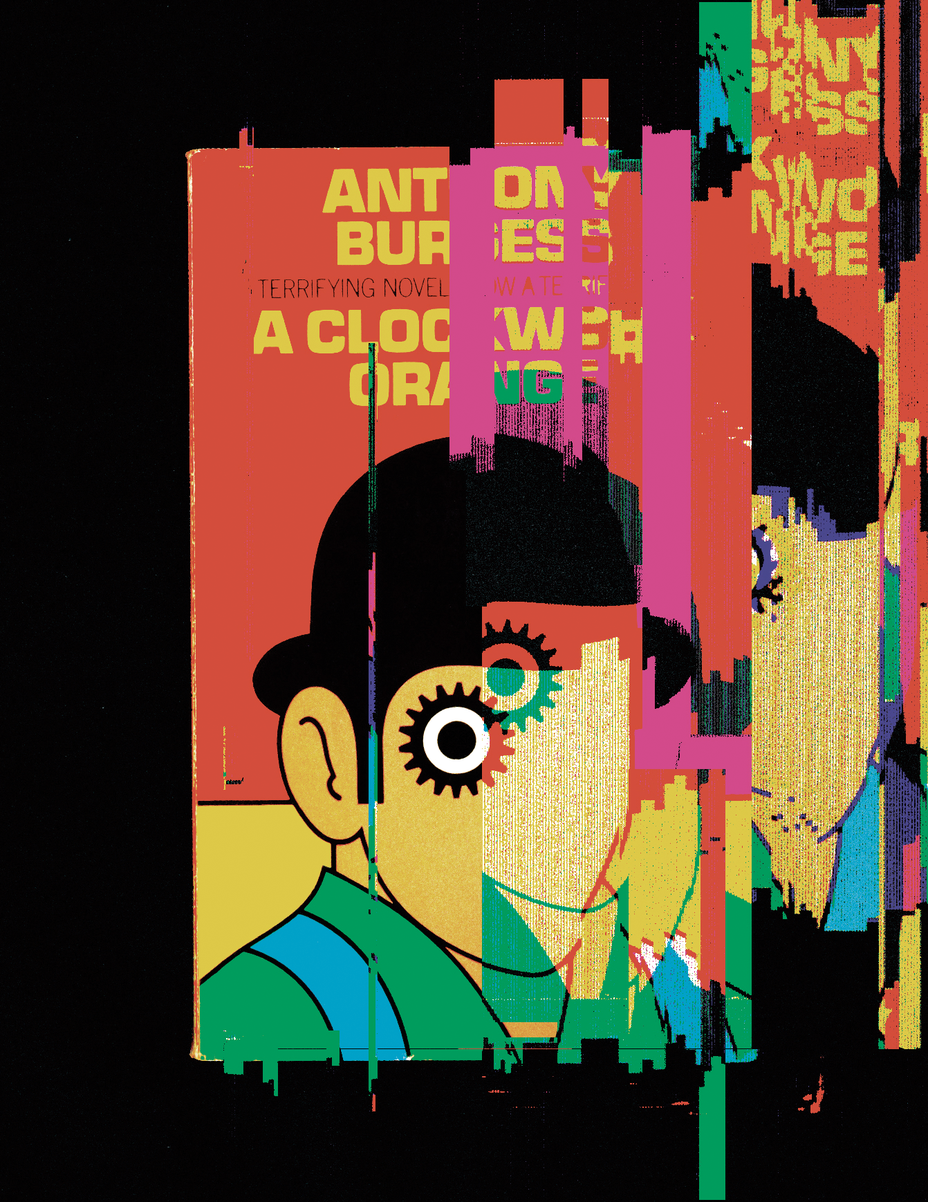
Illustration by The Atlantic. Source: Penguin Books.
It may seem self-serving for a writer at a 169-year-old magazine to carry a torch for reading. But the people who make a living from words are not the only ones who lose out in a postliterate age. Reading is more than a skill, or one mode of communication among many. The media we use to interact with one another shape the world we inhabit. Early humans spent millennia communicating only by voice. The advent of reading and writing transformed society. It altered people’s consciousness and politics, along with the intellectual feats they were capable of. The decline of reading will bring about changes of the same magnitude. It will affect our innermost thoughts, our society’s politics and culture, and how we tell the history of our civilization. If we look closely, we can see that these changes have already begun.
Reading has never been natural. Humans have no innate cognitive machinery designed to string letters into words and connect them to their real-world analogues. To read, people had to repurpose regions of their brain used for speech and object recognition. The practice first emerged 6,000 years ago in Mesopotamia. For millennia afterward, most of the population was illiterate. Literacy became a mass phenomenon relatively recently, after Johannes Gutenberg invented the printing press in 1440.
The written word is fundamentally different from oral language. Writing detaches the message from the messenger, allowing for a more dispassionate spread of information than was possible in oral societies. Because writing a phrase takes longer than speaking it, writing forces the author to slow down and reflect. Written language tends to employ more complex sentence structures and vocabulary than spoken language. And unlike speech, it doesn’t disappear into the ether. Readers can return to a text and plumb it for new meaning and understanding. Because writing endures, individuals can temporarily forget what they’ve written but trust that it won’t be lost forever. This frees up the mind to think of new ideas and make new discoveries.
“More than any other single invention, writing has transformed human consciousness,” Walter J. Ong, a historian and Jesuit priest, wrote in his 1982 book, Orality and Literacy. He argued that literacy created the conditions for inner concentration, extended focus, and logical deduction. It allowed for a new kind of rational, linear, and analytical thought.
Ong cited case studies by the neuropsychologist Alexander Luria, who traveled to remote villages in Uzbekistan and Kirghizia in the 1930s, when peasants were starting to receive rudimentary reading and writing instruction. Luria met his subjects at teahouses, in field camps, and around evening fires. There, he posed a number of questions designed to elucidate differences in how illiterate and literate peasants thought. Luria told the peasants: “In the Far North, all bears are white. Novaya Zemlya is in the Far North.” He then asked them the color of bears in Novaya Zemlya. The literate peasants were able to complete the syllogism. But the illiterate ones refused to try, explaining that they had never been to the north and thus couldn’t answer. Achieving literacy seemed to have conveyed an ability to think logically and abstractly, not simply to read words.
Later scholars would attribute some of these new modes of thinking to other aspects of living in a literate society, not to reading alone. But Ong’s larger argument stands: Print cultures value lengthy, organized arguments. “Writing freezes speech and in so doing gives birth to the grammarian, the logician, the rhetorician, the historian, the scientist—all those who must hold language before them so that they can see what it means, where it errs, and where it is leading,” Neil Postman wrote in 1985. The advent of reading and writing was a precondition for philosophy, modern science, history as an academic enterprise, art criticism.
These changes were hugely destabilizing. As literacy spread through societies, it contributed to political upheaval and revolutions. In the American colonies, the leaders of the patriot cause employed newspapers and pamphlets to foment anti-British sentiment. “The ancient Roman and Greek Orators could only speak to the Number of Citizens capable of being assembled within the Reach of Their Voice,” Benjamin Franklin wrote in 1782. “Now by the Press we can speak to Nations; and good Books & well written Pamphlets have great and general Influence.”
America’s Founders used a print document to construct their new nation and believed that the system they had devised would work precisely because citizens would be informed readers. Franklin was himself a newspaper publisher and established America’s first lending library. “These libraries have improved the general conversation of the Americans,” he wrote in his autobiography, and “made the common tradesmen and farmers as intelligent as most gentlemen from other countries.” Early on, Americans came to see staying informed as a civic and even moral imperative.
Of course, the new republic was not always a haven for sober analysis. The Founding Fathers attacked their enemies in the papers, spreading lies to incite the public against their opponents. One ally of Thomas Jefferson’s called John Adams “a hideous hermaphroditical character which has neither the force and firmness of a man, nor the gentleness and sensibility of a woman.”
Nor was access to reading evenly distributed. For a long time, large numbers of Americans couldn’t pass the federal government’s literacy test—especially in the South, where preventing Black literacy was a pillar of white-supremacist government.
But from the beginning, literature was a crucial source of entertainment, meaning, and connection for many Americans. They shared a set of references from the Bible and English literature. Charles Dickens was sufficiently beloved by American readers that when he got his hair cut during a visit to New York City in 1842, admirers flocked to collect clippings from the barber.
In the 19th century, composing a letter was an art form, and even correspondence with loved ones was written in an elegant, formal style. “It’s weird for us to see it now: a Civil War soldier writing to his wife, and he’s covered with mud in this tent, and he writes as if he’s Shakespeare,” John McWhorter, a linguist at Columbia University, told me. “And you think, Can’t he loosen up with his own wife? But the thing is, that is him basically sending her roses.”
Samuel D. Lougheed served in the 8th Regiment of the Union’s Missouri Volunteer Infantry, which fought at Shiloh and the Siege of Vicksburg. In October 1862, he wrote to his wife: “Tis hard to lie down covered with your own gore on a battle field and die. Tis hard to see the mighty prancing war horse, trampling the dying and dead beneath their merciless feet. No dear wife, near to speak a word of comfort. No living sister or Mother to administer relief in that hour the most sad in the history of humanity. O the humanity. O the horrors of war.”
In 1962, Marshall McLuhan, the patron saint of media theorists, predicted that the Western world would become what he called “post-literate.” In The Gutenberg Galaxy, published that year, he suggested that such an age had already begun—that electronic media were already supplanting the written word. At the time, 90 percent of homes had a television, compared with 9 percent only a decade earlier. Television was becoming Americans’ main source of news. The average household spent more than five hours a day in front of the TV set.
Viewed from the present, the America of the 1950s and ’60s doesn’t seem postliterate. After the war, the nation had become wealthier and more highly educated at a remarkable pace. Its appetite for the written word and its veneration of the intellectuals who produced it seemed poised to grow and grow. In 1964, Time, which then had a circulation of more than 3 million, ran a cover story on John Cheever, the author known for his dark fables of suburban malaise. The article, “Ovid in Ossining,” opened with an extended quotation from the invocation of Metamorphoses. In Cheever’s famous story “The Five-Forty-Eight,” the protagonist boards the titular train and is greeted by a then-familiar, now-exotic sight: a car full of commuters reading the evening newspaper.
But television was changing the rhythms and habits of American life. In 1985, Postman, a friend and disciple of McLuhan’s, published Amusing Ourselves to Death. He argued that television had hijacked Americans’ attention and turned politics into cheap entertainment. “The problem is not that television presents us with entertaining subject matter but that all subject matter is presented as entertaining,” Postman wrote. “Television is our culture’s principal mode of knowing about itself.” At the time, the average American household watched more than seven hours of television every day, a number that would rise to nearly nine hours by 2010.
If TV crowded out the silent time necessary for reading, broadband internet and the smartphone make it nearly impossible. Not too long ago, at-home screen entertainment was finite. Shows aired on a certain day, at a certain time. If you wanted to watch an old movie, you had to put your shoes on and go to a video store. Books could compete in that environment. Some people, at least, would turn off the TV and read a book before falling asleep.
Now entertainment is limitless. There’s no hard stop—one show bleeds into the next. People watch TV with their phone in hand, monitoring social media or texting with friends. Netflix has reportedly told directors and screenwriters to assume that the audience isn’t paying attention and to constantly remind viewers what’s going on. In this environment, people have to be really determined to read. Most aren’t.
When people do read, they might find that they’re absorbing less information. That’s especially true if they read on their phone. The endless scroll, hyperlinks, and notifications invite surface-level reading, with constant invitations to look elsewhere. Studies have shown that people comprehend less when reading on a digital device than on paper, perhaps because of all these distractions. Devoting extended, undivided attention to a text can now feel like too much to ask. Audiobooks have become a popular alternative to print books at least in part because listening to a book allows for multitasking: You can read while doing the dishes or driving to work.
Faced with shrinking attention spans and declining comprehension, schools might have been expected to resist the impulse toward shorter passages and shallower reading. Instead, they spurred it on. A 2025 survey found that most middle- and high-school English teachers assigned zero to four books a year. Successive waves of education reforms have led districts to favor short passages over full books, the better to mimic multiple-choice reading-comprehension exams. Many of the most popular school curricula now rely on excerpts. Annemarie Cortez, the principal at an elementary school in Corona, California, told me that many administrators are instructing teachers not to assign full books; they’re supposed to be running discrete reading drills with short excerpts.
Meanwhile, digital devices have flooded American classrooms. In a New York Times survey, more than 80 percent of elementary-school teachers said students receive a school-issued device by the time they enter kindergarten. Lupita Villalobos, who teaches 3-year-olds at a pre-K in Duncanville, Texas, told me that the district gives each student a tablet to use during school. She’s prevented her students from using the devices, as she knows how much time they spend on them at home. “I had a student who had a very strong reaction to starting school,” she said. “Typically, students cry maybe the first couple weeks and say they want their mom. But this student would cry for her tablet.”
In the recent past, people were at least reading something online, but that’s changing fast. Social media, once mainly text-based, has been overrun with short-form videos. TikTok, YouTube Shorts, and Instagram Reels dominate the attention economy, especially among young people. According to a recent data analysis by Jean Twenge, a psychology professor who studies generational change, by eighth grade, the average kid spends four and a half hours a day on social media. For much of that time, it appears, they are watching videos, often at 2x speed. Even text messages have taken on characteristics of the spoken word. People use all caps to indicate heightened emotion and avoid the formality of proper punctuation, which now seems stilted, even stern. Like many 20-somethings, my friends and I have mostly moved on from texts, preferring to send one another voice recordings instead.
The written word has survived for thousands of years and overcome successive challenges from new technologies. It’s clearly resilient. Reading rates might fluctuate, but optimists argue that the long arc of history points toward universal literacy. Martin Puchner, a comparative-literature professor at Harvard, studies how literature has shaped history. He’s spent decades tracing how communication technologies have changed, and the panics those changes have triggered. For much of his career, he was skeptical of fears about the end of reading. “If the long history of changes in writing technologies has taught me anything, I think it’s that one should always resist the kind of doomsday scenarios,” he told me.
And yet, even Puchner now believes that the doomsday scenario has arrived: A return to text, away from video, seems awfully unlikely. Maybe McLuhan and Postman weren’t wrong in predicting that our society would become postliterate. They were merely early. The world that these theorists foresaw half a century ago is now here. The literate era will prove to be a brief interlude between the oral and digital ages.
Reading shaped the modern mind. Its disappearance will reshape it. Cognitive scientists are starting to understand what these changes might look like. I asked a dozen of them what happens to our brains when we stop reading. Several were amused by my rudimentary question. “Everything that happens to you changes the brain,” Dan Willingham, a professor at the University of Virginia, told me. “Literally reading a word changes your brain for a few hours at least—and, if you know how to measure it right, for much longer than that.” He was trying to reassure me: If everything changes the brain, then almost no single action matters all that much.
But what if you consistently replace one kind of action (reading a word) with another (watching an Instagram Reel)? One of the most robust findings in neuroscience is that people’s brains master what they practice. If we fill our time with short-form videos instead of books, our reading skills atrophy. We have less background knowledge to aid comprehension. There’s no danger of spontaneous mass illiteracy, but the complex cognitive skills that reading fosters start to degrade. The library of the mind falls into disrepair.
Reading books is a workout for the attention span. The more you read, the easier it is to read, and the more you’re rewarded with new understanding. Eventually the process is more pleasurable than it is challenging. But as with physical exercise, the converse is true as well: The less you read, the more difficult it is to read, and the rockier the path to acquiring knowledge.
Social media offers instant gratification. John Hutton, a pediatrics professor at UT Southwestern Medical Center, compares scrolling TikTok to a lab rat pushing a button and getting a dose of cocaine: Eventually, all you want to do is push the button. In 2004, the average attention span on a screen was two and a half minutes, Gloria Mark, a psychologist at UC Irvine, told me. By 2012, it had dropped to 75 seconds. Five years ago, it fell to about 47 seconds. “We become accustomed to having content change rapidly,” Mark said.
Watching videos is a more passive form of engagement than reading. Hutton recently collected brain images of children, all 3 to 5 years old, as they took in stories in different formats. When children watched an animated video of a story, they used the region of the brain associated with imagination about half as much as they did when looking at static illustrations while listening to an audio recording. Children also used their cerebellum—a part of the brain associated with learning—less when watching a video. “They don’t really have to use their imagination as much, because things are happening on the screen,” Hutton told me. “The brain’s just doing less work to understand and learn from what they’re seeing in the animated, compared to the illustrated.”
The paradox is that although video contains more information than text—not just language but sounds and moving images—it does not stimulate deeper thinking. To the contrary, video thrusts so much information at the viewer at once that it’s difficult to focus on any one piece of it. The frames keep changing regardless of how much the viewer has noticed or comprehended. Few people pause and rewind to reflect on what they might have missed.
Young people today have never experienced a world without ubiquitous short-form video. In other studies, Hutton found that children who had more screen time and spent less time reading had less well-developed white matter in areas associated with executive function and language. This suggests that they were less accustomed to using those skills. Benjamin Powers, at the Haskins Global Literacy Hub, told me that students arrive in elementary school with a poor ability to maintain focus and a low tolerance for mental exertion. “In classrooms, this shows up as students who can decode or retrieve information but struggle with comprehension that requires inference, synthesis, or holding ideas in mind across longer texts,” he said.
In a 2024 survey of third-to-eighth-grade teachers, more than 80 percent said that their students’ reading stamina had declined since 2019. Scores on the ACT’s reading and English sections have been falling for the past seven years. They’re now at their lowest level in more than three decades. SAT reading and writing scores have declined too, even as administrators have shortened and simplified the passages assessing reading-comprehension skills.
When these students get to college, their professors find that they have to teach them how to comprehend a text—in other words, how to think. “I’m teaching in German, so we’ve always been used to teaching them how to read, which is something that people in English departments are now realizing that they have to do,” Jonathan Fine, a German-studies professor at Brown University, told me. “Before you can even get to ‘What’s the larger point?,’ it’s: ‘Is this ironic?,’ what a metaphor might mean, just trying to get the very words and grammar to get them to notice everything, so that they can hopefully then make the larger connections.”
That may sound like an exaggeration, but higher education will almost certainly have to become more remedial. In a study of English and English-education majors at two regional universities in Kansas, published in 2024, researchers asked students to read the first seven paragraphs of Dickens’s Bleak House. The novel follows members of the Jarndyce family through a lengthy legal dispute over their inheritance. It begins:
London. Michaelmas term lately over, and the Lord Chancellor sitting in Lincoln’s Inn Hall. Implacable November weather. As much mud in the streets, as if the waters had but newly retired from the face of the earth, and it would not be wonderful to meet a Megalosaurus, forty feet long or so, waddling like an elephantine lizard up Holborn Hill.
The researchers quoted students’ attempts to parse the passage. “So it’s like, um, the mud was all in the streets, and we were, no … so everything’s been, like, kind of washed around and we might find Megalosaurus bones but he says they’re waddling, um, all up the hill,” one student said. At least a quarter of the subjects interpreted the figures of speech literally, leading to the inference that dinosaurs walked the streets of 19th-century London. Dickens continues by describing the Lord Chancellor as he is “addressed by a large advocate with great whiskers, a little voice, and an interminable brief.” Another student interpreted this passage as “describing him in a room with an animal I think? Great whiskers? A cat?”
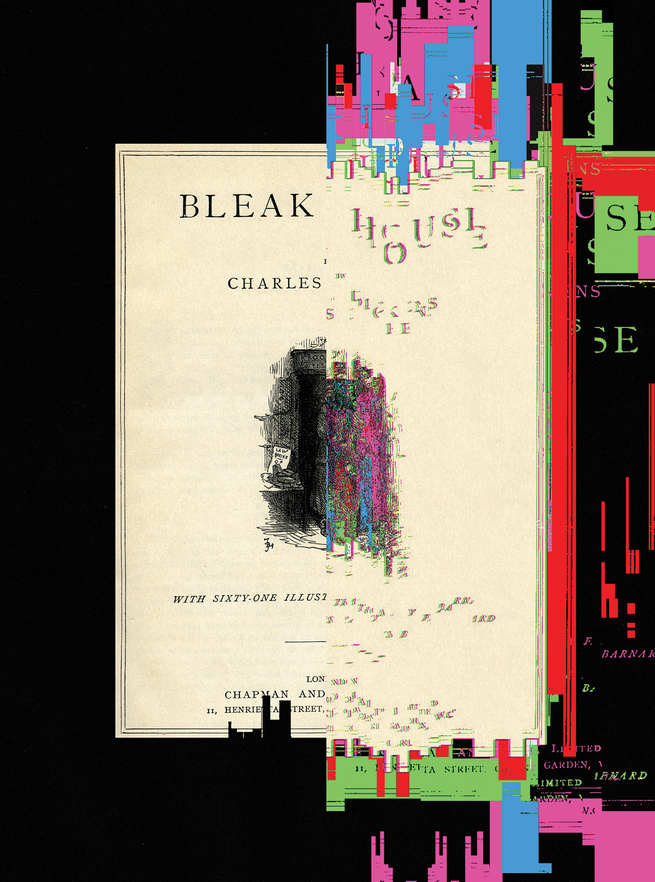
Illustration by The Atlantic. Source: Chapman & Hall.
That students would struggle with unfamiliar references is not surprising. But the researchers gave them access to the entire internet. They could have looked up Michaelmas term or Lord Chancellor or Lincoln’s Inn Hall if they had chosen to do so. Students didn’t even know how to go about figuring out what they didn’t understand, or they didn’t bother. Most of them did not realize that the passage takes place in a court of law. Only 5 percent had an accurate, detailed understanding of what they’d read.
These changes aren’t confined to college campuses. American adults’ ability to answer logic questions, reason effectively, and analyze patterns declined from 2006 to 2018. American adults also tend to have a smaller vocabulary than those with an equivalent level of education did half a century ago. Recent studies suggest that the Flynn effect—the steady rise in IQ between generations since the 1930s—has reversed over the past two decades. Average IQ scores are declining by about three points a decade, Elizabeth Dworak, a research psychologist at Northwestern’s medical school, told me.
The cognitive shifts aren’t all negative. Dworak’s research finds that American adults are improving in certain forms of spatial reasoning. Postliterate culture could convey advantages that we don’t yet understand. In Plato’s Phaedrus, Socrates famously argues that the advent of writing “will create forgetfulness in the learners’ souls, because they will not use their memories; they will trust to the external written characters and not remember of themselves.” He was right. But as writing eroded individuals’ memories, the media theorist Andrey Mir has observed, it improved society’s collective memory.
Could the generations growing up with their brains hooked to endless video feeds be developing some kind of novel, as-yet-undetectable cognitive brilliance? Perhaps. But for now, the decline of reading seems to be ushering in a less rational, analytical, and sophisticated mode of thinking. It’s difficult to see any advantages in that.
In 1982, Walter J. Ong observed that modern civilization was entering a phase of “secondary orality,” in which a once-literate society reverts back to some of the conventions of preliterate cultures. Because spoken words disappear as soon as they’re uttered, oral cultures value repetition to aid memory. Bards in oral societies make use of stock phrases and mnemonics to keep track of their train of thought. They traffic in epithets and “enthusiastic description of physical violence,” in Ong’s words, because conflict is more memorable than dispassionate discussion. Speakers can’t edit their words the way writers can, so they press on without admitting their mistakes. If they later contradict themselves, they don’t expect the audience to recall their earlier statements. Meaning depends on the identity of the speaker, not on any concept of objective truth.
It is unlikely that Donald Trump has familiarized himself with Orality and Literacy. But if he did, he might recognize himself in Ong’s description. Trump’s communication style is perfectly suited to an oral society. He employs epithets—“Low-Energy Jeb,” “Little Marco,” “Sleepy Joe”—that are easy to remember and repeat. He contradicts himself as though there is no record of his previous statements. Even his writing is almost indistinguishable from his speech. (It makes sense; Trump reportedly prefers dictation to composition.) His online posts are full of idiosyncratically placed punctuation, capital letters, and exclamation points. Many are memes with little text: One featured an image of an American warship hitting an Iranian airplane with a laser beam and included the phrase “Lasers: Bing, Bing, GONE!!!”
Trump is our first postliterate president. It is difficult to imagine him being elected leader of a country where information is primarily spread through text. Ahead of the 2024 election, an NBC News poll of 1,000 voters found that Joe Biden had a 49-point lead among respondents who read newspapers. Trump has pioneered a style of communication that exploits our distracted, disputatious age. “So many people, particularly in the academic and journalistic circles, think of him as a political revolutionary,” Roderick Hart, a communications professor emeritus at the University of Texas at Austin, told me. “And I see him much more as a rhetorical revolutionary.”
In the 1985 book No Sense of Place, the media theorist Joshua Meyrowitz observed that television and other electronic media inundated Americans with new kinds of information about their prospective leaders. Print media gave the public access only to politicians’ polished remarks; video let Americans see their presidents sweat, sneeze, and stammer. Voters began to focus on “dating criteria” instead of “résumé criteria,” he told me.
“More than in the past, authorities today must often ‘look and sound good’ rather than write and reason well,” Meyrowitz wrote in No Sense of Place. He predicted that the decline of print and rise of electronic media would ultimately push people toward populist leaders. They would shun authority and institutions in favor of the candidate who made good television. He published his book soon after Ronald Reagan, a former actor, had won reelection.
“I reread the book recently and I kept going, Holy shit, this is even more true than when I wrote it,” Meyrowitz said. Social-media platforms give Americans unprecedented opportunities to watch their representatives’ every move. Their algorithms reward simplistic, inflammatory, emotionally resonant content over complexity, nuance, and rigor. Ideas that comport with folk theories of politics—all leaders are equally corrupt ; immigrants steal jobs; policy problems have easy, commonsense solutions—prevail over the findings of subject-matter experts.
Politicians on the right and the left have figured out how to exploit these new platforms. Reihan Salam, the president of the conservative-leaning Manhattan Institute, described to me how this plays out. “You name an enemy and you polarize the public,” he said. “You don’t allow for nuance, because nuance is just a confusion when you’re in a struggle for power.”
Politicians who promote the distrust of institutions and elites do better under such circumstances. “You create this fantasy that, actually, it’s all really, really simple, and one charismatic person can just achieve these wins that are visually compelling and emotionally compelling,” Salam said. This is precisely the kind of demagogic figure the Founders hoped a well-read populace would see through. “When you think about our constitutional order, how it was meant to work, it absolutely cuts against that,” Salam said.
Marshall McLuhan once said, “The liberal world by definition is literate.” The inverse appears to be true as well.
If Trump is the first postliterate president, he won’t be the last. The political strategist David Plouffe, an architect of Barack Obama’s presidential campaigns, recently argued that candidates should focus each day on content creation. He advised shrinking every idea into something short enough for screen-addled voters to concentrate on. “If it can’t be communicated in an Instagram post or 10-second TikTok, go back to the drawing board,” Plouffe wrote in a New York Times op-ed. That may very well be good advice on how to campaign for office in the postliterate era. As a way to practice informed self-government, it portends disaster.
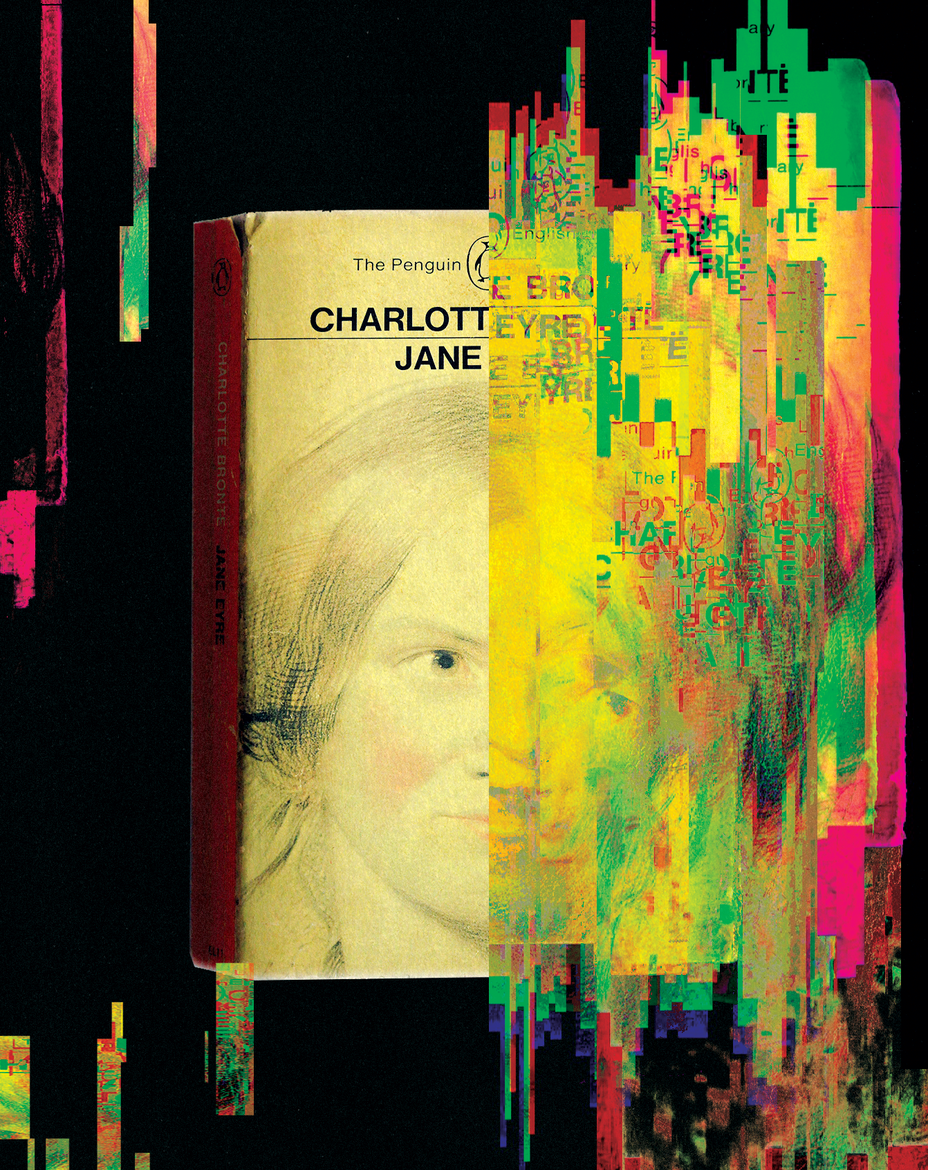
Illustration by The Atlantic. Source: Penguin Books.
I haven’t even mentioned artificial intelligence yet. A number of digital technologies have hijacked attention and made focused reading all but impossible. Generative AI is the first tool to threaten the continued existence of writing.
Writing is hard. Orwell likened the experience to a “long bout of some painful illness.” AI promises a simple remedy. The trouble is that writing is not merely the act of transcribing fully formed thoughts—if it were, it wouldn’t be hard. Writing is the way people figure out what they think, and how to convey those thoughts to someone who doesn’t already share them. Cal Newport, a computer-science professor at Georgetown University, argues that the process of writing forces people to think in an orderly, linear fashion. It exposes flabby thoughts and shoddy reasoning. And the time and focus it takes to form thoughts into words, sentences, and paragraphs allow the author to make new connections and discover new insights.
This feels true to me. My job is to write. With apologies to Orwell, the prospect of a painful illness fills me with less dread than a blank page. But there’s satisfaction in the struggle. The writing process is how I refine and formalize inchoate ideas and gain new understanding. By evaluating my arguments and discarding those that aren’t convincing, I find the ones that are. Writing is hard because the writer is learning. If AI eliminates the challenge, it also eliminates the learning.
Early studies have suggested that this is exactly what happens when people use AI to write. The process is easier. The product is often better than what someone could compose on their own. But it comes at the expense of mental development. One study in Brazil determined that undergraduates who used AI for studying performed significantly worse on a surprise test than those who studied without AI. The students trailed their peers even on questions that demanded reflection and effort instead of specific knowledge. Another study of hundreds of individuals in Britain found that frequent AI use for cognitive tasks is negatively associated with critical-thinking abilities.
Modern life demands a lot of tedious writing. Some of it can surely be offloaded to machines without too great a cost. But a career spent studying the historical adoption of new technologies has convinced Newport that it’s almost impossible to automate away one problem without creating others. Over and over, people think they’re using a tool to bypass a single tiresome task. “And then there’s all these unexpected second-order impacts,” he told me. Email was supposed to be a more convenient substitute for faxes, phone calls, and meetings. Instead, responding to emails became an immense time suck of its own. These unforeseen consequences end up transforming intellectual life.
The skill of deep thinking will likely become rarer and rarer in a world where much of the population uses AI to avoid writing. It will also become more and more important. AI is creating a superabundance of text. It has led to a threefold increase in the number of books released on Amazon each month since 2022, when ChatGPT was launched. Over the same period, scientific-journal submissions have also surged. Many were written at least in part by artificial intelligence.
AI produces crisp, professional prose. Presented with human- and AI-produced text side by side, even M.F.A. candidates have been shown to prefer the work of the machines. If AI writing is pleasing and convincing, however, it is also unoriginal, often inaccurate, or both. People will therefore need their powers of discernment and comprehension more than ever. They will need to know what they think and how to make their own judgments. These are the exact skills that the use of AI threatens to erode.
What’s at risk is nothing less than the ability to think for oneself. If people become overreliant on AI to write for them, they could lose the capacity to interrogate or even develop their own views. These are quintessentially human capacities. “If we gave those up,” the NYU philosopher Kwame Anthony Appiah told me, “we’d stop being the kind of humans that we are. We’d be very different creatures.”
One hundred twenty-six years ago, The Atlantic published an essay by Arthur Reed Kimball describing “one of the most serious of the unchallenged changes of modern American life.” The ability of the nation’s citizens to write well and think deeply was under attack. The enemy of eloquence and sustained attention? The newspaper. In “The Invasion of Journalism,” Kimball argued that the daily paper, with its sports pages and gossip columns, its miscellaneous items and slang, was eclipsing the book and the literary magazine. Even those who claim to read the newspaper to learn of pressing events in Washington or Europe, he argued, will turn first “to some interesting ‘story,’ perhaps a curious bicycle adventure, perhaps the capture of a clever burglar.”
From the July 1900 issue: The invasion of journalism
Before the newspaper, the novel was seen as a threat to good reading habits and moral stature. Thomas Jefferson thought that one of the greatest obstacles to educating women was their passion for fiction, which seduced them away from “wholesome reading.” Once a woman has fallen for novels, he wrote, “nothing can engage attention unless dressed in all the figments of fancy.”
Those inclined to dismiss the present assault on reading point to this venerable tradition: decrying some new technology or medium as distracting and debasing the American people. Perhaps, 126 years from now, this essay will seem like the latest such exercise in hand-wringing. Looking back at these laments, I noticed that the people most invested in the old modes are usually the quickest to predict that all will be lost.
By some measures at least, books continue to thrive. Last year, print-book sales were higher than they were a decade ago. Barnes & Noble opened more than 60 new stores. Almost 400 independent bookstores sprung up in 2025. Substack has seen an explosion of subscriptions for long-form writing. Celebrities such as Dua Lipa and Reese Witherspoon have used their fame and influence to launch wildly successful book clubs. Audiobooks have become a billion-dollar industry.
But the optimists overlook a crucial thread in the data: Text is thriving among a dwindling proportion of the population. Just 20 percent of adults accounted for more than 80 percent of all books read last year. “It’s becoming a kind of niche hobby, like stamp collecting or growing orchids,” Leah Price, a historian of reading at Rutgers University, told me. Readers spend more time reading each day than they did two decades ago. They appear to be even more passionate about print than their predecessors. But the people devoted to text, who derive cultural understanding and intellectual connection from the written word, are now part of a subculture. The fact that you are reading this article almost certainly makes you a member of it.
Now that being a reader is optional, it can function as an identity marker. When you see someone on the train reading printed matter, it feels like a statement. Perhaps inevitably, such statements have become the stuff of online ridicule: Brandish a book too ostentatiously in public, and you might find yourself accused of “performative reading.” The label presumes the person is only trying to telegraph that they are highly educated or possess superior literary taste—why else would they lug a book around?
We’ve been here before. When society first transitioned from orality to literacy, only a small minority could read. As the only individuals who possessed this valuable skill, they occupied a privileged position, and were paid handsomely for their work. At the Library of Alexandria, scholars in residence lived in the city’s royal complex.
Today, reading is again clustered among a small minority of the population, but being a person of letters confers less status than it once did. The remaining readers are marginalized, mocked, and in many ways irrelevant. For most people, a life of letters is an economic dead end. Employment at newspapers has fallen by 75 percent in the past two decades. Job openings for academics in the humanities are likewise in decline, and fewer and fewer of the remaining positions are tenure-track. In 2024, only 8 percent of college graduates earned a bachelor’s degree in a humanities discipline. That year, both English and history departments awarded 40 percent fewer degrees than they did in 2012. There’s a fear among historians, whispered during panels and conferences, that they will be the final generation to systematically examine the past.
The notion of a popular literary figure appearing on the cover of a print newsweekly read by millions of Americans is impossible to imagine today. There is no such figure, and there are no such widely read newsweeklies. Instead, many Americans are proudly postliterate. The president has spoken about his taste for bullet-pointed briefings, and aides have said he likes pictures and charts. The world’s richest men brag about getting their information from X posts, podcasts, and conversations with chatbots. Young people who seek wealth and influence are encouraged to mimic them.
Cultural and economic power tends to flow to people who are skilled at using the most popular communications technology. Today, those people are streamers, podcasters, and influencers. Joe Rogan commands the kind of audience that journalists could only dream of. He has more than 14 million followers on Spotify and more than 20 million subscribers on YouTube. MrBeast, a YouTuber who stages elaborate stunts, such as a real-life Squid Game, regularly gets hundreds of millions of views. Video-game streamers such as IShowSpeed and TheBurntPeanut are among the most popular media figures in the country. These personalities shape what young people aspire to and talk about, and even how they speak.
Books used to be an essential source of knowledge, memory, wisdom, and morality. They were written by older generations and passed down to the young in a vertical transmission of culture, the social psychologist Jonathan Haidt told me. Now information moves horizontally, from young person to young person. This dynamic makes figures such as MrBeast and TheBurntPeanut the guardians of American culture. The decline of reading didn’t turn the world upside down. It turned the world sideways.
Young people want to pursue jobs that will catapult them into the elite—which today means that people coming of age want to be influencers. A 2023 Morning Consult poll found that almost 60 percent of Gen Z respondents said they would be a social-media personality if they could. Amanda Kordeliski, of the American Association of School Librarians, is also a librarian in Oklahoma, where she has set up recording studios for students. “Podcasting is the hottest, most popular thing. I could buy a million microphones and there would still be a waitlist to get into the audio labs,” she told me. “Everybody wants to be an influencer.”
In September, Syracuse University launched its Center for the Creator Economy, and will soon offer its inaugural minor for aspiring influencers. “This center speaks directly to the aspirations of current and prospective students,” Mark J. Lodato, the dean of the university’s Newhouse School of Public Communications, said in a press release. “It’s about meeting them where they are—and preparing them to lead in the world that’s coming.”
The arrival of that world isn’t yet a certainty. Some people have noticed what we’re giving up, and they’re choosing a different path. Nearly two dozen states have banned cellphones during the school day. After Texas’s ban went into effect at the start of this past academic year, a Dallas school district saw 200,000 more library books checked out compared with the year before, a nearly 25 percent increase. Rex Ovalle, a high-school English teacher in the Chicago suburbs and a member of the National Council of Teachers of English, told me he’s seen pushback against excerpts; some teachers are adding whole books back into their curriculum. Felton Thomas Jr., the executive director of the Cleveland Public Library, said that its youngest patrons have joined senior citizens in preferring print books to digital copies. If these acts of defiance against a postliterate culture seem futile, the holdouts lose nothing by trying.
I was raised in the postliterate era. I was born shortly after the dot-com bubble burst and entered first grade around the time the iPhone was released. In seventh grade, I got my first phone and promptly made an Instagram account. If you make an internet reference—any internet reference—I will (regrettably) almost always get it. Most of my knowledge of a world premised on reading comes from what I’ve read in books.
I had the advantage of growing up in a family of readers. My dad read to me almost every night, all the way through middle school. (As the father of a moody daughter, he often didn’t know what words to say to me. When we read together, he could borrow someone else’s.) My older sisters couldn’t wait to recruit me into their book club. Our favorite was The Boxcar Children, about four orphaned siblings who create a home in an abandoned train car. In the book, the children have scarcely found food and shelter before the two sisters decide to teach their younger brother to read. They carve wood chips into letters and use blackberry juice for ink. When I turned 10, my mom passed down her childhood copies of Rabbit Hill and Johnny Tremain. She had written her signature on the inside cover when she got them. I added my own.
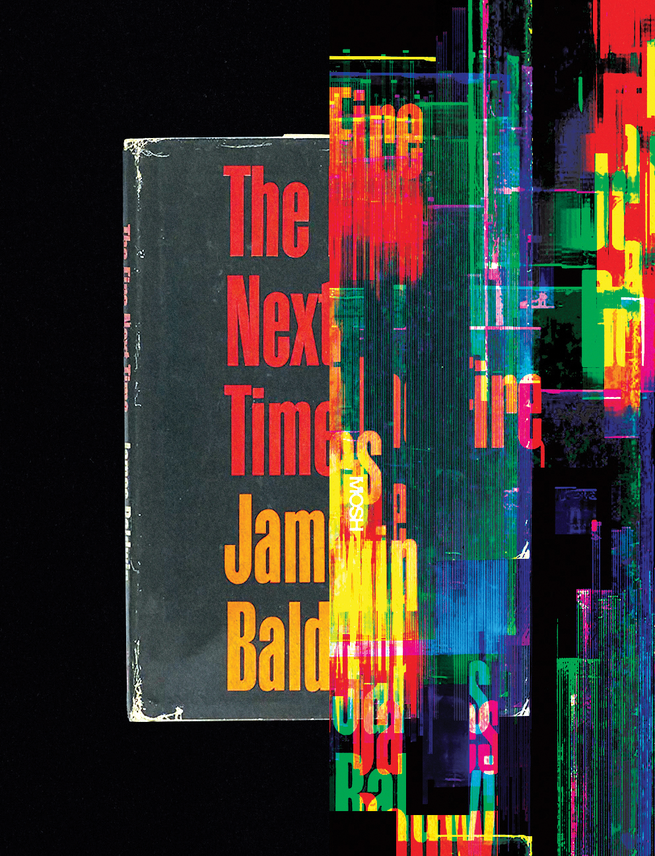
Illustration by The Atlantic. Source: Dial Press.
During high school, I got it in my head that I should read the classics. My teachers kept recommending their favorite books. I wanted to share in their knowledge and understand their references. I slogged through Jane Eyre and fell for Anna Karenina. Although I was alone while reading, I didn’t feel that way. These books contained the wisdom of generations. As James Baldwin said (in a 1963 Life profile, just a week after he appeared on the cover of Time): “You think your pain and your heartbreak are unprecedented in the history of the world, but then you read. It was Dostoevsky and Dickens who taught me that the things that tormented me most were the very things that connected me with all the people who were alive, or who ever had been alive.” I felt like I was part of an unbroken chain of knowledge and culture.
In the years since—I’m not quite sure when—the habit slipped. The change was subtle. I became busier. I started scrolling on my phone before bed instead of reading. My attention began to wander every few pages. What did it matter if I read less? No one was checking on my progress. And the books would always be there. I could pick them up later.
When the Library of Alexandria disappeared, the knowledge inscribed on its scrolls was lost forever. We can only guess what else Eratosthenes and Euclid might have written. The text turned to dust. That won’t happen today; all of the words in the great library could be stored on a single computer chip. Nowadays, even the most obscure academic monographs are scanned and digitized. Google Books and the Internet Archive represent libraries of unfathomable proportions. We can navigate to them with a few keystrokes, not a perilous journey across the Mediterranean. There’s little risk of their texts succumbing to humidity or mice.
But the threat of apathy remains. What we’re losing is the ability and inclination to read those texts. An astonishing wealth of information and wisdom has been bequeathed to us. What we’ll do with this inheritance is up to us.
This article appears in the August 2026 print edition with the headline “The Age of Reading Is Over.” When you buy a book using a link on this page, we receive a commission. Thank you for supporting The Atlantic.