Here is another article with that details : https://www.techspot.com/news/112051-japan-finds-way-recover...
I remember how Lead acid battery recycling has now become commonplace even in fairly under developed parts of the world. I guess it's all about incentives. sigh.
Many processes could recover the inputs. Some are tremendously polluting. Cheap methods to recover lead from older lead-acid car batteries would be an example, or the way scavengers burn plastic insulation of recovered copper wiring.
TL;DR exernalities and economics and pollution drive recycling issues, not % recovery at this point. We know how to recover a lot of the inputs. Knowing how to industrialise and scale it up is what counts.
John McCarthy (of LISP fame) was an (in)famous curmudgeon on USENET, frequently used to say future generations will thank us for making giant collections in the ground of highly valuable recoverable industrial inputs, what we call "rubbish dumps" -He was only partially less wrong, but had a point to make about the cost of inputs to industry vs raw mining costs. If we do come up with a process to strip mine rubbish dumps and send feedstocks in the appropriate directions there's a lot there. Complex plastics, Metals, Organics, Acids, Methane Gas, you-name-it. We already collect and harvest the methane to drive other dump works, the idea of mining the materials isn't "wrong" as much as insufficiently economic right now against raw material sources.
This isn't just an LLMism, it's a painfully redundant phrase. Not much worth me reading forward if even the authors weren't arsed to write the damn thing.
https://en.wikipedia.org/wiki/2010_Senkaku_boat_collision_in...
https://www.rusi.org/explore-our-research/publications/comme...
Japan was one of the first countries to be hit with rare-earth export-restrictions by China - going back to 2010. It seems that a lot of policy came out from this unpleasant shock, incl. the decision by Toyota to focus on developing FCEVs which would be less dependent on Chinese supply-chains. Ironically, the resulting vacuum may have actually led to Chinese/American companies gaining market share in the BEV space.
Still, given how things are going, FCEVs (and Japan with it) might actually end-up having the last laugh.
The main thing actually holding back the recycling industry is the lack of batteries that need recycling, not the lack of technology needed to recycle them. Most of the batteries produced in the last ten years are still being used. And quite a few might head for a second life in storage for another decade or so. It's probably going to be another decade before recycling hits a scale where it becomes a significant and lucrative source of valuable raw materials.
And as others mentioned, it's not just about recycling the lithium in batteries. It's not like cobalt, nickel, copper, graphite, etc. end up on the trash heap.
I'm so tired of reading articles written by LLM. There are several sites that just ingest material (like studies) and crap out low-effort LLM articles.
Furthermore, it's not a remarkable achievement. By contrast to this headline, Redwood Materials claims "Redwood’s technology can recover, on average, more than 95% of materials like nickel, cobalt, copper, aluminum, lithium and graphite in a lithium-ion battery."[0]
Lead acid batteries had a similar trajectory and modern lead acid batteries are effectively 100% recycled.
Can't believe until i saw a comment 'Less dependence on China', then i got it.
Believe in what you want to believe, not depends on truth.
https://green-innovation.nedo.go.jp/en/article/liquid-lithiu...
“While these targets have already been achieved at the laboratory level, we are now moving into the phase of mid-scale demonstration,”
If recycling is set up properly the core charge is going to be enormous and make me question if its worth turning in the old battery or repurposing it as home electricity storage.
> The industry standard for the recovery of lithium (remember there is a difference between recovery and extraction) is 90%, with some platforms now achieving 95%+ like those that use carbonation.
"That said, Japan isn't the only country pursuing lithium recovery. In the US, Redwood Materials – the recycling company founded by former Tesla CTO JB Straubel – says it's already recovering 95% of lithium from the equivalent of about 250,000 EVs per year."
EV batteries are too large and valuable to wind up in landfills, although I'm sure it has happened somewhere. I do like that Japan is is making it harder to just throw out smaller lithium batteries. That strikes me as a more probable source of waste.
Can I ask your reasoning?
Currently hydrogen is just oil with extra steps. Efficient electrolysis either needs ultra-rare materials like iridium and platinum, or exotic ceramics for continuous high-temperature electrolysis.
I personally can't see how this arrangement can supplant oil and batteries.
All of these metals are already almost fully recycled (not sure about graphite). Lithium is the toughest to recycle and it's not solved yet, so it's right to focus on that, because there will be a lot of lithium electrolyte to dispose in the near future.
Is it coming from some internal Slack channel at Tesla or something? Whoever spreading it don't know what they're talking about.
Getting rid of all that waste material from Galena was maybe a different incentive structure but yeah.
There's really no evidence and trend to back this up as a likely outcome.
> In Japan's case, though, the biggest bottleneck right now isn't the technology. It's actually getting dead batteries to recyclers in the first place. Only about 14% of end-of-life lithium-ion batteries in the country currently make it through official collection channels. Many retired EVs actually end up getting exported, making those valuable metals inaccessible. Solving this problem is now more important than ever.
FCEVs make no sense if you have plenty of fossil fuel or access to cheap lithium batteries. But if you see hydrogen as a less resource-bottlenecked way to store energy, it starts to make sense.
This is why I would like to see regulation on disposable lithium powered devices. Some other countries are enforcing it finally with all the disposable vapes littering our environments. Easiest method is similar handling to lead acid batteries requiring you to return a battery to buy one, or pay a core charge. It could even encourage people to pick up vapes off the ground so they can go buy one without the charge.
Edit: linked article is also from April.
It makes sense to try an recycle rare earths or many other types of metals that you may be short of, and I would say for a country like Japan, Holland, Switzerland, Germany, it would make sense to make the effort.
I would think price would be no object if you want to maintain some independence, it’s probably why Switzerland and Denmark are teaming up on Thorium research currently.
Plenty of substances we don't mine elementally are not worth recycling. The main advantage with lithium is it tends to go into large volumes of standardised chemistries.
>racism
>racism, Japan
Type scenario.
https://www.npr.org/2026/07/13/nx-s1-5847025/ev-battery-recy...
https://www.npr.org/2026/03/02/nx-s1-5706658/electric-vehicl...
<guess>
The normal procces uses Sodium Hidroxide that destroy a lot of things but the result is a mix of crap, Sodium salts an Litium salts that are very difficult to separate because they have very similar chemical properties.
Usualy Sodium Hidroxide is cheaper, so in general it's a good idea. But they have plenty of Litium arround.
If you replace the Sodium Hidroxide in the procces with Litium Hidroxide, it should destroy almost everything too. But now the result isonly crap an Litium salt, so you can skip a big part of the separation procces.
</guess>
Case in point - lead acid batteries are not a fair comparison. A lead acid battery is so robust you can separate the cathodes and anodes with your (gloved) hands. Getting the elements out of a lead battery is like picking pieces of pepperoni off of a pizza. Whereas taking lithium out of a lithium cell is like pulling only a certain protein out of a roll of bologna. And the protein catches fire in contact with air.
The article doesn't really give us the details which is a pity.
" As the United States tightened regulations on lead processing to protect Americans over the past three decades, finding domestic lead became a challenge. So the auto industry looked overseas to supplement its supply. In doing so, car and battery manufacturers pushed the health consequences of lead recycling onto countries where enforcement is lax, testing is rare and workers are desperate for jobs. "
https://www.nytimes.com/2023/03/20/world/americas/car-batter...
https://www.nytimes.com/interactive/2025/11/18/world/africa/...
>A new law taking effect this year will require manufacturers and importers to collect and recycle small portable batteries from the likes of phones, vapes, and power tools.
But "recycle" doesn't necessarily mean closed-loop recycling (recycling into the same products). Lithium recovery is a type of open-loop recycling and the surrounding paragraphs talk about lithium recovery so this is a reasonable interpretation.
https://www.nature.com/articles/s41467-025-61481-y
https://interestingengineering.com/energy/china-recovery-mat...
No, they don't and no, they wouldn't. "Inhaled air [at sea level] contains 21% O2 while exhaled breath contains approximately 16% O2 and 5% CO2" [1]. 24% recovery.
Toyota was seemingly decades ahead at one point with their hybrid cars; but now they have resigned to a defensive position compared to Tesla, Chinese automakers, even the European ones.
Which is a shame, because it has a perfect combination of short-range needs (I mean, look at kei-cars), tons of wonderful places to hang out while charging (toll-way rest areas are so good), rare sub-freezing temperatures in most of the country, mandatory vehicle inspections (which could collect great safety data as well as preventative maintenance), general love of new cars and brand loyalty, lack of political or individual divide of "big gas trucks are manly", mobile-power-station earthquake preparedness (a nice bonus), generally cooperative nation-wide infrastructure...
I guess we just have to hope the main automakers can hold on long enough for solid-state batteries and move faster than a snail's pace when it does.
It's a bit silly to downplay their investment based on the sales numbers of Toyota Mirai.
Japan seems to do well in research and development, and they also seem to open to iterate over time very well when they put their minds to it. I’m glad they’re somewhat on our side but not mindlessly so.
For now, NMC remains superior for some high performance applications, as well as for high-end laptops and phones. Yes, there are "myriad" problems with nickel and cobalt. These problems will diminish as scale makes recycling economically competitive to virgin material mining.
At some point the number of EV batteries being disposed will approach equilibrium to the number of new vehicle batteries manufactured. When this happens the amount of virgin nickel and cobalt needed will also approach zero.
My dad bought a recycled lorry battery off them in the late 70s, and I remember going to the place to pick it up. I can't imagine it was a very safe place to work, and I expect that was pretty much a maximum lifetime exposure to lead in one hit ;-)
It is an interesting situation.
Anecdote: I have a 2014 Leaf, purchased a couple of years ago as the first foray into EVs. It's a great little car, perfect for the daily short trips for which we bought it. Use-case matters!
> In January this year, the government raised the maximum subsidy for EVs by ¥400,000 to ¥1.3 million. While the maximum subsidy for minicar EVs remained unchanged at ¥580,000, many domestic models are receiving the full subsidy amount.
> One EV model benefiting from this subsidy system is Honda Motor Co.’s compact Super-ONE, launched in late May. Originally priced at about ¥3.39 million, including tax, it can be purchased for ¥2.09 million — on par with minicar EVs — when the subsidy is applied. Demand has been overwhelming, with some dealerships temporarily suspending acceptance of orders.
> The Tokyo metropolitan government raised its subsidy cap in July in response to rising crude oil prices caused by the deteriorating situation in the Middle East. Models from Toyota, Honda and Nissan, in principle, can receive subsidies of ¥900,000 or more per vehicle.
If they keep up with these subsidies, I think we could see some pretty rapid adoption of EVs. Charging infrastructure still needs to improve, though.
PHEVs are also eligible for subsidies, with the price of PHEVs being comparable to the cost of a HEV after subsidies. I think this can also help to get people used to the idea of driving EVs and charging at home.
[1] https://japannews.yomiuri.co.jp/business/companies/20260707-...
FWIW neither lithium metal nor most Li-ion electrode chemistries autoignite in air at STP. The fire hazard is primarily due to heating up to the ignition temperature through short circuits though there are also exothermic reactions with e.g. water that can heat things up sufficiently.
Being the eager electron donor it is, once it is on fire it is very hard to put out, of course.
So they are not expected in meaningful quantities until the early 2030-s.
And the LFP chemistry has now advanced so much that solid-state batteries might not even matter anymore, except for some niche uses like aviation/drones.
> Toyota is still digging its heels in on gas-powered cars, even though the fact that Tesla used Japanese batteries in its early days proves Japan was once ahead of the curve.but they always seem to retreat right back into their comfort zone after a brief flash of brilliance, watching the rest of the world race ahead while they continue living in the past.
Did Japan get behind on battery tech? Couldn't them make a priority to get an edge there too?
One can replace air with pure nitrogen for example, but that complicates things.
This is recently (2010) in California even: https://en.wikipedia.org/wiki/Exide_lead_contamination
Still, the overall benefit might be seen as positive for lithium from shifting widespread air pollution from combustion engines to more localized pollution. Though obviously the world needs to work on better processes for the local pollutants.
The necessity for recycling those batteries, without more, does not logically follow from their relative abundance in view of the purely economic perspective you posit. Why not just bury them?
It may be the scarcity of lithium that may drive us to take otherwise expensive steps to recycle such batteries.
The conclusory "of course" sets the argument up for a failure from the outset. Though it is not the only flaw.
As an Indian this is exactly one of the reasons why I am afraid of EV boom. All of that bad stuff, which we are mostly unfamiliar with (in terms of how to handle it properly, because battery tech is always changing) is going to dumped in places like India. And would silently sustain the bad effects for many decades or even more, until it (the bad stuff) somehow reaches some developed country (probably never).
no. i just found it funny.
> Or is there something more going on?
I remember BYD actually had to design models specifically tailored to the Japanese market (k-car)—their preferences are honestly so bizarre. I think a lot of this comes down to their national character. Once external momentum fades—like the industrial transfers from the US—they seem to lose the drive for technological innovation. They just cling to whatever they already have and refuse to adapt to global shifts.People in Japan are still using Yahoo and fax machines(not to mention their own bizarrely proprietary text editors,Hidemaru/SAKURA editor, to compare, in china, it's also vscode).
Toyota is still digging its heels in on gas-powered cars, even though the fact that Tesla used Japanese batteries in its early days proves Japan was once ahead of the curve.but they always seem to retreat right back into their comfort zone after a brief flash of brilliance, watching the rest of the world race ahead while they continue living in the past.
Aren’t all Teslas made in the US supplied with American made batteries? In partnership with Panasonic, for the Model 3, but still a Tesla factory in Nevada. And I think 4680s are all Tesla made, correct?
Or if we want to be charitable, surely the $40B has resulted in some advancement of the scientific knowledge. From which we can conclude that the "hydrogen economy" remains a pipe dream despite all the investment so far?
burned and buried underground? nah.
Australia will sell the raw resource ( hard-rock spodumene ) to anyone that wants a X-year contract - it's on them to process the concentrate (although we are currently building out spodumene processing).
Australia has one of the biggest lithium reserves, and is the biggest producer of lithium by weight, with most of its production coming from mines in Western Australia.
~ https://en.wikipedia.org/wiki/Lithium_mining_in_AustraliaThere's also Chile:
Lithium mining in Chile is the second largest in the world in terms of extraction after it was surpassed by Australia in 2012. Chile, like Argentina and Bolivia, is located within the Lithium Triangle, an area of South America that houses the largest known reserves of lithium on the planet.
~ https://en.wikipedia.org/wiki/Lithium_mining_in_ChileIt might pay to brush up on mineral resources, processing, and global trade patterns before over confidently launching into faux-facts.
Meanwhile Toyota is #1, moving millions of units, something like half of them are electrified in most markets. A 2026 Camry, for $30k, gives the buyer a low-TCO, value retaining, 50mpg, 230hp appliance of a car. That's a rarity.
James May suggests in his doco "The Peoples Car" that the US auto market was like this when Japan was recovering from WW2, giving them the edge. It wouldnt surprise me if after a few years of success that they also stagnate.
Toyota has also finally started to make compelling EVs with the bZ4X and bz4X Touring, which could help drive sales. There has definitely been a lack of good options among Japanese manufacturers.
But charging infrastructure still sucks, at least where I live.
Electricity is also quite expensive. I did the math on my PHEV - and even if I only charge overnight when electricity rates are lowest, I don't save very much over using gasoline.
Kei cars are really popular (about 38% of car sales) [4], and get about 21 km/l (50mpg). Gasoline is subsidized by the government and costs ¥170 per liter ($4 per gallon). The price to fill a 27 liter tank is ¥4,650 ($29). Kei cars are all around pretty affordable, and there isn't much to save in the way of operating costs by driving an EV.
Minivans are also really popular with families. If I look at a list of best-selling car models (excluding kei cars), 5 of the top 10 are Minivans. [3] The only EV minivan currently on sale in Japan is the Volkswagen ID Buzz, which starts at around ¥9M ($55k), and is out of reach of most Japanese families.
Another factor at least where I live is that 4WD models are pretty popular due to snow and mountains (it's a hard requirement for me). 4WD is available on most gasoline cars sold in Japan, and is a pretty inexpensive option. On EVs getting a car with 4WD requires stepping up to an expensive "performance" trim, if it's available at all. On EV kei cars like the Nissan Sakura or the Honda N-One E 4WD isn't even an option.
[1] https://japannews.yomiuri.co.jp/business/companies/20260707-...
[2] https://en.wikipedia.org/wiki/Kei_car
[3] https://www.best-selling-cars.com/japan/2025-full-year-japan...
Edit: I also think there's a fear of this: wide acceptance of EVs open the door to BYD (or similar) huge takeover of the car market.
If anything the main exceptions to that are exactly the places tourists are most likely to go.
Lithium batteries are less toxic than most other battery chemistries (including lead acid batteries). The major toxic portion of lithium batteries comes in the form of production, but not the actual materials involved in the battery.
The battery tech also isn't changing as much as you might think. Don't get me wrong, it is getting better, but a lot of that isn't really by changing the underlying formula for the batteries, but rather tweaking the processes for creating the structure of the battery.
That's not to say that you want to inhale the smoke of a burning lithium battery. But these batteries don't have any heavy metals in them. The materials they do have tend to already be in abundance in the environment. A major part of the reason for that is these batteries do need to be cheap. Heavy metals drive up the price.
I had the impression that India is quickly turning rich enough to say no to things like this.
https://friendsoftheearth.eu/news/lithium-in-serbia-people-p...
So far we have been able to pause it, but evil never sleeps. Hopefully we overthrow traitors on next election. Won't be easy as all media turned into propaganda brainwashing machine, protesters are being run over by cars driven by pro-government thugs who are being pardoned by president, and instead of being jailed for attempted murder they get promoted, are being given high political functions, and celebrated as defenders of the nation.
Polluted cities getting cleaner for some. Clean rivers and beautiful forests getting poisounous ore pits for others.
Phrases that are equivalent to "full tank every morning with no need for drives to gas pumps" basically don't appear on Japanese Internet. I just googled a bit for Model 3 user reviews in Japanese, and most mentioned items seem to be futuristic experience, various minor QoL and reliability issues like sensors and actuator issues, and disappointing chassis dynamics such as torsional rigidity and suspension designs. Few mention home charging and none as a positive. Fewer mention the CEO as a factor, whose eccentricity is still not widely reported in Japan - Trump/Musk derangement is not fun to watch and media tend to sanewash or simply skip over those.
Though, I think Tesla is also not doing that bad in Japan? I see pre-Highlander M3 and occasional MY Juniper on the road, about as often as Porsche(all models). It's slightly more common than Nissan Sakura, and definitely more common than Ferrari and BYD cars(all models).
You say this in past tense, but BYD's kei car won't be released until later this month [1]. It remains to be seen how well it will sell. I think they are expected to sell maybe 5,000 units per year initially, but obviously they are looking to expand sales over time.
And what's wrong with kei cars? They are inexpensive to buy, fuel efficient, easy to park, inexpensive to maintain, are shockingly roomy inside, and have practical features like sliding doors. They aren't the fastest or most luxurious cars in the world - but as a tool for getting around they do their job very well.
The government also provides strong monetary incentives to drive kei cars in the form of lower taxes and inspection costs, which is another reason they are so popular. That's why the BYD Racco is kind of a big deal - they are the first non-Japanese manufacturer to design a car that complies with kei car standards. No other foreign manufacturers to date have felt it was worth the effort.
https://en.wikipedia.org/wiki/Hybrid_Synergy_Drive
https://autos.yahoo.com/ev-and-future-tech/articles/toyota-p...
https://www.motor1.com/news/798173/toyota-chairman-reveals-w...
Isn't it water with some oxygen added?
https://opengov.jp/en/economy/energy/crude-oil-imports/
Japan (Panasonic) is important baterry cell manufacturer, but most battery cells are exported, not used for domestic EVs. For example Panasonic is supplying batteries for Tesla.
https://en.wikipedia.org/wiki/List_of_electric_vehicle_batte...
In a ground-breaking step forward, Scientists from Japan have developed a new method to recover up to 90 percent of lithium from used EV batteries – and it suddenly feels like great news on Earth Day.
With electric vehicles booming worldwide, the pressure is mounting to find smarter ways to deal with old battery waste.
This new technique doesn’t just recycle materials; it recovers most of them at an unbelievable rate.
And if it delivers at scale, it could change how EV batteries are made and reused for years to come.
This huge breakthrough in tech has come from a recycling facility in Japan, where engineers have managed to extract around 90 percent of lithium from used batteries.
That’s a huge leap compared to traditional methods, which often recover less than 50 percent of the material, especially since it feels like a win to celebrate this Earth Day.
At the heart of the process is a clever chemical tweak; instead of using standard sodium hydroxide, the team swapped in recovered lithium hydroxide during recycling, which is a white powder.
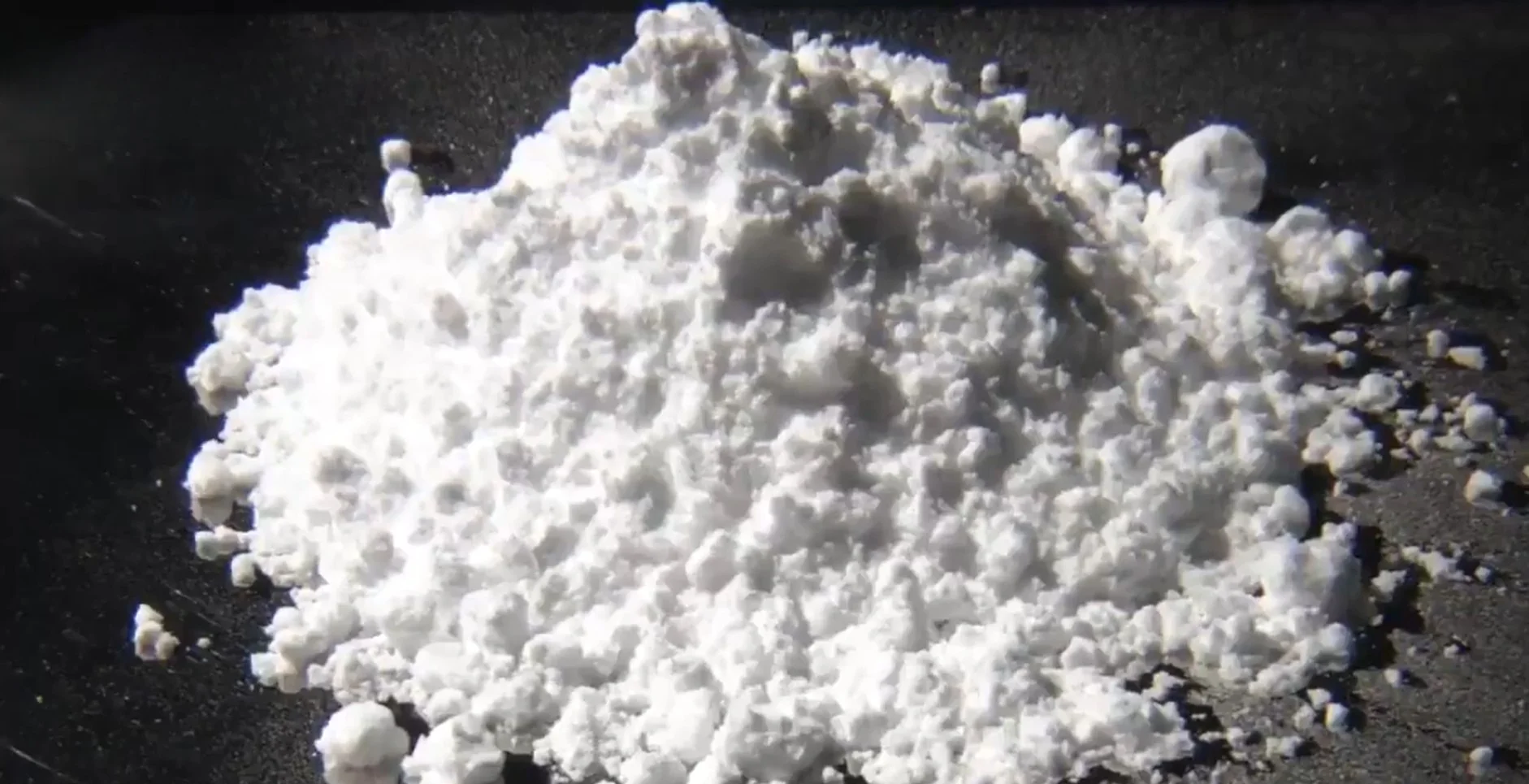
NHK World
This helps convert battery waste, known as ‘black mass’, into high-purity lithium that can be reused in new batteries.
Even better, the process isn’t just efficient, it’s better for the environment too, because researchers say it can cut carbon emissions by around 40 percent compared to conventional recycling techniques.
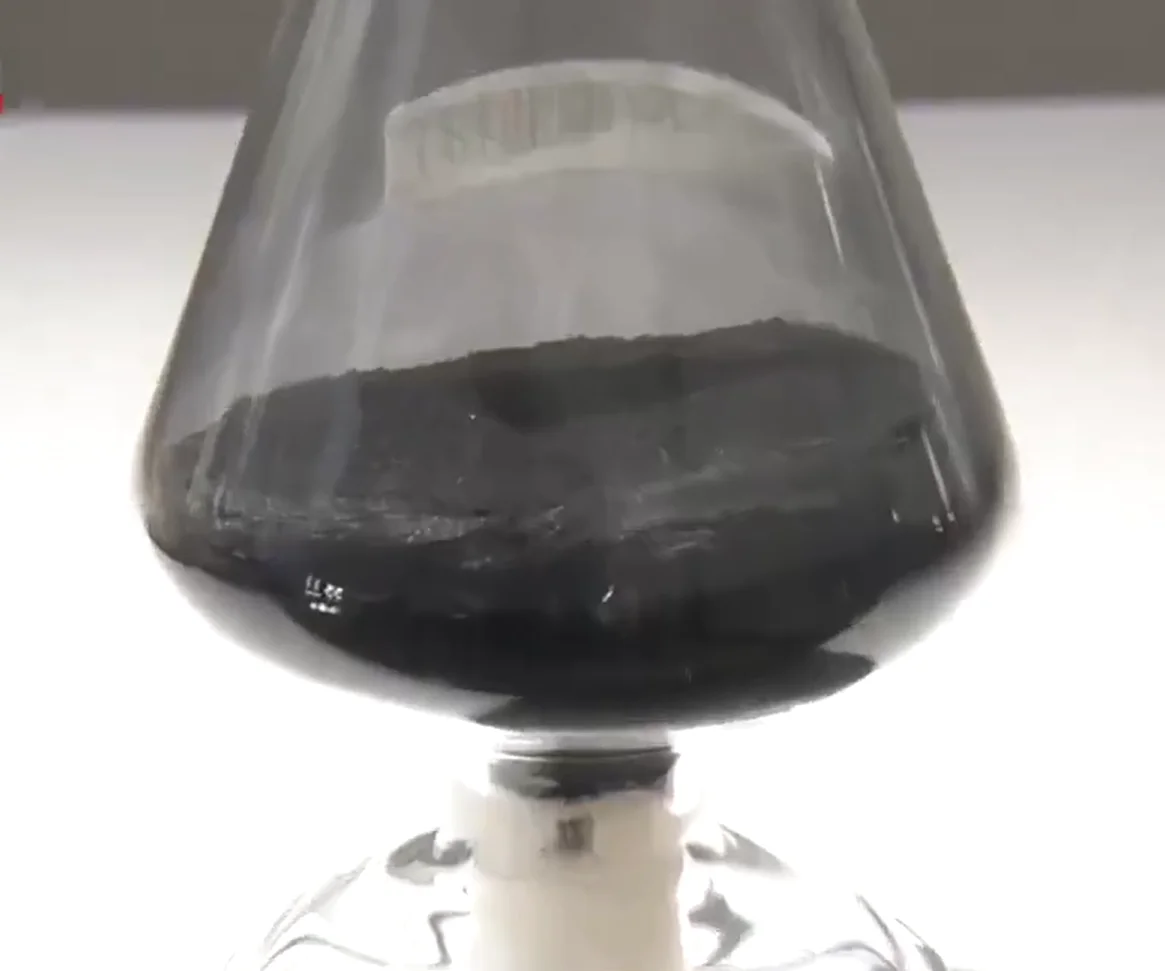
NHK World
This matters because lithium is one of the most critical ingredients in EV batteries, and demand is skyrocketing, as well as mining being expensive, energy-intensive, and often geopolitically complicated.
By recovering lithium domestically, Japan could reduce its reliance on imports and stabilise supply chains.
In fact, the country currently imports almost all of its battery minerals, so recycling at this scale could be a game-changer.
Massive geopolitical shift. NHK World confirms Japan has perfected a revolutionary process to extract high purity lithium from dead batteries with a staggering 90 percent recovery rate. This brilliant technological leap guarantees Japan's absolute economic security. pic.twitter.com/O7ENxLHcNb
— Furkan Gözükara (@FurkanGozukara) April 8, 2026
There are still challenges, though: only about 14 percent of used lithium-ion batteries in Japan currently make it into official recycling systems, meaning collection infrastructure needs a serious upgrade.
But with plans to make production even more powerful by 2027 and extract tens of thousands of tons of materials annually by 2035, this innovation could be a big turning point.
If adopted globally, it might not just change lives in Japan; it could save the world.
Maybe the most clear indication that Japan isn't a car centric culture was the complete lack of FREE parking space.
I'm curious how the math would work out with an all-denka plan. I work from home so I switched from an electric plan where during daylight solar hours my electricity drops to 13 yen/kWh
BTW, lithium itself is highly toxic too.
Sure, we could end up with a tech that have really no pollution potential. But there is much higher chance that we would end-up with something bad, that would go into production with a promise of "proper handling and re-cycling", but would never end up getting done...
One example I can give of that is the fact that Alaska is home for the largest salmon fishery in the world, a fishery that is more valuable as a food resource than any gold you can extract from the headwaters of Lake Iliamna.
“Master-leases” is a factually incorrect claim. Tesla owns the entire Nevada site and all of the buildings. Panasonic is a tenant of Tesla, leasing some sections of floor space to operate their 2170 cell production lines, manufactured to Tesla's specification. This arrangement was formed before Tesla had meaningful battery cell manufacturing expertise of its own.
In the same building cluster, Tesla does in-house battery module production, battery pack production, Powerwall manufacturing, Megapack manufacturing, electric motor manufacturing, drive units, and other powertrain components.
Panasonic was not involved in the design of Tesla's 4680 cell format. Along with this new form factor, Tesla gambled with various novel manufacturing processes, which resulted in many delays. Except for the delays, the Tesla 4680 production ramp has not been a “major failure”. It's producing a large volume of cells going into real customer cars, in the order of tens of millions per annum, and in that respect it has been successful. It is not yet clear whether the various manufacturing innovations (e.g. dry process) will be as transformative as hoped.
Separately to Tesla's efforts, and in response to Tesla's plans, Panasonic also developed its own manufacturing process to produce 4680 cells with the aim of being a supplier to Tesla.
BYD so far is doing much worse in Japan compared to Tesla, despite them having standard lineup of an SUV, two sedans, and a compact. A part of the reason would be that there's no particular motivation for their customers to pick specifically a Chinese car, but it's also true that a lot of Kei cars are sold in Japan, and producing a ground-up Japan-specific product was the solution that BYD took, which, I suppose, seemed to be a bizarre decision to GP.
The Japanese made the right decision by not jumping on the EV bandwagon just to lose billions of dollars, very similar to Apple in comparison to their peers burning billions of dollars, chasing AI models. What is the point of going bankrupt burning Capex or decommissioning some parts of your industry like Germany.
Another example I could give is that over the years some tech people have kept harping on Sony and Nintendo in the gaming industry, on how they should follow Microsoft down the road of making no profit when it comes to games But lo and behold, they make a profit in that area.
One other footnote, China, Taiwan, Korea and Japan support, are very loyal to their local industries, i.e. car manufacturers and electronic industries. Which is one of the reasons why still Apple does well in Eastern Asia, because they are like neutral territory, the Japanese will buy Apple products, but won’t buy their nearest neighbors products, and same thing goes for China, Korea, and Taiwan when they have a choice, which is an interesting dynamic.
Maybe it's different in other parts of the country or maybe the fact that EVs are so expensive their owners have different price sensitivity but one of the main reasons I would want an EV here in Japan is the miserable gas station experience.
In my city, half the gas stations have rip-off prices, 10-20 yen/liter higher than the cheapest stations. Often they just show a blinking "888" as a price so you can't even tell before pulling up to the stall. I pay for a map app that shows gas station prices (and which parking lots are free). Sometimes they'll have decent prices if you get a cash prepaid card or some kind of membership. The cheapest stations are either a 10 minute detour or I have to stand in line for 10 minutes (the cheapest in town is so popular cars line up across an intersection, incredibly dangerous).
On the highway the prices are even worse, since you're a captive audience (all highways are tolled and getting off and on the highway will ding you since prices are based on segments)
Yes, that is how it goes.
Right now all the "intellectuals" and "thought leaders" are in EV apologetic mode. This is a window of opportunity for the corporate to maximize bad stuff to maximize profits selling EV.
(this is not a diss on India, i think that make the country much more interesting)
Toyota seem to be spartan intentionally.
GWM has them both outflanked they just push comfortable interior as its easier than catching up on any of the other engineering.
Teslas just feel like Jony Ive reinvented the car interior from an artistic design perspective with zero reference to the comfort of the passenger.
Gigafactory Nevada is jointly operated by Tesla and Panasonic [1]. That's in America. (No clue on the master lease bit. Would be curious for your source.)
[1] https://www.reuters.com/business/autos-transportation/panaso...
Not really true. There are plenty of non-toxic elements in the ground.
The actual issue with mining is that the elements we are after are often surrounded by the likes of arsenic. Gold is a great example of this as veins of it are often right along and in arsenic.
That said, I do agree about being conscious of what sort of undesirables get leached out from the stuff we pull from the ground. For example, I recently learned that the reason we have to be worried about mercury in ocean fish is because mercury is a major part of the pollutants spewed from coal plants.
My current overnight rate is about ¥21/kWh after factoring in those adjustments - so yes if I could charge at ¥13/kWh that would be a sigicant difference. I'm not aware of any providers that offer that rate in my region, though (electricity here tends to be more expensive than the national average).
I actually reran my calculations and it looks like running my car on electricity is about 40% less expensive per km than gasoline, which is better than I expected. While that's significant if I'm just looking at fuel costs, it's not that significant when I look at total cost of ownership. And I do expect electricity to have less of an advantage in winter, when waste heat from combustion can be used to heat the car.
Still, if I hop on an express train for an hour away from central Tokyo, every house has a car park and most significant stores have dedicated parking spaces, and I get a vibe of "suburbia with narrower streets". Heck, I get some of that even as close as Kawasaki or southern Tokyo once you're away from major train stations.
But the QC tests to Yazaki's deisred level didn't exist yet, and Tesla did their own tests. And Tesla was maximizing it's "Made in the US" stance, which either goes by weight or components.
So Yazaki was secretly making unlabeled high-voltage connectors in Japan, selling them to Tesla, who could then test them themselves and claim falsely the source of production.
We replace the evil of oil with the same behaviour but in new places.
I wonder how long it takes for a country to recover from its oil industry?
My point was primarily that the chemicals within the lithium ion batteries are themselves pretty common on the surface and not forever poisons like lead.
My other point was that the major issue around these was primarily the chemicals used to purify and refine. Those can be nasty especially if not treated well.
But all things considered, the risks and potential damage from mishandling the recycling and production of LiPos is a lot lower than the risks that surround things like recycling lead acid batteries.
Cobalt is neither particularly toxic nor a heavy metal. In fact, it's a part of vitamin B12. You might be thinking of Cadmium, which is indeed a very toxic and nasty metal.
In LiPos the heaviest metals are Iron and Nickel. That's by design. Heavier metals tend to be more expensive to procure.
In trace amounts, by both weight and volume lithium batteries are mostly nickel and/or iron.
> There are other toxic substance like phosphorus in "lithium" batteries. Some "lithium" battery chemistries
...
> BTW, lithium itself is highly toxic too.
Both phosphorous and lithium are fertilizers. Yes, taking in a very large dose of both is poisonous, but the same is true of salt.
Carrots?
If rumour is to be believed, this isn’t a coincidence and had been done by the regime.
Chronic cobalt ingestion has caused serious health problems at doses far less than the lethal dose. In 1966, the addition of cobalt compounds to stabilize beer foam in Canada led to a peculiar form of toxin-induced cardiomyopathy, which came to be known as beer drinker's cardiomyopathy.[212][213]
Cobalt metal is suspected of causing cancer (i.e., possibly carcinogenic, IARC Group 2B) as per the International Agency for Research on Cancer (IARC) Monographs.[214]
It causes respiratory problems when inhaled.[215] It also causes skin problems when touched; after nickel and chromium, cobalt is a major cause of contact dermatitis.[216]
That is a lot of batteries..
I think if you are worried about pollutants, you should be worried about the fumes released every time you start up a fossil fuel engine.
Yes, it's a lot of batteries, but they are batteries with 10 to 20 years of service life as opposed to ~1 week worth of fuel transported, refined, and burned.
When it comes to energy, there's no perfect solution. IMO, LiPos are the best of bad options. Yes they pollute, but they pollute a lot less, particularly over their lifetime.
I am worried about both. Why are you picking sides? At lease fossil fuels started slow. Here we are switching to an unknown solution(s) on a massive scale..
>but they are batteries with 10 to 20 years of service life as opposed to ~1 week worth of fuel transported, refined, and burned. Yes they pollute, but they pollute a lot less, particularly over their lifetime.
CO2 at least have a natural mechanism by which it gets removed. And the affects of CO2 accumulation is not as acute. I am not sure about the materials that potentially could be used.
Also you say they pollute less. But as I said, the devil is in the details. Remember that the lead that used to get added to gas turned out to be very bad. So may be it is something like that that would be added to the battery chemistry to make it last longer or work better in cold or what not...
It is disturbing that people are just handwaving such possibilities away. I think that was exactly how we got here. But now doing the same could end up a lot more worse...
Because we need a way to generate motion and one method is clearly less pollutant and less toxic than the other, EVs.
Obviously bikes would be even better, but those don't have the capacity to transport everything and everyone we need. If there was another even better way to do things I'd be in favor of that. But as it stands, batteries and electric motors are king in terms of low pollution. (Ok, the absolute best is electric trains and trolleys. But those require infrastructure governments are unwilling to build out.)
> At lease fossil fuels started slow. Here we are switching to an unknown solution(s) on a massive scale
IDK what you mean by slow, but as I mentioned before, a very large quantity of fossil fuels are burnt and released into the atmosphere. That's not a slow process. BEVs only potentially release pollution on manufacturing and then give 10 to 20 years of service life. That's an extremely slow pollution release.
> CO2 at least have a natural mechanism by which it gets removed.
One that's much slower than the production. But also CO2 is not the only thing released when you burn fuel. The others are also linked to negative health outcomes. PM2.5 globally is almost entirely related to burning fossil fuels (though it also goes crazy when wild fires rage). It is linked to a wide range of health problems [1]
> Also you say they pollute less. But as I said, the devil is in the details. Remember that the lead that used to get added to gas turned out to be very bad. So may be it is something like that that would be added to the battery chemistry to make it last longer or work better in cold or what not...
A very key detail that made the lead in gasoline particularly dangerous and bad is the fact that gasoline is burned and spewed into the air. That's a detail I think you are missing.
There is no part in the battery lifecycle that involves discharging the chemicals used (except for H2O during the drying process) into the atmosphere or general environment. And that sort of waste is particularly undesirable. The goal of recycling the batteries is to capture as many of the minerals involved as possible.
Even the worst and absolutely most irresponsible form of battery disposal where we just throw them into landfills and they release all their internal chemicals into the landfill isn't an environmental disaster. The landfills are already a swimming pool of toxic materials and it's job is to contain them.
> It is disturbing that people are just handwaving such possibilities away. I think that was exactly how we got here. But now doing the same could end up a lot more worse...
What's disturbing is you aren't using critical thinking. You are fear mongering. "There could be some unknown unknown which makes these actually bad". Your argument could be used for why we SHOULD put lead into gas. "Well, we don't know what relies on that lead in the environment, if we remove it we could end up damaging lead organisms that have adapted!"
We've thought about it, a lot. Burning fossil fuels is an ongoing global disaster. Batteries would significantly reduce and potentially eliminate the use of fossil fuels. They result in cleaner air, less emissions, and importantly an extremely easy to contain and monitor lifecycle.
Lead acid batteries completely prove this. There are problems with recycling them but those problems are entirely local issues rather than global issue. LiPo, even if they end up being handled irresponsibly, would still end up doing far less damage to the world environment and everyone that isn't directly working with those batteries. We put everything even potentially toxic about the battery in a welded shut cylinder. In 99% of cases, the only way that stuff comes out is someone using force to break open the cylinder.
In the case of fossil fuels, everything is spewed directly into the environment. All the CO2, NOx, CO, randomly created hydrocarbon molecules, unburnt fuel, etc. These things are measurably causing cancer, asthma, heart problems, etc. Every person on the planet is forced to inhale burnt fossil fuels.
[1] https://www.sciencedirect.com/science/article/pii/S266676572...
No, it is not the unknown unknowns that worry me. It is a very much known aspect. It is "human behavior" and the collective short shortsightedness that goes along with it..
Combine that with any potential issues that EV tech have, and we would find ourselves in a very similar or far worse mess than we are now.
So I want us to be collectively better than that. But the responses that I am getting when I raise this point, does not give me much hope. Because people latch on the easiest thing. That I am "Fear mongering"!
On concrete terms, this would look like some regulation that require EV companies to declare a plan regarding how they will process/recycle old batteries before they launch a product. And a way to closely watch that it is being carried out.
I don't see any efforts or calls to do things like that. As of now, anything "green" gets a free pass.
It's been studied. You have no concrete problem you can point to. You are fear mongering because you are worried about a potential heretofore demonstrated or observed problem.
And your fears are particularly unfounded because we are actually already producing and recycling these batteries today. If there's a risk, you could point to an exact problem that's being commonly observed right now.
> On concrete terms, this would look like some regulation that require EV companies to declare a plan regarding how they will process/recycle old batteries before they launch a product. And a way to closely watch that it is being carried out.
I don't really disagree with this. My argument is entirely around the fact that even with the absence of such a regulation, the batteries come out on top in terms of their environmental impact. And they are valuable enough that recycling naturally happens without any sort of plan being put into place to handle them.
> As of now, anything "green" gets a free pass.
What you are giving a free pass to is fossil fuels. You are failing to account for the amount of damage they are provably doing right now because they drop their pollutants into the atmosphere.
That's why I call your comments fear mongering. You are hyper focusing on a potential unproven issue that will provably be nowhere near as damaging as burning fossil fuels even in the worst imaginable case as a way to say "Maybe we should just keep burning fossil fuels because they are a better known bad thing".
If we grounded up every single battery ever produced and dumped that particulate matter into the ocean, we will have done far less damage than what's already been done to the ocean from fossil fuel extraction and burning. There is simply not enough material in these batteries to cause the sort of damage you are worried about. Even if these things were all made of the worst most toxic elements imaginable (they aren't).
You are asking me to give a concrete example of how it will be abused. I don't have that. Sorry. You win, I guess.