For some reason unknown to either of us it really pisses off my wife when I refer to our IKEA furniture by the Swedish names. I think it stems from a deep seated disdain she has for flat pack furniture.
Me: where’s the thing?
Wife: in the white cupboard
Me: which white cupboard? There are 6
Wife: the white cupboard opposite the piano
Me: the Brimnes?
Wife: >.<
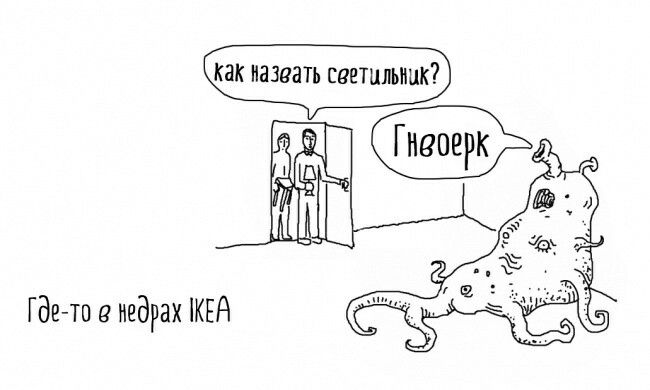
(The dialogue goes, "Somewhere deep inside Ikea HQ: How shall we name the lamp?" "GNVÖERK.")
I find this surprisingly high; I guess it’s _products_ and not _names_, meaning that five colors of the same product count as five new products but only one name.
Definately more fun would be the Polish version. How many people can pronounce the BYDGOSZCZ sofa, the PRZEMYSŁAW bookcase and the PSZCZOŁA soft toy?
If that's true, I wonder how many years it will take to use up the remaining unused Swedish words.
I think "being as widely-understandable pun as possible" is definitely one of their naming priorities.
I love the JERKER desk that I bought 26 years ago, so I assume this rule must be younger than that.
PAX
https://www.ikea.com/us/en/p/nattbad-bluetooth-speaker-yello...
Looks like some of these place names have been overpowered in search results by their named-for sofa counterparts! When searching Finnala, Sweden, I essentially only get search results for the sofa, and even the Google AI overview, while admitting it's a locality in Sweden, shows me a picture of the sofa!
Also, maybe semi-relevant: I made a small guessing game about the IKEA product catalogue in case someone wants to be lightly entertainment for two minutes [1].
https://www.youtube.com/watch?v=O4si8w8WMFc
(Rob Paravonian - Particle Board) - of Dr. Demento, etc., fame.
Translation:
  Somewhere inside IKEA.
  - How do we call the table lamp?
- GNVOERKHey Donna [1]...
That's sexist. Saying women don't read books? /s
It's more likely that the whole product catalog contains 2-3k products. [1][2][3] So no, you don't.
[1] https://www.ikea.com/us/en/cat/products-products [2] https://lar5.com/ikea (~ 2200) [3] https://namingschemes.com/Ikea_Product_Names (~ 1300)
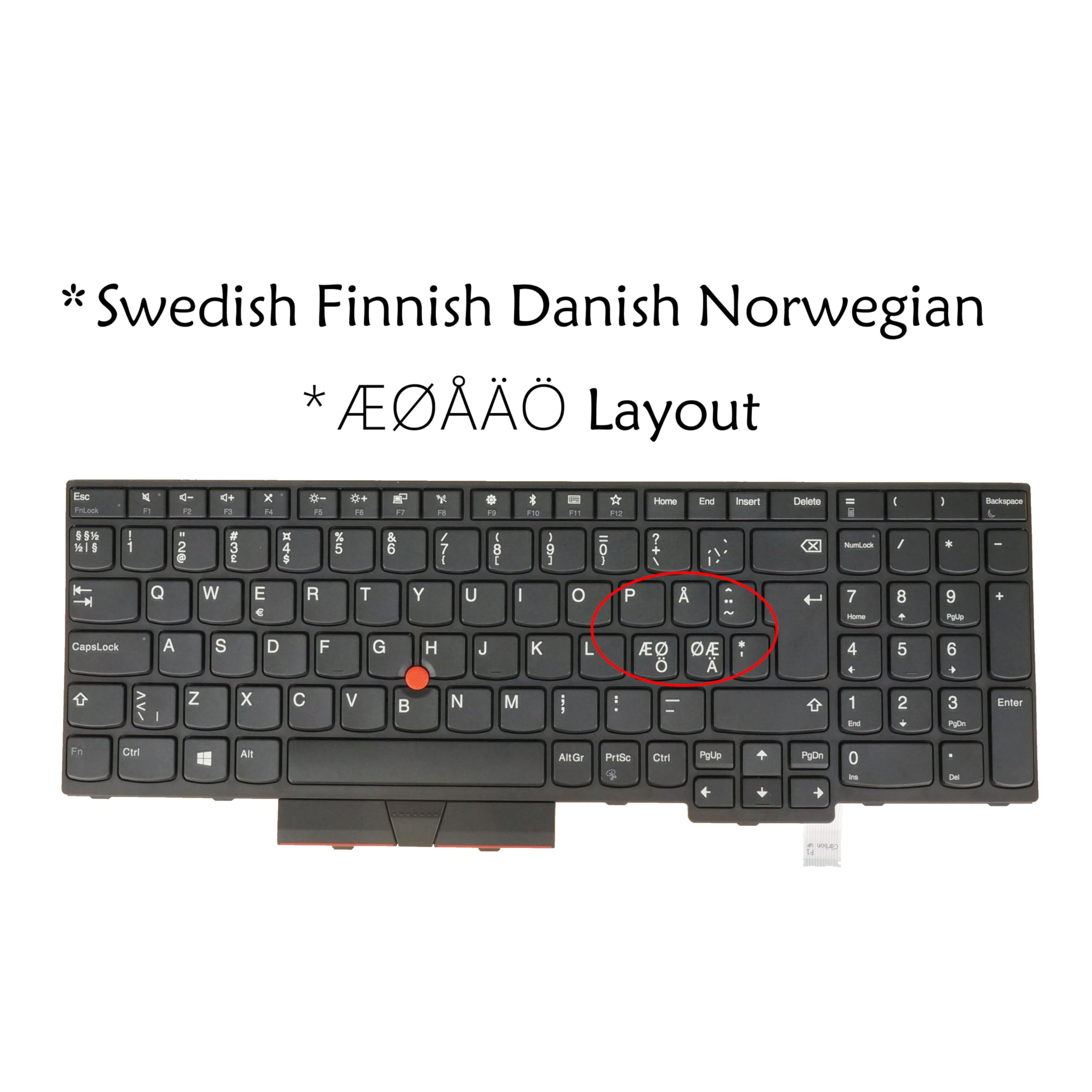
Was very surprised to find things like “bookshelves are all men’s names”, “all names must have ä, å, or ö”, etc.
Complete coincidence that this is #2 today. Had to check that ’NaOH’ wasn’t one of my coworkers
https://www.ikea.com/ca/en/p/fraeck-mirror-stainless-steel-3...
Yes, but why prefer these letters?
I don’t know Swedish. Is it because these diacritics make the names seem more exotic?
I always thought it's just a natural consequence of using Swedish language, turns out it's on purpose!
Any speakers of either language able to confirm or deny?
And also numbers I assume. Does it mean something like “endless stream of numbers”?
I’m very surprised that they have 2000-3000 new products every year. Checking every name against every language of countries they operate in to avoid “bad” names must be a pain.
So in the end, hard to say to a seller or type on the part screen the name of what you want. Most of the time you will not be able to remember what was the name of the thing and have to look around and find by categories to find again what you are looking for. And forgot the name already 3 days after. And actually i was multiple time annoyed by that. For example, look at the baby changing table name: ÄLSKVÄRD.
Also, hard to remember/pronounce name make it that often you are lost and confused between multiple names that doesn't make any sense to you like HFEREZR versus HORCRUX.
One case that frustrated me a lot is: good luck finding which white cabinet door you need to buy between VEDDINGE and VALLSTENA that are 99,9% the same, and have the same description on ikea website and shops... In the warehouse you are looking for it, you look for the thing starting with the V, like VA...VII... something, and you find VEDDINGE. Was it this one i needed to be or another name similar?
But for those in the US, wouldn't it all be a bit familiar? Whenever I watch a movie set in my home country with home accents and locations, it always feels a bit too familiar and it can cheapen the feel a bit.
This may not even be that far off from reality, looking at the sort of names rando brands on Amazon often have...
So that wouldn't be a problem if Polish names would be provided with audio examples.
By the way, the communistic period here was full of products using regular words, name of places or people’s names. We had Wisła, Bieszczady wall units. First Polish color TV was Jowisz (Jupiter); first TV ever my mother had was called Szafir (Saphire). Then Szarotka (elderweis) or Sylwia radios from 50s and 60s respectively. A clone of IBM PC with Intel 8086 (or with Russian clone) from 1986 was called Mazovia - Mazowsze which is a historical region of Poland, same name was also used for DOS encoding for that machine.
Why should we treat a minor wiki page and some dude's personal site (who disagree with each other on totals) as authoritative proof Ikea is wrong about it's own catalog? Especially when it's not hard to find 1st/3rd party sources claiming an order of magnitude more products. Keep in mind, some things will also fall off the catalog over time.
I'm not aware of any relevant Swedish expression that would repeat the same word like that. Maybe something like "siffror och tal", where both words could be translated as "numbers" by someone not paying attention to the resulting sentence. :)
> How We Leverage Naming
> Our Naming Strategy, Explained
> Why Swedish Is Important
> The Bottom Line
And unforgettable aphorisms like
> It isn't just a name—it is the output of a scalable, globally coordinated, linguistically validated, Swedish-inspired naming framework designed to optimize brand consistency
to let me know? I'm completely lost on this page and can't find the answer without these.
By the way, we consider them unique letters, not A and O with diacritics. The Swedish alphabet goes …XYZÅÄÖ.
Oh, and I just learned that we only officially added W in 2006. Before that, it was considered a variant of V. We still pronounce them the same, which is why many swedes will mix them up when speaking English. Mostly in the W->V direction, but I've heard the opposite happen too.
of course. Haagen Dazs, Motorhead, etc have known it loooong ago
https://about.iceland.co.uk/our-story/the-dark-ages/beware-m...
A møøse once bit my sister...
I'm 100% för this.
Ikea used to make somewhat reasonable and affordable products, that, in total were much higher quality than their price point suggested.
Now they are just cheap, on almost every metric.
I mean.. we have the Windsor Chair (https://en.wikipedia.org/wiki/Windsor_chair) and the Welsh Dresser (https://en.wikipedia.org/wiki/Welsh_dresser) and those both slightly predate ikea so it's not a new thing.
https://www.ikea.com/us/en/p/vuku-wardrobe-white-80331973/
Need an end table that is lacking?
https://www.ikea.com/us/en/p/lack-side-table-white-30449908/
I heard a guy nearby telling the person with him "must be for the interns".
I guess at the time the name was funny too but I had forgotten it.
IKEA sold that too: https://www.ebay.co.uk/itm/306072403869
We have one called jysk... They're doing alright.
I’m bookmarking it for sharing
Submit it to Hacker News as its own post before I do.
Seriously.
You have one hour.
In Hungarian it's A, Á, B, C, Cs, D, Dz, Dzs, E, É, F... So Cu--- comes before Cs---
Suck on that, AI Slop Detector!
(Confession and question for dang: I actually used an LLM to generate that unicode composite to copy and paste —̈ is that against HN guidelines?)
https://www.ikeahotell.com/en/about-us/
https://www.fastcompany.com/91529069/what-its-like-to-stay-i...
British lad giving a review/tour: https://www.youtube.com/watch?v=trcUc9ILYqI
I was watching Monk recently, and it feels kinda neat seeing a show shot in San Francisco because I used to live there. I wouldn't say it feels "cheap" though.
MAUL HALTEN!
End table? That’s a server rack: https://wiki.eth0.nl/index.php/List_of_IkeaRacks
Which makes it hilarious when she's annoyed at the boy.
A B C Č D Ď E F G H Ch I J…
• „če“ goes after both „ca“ and „ci“, but „ác“ goes between „ab“ and „ad“
• „cha“ goes after „da“ and „ha“
Also, the A is short for Agunnaryd, the founder's hometown. (IK is his initials, Ingvar Kamprad, and E is for Elmtaryd, his family farm.)
At least in Norwegian, ae, oe, and aa is also traditionally collated as if they were using these letters, so a word starting "aa" comes at the end of the alphabet, after z, oe and ae....
The same way "Brown" is common surname in English but mostly makes you think of the color first
"Malm" is a a noun with several meanings, most notably "metal ore", but also some (more archaic) meanings like "area with sandy soil" or "city outskirts".
The fact that "Malm" also happens to be a surname is secondary; Swedish has a lot of surnames that are simply ordinary nouns or adjectives. A completely literal "No surnames, ever" rule would probably be quite a bit too restrictive. I suspect that the actual internal rule is "No names that are primarily (or solely) surnames", or something to that effect.
Girl with the dragon tattoo was released in 2005
I’ve seen “LILCHYT” and “MYSHART” on the road recently.
The names just hit different.
The product names of IKEA may sound strange even to us Swedish speakers. In other parts of the world, they are basically incomprehensible, but fun! Here you will learn the most about how we name our products and the two rules that must always be followed – because there is a method in the madness.
Ingvar Kamprad, founder of IKEA, had a hard time remembering numbers and numbers, so instead he decided to name his products. Naming products started as a practical solution, but over time it has become an important part of our identity and expression at IKEA.
We work purposefully to create a strong and unique identity for IKEA. Everything we do – including naming our products – helps us build and strengthen IKEA as a brand. That's why we follow two simple rules:
The product names reflect our Swedish identity, Småland's heritage and our values. They make IKEA unique and contribute to a sense of playfulness. The names are real words and often inspired by Swedish places, nature, emotions or everyday expressions – and follow a clear categorization system. For instance:
Sofas → Swedish place names
Bookshelves → men's names
Children's products → animals and nature
To be used as a product name, it must:
Every possible product name is carefully checked to avoid undesirable meanings in other languages, political or religious affiliations and fit into our global profile.
This applies, for example, to services, functions and communication, which must be clear and easy to understand for all customers, regardless of market.
An exception to these two rules are some carefully selected Swedish words (Hello, bye, welcome, welcome back and coffee), they are used to express aspects of the culture and traditions we have at IKEA.
Did you know that we name around 2,000-3,000 new products every year?
Did you find this useful?
Thank you for your feedback!
The text is confusing to understand
The text is not relevant to my question
The text is relevant but not helpful
The text is too long or too short
Thank you for your feedback!
Was the article not helpful? Try one of the related articles below.