That said, good advice. Mediocre readers are mediocre writers. The reverse is not necessarily true. I've met many fantasy writers (hello Readercon!) who've read every damn series and then proceed to write yet another Tolkienesque knockoff. Their brains are pretty much like overtrained LLMs.
The advice of "read more to write better" is incomplete IMO. I'd change it to "read/engage critically to write better". Else reading results in memetic ideas and tonality
In fact, you'd want to read less if it means reading deeply
> Insight #4: The best writers are the best readers. There aren’t any shortcuts around this. Successful writers read. They read a lot. And the best writers read a wide variety of books. It’s impossible to stress the importance of this insight. When aspiring authors ask my advice on making it as a writer, this is my most common first response: Read.
https://hughhowey.com/writing-insights-part-one-becoming-a-w...
This unfortunately does not bode well for my writing ability as I read emails and Claude output all day. Recently, I've been reading a lot of building codes and compliance documents and I've develop annoying ticks like using "shall", "need not", "take no exception", overuse of passive voice, etc.
My hypothesis is engineers suck at writing by default unless they do extra-curricular reading. I read a lot! But sadly it's often textbooks, journal papers, documentations, and Claude. I'm envious of great writers, but I don't have time to read Keats. I'm immersed in Stewart, Strang, and whatever Claude is feeding me next.
Reading as a person wanting to become a better writer should be more conscience of what they are reading. I often finish a novel and can't even remember if it was narrated, or how. That is not careful reading.
I've heard of authors who, went waiting for their muse, just copied novels they liked until they got back in the groove, and this usually helped.
Practice makes practice. Deliberate practice makes...
[also, I can't also think about people who I know who talk talk talk (to hear the sound of their own voice?) and never listen... is this part of what he's implying?]
Operating these little diskettes that load programs straight into the receiver’s brain.
I feel like Joseph Goebbels of fictional worlds. Writing a code that will smoothly execute delusion - “This is real, this really could happen. I want to see where it goes next.”
If words are just source code for human brain then I wonder, when using an LLM - do you really program it or does it rather program you?
I tend to mimic the author I am reading, it’s annoying.
If I change the book I read while writing something, my text changes tone in the middle.
I am not a good writer, and I don’t read that much, so maybe that trend goes away when you write a lot, but it’s a pitfall worth knowing
Another thing is that I find myself using AI-isms in daily conversations more and more the more I use them to help me code. "Load-baaring" and "not X but Y" are phrases that I actively have to catch myself to avoid using now.
I know it's a very bad thing to say out loud, but if even aspiring writers, those who care so much that they go to writing workshops, have stopped reading, it's a very strong signal that writing/publishing won't be a viable profession in the near future anymore.
That people in general don’t read, I get. But if you don’t read, why would you want to write? Baffling!
> And I’m not even a good example of proper work ethic. I have friends who write, revise, edit, and publish a novel a month. Year after year. I have friends who have published over fifty novels in their first handful of years of writing. Both of my friends who publish a book a month make millions of dollars a year, and they are among the best writers I know when it comes to craft. I can’t put their books down. They pass like Messi.
I find myself rewording things to avoid claude and chatgpt-isms. You don't realize how much you say "You're absolutely right" on a day to day basis...
"The art of not reading is a very important one. It consists in not taking an interest in whatever may be engaging the attention of the general public at any particular time. When some political or ecclesiastical pamphlet, or novel, or poem is making a great commotion, you should remember that he who writes for fools always finds a large public. A precondition for reading good books is not reading bad ones: for life is short."
“Reading is merely a surrogate for thinking for yourself; it means letting someone else direct your thoughts. Many books, moreover, serve merely to show how many ways there are of being wrong, and how far astray you yourself would go if you followed their guidance. You should read only when your own thoughts dry up, which will of course happen frequently enough even to the best heads; but to banish your own thoughts so as to take up a book is a sin against the holy ghost; it is like deserting untrammeled nature to look at a herbarium or engravings of landscapes.”
Yet the quality has gone down when you compare it to, say, 1600's greatest works.
Its a struggle trying to "imitate the style" in writing. In music, you could keep playing all the songs in the style of your favorite artist and possible develop a close stylistic proximity to what you're imitating but in writing do you just write prose with the same wordings? i get the keep reading to develop your style but feels like adapting a style you want to master and then make your own variant is way harder in writing.
Very similar to those "I'm making my own language with blackjack and hookers" announcements where it's obvious that the author has only known the Algol family (Python, JS, C/C++/C#/Java and maybe a bit of ML flavour through Rust or TS) without exploring the other ways of thinking (https://madhadron.com/programming/seven_ur_languages.html).
Music and writing will change. The markets for both certainly have changed. It seems that music has proven to be more durable.
LLM tropes are one thing, but before those came along you could easily see how someone working in a corporate office would pick up jargon there even if they loath it. Here on HN you can observe certain phrases and words which seem to be part of what some IT professionals use — like the horridly angular orthogonal used figuratively.
Reading prose written by writers who live outside of such bubbles (or who simply have a good editor in addition to their own filtering) is an antidote to that.
Working on stylistic issues is a conscious self improvement thing, but you leverage your many hours of reading when you're tackling that. Reading a lot means you unconsciously get good at judging which prose works well and which grates.
T.R. Napper explicitly states that you do in his piece:
> But I am saying this: go look at your phone, and tell me what your average screen time is per day. Two hours? Five? Seven? If so – shut up: you’ve time to read.
It doesn't have to be Keats. Start by building the habit (read in bed before sleeping!) and just read whatever you enjoy. If Keats seems like a hurdle, just pick up Pratchett or Tolkien.
Because from the article: > One of the key things I’ve learned is this: there’s no real blueprint.
So to me it’s saying there’s a lot of different ways to cook this stew but it always requires this ingredient
Then do the same deep dive for a different author. I may have made a mistake with my current choice, Jill Lepore. I can't tell whether it's her writing style or what she writes about, but it is definitely chewy.
Writing, programming, or drawing is fundamentally training on somebody else's work. Accept it, get better at it, and then move on.
[0] https://www.theatlantic.com/ideas/2026/01/college-students-m...
Incidentally, having quickly scanned some of Schopenhauer's actual writing [0], I found statements such as "women are suited to being nurses and teachers of our earliest childhood precisely because they themselves are childish, silly and short-sighted" and women "are inferior to men in respect of justice, honesty and conscientiousness". If I'd come across these first I'd be very reluctant, rightly or wrongly, to uncritically accept his views on other subjects.
[0] https://www.scribd.com/document/509571816/Schopenhauer-Arthu...
Just wanted to compliment your writing. Though only a short comment, it painted a vivid picture in my mind.
In music, you have voicing sparsity, changes in voice count, preferred pitch ranges, tension/release cadences, embellishments, richness, playfulness, and a host of other characteristics. Rachmaninoff, for example (among other things), favours active, moving octaves quite deep in the base, extremely rich chords in the middle treble, simple (local) rythymic patterns, and expanding simple ideas like repeated arpeggios into large parts of a piece. He has more voices than other pieces typical of his time, though they tend to be combined somewhat simply when contrasted with counterpoint exercises and other techniques typically involving fewer voices.
In writing, you have sentence length, sentence complexity (they're different), typical volume used to express an idea, specific word choices, whether you tend to observe concrete or abstract ideas, the level of "truth" in your statements (in many flavours -- deadpan humour being quite different from a boldfaced lie directed toward the reader), technique choice used for signposting, willingness to violate "rules," and so on. If you picked even one project proposal from me at $WORK, you could reliably separate it from those written by hundreds of other engineers just by a few quirks -- habitually providing one level of motivation deeper than is typically expressed in technical writing (not just what we're doing, but what we're not doing and why we made that choice), a tendency to use British spellings and US words, a pattern of contracting any verb tense, sometimes with multiple apostrophes (e.g., "there'll've been"), refusing to terminate a non-exhaustive list without informing the reader that it's non-exhaustive, and so on. If you look at the reasons and motivations for one of those quirks, it's that I tend to have complete ideas (in technical domains) and want to express them completely and have found that every missing detail causes eventual problems -- only tempered by the fact that the requisite length tends also to cause important details to be overlooked on a casual read, which provides a mild damper on length. Understanding that motivation makes it easy to apply it as if you were me even when you don't have concrete examples regarding specific quirk/scenario interactions.
On the contrary, you may have no idea what style means in the context of writing, so you can't fathom what imitating writing style looks like.
I honestly don't know precisely either, but a couple of things to mull over: Clarke and Asimov are said to have a "dry" style. Most of their novels are "story". On the contrary, Eco describes things in very minute detail (there's a whole chapter in "The name of the rose" that is the description of a door).
Those are examples of elements of style you may be able to reproduce and that aren't limited to wording.
You cannot read a book in 30” increments.
In journalism it’s called “burying the lede” and is the most obvious sign of a poor writing, IMHO.
That is NOT the same as being incapable to sit through a general movie. That does not mean they dont like film in general.
Do you think many people will read Stephen King in 500 years?
You don't want people to use this sort of criteria to judge arguments. Not just because it's ad hominem, but also for selfish reasons - your opinion that after a "quick scan" one should dismiss Schopenhauer's philosophical thought (his specialty) because he shared a common contemporary opinion on the nature of women (not his specialty) reflects badly on you. If somebody could reasonably dismiss an unrelated argument that you made based on that, your arguments would be ignored regardless of their merit.
Also, people would wonder if you have dismissed all of the writings and discoveries of sexists and racists; if you have then you are obviously uneducated, and if you haven't then your exceptions imply the shape of your own specific racism and sexism. It's a no-win situation for you.
So yes, it’s very possible. (Even easier if you are amenable to audiobooks IMO.)
To get a feel for his other work, I read his essay "On Women", which is derogatory and sexist. Female philosophers such as Mary Wollstonecraft had already responded to similar patriarchal sexism (50 years before in her case) and as a philosopher one might have expected Schopenhauer to be familiar with similar intelligent women, and to have acknowledged their existence. His denigration of the capabilities of half the human race does not give me confidence in his other speculations.
[Edit] I also observe that Tolstoy stated "at present I am convinced that Schopenhauer is the greatest genius among men. ... It is the whole world in an incomparably beautiful and clear reflection" [0]. As someone who has slogged through the 27 chapters of philosophy in War and Peace, which are a case study of how to fail to understand how human society actually works, I am reluctant to uncritically accept claims from famous people that someone else is a genius.
[0] https://en.wikipedia.org/wiki/Arthur_Schopenhauer#Influence_...
I’m obsessed with the craft of writing. I write every day, I read about the craft often, and in my spare time I like to unwind by… watching interviews where authors talk about their writing process. It’s a sickness. Help me.
One of the key things I’ve learned is this: there’s no real blueprint. I say this to aspiring writers in my workshops, and those I mentor. There’s no one way – every writer will have a different path to creation. Now, this doesn’t mean you shouldn’t be listening to other authors, not at all – it’s a great way to help you think about the creative process – but it does mean nothing is holy writ.
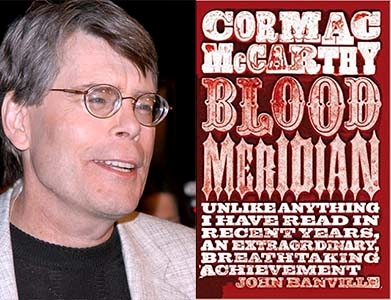
King cites Blood Meridian, The Satanic Verses, and Huckleberry Finn as his favourites
Except the one golden rule*. One rule that is true, no matter the writer. One rule, that if you don’t follow, means you shouldn’t be writing in the first place.
Here it is**: Read as much as you can. Read widely and well.**
I would’ve thought the necessity of reading in this profession obvious. But I’ve noticed a worrying trend lately: aspiring writers who don’t read.
Whenever I give a workshop, or an occasional creative writing lecture at uni, or mentor an individual, I always ask the following questions: who are your favourite authors? And, what are you reading now? I do this as a short cut to finding out their interests, and how therefore I might frame my advice.
But over the past few years, more and more the answer will be: I’m too busy to read. Or: I haven’t read a book in a while (whereafter they rack their brains and tell me they might’ve read Fourth Wing a year back).
To which I say this: fuck you, you’re not too busy.
Joking. I would never say that. But I certainly fucking think it. Now, to be clear – I’m not dissing the Fourth Wing here. On the contrary: if Fourth Wing is a gateway drug to getting someone back into reading, then anyone who loves books should be thankful to Rebecca Yarros.

Sontag
But I am saying this: go look at your phone, and tell me what your average screen time is per day. Two hours? Five? Seven? If so – shut up: you’ve time to read.
I write full-time, currently work three gig jobs on the side, and am engaged with lives of my two children. I read every night. It’s not hard: instead of staring at my phone, or streaming, I read. This is not a boast, nor is it special. This is my job as a writer.
You want to be a writer? Then shut up and read.
Here’s why:
1) Reading teaches the writer about the craft
Every book is an education. Good, bad, mediocre, they teach us the writing craft. Even if we’re not studying the text per se, we’re learning. All the books you’ve ever read – especially the books you read when you were younger – have imprinted themselves on your brain.
It might be genre, character type, trope, setting, structure, anything, everything – you’ve habituated your brain to the patterns and elements of the novel. Certain writers will have a style that will appeal, and it is completely fine to emulate that style as you develop your own ‘voice’ as a writer (by voice I mean, the expression of individuality in your art).
When I began writing, I had some early beta readers say: oh, I see you’ve followed the classic three-act structure. To which I thought: I did? I didn’t know structure back then; I’d never taken a creative writing class. Yet my writing brain instinctively created one, because it had been informed by my life as a reader.
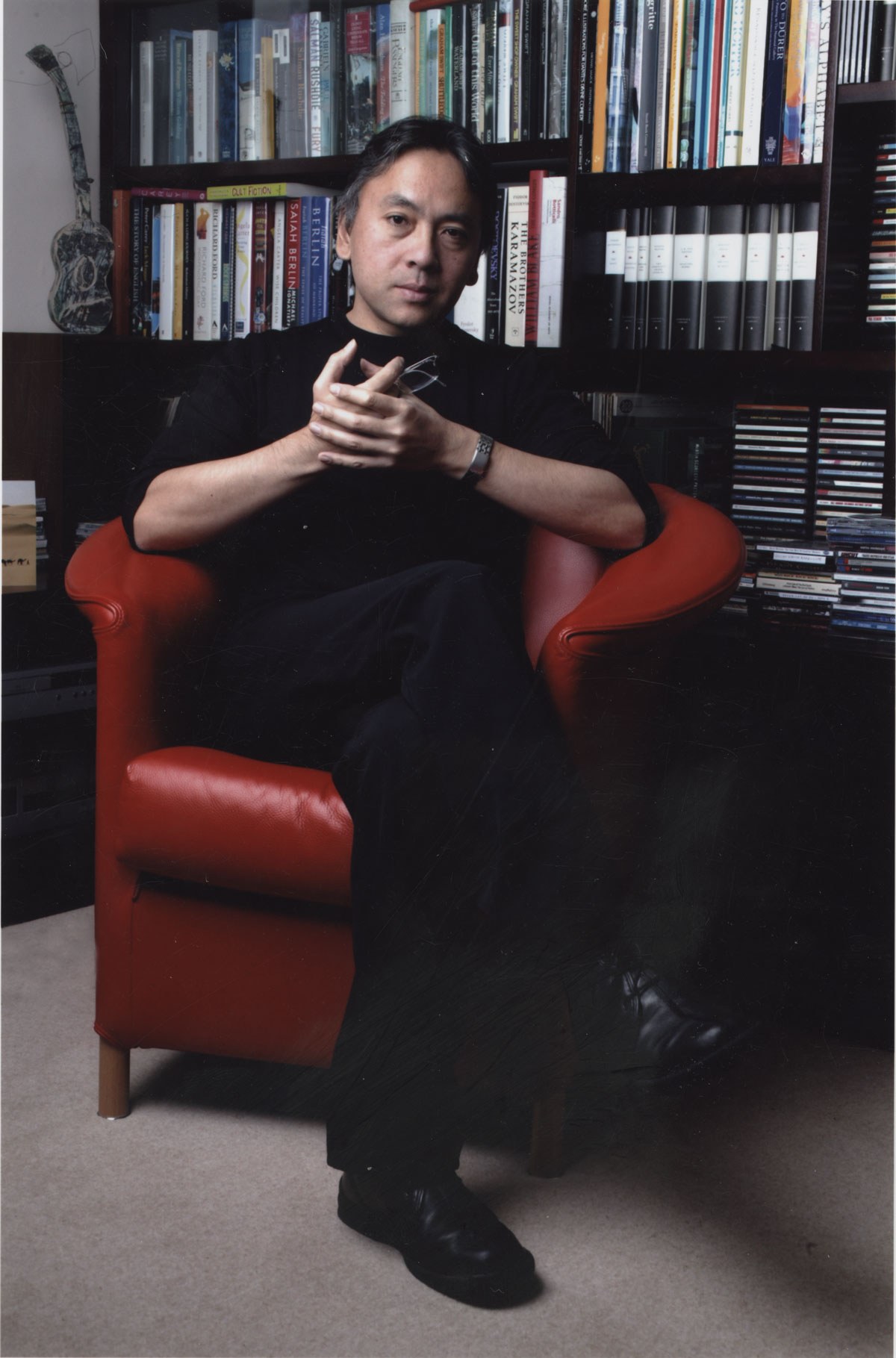
Ishiguro
In the years since, I’ve subsequently taught classes on three and five-act structures, and the purpose of structure in general. I’m not saying such formal classes are of no value, but I do tend to think they are overrated. The reality is, up until recent decades, ‘creative writing’ was not a degree in and of itself. The much-vaunted MFA is only a relatively recent phenomena. They might be useful for some, but ultimately are peripheral compared to the central importance of reading.
2) Reading inspires the writer
I love reading out of genre. The best ideas I get for science fiction don’t come from science fiction. Crime, for example – hardboiled fiction in particular – helped me better understand the origins of cyberpunk, its thematic core, and some of the stylistic possibilities of the subgenre. Non-fiction has given me an unending supply of the raw materials for story – whether that be current events, or history, or science, or philosophy, or anything else – and been a constant source of inspiration. Poetry, as a third example, has taught me how I might use words in an elegant way, and with the strictest of economy create an image, or a mood, or a feeling.
A book almost always has something to teach us – even if it’s how not to write.
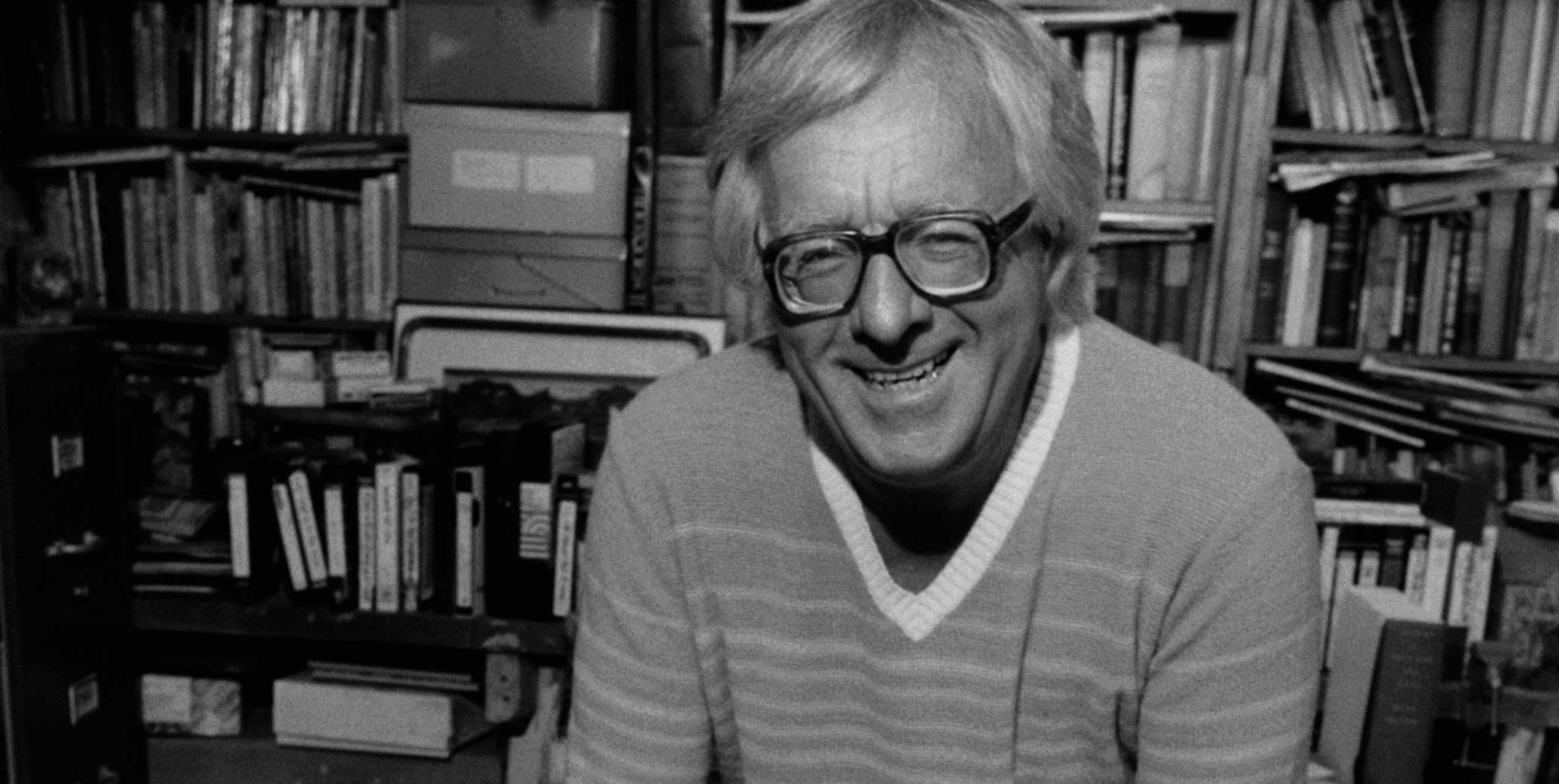
Bradbury
3) Reading changes the structure of the brain
There was a terrible American TV show called Everyone Loves Raymond. I remember little about it, other than when it came on, I tended to change the channel (the show is so old that changing channels was still a thing). But to this day I remember an exchange between the two leads. Raymond has just left his job as a journalist.
His wife says to him: “Why don’t you write the great American novel?”
Raymond replies: “Write it? I wouldn’t want to read it.”
Cue the canned laughter. It is a little funny, I guess, because Raymond has no interest in literature, so the thought of him writing it is absurd.
But here’s the thing: it sums up what’s wrong with the mentality of many an aspiring writer today. One I simply don’t understand. Why be a writer if you don’t love reading? Why devote your intellectual and emotional energy to creating a book, when it’s a form you’re not invested in? Why write, when you aren’t steeped in wonder of storytelling?
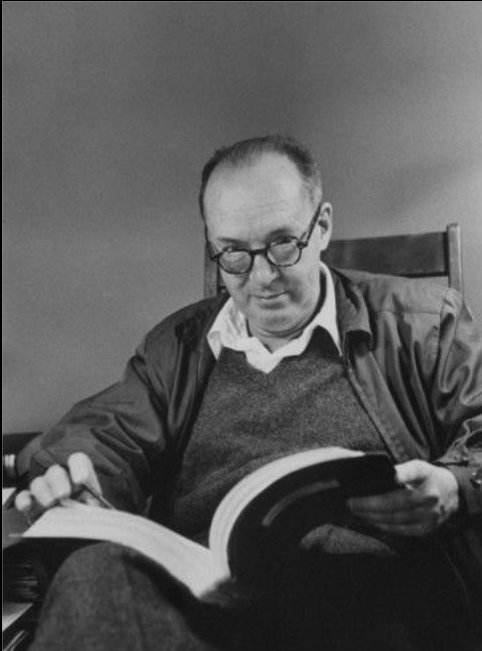
Nabokov
Think about the great film directors. Nolan, or Tarantino, or Scorsese, any of them. They love film. They live and breathe it. Their knowledge of cinema is encyclopaedic and it has without question inspired them and made them better directors. Their cinematic vision has been informed by the richness of the history of cinema, and realised through their life-long commitment to the form.
Literature is no different. Take Le Guin, or Virginia Woolf, or Nabokov. These writers were extraordinarily well-read, whose passion for the written word infused their entire creative existence, whose time, when not writing, was often spent discussing or reviewing or debating novels.
That’s the thing about Generative AI. It gives all the Raymonds out there, the people who don’t even like reading, the capacity to generate a book. It’s not just that they are lazy and talentless, they’re not even interested in literature. They don’t actually like art, they just like the idea of making art.
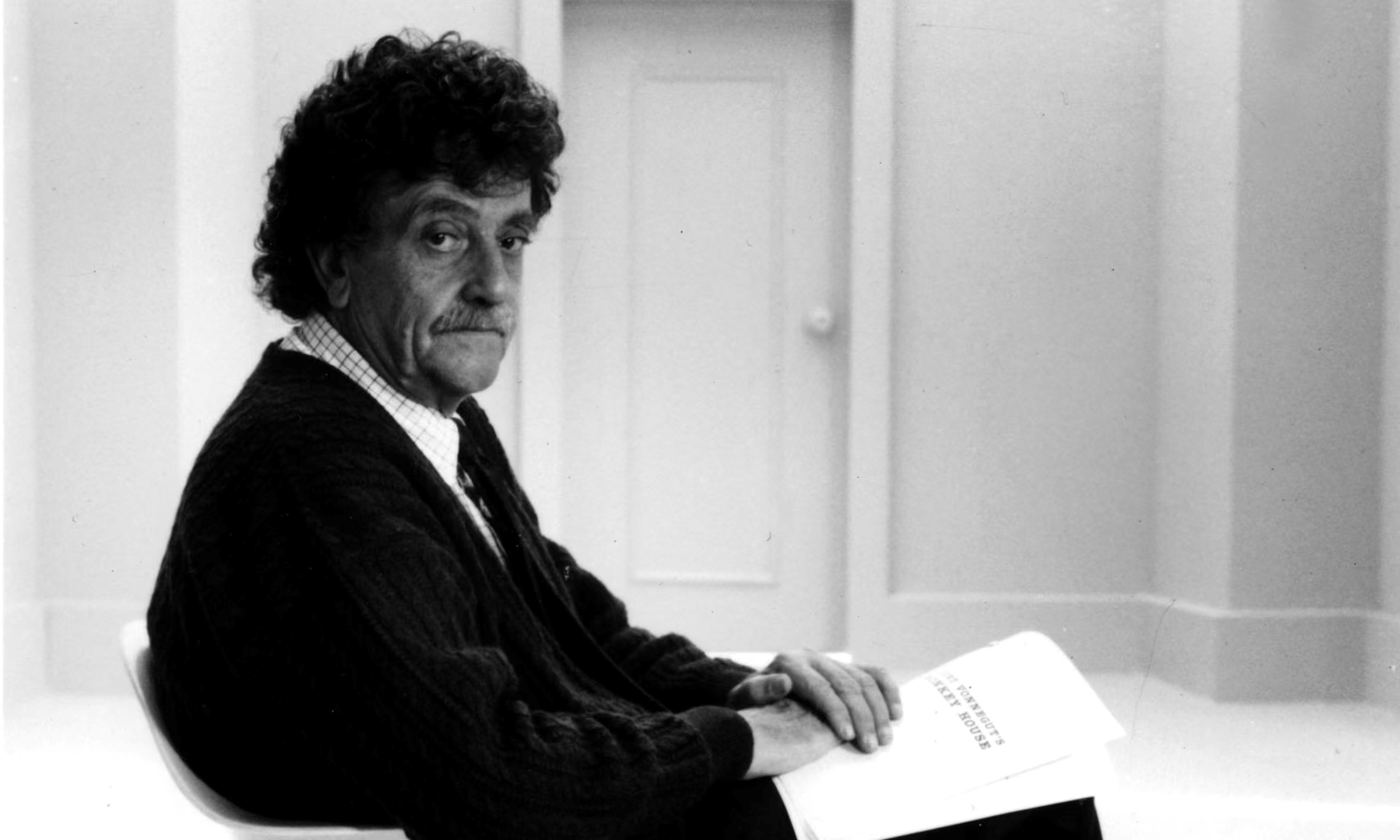
But I don’t want to waste my time talking about those losers (and yes, I’m getting to the part about brain structure – this preamble is relevant). This article is not for them, but for you, the aspiring writer (or, perhaps, someone like me, a published author who yet is obsessed with the way others conceive of their craft).
I read 52 books a year. I have friends who read over a hundred (which for me personally would be too much: I like to savour my books). Some authors I know read as low as 20, and that really is the bare minimum.
Reading changes the structure of the brain, and for the good. But here’s the rub: a digital addiction also changes your brain, and for the ill.
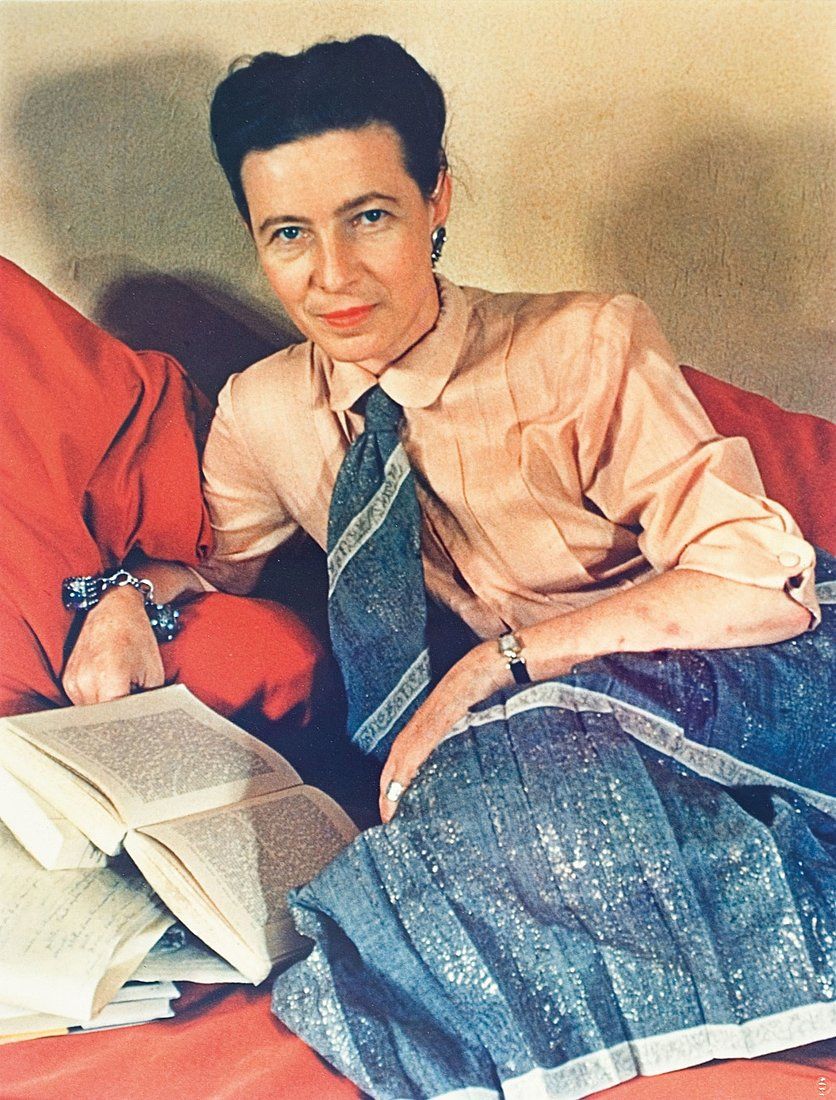
de Beauvoir
This is a phenomenon dealt with by Maryanne Wolf in ‘Reader, Come Home: The Reading Brain in a Digital World,’ but which I’ve seen elsewhere, time and again, in opinion article and in peer reviewed science. In essence, the digital brain – distracted by social media, fiercely hunting for the next endorphin hit, its attention span severely limited – is anathema to the reading brain, which needs time, sustained concentration, vivid imagination, and critical thinking skills.
More and more we lose the ability to immerse ourselves in a book, because we’ve rewired our neural pathways to the digital experience. You know the feeling. The urge to keep picking up your phone, the doom scrolling that eats untold hours/days/weeks from your life, the anxiousness caused by your social media feed and the anxiousness caused by not having access to your social media feed. It’s a pernicious age, where the smart phones we all must carry are infested by apps algorithmically designed by the biohackers of the large tech companies to hijack the timeline of your life, and divert your attention.
And here’s the thing: the reading brain – which many of us are losing – is also the writing brain. That is: attention span, sustained concentration, and a vivid imagination are fundamental skills required the author. Writing a book is like running a marathon, and the fitness regime required to do so is reading. It builds your creative muscles, the stamina to stay at your computer and find the words, and if you are lucky, enables the flow state of creative writing, where the world disappears and all that remains is story. Flow state: that extraordinary and rare experience that yet all writers have known, where suddenly hours have passed while you’ve been immersed in story.
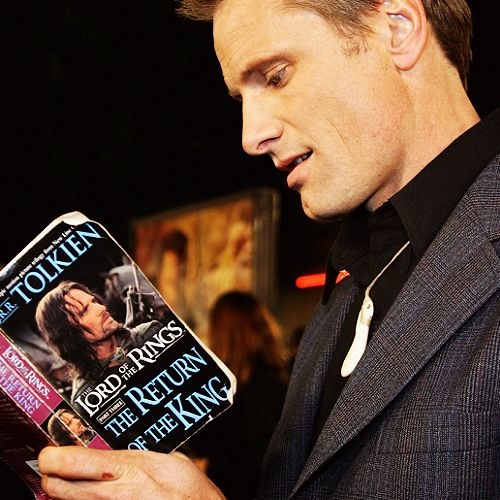
I just love this pic
And to be clear: if you are addicted to the digital, there’s hope for you yet. Just a few weeks of putting aside the phone at night, of settling down with a book for an hour, this will change your brain. It will develop your writing muscles.
So there you have it: the secret to being a better writer, and the secret all great writers share. And I’ve given it to you for free. Now all you need to do, is do it, every day.
Go forth, and read.
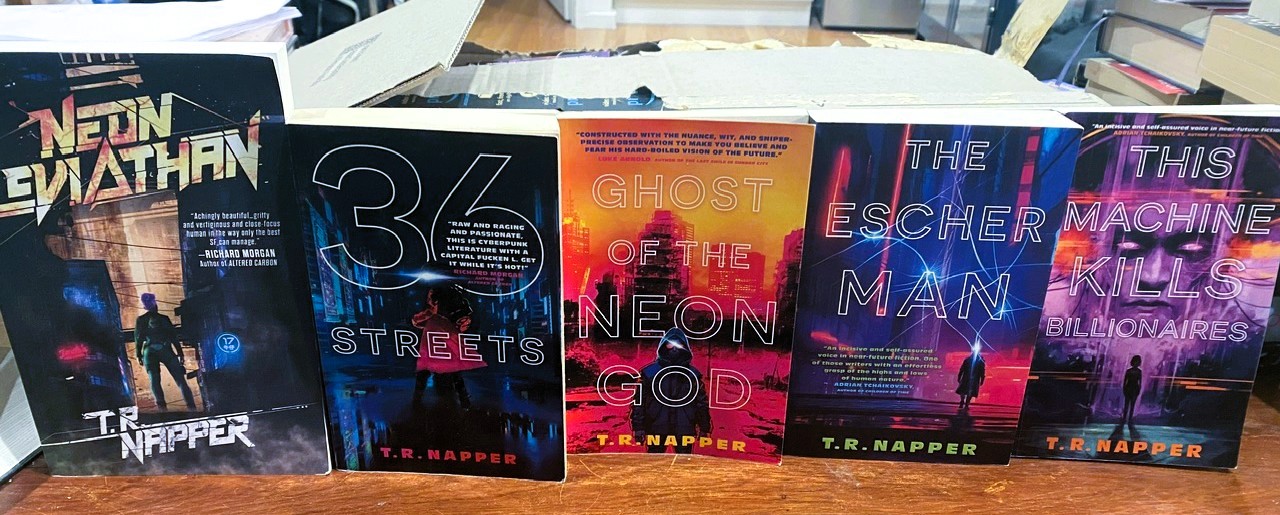
My latest release: This Machine Kills Billionaires
And click here for all my books.
(*It goes without saying that to you must write, as well. This is not a ‘rule’ as such as it is a statement of reality: writers write. Write as much as you can, as your schedule will allow. No excuses. Write).