Even if you are not making an intentional radiator, and/or are using datasheet-specified layouts or modules, you still must comply, which makes these businesses non-viable if complying.
I believe Adafruit gets around certifying every device by declaring themselves a cellphone company and being on good terms with regulators. This isn't viable for the sort of businesses and people described by this article.
I'm not sure about the Ali/Amazon products. I'm assuming they just are not complying.
I heard in the 50s an american could just startup a business installing septic tanks. But now the same person would need a myriad of regulations to be met, heavy equipment use mandated, all of which raise overhead to a level where its impossible to get off the ground.
I always felt the EU were the "good guys", IE not allowing corps to steam roll everyone, what with their rules fining poor behvaiour such as privacy violations, chargers being non standard etc.
However the same problem exists in weird ways you wouldnt even imagine.
For example if someone walks into a small "mom and pops" coffee shop and accuse the owner of "ejecting them due to harrasment reasons", that results in a court case, which can bankrupt the whole margin thin enterprise.
You might say, wait how on earth would a random troublemaker get funding to take a cafe to court, and for what benefit? For one its easier for a settlement to be reached regardless of fault that benefits the claimant than a long court process.
Now how could claimants have the resources? Unbelievably it turns out there are free national non profit corporations that will take any claim for free to court for situation mentioned above.
So what happens in the end? The small coffee shops cant survive but the larger corps who can afford the random payouts are fine, the competition seems to go away on its own and the claimants are happy with what amounts to random payouts for little work.
Please look it up it, and correct me if im wrong, I only know this from some little research into the forays of why small coffee shops find it hard to survive in western landscapes and risks, as I wanted to open my own coffee shop!
In summary, as always the road to ruin is paved with good intentions. So the EU trying to help a little guy in a specific context, ends up creating a situation that makes all small coffee shops non profitable.
I have no solutions.
Feedback for this utterly deranged regulation can be seen below, over 5k entries by many businesses in EU:
https://ec.europa.eu/info/law/better-regulation/have-your-sa...
This would even apply when selling a few electronic knik knaks on ebay?
But as with anything here in Europe, check your laws.
None of this applies to companies that are micro-enterprises or use generic rather than branded packaging. There's a helpful diagram on page 13. The author of this article seems to have imagined a worst-case scenario based on either a misunderstanding or misrepresentation of the EU rules; the discussion here seems to have a lot of people who are in a big rush to demonize their perceived political opponents on ideological grounds.
Your device tends to need to be causing problems, that the FCC then go and track down, and then come back to you. That is (hopefully, depending on the kind of device) extremely unlikely.
As for Ali stuff, probably lots of it is not tested but still comes with a FCC label - but if it is shipped from overseas, who is going to take responsibility for it? Nobody… So there is nothing they can do except fine the person who bought it if it’s really causing problems (and usually I doubt they’d even do that if the user wasn’t intentionally doing something they shouldn’t have been, they are just told to stop and maybe the device would be seized/ destroyed)
""" For a one-person workshop, the result has been pretty brutal.
[...]
The numbers simply do not work for a micro-business like mine. Even in France and Germany, I send only around 1 to 2 kg of cardboard per year. In some other EU countries, I may send less than 100 g in an entire year. Paying annual compliance costs for one or two parcels makes no economic sense.
[...]
I have therefore decided to maintain EU shipping only to: FRANCE GERMANY """
On the other hand I estimate that between 50% and 200% of the taxes collected like this are wasted and not applied to their ultimate goals. The average collected amount per submission is so small that you cannot pay the bureaucrats managing the complex submissions from these sums.
An entrepreneur told me that they were being audited regarding the battery regulation. Two consultants came over from EY and audited all submissions in depth. They found out that the business overpaid by €10. The entrepreneur of course didn't mind and told them to keep the €10. The EY consultants told the entrepreneur to resubmit, otherwise the business would be fined. I think the government spent more on that audit by EY than the business will ever bring in on fees.
On top of this we have the regulations like Intrastat and in the future near-real-time submission of digital invoices to our tax authorities.
1.It will dissuade some people from starting in the first place because it's one more hurdle. Even if in practice people don't comply, the existence of that complexity will dissuade some people.
2.Even if nobody is being prosecuted for mailing 10 anti-static bags, what is the number at which you do comply? And once you do, will you be held accountable for everything that came before?
≤ £1m turnover: no packaging EPR obligation, regardless of packaging volume.
£1m turnover + >25 tonnes of packaging: small producer obligations.
£2m turnover + >50 tonnes: large producer obligations.
The EU has been removing de minimis thresholds because 'China' can easily 'exploit' them. They're kind of right, but it's obviously an insanely stupid situation when someone selling something as a hobby, or just starting up on their own gets dragged into this.
China identifies "choke points" most packages pass: large platforms and logistics companies. Yes, Chinese e-commerce is more centralized on Alibaba/JD/PDD etc, but there are actually much more logistics companies in China than in EU.
They also do not introduce these regulations "from tomorrow" (well, sometimes they do, but it's a different topic). E.g. the non-degradable plastic regulation was issued in 2020 to come in effect in 2025. This gives time to prepare and implement (unlike EU border controls mess...)
So now if something is shipped in non-degradable plastic, the logistics company is fined along with the sender. This is much more scalable and easy to implement. Logistics companies might rise their prices a bit in light of expanded work scope, but it would be peanuts compared to every individual seller.
Could EU just ask DHL/Hermes/whatever to charge an additional €1 "for recycling"? Yes, but...
But of course EU is fundamentally different in a way that the politicians need to please the electorate, so nothing is really planned ahead.
1. The EU commission wanted a single central registry
2. It was the member states, via the Council of Ministers, that torpedoed this.
3. The EU now advises its member states to not implement/enforce this
4. Until the correction, which is on its way, can be fully enacted.
So the same old same old: member states do shitty stuff and blame the EU.
They smash you very quickly. They do not care if they ruin you via prosecurion or you have to shut down. The tax agency is extremely agressive. The laws favor the agents to extents that are illegal and weven criminal (check the bonus of inspectors).
Check Robert Amsterdam work on this, something we all spanish know for a long time.
Firstly for the reasons outlined in the article: it essentially makes being a micro/small business in the EU impossible, if your market is other EU countries.
Secondly because it validates insidious populist views that the EU institution is useless and incompetent at a fundamental level.
The legislation is so ABSURDIST that the EU have actually asked companies to ignore the law that they just implemented. I can assure you it is difficult to ignore a law that comes with a €200000 fine for non-compliance.
So if you want to make a product, there should be readily available, easy to read and follow, guides to make your product compliant. For products with large sales volumes or higher risk, the procedures of course should be more thorough, allowing some more complexity. I think even free consults offered by governments could be a great idea, much better to have consultants before violating a law, than waste money with a lot of inspectors. Also stimulating people to solve problems (many times using technology) is another benefit.
- Americans are usually willing to skirt the rules and figure it out later. This comes with risk but is ideal when you're early stage, low stakes, and you couldn't follow the rules anyway.
- Europeans absolutely want to do it by the book and will be shocked if you suggest otherwise. Being process oriented is great for high stakes industries where lives and safety are on the line but destroys startups, likely slowing or even killing innovation.
There is no floor to the level of "petty" that can happen here: the UK - granted, not the EU - goes after individuals who don't pay their TV license and determine the who by triangulating unlicensed TVs via radio trucks and inspectors looking in your windows.
How about the law doesn’t exist if it doesn’t actually make sense?
The big corporations also don't want people to run small business, because they remove themselves from the job market and cannot be hired / exploited. So they lobby EU FOR regulations that ensure people cannot run business.
In the end, it's mail being sent.
Germany was just a small market for us so we stopped shipping there.
I assume it's better and more clear these days and this probably makes it kinda easier in the long run. However it's a perfect example on how such things don't work if not done properly.
it is not sensible at all because businesses and individuals who dispose of that packaging already pay for the privilege.
It swings to one side, overreaching and overcomplicating things, and then back to the other side where restrictions are loosened or removed.
Anybody remembers the EU platform for dispute resolution? It's gone after 10 years because nobody used it.
PPWR in 10 years will probably be something like: Sign up for a recycling system in your country and pay for the packaging you've brought into the market. Also have icons on the packaging so people know how to recycle them. (Except in France, they'll surely require some crazy stuff as always.)
Having operated in multiple geographies, US is really business friendly.
https://www.verpact.nl/nl/nieuw-bij-verpakkings-epr-zo-regel...
It opens a very clear market opportunity for LECTRONZ themselves. Stop bitching and start doing the shipping and selling, you probably have the volume all the micro entrepreneurs will ship to you, comply with a single jurisdiction and you take on the task of complying with all the other ones.
The EU just printed you a licence to be a middleman, the words you are looking for are thank you.
So many entrepreneurs (who can because software businesses) are leaving EU
Unfortunately, because all of us have postponed thinking about solving the problem, now we have a problem and braking is safer than not breaking at all.
In my country we do have advanced collecting systems but it all falls apart when different materials can be prioritised. There were an interesting proposal of having the companies to buy back the recyclable rubbish but that was scraped.
I was up to this. Because they would need to emit in the docs the amount of money the package cost and how much they would pay back, it was possible to track the sources from a fiscal eyes.
I think it was scraped because people already thought on ways of breaking it, instead of giving better alternatives.
I've been doing business in the EU a long time, and in order to be successful you need to:
1. Never follow all the rules. Focus on your business and customers, and ignore/pay someone to deal with the rest if it ever becomes reality.
2. Start your company in a low cost, low tax jurisdiction. There are plenty of them in the forgotten corners of the EU, or why not a US LLC.
But I think the EU will implode in a decade or two and return europe to a state of innovation and profitability. The nationalist trend will lock any decision making in the EU, and the EU:s deep state will take care of the rest, enriching itself at the cost of the tax payer. The result... countries will leave or just silently start to ignore the EU rules, and then block any legal moves the EU tries to attempt at the EU level.
https://pcengines.ch/recycle.htm
"... there are separate registration and recycling schemes for each of the 28+ EU member jurisdictions (and even a few of their provinces). What part of COMMON MARKET was so hard to understand for EU lawmakers ?
Since there is no single registration available, and separate registration would involve mindboggling complexity, bureaucracy and costs, we do not sell to EU end users until the EU gets their act together. Please order from EU based distributors, or as a business customer.
Business customers are expected to meet their obligations by registering in the EU countries they sell in. "
That was already ages ago when I did some sofware for them. 2007 ish if I'm to trust my Linkedin.
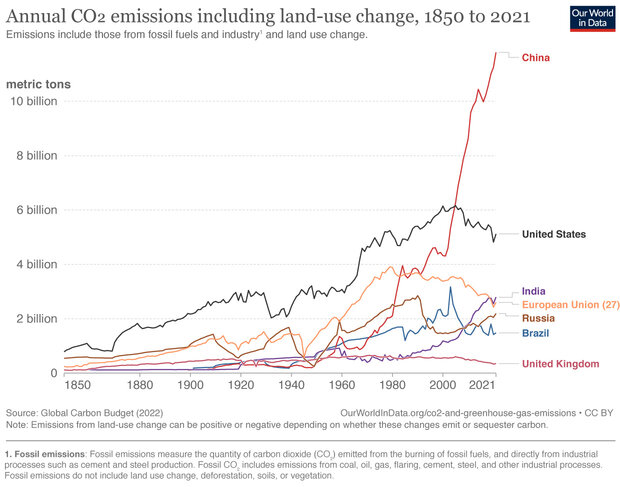
-suicidal for own energy industry and economy via green deal without real impact for the world (see EU vs World/ China CO2 emisions chart)
-demographically/socially suicidal via open borders and stupidly generous social benefits for immigrants instead of supporting own families
-going back in time via overregulation of every aspect of our lives
-becoming police state/s via overcontrol
-hypocritical via outsourcing industries and making carbon footprint in other parts of the world
-internally weak via not protecting european values over immigrants "rights" and terror mongering (p.e. Xmas markets canceled on many places)
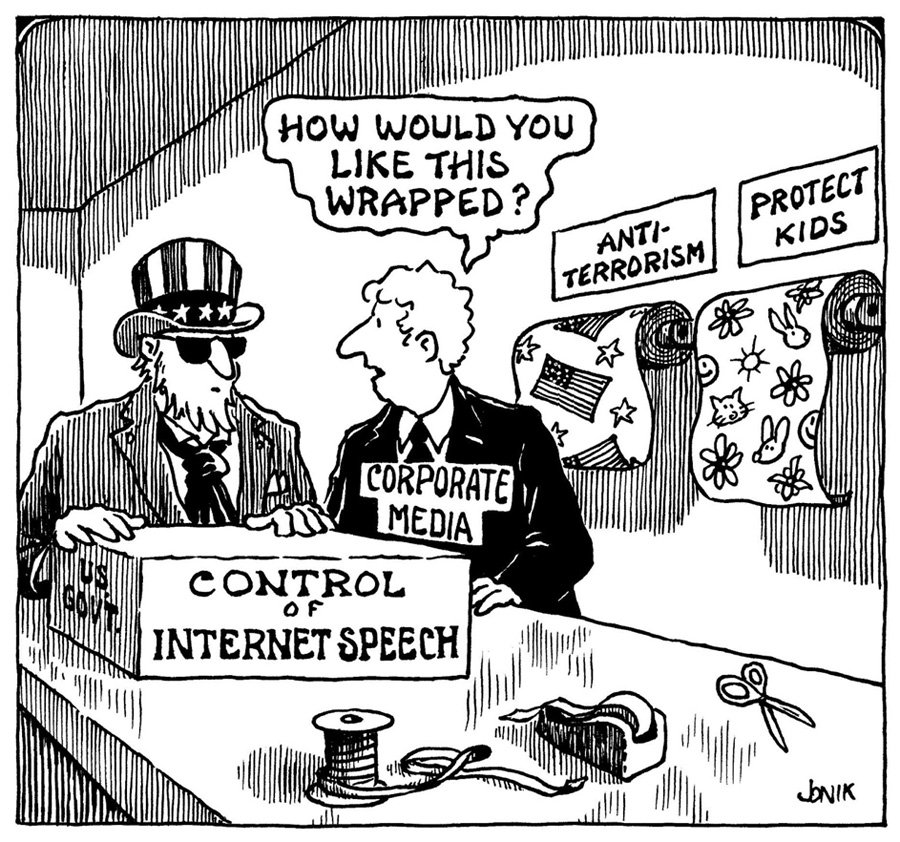
-supresing democracy via online censorship (DSA)
-juicing own people via over-taxation (exit taxes and unrealized gains taxes)
-being stowaway in terms of own external security (majority of states didn't fulfill NATO requirements in terms of GDP's percentage spent on military...well this actually is one thing that improves over the years, but Europe needed a kick from east and west to becoming adult here after years of underspending)
All in all, EU controlling Europe is committing civilizational suicide, living off past merits which results/capacity are running low while morally lecturing the rest. At the same time also destroying the very foundations that made Europe prosperous. History will likely look back at us as we/Europe voluntarily chose decline.
ps. the fact that I had to check if any claim made is not illegal, shows how far with censorship we already are. Freedom of speech cant be regulated without being lost.
Creators, producers and manufacturers in many fields do not distribute or sell directly to consumers (musicians can't directly upload to Spotify and Apple Music; film producers don't upload to Netflix, writers don't print their books).
A small-time maker may pay a fee to the established distributor of the physical products, who takes care of compliance, and uses their packaging and distribution channels.
If your perspective is "I may sell 10 boards this year, maybe", your target is some local/national maker-faire, not a EU marketplace.
I think makers with such limited productions will just fly under the radar (if you sell so little, it's likely you probably won't need to incorporate or declare taxes in a lot of EU countries). If they sell 100s of products across EU, they probably have at least one over-worked accountant taking care of existing compliance stuff.
The EU isn't perfect, but the catastrophising I read feels mostly like astro-turfing attempts at destabilisation.
It's probably more easily noticed from inside the EU.
The extent to which China can appear to do nothing while the west kills itself is just unbelievable. How could you possibly respect people that can't get out of their own way so repeatedly?
Unfortunately the EU does not at all understand how the internet works, maybe even how the global economy works today. Their goals are very reasonable and I fully support them, but the legislation around it (DMA, AI Act, GDPR, this new packaging stuff, don’t get me started with whatever everyone calls the cookie law) is just out of touch with how the modern world works. Again, I don’t think this is out of bad intention (not even to give an advantage to EU companies, but that is up to discussion) but mostly just out of a complete lack of understanding of what would really benefit the common EU citizen. The just seem to listen to activist groups and lobbyists aiming for regulatory capture and when trying to find a compromise in between they chose the worst of both worlds.
Unless you are a medium to large-sized company, it is very difficult to remain fully compliant with the regulations in most nations now - across fields, from packaging, to agriculture, to food, aviation..
This was traditionally something that the UK was better than the rest of Europe, having carve-outs for small businesses.
That's just an excuse then. Register with whatever local authority in your country handles these things and in the unlikely event you get a grumpy letter just send them a copy of your registration documents.
https://emcfastpass.com/fcc-rules-kits-subassemblies/
Putting that board into an enclosure and then selling it now makes you the manufacturer, and you must certify that new product.
You can still do such businesses, but the red tape and other requirements are enourmous: health department and construction applications, soil tests, inspections, manufacturing requirements, and so on. The additional costs and delays are passed on to customers.
It's not just septic tanks, it's all areas of construction and one of the reasons why in many states (like New York and California) it's impossible to make low-cost housing anymore, or (like in Florida) new regulations governing old construction are leading to sky-high reserve requirements and condo fees.
There's also the phenomenon of people just ignoring the laws or bypassing them. For your septic tank example, in Alabama out in the countryside people with low cost prefab houses ("double wides") don't want to pay $10,000 to dig a trench for a septic tank, so they just run sewer hoses deep into the woods or ditches. https://www.epa.gov/septic/surface-discharge-raw-wastewater-...
A "Regulation" becomes "law" in any member state without modification. No member state has to adopt anything. Examples are the GDPR and the new Machine Regulation.
A "Directive" does not become "law" in any member state. A member state has to enact their own national laws to implement the directive until a given date. It does not have to be single law. It could spread many laws. An example is the Machine Directive before it was re-released as Machine Regulation.
More on the different types can be found here from the EU itself: https://commission.europa.eu/law/law-making-process/types-eu...
Imagine making a mod for a video game, and to legally cover your ass, go through months of testing that cost $250,000.
Talk about killing a project in the cradle.
On the flip side, there are engineers who absolutely do not give a fuck, and will design their product with zero regard for emissions. To them the world is "If it's not illegal, then I cannot comprehend why I cannot take it to the extreme".
Are you saying to sell as an individual? People don't do that because if you ever get sued, it puts your personal assets at risk.
Who was wondering this? The EU has been hostile to small businesses and entrepreneurs from the beginning.
If you are running on a level with focus one some revenue, if you are doing it somehow regularly and if you have at least some infrastructure to look like you are a corporate (billing system, customer care or similar), then you may fall under corp rules, even if you are not acting as an entity.
I recall trying to build some hardware in 2020 and getting discouraged because of the CE/FCC silliness. Even though I could self declare for the EU it seemed like a big risk to do so.
It is not a coincidence that here in Germany there are whole law firms specialized in suing small business owners (Abmahnkanzleien.)
I think for a lot of people the tradeoff might not be worth it.
The mere fact that people seem to be highly confused (I saw many posts about that the last week) speaks volumes.
Why introduce legislation that is so complex and hard to understand that people seem to be confused wether or not they’re affected. It’s highly irresponsible and arrogant thing to do.
I'm not convinced that's an accident. I think politicians in Europe are just better than those in the US at hiding who they really work for.
There are numerous examples of regulations in many European countries that create a glass ceiling for anyone who strives to be more than just middle-middle-class, while creating effective loopholes for the wealthy to continue multiplying their wealth.
For example, the total (State + Federal) top tax rate for someone living in California or New York is not too different (maybe 2-3%) from someone living in France or Sweden. But the difference is that in California the top rate does not kick in until you earn north of $1M per year, while in Sweden or France the middle class is already paying those rates.
Likewise, in the US you cannot (legally) shelter your income by declaring it to be foreign income, as you can in most European countries. That is a tax dodge not applicable to the middle class.
And then we have the present discussion: The compliance costs are of course too high for any small business, so these regulations are just another form of regulatory capture to prevent anyone new from breaking into the upper class, while allowing those already there to have it easy.
I would argue it's even worse, because with properly designed federated system you get checks and balances to some extent.
There are parts of EU that have almost zero oversight.
Of course if you are a person that ships 20 packages you don't register a company to do so, nobody will, you just sell them privately (and the exception to sell things privately is quite high, in my country you can do it up to 5000 euros AT YEAR, after that you need to declare the income in your tax declaration but still you don't need to register a company if it's not your main income).
For sales to be "local", products need to be stored in warehouses in each country. But that in turn means the owner of said products (the seller) has to be registered for VAT in that country, and submitting annual reports in each country's language.
I went to the trouble of registering in 6 different countries; in some countries, Amazon more or less helps sellers submit reports; in others, they offer to partner with local lawyers.
The result is a mess of reports, injunctions, penalties for late filing, etc. coming to you in Polish, German, Spanish, Hungarian. I eventually gave up.
Europe is not actually a "single market". It's a federated bureaucracy entirely indifferent (or hostile) to small businesses.
This is by design. It’s the same all over the world. The wealthy are not going to just let you compete
It's important to remember that even without the fact that big companies basically write the regulations, regulations naturally tend to being effectively regressive wrt company stage/size. Every new one is a hurdle that a bigger company has more resources to overcome.
Another small business owner reported their experience in this Reddit thread, looks really bad: https://www.reddit.com/r/europe/comments/1vrz88a/comment/p4i...
I’m as pro-EU as one can get but that’s a mistake we should solve asap
You’re the one making the claim, so please provide sources for your fantastical scenario. By your logic there should be no small coffee shops across the EU, yet this is verifiably and patently untrue.
"If a farmer packs a few apples in a container (sales packaging) and sells it under its own name or trademark to a retailer or consumer in the same Member State, the farmer is a producer [for the purpose of EPR obligations]"
And :
"If the farmer sells the packed apples under its own name or trademark in another Member State, the farmer is only the producer if the recipient is the end user of the apples."
And :
"If the farmer is a micro-enterprise, which is often the case, and the supplier of the apple container is established in the same Member State, such supplier becomes the producer"
That last exemption is quite restrictive, it can be a problem. I can attest that a French manufacturer of antistatic packaging refused to sell to me as a micro enterprise when I was selling electronics kits a long time ago and I had to buy them from China. Some states might not even have packaging manufacturers. So the concerns from the article are founded.
> the discussion here seems to have a lot of people who are in a big rush to demonize their perceived political opponents on ideological grounds.
No, it is the opposite. There are a whole lot of people trying to rationalize something crazy. Nevertheless, countless online shops in the EU run by small business have already closed thanks to these regulations. Even if your assertion that this is a giant misunderstanding were true, the damage is already done.
Instead of a FAQ page that starts with, you know, the FAQ, the actual information is hidden in a PDF download. Once you click it, there is another popup to confirm. That then leads to a PDF with 9 pages of misc front matter before you can see the first question. And the answers themselves are completely unreadable.
Take for example "3) Are envelopes containing letters, invoices, statements and other correspondence which serve a communication function considered to be packaging under the PPWR? NEW!": Three paragraphs of legalese just to say "no" in the most complicated and hard to understand way.
The whole document is 27847 words. If we ignore the complexity and assume the reading-speed number of 238 wpm that I often see cited, that's two hours of extra compliance overhead just to read the FAQ.
And for extra hilarity, the page is also covered in so many popups and warts that fight each other that on mobile you have to accept all cookies because the decline button is covered.
Edit: Also, I've been unable to find any diagram on either the page numbered 13 on the bottom of it or the page numbered 13 by the PDF reader (not the same thing, in 2026...). There are two diagrams nearby but none of them seem helpful. If you mean the one in "9) Who is the ‘producer’ of transport packaging?", it only covers a subset of cases (company A sells the packaging in the same member state). The text states "If company A sells the cardboard boxes to Company C in another Member State, and Company C fills the boxes to transport packaged products, then Company C would typically be the producer in that Member State." so we're back to square one.
Lectronz is a marketplace for open-source hardware makers and DIY electronics. Most of our sellers are not factories or well-funded start-ups. They are engineers, independent designers, and hardware enthusiasts working from spare rooms, garages, and tiny workshops.
Some earn a living from their products. Some sell only a handful of boards each year. Others build ten units simply because they created something useful and want to share it with the community. Occasionally, one of those experiments grows into a real business. Every Arduino begins somewhere.
But the European Union's new packaging rules now threaten to kill the world of makers and micro-entrepreneurs, putting jobs, livelihoods and an entire ecosystem of innovation at risk.
And this threat is not just limited to makers and engineers. It affects artists, craftspeople and other micro-entrepreneurs selling their work across the EU.
The EU has required producers to take responsibility for packaging waste for many years through Extended Producer Responsibility (EPR) schemes. The new Packaging and Packaging Waste Regulation (PPWR), which generally applies from 12 August 2026, aims to harmonise packaging rules across the European Union and reduce waste.
The main idea of EPR is sensible: businesses that place packaging on the market should help finance its collection and recycling.
For makers, this means taking responsibility for the boxes, envelopes, plastic bags and other packaging used to deliver their products. This is an idea we can all get behind.
Unfortunately, instead of creating a single European system, the PPWR preserves a fragmented national model. A business selling directly to customers across the EU must register and fulfil its obligations separately in every Member State where its packaging becomes waste. For large companies, this is part of the cost of doing business; for micro-businesses selling only a handful of products into each country, the cost and administrative burden can be wildly disproportionate to the amount of packaging involved.
Imagine an engineer in Greece who designs a €25 open-source sensor board...
During the first year, he sells five to Germany, two to France, two to Austria and one to Belgium. Each ships in a small antistatic bag and a padded envelope. The amount of packaging generated for each sale is probably around 50 grams.
He has just become a packaging waste producer in four countries.
Based on indicative prices currently quoted by national schemes and compliance providers, the annual cost for France alone can look like this:
These indicative costs continue to add up for each country:
In short, the barrier to entry for these four countries totals €1150 per year in an optimistic scenario.
The weight-based environmental contribution associated with half a kilogram of packaging should be measured in cents. The bureaucracy required to account for it is measured in thousands of euros.
Now imagine you want to sell to all 27 Member States! To make it worthwhile, our Greek engineer needs to sell not 10 boards, not 100, but literally thousands of boards every year from the very start.
It simply isn’t worth it anymore.
Often, innovation doesn’t come from large established corporations, but from small businesses that start from scratch with new ideas and little money. Before becoming successful and selling millions of products, many companies started selling 10, then 100, then 1000. Most businesses never make it there. But there has to be space where ideas can be tested. This is one of the reasons Lectronz exists.
In the past year, while some sellers on Lectronz sold hundreds of products, half of our registered sellers got fewer than 10 orders. This is not a bug, but the nature of a marketplace like Lectronz where makers are free to experiment with product ideas. Some ideas don’t work. Some creators on Lectronz only build 10 units and share them with the community without making a profit. But even products that “fail” have a value. When hardware creators share them with the community, they help others grow as well. One piece of hardware may unlock the creation of another, leading to new product ideas and innovation.
The EPR regulations threaten the existence of this innovative space in the EU.
EU policymakers keep sounding the alarm about Europe’s lack of innovation, but seem hell-bent on making it as hard as possible for innovation to emerge at all, with regulations that create a disproportionate barrier to entry for micro-enterprises and SMEs. It’s an environment where only big players like Amazon, Temu, or eBay can exist.
Lectronz collects a 5% fee on every transaction it processes. We waive this fee on the first five sales to encourage sellers to test our platform. After years of work, and with the recent surge of new sellers joining our platform in 2026, Lectronz now generates roughly the equivalent of one modest salary.
I did not build it to become the next Amazon. I built it because independent hardware creators deserve a marketplace designed for them.
If these rules force many of our sellers to withdraw from the European market, they could also make Lectronz itself unviable. After everything we have built together, that would be personally heartbreaking.
For now, Lectronz sellers should not expect any immediate disruption. It remains unclear how national authorities will enforce these rules against makers and micro-enterprises, and we will continue monitoring the situation closely.
If these regulations are applied strictly, the short-term solution for makers is simple: stop selling in the EU and ship exclusively to non-EU markets.
Yes, you read that right. For a French micro-entrepreneur, it makes more sense to ship products to the US than to ship to neighbouring Germany or Belgium, for example. This is true even with any US tariffs in place.
Of course, limiting sales to the US is not a viable solution for some sellers. It's also a loss for the European economy itself. I still hope that we can work out realistic solutions that can help restore the EU single market for micro-enterprises. Here are some ideas.
Exempt small-volume sellers and micro-enterprises from cross-border packaging obligations. The threshold would apply only to producers that are below a specific volume of waste and/or a specific yearly turnover.
Create a centralised EU portal where sellers can register, report waste, and pay truly reasonable fees at once, for all Member States where they ship products. This could mimic the mechanism that already exists for VAT with the One Stop Shop (OSS).
Ideally, since we are in 2026, most of this work should be done through a modern open RESTful API (not web forms) and open-source software, to be as automated as possible.
A mechanism should allow marketplaces like Lectronz or Tindie to register, report waste, and pay reasonable fees on behalf of all their sellers as if they were collectively one producer of waste.
This means that the marketplace would pay administrative fees and other EPR costs corresponding to a single producer, that would collectively represent all its sellers. For Lectronz, this would have a non-trivial impact in terms of cost and administrative work, but it might be achievable under the right conditions.
As stated above, using a common API standard for all countries would help automate things.
Again, to reiterate, we support the idea of reducing waste and promoting sustainability. But there’s got to be a better, simpler, and fairer way to do it.
This regulation is having a massive effect on the entire ecosystem of micro-businesses, not just makers. It affects artists who sell their creations online. Local traditional food producers who export their products across the EU. It also affects craftspeople who sell their work online through their own website or dedicated platforms like Etsy. Beyond the small world of makers and DIY electronics, this will have an impact on the livelihood of potentially hundreds of thousands of people in the EU.
And to be clear: these rules affect not only businesses in the EU, but any business that sells to buyers in the EU.
Jeanette Koňarčíková, an independent artist and micro-entrepreneur from Slovakia, launched an online petition to draw the attention of policymakers to this issue:
The petition is thoughtful and well-written. I encourage you to read and sign it!
The European Commission also has an open public feedback page for this issue here:
Consider leaving feedback there as well.
Recently, the European Commission has begun to recognise part of the problem and has proposed suspending the requirement to appoint an authorised representative in every destination country until 2035. But this proposal has not yet been adopted. Unfortunately, this proposal may take time to be voted on and enter into force. By then, many small businesses may have closed. More importantly, removing the authorised-representative requirement would address only part of the problem. Rules like this risk undermining trust in the European project itself. What’s the point of the EU if the single market no longer exists for micro-enterprises?
Here at Lectronz, we will continue to move forward and hope for the best.
But make your voice heard now to make sure policymakers understand the urgency of this issue!
>EU institution is useless and incompetent at a fundamental level
Then aren't the people who hold it simply correct? Why brand this valid view as "insidious populists?"
>The legislation is so ABSURDIST that the EU have actually asked companies to ignore the law that they just implemented.
This is probably the best way to emphasize it. It is completely absurd, useless, non-functional, etc.
- resentment that bad policy damages the institution’s reputation - annoyed it proves people i hate like correct
Of course this law it's complex for nothing, to me, they could have just added the cost of the recycling of the packaging material into the cost of the packaging material itself, making it that only the companies producing the packaging would need to comply (so that if you buy a box to ship something the cost of recycling of the box is already embedded in the cost of the box, like they did with plastic bags at the supermarket).
That's not to say that there aren't extremely nice people all other Europe... there are. But I'm still caught off guard when hearing them say some things nonchalantly that would get them fired in the US.
It shows up in the stats, citizens almost always trust EU more than their governments and want EU to have more power but all this means those local governments becoming less important and therefore no one is really pushing for it.
Fingers crossed Trump invades Greenland so things can start moving.
They see tourists and foreigners (even if they're from the EU) as a gigantic target to squeeze and screw as hard as they can. That's what you get when your economy is based on tourism and rich foreigners owning property there: you have to squeeze those hard for it's basically all you have. Officially tourism is "only" about 15% of the GDP but Spain is a service economy and so many of those services revolve around tourism and foreigner owning properties there. Same for the construction sector: they love it when rich tourists have fancy villas built there.
My wife used to own a house there. So did her mom. They sold it all and kissed Spain goodbye once and for all: too disgusted by how the fiscal authorities were treating them.
I won't go on vacation there anymore. Both my wife and my daughter speak spanish and yet we don't plan to go there anymore: she's done giving money to Spain to be seen, in return, as a lemon out of which more juice can be squeezed.
Vote with your feet and you wallet: when a country tries to fuck you, give it the middle finger.
That's the commission telling small businesses that please don't stop selling in the EU and suggesting member states should use common sense. Unfortunately, as with all EU directives the implementation and enforcement is up to the member states, and especially certain northern countries really love their bureaucrats leaving common sense at home in the morning and sticking to the exact letter of the law. The 200000 EUR fine is Germany specific I think, obviously a prime candidate here.
Yes, though they can also ask for your lab results or to inspect your testing facility and hit you with massive fines if it turns out you falsified your compliance documents. As you mentioned this is very rare though - even enforcement actions against non-certified intentional radiators are uncommon.
The crooked MEPs also voted in favor of this law. They are just as culpable.
What a fucking nightmare
The excessive prosperity ended together with the end of the colonization era (there are still a lot of european colonies but they aren't enough to make Europe rich).
Losing access to shamelessly cheap resources naturally and forced customers impoverished Europe and this process is still going. Same thing would be happening with the US thus the aggressiveness now.
If I were a small seller I would just ignore this, like many sellers on Temu do. Before you get into trouble, someone must take notice that you did not register for the recipient fiefdom's protectionism racket. And if that happens, it is not sure that you really are in trouble. As with the GDPR, this kind of regulation is almost unenforcable in practice.
This wasn't introduced "from tomorrow", people had 1 year and a half to prepare for this (at least) or to protest this. See some comments below how individual countries actually messed this up.
> But of course EU is fundamentally different in a way that the politicians need to please the electorate, so nothing is really planned ahead.
> I don't know if this EU regulation will work or not (most likely not)
It's good that you take the time to just make assumptions about how the EU is bad based on your knowledge on how it operates...
There will be a post in 9 months from software companies crying about the PLD and CRA because their leaders were asleep at the wheel for the last half decade.
Within EU we already pay ~€3 for packages from China. And in Austria we will soon pay additional ~€2 for every delivered package. And 20% VAT.
Edit:
I am pretty sure at least some part of these already contribute towards recycling.
The goal here is likely not just to get more funding for recycling, but rather to use materials that can be recycled in the first place. Which you cannot achieve simply by charging businesses or consumers more.
Isn't that by far the simplest solution that removes any and all bureaucracy for almost everyone and still catches 99% of the cases?
I'm not saying it's not true, it's just that it's so hard to follow these things when one is supposed to have a life as well
Everywhere has their problems, I think Europe is doing fine.
Where do you think is a model society ?
There are several comments suggesting the EU did everything right and member states tanked it but this just feels like the EU operating as intended. The EU is comprised of sovereign nations. This is a normal outcome of what is essentially a P2P network. The central authority is illusory because the EU is not sovereign.
Because there's a handful of companies (lectronz, seeedstudio, ebay, etc) that have the full shipment lists. So the compliance agencies don't have to go after individual business records one business at a time; they can go to probably fewer than 10 businesses and find the suggested mass rule breaking with a sql join.
See also the national tax agencies with NACE codes (euro version of NAICS).
Quite common to view Europe as all the same, but Europe varies much more than what US does.
Well it is certainly the perfect conditions for it, the EU is surrounded by friends and enemies alike who openly seek to break it up and the biggest companies in the world are doing everything they can to defy and undermine regulation efforts.
But maybe this is it. Maybe good times, made via surplus bribery by innovation and innovators will not come around for a while. So what do you call a strategy that relies on something hopefully to come, that you are unable to produce or even articulate you need.
Germany is the third largest economy in the world. The EU as a bloc is the second largest economy in the world.
While lagging considerably behind the US and China in services, it still is among the leaders in energy and manufacturing.
It’s in decline, but it’s really not anything that can’t be fixed.
Certainly not anywhere HN/Twitter like to make it out to be.
The EU is facing a two-front information war. A strong EU doesn’t benefit the US, Russia or China. Having said that, a lot of US criticisms that are propagandised against the EU are mostly fair criticisms, the EU makes it easy for its adversaries to propagandise low hanging fruit (such as the bureaucracy on display here)
What really is happening is budget constraint - european 3-letter agencies don't get as much funding as US/UK ones and, due to failed geopolitic strategies, are spread over all sorts of vectors of internal sentiment defence - migrants, Turkey, ARTOS separation, etc
it isn't noticeable due to all the accumulated wealth, but european economies are being bled dry, but pretty much all geopolitical players. They stopped balancing between multiple centers of power - and now painfully pay the price of misaligned dependence.
The politicians are protecting the working class from corporations destroying society for profit. Lets not kid ourselves that the EU isn't endlessly praised for "having a backbone". Universal chargers, removable batteries, open app stores, AI data protections...
The thing is that people generally don't understand that everything in the world is tradeoffs rather than the media/internet portrayal of the world being good vs evil.
> Europeans absolutely want to do it by the book
Again on HN, I don't think conflating Europe and all Europeans into a uniform culture works. This might be true of Germany but as you get further from Berlin it is .. less so.
(Famous story from the Greek debt crisis of using satellite photos to find swimming pools and therefore people who were probably underpaying income tax, which was at such poor compliance levels the state was struggling)
The biggest problem in Europe is the obsession with taxes. Tax on recycling, tax on AI, tax on this, tax on that. So people who want to make money and keep it without having to fight absurd amounts of regulation and red tape just go elsewhere.
Shouldn't any wealth creation viewed positively due to tax, not to mention value to consumers/society?
Or is the view that people on average produce more value when employed by a large corporation?
It's HN - everyone did the latter.
What I find funny is that all of my packaging is re-used. I guess it's still "bad" that I'm sending non-EU packaging to EU, but at a global level, I'm way ahead. Re-using >>> re-cycling.
And you are calling this astroturfing LLM based on what? It's really no different from calling tariffs so much winning and laughing at seething liberals.
a 0.05 EUR spring, a 0.05 EUR bolt and a 0.05 EUR LED in the same package = 9 EUR fee
https://commission.europa.eu/news-and-media/news/ensuring-fa...
Any entity that seeks to take risks to earn outsize income increases the income variance and makes it hard to organize your committed payouts. So you are forced (by your priorities) to discourage the entrepreneur and freelancer and encourage the 18-60 salaried employee. Fixed fungible production unit can be used as an input to a machine that produces committed output.
Then you import guest-workers etc. to improve throughput. You are forced by your priorities. Probably the expansion of the US welfare state will meet similar constraints soon enough.
It’s a bit just-so so I think there’s an over-claim in there but I think the seed is there.
In that case company A is the producer. Also, even if the packaging is branded, company A is the producer if company B is a micro-enterprise. Looking through the document further, I notice that producers aren't even liable for detailed reporting until they put 10 tons of packaging material onto the market.
There are a whole lot of people trying to rationalize something crazy. Nevertheless, countless online shops in the EU run by small business have already closed
I'm sure you can find less emotive ways to make your point, like offering some approximate estimates of how many of these small businesses have closed.
It just so happens that the same is true for a lot of EU technical regulation.
At what point are we allowed to say "the EU is failing to regulate its members effectively"?
Or are we not allowed to say that because it would create some kind of catastrophe where the EU Commission loses its power over the EU27 and Russia invades (or somesuch catastrophising...?)
Also, for those small cases, why not put responsibility (for any harm) more directly into both the customers and producers? For example, if a producer of a new low-volume product somehow manages to get a lot of waste packaging into the environment, they could be held responsible and pay a fee, or probably who discarded was the consumer, so the consumer in this case should be held responsible. I get that large corporations should be held to higher standards, and take stronger preemptive measures and follow stricter compliance rules.
I think the same should apply for all sorts of regulations, like electrical safety, radio emissions, etc.. If you're designing and selling a small product, you can and should take responsibility for what happens to it (in the case it is found your device bad design/construction itself caused injury, of course). Maybe the only thing you should be obliged to do was put a large sticker like 'WARNING: Prototype-class device. By opening you accept some RISK OF INJURY from device. Return to source if terms not accepted: (...)' -- that is, both you and the consumer should share some responsibility for trying something experimental.
Probably the overwhelming majority are completely harmless low-voltage devices.
In general, I think outcome-based and performance-oriented regulation is something that should be more widespread. Like, there should be in the worst case two options: (1) You follow a strict set of rules and guidelines that dictate how companies in your industry type should operate (specially important for high-risk stuff like nuclear plants, large civilian housing buildings, etc.); (2) You (instead) take increased resposibility for outcomes of your activity (products, devices, etc.), being liable for any damage at an increased rate.
In fact, if you sell 10 hobby prototype boards to other hobbyists, you probably have a higher risk of getting hit by a bus on the way to the post office than you do of being fined.
But regardless, kinda OT. I was just trying to make a point that ignoring a law isn't without consequences.
There really isn't much of astro-turfing in non-EU parts of the world that would make little sense, your narrative might make more sense if there were any actual evidence or credibility behind the claims that non-EU states are engaged in anti-EU discourse that doesn't apply to them.
The complaints against EU is a lagging effect and what you see today is cumulative, one that all federated organization eventually face. LLMs have little to do with it and its just more visible as it is quite literally in global discourse
> 6) Who is the ‘manufacturer’ of branded packaging? NEW!
And it starts off this blurb:
> According to the PPWR (Article 3(1), point (12)), if a packaging does not bear a name or trademark, the manufacturer will be the natural or legal person who manufactures packaging or packaged products.
Seems pretty obvious to me the generic bubble envelope example from the blogpost doesn't make sense because that is generic packaging where the manufacturer has to handle this.
Edit: The farmer example is a bit bad imho because produce is not like the products in the blogpost and 'under its own trademark' applies to the product packaging (e.g. custom Apple carton frames etc.), best to focus on the more applicable sections imho.
Do you happen to have a source for that?
The lesson is the opposite: The EU needs LESS power, not more. If the member states didn't have a cartel to tyrannize their collective population, this regulation could never have happened. Any single country that would try to enforce this would be on its own.
In which way?
I'm intruiged, can you give an example?
They create barrier after barrier through their lobbying efforts. A good example is having to pay $50,000 for an inspector to come and determine whether your automatic door opens and closes properly, or to verify that your facility does not have a chimney. A friend of mine who owns a business in Niagara Falls, Canada, had to pay around $10,000 for a wind assessment to determine where chimney exhaust would go once released. He didn’t even have a chimney. They ended up having to have another inspection to verify they didn't have a chimney.
Many of these environmental laws are intentionally created and applied to small businesses as well, even when the cost of meeting the requirements is greater than what the business could realistically generate in sales.
The result is that large corporations can absorb these costs, while small businesses and entrepreneurs are often priced out before they even have a chance to compete.
EU will be in mess forever because it is problem of power and greed.
Also you have Streamlined Sales Tax Registration System (SSTRS) for actual registration in US which covers 24 states.
Not sure what you mean, most European countries tax residents on worldwide income. You certainly can’t just declare income as foreign and be done with it. Some countries (notably UK) had loopholes for non-domiciled residents but they are being closed now.
If it was before than, then the EU recognized the problem and implemented a fix for it.
(YES, the US has regulatory capture, YES the wealthy attempt to use it, YES we should try to eliminate it here too, but it remains true that it is easier to run a small business in the US, while having more billionaires. There are other explanations to the differential here).
Tomorrow Europe becomes a single market. How do I compete with a similar business but from a country where business costs are significantly lower ?
and, on a case-by-case basis, those people are generally happy to adopt other states' standards in the name of convenience and efficiency (California notwithstanding). Look at E-ZPass/I-Pass as a great example of harmonization across states.
It's funny. Ask any Illinoisan how they feel about adopting Ohio's policies and they'd bristle. But say "hey we're gonna make your highway transponder work in every state east of the Rockies" and they're all for it.
I have to wonder if Europe has the same thing going on.
How would we even sack the leadership?
If you are confused by the statement there are no small coffee shops - are you living in Europe? From first hand experience coffee shops survive less than a couple years on any high street , yet there is a Starbucks on every street corner and it’s a well known fact small coffee shops operate on almost non existent margins.
Well, how small business can report anything during 24 hours through weekends, long weekends, 1-week Christmas, 3-4-weeks summer vacations?
Chinese sellers don’t care, sure, but if you live in EU you do care.
That said while the financial penalties are in practice still not common they are chilling nevertheless.
However, EU is also now starting marketplace level enforcement, so in practice even those Chinese sellers will not be able to sell anything without registration.
hmm that is not systems thinking there.. there are more layers than that!
Yes, the point is, pay +€1 for packages from EU to EU to finance all this PPWR circus.
The amount of shit that gets shipped from China to Europe (world) is fucking ludicrous, and people should be taxed heavily for the stupid shit they often don't need.
Well, covering the decline button is very illegal according to EU cookies laws.
I don't know where model is, but what would be ideal: valuing own history, values, societies over not own, being strong outwardly and soft inwardly/on own people (not vice versa as is now), being practical and forward thinking over posing as a "leader in regulation" with suppressing everything meaningful hangover.
There are tons of examples of strategically bad political decisions with long term broad consequences.
Reminds me of "everything is fine" meme.
I also fail to see how this will stop Chinese companies from shipping to Europe. No Chinese company will register in this farce.
They got rid of the de minimis €150 limit for tariffs and added fees on top.
There was also €25 VAT de minimis limit but that’s also no longer the case since some time.
https://packaging-journal.de/en/eu-commission-wants-to-scrap...
"According to the Händlerbund, the European Commission's proposal to abolish the requirement has been on the table since December 2025. However, discussions in the Council of the EU were suspended a few weeks ago after a majority of member states spoke out against it."
"A restricted version is currently being discussed in the European Parliament. According to this, an exemption is only to apply to micro-enterprises with up to 49 employees and an annual turnover of a maximum of 10 million euros. A first reading is scheduled for October 2026 at the earliest."
I just tried to order train tickets in Portugal. Not only do they ask for my passport number, they also ask for your tax id. I will, of course, totally give them my SSN for a train ride… It’s a mandatory field too. People on Reddit say you can just fill in anything, it doesn’t matter, but I hate that kind of uncertainty.
But unfortunately, I may be wrong and bought into an urban legend/bit of propoganda:
https://en.wikipedia.org/wiki/Television_licensing_in_the_Un...
Even more fun, in the lead up to Greece joining the EU, they had to get their government pay under control so they were given monthly caps on what they could pay people. No problem, they created a 13th month.
* As detailed in Michael Lewis' Boomerang: https://amzn.to/4cXJnjE - He's the same guy who wrote The Big Short and Moneyball
The same "protections" also means that the E.U. has no major AI player at all. It seems like all the E.U. can do is tax and regulate what is invented and produced elsewhere.
Actually they'd have no retroactive way to enforce it at all, and the most they'd be able to do would be to charge an import duty on a per-parcel basis, which would ultimately be borne by the importer.
This would be a huge improvement over the utter nonsense they're implementing!
If the seller sells to other member states I don't know
> If company A sells the cardboard boxes to Company C in another Member State, and Company C fills the boxes to transport packaged products, then Company C would typically be the producer in that Member State.
This example makes no mention of whether Company C is a micro-enterprise. This is under transport packaging, not branded packaging.
Whenever I call out things like this to European friends they just think I am being an overly-sensitive American. But saying that to a colleague can absolutely get you fired in the US.
https://rednetwork.net/articles/2026/06/how-corporations-set...
https://euvsdisinfo.eu/report/eu-leaders-puppets-of-financia...
https://www.researchgate.net/post/What_are_the_reasons_behin...
https://edwardshepherd.substack.com/p/the-puppets-and-their-...
https://www.lobbycontrol.de/wp-content/uploads/EU-Lobbyrepor...
Now looking up for "EU politicians are prised for their probity and strong attachment to defend their people" here are the top results:
https://www.transparency.org/en/news/political-corruption-in...
https://www.ftm.eu/articles/european-parliamentarians-involv...
https://www.eupublicintegrity.com/what-is-public-integrity-i...
https://www.politico.eu/article/european-union-corruption-pf...
https://www.economist.com/europe/2026/04/29/europes-unpopula...
So even searching specifically for praising information, one will have to dig deep apparently, or maybe go straight to the official propaganda of what the politicians say about themselves (but probably less so about others).
Everyone is free to go as deep as they want (and can afford) and draw their own conclusions.
[1]https://op.europa.eu/en/publication-detail/-/publication/ad1...
The uptick I'm talking about is in the last 2 years.
At least one Israeli Minister has bragged about them doing it.
I don't think you need specific evidence of Russia doing it, it's widely believed to be happening by security professionals. They famously had troll farms of people employed to spread disinformation and that can only have been accelerated by LLMs.
I was fine with the mindset but never expected to get those questions in an interview, as it'd be illegal in the States.
Unlike what you appear to believe Europeans are not some libertarian captured by the EU socialist, most europeans do want less wasteful and less harmful packaging.
The cadastral value is (finger in the air) 40% of the value of the property; you pay (non-eu resident) 24% of between 1.1% and 2% of the cadastral value.
So 0.1%-0.2% of property value annually.
That is changing with the Single VAT Registration (SVR) legislation, effective in 2028.
One thing I have heard of in the USA is the need for a "business licence". I'm not sure what that is or whether it applies to all businesses, so I'm not sure what it would correspond to in the UK. Neither of my businesses needed any licences or permissions to start trading.
Sure, but you should also understand that “look it up” is the escape words of every inane claim. “The Earth is flat, look it up”; “Reptilians are controlling the world, do your own research”; “Bill Gates is injecting you with mind-control chips, google it”.
You can “do your own research” and “confirm” anything. Which is why the person making the original claim should provide sources, so we can all discuss the same thing and not talk past each other. If your sources are flawed, it’s much easier to reach that conclusion if we’re all looking at the same thing.
> I don’t want to take up space on HN
Don’t worry, a few characters won’t make a difference.
> I’m happy to take a look
Thank you.
> can you name what exactly you found hard to believe?
Certainly. It’s paragraphs 5–8 in your original post. The claim that there are random troublemakers regularly employing free national non-profit corporations in the EU to extort and bankrupt local coffee shops by lying about having been ejected for racial reasons.
I don't know the details well enough, but I do know that there is an effective anti-fedaralist force in the US wherever federal funding is concerned, as it comes with rules conditions (rules) attached. I would be interested to what extent this acts as a bias toward cooperation in the case of ez pass, given the interstate system.
You're trying to argue how school children argue, aim a little higher if you want to convince people that know how to read.
They seem to manage this just fine, but it's a pretty similar scenario. You could also push for standardized business costs and regulations eu wide ofc to help.
Do you understand what the EU even is?
Imagine trying to create a single set of laws to apply to all of the countries in North and South America at the same time. Just try to imagine it, because that's about as close an analogy as you're going to get. Now re-evaluate your criticism in that light, and understand that comparing a single state to a collection of 27 states is more or less a non-sequitur.
Having said that, the customs duty will go to the EU budget so there's now a direct incentive for the EU to maintain or perhaps even increase this.
a) exempt companies with under 50 employees to not kill small business
AND
b) are okay with doing so, ie. there's little consequences from exempting companies from this
Then this is the mark of a terrible piece of legislation. What problem are we actually addressing here by creating another fee collecting, headache inducing registration regime and the 684th enforcement bureaucracy in the EU over yet another trivial consumer issue?
Yes, single use plastics aren't great. Incentivize companies to move away from them by creating positive market incentives instead of creating an anti-productive, full time packaging Stasi.
It's almost as if the people attracted to a career in government can only imagine their subjects responding to the stick, even though the carrot is often far more persuasive. This is the classic downfall of all economic central planning.
The problem with this particular topic is it's a religious one for many in the urban monoculture. They don't ultimately care about packaging waste, they care about punishment and repentance for humanity's existence. We've angered the gods and must repent via punitive measures! To incentivize good behavior is antithetical to that, even if it is more effective at actually doing the thing.
Also, are those bodies ready for the volume of applicants? They certainly weren't when MDR came in.
I think leadership is hard. I’m not sure I buy the idea that a group of countries should be “hard” on anyone.
Preferably somewhere where it’s cheaper than the value of the thing being repaired.
Idk, at least in Germany paper and (plastic) recycling is free. I only have to pay for organic trash and trash to be burned.
Are they shipping within EU? Then they literally are in the field of shipping within the EU.
What makes you so sure? It really depends on enforcement but your Chinese company sure isn't going to just drop Europe as a market.
So? Will major AI players introduce universal healthcare in US? Or is it coming along with AGI which is why it should be the most important to every citizen? Or maybe EU citizens should all band together and stop being lazy and go to having 0 mandatory vacation days?
Reminds of me very old USSR joke which was basically "we have rockets in space, and don't have sausages in stores".
Where have you heard about that? Because there is no concept of universal business license.
I don't doubt the existence of troll farms either its just that the idea that you can influence online discourse in the manner claimed by both Democrats and Republicans and beyond in a left vs right rivalry is greatly exaggerated and carry their biases.
At the end of the day, you really can't change whatever beliefs that the crowd has had for ages. You can't astroturf Palestinians into changing their view against Israelis and you can't astroturf Israelis into changing their position towards Palestinians.
I'm sure there's probably a few comments I missed, but idk if I'd say there's proof of countless here or in the article.
It does seem like it'd have a chilling effect if the article's interpretation is correct, and other comments here also stated that the EU commission wanted to have a central registry to minimize the overhead.
To stop this, you need to try to stop both until one doesn't exists.
An explanation for why some markets are smaller and fragmented is interesting academically but it doesn’t change that it’s not worth participating in.
In places that don't have such a history, there's no reason for it to be taboo.
There are other right-wing (and left-wing) blocks who are funded by the Kremlin and Kremlin-supporters who just try to break things.
At the EC they're not corrupt, they try their best, but they're often given bad advice and are themselves not experts. And their power is limited (they can nudge but not push).
If it was just single registration for EU and paying for each kg of plastic or electronics to member states (like you do with VAT already via VAT-OSS) then it wouldn't be such a big deal.
Even if you didn't have any agreement with recycling companies in each member state and you had to pay the highest per-kg fees it would still be manageable for small sellers.
Meanwhile if you want to sell a single circuit board you're looking at several thousand euro in registration fees and several months for processing just to sell legally to 4-5 countries in EU.
Ultimately "make better rules" is only half the battle. You still need a process for implementation.
California has a frustrating tendency invent its own systems that are neither better nor worse, but nonetheless incompatible with more widely accepted standards. The highway transponder example actually applies again - Fastrak.
CA has some great ideas too, don't get me wrong (ubiquitous painted curbs: great!) but a lot of the time it's just different for the sake of being different.
Not really
Lobbyists get to talk into the ears of the powerful. It is literally their job. They make very sensible arguments for their point of view. So it seems very sensible, for the legislators, to make laws that aid the powerful and impede the weak.
The legislators are very busy with pressures from all sides. The cognitive load of considering views that you do not hear is enormous. It is not "incompetent or corrupt" to fail.
The system has the corruption baked in. It is one of the mechanisms, of many, that wealth and power concentrate in "democracies "
I have seen this process from the inside, good people making terrible decisions
Personally, and this could just be me, I think if I read something of interest I always do my own research, as I dont believe most of what I read, so I expect others to do the same.
I also think its rude to write alot of text instead of a concise expression of an idea.
Bro 5-8 paragraphs is like saying, prove every single point in half of what you wrote.
First of all I didnt "Make a claim" I said "For example". Bear in mind everyone infers differently. My point was there are setups that allow claimants to take small entities to court, without them having to foot the bill.
Law Centres Network: ~120,000 citizens/year (free solicitor casework & representation) LawWorks: ~70,000 citizens/year (free pro bono legal advice & casework)
I actually think it would be quite a bit easier than it is to create the EU. There's a lot more broad cultural homogeneity between the countries in the Americas than there is within Europe. Even on the topic of language you've got the vast majority of all peoples speaking some combination of Spanish, English, and Portuguese. And Latin America has a bit more limited geopolitical concerns than Europe does which makes managing some tensions easier than it might otherwise be.
But I'm not sure why you are considering "it's hard to create the EU" to be a defense against complaints or criticism related to the EU itself. Maybe it's hard and it won't work and the criticism is reflecting that and others are pointing out that it's a flawed task to begin with for some number of reasons. For my own part I think it has been a fascinating topic and a remarkable accomplishment of statesmanship to even get the EU to this stage, albeit like anything there are some very valid drawbacks.
What actually happened, and continues to happen, is that Europe and the EU became entirely dependent on US tech and other foreign industry. It wasn't just a matter of "see what works and then copy it domestically". It oursourced basically everything.
[1] https://single-market-economy.ec.europa.eu/single-market_en
The reason the price for parcels from China is going up in Europe is not shipping chips or component, it's from shipping stupid fucking shit people do not need, from e.g Temu and copied goods such as clothing, shoes and what not.
The toll offices in the airports are being drowned in cheap crap. Shut it down by making people pay more for the shit they buy. That will of course hurt everyone else, but that is how it works.
Migration - EU failed for many years to protect its border against illegal imigration - millions came, half a mil now legalized in Spain.
Overregulation - EU institutions themselves now acknowledge that regulatory and administrative burdens are hurting EU competitivenes
"Integration"/security - imigrants choose rich countries with good social benefits while in some areas inner security drops (car attacks, knife attacks, ra*es)
Greendeal-carbon pricing paid by industries to meet strict quotas, soon also paid by households, very expensive for europeans while having near zero effect on global emmisions in commparisson to China/rest of the world aka too much pain/costs for "nothing".
Digital regulation - via DSA, fight against so called "hate speech" and "disinformation"
Unrealized gains taxes - Netherlands
Exit taxes - France, Germany, Denmark, Netherlands, Spain, Belgium (conditions vary in each coountry).
Demographical colapse - all EU countries have born rate below replacement level 2.1 (average 1.34 for EU in 2024)
Strategic dependency - Europe made itself super dependent on Russia for energy and from military POV on USA, both of these dependencies are now being painfully corrected
Digital ID/CBDC: EU is building digital ID and digital euro, tools with obvious future potential for surveillance and control.
Concerning being "hard" I meant mainly protecting our borders, being hard on enforcing them and our own laws equally on everybody, being strong independent just Europe in general
Obviously I am no expert in (geo)politics, just an average Joe observing concerning tendencies and not liking direction EU is heading.
We don't want universal healthcare, 6-month to one-year waits for routine operations, having to beg doctors for prescriptions, massive tax hikes to pay for all of that while disincentivizing people from working and keeping jobs.
You need to be mad to think it's the right wing parties in the US who get the most funding. E.g. [0]
> The Biden—now Harris—campaign committee raised $997.2 million and Trump’s campaign committee raised $388 million in total between Jan. 2023 and Oct. 16, 2024, the most recent date for which Federal Election Commission filings are available
[0] https://www.forbes.com/sites/alisondurkee/2024/11/04/trump-v...
nobody in an EU member state thinks of themselves as a "state" in the EU, they're a country but in the EU
nobody would want the US kind of federalism. not to mention there isn't a single majority language aside from English for those that know it well enough
The US / Trump doesn’t even manage to renegotiate a trade agreement with Canada, although you speak the same language and your cultural proximity is about 95% - so maybe it’s time to get off your high horse buddy
It'd be interesting to see the US try a real federation, but recent evidence suggests that's beyond its capabilities.
If you concentrated all manufacturing around just a few spots, you end up in a situation like India - inland states with resources get stripped of their resources while all the companies are based in coastal metropolises with port facilities.
One could also go the other way, like China, and let the states compete between themselves for manufacturing prowess, but you need a central planning committee to ensure that the competing provinces still coordinate and work to complement each other. Easier in China, not so much in the EU.
The EU single market is a sorry joke.
That must be the most preposterous thing I've read in while, no offense! :-)
My personal experience has been the exact opposite: That cultural differences (and political differences no less!) in the Americas and also prejudices towards each other are huge, both between countries and often even between individual regions. (And that's even if you exclude the US for a second.) Also, countries in the Americas have had rather different histories (both pre and post Columbus) with only partial overlap. Meanwhile, European countries' history is practically impossible to disentangle, probably thanks in parts to how small the continent is in comparison to the Americas. On top of that, European culture has also had entire millenia to amalgamate and harmonize to the point where, yes, we may still speak different languages but it's very common for people to be able to trace back their ancestors' history across half the continent. It provides us all with the same cultural backdrop and the same roots as to where we come from, whereas in the case of the Americas I would ask: What is the common backdrop here? What are those common roots on a continent that combines both the incredibly rich history of hundreds of different indigenous peoples (all with their individual languages and customs) and the history of Europe, Africa and (in parts) Asia together? The partially shared experience of Spanish colonialism, and English, Spanish and Portuguese as shared languages only get you so far.
Finally, if your claim is that Europe is culturally much more heterogeneous (which again I don't think it is), I'd argue we must have exported a lot of that to the Americas, too. :-)
A single payer insurance system would be more rational vs choosing the worst of both worlds, which the US built through layers and layers of political compromise. The private alternative is a no-go politically in the western world so why not just commit to doing it properly?
Although of course that would require US states (more so than federal) to be more fiscally conservative, so the tax increase wouldn't be as burdensome... which might also be a no-go.
Anybody seriously thinking that seems completely oblivious to how central EU is to the economies and every day lives of member states. There is a lot to criticise about EU but without it, the Europeans lives would be much worse and their economies would be nothing to speak of. It is very sad that populists managed to popularize the image of the bloated unnecessary monster. Even otherwise intellectually capable folks.
The 10th amendment has been eviscerated by the courts. By a strict reading of its relatively simple language, most of what the federal government does is unconstitutional.
Today, USA is unabbreviated as the “United States of America”, but the country was founded as the “United States for Anerica”.
As such, I am strongly in favor of returning to our former glory by stripping the federal government of most of its power and transferring it to the states.
I am also wise enough to know that will never happen without a long and bloody revolution, and I am okay with that given the lived reality that has defined my life.
We live in tyranny. You may not feel the rolling boil of the water that surrounds you, my fellow Americans, but make no mistake: your goose is cooked.
And Germany has 16 federal states.
And it is! People here are always complaining about the EU as if it's a single state, even though it's very clearly in the process of becoming one. It's a long road, we're not sure if we're going to make it all the way to the finish line (but I suspect we will), and we're going to have some happy little (and big) mistakes along the way. But for now it's imperfect, and it might be imperfect for a very long time to come. It's still a lot better than not having it, and we're actively working on improving it.
No, not really. Unless you believe the Hollywood view that everything south of the US border has a Sepia filter
Intra-Canada commerce is a PITA in itself
Do you think Mexico looks in the eyes of half the central American countries? (Mexico being North America, yes I know)
From the top. Nuclear - many people in Europe are anti nuclear
Migration - Europe is going to need migrants and I think most Europeans are in favor of a kinder Migration system
I like European regulation, particularly food regulation - I think it makes for high quality food. Besides, companies always complain about regulation.
Crime has decreased substantially in Europe since 2000 - lots of people are stoking tensions though for their own political ends
Carbon tax is good, the world should adopt one, Europe can lead on this.
Digital Regulation, more problematic for me but people are beginning to see the issues are social media and online porn, something has been needed here for a while
Taxes, lots of countries have taxes. Many countries have exit taxes - seems to be a problem for richer people.
Birth rate - as countries get richer they have less kids... not going to be forcing people to have kids so I'm not sure what the solution is there but I think Migration will play a role. ....
basically all of these sound like a bunch of Fox news soundbites rather than real world issues that Europeans have and I feel most Europeans are in favor of these things so this is how Democracy works.
I like that they are thinking longer term and not doing stupid shit like invading countries and killing people. I think thats a win in and of itself. Also, Europe has been peaceful for several generations now which is also a huge win.
Your country looks more like Germany (and if you know your history, that's no coincidence) than it looks like the EU.
imagine if you will.... the trolling you are serving
Have you evidence?
Why not do the obvious thing that can still help? There are some simple things we as a people or a conglomeration of peoples can do to curb the enthusiasm for state level corruption. It is doable. It will not solve everything - but surely we can still do it.
This is simply incorrect, it has been the United States of America since the Declaration itself where it states: > We, therefore, the Representatives of the united States of America, in General Congress, Assembled,
I'm not anti-federal government or anything but clearly we can see that there are issues in how the federal government has become so powerful and yet we're beholden to these two big-tent political parties leaving folks across the various states unhappy with decrees from Washington. Don't like Donald Trump's power over you? Maybe the federal government shouldn't have that power then?
The conclusion does not necessarily follow the premises
I think that attempts at making the E.U. a state are doomed to fail. There are too many differences between countries, including customs, language, legal systems, etc. The United States of America works because all states largely inherited or adopted the British social contract. You can't replicate this in Europe. The E.U. should have never been more than a free trade agreement. The currency union was a big, fat mistake that amplified the Great Recession in many of the poorer E.U. states.
Rather: if you look at what the EU is doing, it is rather a huge advertisement that the EU should not become one.
One more typical example: we have no big AI company in the EU, because EU was busy being "world first AI regulator" before the industry even started here.
And no, EU is not that rich that it can sustainably pay for policies which make its own energy and industry significantly less competitive with little to no effect on CO2: https://www.climate.gov/sites/default/files/styles/full_widt...
Btw would you be so optimistic about Green Deal and regulation if you too had to pay EU price for petrol of about $8/gal ?
Yes peace since WW2 is great, but we have one war on EU borders and other in Middle East.
Freedom of speech is a bedrock of democracy. I dont thinkt we can bent it for different "noble" reasons or because regulators label smth as hate speech or misinfo. https://prostasia.org/wp-content/uploads/2022/10/image_2022-...
I think we can agree that we disagree, I wish you well.
> Do you think Mexico looks in the eyes of half the central American countries?
Did you mean How do I think Mexico looks in the eyes of half the Central American countries? If so I'd say it's nuanced and many people in those countries have their own views and their own various problems to solve, just like folks in France have a different view on immigration than, say, Switzerland, or how Germany and France can't agree on a fighter jet project and are looking at different industrial policies, or how Spain has a lot less interest in Ukraine than Latvia does.
Of course South America is incredibly culturally diverse, but I think it's a lot more homogenous than Europe is not just in terms of policy but culturally too. But hey if you disagree, sure make your case if you'd like. I'm just discussing the topic based on my own perceptions. The EU has something like 27 official languages and an Americas block would likely have 3 or so - that itself is the kind of thing that makes integration a lot easier.
Do you have actual sources for that?
(Funny thing, I googled the phrase in quotes, did not realize the misspelling, and was a bit frustrated that the only result was this comment on HN...)
Can you please put a date on when you think this happened and what were the turning event(s)?
Because you could mean a lot of different points over decades. And what and when you think was the turning point is pretty significant.
> Overall proficiency: According to data from the European Union, over 43% of the total EU population speaks English as a second language, making it the most widely spoken non-native tongue across all 24 non-Anglophone countries in the bloc.
Only 6-8% of us political funding in 2024 came from business-PAC contributions.
https://www.fec.gov/resources/campaign-finance-statistics/20...
Further splits here: https://www.fec.gov/resources/campaign-finance-statistics/20...
There are exceptions to this of course but most politicians answer to voters much much much more than big business.
For what it’s worth I think the US should increase petroleum tax to limit usage - not going to fly here but I’m all for Europe doing it. Especially without domestic oil sources - bring on the EV revolution, makes tons of sense for everywhere in the world especially Europe.
Anytime there is a spat, the federal government dangles those highway dollars to get their way.
It's better to be an EU MEP and do absolutely fuck all tbh.
Since the current situation is shit, and one EU national state will be shit, too, this only leaves one option. :-) So let's dissolve the EU before even more billions are wasted in this futile project.
In Europe a lot of people speak English as a second language but by and large many member states speak predominantly more languages - Spanish in Spain, Portuguese in Portugal, French in France, Italian in Italy (there's 4 different major language groups right there) and when you add in economy size, prominence on the global stage, geopolitical interests, history, and more it seems to me, in my opinion of course, it's a bit more difficult to wrangle, say, Germany and France together who have collectively killed millions of each others citizens versus, idk, Mexico and Colombia who are certainly distinct and have their own rich national and regional cultures (just like the United States even) but speak the same language and, in my view, get a long a little bit better.
I'm not arguing that there isn't a vibrancy in culture or that these countries are entirely homogenous. I'm arguing it would be easier to wrangle them together in a bloc of sorts than it was to get (and keep) the EU together.
For what it's worth a lot of cultural differences are becoming increasingly (unfortunately) minor differences at best because of globalization and the Internet and other communication technologies.
> and the destruction of thousands of spoken languages
Eh thousands of languages were destroyed by war and destitute and colonialization of various sorts throughout history. I'm not going to put a random assortment of them on a pedestal to get angry about just because they happened to be more recent (400 years ago). But anyway isn't China currently destroying spoken languages in places like Tibet and Xinjiang?
I think Europe and the Americas are differently heterogeneous and differently homogeneous. Certainly the Europeans have made more practical strides in building a coalition across their members than, say, South America or Central America. The reality is that Europe demonstrates a higher degree of solidarity between states than these other places. So it's strange to me to argue the opposite.
But if I understand, your assertion is that the Mayans, the islanders of the Caribbean, the people of Peru, or the Amazonians are less culturally different from one another than the citizens of, say, Greece and Norway? I'm not sure I buy it personally .. but I can see your argument.
not...really a solid argument for how well they would combine, but clearly a major contributor to how how much you know about them.
And FYI those languages didn't disappear 400 years ago. They are spoken today. Guatemala alone recognizes 25 current spoken languages - Spanish and 24 languages that are completely unrelated to any European language.
> For what it's worth a lot of cultural differences are becoming increasingly (unfortunately) minor differences at best because of globalization and the Internet and other communication technologies.
Good news! Many of these languages are still spoken today because these people still live in societies without the internet and other communication technologies! They don't even speak Spanish, their national official language, because they don't know anyone who speaks Spanish.
You don't have to know history, but try knowing a little bit more about current politics and geography before the sweeping statements?
- Number pages of lunatic regulations
- Money gone into the EU
- Not a metric, but fitting very different philosophies of how to handle the domestic currency under one umbrella (ECU, Euro) has lead to massive tensions between the involved countries and their populations in particular when the Euro crisis hiy (e.g. in German "Pleitegriechen" [bust Greeks], PIIGS (pigs) countries (Portugal, Italy, Ireland, Greece, Spain)). If there wasn't a common currency, each country would have solved this problem on its own terms. Now there is hate that continues up to today, and these countries (including their citizens!) can be used as scapegoats.
I wouldn’t say my assertion is that the peoples you mention are less culturally different (I’m not sure and not sure how we measure that) my assertion is if you were to attempt to form a bloc that those cultural differences are very small relative to the whole.
Just like how in the US we have cultural influence from the tribal people that lived here but by and large it’s a small cultural aspect and not the predominant one. I’m not minimizing their importance, significance, or heritage. I’m just saying if you had to go and take people who live in these countries they would be easier to organize as a whole into something of a bloc because at the nation state level they are more, of course it’s just my opinion, homogeneous in interests than when the EU was being put together.
I’m interested in hearing what you think here as well. I’m just chit-chatting - sorry if I sound argumentative. I’m working on not sound like that as much.
It makes it easier. As a hypothetical you can imagine a pre-EU European continent for example, empire, colonies, and more. It would be much more difficult to get those countries to form a bloc because of the number of interests and where they conflict across the globe.
Now take a set of countries that do not have broad geopolitical considerations or have fewer - those countries simply have less to argue about and less complex arrangements to worry about. No colony, no overseas empire, no war.
It seems intuitive to me it’s much easier to get those countries to agree to various political arrangements and then we can mix in other considerations.
> And FYI those languages didn't disappear 400 years ago. They are spoken today. Guatemala alone recognizes 25 current spoken languages - Spanish and 24 languages that are completely unrelated to any European language.
I didn’t say they were gone - the person I was replying to said they were destroyed by Spanish and Portuguese colonialism. Separately, yes those languages are spoken, isn’t there some 180 languages spoken in New York? But you would still characterize the United States as an English speaking country. Just like no matter how many languages were spoken in Brazil it’s still a Portuguese speaking country.
> but clearly a major contributor to how how much you know about them.
> You don't have to know history, but try knowing a little bit more about current politics and geography before the sweeping statements?
Please stop wasting time with random comments like this. Not only do I generally not care but they are bad practices per the site guidelines.