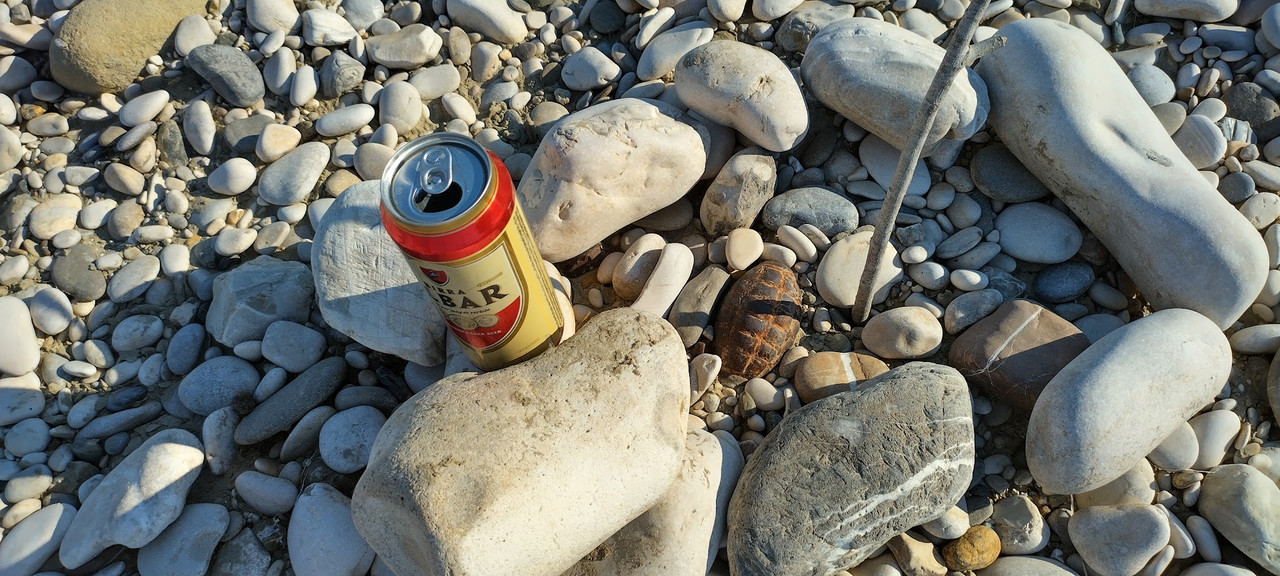
That doesn't sound right.
I wouldn't be surprised if social media was spreading this technique as successful way to fish.
[0] https://law.wm.edu/academics/intellectuallife/researchcenter...
>Centuries of Dutch control produced an ethnic and economic caste system familiar to many colonized peoples. Compared to some imperial powers, Dutch policy was less focused on “Dutchifying” the indigenous population, with most attention paid to resource extraction and maritime strategic advantage.
[1] https://archive.org/details/ahmad-nashih-luthfi-muhammad-fau...
>The short cut to development that the New Order took was highly depending on foreign loans. Consequently, development models were very much shaped by the foreign institutions that became the source of finance for Indonesia. At the end of the 1980s for instance, the World Bank forced for the project for the construction of Kedung Ombo Dam [...] The construction of the Dam had caused thousands of people and tens of villages to be evicted and involuntarily resettled. The Dam became the symbol of prestige for the New Order. When the New Order regime collapsed, the dam was abandoned and gradually left to dry.
> While understudied, the incentives for the use of dangerous dynamite fishing are often falsely attributed solely to poverty and desperation. The cost barrier to buying boats, bombs, and detonators means it’s more likely a practice for middle-income fishers, according to experts.
“A combination of factors drives blast fishing, including ineffective enforcement and management,” said Hampton-Smith, highlighting how indiscriminate the explosions are, killing all manner of species, regardless of age, size, or intent.
The article agrees, assuming "here" is global north tech workers.
There's always someone out there who is going to make the argument.
From the article:
> While understudied, the incentives for the use of dangerous dynamite fishing are often falsely attributed solely to poverty and desperation.
> The cost barrier to buying boats, bombs, and detonators means it’s more likely a practice for middle-income fishers, according to experts.
Destroying habitats and the future of fellow fishermen for short-term gain is just selfishness and greed.
Desperation is no excuse.
None of those things cost a lot of money and the return on investment for just affording a single bomb pays for itself almost immediately.
you'd have to imagine that higher earners would easily be able to navigate out to deeper waters with better boats whereas lower income would stay in shallower waters which is noted as largely where this is happening
I’d argue this practice hurts poor fisherman more than helps as coral reefs are important nurseries for fish and reliable sources as well. Blowing them up will rob communities of shallow fishing grounds and future fish
I’m sure if you told an indigenous tribe you were planning to do this they’d agree that it’s stupid, yet here we are.
It’s leading us to do insane things damaging our own health and the environment, nevermind how much suffering it’s causing the actual sentient beings we’re using.
What is interesting is that both Indonesia and Thailand have strong and similar anti blast fishing laws since early 00s that charge 5+ years of prison time.
However, Thailand has been much more successful with taming blast fishing which is practically gone now and the story here is very insightful.
Some of it is due to Thailand's geography and high demand for marine tourism but the biggest push here was EU and US regulation that gave Thailand opportunity to shape up. In 2015 (same year when Thai anti blast laws were codified more strictly) US TIP (trafficking in persons) report down-graded Thailand to tier 3 mostly due to fishing slave workers while at the same time EU's IUU (illegal, unreported and unregulated fishing) issued a yellow card. All of which lead to the biggest fishery reform in Thai history which mostly eliminated blast fishing.
Since then Thailand is back to tier 2 of TIP and got lost the yellow card from EU's IUU. Indonesia never got tier 3 of TIP despite many arguing it should have and never got a card from IUU. Stories like this turn me into a globalization believer - I know it's not perfect but the system is kinda working?
I know that seismic survey acquisition should be easily identifiable because those shots occur at precise intervals during the survey and continue all day long with no breaks unless there is an equipment failure or other reason to shut down. A 10 second interval would be one common example.
The damages from activities like this are terrible. Using explosives as a seismic sources was banned in the late 1970's I think due to harms done to marine mammals and organisms and the environment in general. Since then, airguns firing compressed air have been the dominant marine seismic source. Depending on the bandwidth of the bubble created and the volume of the airgun array they can also be extremely destructive to marine mammals like whales and porpoises so crews employ biologists as whale watchers in those areas where activity can be expected so that the effects on whales can be minimized.
It is still a serious issue in offshore exploration though.
Bomb fishing is something I would expect to hear about from some redneck coon-ass from Lousyana. I guess that people everywhere figured out how to stun fish to improve catch quantities and some use that as the primary method now. Maybe if deeper waters weren't fished out they could just go further offshore. Once you have foreign fleets dragging up everything in their paths then the only fish left are around the reefs.
I hate the idea but this article makes me optimistic that other proactive measures that are not mentioned might be restoring a lot more than this.
Read critically.
the coral is a tragedy of the commons things; it's a sweet deal for lazy fisherman.
There's basically one solution to bomb fishing: make it economically nonviable. You could ban it an punish the people doing it, which is often the immediate action taken and seems like the path being set up here...
but really any money spent on enforcement may be better spent on setting the bomb fishers up with the tools to make a living doing something else — ironically "teach a man to fish"
Fishermen were doing this in Indonesia decades ago. Pretty well known technique.
advanced question for the college types: how many if you supersize it?
However, I will now refer to explosives exclusively in units of Bald Eagles when referring to their mass, and "star spangles" when referring to their energy output.
They’re just getting off on being racist to the “savages who don’t know better”.
I know you mentioned Indonesia never got the yellow card it should have and that certainly creates less incentives for them to straighten their act. But I am trying to understand if the government is still largely to blame or not?
If you have money for buying bombs, you have money for a fishing rod to feed your children for the entire year.
To incentivize them to stop you have to give them better options. In this case, teach a man to not fish with explosives and you’ll feed him for the rest of his life.
The difference between the first world and the rest of the world is that the first world has more sympathy for the non-existing, abstract humans from the distant future.
https://en.wikipedia.org/wiki/Overfishing#Examples_and_evide... has several examples of prior ‘art’, and I don’t think that list is complete. Herring almost became extinct in the Atlantic in the 1970s, for example.
And that’s only fishing. Other examples include the passenger pigeon, the American bison, and the dodo.
Fishers, I would guess, are aware of fish wanting to be near reefs.
Man kind - If we can, we will.
UK should not hold us back with their shenanigans.
Paternalistic racism might as well be a central tenet of certain political movements — whose entire ideology is that certain humans are not fully equal as thinking moral agents in the world.
The new “scientific racism”.
all blast fishing is a failure of governance so I'd say yes but the fishing cultures here in SEA are so different from anywhere else in the world so it's very hard to govern without strong central body. Lots of cultural, religious, poverty and spiritual stuff mixed into all of that which really complicates things.
IMO Thailand has a much stronger centralized government and just better geography to make enforcement easier. It's mostly mainland with coastlines while Indonesia is mostly islands which are notoriously difficult to govern. So to answer your question, it's probably just that incentives in Thailand go much further due to all of these variables.
Why make excuses for greedy jackasses? Their ancestors didn't invent this 5,000 years ago and it's the "oNlY wAy they can survive." They fished without bombs once. Some guy realized this depraved method works, so now lazy people choose to do it so they can get money faster than the people fishing legitimately can. That's why it's illegal.
>how to
Dynamite goes into the water, fish goes belly up, 90% of the catch is lost. It's not rocket science.
Why so quick to make excuses for selfish and mind-bendingly stupid people? Why are you assigning guilt on the “rich west” for a local practice that is for local consumption? Not every indigenous practice is good. Some are the reason those communities can’t escape poverty. It’s not colonialism or oppression, their problem is stupidity.
The article addresses that objection.
Expect more elephants to be slaughtered as a result of Elon Musks teardown of USAID.
If you're trying to communicate 'this much rainforest disappeared' or 'look how large this landmass-sized Antarctic iceberg is' to a wide audience a well-known area is a reasonable way to do it. In Britain basically everyone knows roughly what the size of Wales is relative to the other countries of the UK, even if they don't know its exact size.
Developed countries are rich after centuries of extracting natural resources, to the point that Europe is nearly deforested, American rivers in the rust belt used to catch on fire from chemical pollution, and we destroyed a pacific atoll with over 20 nuclear bombs.
A little rich for us to suddenly care about the coral so much that we can lecture developing countries about it. In this case, it doesn’t seem these are the acts of desperate people, but the arrogance of someone who will probably never face hardship beyond “ramen profitability” saying desperation is no excuse is astounding.
[1] https://www.google.com/maps/place/Livingseas+Coral+Restorati...
In Fiji, for example, no fisherman could get dynamite if they wanted it. The only way to get that is if you run a (very heavily regulated) mine, or a quarry, and you'd have to account for every blast.
> It’s not colonialism or oppression, their problem is stupidity.
bingo
I am calling out exactly that sentiment, because it removes the intelligence, agency, and morality from the people you’re discussing by reducing them to animals. You call them lessers and stop holding them to the same standard — and that so many did so here, despite poverty being unrelated, is precisely the evidence their motivation for doing so was racial stereotypes and not facts.
You see the same with, eg, excusing gangland violence as “poverty”, despite areas with much higher poverty (including foreign nations) not experiencing the same anti-social behavior.
The east of the island became independent (from Australia) in 1975 and is now Papua New Guinea. Meanwhile, the western half was handed over to Indonesian control following the end of Dutch rule, a status formalized through the controversial, UN-backed 1969 "Act of Free Choice" in which a tiny, handpicked group of local leaders voted under military duress to integrate with Indonesia.
Indonesia has been conducting a decades-long genocide of the people of West Papua. It gets little press because it's an ethnic cleansing slow-burn. Slaughter the Papuan people, replace them with Javanese, then bulldoze their forests to grow palm oil.
For more, read the abstract (or the entire paper) here: https://researchers.westernsydney.edu.au/en/publications/for...
There's a timeline of the history of the "conflict" here: https://www.papuapartners.org/west-papua
https://www.abc.net.au/news/2020-12-01/west-papuan-separatis...
This article was originally published by Inside Climate News and is reproduced here as part of the Climate Desk collaboration.
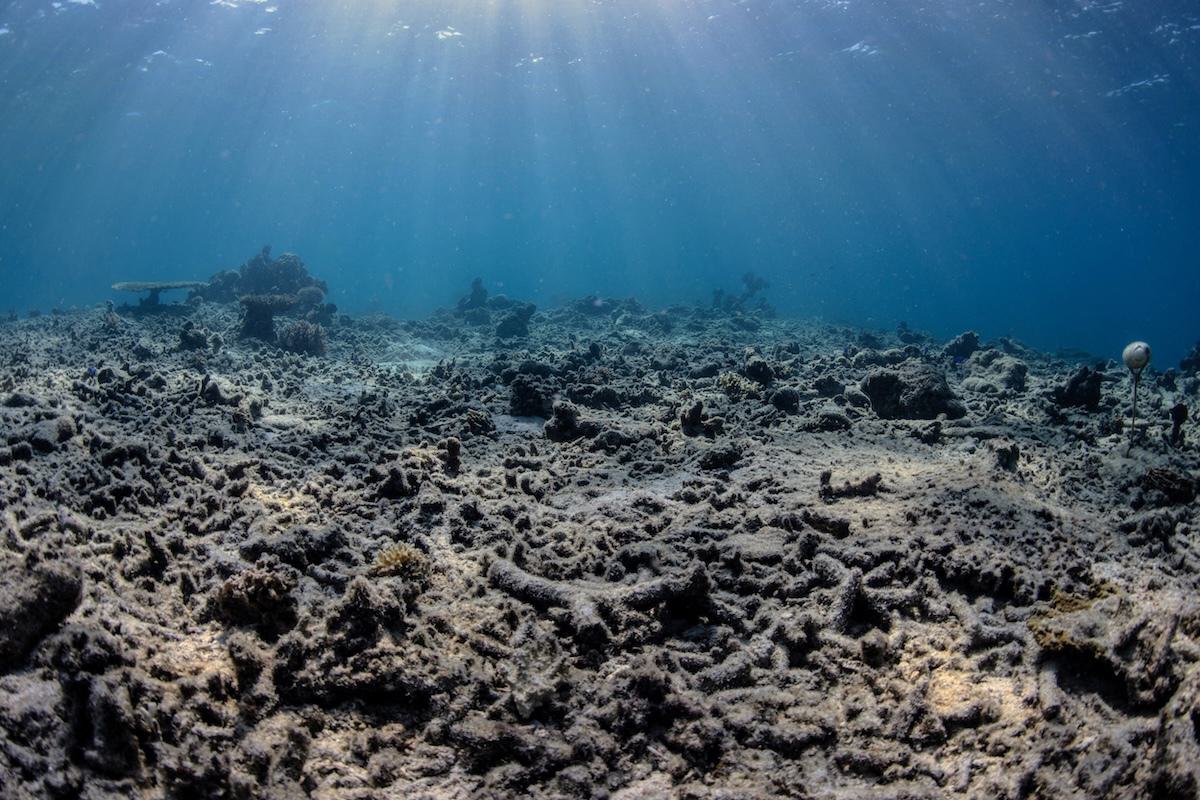
A bomb-fished coral reef in Sulawesi, Indonesia. The Ocean Agency
Fishers operating off the coast of Sulawesi, Indonesia, are detonating more than 8,000 underwater explosives each year, researchers estimate. The practice is turning picturesque coral reefs to “rubble.”
Nicknamed the “Amazon of the Seas,” the Coral Triangle is the world’s most biologically diverse marine ecosystem. Sink below the surface and you’ll encounter the sound of a vibrant symphony of snapping shrimp, crunching crustaceans, and feeding fish.
But then the rhythmic music of life will dissolve into eerie silence, punctured only by the plosive boom of detonating bombs.
Off the coast of Indonesia’s Spermonde Archipelago, underwater microphones captured over 3,500 explosions in just 3,600 hours of recording, according to researchers from the Zoological Society of London.
The source? Blast fishing — a globally banned technique that uses plastic bottles packed with explosives to stun and kill everything in a 90-foot radius. The highly destructive practice has been documented in at least 34 countries, from Lebanon and Libya to Brazil and Ecuador.
While fishers predominantly use the method to catch fish for sale at local markets — identifiable by their ruptured internal organs and burst swim bladders — it’s also a grave threat to colorful coral reef habitats.
“Bomb fishing is quite likely the leading cause of reef loss in this area,” said Ben Williams, the paper’s lead author, noting that a single bomb can wreak 200 square feet of destruction. “These picturesque reefs get converted into a landscape that looks like the moon. It’s just rubble and dead coral with very little sign of life.”
In 2023, researchers from Britain and Indonesia snorkeled down and anchored $150 audio recorders to short stakes in the seafloor. Using A.I. software — which the team has now made open-source — they scoured 16 months of audio in just a few hours to identify possible detonations.
While the A.I. filtered suspected cases, each suggested sound wave was then manually verified to assess if it stemmed from a bomb or a misfiring boat engine.
With sound traveling over four times faster through water than air, the team of marine scientists were able to detect detonations from over 10 miles away.
“When [the bombs] are close, it’s so loud that it can shake you out of your skin,” said Williams. “But if you put your head up on the surface, you probably can’t even see the boat that did it.”
Accounting for stormy-season setbacks and spearfishermen who tampered with the recorders, the team calculated that there were likely more than 8,500 blasts each year — all within an area of just 350 square miles.
With a bomb dropped once every 62 minutes, the equivalent of three football fields of reef are destroyed each year, according to Williams.
Indeed, an estimated 75 percent of coral has been lost in the Spermonde Archipelago since 1990 as a result of human activities, bleaching, and warming waters.
“Repeated blasts create shifting fields of rubble that prevent hard coral recruits from settling and growing, making natural regeneration and recovery of the reefs a difficult or impossible task,” said Melissa Hampton-Smith, a postdoctoral researcher at James Cook University in Australia, in an email to Inside Climate News.
The data revealed for the first time that bomb fishing takes place year-round, peaks during the mornings and significantly reduces on Fridays, the local day of prayer.
While understudied, the incentives for the use of dangerous dynamite fishing are often falsely attributed solely to poverty and desperation. The cost barrier to buying boats, bombs, and detonators means it’s more likely a practice for middle-income fishers, according to experts.
“A combination of factors drives blast fishing, including ineffective enforcement and management,” said Hampton-Smith, highlighting how indiscriminate the explosions are, killing all manner of species, regardless of age, size, or intent.
“Managing all illegal fishing, including blast fishing, is complex and varies from place to place, but in general equitable, consistent, and legitimate enforcement is key,” said Hampton-Smith, who first studied the phenomenon while living and working in East Africa’s bomb fishing hot spot, Tanzania.
Despite the widespread harm, intercepting blast fishers in the act remains an elusive goal in a nation encompassing over 70 million acres of marine protected areas — a region larger than the entire United Kingdom.
Though authorities in neighboring Malaysia successfully confiscated 1,250 pounds of ammonia fertilizer suspected of being used to construct homemade fish bombs this May, patrols currently fail to effectively pinpoint the detonations in real time.
“Restoration efforts struggle to keep up with such rapid rates of destruction caused by bombing,” said Jamaluddin Jompa, coauthor of the paper and a research professor at Hasanuddin University in Indonesia, in a press release. “Immediate work to tackle bomb fishing is needed.”
Williams is hopeful the new research could be used to construct a network of audio sensors with GPS syncs to provide real-time detection and localization for marine authorities.
And not just in Indonesia. From the Philippines to Turkey to Zanzibar, Williams hopes the now publicly available code will be rolled out across the globe to keep biodiverse habitats from being reduced to “rubble.”
Crucially, unlike bleaching events or warming waters, bomb fishing represents a rare form of coral crisis where a local fix exists.
“Because bomb fishing is an acute stressor, you can restore your way out of it,” said Williams. “If bomb fishing stopped, and you went and restored the reefs, they should be healthy and thrive for quite some time to come.”
—Johnny Sturgeon, Inside Climate News
Supertrawlers Are Taking Antarctic Krill That Whales Depend On