1. Predictability. Flavors of it: deliver features on time, roadmap stays mostly stable, on demand requests are known about ahead of time, business struggling or doing well transparent, tech debt / upkeep are first class citizens of planned work. All of this is project management and communication.
2. Org pays market rate and has good benefits. Employment is an exchange and esp for those who work hard, they deserve the recognition.
3. “People” (aka HR) is taken seriously. The team is expected to be checked in. Those who aren’t get fired. Ideally, there’s enough in place for individuals to come to their own conclusion that they should be fired. See #1. When a req is open it’s a top priority of whoever is in charge.
You can be PM-nonexistent or PM-heavy with lots of meetings and JIRA. Maybe you can accomplish all 3 above in both worlds. My experience is that process when done right moves the needle. No process leads to nonsense and process for the sake of process grinds it to a halt. It all gets better when the leaders are bought in or self aware enough to get out of the way.
If you push for change long enough, and aren’t an asshole about it, just genuinely interested and motivated, there’s a chance you’ll see your vision for better culture materialize.
I do believe the opposite is true too. If you have a strong culture, a product or idea with promise, and a team of smart and capable people, it can move you faster in the right direction too.
The problem is that every person or company in group 1 thinks they are in group 2.
Except the market is full of proof this isn't true. You can still do very well with a broken culture if you have an oligopoly, through tactics like vendor lock-in, by buying up upstart competition early, using VC funding to capture the market by selling below cost, etc.
And now that you have hundreds of thousands of people who have been laid off from high-paying jobs, it's an employer's market.
But, and maybe I'm just a curmudgeon, but I kind of wonder why we write articles like this. Like if a culture is bad, is it likely a CEO is going to be looking for random blog posts for constructive criticism?
Or even managers? I look at the market forces at play, and I just don't think many (any?) organization successfully create an incentive structure where performance on intangibles (specifically management) can be assessed well enough to make a bad culture into a better culture. I've worked at zero places where managers where seriously held to account for how "motivated" their employees were; when there were surveys of engagement engineers almost never truly believed they were anonymous (and why would they?) and were hesitant to give honest feedback.
In short, being a CEO is a skill of crafting and debugging a machine of people, a skill that I think life gives almost no training for, and a skill that most people with that title have no awareness or aptitude for. </rant>
As a principal engineer at Meta and LinkedIn, it’s still the most productive team I’ve ever been on
Afaict toxic managers and C-level managers make for bad culture.
Now what?
* announce that effective immediately, the company will begin its transformation to an "AI-first" organization, with AI driving most development workflows by end of year
* percolate the message through upper management down to line managers that they are to assure their reports that the aim of the transformation is to augment current employees, not reduce headcount
* stealthily start lopping off heads anyway
A bird in the hand is worth two in the bush. Giving junior devs or non-devs what is essentially automated stackoverflow copypasta on steroids only amplified all the downsides of inexperience that we already learned well over a decade ago.
The CEO (or at least the founder) created and cultivated the culture of the company thus far. If the culture is bad, they are the single largest reason why.
You are right in that execs won't seek out the blog article which criticizes their strategy... unless they actually want to steelman against their own position (which is a very useful activity but few people do it).
But the CEO doesn't need to find it on their own. They surround their self with a Board, investors, sales people, managers / leadership team, people from their MBA program, etc. the article just has to plant a seed which grows somewhere in that ecosystem.
That said, the article may not be right. The largest and most successful companies in the world aren't the ones with the best company culture. They simply work in industries where the money is so prolific that the people who want to work in the industry are already highly motivated. The CEO doesn't need access to this information because it isn't true; it simply tickles your cognitive biases.
I love companies like that! Everything is documented, stuff just works, CI builds...
If something is broken, you just open ticket, and responsible person takes care of it! You do not have to investigate when Judy returns from holidays...
With remote work I can spend more time with kids..
"Company culture" usually means you have to listen to shitty stories, provide social life for some lonely people, and do unpaid emotional labour!
And do not dare to say anything even remotely controversial, in this "open" environment that "foster communications"!
The irony of writing this comment for a post that made the front page of one of the most widely read aggregators in tech, in said comment section
Right now I'm happy where I work, but I think most people recognize that so much can change almost literally overnight (either in terms of the employer still wanting to employ someone, e.g. sudden layoffs, or in terms of whether it sucks to work somewhere, e.g. massive policy changes like a job where you're comfortably remote suddenly trying to make you commute or even move). Until I'm at a point where I'd be able to retire if something like that happened, I need to continue to be aware of how to spot the red flags at prospective employers.
No, but the CEO will absolutely seek out my recommendations and I do read random blog posts
I think its a way to speak out and get it out there, than stay unspoken. Author as well others who share same opinion get some validation that they are not only ones.
I think the odds of any particular article making it onto a CEO's radar are low, and the odds of them actually taking good advice to heart (let alone implementing it) are even lower. That said... I also get the impression that the shittest kinds of C-levels and VPs are disproportionately swayed by whatever opinion they last read in their daily email newsletter or heard on a five-minute podcast snippet. So at least in theory, if you were able to inject a seed of a good idea into the zeitgeist, that idea might reach the level of saturation where it turns into a form of white-collar peer pressure.
Unfortunately I also think the ideas that reach the peer pressure saturation point tend to be less "be nice to your employees" and more "put shock collars on them and make them beg for their jobs," but I guess it can't hurt to try?
I remember many years ago companies used to advertise their "joel score" (not quite the same thing but related) to attract employees.
This is something which I think investors could also use as an indicator of company quality.
A lot of cultural problems also have quite easy fixes they just require shining a light on specific abuses of executive power which simultaneously hurt employees and destroys shareholder value. There is a lot more of this than I think people realize.
https://en.wikipedia.org/wiki/Workplace_democracy
The idea that we shouldn't be able to vote for our bosses is completely ridiculous. If we had truly collaborative workplaces it would probably unlikely another $50 trillion worth of value once you give workers the ability to exercise their voice (passionate workers want stable working environments, if executives are never held accountable by their subordinates how can we argue such an unfree system is worth preserving?).
As for your "now what", companies with a bad culture will be at a competitive disadvantage. Their efforts to wring more productivity out of their broken culture usually make the culture worse. My advice would be to leave ships once you realize that they're sinking. (That doesn't make you a rat!)
Different to corporate jobs those teams spend tremendous amounts on scouting, analysis etc.. They don't just look for the best player but also one who fits as a person.
I think the core issue is that management hasn't picked this up yet and understanding team chemistry etc is totally undervalued. I'd argue this is partly due to this being hard to measure and very hard to do.
I suspect executives very much get it, but realise that there's no obviously good answer here.
>A lot of cultural problems also have quite easy fixes they just require shining a light on specific abuses of executive power which simultaneously hurt employees and destroys shareholder value. There is a lot more of this than I think people realize.
What do you mean? Who would "shine this light", on which executive, and who would they whistle-blow to exactly, the board? Short of embezzlement or sexual harassment (and not even all sexual harassment cases) I can't think of any cases where calling out an executive's behavior won't result in immediate retaliation. This is a genuinely tricky problem, but most of all I get the sense executives would rather own the wrong decision than have a subordinate get credit for swaying them to the right decision.
What might be more pointed, instead of pointing to the "useful effects of good culture" why not have actual tactics on how to reform or remove bad management and preserve and expand good management?
The power of your vote is proportional to the value you bring.
A while back I threatened to quit because I had a team dynamic that was untenable. I made a management change mandatory.
I got a new boss. The old boss was later terminated.
Bugs and security flaws are just oversights. Those oversights are caused by inattention either through fatigue or acting too quickly. An inexperienced person delegating what they don't understand to AI produces more bugs, not less.
Those mindlessly copying from stackoverflow were in a similar situation, but only because they ignored or didn't understand the warnings from the discussion. You're rolling the dice if you expect AI to explain itself, as it can only ever know at most what it scraped from (stackoverflow and poorly documented github repos).
As it was not too long ago, searching on stackoverflow was already a hail mary play. AI just makes the problem worse. At best, with AI there's a lot of reinventing the wheel with no hope of ever doing better than merely approximating the wheel.
A lot of people hate it, but if you have a rotation, that will force this person to deal with what they create during their rotations, and the operational issues will be an explicit part of your job when you're dealing with them.
When it kind of goes to random people, the conscientious people who fix the bugs and operational issues look unproductive, and the aggressive people throwing slop over the wall who never bother look great.
Forcing this through a rotating cast, and having other people not worry about it unless management decides it's too much for one person and they need help during this rotation, really avoids some of the most toxic outcomes around this.
On-call doesn't have to mean someone is getting paged at 3am. It does mean everyone rotates through, and it is clear who has the monkey, so you don't have passive-aggressive vs. conscientious behavior hiding issues like that.
To me it is obvious that an org with a good culture will be more able to identify and reach its targets than a dysfunctional org lacking trust and safety.
The worst managers I've had were optimisers (and had the worst teams), and the best managers with the best teams weren't optimisers.
The best ones didn't care about metrics at all, but would work to get their teams the tools and/or conditions they wanted to do a good job. Of course it probably only works with a certain level of talent and alignment in the team
(And sometimes just leaving really is the best step!)
But I don't think my comment is as hopeless as all that. There are places with better culture; all other things being equal, they should be out-performing places with bad culture. That means that they should be more likely to hire, and more likely to pay better. So, if you're in a place with bad culture, don't just sit there. Go looking.
Being able to work more quickly is pretty much the definition of productivity.
Wrong.
You can dig a tunnel that fills in and kills you.
You can drive in a huge circle to get not the house next door.
You can kick out 1M lines of code a day that you don't understand and can't read.
It's only productive if the work produces value.
This newsletter is sponsored by Unblocked.
[Webinar] How to stop babysitting your agents
Agents can generate code. Getting it right for your system, team conventions, and past decisions is the hard part. You end up wasting time and tokens in the correction loops.
More MCPs, rules, and bigger context windows give agents access to information, but not understanding. The teams pulling ahead have a context layer to give agents exactly what they need for the task at hand.
Join live on Sep 2 (FREE) to see:
Where teams get stuck on the AI maturity curve and why common fixes fall short
How a context layer solves for quality, efficiency, and cost
Live demo: the same coding task with and without a context layer
Thanks to Unblocked for sponsoring this newsletter. Let’s get back to today’s thought!
This is something that has been on my mind for quite a while now. It seems like everything these days revolves around “AI”, “AI tools”, “AI productivity”.
“You need to use this AI tool”
“You need to be using this AI workflow”
“Your engineers should be 2x, 5x, or even 10x more productive with AI”
And I get it. AI is changing how we build software, and I use AI tools myself every day as well.
But we’re focusing too much on AI tools alone and not enough on the environment in which the tools are being used. Because there’s something a LOT more important than AI tools, and that’s a great culture.
Throughout my 13+ year career in the engineering industry, I’ve seen both the negative effects of bad culture and the positive effects of a good one. I even felt it myself as an engineer and an engineering manager, when departments spent whole days blaming each other for problems.
So, I am a big believer that everything starts with a good culture, and I’ll tell you all about it in this article.
Let’s start!
This is a sentence that breaks a good culture and makes people believe that their job is not important. Especially if it comes from an executive, e.g., a CEO, CPO, or even worse, a CTO.
The problem with it is that it totally decreases psychological safety, and everyone starts wondering whether they'll still be needed or not.
But here is an important thing that many people forget:
There is no better productivity hack than a great culture. No AI tools will provide bigger productivity gains.
I’ve unfortunately seen and heard this sentence quite a few times, either directly or from an engineer or engineering leader who has reported that to me.
I think things have gotten a bit better this year, but in 2025 and in early 2026, I heard this many times.
Let’s go more into why this is really problematic.
Many executives believe that AI will just magically increase the productivity of everyone. But the reason that often doesn’t work is Conway’s law. It states:
Organizations which design systems (in the broad sense used here) are constrained to produce designs which are copies of the communication structures of these organizations.
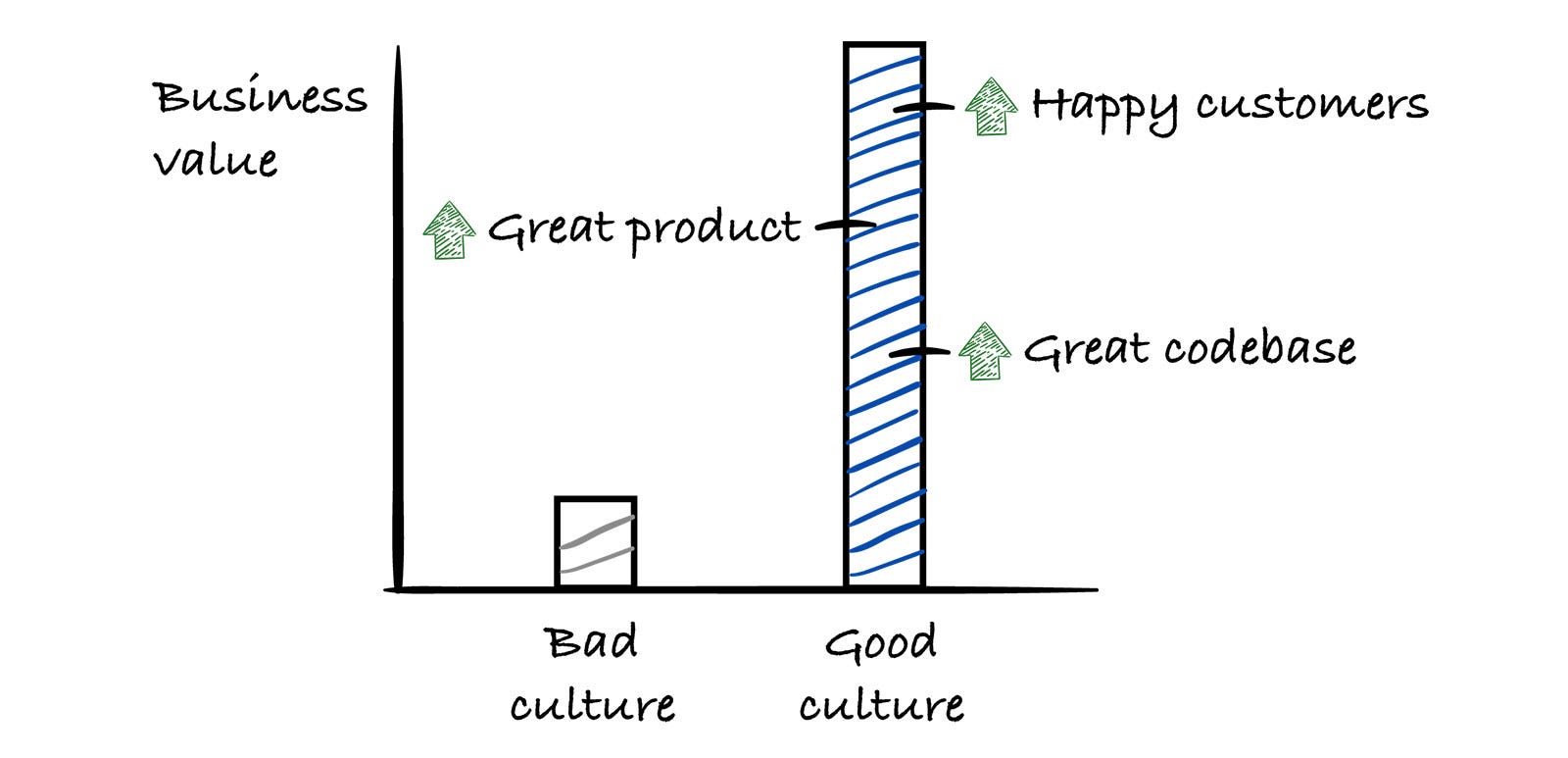
I mention this law quite a lot in different articles, because it’s just so important. And the reason why it’s particularly relevant in this case is that the overall productivity and the “end product” mimic the overall culture of the organization.
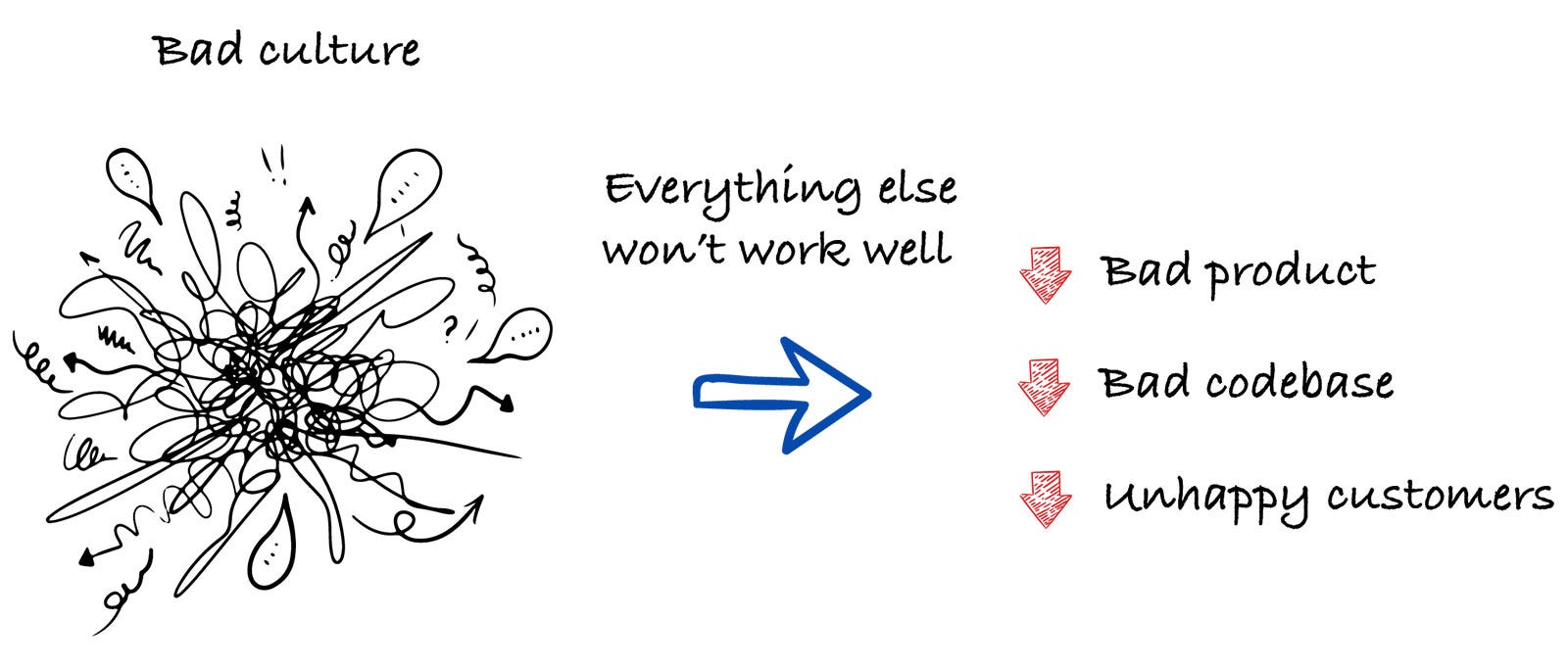
If the culture is bad, the end product will be bad as well, because people just don’t work together well and they don’t communicate properly. But if the culture is good, then often the end product will be good as well.
So, you should always think about good culture as a prerequisite for everything else. And I like to make an analogy to what health is to us, humans. Without health, we can’t do anything else well.
And the same is true for organizations with bad culture, everything else won’t be good as well.
Now, here comes the problem that many people fall into, especially CEOs and other executives. They see either a competitor or some other company reporting 10x higher productivity using a certain AI tool.
They start to panic, they start feeling FOMO (fear of missing out), and they start blaming people around them: “Why don’t we have that same amount of productivity as well?”
A lot of the CEOs are unaware of what kind of problems this may bring. Especially to the culture of the organization. When you start actively “blaming”, it shows to everyone that they are not doing their job well, and that you don’t trust them to make good decisions.
And this especially falls hard on engineers and engineering leaders, as they are often viewed as people who should be initiating AI adoption.
What many CEOs don’t realize is that a lot of the “reporting” of AI increasing productivity by 10x is more or less selling a certain AI product, or a certain partnership where they are promoting the other product.
So, many of the CEOs fall for the trick and make their company culture a lot worse.
My recommendation: Always take a look at what the incentives are behind people saying something, that says a lot about whether it’s true or not.
Here is another really important point, and many people seem to forget it. As we mentioned, good culture is a prerequisite for everything else. But when it comes to AI, it amplifies everything you already have.
So, both AI and good culture go hand in hand really well together. AI makes bad communication even worse, it also makes bad architecture even worse as well.
But if you have a good culture and good architecture, people will be more productive because they will help each other, and AI will also have a better blueprint of what good looks like because of good architecture.
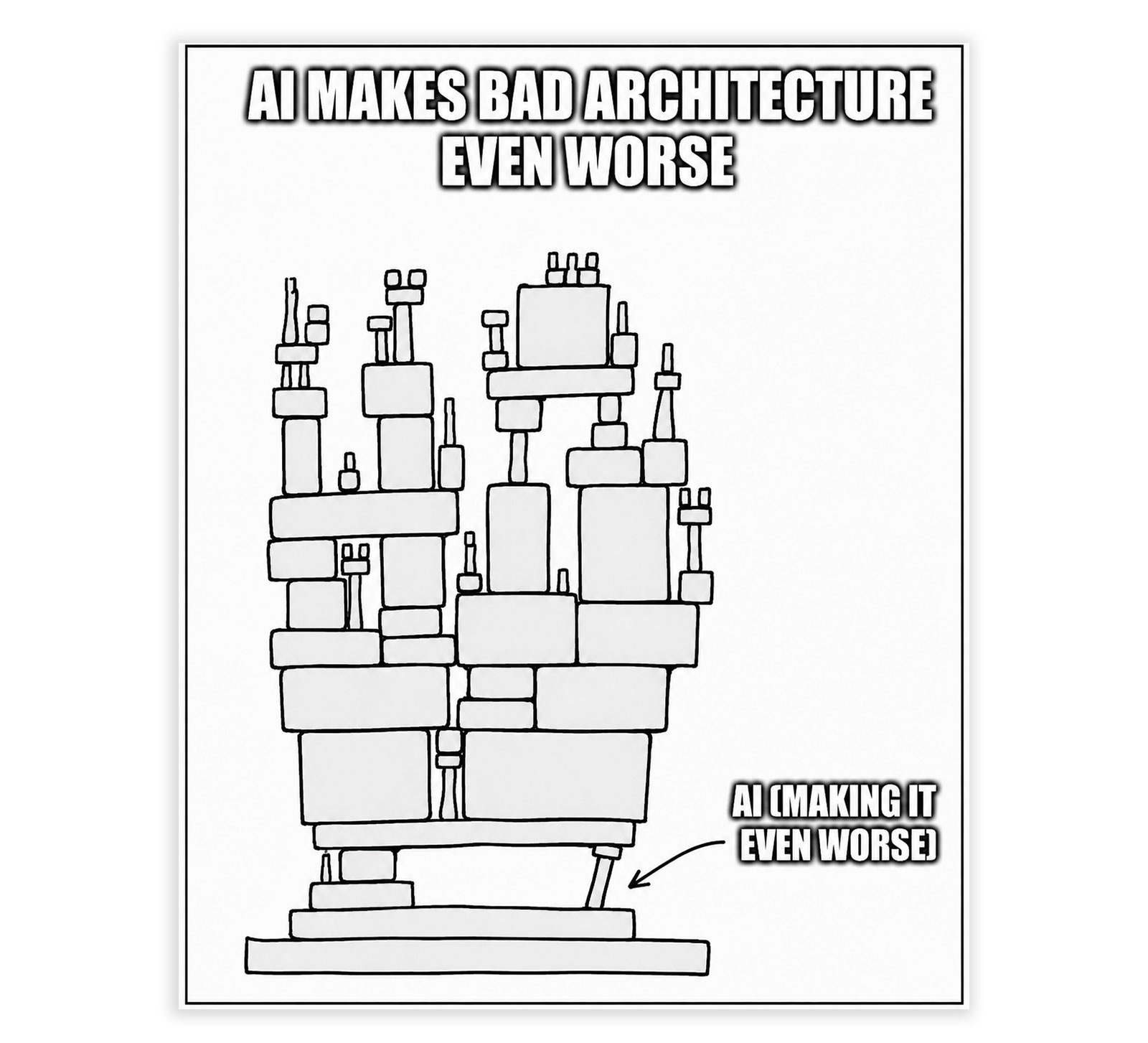
Always keep this in mind. Just starting to use AI for everything just makes things worse if you don’t have good processes, architecture, and people don’t work together as a team.
Everyone just goes in the wrong direction faster.
If you’re wondering whether you have a great culture inside your team or organization, here are some useful questions to answer:
Do people know what they are responsible for?
Can they make decisions without unnecessary approvals?
Do they feel safe challenging leadership?
Do teams trust each other?
Are priorities clear?
Can people disagree constructively?
Do we reward outcomes?
Do people understand why they are building something?
Do we learn from failures, or do we look for someone to blame?
If the answer to these is “Yes”, then you are on a good track to have a good culture. Additionally, here is my personal checklist that I look at when doing an assessment of a certain engineering culture:
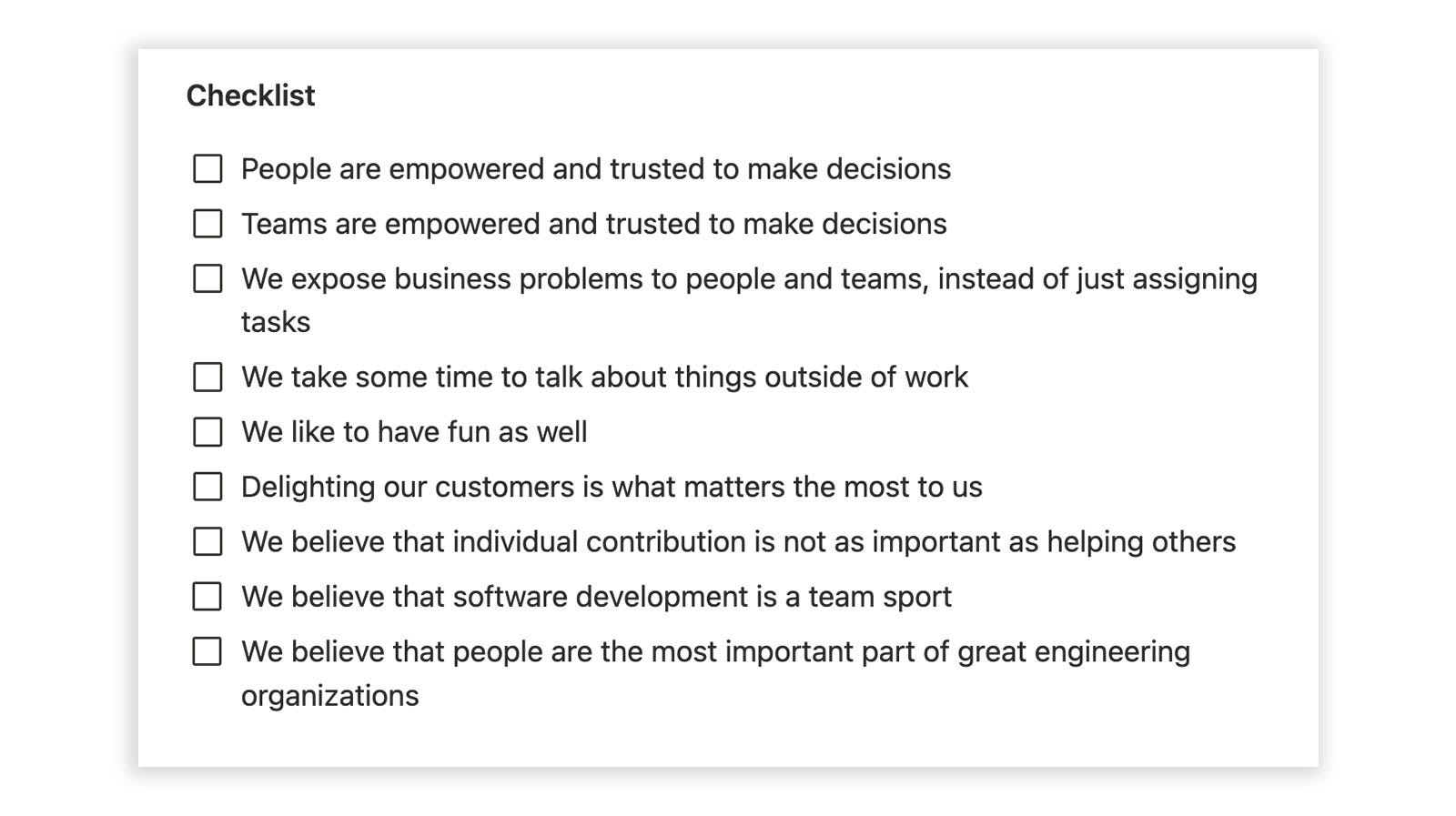
You can find my full checklist for assessing whether a certain engineering organization is great or not.
You can use the same checklist in your case as well. This checklist provides you with a guide on what you should focus on in order to create a great engineering organization where everyone can thrive.
It works for organizations with multiple teams or smaller organizations. You can also use this for a specific team that is part of the bigger organization as well.
Paid subscribers, you can get it here: 🎁 Products for paid subscribers.
Additionally, take a look at how I do a full engineering organization audit in this article:
Now, let’s go to a very important thing next. How to actually message AI adoption correctly, so that you keep a great culture and have everyone excited about using AI tools.
The best messaging I saw (and has worked well) is the following:
What great engineers and engineering leaders do is learn and utilize all different tools that help them do the work better. This hasn’t really changed.
AI is like any other tool that has come out over the years. Use it in your favor to help your team, organization, and the business. That’s what great engineers and engineering leaders do. And it hasn’t changed with AI.
Don’t ever mention something even close to “replacing” or something along the lines of “You are not important anymore, because we have AI”. Those are just going to completely diminish morale and break the entire culture.
When it comes to AI adoption, it only works bottom-up, it never works top-down, and the reason for that is that things are changing so fast, new AI tools are coming out every day, and there needs to be constant exchange of knowledge between everyone.
Always keep this in mind. Trying to “force” people will only result in bad outcomes.
Many people believe that AI adoption happens just by introducing a new tool, and people will just magically become 2-5x more productive. Well, it doesn’t work like that.
AI adoption is not a tooling problem, it’s a leadership problem.
And at the same time, if your goal is to just increase AI usage amongst everyone, you’re basically losing. The goal should always be business success and overall outcomes.
As we mentioned, AI is like any other tool, and we need to treat it that way.
I wrote the article called: Companies should hire more engineers in the age of AI, back in July, 2025. And it’s now more true than ever.
I fully believe that the best companies hire more engineers, not fewer, and the reason is that with more people, you exponentially increase your productivity as well.
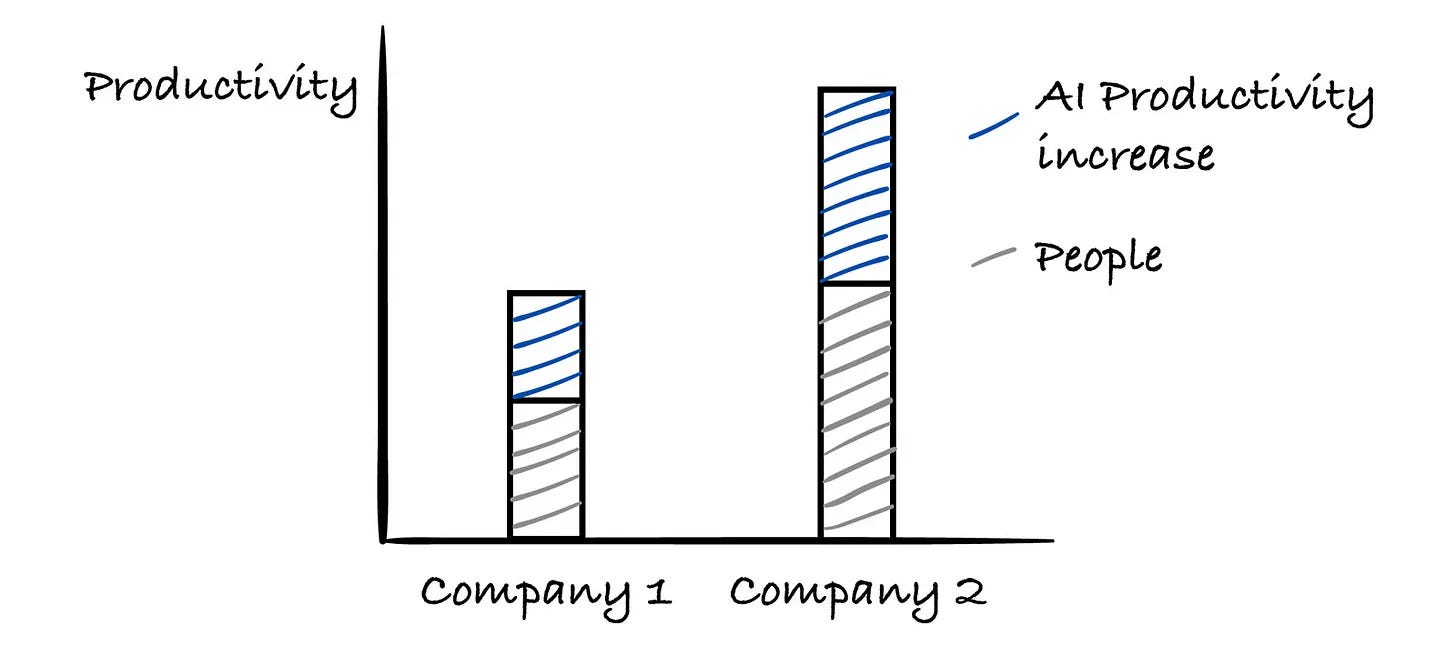
Of course, the prerequisite is that the company culture is on point. Without it, it won’t work.
Time to market (TTM) is a very important metric in the age of AI, and I strongly believe that the best companies in a specific industry are going to be the ones that are going to move the fastest, make adjustments based on market needs, and provide the best experience for the users.
This was true before the age of AI, and now it’s even more important as things are progressing faster than ever.
So, knowing this, why would you actually restrict yourself with less productivity and less talent?
It’s a huge competitive advantage to be more productive. And I believe being less productive (that you can be) is actually a huge liability, which would result in an overall decrease in market share percentage long-term, in my opinion.
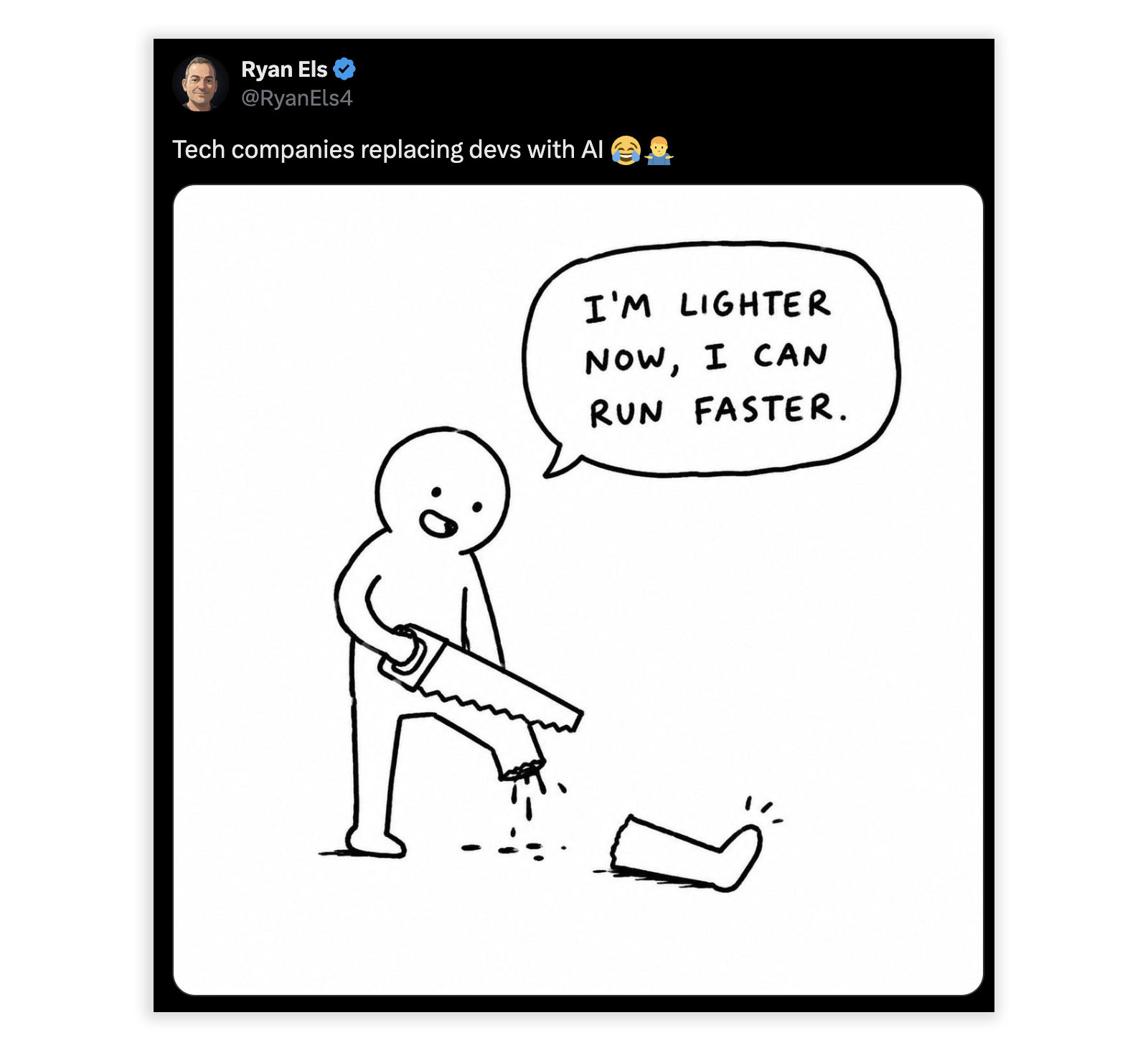
If you believe that “replacing engineers with AI” is a good bet. You’re actually making your company a lot worse that way. That’s my opinion.
Let’s end this article with the following:
I DON’T think the biggest question for leaders should be: “How do we get everyone to use AI?” The biggest question is:
“How do we build an organization where great people can do their best work, and then use AI to multiply them?”
This is the real question that organizations should be asking and focusing on. Great culture is the biggest productivity hack.
Liked this article? Make sure to 💙 click the like button.
Feedback or addition? Make sure to 💬 comment.
Know someone that would find this helpful? Make sure to 🔁 share this post.
Interested in sponsoring this newsletter? Check the sponsorship options here.
Check out my book “The Multiplier Mindset” coming out later this year, here.
Take a look at the cool swag in the Engineering Leadership Store here.
Want to work with me? You can see all the options here.
You can find me on LinkedIn, X, YouTube, Bluesky, Instagram or Threads.
If you wish to make a request on particular topic you would like to read, you can send me an email to info@gregorojstersek.com.
This newsletter is funded by paid subscriptions from readers like yourself.
If you aren’t already, consider becoming a paid subscriber to receive the full experience!
Check the benefits of the paid plan
You are more than welcome to find whatever interests you here and try it out in your particular case. Let me know how it went! Topics are normally about all things engineering related, leadership, management, developing scalable products, building teams etc.
No posts